
Feral Historian
Published 26 Jun 2026Let’s begin a look at the Planet of the Apes franchise, starting with Pierre Boulle’s novel that started it all. The book sets up all the themes that get reworked and reimagined through every subsequent take on the story, from the 1968 film to the most recent series of films.
00:00 Intro
01:52 Beginnings
05:09 Essentialism
08:08 Aping
10:02 Iterations
12:15 Endings🔹 Patreon | patreon.com/FeralHistorian
🔹 Ko-Fi | ko-fi.com/feralhistorian
🔹 and Merch! | feral-shop.fourthwall.com
October 25, 2026
Planet of the Apes: Part 1 – Beginnings
October 18, 2026
Coriolanus and Science Fiction
Feral Historian
Published 19 Jun 2026Coriolanus is on a core level a story about loyalties, the personal and the tribe. It’s a rich field for science fiction, and this story hinges on a delicate balance of loyalties that can change drastically in different sci-fi settings.
The original edit of this relied heavily on the 2011 film, but for copyright reasons I’m using different performances as examples here. Apologies for any edits that seem a tad off.
00:00 Intro
03:00 The Tribunes
04:50 A World Elsewhere
07:25 Martius and Aufidius
12:39 LoyaltiesCorrections: 13:07 I know, I’m technically using “geopolitical” incorrectly.
It also occurs to me that there is a bit of a Coriolanus influence on my book (shameless plug incoming) Stellar Drift, available now. amazon.com/dp/B0GTVXK4CN
And of course book 1 in the series, Ninti’s Gate as well. amazon.com/dp/B0CYXH9BWD
🔹 Patreon | patreon.com/FeralHistorian
🔹 Ko-Fi | ko-fi.com/feralhistorian
🔹 and Merch! | feral-shop.fourthwall.com
Comments Off on Coriolanus and Science Fiction
October 16, 2026
Three Heinleins
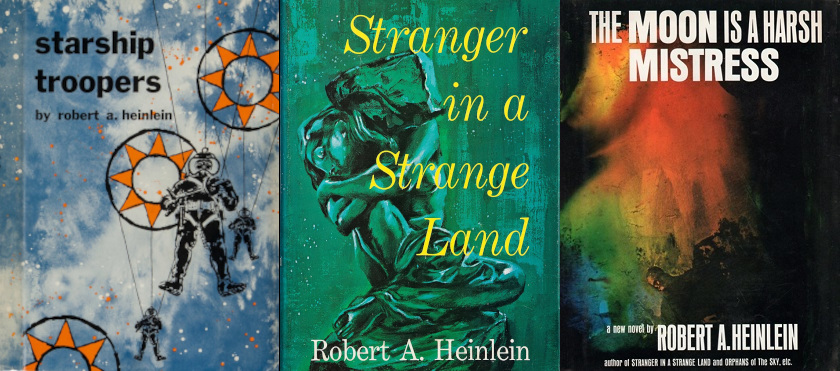
While I can’t claim to have read every word Robert A. Heinlein published, I’ve read most of his novels and short stories. I started with Starship Troopers in grade school. I was a still-wet-behind-the-ears army cadet and that book rocked my world. It’s still in that small group of early books I’ll re-read every few years. Stranger in a Strange Land was an outlier for me, even though it was the next book Heinlein wrote and it became much more relevant culturally by the time I read it (early 70s) it didn’t speak to me the way Starship Troopers had done. On the other hand The Moon is a Harsh Mistress is another one of my all-time favourites, but it helped that when I read it I was already interested in libertarian ideas. All that said, I pretty much felt obliged to share Derek Ryan Jacobs’ short essay on the three books:
There may be no single author in science fiction more persistently misread than Robert A. Heinlein. Depending on what you read and how you interpret it, he is a fascist militarist, a free-love mystic, or a libertarian firebrand. He writes novels that venerate duty and others that dissolve it, texts that praise hierarchy and others that work to dismantle it. Starship Troopers is cited by conservative politicians for its advocacy of earned citizenship; The Moon is a Harsh Mistress is direct rebellion. In between, Stranger in a Strange Land was adopted by communes as spiritual scripture. The contradiction seems total. How could one author plausibly inhabit all these roles at once — much less within a single decade?
0. Introduction
When read together and with care, Starship Troopers, Stranger in a Strange Land, and The Moon is a Harsh Mistress do not reveal an author in philosophical chaos. They reveal an author in methodical experiment. Each novel proposes a different relationship between the individual and the state, a different subgenre framework, and a different set of philosophical tools. But beneath these surface dissonances, all three are working toward the same end: to interrogate the legitimacy of power, and to dramatize the conditions under which agency becomes moral authority. Heinlein does not offer answers so much as simulations. He runs three models. He sets the parameters and variables, and lets the story prove — or fail to prove — the coherence of its system.
It is no accident that these books appeared in the order they did. Starship Troopers came first, a tightly structured martial bildungsroman that argues for citizenship earned through service. Stranger in a Strange Land followed two years later, its spiritual and structural opposite, casting off hierarchy in favor of intuitive communion. Then came The Moon is a Harsh Mistress, a revolutionary treatise dressed as a caper novel — neither ecstatic nor doctrinaire, but strategic, and committed to the long work of building something better. Rather than signaling a philosophical evolution, this sequence maps a series of aesthetic transformations. Each novel shifts genre to create a new laboratory and tell a story of outsiders confronting power. And each converges on a shared moral structure: legitimacy requires individual consent, and any illegitimate system is unfit to govern.
[…]
Conclusion — Three Systems, One Standard
It is tempting to treat Heinlein’s bibliography as a contradiction, or a drift, or an ideological muddle. It is none of those things. What Starship Troopers, Stranger in a Strange Land, and The Moon is a Harsh Mistress reveal — when read in dialogue — is a single philosophical theme rendered in three keys. Legitimacy must be earned. Authority without consent is counterfeit. Freedom without structure is meaningless.
The genre of science fiction gave Heinlein the tools to test that claim. Subgenre let him shift the boundaries, change the stakes, and vary the rules of engagement. But in every world he built, from the Mobile Infantry to the Martian mind to the lunar republic, the same truth holds: agency is a responsibility. And only those who accept its cost are fit to wield its power.
Comments Off on Three Heinleins
October 13, 2026
No wonder the wokies hate J.K. Rowling
The Harry Potter books used to be sacred lore to the woke generation until the author committed the unforgivable crime of defending the rights of women against the encroachment of trans-women. Yet, it doesn’t take a very close reading of the texts to discover so many things that appear to have slipped under the notice of the progressives and form the core beliefs of the fictional world she created:

Amelia crossing paths with Harry Potter and the gang seems much more appropriate than it might have in the past
Potential is largely hereditary, family is most important, the media are lying parasites, the state can’t be trusted with education, and children should be taught armed self-defense.
These are not subversive readings. These are the plot.
The Harry Potter series was the most successful publishing phenomenon of the late twentieth century. It sold half a billion copies. Progressive parents handed it to their children as a parable about tolerance and the courage to stand against prejudice. The movies grossed eight billion dollars. The author became an icon of liberal cultural production and then, by a process that remains opaque to the people who made her famous, a figure of political villainy for holding positions indistinguishable from mainstream liberal feminism circa 2005.
Set aside the author. The books exist independently of whatever J.K. Rowling believes or is believed to believe. Read them for what they actually say. The worldview encoded in the narrative structure, the plot logic, and the moral arc is not the worldview the books were marketed as containing. It is considerably more interesting.
Blood Will Tell
Magic is inherited. This is the foundational premise of the entire fictional world and the premise from which everything else follows.
You are either born a witch or wizard, or you are not. No amount of study, effort, practice, or desire will make a Muggle magical. The reverse is also true: Squibs, born to magical families but lacking the gift, cannot acquire it. They are defective members of magical lineages, pitied and often hidden. Argus Filch, the Hogwarts caretaker, is a Squib. His bitterness and cruelty toward the students is the bitterness of a man who can see the gift in others but will never have it himself.
[…]
Family Carries Everything
Harry survives Voldemort’s killing curse because his mother died to protect him. Not a metaphor. A literal magical mechanism. Lily Potter’s sacrificial love created a protection charm encoded in Harry’s blood that made him impossible for Voldemort to kill directly.
[…]
The Press Are the Enemy
The Daily Prophet is introduced early and is corrupt throughout.
[…]
The State Cannot Be Trusted to Educate Your Children
Dolores Umbridge is a government administrator appointed by the Ministry of Magic to reform Hogwarts.
Her arrival at Hogwarts in Order of the Phoenix is the politicization of education made literal. The Ministry does not trust Dumbledore. The Ministry does not want students to learn Defense Against the Dark Arts. A student body trained in combat magic is a student body that might resist. Umbridge’s curriculum is therefore purely theoretical: no spellcasting, no practical application, only reading approved texts about defensive magic that the students are forbidden to practice.
[…]
The books contain other lessons that the progressive readership tended not to discuss.
House-elves are slaves. They are hereditary servants bound to magical families, forbidden to disobey direct orders, and conditioned to punish themselves for disloyalty. Dobby is freed and becomes a hero. But Dobby is the exception. Most house-elves, including the Hogwarts house-elves, do not want freedom. Hermione’s Society for the Promotion of Elfish Welfare is played for laughs. The elves reject her knitted hats. They are offended by the offer of liberation. Dobby is a weirdo.
The narrative does not resolve this. The house-elves are not freed after Voldemort falls. The epilogue does not mention them. The implication is that hereditary servitude is acceptable if the servants are happy, and these servants are happy. Whatever else this is, it is not an abolitionist text.
[…]
What The Books Actually Taught
The Harry Potter series is a fundamentally reactionary conservative text dressed in the aesthetic of liberal tolerance.
It teaches that ability is inherited and the argument is only about whether pedigree or demonstrated ability should determine status. It teaches that family is the highest loyalty and the source of the most powerful magic. It teaches that the press serves power and the only response is to route around it. It teaches that the state will capture education to produce compliant subjects and that the answer is to arm the children. It teaches that some people are born for greatness and others are born for service, and the main thing is to get the sorting right.
None of this requires reading against the grain. It requires only reading.
October 11, 2026
In The Country of the Blind: A Tale of Applied Cliology and Incompetence
Feral Historian
Published 5 Jun 2026Michael Flynn’s In The Country of the Blind gives us a mystery wrapped around an examination of the idea of predictive history. Sort of Foundation with more laughs and cynicism.
I’ve been sitting on this one for some time now, hoping to think of some good b-roll to cut in. But I got nothing, so here it is. For those that listen to these while driving, this one’s for you.
I haven’t found the study I mentioned that isn’t paywalled, but here’s a link so you know which one I’m talking about. https://muse.jhu.edu/pub/1/article/92…
00:00 Intro
04:50 Results, Not Intentions
10:43 Technopeasants
13:21 Scientific Management
16:33 Back to Now
18:43 Power Structures🔹 Patreon | patreon.com/FeralHistorian
🔹 Ko-Fi | ko-fi.com/feralhistorian
🔹 and Merch! | feral-shop.fourthwall.com
Comments Off on In The Country of the Blind: A Tale of Applied Cliology and Incompetence
October 3, 2026
Altered Carbon: Immortality Breaks Humans
Feral Historian
Published 29 May 2026Richard K. Morgan’s Altered Carbon builds on a simple premise, what if everyone’s consciousness was digitally transferable, regardless of class or wealth. The world he depicts has an undercurrent of dread permeating everything and hints at some even more terrifying possibilities.
00:00 Intro
03:10 Not Human Anymore
06:25 Social Disconnect
11:07 Make it Personal
15:15 The Netflix Adaptation
(more…)
Comments Off on Altered Carbon: Immortality Breaks Humans
September 5, 2026
60th Anniversary of Star Trek: A Very Brief Look Back
Feral Historian
Published 4 Sep 2026On September 8th 1966, Star Trek premiered and has since reflected shifts in American popular culture from the Vietnam era to today. It hasn’t always been good, but it has been a ride. Perhaps one that has come to an end.
00:00 Intro
04:32 A New Trek
06:15 Overlap
09:04 Stuck In Itself
10:00 Enterprise
12:37 JJ
13:28 Trek TodayThe link for Sean Munger’s video: • Star Trek and the Vietnam War (Part I)
Obviously this is not a statement of agreement with every point in that video.🔹 Patreon | patreon.com/FeralHistorian
🔹 Ko-Fi | ko-fi.com/feralhistorian
🔹 and Merch! | feral-shop.fourthwall.com
🔹 Oh, and book 2 of Stellar Drift is out. https://www.amazon.com/dp/B0GTVXK4CN
Comments Off on 60th Anniversary of Star Trek: A Very Brief Look Back
August 6, 2026
The End of Eternity: Micromanaging History, Killing the Future
Feral Historian
Published 3 Apr 2026Isaac Asimov’s The End of Eternity can be read as a tangent to his Foundation series, an artifact of the optimism that permeated the years immediately preceding the dawn of manned spaceflight, or as a critique of central planning and social engineering. It also has a bit more character development than is typical for Asimov’s concept-focused writing.
00:00 Intro
04:33 Noys and Space
09:25 Closed Loop
11:14 The Superman
16:17 Losing the Stars
20:31 Ending Eternity
(more…)
Comments Off on The End of Eternity: Micromanaging History, Killing the Future
July 30, 2026
Equilibrium: 198451 with Gun-Fu Fighting
Feral Historian
Published 27 Mar 2026Equilibrium (2002) is a curious mix of early-aughts action movie and mid-20th Century dystopia. While it does feel a bit overwrought and derivative at times, it ends up being more than the sum of its parts.
00:00 Intro
03:17 Gun Kata
04:44 198451
06:45 Endings
07:07 Anti-Human Systems
(more…)
Comments Off on Equilibrium: 198451 with Gun-Fu Fighting
July 16, 2026
How Few Remain: The Second War Between the States
Feral Historian
Published 13 Mar 2026Let’s take a look at Harry Turtledove’s How Few Remain and its many themes and historical extrapolations. And probably argue about the Civil War a little along the way.
If there’s enough interest, this may be the start of a dive into the entire sprawling series that follows.
00:00 Intro
01:37 A War Unfinished
07:09 Adapting and Evolving
10:12 Abraham Lincoln and Frederick Douglass
13:15 The Horace Greeley Letter
15:40 Freddie’s Louisville Adventure
18:07 Turtledove, Lost Cause, and Spoilers
(more…)
Comments Off on How Few Remain: The Second War Between the States
July 13, 2026
A Fair Reading of The Camp of the Saints
Feral Historian
Published 10 Jul 2026Jean Raspail’s 1973 novel The Camp of the Saints has gone from obscurity to infamy in recent years, drawing condemnation for its highly … unflattering depiction of third-worlders. Much of this condemnation comes from people who haven’t read it, or gave it only a shallow and cursory read. But if we let the book speak for itself it can be quite insightful at times, and the true target of its scorn becomes brutally evident.
Rather than use politically-charged b-roll, it’s all hiking shots this time. Mostly to cover some edits. This is a great one for those who listen to these on the commute. Or the commode as the case may be.
00:00 Intro
01:03 The Story
14:22 Escalation Curve
17:38 Hamadura and “Whiteness”
22:05 Culture and Ethnicity
26:33 Why so Serious?
30:09 The End of a World
34:14 Your Virtual Right-Wing Uncle
35:48 A “Martian” Perspective🔹 Patreon | patreon.com/FeralHistorian
🔹 Ko-Fi | ko-fi.com/feralhistorian
🔹 and Merch! | feral-shop.fourthwall.com
🔹 Oh, and book 2 of Stellar Drift is out. https://www.amazon.com/dp/B0GTVXK4CN
Larry Correia’s trailer park elves
On X, Larry Correia explains the genesis of a group of characters he created in his Monster Hunter International series:
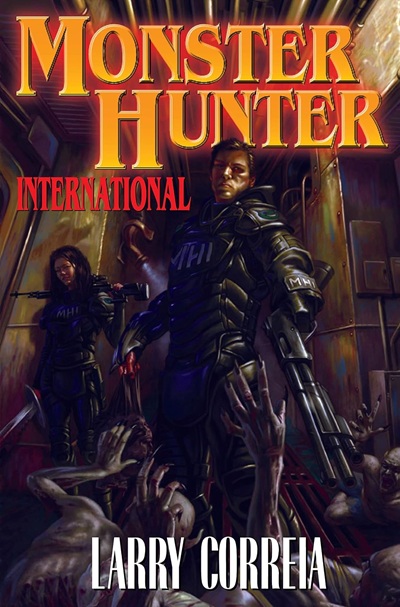
I’ve been talking to this pathetic, race obsessed loser, bitter failure of a wannabe writer for a while, but it did remind me of the fun story of where MHI‘s trailer park elves came from.
This dork thinks it is because I’m racist against white people or some shit, but it is actually a lot simpler. I was in the bedroom, typing on my laptop. I was working on the beginning of MHI and still figuring out this whole writing thing.
My wife was in bed reading a fantasy novel. She sighs and puts the book down. I ask what’s wrong, and she says “Elves are always the same. It’s so boring. Authors just keep rehashing Tolkien elves over and over. They’re all wise and beautiful and eternal and blah blah blah. Just once I’d love for them to do something different! Why can’t there be, I don’t know … redneck elves or something?”
And the light bulb went on because she said this to a guy who’d lived in some poor areas in Alabama and Mississippi and had a blast. And that night I wrote the Enchanted Forest Trailer Park scene.
The part where the dog pees on the outside couch, and they just flip the cushion over and tell you to have a seat, true story. 😀
Contrary to what this woke loser thinks, I love rednecks. I think they’re hilarious and awesome and I appreciate the culture of being rowdy and not giving a shit while being ready to fight at the drop of a hat. Anybody who has read the series knows MHI is filled with bad ass southerners. Just like the woke left appointed themselves “speakers for the marginalized” this asshole is the same. I never bent the knee to the woke left, and my answer is the same to the woke right. Fuck off.
Meanwhile I go to the south and people love this stuff. Only humorless dolts get butt hurt over the Enchanted Forest, because the rest of us have been there! We know those guys. That’s what makes it fun.
The elves gave me the idea, what if every mythological race from the old world adopted an American subculture once they got to the US? Which gave us orcs, gnomes, minotaurs, dragons, cyclops, all adopting some culture. I’ve had a lot of fun with that over the series.
And the culture has got to be a twist on what’s expected. That is what makes it interesting. It goes back to what my wife said back in 2007. This prick is crying how come the elves are WHITE?! Tolkien, that’s why. And why is one FAT?! Why are they POOR?!? Did you make the other races fat and poor and use them for comedy relief or just the WHITE ONES?
Well A. stupid obviously never got to the gnomes, and B. it is because, elves are supposed to be beautiful and immortal and awesome. If I wrote a dwarf as fat and drunk that’s not interesting because that’s NORMAL, and doesn’t fit the established nature of the setting where traditional stuff goes sideways when it gets here. Duh.
This explanation is for my fans. Not this dork. I don’t think he’s smart enough to explain anything to.
Comments Off on Larry Correia’s trailer park elves
July 1, 2026
Elleander Morning: Causes vs Catalysts
Feral Historian
Published 6 Mar 2026Elleander Morning (Jerry Yulsman) is a peculiar bit of alt-history, brilliant in some ways and immensely clunky in others. It’s a story of a war averted, or perhaps only postponed, and it plays with some fundamental questions of history.
00:00 Intro
02:30 Implications left hanging
03:29 The Books
06:15 The New Catalyst
12:06 Gaming the Past
13:04 Concluding Musings
(more…)
Comments Off on Elleander Morning: Causes vs Catalysts
June 28, 2026
George R.R. Martin left “a smoking crater” where the epic fantasy market used to be
Full disclosure, I’ve never read any of George R.R. Martin’s novels from which the Game of Thrones TV series began (I did read some of his earlier work). His failure to complete the book series has had serious negative consequences on the ability of other authors, as Larry Correia explains:
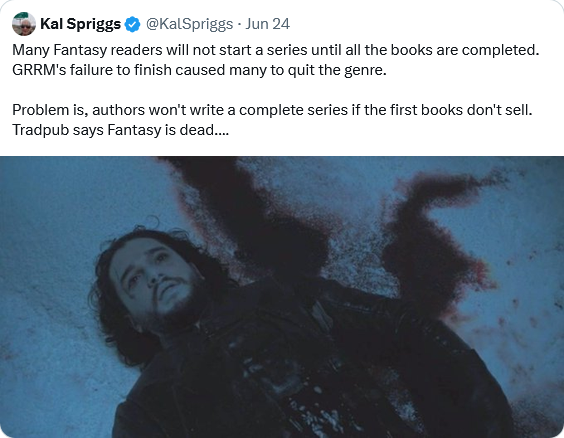
I’ve been telling people this for years.
GRRM pissed off millions of customers but he don’t give a shit. He got his bag. But his legacy is being such an epic bum ass bum that he crippled an entire genre, ruined consumer sentiment, and killed off an entire generation of epic fantasy authors.
Romantasy and LitRPG grew as a direct result of filling the smoking crater George left in the industry. New writers could no longer get deals to write epic fantasy unless the entire series was in the bag, and nobody can afford to gamble that much time to write that many books they may never sell.
Publishers no longer took chances on new series because customers had got burned by lazy shirkers like George and Pat. Agents wouldn’t represent new epic fantasy unless the whole thing was done. It hurt Indy because dudes had to convince customers that they weren’t bums too. Except when book one makes $50 total, because customers said I’m not starting a new series until it’s done! they sure as shit ain’t writing book two. So it’s a self fulfilling prophesy of suck.
In the comments Dunning-Krugerands are saying this isn’t true. Look at guys like Brandon Sanderson. Wrong. Guys like him, or me, who already had established names, reputations, and fan bases were fine. We had enough customers who trusted us we could still do new things and people would come along to make it economically viable.
For example, the only reason my epic fantasy series got picked up is because I was already successful and could guarantee a viable level of sales off my existing fans. Newbs don’t have that. And over the ten years it took for me to write the six books to finish it, the entire time I heard from potential customers, nope, not gonna start a new series that might not finish because of George.
I am fine during this because I’m still gonna make a couple hundred grand off each of those just off my existing fans. Newbs make two bucks an hour, say to hell with being a writer I’m going back to my day job, and you all missed out on the next great author and his absolutely brilliant series, because you were too mad at billionaire George shoving twinkies in his mouth instead of writing.
Nope. Guys like me and Brandon are fine. George’s profound laziness screwed over the new guys. Customers and the industry quit taking chances on new guys. We will never know how many excellent fantasy series we missed out on, robbed by George’s laziness burning so many customers.
Some writers gave up, but others moved into different genres. Which is good. But it sure does suck if epic fantasy is your jam. LitRPG is close but different enough it blew up during this time frame because that’s where the talented went.
Being such a pretentious, bloviating bum that you damage an entire industry and strangle a generation of aspiring artists is quite the legacy.
Kal (who is a good writer btw, check out his books) asks what can we do about this? For me personally I’m just gonna continue mocking George’s work ethic in the hopes more normies realize what an outlier he is, and how they should expand their horizons to read other authors who aren’t stuck up, know it all, dickheads.
And before anybody starts barking at me that I’m such a hypocrite because I’ve not finished all my series, sorry I’ve only finished three of eight so far, and have only written THIRTY books since George’s last one, the next MHI comes out in December, and the last two books are next year, and I’m not planning on retiring anytime soon (if ever).
Comments Off on George R.R. Martin left “a smoking crater” where the epic fantasy market used to be
June 27, 2026
Larry Correia is “not a real writer”
While I haven’t read everything Larry Correia has published, I’ve enjoyed reading a lot of his work, but I’m clearly having fun wrong because “he’s not a real writer“:
T-Lex @T_Saurus_Lex
“Not a real writer” is an inside joke, from the Sad Puppy era. Something some cunning quarter-wit accused him of because Larry wasn’t prone to bend the knee to the SJW mafia. I think the details are on his blog somewhere.Yeah, for my newer readers saying I’m not a *real* writer has been a running joke forever.
When you are a writer who annoys the liberal publishing establishment they always make up some reason to disqualify you, so they can dismiss you, and never take anything you say seriously. These are not honest people.
(If you are a proper good thinking liberal writer, don’t worry, you achieve real writer hood by loudly existing and they’ll stick you on panels if you’ve published one short story that was read by six whole people)
So at first I wasn’t a real writer because I only wrote monster adventure pulp. So then I was multi genre (and now I’m successful in more genres than most authors ever attempt). No. Those are the wrong genres.
Then I didn’t count because I wasn’t a bestseller. Until I was.
Then to be a real writer I needed to win some awards. (The big one I got nominated for at the beginning didn’t count because reasons). So then I won some awards. No. Not those! Those don’t count!
Real writers tackle serious topics and impress serious academic critics, until I wrote Son of the Black Sword, which impressed even my snootiest haters … so they promptly dropped that path to real writer hood.
This got super silly at times, and how the title really stuck, one time on book tour one of my haters saw me arrive early to a book signing outside Portland. It didn’t start for an hour so there was only three people there who had driven a long way. So I was just hanging out talking to them.
My hater immediately got on Twitter and told everybody “I saw Larry Correia on his alleged book tour and he only had three people show up. WHAT A FAILURE. WHAT A LOSER!”
The actual signing had 40, which is pretty decent. I was still there when somebody showed me this tweet. We all laughed and responded with a group photo saying learn to count, dork.
But Social Justice Warriors (ah, the good old days) can never admit a mistake. So he doubled down and tweeted I still wasn’t a REAL WRITER because that same store ROUTINELY had book signings for TWO HUNDRED customers.
Problem was, the book store wasn’t that big. To fit 200 they would have to remove all the shelves. And at this point I was still there signing their inventory so I asked the manager. She said out of hundreds of signings they had only hit 200 twice the entire time they’d been in business. Brandon Sanderson post WoT and GRRM at the absolute height of the HBO show, and those had lines out into the parking lot.
So only the top bestsellers on Earth at that moment count as Real Writers. Seems unfair. But okay.
So me and my fans leaned into this super hard to mock the absurd and ever moving goal posts of the terminally online haters. And the rest of my book tour was called THE STILL NOT A REAL WRITER WORLD TOUR. And I got a big group photo at every event for the next week.
And yes, I have hit 200 since, but I’m sure the minute I did the new Real Writer threshold moved to 400. 😀
This has been a running gag ever since, the same way my fans refer to me as the ILOH, though that is a story for another day.
Comments Off on Larry Correia is “not a real writer”


