
Quotulatiousness

September 17, 2026

British government seeks to retroactively change the Rules of Engagement during “The Troubles”

Filed under: Britain, Europe, Government, History, Military, Politics — Tags: , , , , — Nicholas @ 05:00

I’m old enough to have had lengthy conversations with British soldiers and officers who were serving or had recently served in Northern Ireland at the tail end of “The Troubles”. It was a dangerous situation the troops found themselves in and the Rules of Engagement they worked under at least recognized that it wasn’t a normal day at the office back home. On his Substack, Dr. Robert Lyman explains why the current government’s plan to retroactively change the rules that governed the actions of the British military forces is one of the worst possible things they could do:
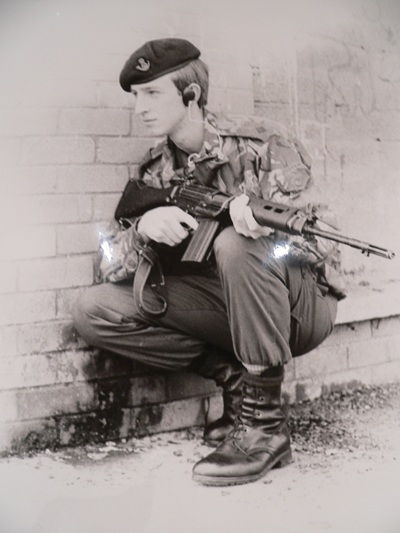
Lieutenant Robert Lyman in the Ballymurphy, 1983, in a photograph snapped by Lieutenant Colonel Bryan Elliott, CO of 1LI at the time. He was driving past in his Landrover and spotted a photo opportunity.
Photo via The War Room

For those who know me well, the idea that I might now be encouraging young men and women not to join the Armed Forces might sound that I had lost my marbles. I can assure you that is not the case. I am deadly serious. This government’s determination, building on the surrender of the previous Conservative government to the varying dictats of the ECHR, will drive an impossible moral and legal wedge between the people who the country ask to do its dirty work, and the government that sends them in harms way. It is an intolerable set of affairs that all sensible people in his country should oppose. What sort of perversity might think that this behaviour is acceptable from any government? I despair, yet it seems that this is precisely what our current morally impoverished government seems to desire.

[…]

The central concern is that the proposed changes will expose servicemen and women, many of whom have already undergone judicial scrutiny for actions undertaken during the Troubles, to further litigation and investigation. In practice, this is likely to encourage a new wave of cases brought by individuals seeking to revisit or reinterpret events from a campaign in which terrorist organisations such as the IRA and INLA were ultimately defeated.

The immediate implications are troubling enough. The longer-term precedent, however, is far more serious. If this legislation proceeds, it will send a clear message to today’s servicemen and women, that even after they have acted lawfully, completed investigations, and fulfilled their duty to the State, they may still face renewed legal jeopardy in later decades. It undermines the fundamental bond of trust between those who serve and the government that sends them into harm’s way.

Every member of the British Armed Forces operates within a strict and clearly defined legal framework. These rules, embodied in the Laws of Armed Conflict and implemented through Rules of Engagement (RoE), govern the use of force in military operations. During my own service, I spent countless hours learning these rules, teaching them to my soldiers, and ensuring they were followed in Northern Ireland, Bosnia, and elsewhere.

This debate is not about whether soldiers should be above the law. Of course they are not, nor should they be. Rather, it is about whether the rules that governed military operations at the time can be retrospectively reinterpreted after a conflict has ended. The concern is that former adversaries will be able to pursue legal action against veterans for actions that were considered lawful under the Rules of Engagement in force at the time.

Today, Policy Exchange published an excellent report examining this issue in relation to former members of the SAS who served in Northern Ireland. The report sets out the problem clearly and persuasively, concluding that the proposed changes should be abandoned. I agree.

Predictably, some MPs have defended the legislation. Diane Abbott, for example, has argued on X that opposition to the changes amounts to “a call for armed forces personnel to be placed above the law.” That characterisation is deeply misleading. The debate has never been about exempting soldiers from the law. It is about subjecting veterans to repeated investigations and additional layers of judicial scrutiny many years after the events in question, often in ways that were never demanded of those they fought against on behalf of the nation.

At its core, this issue is one of fairness. It raises questions about double standards, retrospective judgment, and the constant shifting of the goalposts. Veterans who served under one set of rules are now being told that those rules may no longer be sufficient protection against further legal action.

Is This Table Really 200 Years Old? (Furniture Forensics)

Filed under: History, Tools, USA, Woodworking — Tags: , , , — Nicholas @ 04:00

Rex Krueger
Published 16 Sep 2026

[AI summary: Rex Krueger investigates a vintage drop-leaf gate leg table to determine whether it was handmade or factory-built. By examining specific construction techniques, joinery, and material choices, Rex deciphers the history of this piece and explains how such multi-purpose furniture served past households.]

All my plans!: https://www.rexkrueger.com/

More Furniture Forensics: • Furniture Forensics

Compass Rose Toolworks: https://www.compassrosetools.com/
Join the Mailing List: http://eepurl.com/g3rkmv
Get my woodturning book: http://www.rexkrueger.com/book
Get My Book, Everyday Woodworking: https://amzn.to/3oyjC0E
Follow me on Instagram: @rexkrueger

You don’t hate the relic media nearly as much as they deserve

Filed under: History, Politics, Russia, USA — Tags: , , , , — Nicholas @ 03:00

The relic media in Canada has — thanks to generous government subsidies — become a maple-flavoured version of the North Korean news media, but even in the United States where there’s still a somewhat competitive market, most media outlets are delighted to act as unpaid propagandists … and have been that way for generations:

Walter Duranty won a Pulitzer Prize for lying about Stalin’s Ukraine famine while millions starved. His employer, the New York Times, never returned that prize. The institutional rot ran deeper than one reporter.

In 1936, Times Moscow correspondent Harold Denny watched the first of Stalin’s Great Purge trials and reported the proceedings as credible. The defendants, Grigory Zinoviev and Lev Kamenev among them, confessed to plotting murder and sabotage. Denny saw no obvious coercion and wrote accordingly. The NKVD had spent weeks breaking these men through sleep deprivation, threats against their families, and relentless psychological torture until they would say anything in open court.

Every confession was fabricated. Every defendant was executed anyway. Stalin murdered roughly 750,000 people during the Great Purge between 1936 and 1938, and the Times gave the operation a veneer of legitimacy at its most critical moment.

Central planners require a monopoly on information to survive. When the newspaper of record in the most powerful capitalist country on earth launders your show trials as fair proceedings, you buy yourself years of Western political goodwill. Stalin purchased that goodwill with useful idiots who confused proximity to power with insight.

You pay for this dynamic today every time an institution that failed catastrophically keeps its credentials, its prizes, and its authority to declare what counts as credible journalism.

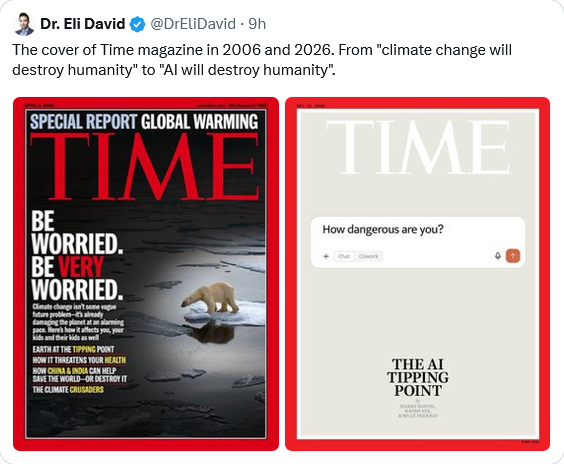
Duranty would have been proud of Time magazine had he been alive today.

The Brutal Life of a Medieval Butcher

Filed under: Britain, Food, History — Tags: , , , , — Nicholas @ 02:00

Tasting History with Max Miller
Published 24 Mar 2026

Tender stewed spiced meat and onions with bright yellow saffron sauce

City/Region: England
Time Period: c. 1430

It’s a well-circulated myth that medieval cooks spiced meat heavily in order to hide the fact that the meat had gone bad. And it is, indeed, a myth. Amongst the many reasons why this doesn’t hold up is the fact that in medieval Europe, spices were expensive, and if you could afford to use a lot of them on your meat, you could afford not-spoiled meat. Dishes like this one, which uses five different spices and saffron, which has always been expensive, would be only for the wealthy.

This dish has the classic medieval flavors of warm spices and vinegar, and I really enjoyed it. The meat and onions are tender, the sauce is a beautiful bright yellow, and it’s quite unlike anything we typically eat today.

    Brawn en peuerade
    Take might broth of Beef or Capon, and then take clean fresh meat, and seeth it, but not too much; And if it be fresh meat, roast it, but not too much, and then cut it in pieces, and cast it into the broth; And then take whole onions, and peel them, and then take vinegar thereto, and cinnamon, … then take cloves, mace, and powdered pepper, and cast thereto, and a little saunders, and set it on the fire, and let boil till the onions and the meat be cooked enough, and not too much; then take liquor made with bread and vinegar and wine … and cast thereto saffron to make the color bright, and salt, and serve it forth.
    — Harleian Ms. 279, c. 1430

(more…)

QotD: Boris Johnson

Some generous souls are claiming it’s not Boris’s fault — which may be true, up to a point, of which more in a moment — but whoever is to blame one thing is abundantly clear: Britain is a failed state, the Sick Man of Europe, and those of us who grew up believing that to have been born British was to have won the lottery in life have now been sorely disabused of the notion.

How can this possibly have happened to the land of Magna Carta and English Common Law, the heroic seafaring nation which coloured the atlas pink and stamped its character on half the world’s nations from Australia and the U.S. to India and South Africa, that invented most of the world’s best sports, produced most of its greatest literature, beat Philip II of Spain, Napoleon, the Kaiser, and Hitler and discovered almost everything worth discovering?

Just when did Britain become so incredibly, embarrassingly shit?

Well, it’s easy to blame Boris, as I have done on occasion, for being a priapic lard-butted lightweight chancer who should never have been given the keys to Number 10. As we’ve learned to our cost, he’s all mouth and no trousers, great for an impromptu bon mot or jolly photo op but perfectly useless in times of crisis, being too easily led, having no opinions of his own, the backbone of sponge and the moral character of a Plecostomus catfish.

James Delingpole, “Britain is now the sick man of Europe”, Breitbart, 2020-08-14.

Powered by WordPress


