Quotulatiousness

September 13, 2026

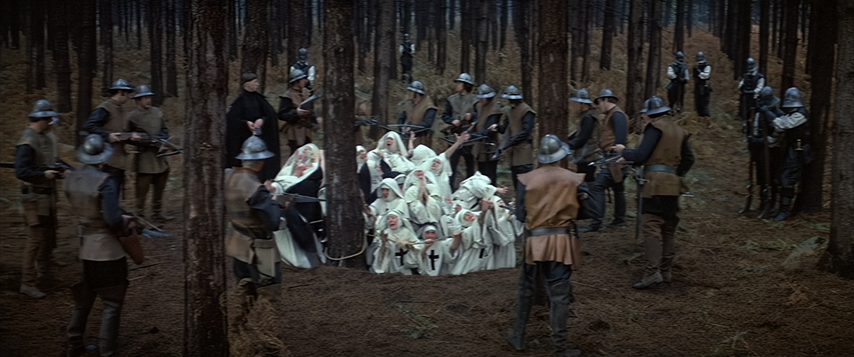
The Devils by Ken Russell

Filed under: Europe, France, History, Media, Religion — Tags: , , , , , — Nicholas @ 06:00

On her Substack, kulak explains why The Devils is the “greatest film of all time”:

What if the 1990s Berserk anime, Warhammer 40k, A Man for All Seasons, The Wickerman (1972), Cromwell, 1984, The Gulag Archipelago, the Rocky Horror Picture Show and the chronically underrated 2012 horror masterpiece Compliance … were all the same horrifying movie?

What if Mel Gibson made a film like Apocalypto, exploring the nightmarish depths of political/religious sacrifice rituals … But about Early-Modern Shakespeare-era Europe?

I’m constantly asked for my “Greatest Film of all Time” … A torturous question for someone who’s seen as many movies as me … And doubly torturous because maybe the best true answer is one its really hard to name:

Ken Russel’s The Devils might be it.

Certainly the best 30 Years War film ever made.
And the Greatest goth movie ever made.
And the Greatest witch hunt movie ever made.
And the Greatest “MeToo” movie ever made.
And the Greatest “insane asylum” movie ever made.
And CERTAINLY the Greatest Exorcist movie ever made.
Yes, I said that. And I mean it. Did I stutter?

And maybe the Greatest “Dark Fantasy” film ever made … Except for the fact that the whole thing is true.

And its being rereleased, the full remastered director’s cut in 4K, this October in Cinemas.

(The strobe effect is only in the trailer)


Ken Russel’s The Devil, adapted from Aldous Huxley’s book The Devils of Loudon and the play The Devils by Dan Whiting, is one of my top five films of all time. And certainly one of the biggest films of all time in it’s own weird way. It does things as impressive for the spiritual, psychological horrifying, and historical on film as Sergei Bonderchuk’s Waterloo does for warfare or Akira for Scifi and Animation.


Indeed I think I might be the only one who could give that answer, given I might be one of like 10 people who know 17th Century History/Literature and obscure extreme Horror Cinema well enough to INSIST on its OVERWHELMING historical accuracy.

Indeed I’d struggle to think of a film which captures the Insane deadly hypersexual kaleidoscopic character of the 17th century better.

I’ve been doing this a lot recently … But I feel I need to lay out my qualifications here to talk about this … My two areas of focus in university were 17th and 18th century English Literature (Shakespeare through to Jane Austin), and 17th and 18th century Political theory (specifically the works of Hobbes, Locke, Hugo Grotius and other natural law theorists … Yes, I took the BoomerCons seriously when they said natural law was the basis of our society, Like an idiot) … I’m by no means an expert, but the broad flavor of this era: Culturally, religiously, politically, historically, militarily, theoretically, theologically, poetically … Was what I immersed myself in during the years when I should have been drinking and partying more and repeating nonsense to people in power, and other things that actually advance your career.


I need to establish that off the bat because I feel as if a huge part of the reason this film is not regarded as a contender for “Greatest film ever made” is the simply the fact that audiences and critics do not believe it, and certainly do not GET it.

That it is SO Bizarre, and SO weird, and SO horrifyingly violent, and SO hypersexual, and SO saturated in its colors, and SO religiously discordant … That it has to be a bizarre psychedelic hellscape of Ken Russel’s perverse drug-addled imagination …

They especially had to think this because if they accepted that it was indeed historically accurate, and not a bizarre sexual/psychedelic story of the American 1960s and 70s reading themselves back into history … Suddenly they’d have to accept that the same thing done to Loudon in 1634 was what was being done to America in the middle of the 20th century, and has been done to the west more or less ever since …

That the yo-yo between state-enforced debauchery one the one hand, and moral panic witch-hunts on the other, is not a schizophrenic attribute of mass media or “Moral Progress” or American Culture … But a highly historically precedented and calculated attack meant to destroy and enslave a people without fighting them.

That “Free Love”, “Feminist Criticism”, “Queer Theory”, “No Fault Divorce”, and “Hostile Work Environment lawsuits” rock society between the extremes of sexual license and socio-sexual moral-panic for the same reason one might rapidly rock a boat between it’s port and starboard sides … To capsize it into the devouring abyss.

That we are indeed living through Loudon at scale.
The scandalous The Whispering Gallery published by “The Badly Had” in 1926

Filed under: Books, Britain, History — Tags: , , , , , — Nicholas @ 05:00

In the latest edition of the SHuSH newsletter, Kenneth Whyte recounts the publishing scandal of the 1920s, as The Bodley Head fought off other publishers to obtain the British rights to The Whispering Gallery, written by an anonymous career diplomat with lots of juicy scandal about the great and the good of British public life:

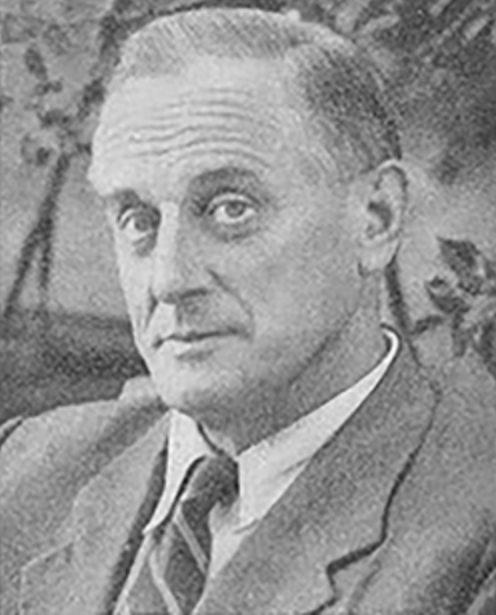
Hesketh Pearson

In 1926, Allen Lane was a young publisher at The Bodley Head, a firm founded by his uncle. He was approached about a manuscript entitled The Whispering Gallery — the diaries of an anonymous retired diplomat or, rather, “envoy extraordinary”. Its pages, writes Lane’s biographer, Jeremy Lewis, were “crammed with scandalous and revealing revelations about assorted politicians, tycoons and literary men, including Lenin, Mussolini, Kitchener, Churchill, the late Tsar, Henry James, and Cecil Rhodes”.

Who wouldn’t want to publish that?

Lane learned that the manuscript had been whipped into shape by Hesketh Pearson (below), an actor, writer, and military hero, who was also the representative of the anonymous diplomat. The US rights had been sold to the prestigious firm of Boni & Liveright. Lane rode his Triumph motorcycle to Sussex where he met the vacationing Hesketh Pearson and learned that his anonymous diplomat had been keeping a diary since his university years and throughout his impressive career. With the backing of colleagues at The Bodley Head, Lane offered £250 for the rights to the manuscript, with the provision that the diarist’s identity be revealed to him and one of the firm’s directors. His offer was accepted. Lane was told that the diplomatic diarist was Sir Rennell Rodd.

An aggressive print run of 5,000 copies was ordered. Lane sold the serial rights to the Sunday Chronicle and assured literary editors at other major newspapers that The Whispering Gallery would be “one of the most talked about books of the autumn season”. He was not wrong.

By publication day, all but about 500 copies had been sold into stores. Another print run was ordered. Lane was not especially concerned when the Daily Mail denounced the book on release as a “scandalous fake”. A conservative paper was never going to respond well to a diplomat who described Lenin as a sympathetic character.

Then the Observer piled on: “a reeking compost of garbage”, it wrote. The Times joined the chorus. Important figures disputed facts in the book. Winston Churchill, for instance, said he was actually on the Western Front when the diarist had him dining with Asquith in Downing Street.

Lane came under pressure from the higher-ups at The Bodley Head. They asked him to coax the anonymous diplomat into responding to his critics, or sue those describing his book as a fraud.

“I do not mind if I am believed or not”, responded the diplomat via Pearson.

Attacks on the reputation of The Bodley Head continued. Lane and a director of the firm decided to confront Pearson. They arranged a meeting. Pearson arrived late and flustered. He said he’d had a difficult time with the diarist who claimed, “among other things, that it is [Pearson’s] fault that the book has got all this publicity, and that he did not want it”. Lane and the director were mollified.

But the Daily Mail kept up its attacks on the publisher: “They have lent themselves to a fraud on the public and have debased the name of their firm. It remains to be seen whether reputable authors will be willing to have their works published by a firm which is capable of such disgraceful conduct.”

Increasingly impatient with young Lane, The Bodley Head’s board increased its pressure on him to find a resolution. He met again with Pearson and demanded to meet the diarist. Pearson said that was not possible. Among other reasons, the timing was inconvenient because Sir Rennell Rodd’s daughter was about to be married. Pearson was indignant at suggestions that the diarist might not exist and that he had written the manuscript himself. Lawsuits were threatened both ways.

The Bodley Head’s board insisted Lane reveal the name of the diarist. Lane at first refused, but then took it upon himself to visit Sir Rennell Rodd at his home in Cavendish Square. A well-regarded former ambassador to Rome and delegate to the League of Nations, Sir Rennell said he had nothing at all to do with The Whispering Gallery. “Had Lane taken the trouble to consult the reference books”, writes Lewis, “he would have discovered that [Rodd] had recently written his memoirs in three volumes; the last of these had appeared only the previous year, which made it all the more unlikely that he would have written The Whispering Gallery“.

Lane confessed all this to his board. Word leaked to the Daily Mail, which celebrated its exposure of “the greatest literary scandal of recent times”. The Bodley Head tried to salvage its reputation by claiming to have been the victims of a fraud by a “miscreant”, i.e. Pearson, and by blaming “our junior director”, i.e., Lane, for guaranteeing the authenticity of the book.

Then the fun started.

The Plane That Terrorized Europe – Stuka Ju 87 – Nazi Rearmament 05

Filed under: Germany, History, Military, Weapons, WW2 — Tags: , , , , , , — Nicholas @ 04:00

World War Two
Published 13 Sep 2026

The Junkers Ju 87 Stuka was designed to do more than destroy targets. Diving steeply, delivering bombs with unusual accuracy and, on early aircraft, screaming through sirens mounted on its landing gear, it turned air attack into psychological warfare.

In this Nazi Rearmament episode, we trace the Stuka from the clandestine programs that produced its predecessors to its role as the symbolic spearhead of German combined-arms warfare. We examine how its dive brakes, bomb crutch, and automatic recovery system worked; why its crews disliked the infamous sirens; and how the aircraft evolved from precision dive bomber into an armored tank-buster.

From Spain, Poland, and France to the Battle of Britain, North Africa, and the Eastern Front, the Ju 87 could be devastating when the Luftwaffe controlled the sky. When that protection disappeared, its slow speed and weak defenses turned specialization into fatal vulnerability.

The Stuka was neither the wonder weapon of Nazi legend nor a useless relic. It was a highly effective weapon built for conditions that Hitler’s expanding war ultimately destroyed.

This series is an extension of Death of Democracy, exploring how Nazi Germany evaded treaties and international oversight to construct the war machine with which it terrorized Europe.

Never Forget.

Stellantis signs an MOU with Roshel for their Brampton auto plant

Filed under: Business, Cancon, Military — Tags: , , , , — Nicholas @ 03:00

On the surface, this seems like excellent news, both for Stellantis who get rid of an auto plant they can’t economically operate and for Roshel who now will get manufacturing capability for their expanding military vehicle lines. But, as Martyupnorth points out, it’s only an MOU and will require placating the auto union:

Image from @Martyupnorth on X

Let’s recap what happened at this old facility in the last 3 years.

The Brampton plant built Chargers & Challengers until December 2023. Then Stellantis (the parent company of Chrysler) shut it down to retool for Jeep Compass. Taxpayers handed over hundreds of millions of dollars to make that happen.

Workers were told it was temporary. They receive a combination of Employment Insurance (EI) and company-paid Supplemental Unemployment Benefits (SUB) that brought most of them up to about 70% of their regular weekly wage, plus continued health benefits. Their contract said they were good for 2 years of benefits.

In February 2025 the work stopped, because U.S. tariffs made building cars in Canada for the American market a losing proposition. October 2025 Stellantis moved the Compass to Illinois. The plant has sat empty ever since. Roughly 2,200 people have been collecting layoff cheques while the building rusts.

Now Stellantis has an MOU with Roshel, a local company that actually wants to use the place. The union’s response? Pause the contract talks. Declare an “impasse.” Demand the company keep pretending the old product plan is still viable.

Unifor spent years extracting benefits and job-security that assumed the world would stay the same. When the world changed, the union treated any other option, like a defence contractor, even just selling the asset so someone else who could hire people, as a betrayal.

The workers are the ones sitting at home. The union leadership is the one treating a mothballed factory like a sacred site that can only ever build Unifor-approved vehicles.

Markets don’t care about the last collective agreement. Tariffs don’t care. Customers don’t care. A plant that produces nothing is just expensive real estate with a Canadian flag out front.

The union’s job was supposed to be representing the people who used to work there. Instead it became another veto on anyone trying to turn the lights back on.

Unions are a scourge on Canada.

Velvet Glove and Sparrow II missiles: A Guide To Early Cold War Bomber Interception Tactics

Polyus
Published 6 Apr 2026

The Velvet Glove was a semi-active guided missile system developed by the Canadian Armament Research and Development Establishment. Its successor, the Sparrow II was developed by Canadair in association with the US Air Force. This is the story of the development of the missiles in the context of their contemporary weapons systems.

0:00 Introduction
1:00 NORAD and continental defense
3:21 Gun approach
5:32 Rocket pod approach
7:54 Nuclear option
8:35 Interception Tactics
11:56 Guided missile approach
14:38 Velvet Glove missile development
19:30 Sparrow missile development
22:03 Arming Canada’s future fighters
25:08 Conclusion

QotD: Naming “Cathay”

Filed under: Books, China, Government, History, Quotations — Tags: , , , , — Nicholas @ 01:00

This is all a very long way of getting around to why I’m so interested in the Khitans.

You may think you’ve never heard of the Khitans (Chinese: 契丹 or “qidan“), but you probably have, albeit indirectly. “Khitan” is their ethnonym within their own proto-Mongolic branch of the Altaic languages. In the Turkic languages a little further West, the same people are called “Khitai“. A splinter group of the Khitans who settled in Dzhungaria and Transoxiana called themselves the “Kara-Khitai” (Black Khitans), a name that should be instantly recognizable to anybody who played Age of Empires II. If you prefer Paradox map-painting games to more traditional RTS, they do also show up in the Crusader Kings series, resulting in memes like this one. Oh dear, where was I? Right, the Khitans. The word “Khitai“, via a continent-wide game of Chinese whispers (get it?), became “Cathay”, which the confused Europeans took as the name of the Middle Kingdom itself, finally resulting in the birth of a wonderful airline.

Right, the Khitans. There they were, grazing their flocks on the Greater Khingan Mountains, just bein’ a horde, doing horde stuff. Suddenly, opportunity fell into their laps: the Tang empire was unravelling. The bustling cities and ports of Northeastern China were sitting right there, defenseless, full of gold, and skilled craftsmen, and all the soft and delicate sensuality of settled life. It was about to happen again, right? The nomadic horsemen riding in from the wild steppe, pillaging the effete townspeople and becoming their masters, only to succumb to pleasure and become effete in turn, the endless cycle of history? How could it be avoided? Here is how Mote (yes, we’ve finally gotten to the book) describes their Catch-22:

    … the Khitans probably saw quite clearly that when a steppe people by degrees gave up its nomadic mobility in exchange for the more comfortable sedentary life, it ran great risks of having to compete with the Chinese on their ground. Losing in that way their comparative advantage inevitably cost the nomads their cultural integrity; they slowly became just “little Chinese” … no steppe people on China’s borders could become sinified and survive, except by migrating into China and being absorbed — another form of extinction … the warning to nomadic peoples was clear: they must master the art of drawing resources from China without sacrificing their steppe integrity … The wealth that could be wrung from it could give mastery over all Inner Asia.

The Khitan response to this pickle was unlike any I’ve ever heard. Roughly half of the Khitan aristocracy, including the royal clan, immediately adopted Chinese customs,1 moved to the city, and began building a bureaucracy. The other half, including the clan that Khitan kings traditionally picked their wives from, stayed in the steppe and had nothing to do with any of this. They then established two governments, two sets of laws,2 two taxation regimes, two writing systems, two of everything. One was civilized, the other was barbarian. Two completely incompatible social structures living side-by-side, passing through each other, but never interacting. Like dark matter, or like life-forms with mirror chirality. As a Khitan subject, you belonged to just one of these systems (if you were low class, you were sometimes allowed to pick!), and only that system had any authority over you.

The only point of official contact between the two worlds was at the top, where the Khitan king spent half the year reigning as a Chinese-style emperor, and half of it touring around his nomadic subjects as Great Khan in a mobile court. The Khitans recognized that although the king was theoretically 50-50, extended exposure to civilization would tend to Sinify him over time, and his descendants even more so. This is why they mandated that every empress was a pure-strain barbarian from a wild clan. They expected these formidable women to wield influence over their sons and to ensure that as the years rolled past and the royal clan grew more and more Chinese, they would be replenished each generation with the barbarian perspective of their mothers. This totally worked, but also resulted in no end of conflict between the empresses and their palace retainers, who exemplified different worlds.3

Sometimes you read about a social or legal system, and you are just certain that it could not be stable. I had this reaction reading about the Spartan diarchy as a kid, and I had it again reading about the Khitans last year. But their system not only endured, it flourished, and eventually turned into the Liao Dynasty which ruled China for centuries. And it functioned basically as it said it would on the tin — the civilized parts of their empire keeping things efficient and organized, supporting craftsmen and tradespeople; while the Strategic Nomad Reserve was always there ready to be called on in times of war, and prevented the administration from getting too soft and decadent.

John Psmith, “REVIEW: Imperial China, by F.W. Mote”, Mr. and Mrs. Psmith’s Bookshelf, 2025-02-24.


  1. The decisive thing they actually did was to adopt surnames, which as James C. Scott will tell you is about the most forceful possible way to reject your barbarian heritage.
  2. The differences in laws could be extreme. For instance, under Chinese law, as in most “civilized” places, treason was punished with ultimate severity and brutality. But in many “barbarian” cultures, treason isn’t actually a huge deal (almost akin to a playground fight) and defeated rebels are customarily forgiven. The Khitans, again, simply did both. Traitors were executed if they lived under city law, and received amnesty if they were under tribal law.
  3. One such an empress, upon the death of her husband, was asked by a Chinese courtier if she would follow ancient custom and be buried alongside him. She responded: “I of course do not refuse to join the Emperor underground, but my children are young and the country has no leader, so I am not free to do that”. Then she ordered that her right hand be severed at the wrist to represent her within her husband’s tomb.

Powered by WordPress