Quotulatiousness

September 14, 2026

Stefan Zweig’s The World of Yesterday

Filed under: Books, Economics, Europe, History — Tags: , , , , , — Nicholas @ 04:00

I’d heard a bit about Stefan Zweig but I’d never read any of his work. Ted Gioia’s review of The World of Yesterday certainly makes me a bit more likely to pick up a copy:
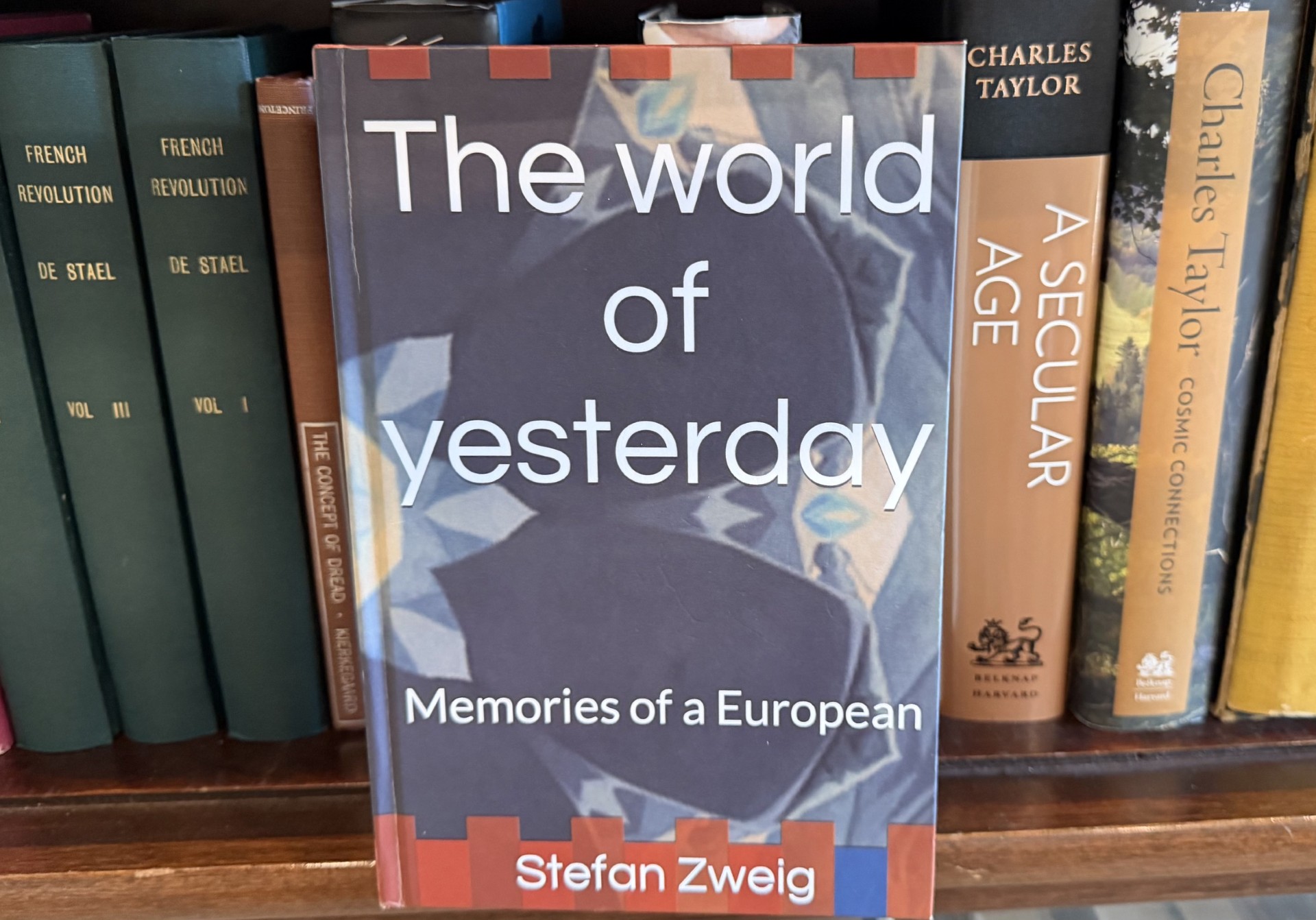
Photo from The Honest Broker

My most recent find is Stefan Zweig’s account of how Vienna went from nineteenth century elegance, prosperity and cultural flourishing to warmongering and hyperinflation. His book The World of Yesterday may be the single best memoir from a survivor of societal collapse from the 20th century — and deserves to be far better known.

I call Zweig a survivor, but that’s not entirely true. He somehow managed to stay alive during World War I (not an easy task for a young man in Central Europe), and the subsequent economic crisis. But World War II forced him into exile, and he committed suicide in Brazil in 1942.

He was a broken man by then — and he feared Hitler was too powerful to stop. So Zweig, one of the greatest writers and thinkers of his generation, ended it all with an overdose of pills.

Just a few years earlier, Zweig had gained renown as the most widely translated contemporary author in Europe. In Germany, his books sold 20,000 copies on the first day — even before a single advertisement had appeared. But that now changed.

“Not a single one [of my books] is available in Germany today,” he lamented at the end of his life. “Those who still possess a copy keep it carefully hidden.” And the same was true in France, Italy and other countries under fascist control.

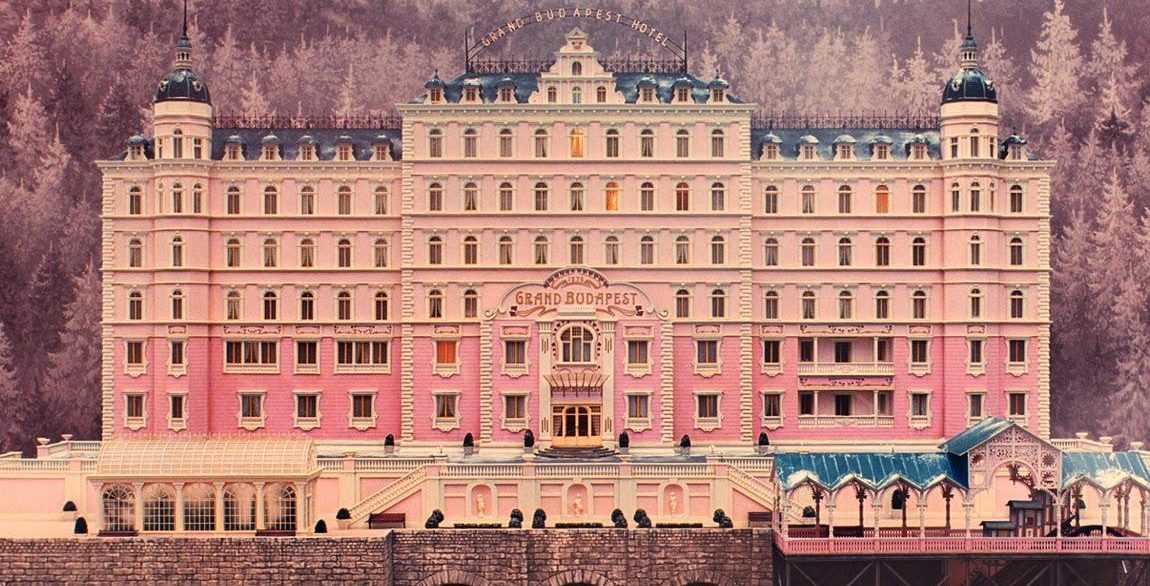
Zweig is best known today as the inspiration behind Wes Anderson’s film The Grand Budapest Hotel. “It’s basically plagiarism”, the director has admitted. But Zweig ought to be remembered more for his writings, especially this final work from his pen.

Stefan Zweig is now remembered as the inspiration for The Grand Budapest Hotel.

His fiction is also sadly under-appreciated. And it’s very readable — Zweig was a specialist in short novels with fast-paced plots. I highly recommend 24 Hours in the Life of a Woman, and Chess as starting points. Zweig also had a knack for mini-biographies (see, for example, his stellar book on Montaigne).

The day before he died, he mailed his manuscript of The World of Yesterday to a publisher. It was released posthumously, and is now recognized as a defining document in how things go bad. Over the course of 500 pages, Zweig starts with the peace, prosperity, and cultural flourishing of the final years of the Habsburg Empire, and then shows, step by step, how a healthy, vital society self-destructed.

The entire book is well worth reading. I will only discuss a small part of it here — covering the hyperinflation following World War I. But this book is so rich in observations and telling details, I could easily devote several articles to it without coming close to exhausting its riches.

Zweig lived through the currency collapse twice — first in Austria (where he lived across the road from an odd young man named Adolf Hitler), when the crown devalued rapidly. Then he moved to Germany, where hyperinflation was even worse.

The stories he tells are so fanciful, you might think he was writing a fable in the style of Jorge Luis Borges. Consider his story of beer-swilling tourists.

The story starts when the Austrian currency collapses in value. Germans quickly learn how to take advantage of this, by crossing the border to buy up cheap merchandise — but with unforeseen consequences:

    Finally, at the instigation of the German government, a border guard was appointed to prevent all consumer goods from being bought in the cheaper Salzburg instead of in the home stores … But one article remained free, which could not be confiscated: the beer that one had in the body.

    And the beer-drinking Bavarians calculated from day to day on the exchange rate slip whether, as a result of the devaluation of the crown, they could drink five or six or ten liters of beer in Salzburg for the same price they had to pay at home for a single liter.

    A more splendid lure could not be imagined, and so crowds of women and children moved over from neighboring Freilassing and Reichenhall to afford the luxury of swilling as much beer as their stomachs could hold. Every evening the station was a veritable pandemonium of drunken, bawling, spitting hordes of people; some who overloaded themselves had to be carried to the carriages on the trolleys usually used to transport suitcases …

    Of course the happy Bavarians had no idea that they were in for a terrible revenge. For when the crown stabilized and the mark, on the other hand, plummeted in astronomical proportions, the Austrians crossed over from the same station to get cheaply drunk in their turn, and the same spectacle began a second time, but in the opposite direction.

This imbalance between currencies created other surreal scenes.

    Incredible as the fact may seem, I can corroborate it as a witness that the famous luxury Hotel de l’Europe in Salzburg was for a long time rented out entirely to English unemployed people who, thanks to the abundant English unemployment benefits, lived here more cheaply than in their slums at home.
June 28, 2026

How to Steal a Country Without a European War – Death of Democracy 21 – Q1 1938

World War Two and Spartacus Olsson
Published 27 Jun 2026

In early 1938, Adolf Hitler turned a military scandal into personal control over the Wehrmacht — and within weeks used that power to pressure, invade, and annex Austria in the Anschluss. This episode follows the Blomberg-Fritsch crisis, Hitler’s February 4 command takeover, the Berchtesgaden ultimatum, Schuschnigg’s failed plebiscite gamble, the German invasion of March 12, and the terror that followed in Vienna.

This was not just a border crisis. It was the moment Nazi Germany moved from internal dictatorship to open territorial expansion. Britain and France did not intervene, Austria was erased as a sovereign state, and Hitler’s next target — Czechoslovakia — was already coming into view.

This historical documentary examines Nazi Germany, the Anschluss of Austria, the Wehrmacht, appeasement, antisemitic terror, propaganda, and the collapse of the post-1919 European order.

Educational documentary. Nazi symbols and imagery are shown only in a historical, critical, and anti-fascist context.

March 11, 2025

The Myth and Truth behind Croissants – A Recipe from 1850

Filed under: Food, France, History — Tags: , , , , , , , — Nicholas @ 02:00

Tasting History with Max Miller
Published 29 Oct 2024

Crescent-shaped bread rolls, from before the croissant was a flaky pastry

City/Region: France
Time Period: 1853

Croissants weren’t always the buttery, flaky pastries that we know and love. While today, that flakiness is what defines a croissant, in the past, it was the crescent shape that was most important.

This recipe from the mid-19th century, a good 50 years before the croissant got its flakes, is a wonderfully soft bread. It doesn’t bear much resemblance to a modern croissant besides the shape, but it is much easier to make. The bread is a little plain, but would be lovely with some butter and jam.

    In luxury bakeries, small loaves called croissants are prepared, usually in the semi-circular shape of a roll curved and tapered at the ends. The liquid is used to form the dough with one kilogram of flour consists of one or two eggs beaten and mixed with about five hundred grams of water. Moreover, the choice of flour, the dose of yeast, as well as the working of the dough, require the same care as when it comes to the other luxury breads mentioned.
    — Des substances alimentaire et des moyens de les améliorer by Anselme Payen, 1853.

(more…)

April 14, 2024

Soviets Take Vienna and Königsberg – WW2 – Week 294 – April 13, 1945

World War Two
Published 13 Apr 2024

The prizes of Vienna and Königsberg fall to the Soviets as they continue what seems an inexorable advance. In the West the Allies advance to the Elbe River, but there they are stopped by command. The big news in their national papers this week is the death of American President Franklin Roosevelt, which provokes rejoicing in Hitler’s bunker. The Allied fighting dash for Rangoon continues in Burma, as does the American advance on Okinawa, although Japanese resistance is stiffening and they are beginning counterattacks.

Chapters
00:32 Recap
01:05 Operation Grapeshot
01:57 Roosevelt Dies
06:01 Soviet Attack Plans for Berlin
12:45 Stalin’s Suspicions
14:31 The fall of Königsberg
17:02 The fall of Vienna
18:38 Japanese Resistance on Okinawa
20:34 The War in China
21:09 Burma and the Philippines
22:38 Summary
22:57 Conclusion
25:05 Memorial
(more…)

April 13, 2024

The Legend of the Wiener Schnitzel

Filed under: Europe, Food, History — Tags: , , , , , — Nicholas @ 02:00

Tasting History with Max Miller
Published Jan 9, 2024

Variations of wienerschnitzel throughout history and its legendary origin stories, and a recipe for a 19th century version.

Fried breaded veal cutlets served with the traditional lemon wedges and parsley

City/Region: Vienna
Time Period: 1824

Breaded and fried meat has been around for a very long time in many places, but it wasn’t until 1893 that we get the first mention of the word wienerschnitzel. Then in the early 20th century, the Austrian culinary scene decided to champion this term to refer to a veal cutlet that is made into a schnitzel, and restaurants in Vienna began specializing in schnitzel.

This recipe predates the term wienerschnitzel, and unlike modern versions it isn’t dredged in flour first. This makes it so that the breading doesn’t puff away from the meat, but the flavor is rich and delicious, just like I remember from my trip to Vienna. If you don’t like veal or don’t want to use it, you can use pork or chicken. It won’t technically be wienerschnitzel, but nobody’s going to judge you. You can also use another fat instead of the clarified butter, but butter gives the best flavor.
(more…)

April 8, 2024

The Battle of Okinawa Begins – WW2 – Week 293 – April 6, 1945

Filed under: Britain, Germany, History, Japan, Military, Pacific, Russia, USA, WW2 — Tags: , , , , , , , — Nicholas @ 04:00

World War Two
Published Apr 6, 2024

It’s the next step toward invading Japan’s Home Islands — invading Okinawa, and it begins April 1st. Advances are easy by land, but at sea the kamikaze menace is in full swing. In Burma, plans are made to liberate Rangoon; in the west hundreds of thousands of Germans are surrounded in the Ruhr; and in the east, the Soviets begin assaults on Königsberg and Vienna.
(more…)

February 10, 2024

Napoleon’s Revenge: Wagram 1809

Filed under: Britain, Europe, France, History, Military — Tags: , , , , — Nicholas @ 02:00

Epic History TV
Published Jun 21, 2019

Six weeks after his bloody repulse at the Battle of Aspern-Essling, Napoleon led his reinforced army back across the Danube. The resulting clash with Archduke Charles’s Austrian army was the biggest and bloodiest battle yet seen in European history, and despite heavy French losses, resulted in a decisive strategic victory for the French Emperor.
(more…)

January 19, 2024

Vienna’s Iconic Chocolate Cake

Filed under: Europe, Food, History, Law — Tags: , , , , — Nicholas @ 02:00

Tasting History with Max Miller
Published 17 Oct 2023
(more…)

April 4, 2022

The Congress of Vienna (Part 2) (1814 to 1815)

Historia Civilis
Published 2 Apr 2022

Patreon | http://historiacivilis.com/patreon
Donate | http://historiacivilis.com/donate
Merch | historiacivilis.com/merch
Mailing List | http://historiacivilis.com/mailinglist
Twitter | http://historiacivilis.com/twitter
Website | http://historiacivilis.com

Sources:
Eric Hobsbawm, The Age of Revolution, 1789-1848
Adam Zamoyski, Rites of Peace: The Fall of Napoleon and the Congress of Vienna
Richard J. Evans, The Pursuit of Power: Europe 1815-1914
Wolfram Siemann, Metternich: Strategist and Visionary
A. Wess Mitchell, The Grand Strategy of the Habsburg Empire
Robert K. Massie, Dreadnought: Britain, Germany, and the Coming of the Great War
Adam Hochschild, Bury the Chains: Prophets and Rebels in the Fight to Free an Empire’s Slaves
Harry Dickinson, Public Opinion and the Abolition of the Slave Trade | https://bit.ly/2XRMLJC
The History of Parliament: The 5th Parliament of the United Kingdom | https://www.historyofparliamentonline…

Music:
“Past,” by Nctrnm
“While She Sleeps (Morning Edit),” by The Lights Galaxia
“Mell’s Parade,” by Broke For Free
“Day Bird,” by Broke For Free
“Thomas Neutrality,” by Enrique Molano
“Infados,” by Kevin MacLeod
“The House Glows (With Almost No Help),” by Chris Zabriskie
“Hallon,” by Christian Bjoerklund

February 2, 2022

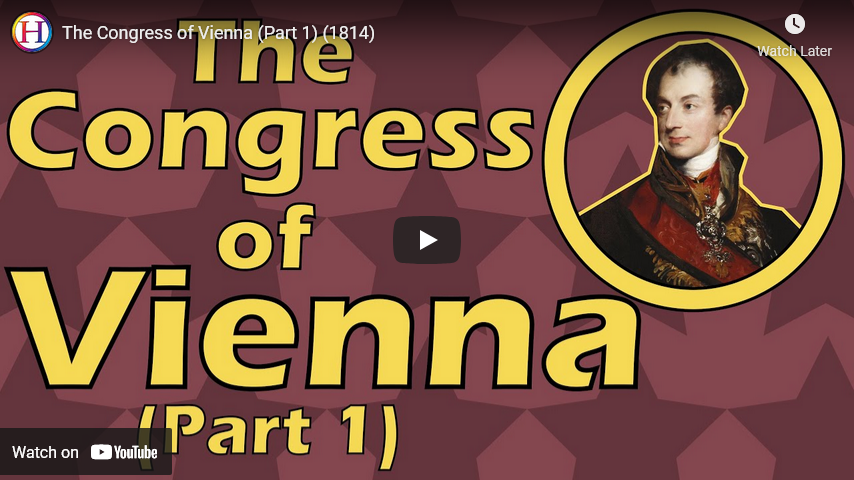
The Congress of Vienna (Part 1) (1814)

Filed under: Britain, Europe, France, History, Military, Russia — Tags: , , , , , , — Nicholas @ 04:00

Historia Civilis
Published 29 Jan 2022

Patreon | http://historiacivilis.com/patreon
Donate | http://historiacivilis.com/donate
Merch | historiacivilis.com/merch
Mailing List | http://historiacivilis.com/mailinglist
Twitter | http://historiacivilis.com/twitter
Website | http://historiacivilis.com

Sources:
Wolfram Siemann, Metternich: Strategist and Visionary | https://amzn.to/3Glc5c8
Eric Hobsbawm, The Age of Revolution, 1789-1848 | https://amzn.to/3zOQWV4
Adam Zamoyski, Rites of Peace: The Fall of Napoleon and the Congress of Vienna | https://amzn.to/3zSpcir
Richard J. Evans, The Pursuit of Power: Europe 1815-1914 | https://amzn.to/3qhFE8G
A. Wess Mitchell, The Grand Strategy of the Habsburg Empire | https://amzn.to/332Sorj
Robert K. Massie, Dreadnought: Britain, Germany, and the Coming of the Great War | https://amzn.to/3r6jllP
—
N. Gash, “After Waterloo: British Society and the Legacy of the Napoleonic Wars”, from Transactions of the Royal Historical Society, vol. 28, 1978, pp. 145-157. | https://www.jstor.org/stable/3679205
The Annual Register, 1815, Preface | https://hdl.handle.net/2027/mdp.39015…
Voltaire, “An Essay on Universal History, the Manners, and Spirit of Nations” | https://amzn.to/34BGbtL
The History of Parliament: The 5th Parliament of the United Kingdom | https://www.historyofparliamentonline…

Music:
“Like,” by Nctrnm
“But Enough About Me Bill Paxton,” by Chris Zabriskie
“I Don’t See the Branches, I See the Leaves,” by Chris Zabriskie
“Orion,” by Josh Stewart
“CGI Snake,” by Chris Zabriskie
“Gown,” by Nctrnm
“Hallon,” by Christian Bjoerklund

We are a participant in the Amazon Services LLC Associates Program, an affiliate advertising program designed to provide a means for us to earn fees by linking to Amazon.com and affiliated sites.

April 27, 2021

QotD: Modern Vienna

Filed under: Europe, History, Quotations — Tags: , — Nicholas @ 01:00

There are four ages of modern Vienna. Before the First World War, it was cultured and rich; from 1918 until the Anschluss with Nazi Germany, it was cultured and poor; from 1938 to the end of the Allied occupation, it was just poor; and from 1955 to the present, it has just been rich.

Daniel Johnson, “The broken circle”, The Critic, 2021-01-09.

March 19, 2021

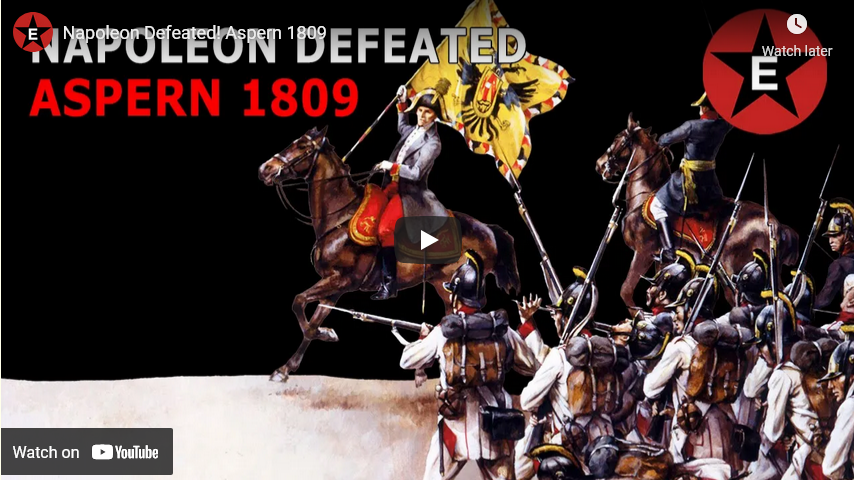
Napoleon Defeated! Aspern 1809

Filed under: Europe, France, History, Military — Tags: , , , — Nicholas @ 02:00

Epic History TV
Published 9 May 2019

In 1809, with Napoleon and his best troops bogged down in Spain, Austria decided to try to get revenge for her humiliation at Austerlitz three years before. Archduke Charles led an invasion of France’s ally Bavaria, but Napoleon raised fresh troops and transformed the strategic situation in four days of hard fighting along the Danube. But having taken Vienna, Napoleon’s overconfidence led to a desperate battle at Aspern-Essling, resulting in his first major defeat as Emperor, and the death of his closest friend.

With thanks to HistoryMarche, check out his channel here: https://www.youtube.com/channel/UC8MX…

Get early access & vote for future topics at Patreon https://www.patreon.com/epichistorytv

Find Osprey books on the Napoleonic Wars https://ospreypublishing.com/

Recommended books on the Napoleonic Wars (as an Amazon Associate I earn from qualifying purchases):
Eggmühl 1809: Storm Over Bavaria https://geni.us/mRvuG
Aspern & Wagram 1809 https://geni.us/4wewlr
French Napoleonic Infantryman 1803-15 https://geni.us/ivLojZD
British Light Infantry & Rifle Tactics of the Napoleonic Wars https://geni.us/02ycFR4
Tactics and the Experience of Battle in the Age of Napoleon https://geni.us/mKAYz
Napoleon the Great http://geni.us/NqMW

Music from Filmstro: https://filmstro.com/?ref=7765
Get 20% off an annual license with this exclusive code: EPICHISTORYTV_ANN

#EpicHistoryTV #NapoleonicWars #Napoleon

February 7, 2020

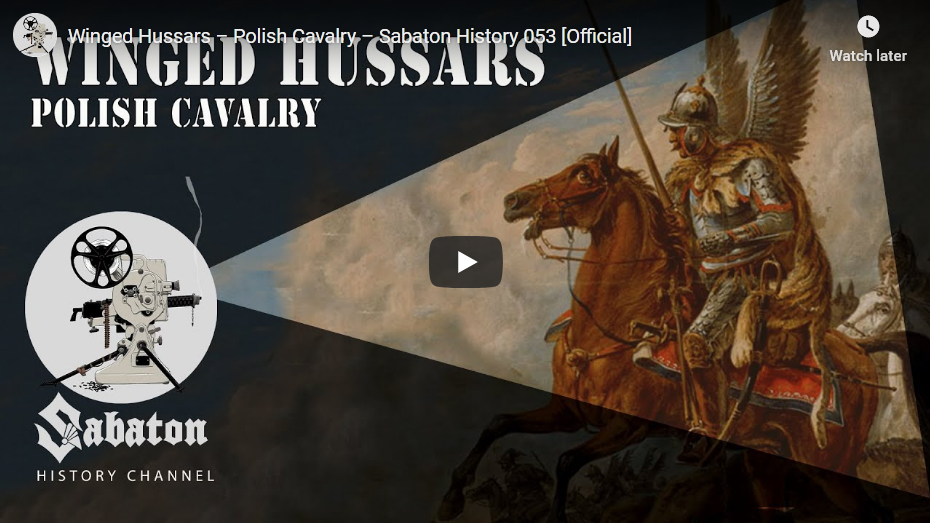
“Winged Hussars” – Polish Cavalry – Sabaton History 053 [Official]

Filed under: Europe, History, Media, Military, Religion — Tags: , , , , , , — Nicholas @ 04:00

Sabaton History
Published 6 Feb 2020

The Winged Hussars have arrived!

By the 17th century it seemed like the golden age of the Winged Hussars had come to an end. Heavily armored, clad in steel and leopard skins, they had once charged over the battlefields with their wings proudly flying in the wind. But as the city of Vienna came under siege by the Ottoman Empire, the Polish Winged Hussars once more set out to meet their foes on the battlefield. Prepare for a thunderous charge that would go down in history.

Support Sabaton History on Patreon: https://www.patreon.com/sabatonhistory

Listen to “Winged Hussars” on the Last Stand Album:
CD: http://bit.ly/TheLastStandStore
Spotify: http://bit.ly/TheLastStandSpotify
Apple Music: http://bit.ly/TheLastStandItunes
iTunes: http://bit.ly/TheLastStandItunes
Amazon: http://bit.ly/TheLastStandAmz
Google Play: http://bit.ly/TheLastStandGooglePlay

Watch the official lyric video of “Winged Hussars” here:
https://www.youtube.com/watch?v=rcYhY…

Check out the trailer for Sabaton’s new album The Great War right here: https://www.youtube.com/watch?v=HCZP1…

Listen to Sabaton on Spotify: http://smarturl.it/SabatonSpotify
Official Sabaton Merchandise Shop: http://bit.ly/SabatonOfficialShop

Hosted by: Indy Neidell
Written by: Markus Linke and Indy Neidell
Directed by: Astrid Deinhard and Wieke Kapteijns
Produced by: Pär Sundström, Astrid Deinhard and Spartacus Olsson
Creative Producer: Joram Appel
Executive Producers: Pär Sundström, Joakim Broden, Tomas Sunmo, Indy Neidell, Astrid Deinhard, and Spartacus Olsson
Post-Production Director: Wieke Kapteijns
Edited by: Iryna Dulka
Sound Editing by: Marek Kaminski
Maps by: Eastory – https://www.youtube.com/c/eastory

Archive by: Reuters/Screenocean https://www.screenocean.com
Music by Sabaton.

An OnLion Entertainment GmbH and Raging Beaver Publishing AB co-Production.

© Raging Beaver Publishing AB, 2019 – all rights reserved.

January 15, 2020

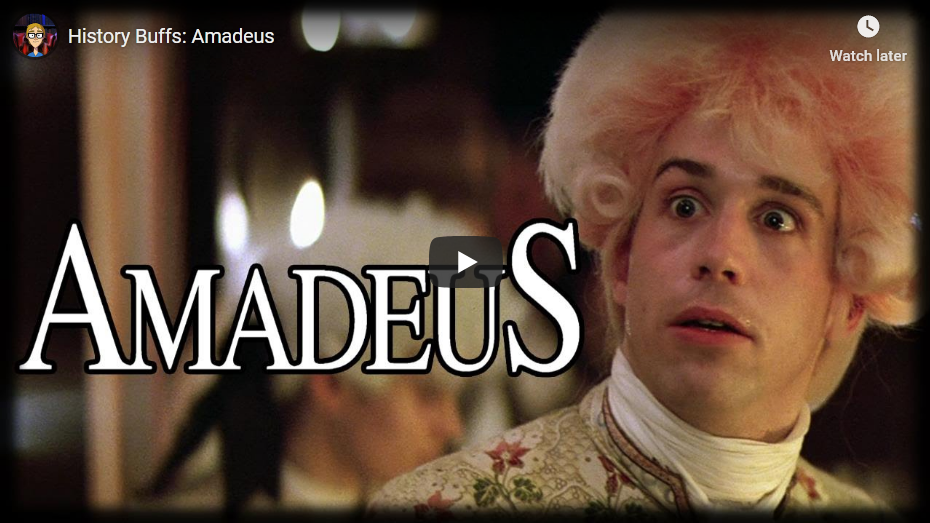
History Buffs: Amadeus

Filed under: Europe, History, Media — Tags: , , , , — Nicholas @ 04:00

History Buffs
Published 3 Dec 2015

In this episode we look at the original Rock n Roll bad boy, Wolfgang Amadeus Mozart! And who says this show isn’t classy and sophisticated 🙂

● Follow us on Twitter: https://twitter.com/HistoryBuffs_

________________________________________­_________________________________

Amadeus is a 1984 American period drama film directed by Miloš Forman, written by Peter Shaffer, and adapted from Shaffer’s stage play Amadeus (1979). The story is set in Vienna, Austria, during the latter half of the 18th century.

The film was nominated for 53 awards and received 40, including eight Academy Awards (including Best Picture), four BAFTA Awards, four Golden Globes, and a Directors Guild of America (DGA) award. In 1998, the American Film Institute ranked Amadeus 53rd on its 100 Years… 100 Movies list.

The story begins in 1823 as the elderly Antonio Salieri (F. Murray Abraham) attempts suicide by slitting his throat while loudly begging forgiveness for having killed Wolfgang Amadeus Mozart (Tom Hulce) in 1791. Placed in a lunatic asylum for the act, Salieri is visited by Father Vogler (Richard Frank), a young priest who seeks to hear his confession. Salieri is sullen and uninterested but eventually warms to the priest and launches into a long “confession” about his relationship with Mozart.

May 19, 2019

Siege of Vienna & Queen Nzinga – Lies – Extra History

Filed under: Africa, Europe, History, Religion — Tags: , , , , , , — Nicholas @ 06:00

Extra Credits
Published on 18 May 2019

Writer Rob Rath talks about all the cool stories and facts we didn’t get to cover in our two special short series on the Siege of Vienna, and the life of Queen Nzinga.
Join us on Patreon! http://bit.ly/EHPatreon

From the comments:

Extra Credits
Timestamps:
2:00 – Demonetization sucks. THANK YOU PATRONS!
7:15 – Istanbul was Constantinople now it’s Istanbul not Constantinople been a long time gone oh Constantinople
11:07 – the arrival of the Winged Hussars wasn’t exactly the same as Rohan answering Gondor’s call for aid
16:20 – Nzinga’s controversial role in slavery
19:25 – what’s next on Extra History?
21:02 – SIX DEGREES OF WALPOLE

Recommended reading:
The Enemy at the Gate: Habsburgs, Ottomans, and the Battle for Europe by Andrew Wheatcroft
The Siege of Vienna: The Last Great Trial Between Cross & Crescent by John Stoye
Hispanics and the Civil War: From Battlefield to Homefront by the National Park Service

Music videos:
Queen Nzinga: https://www.youtube.com/watch?v=N94H6F0WObc

Siege of Vienna: https://www.youtube.com/watch?v=jQ_HV57cgbg

Older Posts »

Powered by WordPress