
One ideology where it’s as true as it is for libertarianism is feminism. Feminism was led by (and greatly improved the life chances of) women like me. It was great for smart, disagreeable, career-focussed women who don’t like or want kids. And yes, just like getting banged up for a bit of weed while harming precisely no-one seriously annoys the kind of smart, self-controlled person who can formulate a (libertarian) policy response to the War on Drugs, so too with women who were uninterested in home and family (or who were same-sex attracted) and found that being circumscribed professionally and romantically really, really rankled.
However, just as most people aren’t members of Heath’s self-control aristocracy, most women do not combine high intellect with disagreeableness and conscientiousness. Some feminists have realised this — albeit in an ad hoc way — and because feminism as a wider movement was/is wedded to blank-slatism, they believed they could shift the dial on what was then called “female socialisation”. That is, they thought it would be possible to make women as a group more closely resemble the able, disagreeable women who were by the 70s and 80s entering the professions, politics, academia, lobbying outfits, and think-tanks.
Or, of course, men. Men more often combine high trait disagreeableness with high trait conscientiousness (although even among males, the combination is rare). This is despite the fact that there are more agreeable women than agreeable men, and more conscientious women than conscientious men.
No woman should be authorized to stay at home to raise her children. Society should be totally different. Women should not have that choice, precisely because if there is such a choice, too many women will make that one. It is a way of forcing women in a certain direction.
“A Dialogue with Simone de Beauvoir”, in Betty Friedan, It Changed My Life: Writings on the Women’s Movement, Random House, 1976, p. 397.
de Beauvoir’s suggestion is both authoritarian and hilarious, and represents a panicked response — not unlike the howls from Marxists when it became clear the proletariat was uninterested in revolution — to women unlike her. While it’s true (at least historically) that there were a number of strands to feminism — including a pro-motherhood one — careerist feminism finished up dominating all the others. I’m old enough to remember campaigns for wages for housework. If some old school wonks got hold of this idea, it could form part of a suite of policies directed to increasing the fertility rate.
You don’t see those feminist campaigns any more, though. They’ve been submarined. As I say, I’m old.
Women throughout the developed world — notoriously — tell pollsters they want more children than they have. Usually three is the preferred number, as opposed to two or one. The so-called “gender wage gap” exists because women have children.
Economists often decry this finding as a case of stated versus revealed preferences: what people do is more salient than what they say, something known since Roman times. Hence the Stoic quip acta non verba (“deeds not words”). However, even if fully half the “I want more kids than I have” response served up to pollsters is nothing more than windy stated preferences, that still leaves a lot of unborn but wanted children. Feminism, as Louise Perry is fond of pointing out, has simply dropped the ball on this one.
This insight is, I recognise, a genuine example of ad hominem. It suggests that people plump for ideologies that will give them a leg-up, and do so deliberately. That said, political ideology is, like conscientiousness, heritable. Henderson’s and Heath’s insight reminds us that everything social is emergent from the biological (the basis of Lorenzo Warby’s essays on this Substack). That’s why libertarianism is the way it is, and feminism is, and probably other ideologies too.
Helen Dale, “People Unlike Me”, Not On Your Team, But Always Fair, 2024-05-29.
October 25, 2026
QotD: Feminism as a luxury belief
September 28, 2026
QotD: “This is revealed preferences with an erection”
As far back as we have records, and into the present day, anywhere that women are sold as pleasure slaves blonde blue-eyed girls with big racks have been the most in demand.
Our most extensive documentation on this is from the Ottoman Empire. Their slave-takers raided as far north as the west coast of Ireland and even Iceland because a handful of Sidneys could fund years-long expeditions — ships, weapons, provisions, hundreds of men — from the price they fetched on the auction block. And net a healthy profit, too.
But the pattern is everywhere — cross cultural, cross-racial. Evolutionary biologists think they know why: chicks who look like le Sweeney are radiating signals of youth and immune-system effectiveness and general reproductive fitness. Blonde hair fades with age, clear skin doesn’t hide blemishes that reveal vulnerability to infection, and I hope nobody reading this needs any education about breast-to-waist-to-hip ratios. If you do, ask an AI for an explainer.
I don’t know that anybody’s explained the allure of blue eyes satisfactorily yet. We know they’re a huge win in the sexual selection game, because of the rapidity with which they propagated. A single point mutation, probably less than 10,000 years ago in Europe, spread like wildfire despite the fact that lack of melanin granules in the iris is recessive.
There’s not much that can reveal the instinctive desires of men more clearly than what they’re willing to pay to own women who light up their limbic systems. This is revealed preferences with an erection.
It’s not just yesterday, either. Every few years somebody busts a semi-covert slave market in some shithole like Mauritania or Afghanistan and it’s the same old story. The highest value merchandise is always blonde white girls, usually trafficked from Eastern Europe.
So, yes, when old-school racists ranted about darkies lusting for the flower of white womanhood, they were not wrong. Because, well, basically everybody lusts for the flower of white womanhood. It seems to be wired in.
ESR, Twitter, 2025-07-30.
August 15, 2026
QotD: “The progressive is a walking paradox”
If I loudly claim to love vanilla ice cream, yet every time I return from the Mr Whippy van I’m holding a choc-ice, my revealed preference is evidently for chocolate — not vanilla.
Thus the truth of a person’s preferences is revealed through their actual choices and behaviour, not by what they claim to prefer.
It’s unfortunate we can’t simply listen to their words, but they are so oriented toward the external, the aesthetic, and the performative (“Theater Kid Progressivism”) that we must instead look at their proximal behaviours — where they actually choose to live and raise their families, for example, to extrapolate backwards their true feelings on mass migration and its consequences.
This is the lens through which we should try to understand our Progressive class.
The bitterest irony, the irony of ironies, is this: progressives, especially those who voted for it, self-evidently do not feel at home in the societies they helped create.
If they were genuine believers, they would live contentedly amidst their new friends.
Instead, they scuttle off into the countryside, the leafy suburbs, or gated enclaves, abandoning the very demographic transformation they imposed on others.
It is often said that if liberals didn’t have double standards they wouldn’t have any at all, but while this is very funny (and true), there’s more to it.
It reveals a profound non-confluence between their stated attitudes and their actual behaviours, indicative of extreme cognitive distortion.
They protest performatively that open borders and rapid demographic change are a universal good, even moral imperatives and (admittedly less often nowadays) sources of strength.
Yet when it comes to their most intimate revealed preference — where they opt to live and raise their families — they consistently prioritise homogeneity, good schools, and cultural familiarity.
They lobby and vote without end for policies that maximise immigration into lower- and middle class neighbourhoods, then abandon those very communities for pastures anew, safely insulated by postcodes and house prices.
Their revealed preference is that do not want to live in the Canada (or Britain, or America, or Europe) they are busily helping to construct.
They enjoy the vibes, the moral status, the Instagram aesthetics, while quietly falling back to the leafy, high-trust environments their grandparents took for granted.
Progressives love to speak of taboos (indeed if there is a pastime more alluring and intoxicating to the progressive than “breaking taboos”, I am yet to come across it, but I digress) yet is the greatest taboo of all right in front of us after all, carrying a basket of organic fruit and veg from Waitrose?
To interrupt the Progressive in the midst of his communal dream state, to turn our collective eye away from the brave new world they are building for us and to instead look inwards, to look the Liberal cuckoo directly in the eye and put words to the disparity between their words and their actions …
The subject of lawful and legal deportations is increasingly mainstream, yet what of urban renewal and rewilding by means of progressive importations?
The Progressive is a walking paradox, he is both the centre of attention and the ghost at the feast all at once.
Æthelstan, The social media site formerly known as Twitter, 2026-05-14.
March 7, 2026
Reported preference versus revealed preference – know the difference
On the social media site formerly known as Twitter, Devon Eriksen encapsulates the experiences of so many companies who found a male-oriented market and then they try to make their offerings more appealing to women:
Most business suicides are induced by not understand[ing] the difference between reported preference and revealed preference.
If you run Testosterone Studios, maker of Angry Muscular Axe Guy Kills Demons in Hell, you might notice after a while that not very many women buy your games.
Since your stockholders have a profound moral objection to other people having money and not giving it to them, they want you to correct this problem, stat.
They want you to make Angry Muscular Axe Guy Kills Demons in Hell 2 sell to men AND women. So you sigh, shrug your shoulders, hire a bunch of female consultants, and ask them “What do women like?”
“Feminism!”
“Girlbosses!”
“Strong Female Characters effortlessly outdoing men at everything!”
“Gay stuff!”
So Testosterone Games dutifully makes Petite Feminist Girlboss Replaces Angry Muscular Axe Guy, hoping that men will buy it because they bought the first one, and girls will buy it because it panders to what they were told girls want.
Of course, nobody buys it. The men don’t buy it because it’s not what they liked in the first one, and women don’t buy it because women couldn’t care less about games where you fight demons in hell.
If, instead of asking a bunch of consultants what women like (reported preference), they had looked at games women actually buy (revealed preference), they would have seen something very different.
“Fruit Matcher 3000 for iPhone.”
“Point and Click Alice in Wonderland Studio Ghibli Adventure”
“Something Something Hogwarts.”
And they would have realized, had they two brain cells to rub together, that you can’t please everyone, because some people hate exactly what other people like.
If you want more money, look at who is already buying your product, and see if you can make them like the next one better. Because I guarantee you aren’t already selling to every single male on the planet.
And don’t hire video game consultants.
They don’t know how to sell games, and they don’t care, because they don’t want to sell games. They just hate men, and want to ruin things men like. If you hire them, they’re going to have their fun, cash your check, and ride off into the sunset, while you lose your business.
And indie studios, who know whether they are making Aliens Must Die or Barbie Horse Adventures, will replace you, which is the free market operating as intended.

February 1, 2026
Don’t listen to what they say, watch what they do
On the social media site formerly known as Twitter, John Carter reacts to an Australian race-grievance grifter “Race Discrimination Commissioner” bloviating talking about Australia as “stolen land”:
The implicit meaning of this framing is that Anglos stole the land so it’s only fair for them to give hundreds of millions of Hindoids the opportunity to steal the land.
Revealed preference demonstrates this. If he believes the land is stolen, and he believes theft is morally wrong, then he would not accept a salary of hundreds of thousands of dollars from the Australian government (this is blood money), and he wouldn’t live in Australia.
Since he doesn’t do either of those things, he either doesn’t believe what he’s saying, or he does but he doesn’t think theft is bad, in which case he’s simply trying to emotionally manipulate white Australians by using their own morality against them in order to guilt them into continuing to allow him and people like him to parasitize the Australian people.

He then elaborates:
It really cannot be emphasized enough how dishonest all of this is.
America stole land from the natives, purchased some African farm equipment, and has always been a “nation of immigrants”, therefore “open the borders and give us your country”.
Canada is built on stolen land, sent some kids to boarding school, and has also always been a “nation of immigrants”, therefore “Let my people in, saar”.
Australia, same narrative as Canada.
New Zealand, same as Australia.
Britain did an imperialism, therefore “your country belongs to us now, saar”.
France, same as England.
Spain, same as France.
Ireland never had an empire and hasn’t had slaves since the Viking Age, and indeed was itself colonized by England … therefore Ireland must accept unlimited migration in solidarity with other post-colonial countries.
Germany was too mean to Jews for a few years, therefore Germans must abolish themselves and give their country to North Africans.
The only peoples the Swedes ever conquered or enslaved were neighbouring Europeans, but Sweden might have sold some iron that might have gotten used on some slave ships a few centuries ago, therefore must open its borders to Bomalians and give them all the rape toys they can penetrate.
The justification differs, but the conclusion is always the same: open borders and ethnic replacement.
The uniformity of the repugnant conclusion indicates that these narratives are formed by reasoning back from that tendentious repugnance, with the arguments tailored to national conditions using whatever specific historical circumstances are handy, with the intent of emotionally manipulating native populations into laying down their arms, foregoing resistance, and placidly accepting the loss of their countries to the hundreds of millions of third-worlders intent on flooding every developed white country on the planet.
The people making these arguments don’t believe a word that they say. Their seething resentment for Europeans is entirely real, but this is almost entirely an inferiority complex, humiliation at having been so easily conquered and then taught to eat and wipe with something other than their hands. They don’t believe that slavery or conquest are wrong: if they did, they wouldn’t still practice slavery, and they wouldn’t be trying to conquer the West in the guise of beggars, by shamelessly playing to our pity and misplaced guilt. They say these things in order to trick you by playing on a conscience they don’t have themselves. It’s a sales tactic, and they’re selling you annihilation.
April 17, 2024
Pay no attention to what “tax me more” folks say – instead watch what they do
One way for an a wealthy person to get a lot of free media attention is to performatively declare that they should be paying more taxes. This ostentatious virtue-signalling is frequent enough that Tim Worstall has been writing the occasional article about it for quite some time:
For there is this:
Public donations to pay off the national debt have hit their highest level in at least a decade amid growing concern about the UK’s soaring debt mountain.
Members of the public handed almost £700,000 over to the Government through six individual bequests and donations last year, according to Debt Management Office (DMO) figures obtained via a Freedom of Information request.
The amount for the 2023-24 financial year was the highest in at least a decade, with the biggest single payment to help pay off Britain’s £2.65 trillion debt pile coming from a £500,000 bequest, according to the DMO, which did not provide names of individual donors.
One way to think of this — an entirely correct way to think of it too — is that an entire 6 people last year thought that inheritance tax was too low. Which, out of the about 600k deaths (not looked it up but that’s right order of magnitude, it’s not 6 million and it’s not 60k) is not actually a lot. 0.001% in fact.
One of the grand insistences of economics is that watching what people do gives more information about their true beliefs than listening to what they say – revealed preferences, not expressed. So, by what people actually do we have 0.001% of the people leaving estates of any size whatever who think that the tax on estates is too small. This is not a large majority in favour of higher taxes upon estates being left.
But back to the far more important subject, me.
As far as the UK is concerned I did start this off. The reporting on how much people voluntarily leave to the government. Who pays extra that is – who makes a voluntary donation to government. Back in 2006 in fact, back in the depths of the Brown Terror:
LAST YEAR there were five people in Britain who thought that their taxes were too low. No, this isn’t the number of people who have called for higher taxes. Rather, it is those who were so convinced of the righteousness of state spending that they voluntarily sent extra money to the Treasury.
The Americans have been doing this since 1843. It’s always been possible to pay extra to HM Treasury — Stanley Baldwin actually handed over one fifth of his estate while he was still alive. Admittedly, he was Financial Secretary to the Treasury at the time and was asking for donations to aid in paying down war debt but still, props for money where mouth is.
Cheques, by the way, should be made out to “The Accountant, HM Treasury”, and sent to 1 Horse Guards Road, London SW1A 2HQ. A 2nd-class stamp is sufficient and you are encouraged to add a covering note so that your donation is spent in the way you like.
I wrote that piece for The Times simply because I thought it would be a cute thing to do — and I wanted the £200 that went with writing it. As ever with freelance journalism, my money is important.
I also know that that was the first piece that appeared in UK journalism on this point. For when I asked the Treasury they’d no idea at all how many had in fact paid extra. Took them months to find out too. The donations had happened before, but no one had been writing about it. At least, not since Baldwin’s generation.
His Majesty King Charles, in right of Canada, would also be happy to accept any unwanted sums of money above your mandatory tax rate here. Go wild, wealthy and patriotic Canadian multi-millionaires!
March 18, 2024
Slimy “nudgers” want to manipulate the food you buy by “denormalizing” what you enjoy
Christopher Snowden on the self-imagined elites’ desire for you dirt people to eat a different diet than you would voluntarily choose for yourselves:
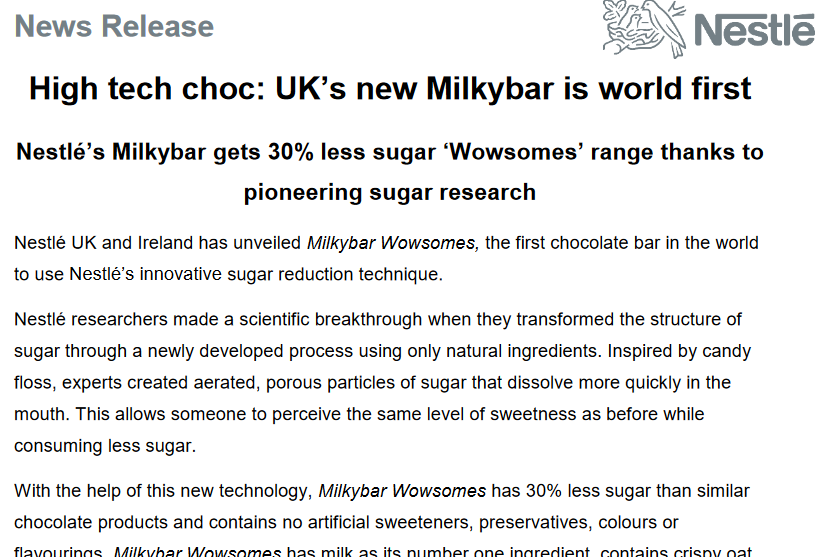
On Thursday, Legal & General Investment Management’s senior global environmental, social and governance (ESG) manager told Nestlé to sell less sugar. It’s not for want of trying. In 2018, Nestlé launched Milkybar Wowsomes with 30% less sugar than a Milkybar. The company described it as a “great tasting product” that was the result of “a scientific breakthrough” but when it was discontinued in 2020, Nestlé lamented that demand for it had been “underwhelming”. In 2021, it launched a non-HFSS version of Shreddies called Shreddies The Simple One which contained just four ingredients. The company said:
We know that consumers are looking to eat more healthily, especially following the pandemic. Shreddies The Simple One is an exciting new addition to the breakfast table that caters to growing demand, with a delicious taste consumers will love.
Consumers did not, in fact, love it and it was withdrawn from sale the following year.
Today, the King’s Fund has added its voice to the call for mandatory reformulation targets enforced with heavy fines. The King’s Fund’s job has traditionally been to get more money for the NHS but it is under new management with Sarah Woolnough, a former trustee of Action on Smoking and Health and former CEO of Cancer Research UK, so it is now involved in lifestyle regulation.
Compelling food manufacturers to strip out large amounts of fat, salt and sugar would help “denormalise” the routine consumption of unhealthy food, Sarah Woolnough, the chief executive of the King’s Fund, told the Guardian.
The word “denormalise” is taken straight from the anti-tobacco playbook. See how it works yet?
As the Guardian points out, the King’s Fund has done some polling which finds that reformulation is hugely popular in the abstract.
Overall, 67.3% of Britons agree that the government should require companies to reduce the amount of fat, salt and sugar they put in their products, a survey for the influential health thinktank undertaken by Ipsos Mori found. Only 5% disagreed.
This is a beautiful example of the difference between stated preferences and revealed preferences. People love the idea of fat, salt and sugar being removed from food. Who wouldn’t, so long as the food tasted the same? But it doesn’t taste the same. It tastes considerably worse. And when reformulation isn’t physically possible — for example, with nearly all confectionery, biscuits and cakes — the only way to meet the target is by shrinking the product. Some chocolate bars are now so small that a dual pack is the default (and so, as with the sugar tax, big business is doing rather well out of it). And, yes, that is because of the government’s reformulation scheme.
If pollsters asked people if they are in favour of shrinkflation, I doubt many would say yes. As for reformulation, the only way to get an informed opinion would be to do a taste test using the “before” and “after” versions of popular food products and ask people whether the government should mandate the reformulated version and ban the original version. Again, I doubt many people would give unqualified support for reformulation.
Fortunately, we don’t need to carry out such experiments because the public have been offered reformulated products many times in the real world. Sometimes they become popular — in which case there is no need for government coercion — but very often they are a flop, and in many cases they cannot even be attempted.
The British public have put up with a lot from meddlesome puritans in the last 20 years, but I strongly suspect that if the government tried to force us to eat the likes of Milkybar Wowsomes and Shreddies The Simple One, the thin blue line would finally snap.
September 6, 2023
Some key planks from Scott Alexander’s presidential platform
I was a bit surprised to find that Scott Alexander has decided to toss his hat into not one, but two party primaries for the 2024 presidential nomination:
The American people deserve a choice. They deserve a candidate who will reject the failed policies of the past and embrace the failed policies of the future. It is my honor to announce I am throwing my hat into both the Democratic and Republican primaries (to double my chances), with the following platform:
Ensure Naval Supremacy And Reduce Wealth Inequality By Bringing Back The Liturgy
The liturgy was a custom of ancient Athens. When the state needed something (usually a new warship) it would ask for volunteers among its richest citizens. Usually one would step up to gain glory or avoid scorn; if nobody did, the courts were allowed to choose the richest person who hadn’t helped out recently. The liturgist would fund the warship and command it as captain for two years, after which his debt to the state was considered discharged and he was given a golden crown. Historians treat the liturgy as a gray area between voluntary service and compulsory taxation; most rich Athenians were eager to serve and gain the relevant honor, but they also knew that if they didn’t, they could be compelled to perform the same service with less benefit to their personal reputation.
Defense analysts warn that America’s naval dominance is declining:
Only 25 per cent of America’s 114 commissioned surface combatants (cruisers, destroyers, and littoral combat ships) are less than a decade old. By comparison more than 80 per cent of China’s 141 destroyers, frigates, and corvettes have been commissioned in the past decade. In the same time period, the United States commissioned 30 surface combatants … The nearly 600-ship Navy of the late 1980s deployed only 15 per cent of the fleet on average. Today, with fewer than 300 ships, the US Navy deploys more than 35 per cent to service its global missions, contributing to a material death spiral.
So America is short on warships. But it is very long on rich people with big egos. An aircraft carrier would cost the richest American billionaires about the same fraction of their wealth as a trireme cost the richest Athenian aristocrats. So I say: bring back the liturgy!
(source)
The American rich already enjoy spending their money on exciting vehicles — yachts for the normies, rockets for the more ambitious, Titanic submersibles for the suicidal. Why not redirect this impulse towards public service? Imagine the fear it would strike into the hearts of the Chinese when the USS Musk enters Ludicrous Mode in the waters off the Taiwan Strait, with Elon himself at the wheel. Imagine how efficiently the USS Jeff Bezos will deliver its payloads! And does anyone doubt that billionaires – usually careful to avoid taxes — will jump at the chance to do this?
The Athenians had a parallel liturgy for rich people who would select and sponsor theater productions, but I think we can skip this one for now.
[…]
Legalize Lying About Your College On Resumes
Colleges trap Americans in a cycle of burdensome loans and act to reinforce class privilege. I have previously advocated making college degree a protected characteristic which it is illegal to ask people about on job applications. But this would be hard to enforce, and people would come up with other ways to communicate their education level.
So let’s think different: let’s make it legal to lie about your college on resumes (it is already not technically illegal to lie on a resume, but companies can ask for slightly different forms of corroboration which it is illegal to lie on). Everyone can just say “Harvard”, and nobody will have any unfair advantage over anyone else.
Start An Internet-Pop-Up Trade War With The European Union
For too long, Americans have groaned under the weight of foreign cookie-related-pop-ups which they and their elected representatives have no control over. It’s time to fight back.
When I am elected, I will mandate that all American websites serve popups to European Union residents explaining why the GDPR is annoying and why it affects even Americans who have no say in it. If the Europeans want to be able to access Google, Facebook, Twitter, or any other US-based site without clicking “I understand” every time they reload it, they’ll have to pressure their government to do something about GDPR.
Appoint Donald Trump Constitutional Monarch
This would require a constitutional amendment, but I’m sure I could convince enough people.
The British experience suggests that the role of a constitutional monarch is to flaunt how rich they are, get 24-7 news coverage regardless of whether or not they do anything interesting, and have scandals. Donald Trump is the best person in the world at all three of these things
Trump wants to be on top, but is not that interested in governing. Meanwhile, American liberals (by revealed preference) want to continue thinking about him every hour of every day forever, but also don’t want him to govern. Constitutional monarchy would satisfy everyone’s preferences. If Trump is destined to destroy democracy — and everyone agrees that he is — let’s make it happen as gently and non-destructively as possible.
Obviously the royal family can’t participate in regular electoral politics, which means no Trump would ever be able to run for office ever again. This is the only way we are ever getting rid of them, you know this is true, please don’t throw away this chance.
I would support reverse primogeniture-based inheritance — ie the youngest son takes the throne — just so we can have a “King Barron”.

March 30, 2023
QotD: Revealed preference in the teenage hellscape of high school
Robert Stacy McCain, “Conflicting Signals”, The Other McCain, 2019-05-23.
August 9, 2020
QotD: The economic concept of “revealed preferences”
Now, you can’t help but notice that there is a disparity between those who say that taxes should be higher and those who act as if they should be. Clearly, an individual who really believes that the Government is more effective at spending his money would voluntarily offer up more than the legal minimum of taxation. That we have fewer people acting in this manner than are to be found writing columns and making speeches calling for higher taxation shows a certain gap, does it not, between public utterances and private actions? Why, we could make such donations a litmus test for those believers in higher taxation and state spending who want to compel all of us to pay more. Only those who show their commitment by sending a cheque to the Treasury should be treated seriously.
Cheques, by the way, should be made out to “The Accountant, HM Treasury”, and sent to 1 Horse Guards Road, London SW1A 2HQ. A 2nd-class stamp is sufficient and you are encouraged to add a covering note so that your donation is spent in the way you like.
Tim Worstall, “Show us your cheques”, Times of London, quoted in Continental Telegraph, 2020-05-07.
December 10, 2019
“NATO [reminds] me of the pre-reformation medieval church. Their stated objectives sound Godly and noble but their true purpose is to keep a bloated priesthood in luxury”
NATO still exists, decades after the threat it was designed to counter dissolved. Tom Paine wonders why this is so:

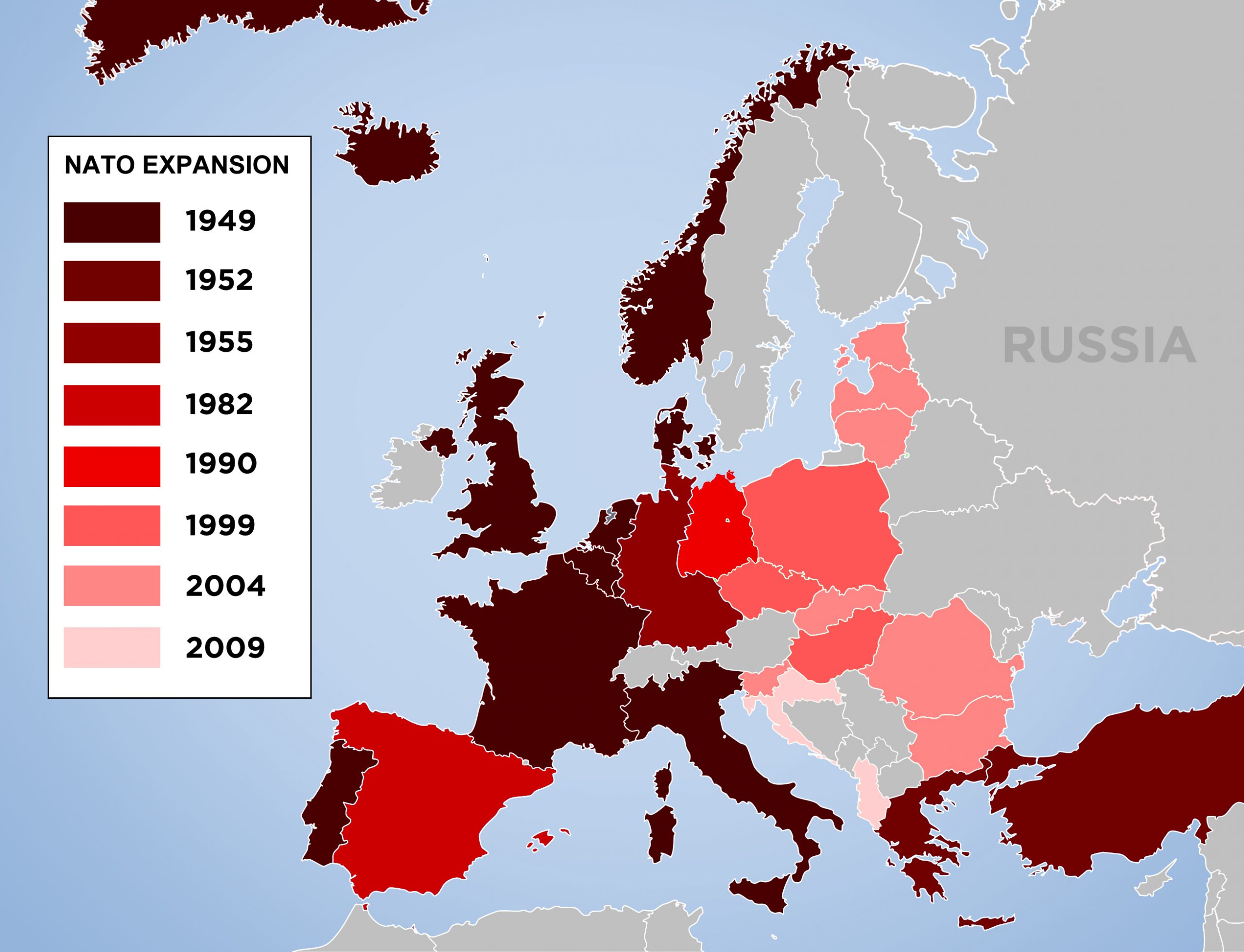
The dismal science teaches us to distinguish between peoples’ stated preferences (often virtue-signalling lies) and their revealed preferences (how they spend their money). All NATO members say they believe in the alliance. Only four — the USA, the UK, Poland and Greece — meet their obligation to contribute more than 2% of their GDP. If you’re wondering, Greece has only accidentally met that target because of the catastrophic fall in its GDP.
Opinion polls and my own experience of the bitter, sneering anti-Americanism of my otherwise delightful continental chums suggest that as usual the revealed preference is the truth. The Germans and French would not go to war in defence of America or Britain if we were attacked. Britain was attacked, when the Falklands were invaded, and our “allies” and “friends” sold arms to our enemies and gave them all kinds of moral support. Remember the Welsh Guards (my grandfather’s old regiment) massacred by Exocets fired from Mirages? The USA has often gone to war since the alliance was formed and mostly only British warriors fought, died or were injured alongside theirs.
Germany, France and their freeloading friends have quite simply been taking the piss from the outset. They take the Americans (and us Inselaffen and rosbifs) for mugs. They plot to form an EU Army and regret that Brexit means they won’t be able to continue to rely on English-speakers as their cannon-fodder.
The continued existence of NATO has fuelled the epic paranoia of Russia’s military/intelligence apparatus. Desperate not to be decommissioned the generals and chekists have claimed that “the West” they grew up opposing is intrinsically hostile — rather than, in truth, insultingly indifferent — to Mother Russia. Their only “proof” of this nonsense was NATO.
[…]
NATO is yet another of many examples of the truism that, once a bureaucracy acquires a competence, it will never disband. It continues because it can. The political and economic ills that drove the creation of what is now called the EU have long since faded into history. But the plump parasites of its apparatus have repeatedly repurposed it. Britain is a paradise of social, ethnic and sexual equality compared to the days when the precursors of the Equalities Commission were formed but its staff will find imaginary evils by the thousand before they’ll return to productive labour. Marx would gasp at the generosity of Britain’s welfare state and marvel at the lifestyle of even the poorest Brit and yet trivial micro aggressions are enough to sustain the revolutionary fervour of Marxist academics desperate to live as idly and unproductively as the man himself.
June 27, 2019
“Raise our taxes!” cried the hypocritical virtue signallers
We’ve been over this ground before. Some very rich people are getting fawning media coverage for their “selfless”, “virtuous” demand that the government raise their taxes. Except they’re far from selfless: they’re demanding that other people be forced to pay more tax, but they’re very much not putting their own money where their bleating mouths are. Most governments are happy to accept more money from you than your formal tax liabilities:
- The Canadian federal government
- The British government
- The US federal government
- The province of Ontario
- The City of Toronto
… are all very eager to accept your contributions. But most people don’t take advantage of this mechanism, especially the ones garnering headlines for their “altruism”. Because they’re virtue signalling, and almost certainly don’t actually want to be taxed more. Don’t believe what people merely say they want, watch what they actually do (economists call this “revealed preference“). Hypocrites, the lot of them.

June 9, 2019
People who call for higher taxes are almost always hypocrites
And the numbers prove it:
There are many people who tell us that taxation in the UK is too low. Just think of all the gorgeously bureaucratic things that could be done if only the government had more money! Then there’s the number of people who actually do pay more tax on the basis that they think the government should have more money. The second being a rather smaller number than the first.
Which does bring us to that basic point that economists do insist upon making. Revealed preferences are a much better guide to what people do in fact believe than are expressed. Or, as folk wisdom has it, talk is cheap. That many shout that taxes should be higher – usually to insist that them over there should be taxed more – is interesting and amusing. But the actual number of people who really believe taxes should be higher is the number of people who voluntarily offer up more of their own hard earned to the government.
Which means that, according to the aggregate views and actions of the population of Britain taxes last year were too low by exactly the amount of £11,069. Everyone else is just virtue signalling:
Donations to the Treasury have dwindled in recent years, however, even as the country’s debt remains relatively high. There were just 14 donations and bequests to reduce the national debt in the 2018-19 tax year, totalling £11,069, the UK Debt Management Office said.
That is the revealed preference of us all in aggregate.
It’s not just the UK where the number of people demanding higher taxes don’t actually put their own money where their mouths are — it’s true in Norway, the USA, and even the City of Toronto.
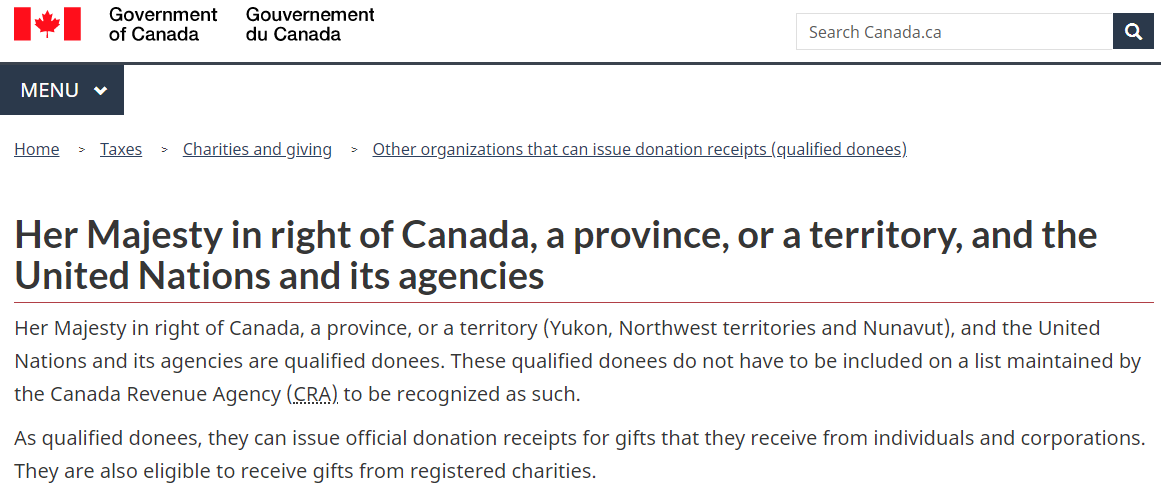
For ultra generous Canadians, Her Majesty will happily accept your donations here. To prove that you’re even more devoted to the challenge, you can even forego the tax credit, too!
November 27, 2017
China discovers that there’s a (very) limited appetite for shared bikes
In the Guardian, Benjamin Haas reports on what at first might seem to be a vast modern art display:

At first glance the photos vaguely resemble a painting. On closer inspection it might be a giant sculpture or some other art project. But in reality it is a mangled pile of bicycles covering an area roughly the size of a football pitch, and so high that cranes are need to reach the top; cast-offs from the boom and bust of China’s bike sharing industry.
Just two days after China’s number three bike sharing company went bankrupt, a photographer in the south-eastern city of Xiamen captured a bicycle graveyard where thousands have been laid to rest. The pile clearly contains thousands of bikes from each of the top three companies, Mobike, Ofo and the now-defunct Bluegogo.
Tim Worstall draws the correct conclusion from the provided evidence:
We want, irrespective of anything else about the economy, a method of testing ideas to see if they work. Does the application of these scarce resources meet some human need or desire? Does it do so more than an alternative use, is it even adding value at all?
Bike shares, are they a good idea or not? The underlying problem being that expressed and revealed preferences aren’t the same. There’s only so far market research can take you, at some point someone, somewhere, has to go out and do it and see.
Excellent, the Commie Chinese have done so. Vast amounts of capital thrown into this, competing bike share companies, hire costs pennies. And no fucker seems very interested. That is, no, large scale bike share schemes don’t meet any discernible human need or desire, they don’t add value, spending the money on something else will increase human joy and happiness better.
And this is excellent, we’ve tried the idea and it don’t work. Now we can abandon it and go off and do something else therefore.
Which is the great joy of market based systems. They’re the best method we’ve got of finding out which ideas are fuck ups.
Long live markets.
August 23, 2017
On the most recent figures, people do want to pay more tax … just not many of ’em, and not very much
Last month, I posted an item on the Norwegian experiment in encouraging taxpayers to pay more than they owed in national tax. More recently, Tim Worstall reports an uptick in UK taxpayers voluntarily sending Her Majesty’s government more than they owed:
… the greater publicity of this ability to pay more has indeed led to more people making those extra voluntary payments. Further, to a more regular reporting of how many do so:
Jeremy Corbyn’s claim that many people want to pay “more tax” to clear the national debt or fund public services has been undermined by official figures.
Figures disclosed by the Government show that just 15 taxpayers made financial gifts worth less than £200,000 to the Government over the past two years.
15 people is of course more than 5.
The Debt Management Office said that £180,393 in 2016/17 and £14,558 in 2015/16 was made in these voluntary payments.
Most of this came from a single bequest of £177,700 in the last financial year. The other donated or bequeathed by the other 14 people were for relatively trivial sums. Someone gave 1p, another gave 3p and a third person handed over £1.84 to the Government.
Although not that much more then if we’re honest about it.
[…]
At which point something economists are most insistent upon. What people say is nowhere near as good a guide to their beliefs as what people do is. Expressed preferences are all very well but the truth comes from revealed preferences. Many might say they will pay higher taxes in order to gain more government. Very few do, so few that we can dismiss the expressed wish as being untrue.
It could of course be true that many would like other people to pay more in taxes, it could even be true that some to many would happily pay more if others did as well. But those are different things, the argument that people wish to pay higher taxes themselves and themselves alone has been tested and been found to be wrong–simply because when the opportunity is made available people don’t.
Once again, for my Canadian readers, it’s totally legal and acceptable to pay Her Majesty in right of Canada any additional monies you might feel are appropriate…


