
Quotulatiousness

August 30, 2026

Why Machiavelli Matters Now by Stephen Bowd and Alexander Lee

Filed under: Books, History, Italy, Politics — Tags: , , — Nicholas @ 05:00

In The Critic, Tom Jones reviews a new work on Niccolo Machiavelli by Stephen Bowd and Alexander Lee:
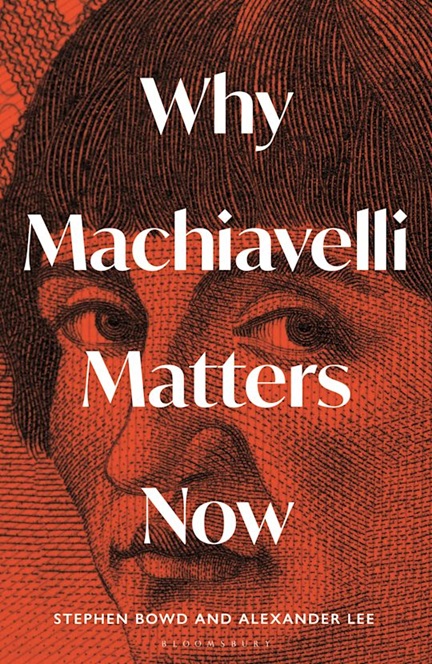
Machiavellian is rather a dirty idea in politics, conjuring tired images of scheming Wormtongues, smoke and mirrors, nights of long knives, Peter Mandelson.

But a new book hopes to change that, by offering us a more rounded view of this important figure, who has been sadly lost — like Sun Tzu and Marcus Aurelius, but thankfully not Edward Gibbon or Carl von Clausewitz — to business bros who buy their books in branches of TG Jones in regional airports.

The first chapter of Why Machiavelli Matters Now is dedicated to the closest thing to methodology the Italian ever laid out. Halfway through The Prince, he writes that “it has seemed only proper to go straight to the effectual truth of the matter [alla verità effettuale della cosa], rather than to how it is imagined”. This, authors Stephen Bowd and Alexander Lee claim, “is perhaps the most crucial sentence in the whole of Machiavelli’s writings”.

But it might be best summarised as wanting to understand things not as they were, but as they came to be — or, more precisely, what caused them to change. That wasn’t all; since he used the concept in relation to a prince’s relations to “his subjects and friends”, it means the specifics of how human behaviour produces political change. This, as the authors note, “was genuinely revolutionary. No one until then had thought of politics in such overtly dynamic terms.”

This, at least, was Strauss’ reading. But as with most of Machiavelli’s work, the thing is more subtle than it first appears. Informed by both Aristotle and Lucretius (it should be obvious at this point how heavily I am cribbing from this interesting, short and consumable book), it was:

    a truth that had to be decided pragmatically, through experience, on the basis of what felt right, rather than what could be rigorously verified – and all too often shaded off into mere verisimilitude. It sought to explain changes of all kinds but was preoccupied above all with the causes of civil unrest and factional struggles, which undermined rulers and republican regimes more than anything else

Understanding the effectual truth was, for Machiavelli, essential if princes were to avoid being either baffled or frightened by political developments. Alas, were our own princes aiming for such lofty ideals of governance.

The short-term impact of widespread LLM usage

Filed under: Business, Media, Technology — Tags: , , , , — Nicholas @ 04:00

I haven’t used any of the latest tranche of LLM agents, although I’m assured by those who do use them that they’re significant improvements over the previous iterations, so I don’t really have an opinion about the state of the “AI Revolution”, but Freddie deBoer has a rare non-catastrophist yet also non-utopian take:

My LLM skepticism is really pretty simple: immense practical consequences have been predicted for them, essentially none of those consequences have come true or can be proven to be imminent, and because reality has a powerful status quo bias it’s not sensible to simply assume that they’re coming. Extraordinary claims require extraordinary evidence and no one has produced such evidence. My position is not a complicated one to understand and shouldn’t be controversial. I’m acting with no more skepticism towards AI claims than I regularly demonstrate towards claims about religion or astrology or New Age woowoo.

And, crucially, I’m not the one who has set the comically over-the-top expectations here; the AI maximalists and their enablers in the media have. Sundar Pichai, who as the CEO of Google is one of the ten most consequential figures in the business world, said that LLMs were a bigger deal than the discovery of fire or electricity. AI maximalists frequently insist that the LLM era is equivalent to or more important than the Industrial Revolution. Dario Amodei, CEO of Anthropoic, went on a podcast from The New York Times (the stentorian, buttoned-down New York Times) and talked about a future where AI colonizes Mars of its own volition. Reports out of Silicon Valley hold that many tech workers sincerely believe that they’re a few years from owning their own asteroid mines and will be so wealthy they essentially step outside of the human experience when it comes to material desire. (If you look, you can find concerning stories on Reddit and similar places of techies spending down all of their saving and taking out large loans, on the theory that in the next few years they will become trillionaires thanks to LLMs.) Scott Alexander seems increasingly unwilling even to countenance the possibility that “AI” is not all its cracked up to be. None of this is serious, let alone convincing. I keep using the example of indoor plumbing to establish a baseline of what actual civilization-altering technological change looks like because that’s what civilization is built on. Videos where AI Chuck Norris beats up AI Vladimir Putin are not on that level.

None of this means that I believe what I am frequently accused of believing, that LLMs have literally no consequences. I don’t think that. I think that the winners of the current AI war will end up with important enterprise software that meaningfully changes how administrative and clerical tasks are completed in the average American workplace. The winners of all of this will make a lot of revenue off of this technology. Certain tasks are going to be presumed to be automated from now on. You’ll ask computers to do things in natural language that you used to do with clicks and commands. And, as we’re already seeing, human culture is going to become even lonelier, less authentic, more crass, less creative, more artificial, and less fulfilling than before. Those are consequences. They’re just, you know, consequences in a fundamentally mundane and boring world. But, yeah. Somebody’s going to make a lot of money on this stuff — conventionally a lot, I mean, not these absurd hundreds of trillionaire dreams, but a lot of money.

The trouble is that, clearly, none of this is enough, precisely because of those outsized expectations. The problems with “LLMs are going to prove to be highly consequential and remunerative enterprise software in a more-or-less unchanged economy and world” are multiple:

  • The amount of money and time and energy and attention and manpower that’s been invested in LLMs is so massive that nothing resembling an ordinary economic return can ever pay it off; with AI now essentially propping up the entire American economy, this is a dire circumstance even though specific firms will survive and eventually thrive.
  • You can’t cure cancer because cancer is not one disease and also it evolves under natural selection pressures and sometimes when we reduce rates of one cancer rates of other cancers rise etc etc etc; interstellar travel is a fantasy thanks to basic rules of physics and physiology, not because we’re not smart enough; asteroid mines make absolutely zero sense in basic economic terms; you can’t upload your consciousness because consciousness is not software but embedded into the very cells of our bodies that inevitably die; we already experienced radical life extension thanks to immense reductions in infant mortality and smoking cessation, the add-another-25-years-to-the-average-lifespan stuff is just a slow unglamorous chipping away; limitless cheap energy is being kept from us by thermodynamics, not how advanced our microprocessors are; on and on, the things we’re demanding failing to materialize because they’re not sensible things to demand.
  • It’s impossible that all of the major players in this field (OpenAI and Anthropic but also Meta and Google and Nvidia and Oracle and Caterpillar and Modine Manufacturing and Constellation Energy …) survive the next decade; some of them are going to fail, and they’re going to cause an immense amount of collateral damage on the way down.
  • Some very informed people will tell you that the future is not LLMs but SLMs, small language models you run locally on your own computer, which would have potentially devastating downstream effects for chip manufacturers, model developers, construction firms, energy companies, etc.
  • We have absolutely no idea about where the next big growth field might be if it isn’t this, and this period of permanently irrational stock market growth (which has underwritten all economic optimism) is dependent, more than anything, on that one organizing story.
  • The emotional investment in AI is even less likely to pay off than the financial investment; a huge number of people, including a lot of people who spend their lives being too cool for this sort of thing, have staked their emotional health on the idea that the mundane world is imminently going to end, but the mundane world never ends and we will all spend the rest of our days downloading apps to pay for parking a single time and emptying the diaper pail and trying to figure out how to avoid the third round of small talk with the same coworker in a day.

Honestly, I think Google’s recent shakeup tells us a lot about where LLMs are going. Google, for a thousand reasons, is the “frontier” company most likely to make a ton of money off of AI in the next decade — and also, they’ve slipped far down the rankings in terms of the best model and they don’t appear to care very much. Google’s Gemini was briefly seen as the class of the field, but in the past year or more they’ve consistently underperformed OpenAI and Anthropic’s best models. (To say nothing of the rapidly-ascending Chinese competitors, which is a whole other thing.) Google’s top AI guys, Demis Hassabis and Jeff Dean, have both moved on from active development of Gemini because they’re more interested in moonshot AI; the implicit concession is that Google doesn’t think that Gemini can ever be “AGI”, that utterly vague, non-falsifiable construct so many people are now chasing. Instead, Google seems to understand that its vast preexisting base of users allows the company to make a mint without any absurd sci-fi premises: when you ask an AI agent to do your grocery shopping, you’ll probably do it through Google in one way or another, and they can take a few cents off of each of those interactions to the tune of billions. It’s not glamorous and it doesn’t allow you to pretend that you’re going to live forever. But pragmatism of that kind is the soil in which modern day fortunes grow. Moonshot Google is long dead, and for a reason.

The unspoken dividing line between “BCE” and “CE”

Filed under: History, Religion — Tags: , , — Nicholas @ 03:00

I’m not a trained historian, so I don’t know if it’s a guild requirement for modern historians to ostentatiously avoid using traditional “BC” and “AD” to denote historical dates or if it’s just another sop to the easily offended like so many other things:

An Olmec head, By Marshall Astor (Life on the Edge), CC BY-SA 2.0, https://commons.wikimedia.org/w/index.php?curid=19349056

Although I work primarily as a computer programmer, my college degree is in History. Over the years, I have retained a high level of interest in history, both recent and ancient.

A few months ago I listened to a Great Courses presentation about the Olmecs — one of the lesser known Central American civilizations — given by Dr. Ed Barnhart. The course lived up to its name and taught much about the history and society, as well as the giant heads, of the Olmecs. However, one thing bothered me about Dr. Barnhart’s presentation.

Dr. Barnhart generally uses CE and BCE for dates. CE stands for “common era” and BCE stands for “before common era”. Other than that fact, CE perfectly coincides with the previous AD and BCE perfectly coincides with BC.

Perhaps Dr. Barnhart should not be singled out. He is not alone in the use of these terms. In fact, the majority of historical presentations these days employ CE and BCE. And it may be that using these terms is not a personal decision; rather, it may be that a department-wide or even university-wide convention.

However, in my view, using CE and BCE instead of AD and BC is not okay. As an (amateur) historian, I believe that it’s bad for history. And as a Christian, I find it a bit offensive. I will probably never have the opportunity to tell Dr. Barnhart why he should not use CE/BCE, but if I did, here’s what I would tell him:

1) The prime commitment of a historian should be to history. A historian should be careful that the information presented is the most accurate, the most complete, and most contextually grounded. CE/BCE fails to be most accurate because it takes an obviously true historical fact — that the currently used Julian/Gregorian calendar is based on the birth of Christ — and obscures that fact. It is not the most complete because there is no way on its own to understand that CE/BCE means to present the same system as AD/BC. To truly understand the system, the AD/BC system would need to be explained. The AD/BC system can stand on its own, but the CE/BCE can only be understood along with AD/BC.

And it lacks context because the terms “common era” and “before common era” give no indication as to what exactly is the demarcation between the two eras. Since CE/BCE gives no referent, a student could reasonably conclude that the dating system is entirely arbitrary. For these reasons, using CE/BCE leaves students or listeners knowing less than they should and perhaps even having a wrong understanding of the dating system. AD/BC preserves important historical information. CE/BCE does not. On the basis of that alone, CE/BCE should not be used by historians who want to be as accurate and complete as possible.

2) Using AD/BC does not require anyone to profess Christianity. Some might say that AD/BC unfairly burdens non-Christians, but the terms Anno Domini and Before Christ are clearly not confessional statements. There is no serious historical dispute that Jesus Christ existed in approximately the time and place given in the Scriptures, and AD/BC merely recognizes that this is the basis for the year numbering system. Anno Domini, or year of the Lord, doesn’t require the user to say “my Lord” or otherwise confess Christianity, just to recognize that the calendar was created by people who did confess Christianity. That is an important fact, not something to be hidden.

The fact is that every calendar starts dating from something, generally from an important event. Some examples are:

  • Roman dating: years counted from the traditional founding of Rome, Ab Urbe Condita, conventionally placed in 753 BC.
  • Hebrew calendar: years are traditionally counted from a calculated date for the creation of the world.
  • Islamic calendar: years are counted from the Hijra, Muhammad’s journey from Mecca to Medina in AD 622.
  • French Republican calendar: years were counted from the establishment of the French Republic in AD 1792.

To use a particular calendar says nothing about one’s religious beliefs.

The Ancient Greeks 05 – The Greeks Fight Back 1 – The Way to Salamis

Filed under: Europe, History, Middle East, Military — Tags: , , , , , , , , — Nicholas @ 02:00

seangabb
Published 29 Mar 2026

Greece: A Brief History, c.700 BC – 500 AD

How did the Greeks recover from what looked like total defeat? In this lecture, we pick up the story at the darkest moment of the Persian invasion. Athens has fallen. The Acropolis has been burned. Xerxes appears on the verge of total victory. And yet, the Greek resistance does not collapse.

We examine the extraordinary political and strategic crisis of 480 BC, including:

– The evacuation of Athens and the transformation of the city into a “nation at sea”
– The internal divisions within the Greek alliance
– Spartan reluctance to defend central Greece
– The decisive leadership of Themistocles
– The strategic importance of naval power

At the centre of this lecture is the question of strategy: should the Greeks abandon the north and defend the Peloponnese, or risk everything in a naval battle at Salamis?

This is the turning point of the war — not yet a victory, but the moment at which survival becomes possible.

QotD: Cant

Filed under: Quotations — Tags: , , — Nicholas @ 01:00

Cant, or humbug, is far worse than hypocrisy: for if by hypocrisy, we mean a failure to live up to our professed moral ideals, most of us are hypocrites, and thank goodness for it. A society in which everyone lived up to his moral principles unswervingly would be intolerable, regardless of whether those principles coincided. Apart from the fact that no mesh of such principles could ever be fine enough to catch all of life’s infinitely variable exigencies, a person of no moral weakness whatever, while perhaps admirable in the abstract, would be an uncomfortable, even frightening, person to meet. It is good not to be a liar; but never to lie is to be an unsocial being, with as much feeling as an automaton.

Without hypocrisy, there would be no gossip; without gossip, there would be no literature and precious little conversation. The dose of hypocrisy necessary to maintain social intercourse is a matter of judgment, for while many individual instances of hypocrisy are reprehensible and properly the subject of adverse comment, and some instances are beyond the pale, hypocrisy is as necessary to human existence as love or laughter. We should never forget La Rochefoucauld’s dictum that hypocrisy is the tribute that vice pays to virtue: but at least he knows that there is a difference. The only effective way to eliminate hypocrisy entirely from human affairs is to have no moral standards.

Cant is more destructive than hypocrisy because it is harder to expose and because a humbug deceives himself as well as others, while a mere hypocrite retains some awareness; he is a rogue rather than a villain. Cant is the vehement public expression of concern for others, or of anger at an opinion casting doubt on some moral orthodoxy that is not, and cannot be, genuinely felt, its vehemence being a shield for insincerity and lack of confidence in the orthodox opinion. Doctor Johnson defined cant as “a whining pretension to goodness, in formal and affected terms.” Cant is contagious, and, when widespread, it creates an atmosphere in which people are afraid to call it by its name. Arguments then go by default; and if arguments go by default, ludicrous, bad, or even wicked policies result.

Theodore Dalrymple, “The Age of Cant”, City Journal, 2020-11-27.

Powered by WordPress



