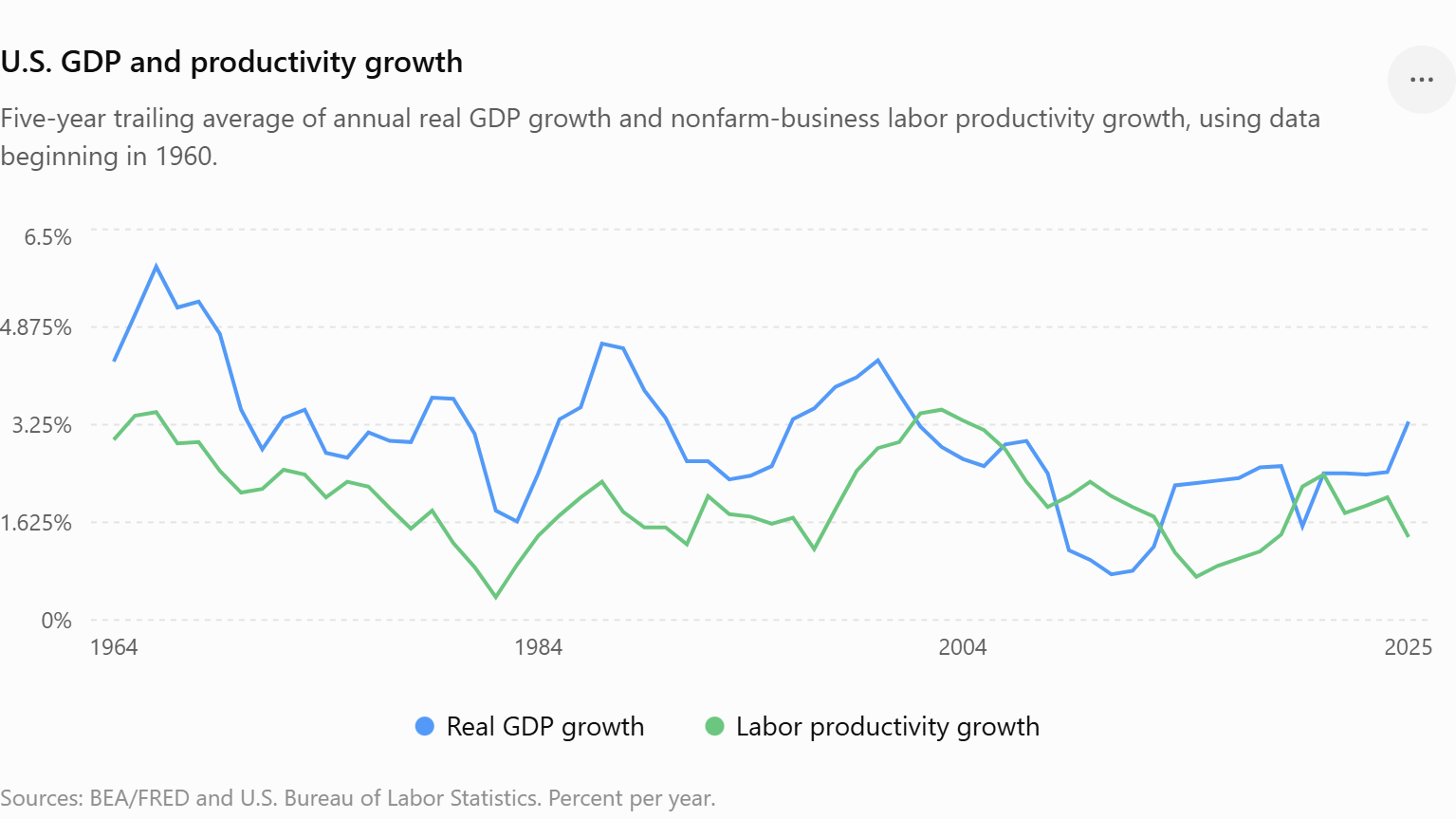
I haven’t used any of the latest tranche of LLM agents, although I’m assured by those who do use them that they’re significant improvements over the previous iterations, so I don’t really have an opinion about the state of the “AI Revolution”, but Freddie deBoer has a rare non-catastrophist yet also non-utopian take:
My LLM skepticism is really pretty simple: immense practical consequences have been predicted for them, essentially none of those consequences have come true or can be proven to be imminent, and because reality has a powerful status quo bias it’s not sensible to simply assume that they’re coming. Extraordinary claims require extraordinary evidence and no one has produced such evidence. My position is not a complicated one to understand and shouldn’t be controversial. I’m acting with no more skepticism towards AI claims than I regularly demonstrate towards claims about religion or astrology or New Age woowoo.
And, crucially, I’m not the one who has set the comically over-the-top expectations here; the AI maximalists and their enablers in the media have. Sundar Pichai, who as the CEO of Google is one of the ten most consequential figures in the business world, said that LLMs were a bigger deal than the discovery of fire or electricity. AI maximalists frequently insist that the LLM era is equivalent to or more important than the Industrial Revolution. Dario Amodei, CEO of Anthropoic, went on a podcast from The New York Times (the stentorian, buttoned-down New York Times) and talked about a future where AI colonizes Mars of its own volition. Reports out of Silicon Valley hold that many tech workers sincerely believe that they’re a few years from owning their own asteroid mines and will be so wealthy they essentially step outside of the human experience when it comes to material desire. (If you look, you can find concerning stories on Reddit and similar places of techies spending down all of their saving and taking out large loans, on the theory that in the next few years they will become trillionaires thanks to LLMs.) Scott Alexander seems increasingly unwilling even to countenance the possibility that “AI” is not all its cracked up to be. None of this is serious, let alone convincing. I keep using the example of indoor plumbing to establish a baseline of what actual civilization-altering technological change looks like because that’s what civilization is built on. Videos where AI Chuck Norris beats up AI Vladimir Putin are not on that level.
None of this means that I believe what I am frequently accused of believing, that LLMs have literally no consequences. I don’t think that. I think that the winners of the current AI war will end up with important enterprise software that meaningfully changes how administrative and clerical tasks are completed in the average American workplace. The winners of all of this will make a lot of revenue off of this technology. Certain tasks are going to be presumed to be automated from now on. You’ll ask computers to do things in natural language that you used to do with clicks and commands. And, as we’re already seeing, human culture is going to become even lonelier, less authentic, more crass, less creative, more artificial, and less fulfilling than before. Those are consequences. They’re just, you know, consequences in a fundamentally mundane and boring world. But, yeah. Somebody’s going to make a lot of money on this stuff — conventionally a lot, I mean, not these absurd hundreds of trillionaire dreams, but a lot of money.
The trouble is that, clearly, none of this is enough, precisely because of those outsized expectations. The problems with “LLMs are going to prove to be highly consequential and remunerative enterprise software in a more-or-less unchanged economy and world” are multiple:
- The amount of money and time and energy and attention and manpower that’s been invested in LLMs is so massive that nothing resembling an ordinary economic return can ever pay it off; with AI now essentially propping up the entire American economy, this is a dire circumstance even though specific firms will survive and eventually thrive.
- You can’t cure cancer because cancer is not one disease and also it evolves under natural selection pressures and sometimes when we reduce rates of one cancer rates of other cancers rise etc etc etc; interstellar travel is a fantasy thanks to basic rules of physics and physiology, not because we’re not smart enough; asteroid mines make absolutely zero sense in basic economic terms; you can’t upload your consciousness because consciousness is not software but embedded into the very cells of our bodies that inevitably die; we already experienced radical life extension thanks to immense reductions in infant mortality and smoking cessation, the add-another-25-years-to-the-average-lifespan stuff is just a slow unglamorous chipping away; limitless cheap energy is being kept from us by thermodynamics, not how advanced our microprocessors are; on and on, the things we’re demanding failing to materialize because they’re not sensible things to demand.
- It’s impossible that all of the major players in this field (OpenAI and Anthropic but also Meta and Google and Nvidia and Oracle and Caterpillar and Modine Manufacturing and Constellation Energy …) survive the next decade; some of them are going to fail, and they’re going to cause an immense amount of collateral damage on the way down.
- Some very informed people will tell you that the future is not LLMs but SLMs, small language models you run locally on your own computer, which would have potentially devastating downstream effects for chip manufacturers, model developers, construction firms, energy companies, etc.
- We have absolutely no idea about where the next big growth field might be if it isn’t this, and this period of permanently irrational stock market growth (which has underwritten all economic optimism) is dependent, more than anything, on that one organizing story.
- The emotional investment in AI is even less likely to pay off than the financial investment; a huge number of people, including a lot of people who spend their lives being too cool for this sort of thing, have staked their emotional health on the idea that the mundane world is imminently going to end, but the mundane world never ends and we will all spend the rest of our days downloading apps to pay for parking a single time and emptying the diaper pail and trying to figure out how to avoid the third round of small talk with the same coworker in a day.
Honestly, I think Google’s recent shakeup tells us a lot about where LLMs are going. Google, for a thousand reasons, is the “frontier” company most likely to make a ton of money off of AI in the next decade — and also, they’ve slipped far down the rankings in terms of the best model and they don’t appear to care very much. Google’s Gemini was briefly seen as the class of the field, but in the past year or more they’ve consistently underperformed OpenAI and Anthropic’s best models. (To say nothing of the rapidly-ascending Chinese competitors, which is a whole other thing.) Google’s top AI guys, Demis Hassabis and Jeff Dean, have both moved on from active development of Gemini because they’re more interested in moonshot AI; the implicit concession is that Google doesn’t think that Gemini can ever be “AGI”, that utterly vague, non-falsifiable construct so many people are now chasing. Instead, Google seems to understand that its vast preexisting base of users allows the company to make a mint without any absurd sci-fi premises: when you ask an AI agent to do your grocery shopping, you’ll probably do it through Google in one way or another, and they can take a few cents off of each of those interactions to the tune of billions. It’s not glamorous and it doesn’t allow you to pretend that you’re going to live forever. But pragmatism of that kind is the soil in which modern day fortunes grow. Moonshot Google is long dead, and for a reason.