
We’re going to start with senior magistrates and here we can engage in at least a little bit of cross-polis comparison because these most senior magistrates tend to be the only sort that show up regularly in our sources. As noted last time, the general term for these senior magistrates was archons (ἄρχοντες, archontes, literally “leaders”, from ἄρχω, “to begin, to be first” and thus “to lead, to rule”. Note also ἀρχή, “first, preeminent” but also “power, empire or an office”.), but every poleis‘ archons were likely to be a bit different, with their own particular local terms, numbers and sets of powers.
Numbers however is the first key difference here. Most modern governments have a single magistrate – a president or prime minister – from whom flows all executive power, delegated down to subordinates who are often unelected and whose power thus derives from the one chief magistrate at the top. In some cases, that power is less vested in the person of a prime minister as it is in the collective cabinet (where the cabinet wields power and notionally takes responsibility collectively), but there is still one line of power, reaching from the people, through a single executive person or body, then down to many functionaries whose role is to implement the will of the single executive.
This is not how ancient Greek magistrates (or indeed, ancient magistrates generally) worked.
Instead, Greek magistrates were a product of efforts to weaken royal power by dividing it, which of course only works if executive power was truly divided, that is vested in different autonomous figures. Thus it is important to not to see these magistrates as organized into a “chain of command” or even engaged in collective decision-making. Instead, the best way to understand most magistrates is to imagine them as individual actors whose powers are restricted to a single sphere of action (that is, they have a specific job) and that a city might have many of them. Thus there isn’t one executive power in a polis, but many. Even in cases where magistrates function as a board, it is often the case that each member of that board carries the full power of the magistracy – it is a board of ten magistrates, not a board of ten acting as a magistrate, which means the individuals can act independent of the board.
So instead of one executive, what you have in a polis are many independent, little executives, each with a fragment of the overall executive power. And if you are thinking, “that sounds like an awkward system, since magistrates might be working at cross-purposes with each other”, well, yes. There’s a reason we don’t generally structure governments this way. But the Greeks did and they liked it that way, because this sort of structure keeps the powers of the magistrates in check.
So what might the high magistrates of a polis do exactly? Though there are many different configurations for high magistrates, they tend to do the same basic set of jobs (again, split up usually). You need magistrates to 1) lead the armies and fleets (not usually a distinct job; strategoi are generals and admirals), 2) manage and organize the law courts (which may or may not include making summary judgements in minor cases), and 3) conduct key religious rituals on behalf of the community. Those who have been here a while will note how this maps on neatly to the three roles of kingship (chief general, chief judge, chief priest), though the shift from royal law maker-enforcer-judge to “court scheduling specialist” is a meaningful one.
So at Athens, we have the initial three archons which slot neatly into these roles: the polemarch (πολέμαρχος, polemarchos, lit, “war-leader”) was in charge of the army, the archon basileus (ἄρχων βασιλεύς, lit, “king archon“) who filled in for the king in religious rituals which required his presence but had no broader non-religious powers, and finally the eponymous archon, who lent his name to the year (“in the year of the archonship of so-and-so” being a standard dating form) and ran the courts. It seems fairly clear that early on the eponymous archon often stood as judge and initially also presided over the meetings of the Athenian boule and ekklesia as its chief magistrate (and so supervising the law making process as well).
Over time these offices in Athens were weakened or supplanted, breaking power up further in order to buttress the democracy against both oligarchic power (remember: strong magistrates are a tool of “the few”) and tyranny (strong magistrates have a good position to overthrow the democracy and institute a tyranny). The eponymous archon slowly lost most of his power; the boule came to be a select council which ran the ekklesia and in turn there was an even smaller select council, the prytaneis who acted as a select of the boule and presided over it. Meanwhile, the polemarch became mostly an organizational, “managing the home front” figure, while the war leading role was replaced with a board of ten generals, the strategoi. The strategoi ended up being a pretty key office. As everyone understood you needed generals with expertise, it was an office where one could be elected multiple times in succession and was never determined by lot the way the archonships were; that meant a capable politician could secure a permanent role in the state by getting elected over and over again as strategos; this is for instance the position Pericles held.
As for the courts, these got bigger even as the eponymous archon got smaller and so the Athenians created six lesser archons, the thesmothetai (θεσμοθέται, sing. θεσμοθέτης; “law-giver”) who operated the courts (but did not dispense justice; these are jury courts). Still the eponymous archon kept some vestigial legal powers, like a supervisory role over the epikleroi, sometimes translated as “heiresses” (although that’s not quite right – they weren’t and indeed under Athenian law couldn’t inherit, but rather property was passing through them to legally valid inheritors – they were required to marry into their paternal line in order to generate a husband who could be such a valid inheritor – which in most poleis had to be male.).
At Sparta, the ephors and the two hereditary Spartan kings filled the role of high magistrates; the existence of the two hereditary kings is, we know, quite unusual but the board of ephors is not. We know that several other poleis had ephors and evidently on Crete they had kosmoi (described by Aristotle but epigraphically attested at Eleutherna, Eltynia, Gortyn, Knosos, Lyktos, etc.; Inventory 1159, 1160, 1164, 1169, 1175) whose powers were apparently much like the ephors. Ephors and kosmoi appear invariably as boards of officials with a wide range of executive powers: the Spartan ephors (of whom we are best informed) handled most foreign policy, served as a high court and could propose legislation to the assembly. At Sparta the ephors had the job of making sure the kings did their job, including their religious role, but also had some of their own ritual functions, like the ritual declaring of war on the helots (Plut. Lyc. 28.4). As you might imagine, a board of magistrates with such wide-ranging powers tended to be tools of “the few” and indeed Aristotle notes that the Spartan ephors were easy to bribe (Arist. Pol. 2.1271a) while the Cretan kosmoi monopolized power to produce an effectively hereditary oligarchy (Arist. Pol. 2.1272b). Also notably it seems like one of the ephors or kosmoi was always eponymous, giving their name to the year just like the Athenian eponymous archon.
Athens and Sparta weren’t the only poleis with these kinds of high officials, of course, but as noted the magistrates of other poleis are often very poorly attested. Thebes had an eponymous archon (of unclear powers) and at least two polemarchs by 382 (Inventory, 455); the Boeotian confederation, of which Thebes was the leading power, also had seven Boiotarchs (Βοιωτάρχης, a fusion of βοιωτία (the name of the region) and that ἀρχ- root meaning “leader”), elected for a term of one year who led the combined armies of the Boeotian poleis. Argos’ assembly had a presiding magistrate attested in inscriptions, who was assisted by a secretary with a six month term of office; they also had board of five strategoi who commanded the army reported by Thucydides as well as a board of treasurers (ἀρτῦναι, artunai; Inventory, 604).
Demiourgoi (“public workers”) appear in a number of poleis, often as a board or group of magistrates (Larissa had these, Arist. Pol. 1275b; Inventory 696), though the role of demiourgoi seems to vary from polis to polis as you might expect with so general a name (at Larissa they were apparently able to make new citizens, but the title was also used for the officials of the Hellenistic-era Achaean League (a federal alliance of poleis) and the representatives of the Peloponnesian League (Dem. 18.157) among quite a few others.) That said, demiourgos is a word with a wide range of meanings, to include magistrates but also skilled workers in public employ as well as being used in a philosophical sense to mean a kind of “creator god”, so it’s a tricky word.
All told then what should you expect in terms of the high magistrates of a polis? Well, first that the key jobs here are leading the army, organizing the courts (and/or acting as a court as a board) and filling religious roles; you should expect these jobs to split over multiple magistrates. In democracies, offices that don’t require a lot of technical know-how may be selected by lot, but the rest tend to be elected (in oligarchies often from a subset of the polis, defined by wealth). In either case, magistrates serve relatively short terms, usually just one year (but sometimes a little longer or shorter). It is generally only the “specialist” offices (read: generals) that can be held multiple times consecutively. The more powerful the magistracy, the more likely it is to be organized as a board of magistrates.
Now those are the most important and central magistrates, but a large polis with thousands of politai (and even more non-citizens) is going to need a slew of other state officers to handle a lot of the day to day matters. That brings us neatly to minor magistrates …
Bret Devereaux, “Collections: How to Polis, 101, Part IIb: Archons“, A Collection of Unmitigated Pedantry, 2023-03-24.
October 9, 2026
QotD: Polis magistrates – Archons
September 11, 2026
The Ancient Greeks 05 – The Greeks Fight Back 4 – Liberation to Empire
seangabb
Published 1 Apr 2026Greece: A Brief History, c.700 BC – 500 AD
What happens when victory creates power?
In this final lecture on the Persian invasion, we examine the consequences of Greek victory — and the transformation of liberation into empire. With the Persians driven out, unity collapses. Athens and Sparta begin to diverge, and a new political order emerges in the Greek world.
We explore:
– The rebuilding and fortification of Athens
– Themistocles and the rise of Athenian naval power
– Spartan suspicion and the fall of Pausanias
– The ostracism and exile of Themistocles
– The creation of the Delian League
– The transformation of alliance into Athenian empireThis lecture shows how victory over Persia leads directly to the rise of Athens — and to the tensions that will eventually produce the Peloponnesian War.
September 7, 2026
The Ancient Greeks 05 – The Greeks Fight Back 3 – Plataea
seangabb
Published 31 Mar 2026Greece: A Brief History, c.700 BC – 500 AD
How was the Persian invasion finally defeated on land?
In this lecture, we examine the final phase of the Persian invasion, culminating in the decisive Greek victory at the Battle of Plataea in 479 BC. After the withdrawal of Xerxes, a large Persian army remains in Greece under the command of Mardonius. Through diplomacy and force, he attempts to break Greek resistance — but fails.
We explore:
– Persian diplomatic strategy and the offer to Athens
– The reoccupation and second destruction of Athens
– The mobilisation of the Spartan army under Pausanias
– The Battle of Plataea and the destruction of the Persian land forces
– The simultaneous Greek victory at MycaleThis lecture shows that Salamis was not the end of the war, but the beginning of a final, decisive Greek victory on land and sea.
August 30, 2026
The Ancient Greeks 05 – The Greeks Fight Back 1 – The Way to Salamis
seangabb
Published 29 Mar 2026Greece: A Brief History, c.700 BC – 500 AD
How did the Greeks recover from what looked like total defeat? In this lecture, we pick up the story at the darkest moment of the Persian invasion. Athens has fallen. The Acropolis has been burned. Xerxes appears on the verge of total victory. And yet, the Greek resistance does not collapse.
We examine the extraordinary political and strategic crisis of 480 BC, including:
– The evacuation of Athens and the transformation of the city into a “nation at sea”
– The internal divisions within the Greek alliance
– Spartan reluctance to defend central Greece
– The decisive leadership of Themistocles
– The strategic importance of naval powerAt the centre of this lecture is the question of strategy: should the Greeks abandon the north and defend the Peloponnese, or risk everything in a naval battle at Salamis?
This is the turning point of the war — not yet a victory, but the moment at which survival becomes possible.
August 20, 2026
The Ancient Greeks 04 – The Persian Invasion 3 – The Road to Thermopylae
seangabb
Published 25 Mar 2026Greece: A Brief History, c.700 BC – 500 AD
Why did the Greeks resist — and how did they organise their defence?
In this lecture, we follow the formation of the Greek coalition against Persia and the strategic decisions that led to the famous stand at Thermopylae. Against overwhelming odds, a divided collection of city-states came together to resist the greatest power in the known world.
We examine:
– The creation of the Hellenic League
– Spartan leadership and Greek strategy
– The selection of Thermopylae as a defensive position
– The parallel naval strategy at Artemisium
– The events leading up to the battleThis lecture sets the stage for one of the most famous last stands in history, showing that Thermopylae was not an isolated act of heroism, but part of a carefully considered defensive strategy.
July 26, 2026
The Ancient Greeks 03 – Enter the Persians 5 – Earth and Water: The Logic of Empire
seangabb
Published 16 Feb 2026Why does Persia turn west? In this lecture we examine Persian strategic thinking after the suppression of the Ionian Revolt. We analyse the demand for “earth and water”, the meaning of submission in Persian political culture, and the diplomatic crisis that follows.
Most Greek states comply. Athens and Sparta do not. We also explore the Persian expedition of 492 BC under Mardonius and the calculated preparation for renewed intervention.
July 22, 2026
The Ancient Greeks 03 – Enter the Persians 4 – The Ionian Revolt and the Fatal Intervention
seangabb
Published 16 Feb 2026The Persian Wars begin not in Athens, but in Miletus. In this lecture we explore the failed Naxos expedition, Aristagoras’ desperate gamble, and the outbreak of the Ionian Revolt in 499 BC. We examine Aristagoras’ appeals to Sparta and Athens, Herodotus’ famous scene before Cleomenes, and the fateful decision of Athens to send twenty ships.
We also analyse the burning of Sardis, Darius’ calculated response, and the suppression of Ionia. This is not yet a world war — but it is the moment when Athens introduces itself to empire.
June 30, 2026
Sparta vs Athens 2(d): Athenian Freedom – Drama, Free Speech, Trade, and the Economy
seangabb
Published 8 Feb 2026Greece: A Brief History, c.700 BC – 500 AD
This final segment links culture to economics and asks what Athenian “freedom” actually looked like in practice. Drama was not a private pastime. It was a civic institution performed before the citizen body. Comedy could be brutally obscene and politically personal, naming living leaders on stage — evidence of a public culture far less timid about speech than most modern states.
From there I move to Athens as a maritime power: trade, grain dependence, Piraeus, coinage, state pay, and the economic dynamism that supported participation in Assembly and law courts. The images on the slides matter here: artefacts and “industrial art” show what Athens valued in daily life.
I end by returning to Sparta’s deliberately restrictive economy — iron currency, limited trade, enforced uniformity — and why that system could produce discipline but not lasting intellectual fertility.
This is also where I state plainly what we owe to Athens.
June 26, 2026
Sparta vs Athens 2(c): Spartan Childhood – The Agōgē, Infant Inspection, and State Brutality
seangabb
Published 8 Feb 2026Greece: A Brief History, c.700 BC – 500 AD
This segment goes straight to the ancient evidence. Using Plutarch’s Life of Lycurgus (with the passages shown on-screen), I explain how Sparta understood itself: infant inspection and exposure, the collective upbringing of boys in the agōgē, deliberate hunger and deprivation, enforced endurance, and the suppression of private loyalties in favour of loyalty to the state.
This is not presented as scandal. Plutarch often writes admiringly, which is precisely why the text is so revealing. The system is coherent. It is also terrifying. Sparta did not merely train soldiers. It manufactured them, beginning at birth.
June 19, 2026
Sparta vs Athens – 2(a): Two Greek Worlds (Citizens, Helots, Power)
seangabb
Published 8 Feb 2026Greece: A Brief History, c.700 BC – 500 AD
In this lecture segment I set out the fundamental contrast between Sparta and Athens as social and political systems. Sparta was a permanent military state built on coerced labour and internal discipline. Athens was a quarrelsome democracy that relied on participation, persuasion, and a wider civic culture of debate.
We begin with the basic structures: who counted, who did the work, and how each society organised its citizen body. This is not moral theatre. It is institutional reality. By the end, the students should see why Sparta could produce cohesion and battlefield reliability, while Athens produced instability, argument, and a public life that made intellectual achievement possible.
May 21, 2026
The Ancient Greeks: 01 – What Made Them Special? (c) Why Greece Still Matters
seangabb
Published 31 Jan 2026Given the brutality and inequality of Greek society, a fundamental question arises: why do the Greeks matter at all?
This section answers that question by examining Greek self-awareness and historical reflection. It contrasts Greek civilisation with Near Eastern empires such as Assyria, and focuses on the writings of Thucydides and John Stuart Mill to explain why Greek history had consequences far beyond its own time.
The Greeks were not morally superior, but they developed habits of analysis and criticism that allowed their ideas to outlive their political power.
This section forms the intellectual turning point of the lecture.
May 10, 2026
The Ancient Greeks: 01 – What Made Them Special? (b) Slavery, Violence, and the Reality of Greek Life
seangabb
Published 31 Jan 2026This section confronts the social realities of Greek civilisation that are often ignored or idealised.
It examines the position of women, the central role of slavery, ritualised violence against children, infant exposure, and what we would now describe as widespread paedophilia. Drawing on ancient sources such as Plutarch, Demosthenes, and Aristotle, it shows that these practices were not marginal, but embedded in Greek social norms and justified as rational policy.
Victorian and modern idealisations of Greece are critically dismantled in favour of historical evidence.
The aim is not moral condemnation, but historical clarity.
February 26, 2026
The Decline and Fall of Sparta
toldinstone
Published 25 Feb 2026How Sparta, the most powerful Greek city-state, collapsed in only 20 years.
0:00 Introduction
0:38 Classical Sparta
1:29 Spartan politics
2:22 Helots
3:24 Population decline
4:37 Hubris
5:25 The Battle of Leuctra
6:42 Messenia liberated
7:35 Enter Macedon
8:08 Attempts at reform
9:08 Irrelevance
9:37 Roman Sparta
(more…)
January 19, 2026
QotD: Epaminondas and the defeat of Sparta at Leuctra
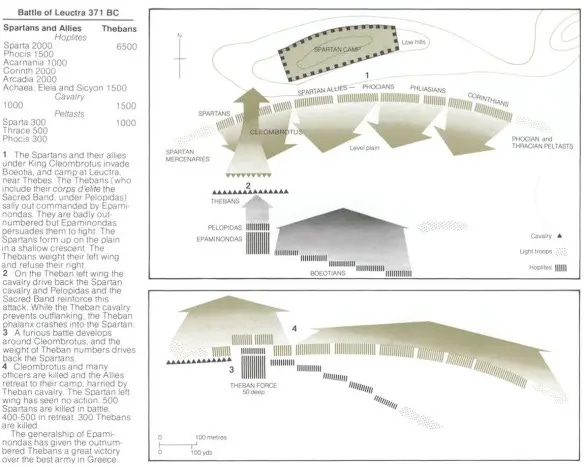
Epaminondas led a smaller force (some 6,000 to Sparta’s 11,000, though historians debate the exact numbers) to a field in front of a Boeotian village called Leuctra. The Battle of Leuctra would not only mark the beginning of centuries of Spartan decline, but also change the way Greek armies battled all the way through the conquests of Alexander the Great.
How did Epaminondas do it? How could he upend the mighty Spartan empire with a force barely half the size? The answer lay in resource allocation, patience, and 300 extremely important gay men.
If you had the misfortune of fighting against a Spartan army in the last few centuries BCE, you had to contend with a phalanx of hoplites. Thousands of men would align shoulder to shoulder, stick out their shields and spears, and push. You probably had a phalanx of your own, but against the Spartan line, you stood no chance.
Epaminondas didn’t have the numbers to directly contend with the Spartan phalanx, but he did have a specific elite force: the Sacred Band of Thebes. The Sacred Band was made of 300 hand-picked warriors paired off into homosexual couples. The idea was that lovers would fight more fiercely for each other.
Instead of a futile effort to out-push a force half their size, the Boeotians overloaded one side. They put a majority of their force on the left side, thinning out the right. They advanced this overloaded left wing before the weaker right wing, hoping to win before the Spartans could fully engage.
The Boeotian left wing, led in part by the Sacred Band, broke through the Spartan line. With enemy forces charging the side and rear, the Spartans quickly routed. When the dust settled, Epaminondas inflicted upon the Spartans one of the most decisive blowouts in Greek history.
Diagram courtesy of WarHistory.org
Over 1,000 Spartans perished in the Battle of Leuctra, including their king and military leader Cleombrotus. The Boetians lost around a hundred, but exact estimates are hard to come by. By anyone’s estimate, their casualties paled in comparison. Sparta’s military reputation would never recover, and the next 200 years marked an era of Spartan decline.
Epaminondas didn’t invent the phalanx. In fact, it’s unclear who really did. There is evidence of a similar strategy in Sumer over 2,000 years earlier. It’s a fairly basic idea — everyone hold your shields together and push. But Epaminondas did advance the strategy. Others would continue to innovate on Epaminondas’ “oblique” advance, up to and including Alexander the Great.
Luke Brown, “Pushing Tush Is Ancient Technology”, Wide Left, 2025-10-13.
July 29, 2025
QotD: Thucydides wasn’t articulating a deterministic law of geopolitics – he was writing a tragedy
These concerns were not limited to the fringes, they were real. So real were they that respected geopolitical analysts like George Friedman (later of Stratfor) wrote books like [The Coming War With Japan] The argument was that an upstart like Japan would crash head first into US economic and security interests, sparking another war between the two. This conflict was inevitable because challengers will always seek the crown, and the king will always fight to maintain possession of it.
Suffice it to say that this war did not come to pass. The Japanese threat was vastly overstated, and its economy has been in stagnation-mode for decades now (even though living standards remain very high in relative terms). What may seem inevitable need not be.
The next several years will see marked increase in tension between the USA and China, as the former completes its long awaited “Pivot to East Asia”. So anxious are the Americans to pivot that they have been threatening to “walk away” from Ukraine if they cannot hammer down a peace deal in the very near future. This indicates just how serious a threat they view China’s ascent to be to its economic and security interests. If they are willing to sacrifice more in Ukraine than originally intended, the implication is that China’s rise is a grave concern, and that a clash between the two looks very likely … some would argue that it is inevitable, appealing to a relatively new IR concept called the “Thucydides Trap“.
Andrew Latham explains the concept to us, arguing that Thucydides is misunderstood, making conflict between rising powers and hegemons not necessarily inevitable:
The so-called Thucydides Trap has become a staple of foreign policy commentary over the past decade or so, regularly invoked to frame the escalating rivalry between the United States and China.
Coined by political scientist Graham Allison — first in a 2012 Financial Times article and later developed in his 2017 book Destined for War — the phrase refers to a line from the ancient Greek historian Thucydides, who wrote in his History of the Peloponnesian War, “It was the rise of Athens and the fear that this instilled in Sparta that made war inevitable.”
Distortion:
At first glance, this provides a compelling and conveniently packaged analogy: Rising powers provoke anxiety in established ones, leading to conflict. In today’s context, the implication seems clear – China’s rise is bound to provoke a collision with the United States, just as Athens once did with Sparta.
But this framing risks flattening the complexity of Thucydides’ work and distorting its deeper philosophical message. Thucydides wasn’t articulating a deterministic law of geopolitics. He was writing a tragedy.
This essay might be an exercise in historical sperging, but I think it has value:
Thucydides fought in the Peloponnesian War on the Athenian side. His world was steeped in the sensibilities of Greek tragedy, and his historical narrative carries that imprint throughout. His work is not a treatise on structural inevitability but an exploration of how human frailty, political misjudgment and moral decay can combine to unleash catastrophe.
That tragic sensibility matters. Where modern analysts often search for predictive patterns and system-level explanations, Thucydides drew attention to the role of choice, perception and emotion.
His history is filled with the corrosive effects of fear, the seductions of ambition, the failures of leadership and the tragic unraveling of judgment. This is a study in hubris and nemesis, not structural determinism.
Much of this is lost when the phrase “Thucydides Trap” is elevated into a kind of quasi-law of international politics. It becomes shorthand for inevitability: power rises, fear responds, war follows.
Therefore, more of a psychological study of characters rather than structural determinism.
Giving credit to Allison:
Even Allison, to his credit, never claimed the “trap” was inescapable. His core argument was that war is likely but not inevitable when a rising power challenges a dominant one. In fact, much of Allison’s writing serves as a warning to break from the pattern, not to resign oneself to it.
Misuse:
In that sense, the “Thucydides Trap” has been misused by commentators and policymakers alike. Some treat it as confirmation that war is baked into the structure of power transitions — an excuse to raise defense budgets or to talk tough with Beijing — when in fact, it ought to provoke reflection and restraint.
To read Thucydides carefully is to see that the Peloponnesian War was not solely about a shifting balance of power. It was also about pride, misjudgment and the failure to lead wisely.
Consider his famous observation, “Ignorance is bold and knowledge reserved”. This isn’t a structural insight — it’s a human one. It’s aimed squarely at those who mistake impulse for strategy and swagger for strength.
Or take his chilling formulation, “The strong do what they will and the weak suffer what they must”. That’s not an endorsement of realpolitik. It’s a tragic lament on what happens when power becomes unaccountable and justice is cast aside.
and
In today’s context, invoking the Thucydides Trap as a justification for confrontation with China may do more harm than good. It reinforces the notion that conflict is already on the rails and cannot be stopped.
But if there is a lesson in The History of the Peloponnesian War, it is not that war is inevitable but that it becomes likely when the space for prudence and reflection collapses under the weight of fear and pride.
Thucydides offers not a theory of international politics but a warning — an admonition to leaders who, gripped by their own narratives, drive their nations over a cliff.
Latham does have a point, but events have a momentum all their own, and they are often hard to stop. Inevitabilities do exist, such as Israel and Hezbollah entering into conflict with one another in 2022 after their 2006 war saw the latter come out with a tactical victory. Barring a black swan event, the USA and China are headed for a collision. The question is: in what form?
Niccolo Soldo, “Saturday Commentary and Review #188 (Easter Monday Edition)”, Fisted by Foucault, 2025-04-21.


