
One of the phenomena noted about most social media platforms was the ease of creating political echo chambers that allowed (mostly) progressive views to be aired but not challenged, which convinced a lot of people that these views were far more widely held than they were. When Elon Musk bought Twitter and reduced the automatic echo chamber mechanism, many formerly happy Twitter users discovered the unpleasantness of dissenting voices (triggering a rush to Bluesky, which allowed the re-creation of those comfortable bubbles for those most distressed). Twitter, now X, has been a much better site since then:
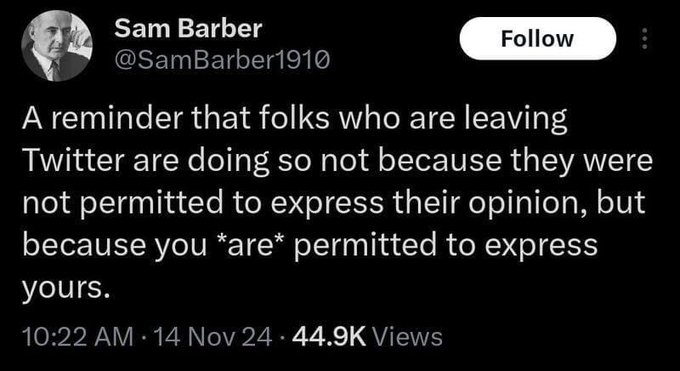
One of the reasons X terrifies soft ideologues is that it has become one of the last places where ideas are forced to compete in the open.
I don’t block people and certainly don’t deliberately curate an echo chamber. My replies are full of people who disagree with me.
And yet every day I watch the same thing happen.
The people who spent years convinced they represented the silent majority get ratioed into the earth by ordinary Americans.
Not because of brigading, coordination, or because some shadowy force is helping.
Because their ideas suck.
That realization should horrify them. But it doesn’t, because they’re dented.
For years they mistook institutional power for public support. They confused HR departments, media outlets, universities, and bureaucracies with actual consensus.
Now the walls are gone and the ideas have to stand on their own. And many of them just can’t.
What’s happening on this platform is not the triumph of a movement. It’s the collapse of an illusion.
The worst part isn’t that they’re losing. It’s that they’re finding out how few people ever agreed with them in the first place.



And the worst part for us is their overwrought responses to their losses.
Comment by Mike Porter — June 1, 2026 @ 13:30