Quotulatiousness

June 26, 2026

To address social media toxicity, you have to change the algorithm

Filed under: Health, Media, Technology — Tags: , , , , — Nicholas @ 05:00

If you’ve been on social media platforms at all, you’ll have encountered aggressively obnoxious behaviour, possibly rising to actual abuse. Some people revel in it, putting on their “online tough guy” personas, but others (the majority) are disturbed and repelled by it. Unfortunately, the way the system is set up is to keep you engaged and inciting anger is one of the best ways to boost engagement.
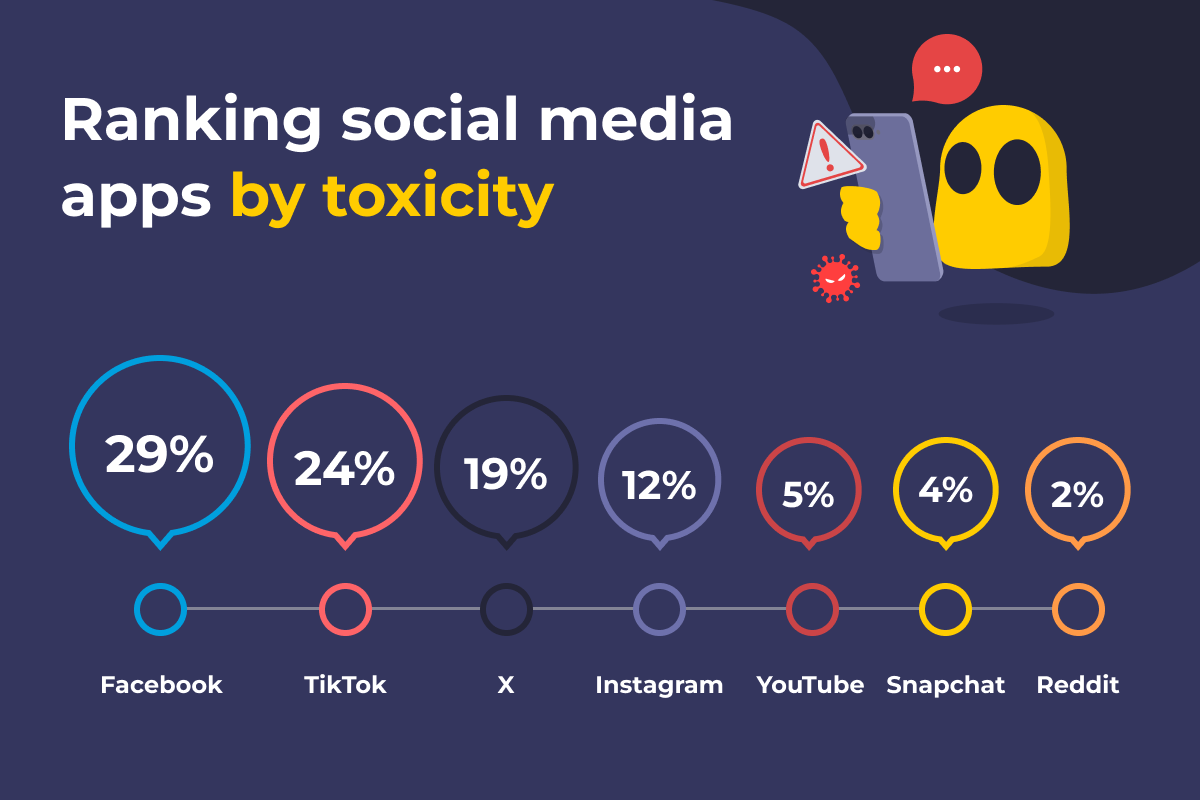
Slide from cyberghostvpn.com

Andrej Karpathy is the man who taught Tesla’s cars to see the road and drive themselves. Before that, he was one of the founding researchers at OpenAI. In the world of artificial intelligence, he’s royalty.

A few days ago, he posted a simple, excited message. He’d been using Claude, an AI assistant, and it was blowing his mind. “It works like a real teammate”, he wrote. He was genuinely thrilled.

The replies tore him apart.

Strangers called him a shill. People who’d never built anything mocked him. The pile-on grew and grew and grew.

Then Karpathy went quiet for a moment. And when he came back, he didn’t defend his original post. He said something bigger.

“After 20 years on this platform, X has never been this toxic. The algorithm actively pushes rage, insults, and pile-ons because they get engagement. That’s why even I post and visit less now.”

Twenty years. This man watched Twitter grow from a tiny blog tool into the global town square. He survived every era of the platform. And now, for the first time, he was saying: I don’t want to be here anymore.

Elon Musk read those words and replied within minutes.

“We need a complete overhaul of the algorithm.”

Not a patch. Not “we’ll look into it”. A complete overhaul.

Think about what that means. Right now, the machine that decides what you see on X has one job: keep you engaged. And the fastest way to keep you engaged is to make you angry. Outrage gets clicks. Insults get replies. Pile-ons get retweets. The algorithm learned this on its own, and now it feeds you rage all day long because rage works.

The result: the smartest, most interesting people slowly stop posting. Why would they? Every time they share an idea, a mob shows up. So they go quiet. And what fills the void is screaming.

Musk just said he wants to tear that entire machine out and build a new one from scratch. One where the most useful, most interesting, most original posts rise to the top. Where sharing a genuine thought doesn’t get you punished.

One of the greatest minds in AI came home excited, like a kid showing off a new discovery. X beat him down for it.

That’s exactly the disease Elon is now trying to cut out.

If he actually does it, you’ll feel it in your timeline before anyone announces it.

Magda Goebbels: The Nazi Mother Who Murdered Her Children

Filed under: Germany, History, WW2 — Tags: , , , , , — Nicholas @ 04:00

World War Two
Published 25 Jun 2026

Magda Goebbels was one of the most infamous women in Hitler’s inner circle. Known as the wife of Nazi Propaganda Minister Joseph Goebbels and often treated as an unofficial “First Lady” of the Third Reich, she helped project an image of family, elegance, and loyalty while standing beside one of history’s most murderous regimes. But her story ends in one of the darkest acts of the Second World War.

As Berlin collapsed in 1945, Magda Goebbels took her six children into Hitler’s Führerbunker. Offered chances to escape, she refused. One day after Hitler’s suicide, she helped murder her own children with cyanide, claiming that a world without National Socialism was not worth living in.

In this episode of our new format, Baddies and Battleaxes, Anna Deinhard returns to tell the story of Magda Goebbels: socialite, Nazi fanatic, mother, accomplice, and child murderer. Her life reveals how women in the Third Reich were not always passive bystanders. Some, like Magda, actively embraced Nazi ideology, helped legitimize the regime, and chose loyalty to Hitler over humanity itself.

This is the story of the Nazi “First Lady” who followed fascism all the way into the bunker.

Who should Anna cover next in Baddies and Battleaxes? Tell us which heroines and villainesses of WW2 you want to see in a future episode.

No “capital formation”, please: we’re Canadian

Filed under: Business, Cancon, Economics, Government, Politics — Tags: , , , , — Nicholas @ 03:00

On the social media site formerly known as Twitter, L. Wayne Mathison identifies one of the biggest reasons the Canadian economy is falling ever further behind other industrialized nations:

AI-generated image from L. Wayne Mathison

Canada does not have a talent shortage.

It has a capital formation shortage.

In Q1 2026, Canada managed one growth-stage VC deal. One. Worth $1M.

That is lemonade-stand money in a global tech race.

The U.S. pulled in $267.2B in VC investment. Capital is not confused. It goes where risk is rewarded, scale is possible, and success is not treated like a moral offence.

Carney and the Liberals keep talking about “building the economy” while presiding over a country where founders raise seed money here, then scale somewhere else.

That is the real brain drain.

Not just doctors. Not just engineers. Builders. Founders. Investors. People who can turn ideas into payrolls.

They look at Canada and see taxes, red tape, weak productivity, political favouritism, and a government more interested in managing decline than getting out of the way.

Carney was sold as the adult in the room. OK. Then explain this: why is Canada producing press releases while the Americans are producing companies?

Because capital can smell fear.

And right now, Canada smells like a country that punishes ambition, subsidizes failure, and calls it fairness.

Sparta vs Athens 2(c): Spartan Childhood – The Agōgē, Infant Inspection, and State Brutality

Filed under: Books, Government, Greece, History, Military — Tags: , , , , , — Nicholas @ 02:00

seangabb
Published 8 Feb 2026

Greece: A Brief History, c.700 BC – 500 AD

This segment goes straight to the ancient evidence. Using Plutarch’s Life of Lycurgus (with the passages shown on-screen), I explain how Sparta understood itself: infant inspection and exposure, the collective upbringing of boys in the agōgē, deliberate hunger and deprivation, enforced endurance, and the suppression of private loyalties in favour of loyalty to the state.

This is not presented as scandal. Plutarch often writes admiringly, which is precisely why the text is so revealing. The system is coherent. It is also terrifying. Sparta did not merely train soldiers. It manufactured them, beginning at birth.

QotD: The submarine war against Japan

Filed under: History, Japan, Military, Pacific, Quotations, USA, WW2 — Tags: , , , — Nicholas @ 01:00

The Second World War witnessed two concurrent campaigns by which submarines were used in an attempt to economically isolate and degrade an island nation enemy. One of these attempts was remarkably successful. In the Pacific, US Submariners sunk millions of tons of Japanese shipping — more shipping, in fact, than Japan had possessed at the outbreak of war. A brutally effective submarine campaign against Japanese tankers affected a near perfect starvation of Japan’s war machine: after intaking 40% of East Indies crude production in 1942, only 5% would reach Japanese shores in 1944. This was a cataclysmic decline which Japan could not survive, owed largely to the 155 tankers sunk by American submarines in 1943 and 1944. In the final year of the war, American boats were able to undertake the ultimate dream of submarine theorists: a close blockade of the Japanese home islands, with American submariners prowling practically every inlet and bay.

The success of the American submarine campaign was genuinely astonishing, and created a near perfect asphyxiation of the Japanese war economy, with imports of virtually every vital industrial input plummeting to near zero by 1944. Admiral Charles Lockwood, who commanded the Submarine Force Pacific Fleet, was probably only slightly boasting when he later told an instructor at the Naval Academy:

    Now don’t teach those midshipmen that the submariners won the war. We know there were other forces fighting there, too. But if they kept the surface forces and the flyboys out of our patrol areas we would have won the war six months earlier.

Despite the phenomenal success of America’s submarine operations against Japan, the American war on Japanese shipping generally receives scant attention. To take just one example, Francis Pike’s magisterial and colossal tome on the Pacific War relegates American submarine operations to an appendix. In contrast, there is an astonishing volume of literature devoted to the war’s other grand submarine campaign: the so-called Battle of the Atlantic. Germany’s famous U-boats attempted a similarly strategic interdiction war against shipping to the British home isles. Unlike the American submarine force in the Pacific, however, the U-boats failed.

Big Serge, “Wolf Packs: Battle of the Atlantic”, Big Serge Thought, 2025-12-12.

Powered by WordPress