
Tiktok found a way to connect you to strangers who don’t make you angry. By offering performers money if they produced media that you “engaged” with, Tiktok offloaded the work of convincing you to conduct your online activities in a way that maximized opportunities to show you an ad onto an army of global theater kids who would spend every hour that god sent trying to figure out how to keep you looking at Tiktok.
This was hugely successful – so successful, in fact, that Tiktok was able to cheat, overriding its own algorithmic guesses about which of its billion cable-access television channels you’d stare at the longest with a “heating tool” that lets the company trick some of those theater kids into thinking that Tiktok was actually more suited to them than other platforms […]
For zuckermuskian social media bosses, Tiktok became an object of fierce envy. Here was the ultimate Tom Sawyer robo-fence-painter, a self-licking ice-cream cone that motivated people to convince each other to make money for you. Facebook, Instagram and Twitter took a hard pivot away from showing you the things that the people you loved had to say, in favor of showing you short videos of people whose parents didn’t give them enough affection in their childhood, desperately shoving lemons up their noses in a bid to win your approval (and a revshare split with the platforms).
It worked. Sorta. Thing is, some of those “content creators” are actually very good, and none of them appreciate being jerked around. They quite rightly see their reason for being on the platforms as improving their own lives, not the bottom line of the platforms’ owners and executives. They may be more “engaging” than your friends, but they’re also a lot mouthier and feel entitled to a say in how the platform operates.
What’s a billionaire solipsist to do? Obviously, the answer is “AI creators”. An “AI creator” is like a “creator” in that it works to maximize your engagement with the platform – and thus the number of ads that can be crammed into your face-holes – but, unlike a “creator”, it makes no demands upon the platform and exists solely to serve the platform’s shareholders and executives. It’s the perfect realization of the solipsist fantasy of a world without people […]
But there’s a problem with this plan: your friends are not a liability for a platform. Your friends are the platforms’ single most important asset. Your friends are why the platforms are so “sticky”. The platforms don’t “hack your dopamine loops” – they just take your friends hostage, and even though you love your friends, they are a monumental pain in the ass, and if you can’t even agree on what board-game you’re going to play this weekend, how are you going to agree when it’s time to leave Facebook, and where to go next?
So long as you love your friends more than you hate Zuckerberg or Musk, you will remain stuck to their platforms. The platform bosses know this, and they inflict pain on you that is titrated to be just below the threshold where you hate the platforms more than you love your friends.
But as much as the platform bosses rely on your love of your friends, they still view your friends as liabilities, thanks to those friends’ unreasonable insistence on structuring their relationship with you to maximize their own satisfaction, rather than how much time you spend looking at ads. So the platforms are deliberately disconnecting you from your friends by minimizing the fraction of your feed that is given over to posts from people you follow, and replacing those friends with a succession of ever-more fungible posters: trolls, creators, and chatbots.
Cory Doctorow, “Tiktokification shall set us free”, Pluralistic, 2026-04-17.
July 21, 2026
June 26, 2026
To address social media toxicity, you have to change the algorithm
If you’ve been on social media platforms at all, you’ll have encountered aggressively obnoxious behaviour, possibly rising to actual abuse. Some people revel in it, putting on their “online tough guy” personas, but others (the majority) are disturbed and repelled by it. Unfortunately, the way the system is set up is to keep you engaged and inciting anger is one of the best ways to boost engagement.
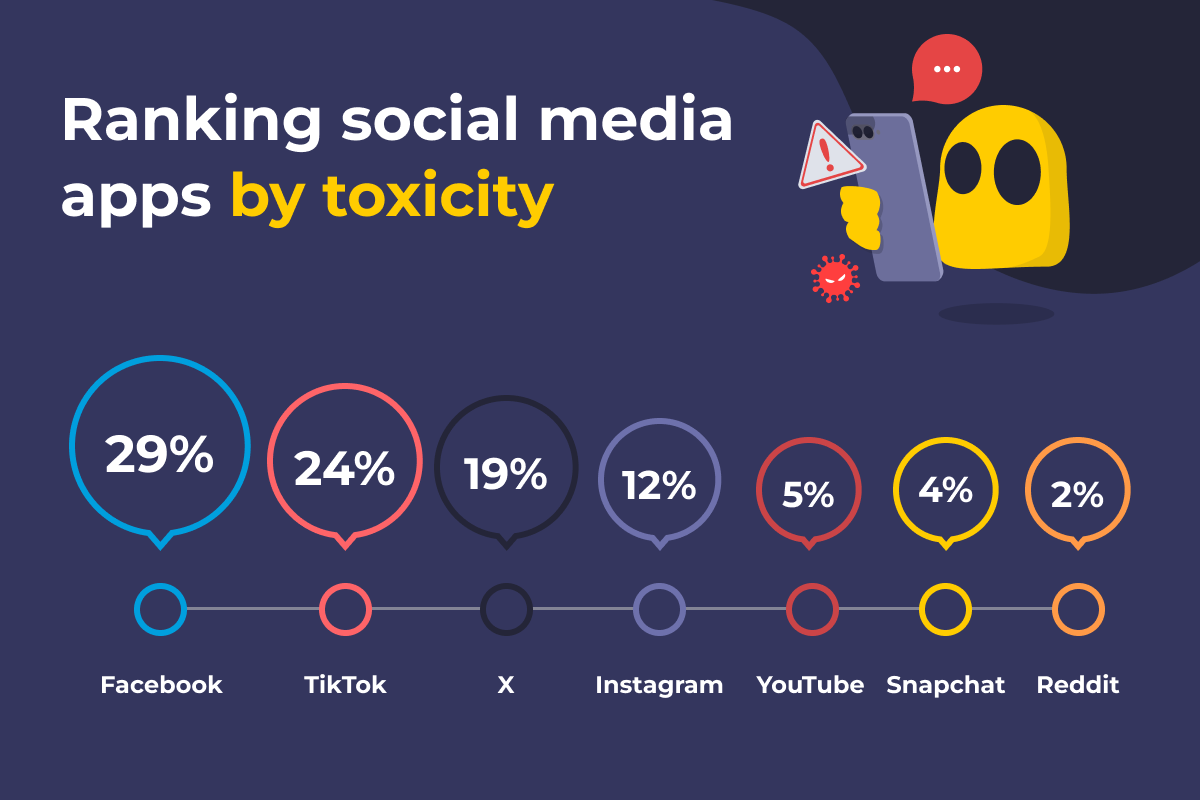
Slide from cyberghostvpn.com
Andrej Karpathy is the man who taught Tesla’s cars to see the road and drive themselves. Before that, he was one of the founding researchers at OpenAI. In the world of artificial intelligence, he’s royalty.
A few days ago, he posted a simple, excited message. He’d been using Claude, an AI assistant, and it was blowing his mind. “It works like a real teammate”, he wrote. He was genuinely thrilled.
The replies tore him apart.
Strangers called him a shill. People who’d never built anything mocked him. The pile-on grew and grew and grew.
Then Karpathy went quiet for a moment. And when he came back, he didn’t defend his original post. He said something bigger.
“After 20 years on this platform, X has never been this toxic. The algorithm actively pushes rage, insults, and pile-ons because they get engagement. That’s why even I post and visit less now.”
Twenty years. This man watched Twitter grow from a tiny blog tool into the global town square. He survived every era of the platform. And now, for the first time, he was saying: I don’t want to be here anymore.
Elon Musk read those words and replied within minutes.
“We need a complete overhaul of the algorithm.”
Not a patch. Not “we’ll look into it”. A complete overhaul.
Think about what that means. Right now, the machine that decides what you see on X has one job: keep you engaged. And the fastest way to keep you engaged is to make you angry. Outrage gets clicks. Insults get replies. Pile-ons get retweets. The algorithm learned this on its own, and now it feeds you rage all day long because rage works.
The result: the smartest, most interesting people slowly stop posting. Why would they? Every time they share an idea, a mob shows up. So they go quiet. And what fills the void is screaming.
Musk just said he wants to tear that entire machine out and build a new one from scratch. One where the most useful, most interesting, most original posts rise to the top. Where sharing a genuine thought doesn’t get you punished.
One of the greatest minds in AI came home excited, like a kid showing off a new discovery. X beat him down for it.
That’s exactly the disease Elon is now trying to cut out.
If he actually does it, you’ll feel it in your timeline before anyone announces it.

June 6, 2026
Brave browser users and X’s latest algorithm changes
While I use the Brave web browser, I don’t access the social media site formerly known as Twitter with it, so I haven’t seen the described behaviour, thank goodness:

Recent algorithm changes on X may be unfairly hammering Brave users. And there’s a larger issue here about bad interactions between robots and privacy measures.
@nikitabier
@braveMy friend Jay Maynard, who some of you may know as Tron Guy, just got permabanned off X for “inauthentic behavior”. His appeal was swiftly denied.
Jay is not a spammer, scammer or engagement farmer; he is, in fact, exactly the kind of good citizen X says it wants. Jay asked Gemini for analysis, and now thinks he knows what happened.
Brave, as a privacy measure, randomly changes the identity presented to sites in order to avoid tracking by the ad vampires. Gemini suggested that some code at X interpreted this as spammy behavior using multiple browsers. If so – and this does seem plausible – everybody trying to protect their privacy with Brave is at risk.
This is a general problem, not just an X glitch or a Brave issue. Social media sites are increasingly relying for security on forms of heuristic AI that are prone to unacceptably high false-positive rates.
More specifically, platforms are increasingly treating a user’s refusal to be tracked, fingerprinted, and categorized as a hostile act. When a site makes it impossible to connect via a privacy-focused user agent without getting flagged as a malicious bot, it stops being “security” and effectively becomes a retaliatory lockout for protecting oneself.
Worse yet, such system architecture provides no circuit breaker – humans are only rarely and exceptionally asked review for errors. Jay’s appeal denial came back so fast that it was obvious no meat-brain ever saw it. He has filed complaints within the Minnesota Attorney General and the Better Business Bureau, because what else can he do? The robots have locked him out.
Badly designed robots and zeal to squeeze human oversight out of the system forces regular citizens to rely on state law enforcement or consumer protection bureaus.
Allow me to gently suggest to the people running X that unless you want politicians poking their noses into your business and imposing constraints on you that you are not going to like, you need to fix your security and appeal processes so running to the law isn’t necessary.
June 1, 2026
Social media echo chambers
One of the phenomena noted about most social media platforms was the ease of creating political echo chambers that allowed (mostly) progressive views to be aired but not challenged, which convinced a lot of people that these views were far more widely held than they were. When Elon Musk bought Twitter and reduced the automatic echo chamber mechanism, many formerly happy Twitter users discovered the unpleasantness of dissenting voices (triggering a rush to Bluesky, which allowed the re-creation of those comfortable bubbles for those most distressed). Twitter, now X, has been a much better site since then:
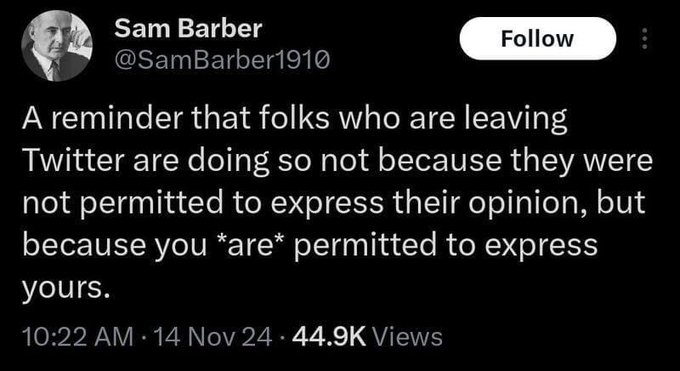
One of the reasons X terrifies soft ideologues is that it has become one of the last places where ideas are forced to compete in the open.
I don’t block people and certainly don’t deliberately curate an echo chamber. My replies are full of people who disagree with me.
And yet every day I watch the same thing happen.
The people who spent years convinced they represented the silent majority get ratioed into the earth by ordinary Americans.
Not because of brigading, coordination, or because some shadowy force is helping.
Because their ideas suck.
That realization should horrify them. But it doesn’t, because they’re dented.
For years they mistook institutional power for public support. They confused HR departments, media outlets, universities, and bureaucracies with actual consensus.
Now the walls are gone and the ideas have to stand on their own. And many of them just can’t.
What’s happening on this platform is not the triumph of a movement. It’s the collapse of an illusion.
The worst part isn’t that they’re losing. It’s that they’re finding out how few people ever agreed with them in the first place.
January 26, 2026
QotD: Twitter isn’t life … it’s far more important than that
Because they talk. Constantly. They never, ever shut up. Most Leftists in my life — and in yours too, I guarantee — never do anything. We all know that the Left take zero interest in their communities. They don’t donate to charity. Let’s say one of those late April blizzards hits and their driveway is snowed in. While everyone else is breaking out the shovels one last time, the Leftist’s natural impulse is to jump on Twitter and start petitioning Congress for some giant, trillion-dollar snow removal bill. It has to have set-asides for Diversity quotas, of course, and isn’t the word “removal” triggering? And so forth, until the snow melts. Hey, problem solved!
I’m kidding, but I’m not joking. Leftists are process people par excellence. Even Stalin won that way, 99% of the time — even though he could have had the entire Politburo shot with a snap of his fingers, he got his way by grinding them down, meeting after meeting after endless meeting. Yes, eventually someone has to actually do something, but that someone isn’t going to be them; it’ll be some toady somewhere, who is only working as hard as he has to in order to get promoted up the totem pole, so that he’s the one in meeting after endless meeting, forever discussing, never doing.
This reaches its apotheosis (apocolocyntosis!) in Twitter, and do you see what I mean? For the Left, tweeting about something is exactly the same as, if not better than, actually doing anything about it. Look around: we’re about to get into WWIII because of this. And speaking of missiles flying, we’ve all remarked on the Left’s signature “fire and forget” policy approach. To them, words are magic — healthcare, for instance, is now Affordable. How can it not be? It says “Affordable Care Act“, right there in the title! Don’t start in with your facts and figures, please — it’s Affordable, damn it! What part of “Affordable Care Act” don’t you understand?
He who talks the loudest and longest, therefore, is the purest.
Combine that with the second step for maximum effect: Emotional incontinence. Just as talking is the same as (better than!) doing, so emotion equals competence. She who feeeeeeels the strongest about an issue wins. This, too, has been obvious for a long time, so much so that Jonah Goldberg, of all people, had a good bit on it back when he was still somewhat convincingly playing a conservative. He joked about how stupid it was to be preoccupied with caring in practical life. Who would you rather have cut that tumor out, your best buddy — who really, really, really cares — or a brain surgeon? Even an utterly dispassionate one, to whom you are nothing more than a slab of meat?
Again, and always: see Twitter. Maximum talk, maximum hysteria, always. I’m belaboring this because in our tabloid-culture society, the identification is complete: The all-talk hysteric is the brahmin; screaming about how much you care just IS morality. Never mind that your caring affects nothing in the best case scenario; worst case it ends up killing people (e.g. the Blue Checkmarks tweeting us into WWIII).
Severian, “Intro to The Way“, Founding Questions, 2022-04-17.
January 12, 2026
Is Keir Starmer malevolent or stupid? Or both?
On his Substack, Tim Worstall wonders just how damn stupid Two Tier Keir actually is:
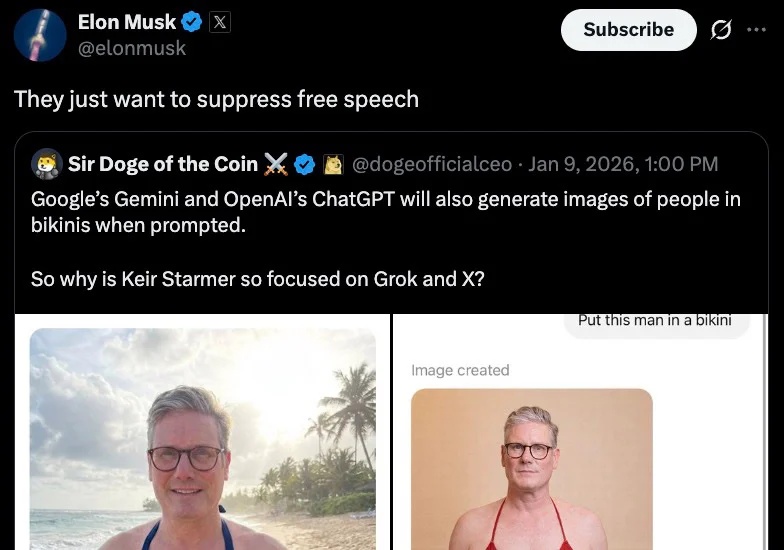
I fear our answer has to be very, very, stupid indeed. Unless he’s simply malevolent which makes things oh so much better, right?
Now, I confess to a fundamental disagreement with the very premise here. For the argument about why we should make child porn legal, see here. Making it more difficult to generate, let alone illegal, strikes me as the wrong decision. But then I’m sufficiently wise in years to realise that I might not be able to persuade some people of either that or of the many other things I am correct about. So, let us leave that aside.
There’s also the point that Grok is hardly the only image generation tool out there these days. Further, the one thing we know about computing is that this year’s leading, bleeding, edge is the free phone app of 5 years in the future. Shrieking that this must be banned just isn’t going to cut it as anyone trying that is simply a Cnut demanding the tide doesn’t flow in.1 On that larger issue of image generation in general we’re just going to end up changing the societal rules. A picture is no longer proof of anything. After all, it wasn’t up until about 1850 — those painters would just do any old thing, the truth be damned — and it won’t be after about 2028. Well, there we are then but …
But OK, let us leave all of that to one side and start from where British politics currently is. Grok generated AI kiddie porn is Bad, M’Kay, and must stop:
Technology Secretary Liz Kendall says she would back regulator Ofcom if it blocks UK access to Elon Musk’s social media site X for failing to comply with online safety laws.
Ofcom says it is urgently deciding what to do about X’s artificial intelligence (AI) chatbot Grok, which digitally undressed people without their consent when tagged beneath images posted on the platform. X has now limited the use of this image function to those who pay a monthly fee.
But Downing Street said the change was “insulting” to victims of sexual violence.
“Downing St” is the equivalent of the American “the White House said” … so yes, that is Keir Starmer, the Prime Minister there.
We’ve also an article from Liz Kendall today:
That Grok continues to allow this kind of content to be created by those willing to pay for it is an insult to victims. No business model should be built on the exploitation and abuse of women and children.
…
The Online Safety Act was designed precisely for situations like this, where platforms fail to take their responsibilities seriously and allow harmful content to proliferate. The British public rightly expects robust action. This is a matter of urgency that demands an urgent response.
I’ve also been clear that the Online Safety Act includes the power to apply to the courts to block services from being accessed in the United Kingdom if they refuse to comply with UK law.
We can see the threat there. If Elon Musk doesn’t do something about this then we’ll block X/Twitter from the UK.
- Why yes, I do know the correct story of Canute and the tides.
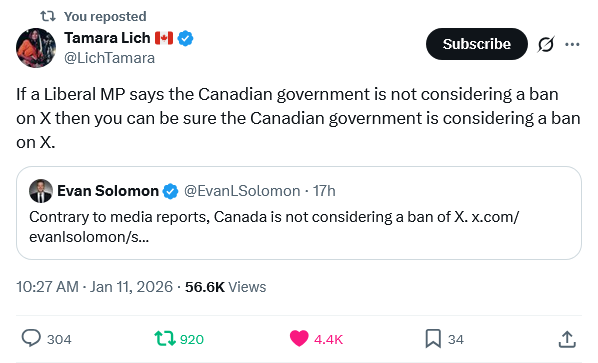
A Canadian and Australian connection showed up as well:

While I don’t depend on the social media site formerly known as Twitter for my news, I have found it a very useful additional source since Elon Musk took over the site. I’m clearly not the only one to feel this way:

As they used to say, however, “never believe anything until it’s been denied by the Kremlin”:
August 12, 2025
Britain warns online platforms about “overzealous” interpretation of online safety law
“Ben the Layabout” posted a note over at Founding Questions linking to a Telegraph article [archive.ph link] that seems to indicate the British government is demanding that online services both enforce the letter of the law and the spirit … whatever that might mean at any given moment in time:
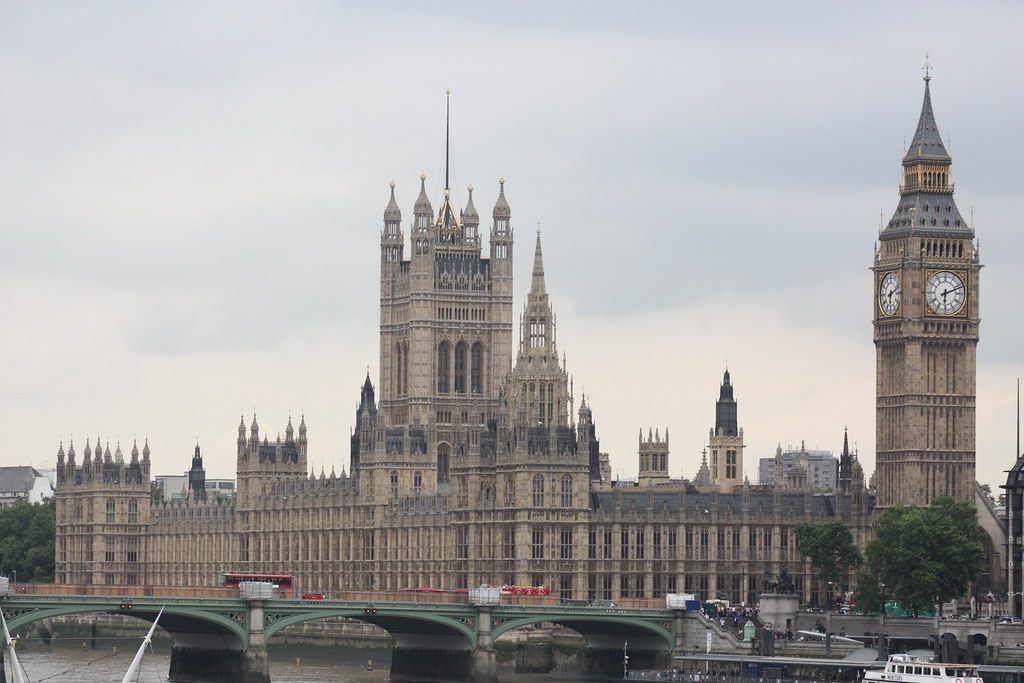
“Palace of Westminster”by michaelhenley is licensed under CC BY-NC-SA 2.0


Social media giants face huge fines for curbing free speech by “overzealous” enforcement of online safety laws.
Ministers have told platforms including Facebook, X, Instagram and TikTok they must not restrict access to posts that express lawfully held views.
The warning, in an apparent change of tone from ministers, comes amid a backlash over websites blocking users from viewing material, including parliamentary debates about grooming gangs.
Campaigners have said that free speech is threatened by the Government’s application of the Online Safety Act, which is meant to protect children from harmful content.
JD Vance, the US vice-president, used a visit to the UK this week to warn ministers against going down the “dark path” of censorship.
Whitehall sources have expressed concern that social media firms, some of which have criticised the law, “have been overzealous” in enforcing it and must be “mindful” of the right to freedom of expression.
The Science Department, which oversees the legislation, told companies they could face fines if they failed to uphold free speech rules.
A spokesman said:
As well as legal duties to keep children safe, the very same law places clear and unequivocal duties on platforms to protect freedom of expression.
Failure to meet either obligation can lead to severe penalties, including fines of up to 10 per cent of global revenue or £18m, whichever is greater.
The Act is not designed to censor political debate and does not require platforms to age gate any content other than those which present the most serious risks to children such as pornography or suicide and self-harm content.
Platforms have had several months to prepare for this law. It is a disservice to their users to hide behind deadlines as an excuse for failing to properly implement it.
So online sites big and small are required to obey the British law, but only as and how the British government wants it enforced or they’ll levy massive punishment. Too lax? Punishment. Too strict? Also punishment. It’s almost as if Britain wants to be cut off from the rest of the internet …
May 16, 2025
Those scary “Brexity books”
Andrew Doyle on the sudden interest British police seem to be taking about what kind of books you may have on your shelves at home:
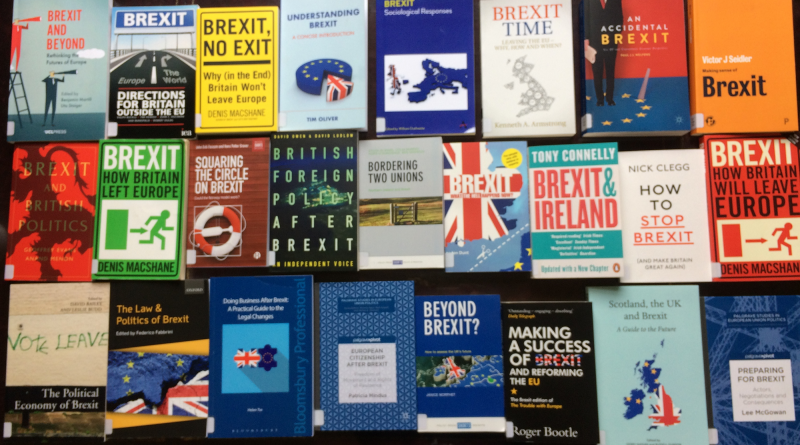
If the British police saw this collection, you’d be lucky to get out of prison in fifty years!
The UK police certainly seem to believe in that old aphorism that that “You can tell everything you need to know about a person from their bookshelf”. There has been much press coverage this week of the case of Julian Foulkes, a former policeman who was arrested at his home in Gillingham for tweetcrime. It took six officers to handcuff the pensioner and take him to a cell, and bodycam footage from the arrest shows them assessing the contents of his bookshelves. One was seen singling out The War on the West by Douglas Murray and another remarked that there were “very Brexity things”.
I have a fair few “Brexity” books on my shelf too. I have just as many “anti-Brexity” books, as it happens. It seems to have escaped the attention of these officers that it is possible to read multiple points of view without necessarily subscribing to any of them. They have also apparently forgotten that “Brexity” views are fairly commonplace, enough so to win the largest democratic mandate the country has ever seen. If it’s a majority view, is it really all that controversial?
I recall during the lockdown I was scheduled for a television interview and, having set up the webcam, I suddenly realised that the two volumes of Ian Kershaw’s excellent biography of Hitler were not only visible, but prominent. The design of the books’ spines is such that the word “HITLER” is displayed in huge letters. Very dramatic and marketable, but not so helpful if you’re about to appear on live television. I must confess that I repositioned my chair to ensure that the books were obscured.
But why? It isn’t as though any sensible person could possibly believe that my interest in the history of tyranny implies an endorsement of it. I could just as easily have a copy of Mein Kampf on the shelf and still retain my wholehearted opposition to its author and everything he stood for. If I owned a copy of the Koran, would that make me a Muslim? If I owned a copy of Jilly Cooper’s Riders, would that make me prone to passionate romps in stables? As a chronic hay fever sufferer, this hardly seems likely.
The assumption that the books we choose to read are a mirror-image of our private thoughts, or that we are so malleable that any opinion we encounter will automatically be assimilated, is very much a core tenet of faith in today’s woke mindset, one that has quite palpably infected the justice system. Those who are currently serving prison time for offensive tweets will be aware that the unevidenced belief that the public act on cue to the language they read has some very authoritarian consequences.
March 4, 2025
QotD: Twitter-thought and the basic university student
Alas, Twitter is still a thing that exists, so even though I tried it for about five minutes and promptly forgot all about it, my students didn’t … which explains, like nothing else can, their bizarre approach to classwork. For every quiz I gave, no matter how straightforward the question, I’d have at least one barracks lawyer coming to me afterwards, trying to weasel her (always her, mentally if not biologically) way back into some points, with some elaborate rationale why her picking the wrong answer was really my fault, because in class I said “The Russians won the Battle of Stalingrad” and the question on the quiz was “Who lost the Battle of Stalingrad?” and how is she supposed to be expected to recognize that “lost” is the opposite of “won” when it comes to battles and blah blah blah (thanks, Greta!).
Or the other depressingly common thing, which was when that same kid, who went to the fucking mattresses for one point on one quiz — which amounts to something like 0.01% of her final semester grade — just didn’t turn in the term paper. This happened at all academic levels, from community college (where you often lose half a class or more by the end of a semester) all the way up through the SPLACs, which cost something in the neighborhood of $70K a year all in. I never could figure this out — I mean, how can they not know that the term paper is 30% of your final grade, while all the quizzes put together amount to 10%? — but then it hit me: Twitter.
Everything on social media has, of necessity, equal weight, in that whatever’s in your feed at the present time is the only thing that exists. So when Snowflake was in “schoolwork” mode and missed that one question on that one quiz, it was the only thing that mattered in her world. My quiz was at the top of her Twitter feed, so she had to put all her energy into battling me for it. By the end of the semester, though, she was in “sorority” mode, or “getting ready for that kickass ski vacation” mode, or “beefing with that basic bitch Becky” mode, so my term paper barely registered — if she bothered to turn anything in at all, it was copy-pasted straight from wikipedia, because who cares, when Becky is out there on Twitter, h8ing?
Severian, “Also Sprach Froggy”, Founding Questions, 2021-09-30.
January 5, 2025
German democracy hanging by a thread after vicious attacks by Elon Musk
German politicians are growing ever more desperate as evildoers like Elon Musk continue to undermine the political stage by calling for antidemocratic things like free speech:
Alice Weidel, the federal leader of Germany’s “far-right” AfD, has approximately the same policy prescriptions as Donald Trump. Chiefly they are to return to the bourgeois habits that used to make free market states prosperous. But she subscribes to these in mainland Europe, which has been easily spooked since the Nazis offered policies that were not bourgeois.
“Humankind cannot bear very much reality,” as the far-right poet, T. S. Eliot, wrote in Burnt Norton, now the better part of a century ago. (He was arguably plagiarizing the far-right German poet, Johann Wolfgang von Goethe.)
One could recommend that my readers look her up on YouBoob, or better search for print, and form their own opinion on this Frau Weidel. (Who speaks English, and Chinese, fluently.)
Compare her, for instance, to the British prime minister, Keir Starmer, who rose to power as the prosecutor protecting Muslim “grooming gangs”, and now puts people in gaol who protest on behalf of their rape and murder victims. The idea that Mr Starmer should have a rôle in the government of a civilized country, is as absurd as the idea that the 14-year-old narcissist who has ruled Canada, or the 82-year-old senescent who has ruled the United States, are respectable members of the human race.
And closer to the scene of crisis, eugyppius reports on the latest Muskian outrage against peace-loving German politicians:
For days, the German establishment have been in an absolute uproar over Elon Musk’s profoundly antidemocratic election interference. You cannot turn on the television or open any newspaper without enduring all manner of wailing about the grave danger Musk poses to German democracy.
The naive and the simpleminded will say that all of this is crazy and that the Federal Republic has become an open-air insane asylum – a strange playground of political hysterics the likes of which the Western world has never seen before. That is because they don’t understand what’s at stake here. Musk did not just say the odd nice thing about Alternative für Deutschland, oh no. He also said various German politicians were fools and traitors, he called for resignations and he published an untoward newspaper editorial. It is amazing the German democracy has not yet collapsed in the face of this unrelenting campaign, and still the absolute madman shows no signs of stopping.
Elon Musk’s frontal assault on the German constitution began on 7 November, when he tweeted four antidemocratic words – “Olaf ist ein Narr” (“Olaf [Scholz] is a fool”) – in response to news that the German government had collapsed. Three days later, he tweeted the same thing about Green Economics Minister and chancellor candidate Robert Habeck, after Habeck gave a speech calling for widespread internet censorship.
Thereafter, all was quiet for a time. German democrats allowed themselves to hope these were but isolated indiscretions and that Musk would allow them to get back to their arcane business of promoting feminism abroad, changing the weather and eliminating “the extreme right”. Lamentably, the peace turned out to be a false one. Musk renewed his campaign against democracy with a vengeance on 20 December, tweeting in the wake of the Magdeburg Christmas market attack that “Scholz should resign immediately” and that he is an “incompetent fool”. That very same day, Musk tweeted for the first time that “Only the AfD can save Germany”, a sentiment he repeated also on 21 December and on 22 December, delighted at the nationwide freakout his casual remarks had incited.
In the course of this freakout, German President Frank-Walter Steinmeier hinted darkly that “outside influence” constitutes “a danger for democracy”:
Outside influence is a danger for democracy – whether it is covert, as was recently apparent in the elections in Romania, or open and blatant, as is currently being practised with particular intensity on the platform X. I strongly oppose all external attempts at influence. The decision on the election is made solely by the eligible citizens in Germany.
The indefatigable Naomi Seibt, who appears to be Musk’s primary informant about German politics, brought these remarks to the evil fascist billionaire’s attention, and he promptly responded that “Steinmeier is an anti-democratic tyrant”. Musk then delivered his coup-de-grace the next day, with an editorial in Welt am Sonntag – the most devastating piece of political prose that Germany has witnessed since Hitler penned Mein Kampf.
By my count, Musk may have directed as many as 700 words against the noble if surprisingly rickety edifice of German democracy – an assault few political systems could withstand. The self-appointed guardians of our liberal order accordingly declared a five-alarm fire, and they have betaken themselves to their keyboards to defend what remains of our free and eminently democratic political system, where anybody can say anything he likes and vote for any party he wishes, so long as what he likes and those for whom he votes have nothing to do with major political parties supported by millions of Germans like Alternative für Deutschland.
November 26, 2024
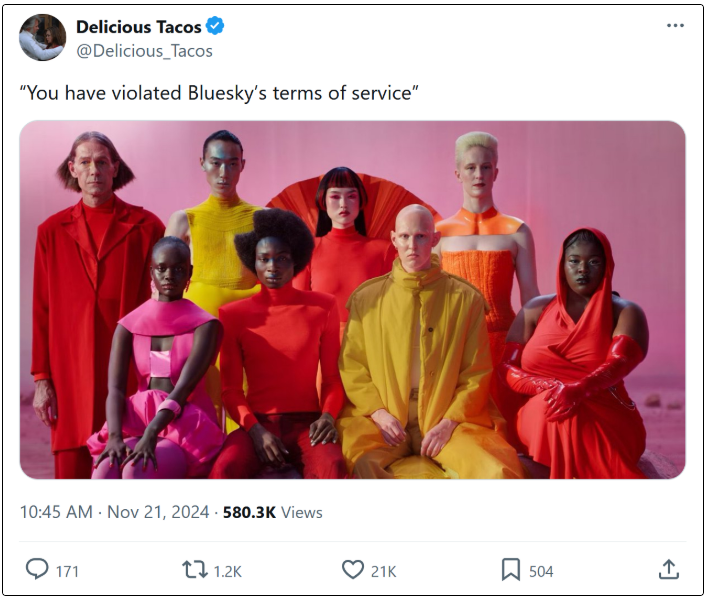
“Bluesky is going to give us hours of amusement as a platform full of wannabe school prefects all report each other”
I don’t mean to make poking fun at Twit/X alternative sites like Bluesky a regular thing, but the performative flouncing as progressives announce they’re leaving Twit/X for a more congenial — for which read “censorious” — site continues to amuse.
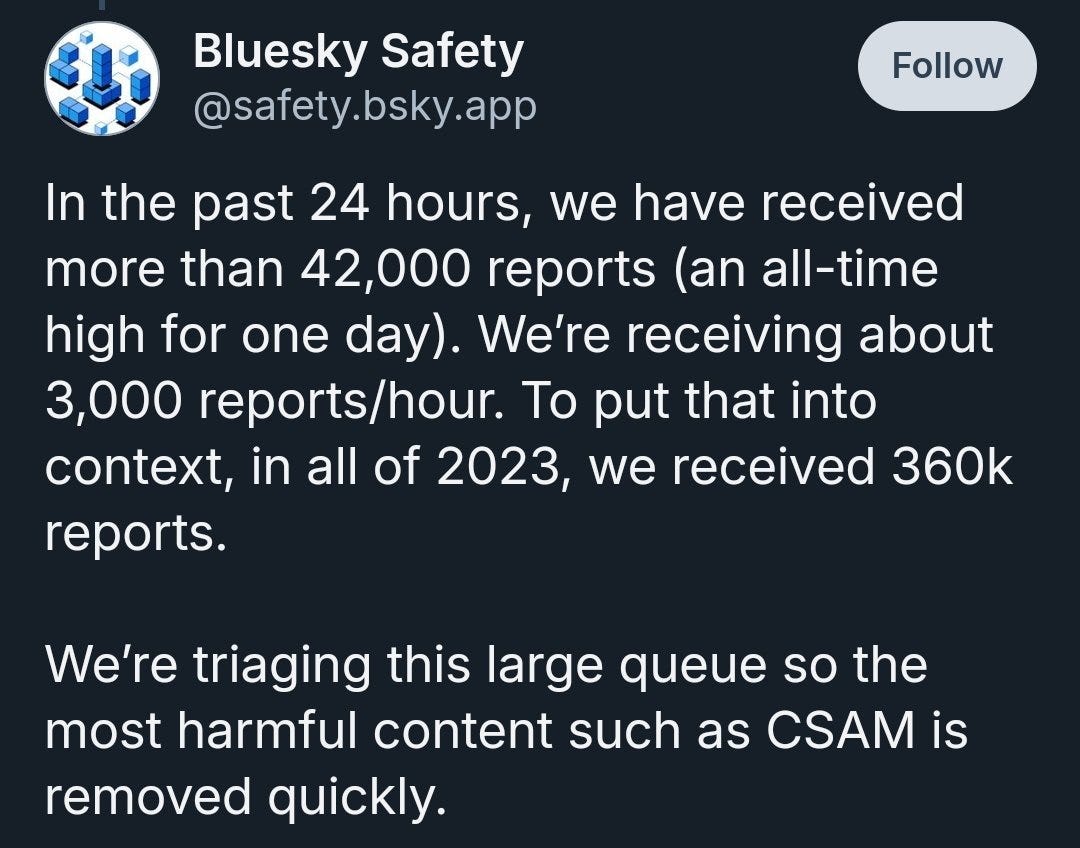
Bluesky welcomes former Twitter/X luminaries
I’m going to take a pop at a sub-group of flouncers, though, the ones moaning about being called hurty words. This includes a number of individuals who genuinely seem to think it’s their role in life to go looking for nasty bigoted shite, then report it to Twitter’s overlords (and now Bluesky’s overlords as well, if things like [the image on the right] are anything to go by).
“Bluesky is going to give us hours of amusement as a platform full of wannabe school prefects all report each other” seems a fair assessment.
And yes, I have to engage in a little ritual genuflection here, because I have genuinely been called a large number of nasty names in my life. And despite that, dibber-dobbers still give me hives.
If I had a quid for every use of “dyke” (and related) sent my way, I would be matching millions with sundry oil sheiks, and that’s before we get to the ire directed at any columnist with whom ordinary members of the public disagree. I am old enough to have received thousands of abusive letters (about both novels and columns), some of them written in green ink. People are allowed to dislike me and my kind, or to argue that I’ve written a load of cobblers. They’re also allowed to dislike you and your kind. It would be astonishingly easy for me to wander over to Arabic Twitter and report lots of sincere Muslims for saying bigoted things about homosexuals. I don’t engage in this behaviour because I don’t expect the world to be my friend.
Relatedly (and this is directed at ethnic minorities as well as fellow gayers), a lot of folks from “historically disadvantaged groups” have become dab hands at dishing it out over the last twenty or so years. A necessary corollary of this behaviour is “learn to take it”. Yes, that means you. People are not going to stop saying hurty words to each other. People are also going to judge you based on the behaviour of your worst activists and vote accordingly (see recent US election results).
What of the core claims being made? Is Twitter genuinely worse now, a victim of what goes by the name “social media enshittification“?
Well, yes and no. I know many people dislike what Musk has done to Twitter, but when he made “likes” private, he stopped his site being used as a vector for HR vindictiveness (something about which HR mavens have complained, by the way, at least privately). It’s also now substantially more difficult to generate a pile-on using a quote-tweet, as well as possible to read tweets (but without interaction) from people who are hot on the block button.
The latter change has allowed me to establish why Baroness Nicholson had me blocked. I’d always wondered, because she’s had me blocked for as long as I can remember, yet like me, she can legitimately be described as “sex realist” or “gender-critical”. Musk’s change meant I was able for the first time to see an entire thread underneath one of her tweets, so learned that she blocks anyone — friend and foe alike — for swearing. Women who know her socially and get on with her well “IRL” have been blocked for saying “bugger” and “shite” on Twitter.
Well, glad that’s cleared up. Good to know.
The worst change Musk has made involves deboosting external links. This first emerged in April last year, in response to Substack releasing Notes (which Musk considered so derivative of Twitter’s code as to be a “clone”). At first only direct links to Substack were affected. If you had your own domain — as I do — you were fine. However, external link deboosting is now being applied uniformly. Everyone from a local tradesman selling new driveways and conservatories to the BBC and the Spectator now has to make use of some tedious version of “link in following tweet” or “link in bio”.
If Musk doesn’t fix this, he will legitimately lose the journalists and commentators currently on the site. Those people came, originally, to share stuff from their mastheads, and this applies regardless of politics. I first gained a following thanks to professional experience — yes, it was once fine for commercial solicitors to natter on the socials about the Enterprise Investment Scheme and how it related to start-ups and spin-outs etc — and later through Speccie columns along with a couple of books. A tweet from Tim Harford praising my second novel (with a link, bless him) went “viral” and led to thousands of sales. Pieces for the magazine proved popular. Just as I enjoyed Twitter for other people’s links, other people paid me the same courtesy.
Spotted on Instapundit:
November 25, 2024
In search of bluer skies
In The Critic, Benedict Spence channels his inner David Attenborough to document the majestic migration of American progressives from their habitual grazing lands to friendlier territory:
What will Twitter do without its smuggest inhabitants?
And so we come to it again. It is that time of year when we put on our David Attenborough voices, and talk in low, slightly wistful tones about the great migration that is about to unfold. Everywuh you look, creatures great and small are beginning their treacherous juhneys across a vast and inhospitable wilduhness to happiuh hunting grounds and more pleasant pastures under the clear blue skies. The hullabaloo that accompanies them is impossible to miss — across the plains, the cries go up from elders to alert the rest of the herd of the imminent departure.
Though some may never return from this arduous trek, most will. Disavow yourself of the mental image of elephants and zebras crossing the African savannah — that’s not what we’re here for. This migration is metaversical in nature: it is time, once more, for people to announce they are leaving Twitter.
This year’s exodus came later than usual, prompted by Donald Trump’s bulldozer of a victory over Kamala Harris in the US presidential election, with grown men and women across the country — and its second largest airbase, the UK — deciding that Elon Musk, the platform’s owner and the Orange Man’s endorser-in-chief, was at least partly responsible for this travesty. Not the economy, you understand, oh no. Nor immigration, nor the preoccupation by Democrats with shoulder-chewingly stupid culture war issues the average voter thinks are at best mad and at worst satanic.
No, no, it is all about Musk — who is at once the world’s wealthiest evil genius and also a gibbering moron, according to people who thought Cacklin’ Kamala was a born winner. Musk, we are told, has ushered in a stream of “hate” ever since buying Twitter and rebranding it 10, warping the minds of the impressionable and irreparably damaging the future of the West by facilitating Trump’s return.
This is not Musk’s only crime, though. He has also tweaked other aspects of X’s features, including the block function, making it possible for those on the receiving end of this internal exile to see the posts of their nemeses again without being able to interact with them. This was for a fair few blockees how they were reminded of the existence of their blockers, many of whom they had long since forgotten. Often, in the same instance, it was also how they learned said blocker was off somewhere else.
Musk has also moved to erode the power of institutions and individuals who lived their lives high on the power of credentialism, and the authority this brought them. The changing of blue tick criteria and the emphasis on community notes now means many who were once feted on the site by virtue of who they were must now work harder for their dopamine. But above all else, Musk has refused to silence a swathe of right wing voices who always existed but lived their X lives in the shadows. The platform became more right wing, and for many that was just too much. Having been reliably told throughout the past year that the crude reply guys were just Russian bots and that their gal would ride over them on a wave to victory, they and their allies over here — the infamous adults back in charge of the UK — are doing the grownup thing and going off in a huff to play somewhere else.
November 14, 2024
Germans are perfectly free to post anything to the internet as long as it doesn’t criticize politicians
Once again, eugyppius helpfully illustrates the broad range of freedoms German citizens enjoy in their online activities and the totally reasonable and not-at-all-insane restrictions to those rights:


It’s been a while since I last wrote about the highly advanced democratic freedoms that we enjoy in Germany. Here in the Federal Republic, the police will never fine you or harass you or raid your house for criticising the government – except, of course, when they do all of these things, because you happened not even to tweet, but merely to retweet, the wrong image.
Stefan Niehoff is a 64 year-old retiree who lives in the small town of Burgpreppach in Lower Franconia. He runs an X account with 1,200 followers, where he occasionally expresses his dissatisfaction with the present state of German politics and with the Greens in particular.
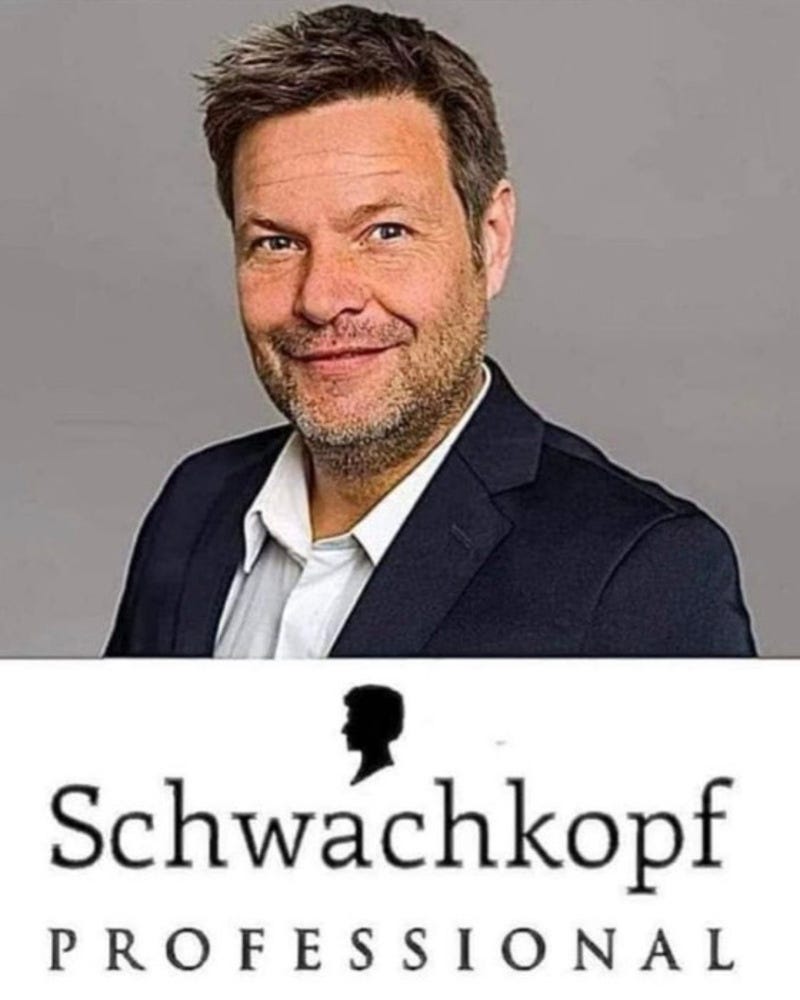
In June 2024, he retweeted this image …
… which appropriates the logo of a popular cosmetic brand to suggest that Robert Habeck, our Green Minister of Economic Affairs, might be a “professional moron”.
Habeck and his associates are notorious for pursuing internet users who share highly illegal content of this nature. They brought Niehoff’s retweet to the attention of authorities, and the Bamberg public prosecutor’s office decided that Niehoff was indeed guilty of a criminal speech offence. The Bamberg District Court then issued an order permitting the police to search Niehoff’s residence and confiscate his electronic devices.
In this order, reproduced by NiUS, the judges explained their rationale as follows:
On the basis of the investigations to date – in particular the screenshots of the posts and the investigations into the user of the X-account “IchbinFeinet” – there exists the following suspicion of a criminal offence:
The accused is the user of the account “IchbinFeinet” on the internet platform X with approx. 901 followers.
At a time that cannot now be determined more precisely, in the days or weeks before 20 June 2024, the accused published an image file using his account that showed a portrait of the Federal Minister of Economic Affairs with the words “professional moron” … in order to defame Robert Habeck in general and to make his work as a member of the federal government more difficult.
The public prosecutor’s office affirms the public interest in criminal prosecution.
This is punishable as defamation directed against persons of political life in accordance with §§ 185, 188 para. 1, 194 StGB. …
The measures ordered are proportionate to the severity of the offence and the strength of the suspicion and are necessary for the investigation …
Armed with this document, Schweinfurt police showed up at Niehoff’s house at 6:14am yesterday morning and took his tablet. Police later told the press that the raid was one in a series of enforcement actions – part of something called “an action day against cybercrime”. By harassing a lot of cybercriminals all at once, police and prosecutors hope to send a message to the people of Germany that they cannot just retweet anything, and that they may only retweet the right things.
November 13, 2024
“The term ‘Maple MAGA’ is a derogatory slur used by Canadian liberals”
I have to admit I was only vaguely aware of the “Maple MAGA Mafia” identified by Canadian Deputy Prime Minister Christia Freeland, so I’m glad Fortissax is here to provide some background for me:
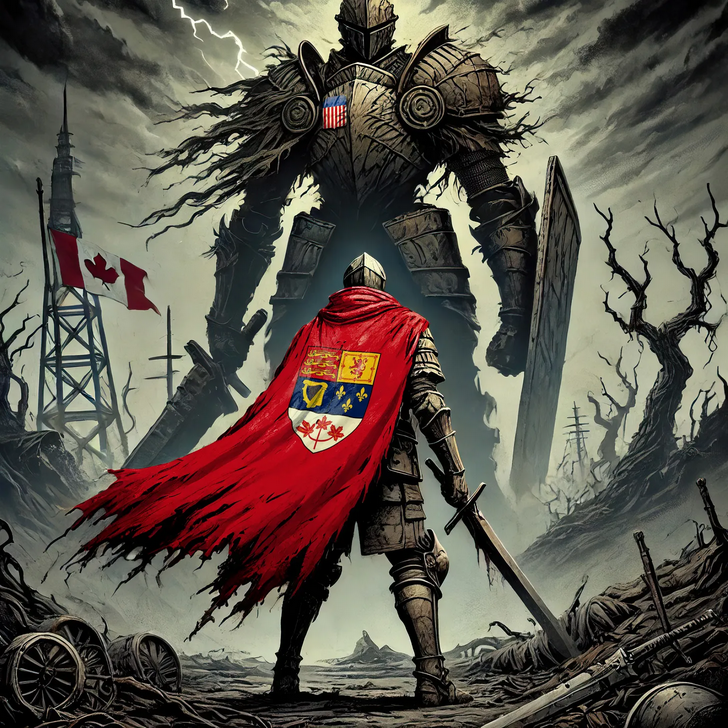
An insignificant yet loud minority among right-wing Canadian populists on Xitter are calling themselves “Maple MAGA”, with some expressing a reasonable desire for Canada to restore itself with a “MAGA ideology”. The term “Maple MAGA” is a derogatory slur used by Canadian liberals, coined by Chrystia Freeland, Deputy Prime Minister — Wicked Witch of the North — and is not intended as a term of endearment. The more extreme accounts are even calling for the outright annexation of Canada by the United States, which all Canadians should oppose if they value their dignity and self-respect. I’d invoke the memory of our Fathers of Confederation, the innovation behind the Avro Arrow (once the world’s most advanced bomber interceptor), possessing the fourth largest navy in the world after WWII, Samuel de Champlain’s great expedition and exploits, the Filles du Roi, and the Loyalist Americans who, like Aeneas leading the Trojans after the fall of Troy in the Iliad, marched north to Canada after the Revolutionary War to found a new civilization. Yet, if they already knew or identified with our glorious past, they wouldn’t be so quick to support an even greater loss of independence and sovereignty to the almighty American empire.
Make no mistake, I admire and appreciate the United States, if that wasn’t clear. There are no people more similar to the Canadian people in the world than Americans. They are Canada’s largest trading partner. Both countries were born of Albion’s Seed, sharing the North American frontier experience, and forming a family of five great Anglo nations spread on four continents, once united under a single imperial government, and now vassals of its successor. Had the United States not elected Donald J. Trump, it would have continued down a path unopposed, as bad or worse than Canada under the liberal party. There is a very real opportunity for this American Caesar to reverse much of the socioeconomic and cultural damage wrought upon it by enemies foreign and domestic. Elon Musk’s acquisition of Twitter, now X, once the bias was removed quickly became a right-wing dominant forum where truths long-feared would embolden many, everywhere to speak their minds. Elon fulfilled the ancient internet prophecy that all public forums with no censorship become right wing, simply because of the objective truths.
Elon didn’t turn it right-wing, he simply removed the government censorship of the DEI cultist board, and their allied state goons in the intelligence agencies from suppressing stories and information from reaching the American public, and the world. The Counter-Elite, a loose alliance of the Paypal Mafia, Peter Thiel, Elon Musk and MAGA populists, in America are a force of nominal good, a positive for right-wing dissidents around the world fighting their own existential struggles against local managerial regimes. If Trump and the cast of would-be heroes succeeds, the United States will enter an era of unprecedented recovery for the forseaable future—though it’s not a magic bullet for the civilizational decline as recently written about by fellow Substacker Dave Green, aka The Distributist.
The United States was Canada’s first, and arguably still its greatest, existential threat — ironically, mostly through no fault of its own, but rather due to its Jupiterian gravity beside little Canada. Canada may be the second-largest country on the planet after the Russian Federation, but it’s a small nation, with only an estimated 28 million ethnic Canadians, 90% of whom live within 200 kilometres of the U.S. border, as much of the country is an inhospitable wasteland of spruce bog and rock, almost impossible to settle due to permafrost. The habitable areas are extremely hot in summer, or extremely cold in winter. Canadians have often looked southward at the Titan with a sense of fatalism. Many intellectuals and journalists over the centuries have wondered when, if, how, and where Canada would meet what felt like its “inevitable” dissolution into the hands of the Yankees. Despite these fears, that dissolution never came.
Yet whispers of provinces seceding — making the “great escape” from the failing post-national economic zone Canada has become to join the booming, recovering United States — are on the lips of some Canadians. If not outright secession, than abandoning the monarchy, establishing a constitutional republic modelled off of the United States of America, copying the constitution, and pathetically copying its culture. I believe the majority of right-wing Canadians would favour constitutional reform to enshrine our own equivalent of legally protected freedom of speech and the right to bear arms. These are ancient English traditions of the “Yeoman” or Free Man, with roots visible in free speech and weapon-carrying practices across the ancient Germanic world. They are by no means exclusive to the United States. Canada and England had considerably relaxed gun laws until recent decades, and changes like these wouldn’t require us to sacrifice our sovereignty to the U.S.
October 24, 2024
It’s called “piercing the corporate veil” and it’s a terrible idea
Tim Worstall explains why the EU’s latest brain fart is not just a bad idea in its own right, but a truly horrific precedent for the future:
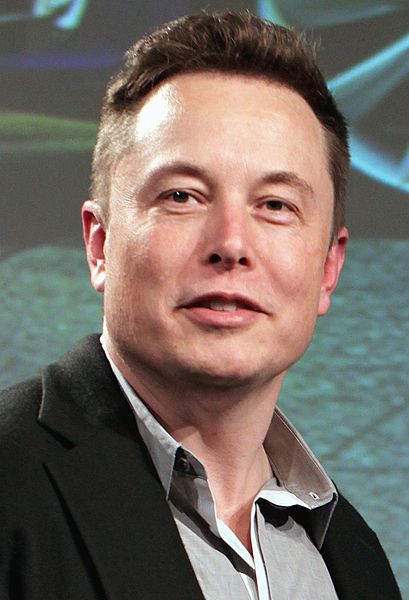
Elon Musk at the 2015 Tesla Motors annual meeting.
Photo by Steve Jurvetson via Wikimedia Commons.
… But now, this, now this is even more important than that. We can deal with free speech by the judicious use of lampposts. This is worse:
The European Union has warned X that it may calculate fines against the social-media platform by including revenue from Elon Musk’s other businesses, including Space Exploration Technologies Corp. and Neuralink Corp., an approach that would significantly increase the potential penalties for violating content moderation rules.
Under the EU’s Digital Services Act, the bloc can slap online platforms with fines of as much as 6% of their yearly global revenue for failing to tackle illegal content and disinformation or follow transparency rules.
In English law that’s known as “piercing the corporate veil”. It’s also something we don’t do. Because that corporate veil is the very thing, the only thing, that makes large scale economic activity possible.
It has actually been said — and not just by me — that the invention of the limited company is the third grand invention of all time. Agriculture, the scientific method, the limited company.
Before the limited co everything was done through partnerships. Every individual involved in the ownership of something was liable for all of the debts of that thing. Which, when you’ve got 5 or 10 blokes trading isn’t that bad an incentive upon them to be honest.
Now think of large scale activity. We want a blast furnace — plenty of folk say Britain should have one after all. £3 to £5 billion these days. OK. No one’s got that much. So, we need to mobilise the savings of many thousands of people to go build it. But without limited liability that means all of those thousands are liable for all the debts — off into the future — of that blast furnace.
“Invest £500 in the new, new British Steel. And if we fuck up then in 10 years’ time they’ll come and take your house.”
Err, yes.
Large scale economic activity depends upon being able to separate the debts of one specific activity from the general economic life of all its backers. If this is not true then no one will invest in large scale economic activity. Therefore we won’t have large scale economic activity. Which would, you know, be bad.


