Quotulatiousness

June 8, 2026

Milton Friedman – accessory to Grand Theft Taxation

Filed under: Bureaucracy, Economics, Government, History, USA, WW2 — Tags: , — Nicholas @ 05:00

I’ve only read a small part of Milton Friedman’s work, but I have great respect for him and think that overall, he was a very strong proponent for smaller, less intrusive government. But there’s one terrible thing that he was instrumental in implementing that almost outweighs everything else:

Milton Friedman’s greatest regret.

The federal government discovered the perfect crime in 1943: make employers collect taxes before workers ever see their paychecks. You think you earn $60,000 per year, but you actually earn $75,000 and hand over $15,000 to politicians without ever touching it. The psychological difference is enormous.

Before payroll withholding, Americans wrote quarterly checks directly to the Treasury. Picture yourself sitting at your kitchen table, writing a $3,750 check to the IRS every three months. The pain was immediate and visceral. Politicians faced constant pressure to justify every dollar because citizens felt the extraction in real time.

Withholding transforms this concrete loss into an abstract accounting entry. Your employer becomes an unpaid tax collector, and you never experience the actual cost of government. Worse, most people celebrate their tax refunds as government generosity rather than recognizing them as interest-free loans they provided to politicians. The Treasury collects your money throughout the year, spends it immediately, then returns your own cash and receives gratitude.

This system enables the explosion in government spending you witness today. Defense contractors billing $640 for toilet seats, agricultural subsidies for corn syrup, and congressional salaries for 535 people who rarely show up to work. When taxation feels painless, voters stop demanding accountability for how their money gets spent.

Milton Friedman helped design withholding as a wartime emergency measure and later called it his greatest regret. Free market economists recognized that the psychological pain of direct taxation creates political pressure for fiscal restraint. The temporary always becomes permanent in government hands, and the emergency justification disappears while the extraction mechanism remains forever.

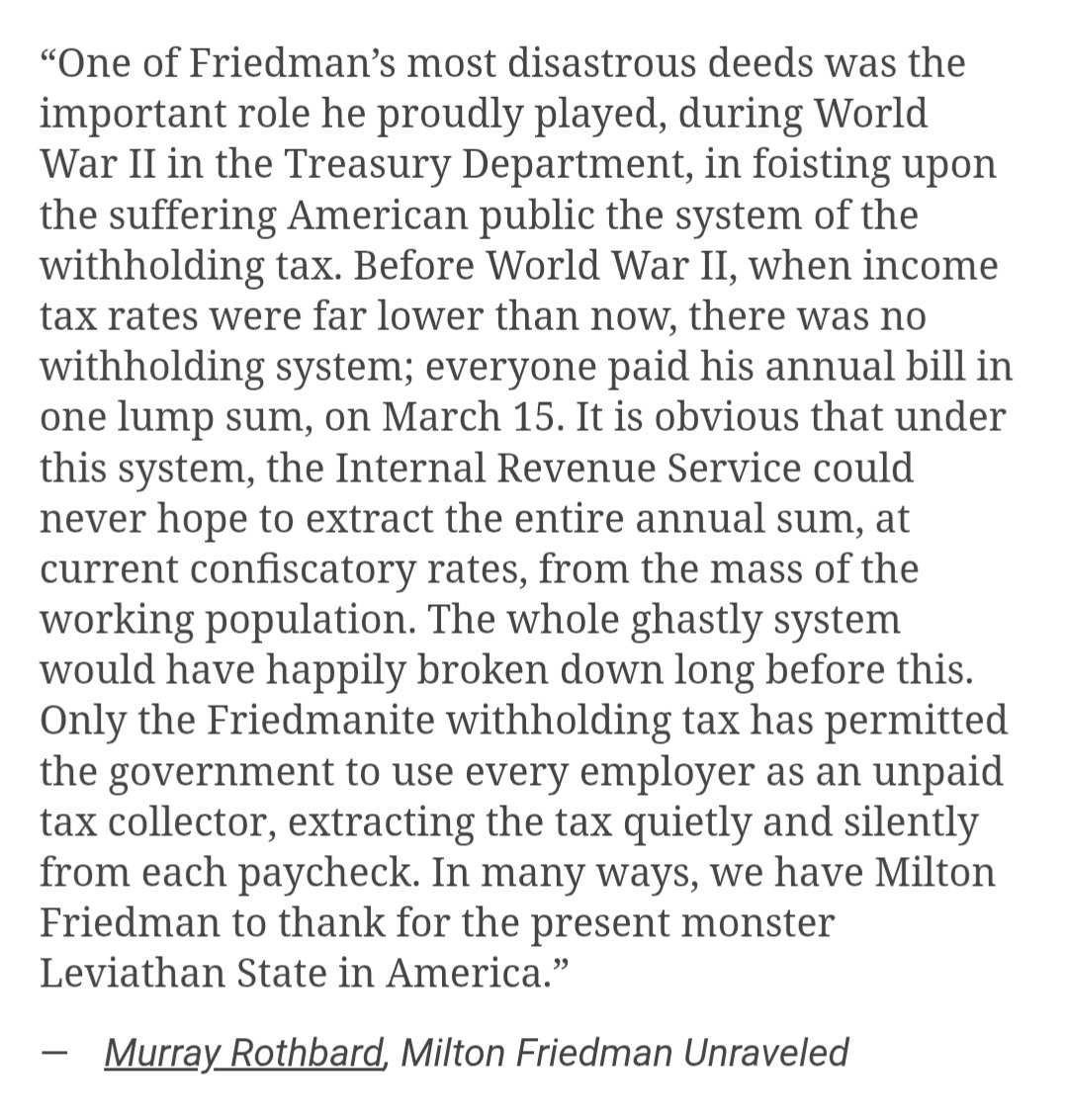
Libertarian economist Murray Rothbard was far more scathing about Friedman:
A Brief History of Nuclear Weapons in Canada

Filed under: Cancon, History, Military, USA, Weapons — Tags: , , , , , , , — Nicholas @ 04:00

Polyus
Published 6 Jun 2026 #aviationlovers #canadianaerospace #PolyusStudios

Canadians themselves were largely opposed to nuclear weapons but their utility in a full out conflict was impossible to ignore. And so up until fairly recently the Canadian government’s position on the matter was deliberately ambiguous. Promoting peace while supplying the means of war. Now with the luxury of hindsight we can see the true extent to which these weapons played a central role in the defense of this country during the Cold War.

Like it or not, Canada was a threatening and potent nuclear-armed force during a 9 year period between 1963 and 1972. The posturing was offensive in Europe, and defensive on Canadian soil. The last defensive weapons were relinquished in 1984. Nuclear weapons were adopted as part of its network of alliances, when it became obvious that the Soviet missile threat could only be defeated by deterrence. Politically the nuclear question was a hot potato, John Diefenbaker tried to keep the weapons out, Lester Pearson let them in, and Pierre Trudeau kicked them back out again.

This video was made without the use of Artificial Intelligence (No AI). Long live people power!

0:00 Introduction
1:20 Uranium mining in the North
2:31 Tube Alloys and the Manhattan Project
4:10 Post war fears of Soviet army and Canadian build up in Europe
6:04 Air threat from Soviet bombers
8:05 The case for nuclear weapons
9:28 Cancellation of the Arrow in favour of nuclear weapons
10:55 Defensive nukes
13:39 Offensive nukes
16:15 Nuclear capable platforms
16:59 Types and numbers of deployed weapons
18:30 Legacy and impact of these weapons
19:55 Conclusion

Support me on Patreon – / polyusstudios

Music:
Denmark – Portland Cello Project
Your Suggestions – Unicorn Heads

“Friedrich Nietzsche predicted our culture more than a century ago”

Filed under: Europe, History, Politics, USA — Tags: , — Nicholas @ 03:00

On the social media site formerly known as Twitter, Creative Deduction give Nietzsche credit for predicting how western cultures would change to the state we find ourselves in today:

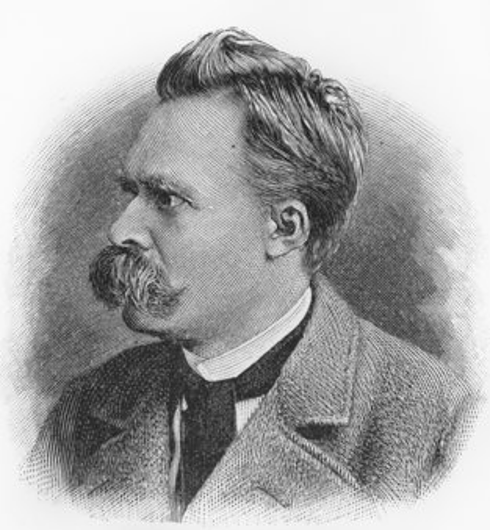
Friedrich Nietzsche predicted our culture more than a century ago.

A society where victimhood confers status; where weakness is celebrated as virtue; where grievance brings moral authority; and where the highest aspiration is not greatness, but comfort.

He regarded it as a symptom of civilisational decline. In place of the old aristocratic values of strength, courage and self-overcoming, Nietzsche saw the rise of what he called “slave morality” — a worldview that elevates weakness, suffering and resentment into virtues. The modern celebration of victimhood, where people compete to present themselves as the most oppressed, is this mentality. Rather than striving to overcome hardship, many now seek status and moral authority through claims of injury and grievance.

Nietzsche was deeply contemptuous of those who pursue safety and comfort above all else. He mocked the “last man”, the small-souled creature who wants nothing more than a warm bed, entertainment and protection from anything difficult or dangerous. For Nietzsche, struggle was not an unfortunate condition to be eliminated, but the very source of meaning, growth and greatness. Without resistance, there is no self-creation.

The modern welfare state would have horrified Nietzsche. By shielding people from the consequences of their actions and removing the necessity of struggle, it does not liberate — it enfeebles. It creates populations that are materially secure but existentially empty, dependent on the state rather than on their own strength and initiative. Nietzsche believed that genuine human flourishing requires the willingness to endure hardship and take responsibility for one’s life. A society that makes comfort its highest value and victimhood its highest status inevitably produces weak, resentful people who have forgotten how to live.

How Red Dot Sights Work (What is a Collimator?)

Filed under: History, Military, Weapons — Tags: , , , — Nicholas @ 02:00

Forgotten Weapons
Published 16 Jan 2026

A whole lot of people have used red dot sights, but how many actually understand how they work? Let’s see if we can fix that today …
(more…)

QotD: Re-use, recycle, and contaminate

Filed under: Economics, Health, History, Quotations, USA — Tags: , , — Nicholas @ 01:00

At the start of the twentieth century, American consumers were still living in what today’s greens would consider a state of grace. They carried their own baskets and cotton bags to the grocery store and brought home food wrapped in biodegradable paper. They didn’t use disposable towels in public bathrooms, which provided cloth towels attached to rollers. There were no Styrofoam cups for coffee and no plastic bottles of water. When people wanted water in a public place, they’d get it from the spigot of a drinking fountain by filling a tin cup chained to the fountain.

This “common cup” was the ultimate reusable product — much to the horror of public-health experts, who blamed it for spreading tuberculosis, pneumonia, diphtheria, meningitis, and other diseases. Alvin Davison, a biologist at Lafayette College in Pennsylvania, analyzed cups from public schools and reported in 1908 that a single sip from a student left a residue of 100 dead skin cells and 75,000 bacteria. He used the scrapings from one school cup to induce fatal cases of pneumonia and tuberculosis in guinea pigs.

His article “Death in School Drinking Cups” provided support to “Ban the Cup” campaigns around the country. The first successful one was led in Kansas by Samuel Crumbine, a colorful doctor who had started his career in Dodge City (he was the model for Doc Adams in the long-running Gunsmoke television series) and went on to lead various public-hygiene crusades. The term “flyswatter” comes from a slogan he popularized, “Swat the fly” (which came to him while listening to the crowd at a baseball game urging a hitter to swat a sacrifice fly ball). After watching train passengers with tuberculosis and other diseases drinking water from a common cup, Crumbine got so upset that he threw the cup out the train’s window, and proceeded to persuade his colleagues on the state board of health to ban the common cup in trains, schools, and other public places in Kansas in 1909.

The ban left Kansans with a new problem: What were they supposed to use at a public fountain? Fortunately, as Crumbine later recalled, “Necessity proved to be the mother of invention.” Shortly after banning the cup, Crumbine was visited by a former Kansan named Hugh Moore, who brought with him samples of a product that his brother-in-law had invented: round paper cups that could be stacked in a dispenser next to a fountain. Crumbine’s endorsement provided crucial help to Moore in selling his product, originally called Health Kups and later renamed Dixie Cups.

John Tierney, “Let’s Hold On to the Throwaway Society”, City Journal, 2020-09-13.

Powered by WordPress