Quotulatiousness

July 25, 2025

The Royal Canadian Navy announces eight of the Kingston-class ships will be retired this year

Filed under: Cancon, Military — Tags: , , — Nicholas @ 05:00

The Kingston-class Maritime Coastal Defence Vessel (MCDV) has been in RCN service starting in the mid-1990s and they’ve apparently done well for the navy in their intended role. Unfortunately, naval ships have a normal working life expectancy of 20-30 years, and the Kingstons are at the upper end of that range, so it’s not surprising that they will be taken out of service. It is a bit of a surprise that the announcement came on Thursday and two-thirds of the class will be paid off this fall, without a direct successor class of ships on the slipways:

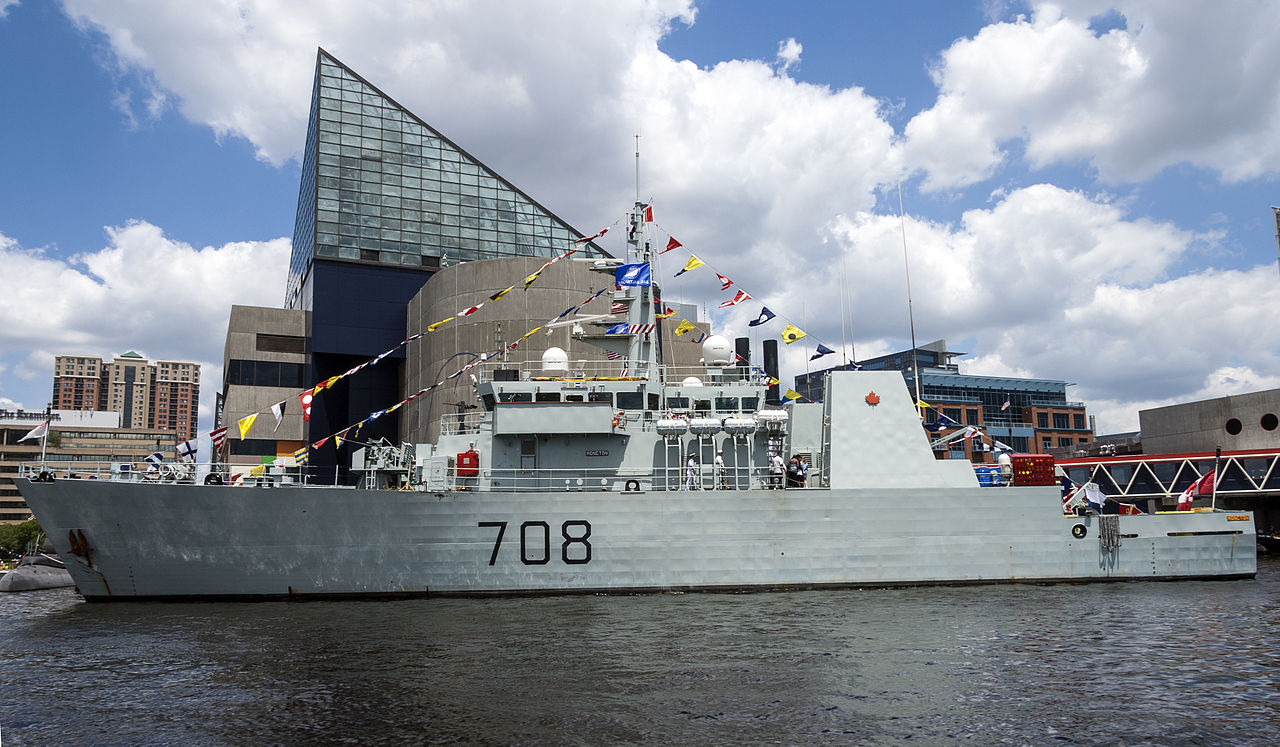
The Kingston-class Maritme Coastal Defence Vessel (MCDV) HMCS Moncton in Baltimore harbour for Sailabration 2012.
Photo by Acroterion via Wikimedia Commons.

Starting this fall the Royal Canadian Navy will begin divesting of the Kingston-class vessels. Eight of the Kingston will be divested while four, Moncton, Yellowknife, Edmonton, and Nanaimo will remain in service for the time being.

Formal ceremonies will take place in Halifax for Shawinigan, Summerside, Goose Bay, Glace Bay and Kingston. Ceremonies in Esquimalt, B.C. will be held for Saskatoon, Whitehorse and Brandon.

The remaining four will be divested over the next three years:

  • Yellowknife in 2026
  • Edmonton in 2027
  • Moncton and Nanaimo in 2028.

The duties of the Kingstons will be transferred to other vessels in the fleet. The AOPS have already taken over the OP CARRIBE and Patrol roles the last few years, while training duties will be moved fully to the Orca [class].

The new Remote Minehunting and Disposal Systems, being containerized can theoretically be deployed on any available vessel, and will be another role taken by the AOPS and the Kingston divest. They’ve already been doing MCM testing so that shouldn’t be a surprise to anyone.

The remaining four Kingstons will likely continue to participate on things like OP REASSURANCE, which Yellowknife and Edmonton are currently deployed on until October as part of SNMCMG1.

In basic terms the AOPS will be taking over a majority of the Kingston‘s tasks, which they have been slowly adding to their belt already. To say there hasn’t been a slow transition would be ignorant of me.

Nor is this surprising. We knew this was coming. Its been an open discussion for a while. I expected we would hear something this year about the divestment plan, however I didn’t expect eight to be paid off right away.

That comes as a surprise to me, also dropping it out of the blue. I wasn’t expecting this to come at this time, so this is a rare moment of genuine shock for me. Of course the Kingston fleet isn’t in the greatest of shape.

Several haven’t sailed in years (I believe Whitehorse is on almost five?) and the decision to not do another refit was basically the death blow to the class as a whole.

Things get harder before they get better. It is better to divest now and have people available for the platforms that are working and in greater need than it is to try and stretch the Kingstons for a few extra years, nor was it deemed worth the ever-increasing cost to keep them in service.

The Kingstons will be replaced by the future Continental Defence Corvette. I expect as the fall comes that we will be hearing more publicly about the project. I was a bit surprised they didn’t bring it up in the Press Release given it’s not exactly a secret, although it was teased a bit.

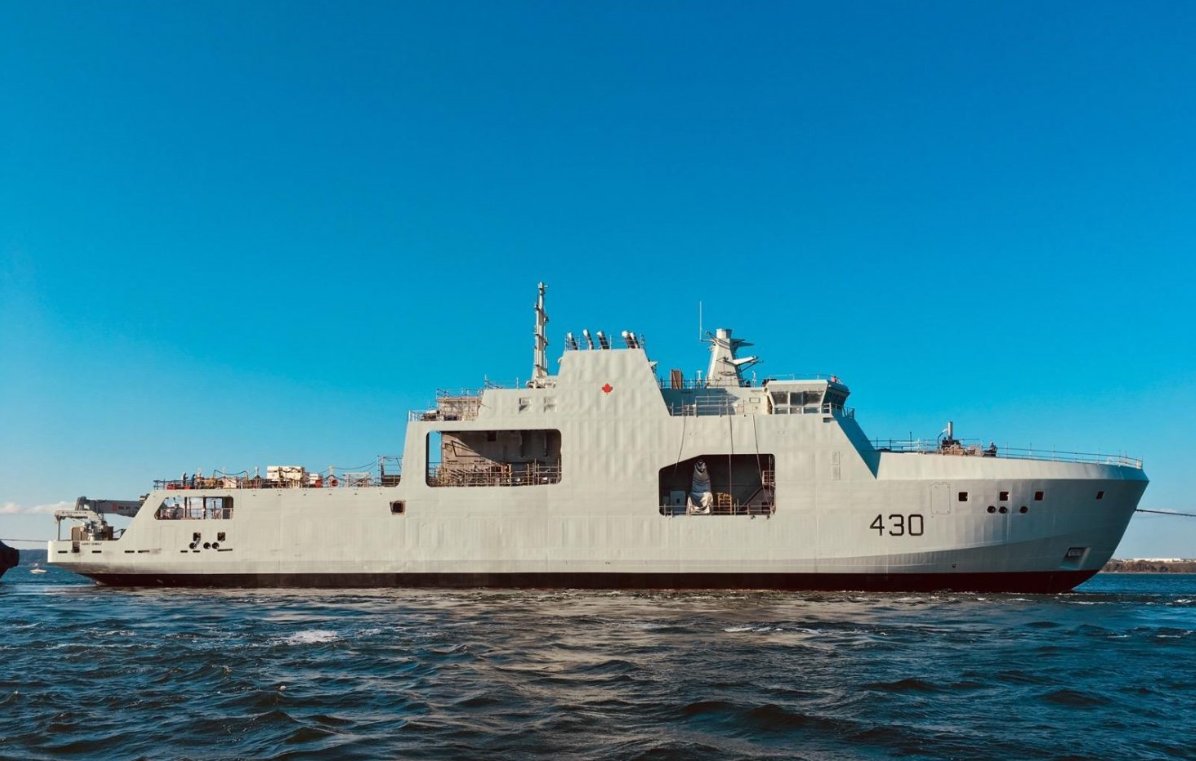
Arctic Offshore Patrol Ship (AOPS) HMCS Harry DeWolf shortly after launch in 2018. The ship was commissioned into the Royal Canadian Navy in June, 2021.

June 15, 2025

Militarizing the Canadian Coast Guard (or not?)

Filed under: Cancon, Government, Military — Tags: , , , — Nicholas @ 03:00

Noah tries to get some solid information on the recent announcement by the Prime Minister that as part of changes to bring Canada into line with our decade-old NATO commitments, the Canadian Coast Guard would be moved from the civilian oversight of the Ministry of Fisheries and Oceans to the military oversight of the Ministry of National Defence. Oddly, the government seems to have been caught rather flat-footed by the PM’s announcement:

When Monday came I was invited to take part in a Media Briefing before [the PM] took questions. My immediate goal was to bring this topic up and get some sort of official words on what these plans were, especially after it wasn’t mentioned in [Carney’s] speech beforehand.

[…]

What we were told was that no such move was taking place, nor plans to arm the Coast Guard and that the current plan was to focus on augmenting their capabilities through new sensors and further collaboration with the RCN.

It was a definitive statement, one that we all agreed was cut and dry. I even reached out to other journalists before adding it to the livethread to make sure we were on [the same] page.

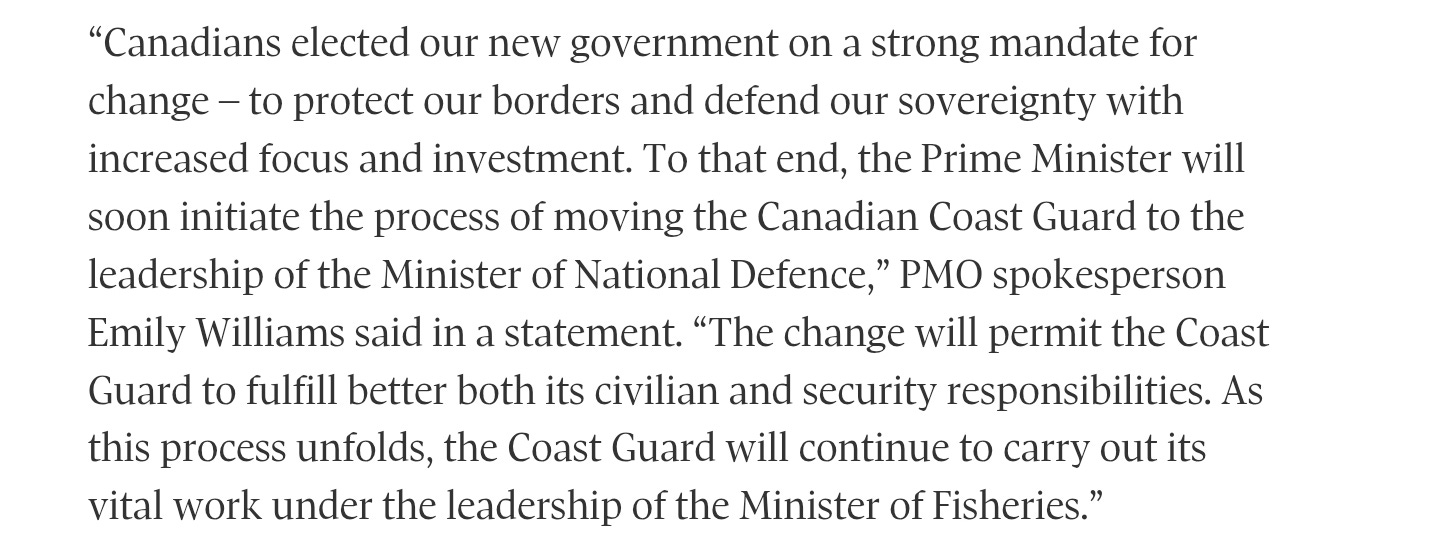
So imagine my surprise when Steven at the G&M came out blazing with a straight no, the plan is to move them. He even came backed up with a statement from the PMO, and credit to Steven, he was quick on this:

Credit to Steven Chase at the Globe & Mail

So as you can imagine my new goal was to figure out what exactly the hell was happening to the Coast Guard, with multiple competing statements on the subject. I made it my mission to have a definitive answer.

So it was back to asking, and emailing, everyone, from the DND to the PMO, CCG to the DFO. I got in contact, I dug into sources, even went as far as to ask people in industry if they had heard anything.

What I got for the first few days was chaos. Multiple statements saying that info wasn’t available, more time was needed. I got outright denial from the DND, only to be told they would email me back with info (they never did)

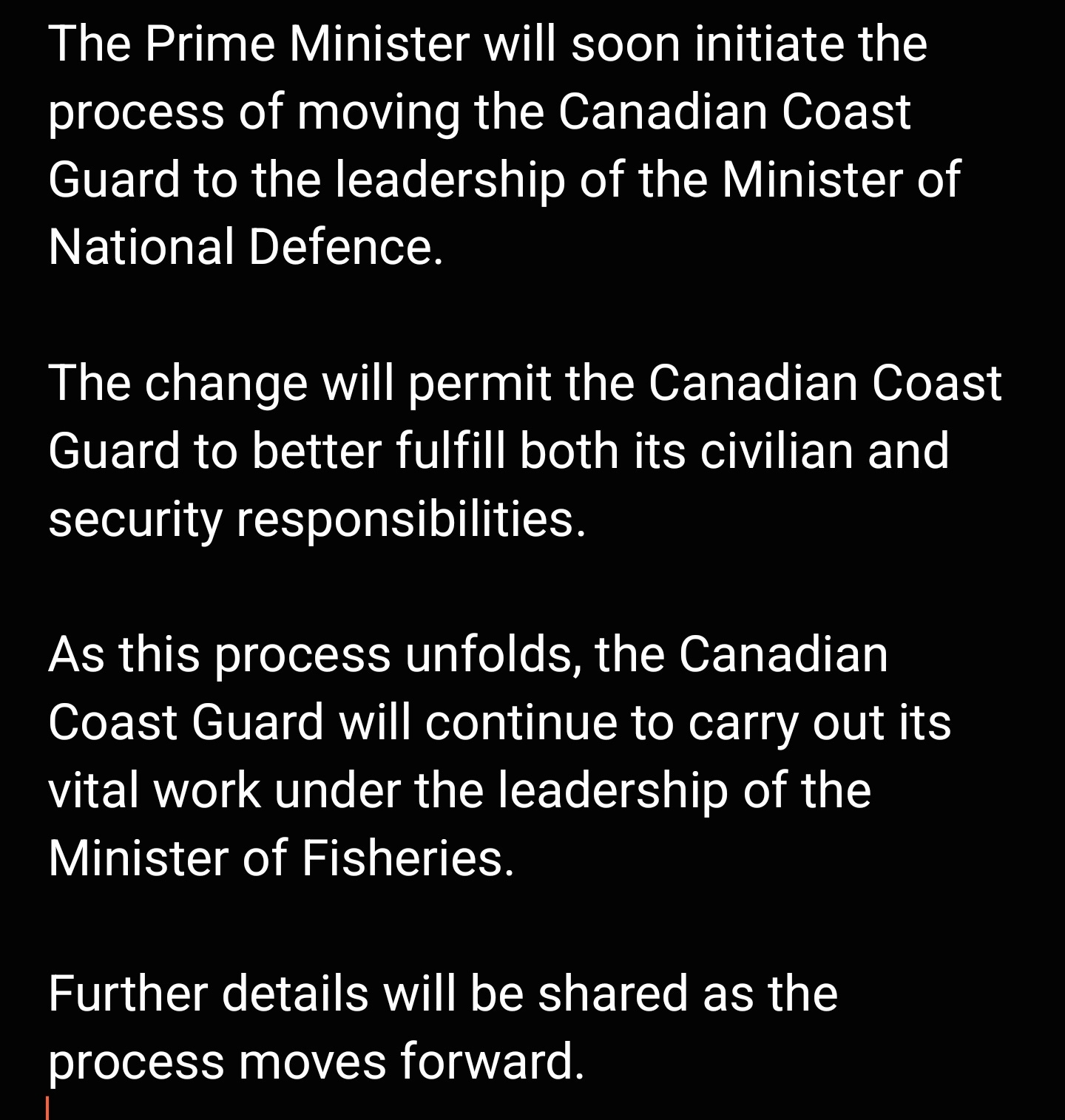
The PMO also told me info would be available when they had it. Evidently as of the time of this writing they have not responded. The only one to stay in contact and provide an answer to my question:

So as far as I was concerned this was a deal closer. The Coast Guard will be moving under the leadership of the Minister of National Defence. What will this look like? We don’t know. I had hit a dead end at this point, where sadly my reach was no longer wide enough for info.

Thankfully, there were others also keen on this, and wanting to get to the bottom of this, and they got farther than me. I will highly recommend my boy Stuart’s article on this as he got farther than me.

What has become evidently clear is:

  1. The Coast Guard is moving
  2. The idea is facing stiff resistance

This isn’t a shock at all. The DFO folks I talked to felt very caught off guard by everything, and the general reaction I have talking around was that this was a bit unexpected.

If accurate, then it is clear that this is the choice of the Prime Minister. He is the one who wants this, and so is making the final push. That isn’t to say he is the only one, but this has his backing and he will push that through.

June 6, 2025

“All the Little Ships” (1964 – CBC Telescope)

Filed under: Britain, Cancon, History, Military, WW2 — Tags: , , , — Nicholas @ 04:00

Royal Canadian Navy / Marine Royale Canadienne
Published 5 Jun 2025

πŸ‡¨πŸ‡¦ Honouring 80 Years of Courage at Sea βš“

To mark the 80th anniversary of the end of the Second World War and the Battle of the Atlantic, the Hamilton Naval Association is proud to reintroduce a long-lost Canadian treasure: “All the Little Ships”.

Originally aired in 1964 on CBC’s Telescope, this rare film features recently retired Admiral Harry DeWolf aboard HMCS Haida as he tells tales not only of HMCS Haida but of “All the Little Ships” of the wartime RCN. Never-before-seen footage shot by Bill Pugsley, a wartime officer who resigned his commission so he could serve two years on the lower deck, as a gunner, and document it.

πŸŽ₯ A story of sacrifice, memory, and Canada’s naval legacy β€” rediscovered. A special thank you LCdr Doug Martin (Ret’d, former CO of HMCS Star).

The opinions expressed in this video are those of the original creators and do not necessarily reflect the official policy or position of the Royal Canadian Navy. Any references to outside organizations, products, or services do not constitute endorsement or affiliation.

#WeTheNavy #CanadaRemembers #HelpLeadFight

April 9, 2025

Stretching the RCN’s limited number of AOPS too thin?

Filed under: Cancon, Military — Tags: , , — Nicholas @ 05:00

I admit that I doubted the overall utility of the Harry DeWolf-class of Arctic/Offshore Patrol Ships when they were announced, but aside from the typical teething troubles of new ship designs they seem to be doing a good job at their initial taskings. Noah, on the other hand, proudly describes himself as “perhaps their [the AOPS] biggest online defender“, but he’s raising concerns that the Harry DeWolf class will soon be expected to pick up the slack as the Kingston-class Maritime Coastal Defence Vessels come to the end of their working lives with no obvious replacements under construction:

Arctic Offshore Patrol Ship HMCS Harry DeWolf shortly after launch in 2018. The ship was commissioned into the Royal Canadian Navy in June, 2021.

It’s a common fact that I love the AOPS.

I am perhaps their biggest online defender, despite the hate, the early issues, and the slander. They, to me, are the perfect vessel for what we require up North, modular, flexible, with a whole world’s of potential.

The six vessels that make up the DeWolfe-class have kept themselves busy, so busy that you often forget that they are, primarily, Arctic vessels. Now that isn’t to say they can’t take other tasks, nor should they be limited.

OP CARRIBE, a trip to Antarctica, hosts of exercises. The AOPS manage to be kept busy, while still finding time for trips up North, although not nearly as much as many would seem to like.

Their ability to hold containerized payloads has also seen them used as testbeds for various capabilities, including towed arrays for ASW, submarine rescue equipment, and in the future, RMDS and unmanned systems like Cellula Robotics’ Guardian AUV.

Indeed, the AOPS are slowly, though surely coming into their own. Yet it is those things it does well, that potential, that puts them in the spotlight among a fleet that is aging and soon set to dwindle in numbers over the next decade.

The looming writing off of the Kingston-class is coming faster and faster everyday, and soon, they will be gone. The little workhorses, whom performed far more than anyone could have asked of them.

The Kingston-class Maritime Coastal Defence Vessel (MCDV) HMCS Moncton in Baltimore harbour for Sailabration 2012.
Photo by Acroterion via Wikimedia Commons.

The Kingstons have been a backbone, beyond the littoral-patrolling minesweeper they were envisioned as when the MCDV project was first stood up.

Yet the Kingstons as we know them are to be retired with no true replacement, their original tasks overtaken by other systems and automation.

Their original replacement, as part of the OPV project has evolved into the Canadian Multi-Mission Corvette, a vessel envisioned to one day be a true second-line combatant to complement the River-class destroyers.

Instead the tasks of the Kingstons shall fall onto the small number of AOPS in service. They will be tasked, not only to fulfill their role as Arctic Patrol ships, but now take the mantle of fulfilling a host of growing secondary tasks that has been filled by these cheaper, smaller vessels.

Add on a Halifax-class that is struggling to stay afloat, bouncing around various states of condition and expected to keep sailing for another decade. Even as the River enter service, the tasks of the Kingstons will not be filled by them.

It’s a lot of strain and demand to put on vessels that are not only significantly larger than the Kingstons, but also significantly more expensive to operate on fulfilling tasks like OP CARRIBE, where while they may be very valuable assets, might not be optimal in lieu of smaller vessels that can easily fill the same role just as efficiently.

On that note it also can’t be understated that the more we put on the AOPS, the more we take it away from its Arctic taskings, and the more we expect of these six vessels to do almost every secondary task, the more we create gaps in our continental defence.

Six AOPS not only for Arctic Patrol, but MCM, Submarine Support, Seabed Warfare, things like OP CARRIBE … How can we expect these vessels to remain in service for the next quarter-century with all this strain?

We don’t talk about these vulnerabilities a lot, but as it stands Canada is severely vulnerable to adversaries and foreign actors ability to leverage asymmetric methods to limit our ability to respond abroad and severely harm Canada’s strategic infrastructure.

March 13, 2025

Leadership of HMCS Harry DeWolf take a TOUR of HMCS Haida National Historic Site, Parks Canada

Filed under: Cancon, History, Military — Tags: , , , — Nicholas @ 02:00

Royal Canadian Navy / Marine Royale Canadienne
Published 10 Nov 2024

Canada’s “most fightingest ship” served in our Navy for 20 years between 1943 and 1963. The last Tribal Class Destroyer in the world, it and its company persevered through the Second World War, Korean War and Cold War.

The ceremonial flagship of our Navy, HMCS Haida was saved from the scrapyards and now rests in Hamilton as a museum ship, a Parks Canada National Historic Site.

One of HMCS Haida‘s Captains was the Naval hero Harry DeWolf — the namesake of the Harry DeWolf Class of ships. The grandson of a Veteran who served on the ship recently took the leadership of HMCS Harry DeWolf for a tour after arriving alongside, showing the stark differences between the newest vessels of our fleet and this vintage destroyer showing the many differences between life in the Navy then and now.

#CanadaRemembers #HelpLeadFight

March 6, 2025

HMCS Bonaventure – The Pride of Canada’s Fleet

Filed under: Britain, Cancon, History, Military — Tags: , , , , , , — Nicholas @ 02:00

Skynea History
Published 22 Oct 2024

For today’s video, we’ll be looking at the last of Canada’s aircraft carriers. Not typically a navy you associate with that kind of ship, but the Canadians actually operated three during the Cold War.

The third, HMCS Bonaventure, is an interesting one. A small ship, that operated aircraft at the very edge of her capability. And routinely baffled American pilots in the process.

Yet, she was also a ship that came to an end before her time. Decommissioned and scrapped, right after an expensive (and extensive) mid-life overhaul. In what is generally seen as a bad political move, more than anything to do with her capabilities.
(more…)

February 12, 2025

Poilievre’s outlined plan for the Canadian Arctic gets the CDR Salamander seal of approval

Filed under: Cancon, Military, Politics — Tags: , , , — Nicholas @ 05:00

Although most of the attention is on the still ongoing Trump tariff tantrum, there is still the required battle-space preparations going on for the next federal election. Conservative leader Pierre Poilievre discussed his proposals for improving national security in the Arctic, and CDR Salamander is enthusiastic:

Pierre and Ana Poilievre at a Conservative leadership rally, 21 April, 2022.
Photo by Wikipageedittor099 via Wikimedia Commons.

… here are the highlights as I see them.

  • Canada’s Arctic is under threat. 75% of Canada’s coastline is in the far north, and 40% of her landmass. Canada needs to become self-sufficient.
  • In the fall of 2022, the Canadian military found Chinese monitoring buoys in the Arctic.
  • A Royal Canadian Navy frigate shadowed a Chinese research vessel in the Bering Strait off Alaska last year (thank you RCN friends, we don’t have any frigates nor naval bases in Alaska because … our leaders don’t understand much outside Norfolk, San Diego, or the Potomac).
  • Russia is building new bases and infrastructure in the Arctic.
  • Canada will take back control of Canadian waters, sky, and land.
  • The Canadian military today is weakened and her allies no longer respects her.
  • Canada does not have a permanent military presence in the Arctic.
  • When Prime Minister, he will increase Canadian forces by:
  • – Doubling the size of the Canadian Rangers from 2,000 to 4,000 Rangers.

    – Acquire two additional polar heavy icebreakers for the Royal Canadian Navy by 2029 on top of the two current icebreakers being built for the Canadian Coast Guard.

    – Will build Canada’s first permanent Arctic military base since the Cold War. It will be CFB Iqaluit. 100% of the cost of the base will come out of the Canadian foreign aid budget and will be up and running within two years of Poilievre becoming Prime Minister.

    – New submarines.

  • Bringing wasted foreign aid back to Canada.
  • If Canada wants to be a sovereign, self-reliant nation, it must take control of their north, secure its borders, and stand on its own two feet.
  • Canada cannot count on the Americans to do it for them.

Further on in this speech, Poilievre speaks out strongly against some of the statements of President Trump and his administration, and that is fine for me. Were I Canadian, I would say very similar things. This is OK. Friends can have disagreements now and then, but for every one item that causes friction, we will always have nine items that bring us together.

It’s all good.

January 4, 2025

Winning WW2’s Most Important Battle – Battle of the Atlantic

Filed under: Britain, Cancon, Germany, History, Military, USA, WW2 — Tags: , , , , , — Nicholas @ 02:00

Historigraph
Published 15 Aug 2024

The Second World War featured many important land battles on a colossal scale. They involved hundreds of thousands of participants, ranged across hundreds of miles and inflicted the most terrible destruction. But none of them were as long-running, as vast or as crucial to allied victory as that fought at sea in the Atlantic, where for four years Allied navies and civilian sailors fought a life or death struggle against Germany’s U-boats. This is the story of how it was fought, and how it was won.

00:00 – WW2’s most important battle
00:45 – The U-boat menace in the early years
08:53 – The massacre off the eastern seaboard
13:12 – American ship printer go brrrrrrrrr
19:31 – The Allies gain the upper hand
21:49 – Black May: the convoy battles of 1943
24:41 – The most important victory of WW2
(more…)

December 3, 2024

Canadian Armed Forces: Can the RCN Really Stop Russia and China in the Arctic?

Filed under: Cancon, Military — Tags: , , , — Nicholas @ 04:00

Esprit de Corps Canadian Military Magazine
Published 2 Dec 2024

Vice Admiral Angus Topshee recently told the National Post that the Canadian Navy is able to defend our Arctic waterways against China or Russia … without help from our allies (aka the US Navy). It is time to target just what the heck the Admiral is talking about!

November 28, 2024

Town-class destroyers – Guide 400

Filed under: Britain, Cancon, History, Military, Russia, USA, Weapons, WW2 — Tags: , , , , — Nicholas @ 02:00

Drachinifel
Published Aug 3, 2024

The Town class destroyers, old Wickes, Clemson and Cadwell class vessels of the US Navy, transferred to the British Royal Navy and others, are today’s subject.
(more…)

July 23, 2024

Trudeau announced new submarines for the RCN … don’t assume he’s really serious

Filed under: Cancon, Government, Military, Weapons — Tags: , , , , , — Nicholas @ 03:00

At The Hub, J.L. Grantastein explains why Trudeau’s hasty commitment under pressure from our exasperated NATO allies is not likely to be met, and almost certainly not to be met fully:

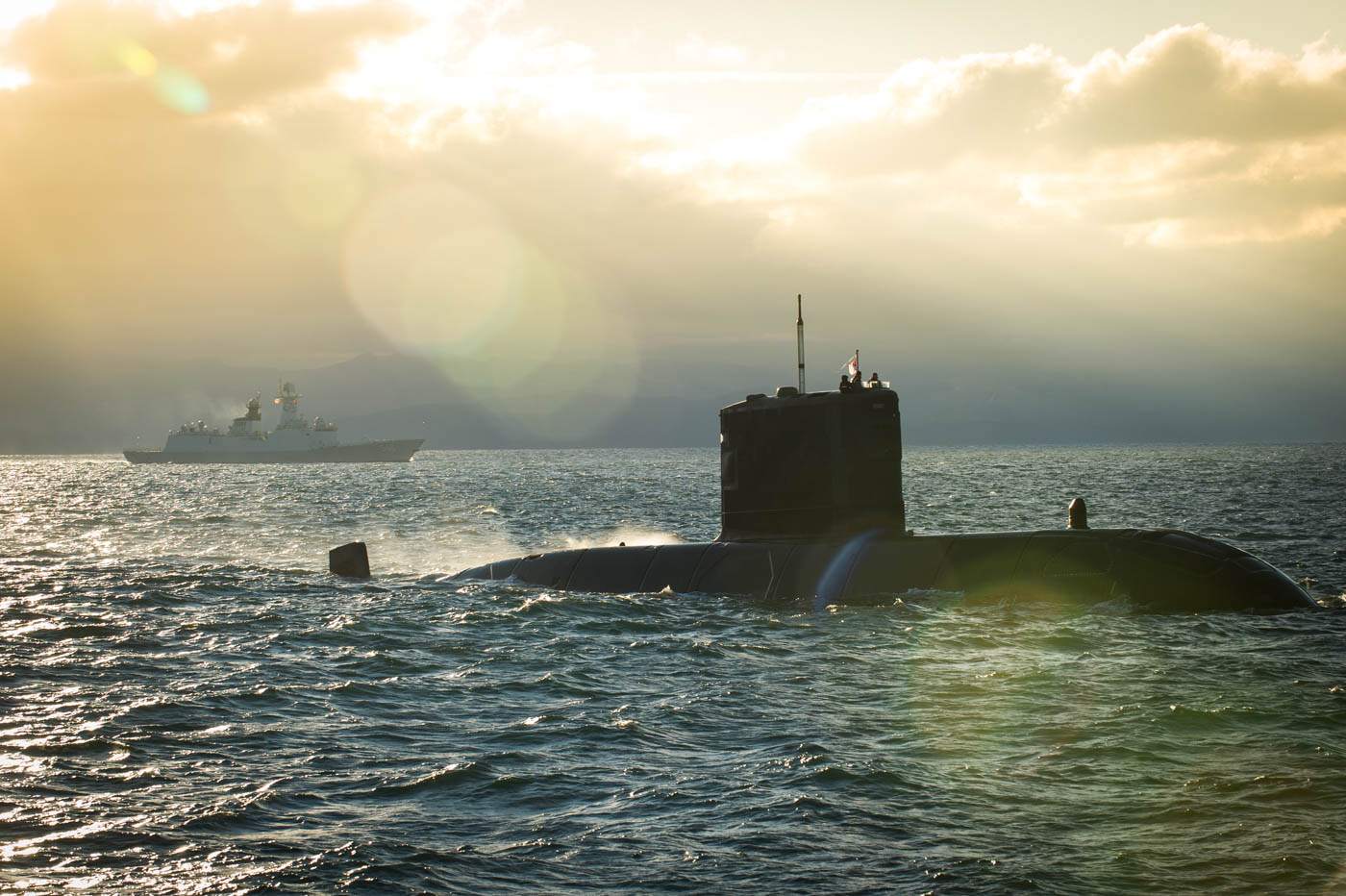
HMCS Chicoutimi escorts Peoples Liberation Army (Navy) ships visiting Victoria on behalf of the Chinese military, 13 December 2016.
Photo: Cpl Carbe Orellana, MARPAC Imaging Services, ET2016-0468-03 Β©2016 DND-MDN CANADA

Canada has no capacity to construct submarines, and the country’s shipyards are struggling to build destroyers, icebreakers, and supply ships. This means that submarines will need to be purchased from European or Asian shipyards with experience in building them. (There will be a certain irony if the RCN, having fought against U-boats in two world wars, ends up with German submarines.)

As of Trudeau’s announcement, let us be clear, no submarine design has been selected, and naval officers are said only to have been engaged in seeking the best models for the RCN. Given Canada’s broken defence procurement system, this is unlikely to be a quick process. The RCN may soon know what it wants but the bean counters will rule as they always do, and orders most likely will not be placed for at least three to five years.

Few expect that the Liberals will be in power in 2027, and if the Conservatives do form the government, it is worth noting that Pierre Poilievre has refused to commit to a date for Canada to meet its 2 percent pledge. New subs may not be an idea the Tories will accept.

If an old or new government does decide to continue with a submarine program, it is certain that a new conventional sub will cost at least $1 billion, many millions more to make it strong enough to operate for long periods in the Arctic, and millions more for its torpedoes, missiles, other weapons, radars, and electronic systems. The costs involved all but guarantee that 12 submarines are a pipedream β€” the RCN will be lucky to get four to six. Trudeau did not offer a timetable in his remarks, but it is highly unlikely that even a single submarine would be ready to go to sea before the early 2030s and the last by the 2040s.

Then there is the problem of manning a fleet of underwater vessels. The RCN has four Victoria-class boats now. These subs, purchased used from the Royal Navy, have not worked well, are constantly undergoing expensive repairs, and scarcely leave the dock. In other words, the crews have relatively little sea-going experience, the RCN is short of sailors already, and experienced mechanics and skilled technicians are in even shorter supply. Each sub will need more than sixty officers and sailors, and there must be at least three times that number on leave, on courses, or in training to support each crew.

There is little point in acquiring new submarines if there are no crews to sail in them, and with the fifteen new destroyers planned and just beginning construction, the senior service’s personnel needs must be a top priority. That need will not be met until the Canadian Armed Forces’ problems with recruitment are fixed, and that problem has bedevilled the military for decades. (I served on a Department of National Defence Special Committee in 1995 that advanced recommendations to improve recruiting, but nothing changed. Nothing has improved in the three decades since.)

Note that referring to the navy as “the senior service” is only appropriate when talking about Britain’s Royal Navy. The Royal Canadian Navy was established in 1910, long after the Canadian Army came into existence. I’m sure members of the RCN won’t mind if you make that mistake, however.

July 12, 2024

New Canadian submarines and icebreakers promised at NATO Summit

Filed under: Cancon, Military — Tags: , , , , , , , — Nicholas @ 05:00

Under reportedly intense pressure from NATO allies, Canadian Prime Minister Justin Trudeau grudgingly promises to begin the (usually decades-long) process of purchasing new submarines for the Royal Canadian Navy:

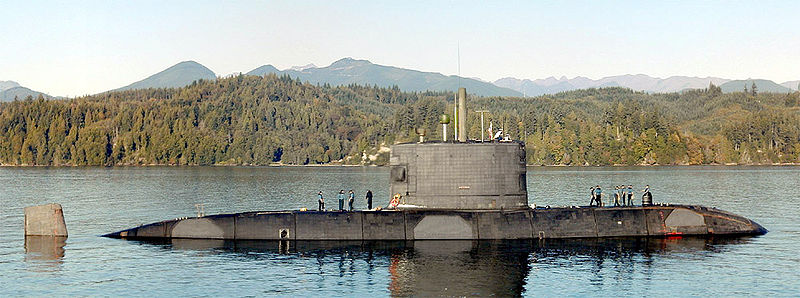
HMCS Victoria
Image via Wikimedia Commons.

The Canadian government announced today it is “taking the first steps” towards buying 12 conventionally-powered, under-ice capable submarines β€” a massive acquisition with numerous shipbuilders from the around world already eyeing the program reported to be worth at least $60 billion Canadian dollars.

“As the country with the longest coastline in the world, Canada needs a new fleet of submarines β€” and today, we’ve announced that we will move forward with this acquisition,” Bill Blair, minister of national defence, said in a statement published during the NATO Summit being held this week in Washington, DC. “This new fleet will enable Canada to protect its sovereignty in a changing world, and make valuable, high-end contributions to the security of our partners and NATO allies.”

Canada has been eyeing the acquisition of a new class of submarines to replace its four aging Victoria-class boats since at least April 2023, and Blair himself was the target of criticism earlier this year after he included language about the acquisition in a major defense policy document that critics labeled as “wishy washy”.

In an op-ed for Breaking Defense published ahead of the NATO summit, Blair said that Canada was still pursing the submarine plan, and emphasized that the investment would help his nation cross the 2 percent GDP target.

The government’s press release does not include a price estimate for the program, but the Ottawa Citizen has previously reported that the Royal Canadian Navy tagged the acquisition at $60 billion Canadian dollars ($44 billion USD).

Another item from Breaking Defence details a new trilateral agreement with Finland and the United States to develop a joint design for a “fleet” of icebreakers:

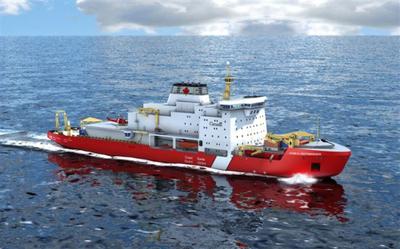
Originally ordered in 2008 for delivery in 2017, the CCGS John G. Diefenbaker is now expected to enter service in 2030.
Canadian Coast Guard conceptual rendering, 2012.

The US, Canada and Finland announced today a new trilateral effort, dubbed the Icebreaker Collaboration Effort or “ICE Pact”, to work together on the production of a “fleet” of new polar icebreakers, in what a US official said was a “strategic imperative” in the race of dominance of the high north.

The initiative, to be formalized in a memorandum of understanding by the end of the year, calls for better information sharing on ship production, collaboration on work force development β€” including better allowing workers and experts to train at each other’s yards β€” and an “invitation” to other allies and partners to buy icebreakers from ICE Pact members.

“Due to the capital intensity of shipbuilding, long-term, multi-ship orderbooks are essential to the success of a shipyard,” the White House said in its announcement. “The governments of the United States, Canada, and Finland intend to leverage shipyards in the United States, Canada, and Finland to build polar icebreakers for their own use, as well as to work closely with likeminded allies and partners to build and export polar icebreakers for their needs at speed and affordable cost.”

Ahead of the announcement, White House Deputy National Security Advisor for International Economics Daleep Singh framed the partnership as a commercial and industrial boon, but also one with national security implications: It is, in part, a message to Russia and China that the US and its partners “intend … to project power into the polar regions to enforce international norms and treaties that promote peace and prosperity in the arctic and Antarctic.”

July 1, 2024

Letter from Britain / Canadian Soldiers (1945) – British Council Film Collection

Filed under: Britain, Cancon, History, Military, WW2 — Tags: , , , , , — Nicholas @ 02:00

Charlie Dean Archives
Published Sep 22, 2013

Three Canadian servicemen visiting London discuss the experiences of Britain that they have been writing home to loved ones about.

Trivia:
This film was specifically produced for Canadian audiences, in order to boost the relationship between the two countries, although it did receive distribution in other countries as well.

Letter from Britain and Ulster are the only two films in the British Council Film Collection to feature Northern Ireland. It is also unusual in that it features real servicemen, rather than actors.

The poster seen on the Underground train at 06:00 was part of the government-sponsored “Billy Brown of London Town” series.

Letter from Britain was filmed no earlier than March 1945, as this is when the “Merchant Navy” class steam train Elders Fyffes — seen at 04:40 — was built.

Several ships are seen around Londonderry in Letter from Britain. These include HMCS Glace Bay, HMS Launceston Castle, HMS Loch Katrine, HMCS Penetang, and HMCS Petrolia. By comparing convoy listings, it can be deduced that these scenes were filmed around 15 March, 1945.

The song sung by “Paddy” at 13:05 is entitled “If You Ever Go To Ireland”, written by Art Noel. The song sung by the solider around 14:45 is an Irish ballad called “The Rose of Tralee”. The piece sung in the pub around 15:40 is “My Gal’s a Corker”.
(more…)

June 5, 2024

HMCS Charlottetown: A formidable submarine-hunting force in Nato’s fleet

Filed under: Britain, Cancon, Military — Tags: , , , , — Nicholas @ 02:00

Forces News
Published Mar 1, 2024

Conceived in the middle of the Cold War era, the Canadian Royal Navy frigate HMCS Charlottetown has evolved over three decades of service, becoming one of the most capable and adaptable ships in Canada’s navy.

After setting sail for Nato’s Exercise Steadfast Defender in the North Sea, she made a stop in Edinburgh en route to participating in the alliance’s largest training mission since the Cold War.
(more…)

May 29, 2024

Why Germany Lost the Battle of the Atlantic

Filed under: Britain, Cancon, Germany, History, Military, USA, WW2 — Tags: , , , , , — Nicholas @ 02:00

Real Time History
Published Feb 2, 2024

In March 1943, German U-boats are on the attack – they sink 108 Allied vessels that month alone. Some Allied officials fear a German victory in the Atlantic is imminent. If the Allies lose the Atlantic, Britain loses its lifeline – and maybe even the war. But by May 1943, it will be the U-boats limping home in defeat. So how, in just two months, did the U-boats go from hunters to hunted?
(more…)

« Newer PostsOlder Posts »

Powered by WordPress