Quotulatiousness

July 24, 2026

Brian Lilley: “Carney has run out of time”

Filed under: Business, Cancon, Economics, Government, USA — Tags: , , , , — Nicholas @ 03:00

While Prime Minister Mark Carney has been playing to the anti-American crowd at home, President Donald Trump has pretty clearly run out of patience with Canada’s dilly-dallying:

🚨 Trump just dropped a tariff ultimatum on Mark Carney — and Canada’s PM is officially out of time. Instead of cutting a real deal, Carney’s played delay tactics: dodge serious talks and pray Democrats win midterms to weaken Trump.

Foolish strategy. Here’s why it’s blowing up 👇


Trump’s threat: 50% tariffs on $28 BILLION in Canadian exports (hockey sticks to whisky, honey to flowers) unless Canada brings real solutions by Aug. 19.

U.S. Trade Rep Jamieson Greer: This is about forcing real negotiations.

Carney says he’s “intensifying” talks. But sources on BOTH sides say Canada’s offers are just vague “promises to discuss”. No substance.


Insiders call it “ragging the puck” — stalling in hopes a weaker Trump post-midterms gives Canada a sweeter deal.

Meanwhile, manufacturing jobs are bleeding: 17K lost last month alone. Over 50K since Carney became PM.
Ordinary Canadians are paying the price while politicians play games. 😡


Carney’s team hasn’t even used obvious bargaining chips:

* Provincial bans on U.S. booze (keep ’em in place, but not leveraged)
* Preferred access to Canada’s critical minerals
* Fixing cheese import disputes

These could be packaged to get tariffs lifted. Why sit on them?


Reality check on dependency:

🇨🇦 Canadian exports to U.S. = 19.9% of our GDP
🇺🇸 U.S. exports to Canada = just 1.4% of their GDP

Trump’s claim Canada “needs us to survive” is exaggerated — but we’re far more exposed.

Delaying hurts us way more.


Why the foot-dragging?

Carney has little incentive to end the fight. Angry Canadians at Trump = more Liberal votes.

Politics over prosperity. Classic.


Question for Canadians:

Should Carney drop the delay tactics, use our leverage, and get a deal done ASAP? Or keep waiting for U.S. midterms?

What’s your take?

Reply below 👇

Who’s really paying for this? Workers or politicians?

Jen Gerson points out that by being relative pushovers every time it’s clear that Trump really means something, it’s confirming American belief that we’ll always be pushovers:

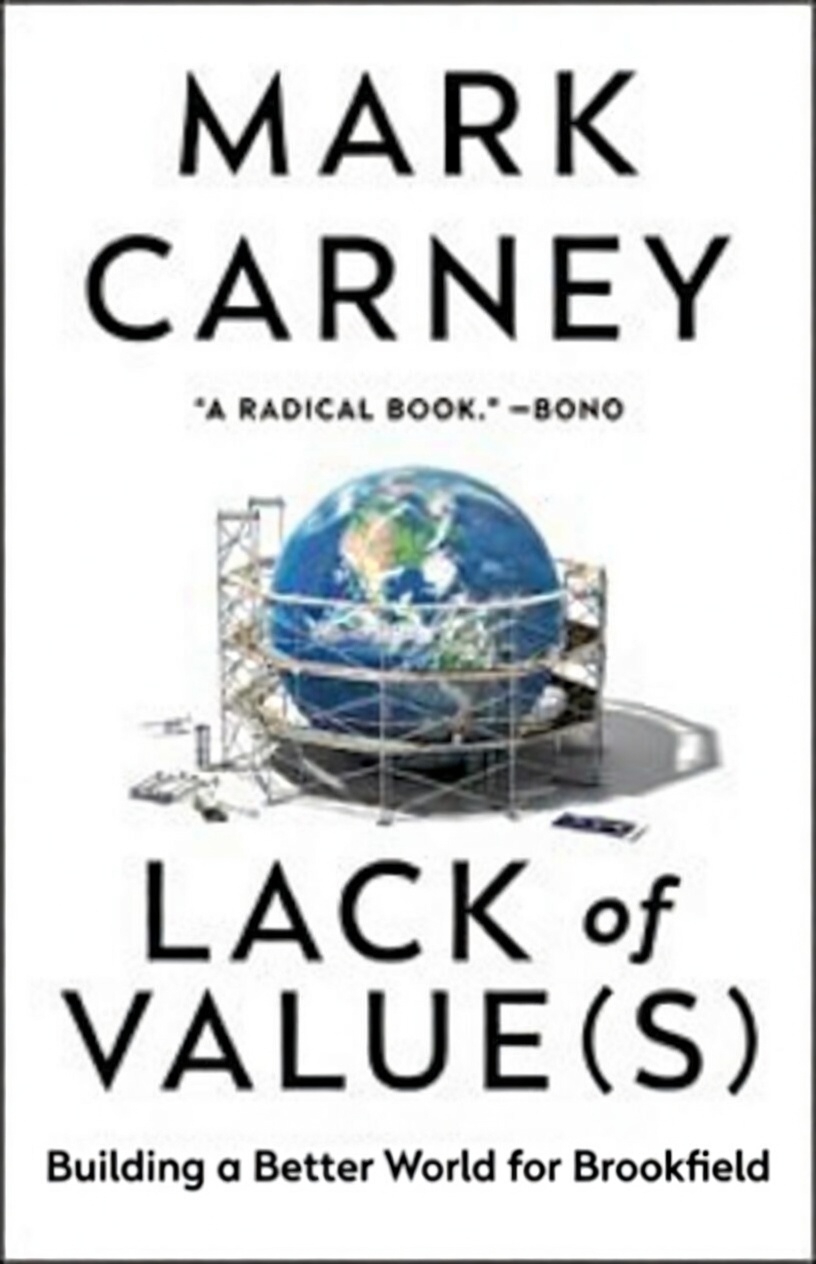
Parody cover of Mark Carney’s Value(s) seen on the net.

This week’s announcement of 50 per cent tariffs on a raft of goods is more proof that the Liberals’ ironclad strategy of “say tough things in public but then capitulate quietly on issue after issue” isn’t panning out. And I write that knowing full well that the statute being used to implement the tariffs is old, tenuous, and may not hold up. I’m not talking about them, for a moment. I’m talking about us.

Where do we even start with Prime Minister Elbows Up? Dropping the Digital Services Tax and retaliatory tariffs? The apology for the terrible sin of running a Ronald Reagan ad? And now we have the business of the Gordie Howe Bridge: to recap, Canada fronted $6.4 billion to build the span between Windsor and Detroit, which was to be paid back over decades through bridge tolls. At the last minute — and presumably at the behest of the rich MAGA donor who owns the competing bridge — Donald Trump announced the bridge would not open until the U.S. got a better deal. After more quiet negotiations, such a deal was struck.

Initially, Carney claimed that the U.S. would take a split of the operating profits — but only after the debt was paid off, something which was expected to bring real profits down to a very small amount. Effectively, he said the deal would give the Americans chump change.

Subsequent reporting suggested this wasn’t the case at all; that the Americans are to take their cut from operating revenue, which presumably will have the effect of dramatically extending our payback period.

In short, it’s a major concession, made worse by the fact that Carney appears to have lied.

And, frankly, I’m not sure which of these two pills is harder to swallow. Regular press conferences aside, Team Canada has been rather shockingly non-communicative about what the hell is going on with USMCA re-negotiations. I give the government some credit for the need to maintain “strategic silence” in order to pursue “strategic patience”, but if your entire brilliant communications strategy for rallying the Canadian public in the face of unprecedented American economic aggression amounts to “Shush. Just trust us. Carney’s super smart. He’s got this,” well, then, you really can’t lie and be dumb about it.

Carney came to power 18 months ago with an explicit “Elbows Up” promise that is deteriorating into a punch line. I don’t object to choosing not to rise to the bait of every provocation. But when “doing nothing” is accompanied by caving on everything, what you have is no longer “strategic patience.” It looks a lot more like “showing the Americans that we have no appetite for retaliation.” We’ve indicated with crystal clarity that aside from the odd mean speech, and the fact that Canadians are Big Mad, we will extract no material consequence for anything they choose to do. And absent consequence, they will continue to escalate past the point of diminishing returns.

Why?

Because they can.

Because they don’t care.

Because they take delight in their own contempt for our demonstrated weakness.

Did This Meal Kill Mozart?

Filed under: Europe, Food, History — Tags: , , , , , , — Nicholas @ 02:00

Tasting History with Max Miller
Published 27 Jan 2026

Sliced pork loin with a rye bread crumb and cinnamon crust

City/Region: Vienna
Time Period: 1742

Mozart is one of my favorite composers of all time. When he fell ill and died in 1791 at the age of 35, rumors flew about what caused his death. Speculation continues to this day. Was it poison from a jealous rival or the Freemasons? Was it one of many possible illnesses? We don’t know for sure, but one theory is that it was trichinosis from undercooked pork, and we do know that he ate pork 44 days before he became sick.

This recipe from a Viennese cookbook in 1742 is for mutton loin, but it says that you can use the recipe for pork or venison as well. While boiling meat is not the most delicious way to prepare it, the crust that you prepare after it’s boiled is delicious. It’s slightly sweet with a hint of cinnamon and a very nice crunch, so if you’re not worried about sticking to the historical recipe exactly, try the crust on some pork chops (cooked however you like) or a roasted pork loin.

    No. 239 — Mutton Loin
    Take from a mutton the loin, as large as it can be, and dress it as one does a venison loin. Boil it in water, wine, and vinegar with bay leaves, onion, rosemary, and strips of lemon peel until it is quite tender. When it is cooked, arrange it on a casserole dish and pour melted butter over it. Take grated dark bread, mix it with cinnamon and sugar, sprinkle this over the loin, pour more butter over it, and put it into the oven, so that it becomes nicely brown, turning it once or twice. Make a good broth, pour it underneath, and serve it warm at the table.
    — Nützliches Koch-Buch (The Useful Cookbook) by Johann Holzmayer (1742 edition)

(more…)

QotD: The first rule of strategic analysis

Filed under: History, Media, Military, Quotations — Tags: , , — Nicholas @ 01:00

Do you know the first rule of good strategic analysis? When a war begins: shut up.

Wars are theatres of chaos, noise, confusion and premature certainty. The temptation to declare victory, defeat or historical turning point within the first few hours or days is not analysis. It is posturing. Yet the modern media cycle, with its appetite for endless commentary and instant verdicts, cannot tolerate silence. The result is a steady stream of confident assertions, most of which will age badly.

The current conflict between the alliance of the United States and Israel and Iran has followed this pattern almost perfectly. Within days, it was announced that America was winning; America was losing; Iran is winning; Iran had been neutralised; Iran remained undeterred; Trump doesn’t have clear plan; he does have a clear plan; this was the start of a forever war; it wasn’t a forever war; the war is a catastrophe for the US; the war is a triumph for the US.; that the war would soon be over; the war is over.

Obviously, these claims cannot be true simultaneously. Most of them will turn out not to be true at all.

Resisting the customary rush to instant judgement and adopting a more analytical frame of mind, what can we, discerning sceptics that we are, sensibly say six weeks into the war? Which claims survive contact with reality, and which are, for now, better treated as conjecture?

Michael Rainsborough, “A Sceptical Stocktake of the Iran War So Far”, The Daily Sceptic, 2026-04-21.

Powered by WordPress