
Quotulatiousness

July 15, 2026

The Prince – “The only people who haven’t read it are the ones who keep losing”

Filed under: Books, History, Italy, Politics — Tags: , , , , , — Nicholas @ 05:00

I didn’t intend to turn this into Machiavelli week, but after the discussion of correctly translating “virtù for modern audiences, here’s Krzysztof Szczawinski with more about that famous/infamous book:
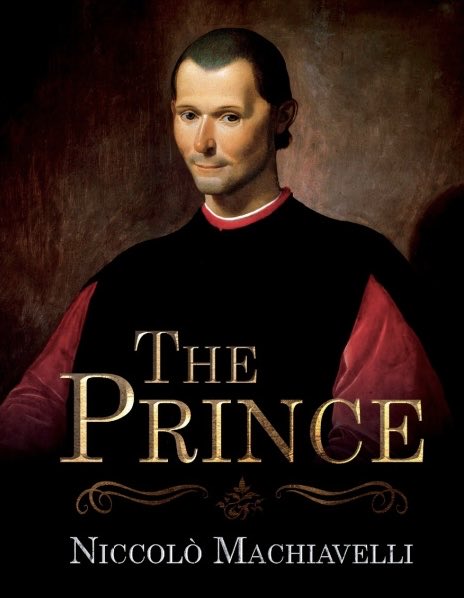
Niccolò Machiavelli wrote The Prince in 1513 as a practical manual for power. For five centuries, polite society has pretended to be shocked by it. Meanwhile, every successful political operator — on every side — has been quietly following it. The only people who haven’t read it are the ones who keep losing.

1. Machiavelli’s central insight is not that the ends justify the means. That is the misquote that lets comfortable people dismiss him. His actual insight is simpler and more disturbing: power has its own logic, independent of morality, and those who refuse to understand that logic will be defeated by those who do. The Prince is not a villain’s manual. It is a description of reality that makes virtuous people uncomfortable – because reality doesn’t care about their virtue.

2. The current progressive system applies Machiavelli more fluently than any of its opponents. His first rule: the appearance of virtue matters more than virtue itself. The DEI statement while systematically excluding dissent. The democracy rhetoric while suppressing opposition. The compassion branding while destroying careers. This is Machiavelli’s prince – not good, but performing goodness to maintain legitimacy. The performance is the power.

3. His second rule, which the current system also applies perfectly: cruelty, when necessary, should be delivered swiftly, completely, and early. Cancellation is Machiavellian – total, swift, exemplary. The point isn’t the individual being cancelled. The point is the ten thousand people watching who quietly adjust their behavior. One public destruction purchases a million private silences. Machiavelli would have recognized the mechanism immediately. He invented the theory.

4. Communism applied the fear side of Machiavelli with full conviction – Stalin made the explicit choice Machiavelli described: better to be feared than loved. The show trial is pure Machiavellian theater – a public demonstration of power functioning as a warning to everyone who isn’t on trial. But communism made his fatal mistake: it destroyed the people’s goodwill so completely that it generated not just fear but hatred. And Machiavelli is unambiguous – you can rule through fear, you cannot survive through hatred.

5. His most important democratic insight — the one nobody quotes — is that the prince who builds his power on the people is more secure than one who builds it on elites. Elites are few, demanding, and treacherous. The people are many, ask only not to be oppressed, and are a more stable foundation. The political movement that actually connects with ordinary people against the credentialed elite is applying Machiavelli more correctly than the elite relying on institutional capture alone.

6. What should we do? Stop bringing virtue to a knife fight. The chronic error of the opposition is the naive prince Machiavelli explicitly warns against – the leader who assumes truth wins automatically, who believes that being right is a strategy. It is not a strategy. It is a precondition. Being right gives you something worth fighting for. Machiavelli tells you how to fight: build your own power base, never rely entirely on others, control your narrative before your enemies do, and treat fortune as something to be seized, not waited for. Fortune favors the bold. Not the righteous. The bold.

7. Machiavelli is taught in universities as cynical amoralism – the thing decent people reject. This framing is itself Machiavellian – it keeps the manual out of the hands of the people who most need it. The current establishment didn’t reject Machiavelli. It institutionalized him, rebranded him in the language of social justice, and uses him daily. The opposition reads Augustine and loses. The system reads Machiavelli and wins. Until the side that is actually right decides that understanding power is not a betrayal of principle but a precondition for defending it – the result will be the same. Virtue without strategy is just a dignified way of losing.

Update, 16 July: Welcome, Instapundit readers! Have a look around at some of my other posts you may find of interest. I send out a daily summary of posts here through my Substackhttps://substack.com/@nicholasrusson that you can subscribe to if you’d like to be informed of new posts in the future.

The Korean War Week 108 – The Republican Candidate – July 14th, 1952

The Korean War by Indy Neidell
Published 14 Jul 2026

In Chicago, the US Republican Party Convention comes to its end and they have chosen Dwight “Ike” Eisenhower as their Presidential Candidate. Part of the official platform is ending the Korean War. The war continues, of course, with a new UN operation designed to take prisoners, massive aerial bombing of Pyongyang, and the build up of the South Korean Army — the ROKA — to one day hopefully take over from the UN forces.

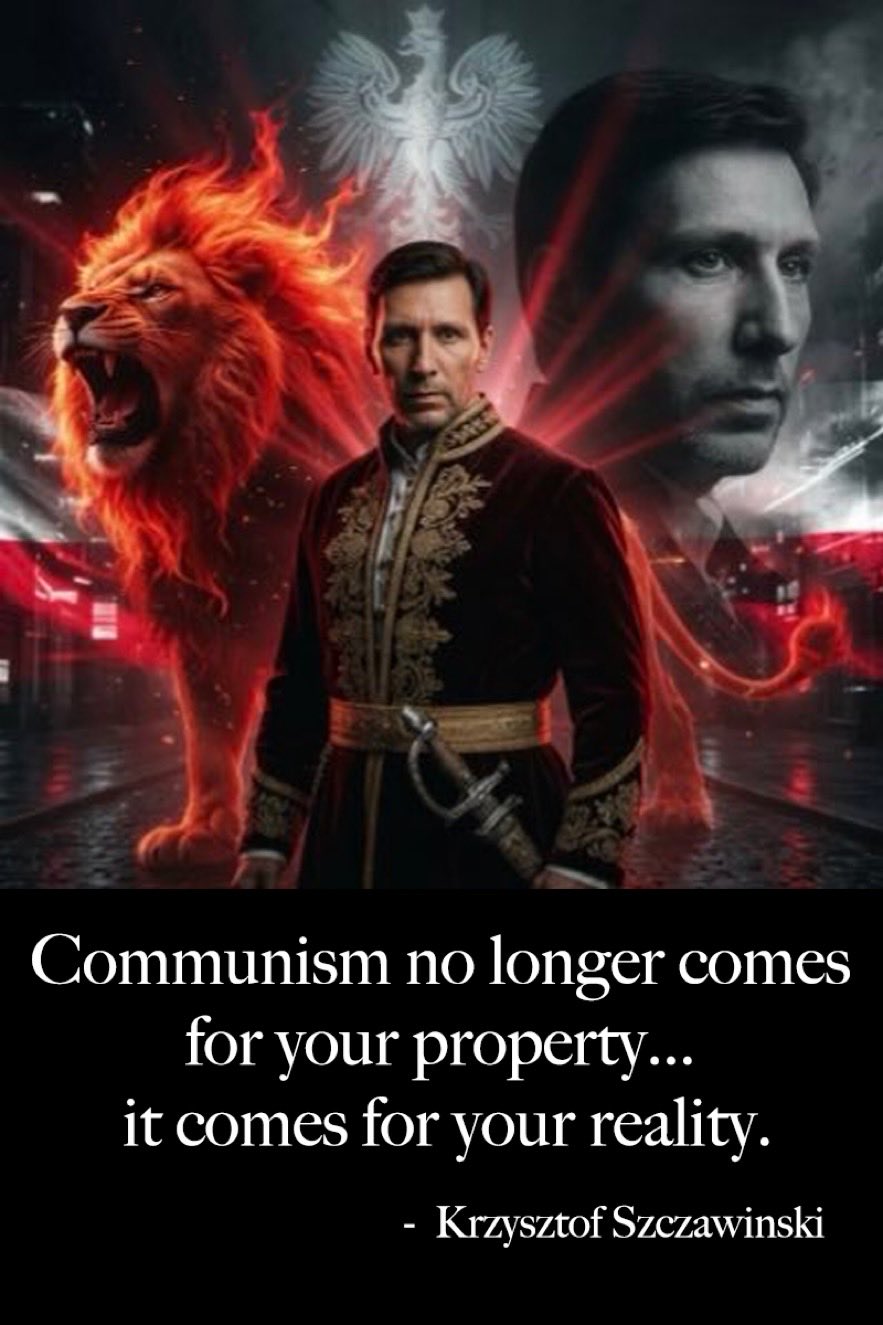
“Communism no longer comes for your property”

Filed under: History, Media, Politics, Quotations — Tags: , , — Nicholas @ 03:00

On the social media site formerly known as Twitter, Krzysztof Szczawinski explains why western countries are perhaps more in danger of communist subversion, because we have an out-of-date mental model of what communism looks like:

On communism – in summary:

1. Communism no longer comes for your property. It comes for your reality. The West still pictures bread lines and gulags, a failed economic theory safely buried in 1989 – that was only ever the surface symptom. Leftism-communism is the most insidious destructive force in our world today, and it survives every empirical refutation for one reason: it was never really an economic theory. It doesn’t care about the truth. It only seeks power.

2. At its core it is a civilizational cancer – a machine for distorting reality through constant lies, rewritten history, and the systematic corruption of truth. It practices negative selection: it promotes the ambitious sociopaths, the ideologues, and the conformists, while the honest and the competent are sidelined or destroyed. Talent, integrity, and productivity become liabilities. The body count runs to roughly a hundred million. But the deeper kill is spiritual – trust eroded, excellence punished, reality itself subordinated to raw power.

3. What has changed is the method, not the logic. Tanks and gulags were crude, visible, self-defeating. Today it does not confiscate – it destabilizes. Chaos is the new collectivization. Every manufactured crisis follows the same structural logic: disorder is produced, fear is maximized, and in the panic that follows, transfers of power occur that would have been politically impossible in calm times. You do not notice the expropriation, because you are too busy surviving the emergency they built for you.

4. The fuel running this engine is the Systemic Lie – not ordinary propaganda, but a managed reality in which the categories of thought themselves are corrupted. Productivity is renamed exploitation. Order is renamed fascism. Resistance is renamed hate. A population that cannot name extraction cannot resist it – that is the design, not a side effect. Polish has a word for what results: zakłamanie, a society so saturated with lies that truth becomes almost inaccessible. Obłuda is the mask of falsehood worn so long it begins to feel like a face.

5. This is why the ideology did not die in 1989. It mutated, migrated, and entrenched itself inside the institutions of the civilization it had set out to destroy. Under a system of institutionalized lying, the loyal are promoted and the honest are pushed out, until the institution fills, top to bottom, with people selected specifically for their unreliability. That is not inefficiency. That is institutional rot at the genetic level. People learn to say the words, attend the meetings, sign the statements – and inwardly check out entirely.

6. The damage was never only in the ideology. It was in the people – the habits of mind that decades inside a system of lies produce, habits that do not evaporate with a change of government. The decisive terrain now is institutional: the schools, the media, the corporations, and above all the artificial intelligence systems being trained at civilizational scale on values that half the civilization never chose and was never consulted on. Whoever writes the values into the machines will have more influence over the next century than any election result.

7. This is where civilizations are actually won and lost – not in grand gestures, but in millions of daily, invisible decisions about whether to say what you actually see. Every person who refuses to perform the lie one more time is doing something larger than they know. Name the chaos. Name the lie. The naming is the resistance.

Tell the truth, have courage, and build.

The Ancient Greeks 03 – Enter the Persians 3 – Darius, Ionia, and the Fragile Peace

Filed under: Europe, History, Middle East — Tags: , , , , , — Nicholas @ 02:00

seangabb
Published 16 Feb 2026

Greece: A Brief History, c.700 BC – 500 AD

With Darius I, the Persian Empire reaches its greatest extent. This lecture explores how Darius reorganised the empire into satrapies, imposed taxation systems, and stabilised rule across vast territories. We examine Persian cultural policy, military discipline, and the integration of Greek communities within the imperial system.

But beneath the surface of order, tension grows. The Ionian Greek cities resent indirect rule through tyrants. Persian administrative logic collides with Greek political volatility. The peace is real — but unstable.

QotD: First up against the wall, come the revolution

Filed under: History, Politics, Quotations, Russia — Tags: , , , , , — Nicholas @ 01:00

An important lesson from history is that people living in relatively stable and functional societies seldom understand how rapidly things can deteriorate and plunge into catastrophe, violence, and mass murder.

A real-life individual named Savva Morozov (1862–1905) was one of the wealthiest men in pre-revolutionary Russia.

He was a textile magnate, a patron of the arts, and a genuine philanthropist. His Moscow mansion was said to be the most expensive in the city. He and his wife, Zinaida, hosted famous writers, composers, and scientists. Morozov also worked to improve conditions for workers in his factories. He gave pregnant women paid leave. He funded scholarships for students. He built a hospital and a theater for his workers. He pushed for constitutional reform: freedom of the press, freedom of association, workers’ rights to organize and strike, and public oversight of the state budget.

Morozov also bankrolled the Bolsheviks.

Reports from this period suggest he gave hundreds of thousands of rubles to the revolutionary cause. He personally financed an underground newspaper of the banned social-democratic party that would eventually become the Russian Communist Party.

Morozov’s goal was almost certainly not to ignite a civil war or hand power to a dictatorship. He likely saw the radicals as useful pressure on the tsar, a way to force real reforms from a regime that would not move on its own.

When revolution came in January 1905, the violence shocked him.

He had set forces in motion that he could not control.

He suffered a nervous breakdown and fell into depression. His doctors and family sent him to the French Riviera to recover. He checked into a hotel in Cannes. There, he apparently shot himself, though rumors persisted for years that he had been murdered and the suicide had been staged.

His wife Zinaida returned to Russia and continued living off the enormous fortune her husband had left behind. Then came 1917. The Bolsheviks seized everything. She survived by selling off the few pieces of jewelry she had managed to keep.

The lavish country estate she and her husband owned later became the personal residence of Vladimir Lenin, leader of the communist revolution. Today it is a museum called Lenin’s Gorki, filled with the possessions and mementos of the first leader of the Soviet Union.

In his book End Times: Elites, Counter-Elites and the Path of Political Disintegration, Peter Turchin points out that in most cases of societal collapse and state breakdown, “the overwhelming majority of precrisis elites … were clueless about the catastrophe that was about to engulf them. They shook the foundations of the state and then were surprised when the state crumbled.”

Rob Henderson, “Dark Shadows Fall, One Upon The Other”, Rob Henderson’s Newsletter, 2026-03-22.

Powered by WordPress


