
A critical assumption of climate alarmism is that the ecosystem is fragile and we naughty, mighty humans can easily overwhelm it. So we were surprised to hear, at the recent Heartland Institute International Conference on Climate Change, that one single hurricane contains more energy than the US generates in a year. And not just surprised, we were skeptical. So we checked, and, by golly, it’s true and then some. As one website gushed, “any way you slice it, hurricanes release a phenomenal amount of energy. If we start by looking at just the energy generated by the winds, we find that for a typical mature hurricane, we get numbers in the range of 1.5 x 10^12 Watts or 1.3 x 10^17 Joules/day (this is according to the Atlantic Oceanographic and Meteorological Laboratory.) This is equivalent to about half of the total electrical generating capacity on the planet! For a single hurricane! But that’s not all, we’re just getting started. A hurricane also releases energy through the formation of clouds and rain (it takes energy to evaporate all that water). If we crunch the numbers for an average hurricane (1.5 cm/day of rain, circle radius of 665 km), we get a gigantic amount of energy: 6.0 x 10^14 Watts or 5.2 x 10^19 Joules/day! This is equivalent to about 200 times the total electrical generating capacity on the planet! NASA says that ‘during its life cycle a hurricane can expend as much energy as 10,000 nuclear bombs!’ And we’re just talking about average hurricanes here, not Katrina.” But sure, a few puffs from a human chimney and all those hurricanes are dancing to our Promethean tune.
John Robson, “Tidbits”, Robson on Climate Nonsense, 2026-05-24.
August 26, 2026
QotD: Putting US power generation in perspective
July 17, 2026
Why solar power is not the answer for Britain
On the social media site formerly known as Twitter, Sama Hoole looks at a recent World Bank report that shows very clearly why solar power should not even be on the power options list for Britain:
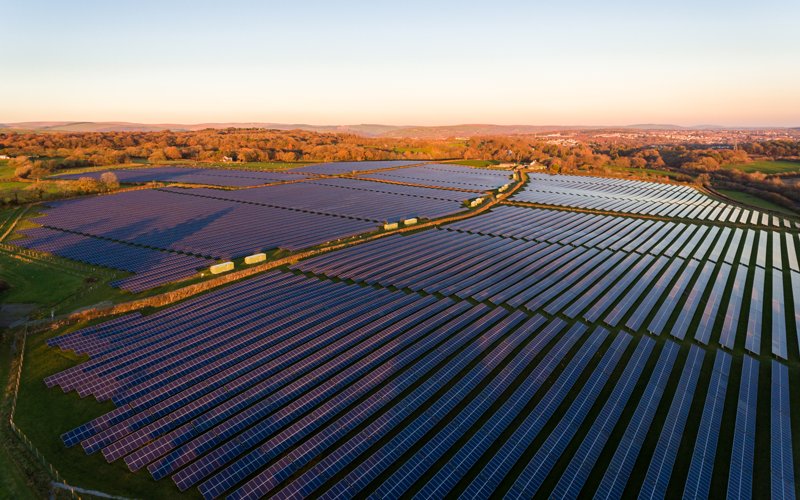
The World Bank ranked every country on earth for practical solar potential.
Britain came second from bottom. Not second from bottom in Europe. On the planet. Out of everywhere they measured, the only place with worse conditions for a solar panel is Ireland. Norway is above us. Norway, where the sun clocks off entirely for part of the year, is a better bet than Lincolnshire.
The reasons are not a mystery. We sit at 53 degrees north, the same line as Edmonton, Alberta. The sun in December gets about as high as a first-floor window and then thinks better of it. And there’s the cloud, which is not a detail, it is the national personality. A square metre of London gets 0.52 kilowatt hours of sunlight a day in December and 4.74 in July, so the panel does nine times less work in the month your heating is on than in the month it isn’t. Across the whole of 2024, British solar ran at 9.5% of what it’s rated at. The other 90.5% is a photograph of a power station.
Now the other column.
The ground we’re bolting it to is Trent valley silt and Lincolnshire fen. Some of it took three hundred years to drain. It grows wheat at yields that most of the planet cannot get near, in a climate so reliably damp that grass grows here without anyone asking it to, which is the entire reason this island has cattle and cheese and a butcher.
So we are, measurably, one of the worst places on earth for sunlight and one of the best on earth for food.
And we’ve had a good long look at both of those numbers and gone with sunlight.
Somewhere in Namibia, which the same report ranked first, there is a patch of absolutely nothing, in full sun, wondering what it did wrong.
July 16, 2026
“Only fans – Europe’s approach to air conditioning”
From the free-to-cheapskates portion of Ed West‘s most recent article on his Substack:
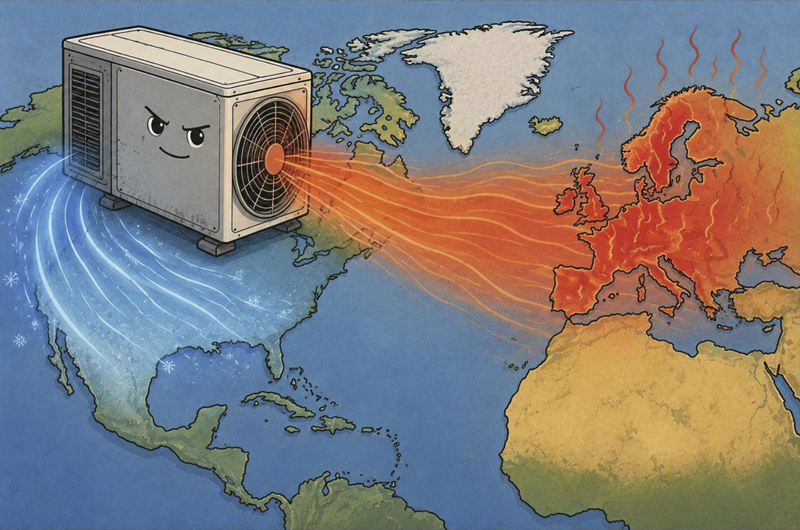
The EU may not actually believe this, but they thought you would …
Different climates have enjoyed advantages at different points in time. For most of history, industry and scholarship in southern Europe benefitted from significantly longer hours of sun and daylight much of the year compared to the north, allowing for more hours of work and study. James Belich noted in The World the Plague Made that this all changed with the expansion of the Basque whaling trade in the late medieval period, providing cheap wax for candles.
England and the Netherlands subsequently overtook the south in their levels of literacy, a transformation usually attributed to Protestantism, although this technical solution to a physical disadvantage certainly helped. As the northern countries grew richer, and were able to use more energy, so the climate came to be an advantage. Cooler areas of Europe in particular benefitted from a relative absence of vector-borne disease, dangerous insects and food poisoning, which made hotter regions of the world more lethal.
Yet the biggest curse of the lower latitudes is that heat makes us sluggish — since people struggle to work above 23° centigrade. As Maarten Boudry writes on his substack, “For every degree above 25°C (77°F), our cognitive performance declines by around two percent. And if synapses suffer, so does economic activity. At 30°C, office performance drops by almost 9 percent.”
I see that. I’ve been trying to write this in temperatures of up to 34°, which equates to a production level similar to a moderate hangover. If only there was some sort of technology that could make my home cooler.
Until relatively recently the world was dominated by a handful of relatively cold regions, and Paul Johnson observed in his history of the United States that human industry thrives in what Fahrenheit appreciators would call “the 60s”, a Goldilocks zone that turned New England and Greater Yankeedom into a powerhouse. The southern states, in contrast, were held back by higher mortality and the impossibility of productive work in the sweltering summer months, and until the mid-20th century were about 40 per cent poorer than the Union states.
The northerners were especially known for their work ethic and their inventiveness, a characteristic epitomised by the Boston-born Benjamin Franklin. Then in 1902, New York’s Willis Carrier changed everything with the one of the most world-changing inventions, the air conditioning unit; aircon has notably shifted population and power in the US southwards, but Dixieland is just part of a broader, global “sunshine belt”.
Among the most notable beneficiaries of this technology are the financial powerhouses of Dubai and Singapore. Lee Kuan Yew famously said of air conditioning that it was “perhaps one of the signal inventions of history. It changed the nature of civilization by making development possible in the tropics … The first thing I did upon becoming prime minister was to install air conditioners in buildings where the civil service worked.” Indeed, it has often been noted as characteristic of the city-state that the aircon is usually set to icy levels, reflecting their determination to be on work mode throughout the day.
While Singapore is the most famous beneficiary of Carrier’s invention, Japan has almost universal air conditioning, with 91 per cent of homes equipped, compared to 88 per cent in the US. China is home to more than 500 million aircon units, is the world’s largest manufacturer, and has also seen an economic shift towards the south. Vietnam, also likely to be a major economic power by mid-century, is as dependent on this technology as it is on its people’s ingenuity. The development of aircon, and medical breakthroughs in the treatment of tropical diseases, has shifted the centre of gravity away from the cold regions of the earth — just as the globe is warming up.
This year’s European heat wave, still ongoing, saw temperatures reach 37 last month in England, a June record. Many schools shut early, although one in Kent instead used air raid tunnels to teach children. London’s Central Line hit 39.4c, presenting a real risk of heat stroke.
Across Europe the hot weather has closed down not just schools but factories, offices and rail lines, and led to an estimated 10,000 deaths, with France top of the heat mortality charts. Indeed as Boudry writes, Europe has the worst heat-related excess deaths of any region — while fatalities in the US have declined by 75 per cent since the adoption of air conditioning.
Update, 17 July: Welcome, Instapundit readers! Have a look around at some of my other posts you may find of interest. I send out a daily summary of posts here through my Substack – https://substack.com/@nicholasrusson that you can subscribe to if you’d like to be informed of new posts in the future.
July 1, 2026
The Korean War Week 106 – The Battle of Old Baldy – June 30, 1952
The Korean War by Indy Neidell
Published 30 Jun 2026On the ground, the fight for the hilltop they call “Old Baldy” really heats up this week, and it’s a bloody one. In the air, the bombing campaign to destroy the North Korean hydro-electrical complex continues, and the Suiho dam, one of the world’s largest, is put out of action and the power is out across much of the country.
00:00 Intro
00:45 Recap
01:14 Suiho Dam
05:22 Old Baldy
09:04 Army Budgets
14:29 Planning a coup?
16:08 Summary
16:22 Conclusion
17:10 Call to Action
June 3, 2026
“… basically it’s a plan to make power more expensive while campaigning on affordability”
John Robson examines a few of the ways the Ontario government (and other provincial and state governments) frames what they call “affordability”, yet somehow it always seems to cost more afterwards and nobody is ever held responsible:
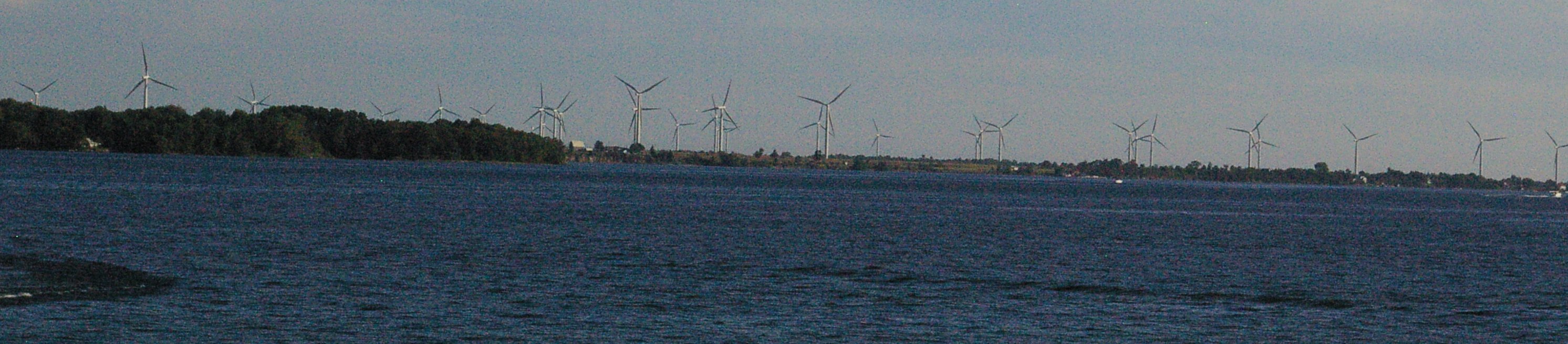
In many areas of life, the devil is famously in the details. And it presents both an opportunity and a frustration because there is so much out there deserving readers’ attention that you can’t even follow it all let alone cram it into a newsletter. Including former banking executive Parker Gallant‘s vigilance about the absurdities of the power system in the Canadian province of Ontario that the aspiring Conservative premier Doug Ford promised to fix in the 2018 campaign and then has smugly done nothing about. These things might seem uninteresting if you do not live in Ontario … until you realize it’s just as bad wherever you live. And when we say bad we mean both the cost and the deviousness with which it is presented to, or hidden from, the public. On this very point we like to quote the late great P.J. O’Rourke that “Beyond a certain point complexity is fraud … when someone creates a system in which you can’t tell whether or not you’re being fooled, you’re being fooled.” Which brings us to the shiny new buzzword “affordability” which refers to policies that make everything more expensive and the beneficiaries hide the fraud in tangles of complex bureaucracy.
If you want to get a headache, stay with us while we explain what it is that Gallant tracks. Ontario has what they call the “Independent Electricity System Operator” so politicians can claim whatever disaster is unfolding isn’t their fault. Sure, they make the laws and oversee the creation of the regulations. But heck, these things are “arms’ length” and “impartial” and independent and expert and wise and wonderful so shut up.
Including this nutty system where the province buys power we don’t need at grossly inflated rates from wind and solar virtue-signallers and then sells the surplus at deep losses to the neighbouring province of Quebec and some American states including New York and Michigan. So he looked in depth (we promised a headache) at just half a day, May 19, 2026, because a post by another of the people who keeps an eye on this stuff for the benefit of an indifferent or baffled populace alerted him to something fishy in the IESO forecast of generation by Industrial Wind Turbine operators. But it seems to be hard to find out exactly how much the taxpayers, via this wonderful “Independent” system with its hand in their pockets via the arm of the state, actually paid these IWTs not to produce power.
Paid them what? Yup. It’s how it works. And the idea is that if they didn’t produce the original forecast rather than the revised one we’d have had to pay them even more for what they didn’t do. Weird even by the standards of government. And expensive. As Gallant sums it up:
The net result is that those IWT cost us Ontario ratepayers almost $2.6 million for NOTHING over just the first 12 hours but we should rest assured the IWT owners loved it!
You read that right. The citizens of Ontario paid $2.6 million to the energy producers of the future not to produce energy in the present in just half of one day. If it were typical, it would be over $5 million a day times 365 days in the year so yes indeedy folks nearly $2 billion a year.
[…]
He then looks at various efforts to try to figure out the cost to consumers, including one by “my friend Roger Caiazza (the Pragmatic Environmentalist of New York)” based on the auction price of “allowances” in March 2025:
Roger’s conclusion at that time was that the RGGI auctions were adding about $8-11/MWh to the wholesale cost of electricity, for electricity produced by natural gas. That would mean an addition of about 1 cent/kWh on a consumer’s bill. A penny may not seem like much, except when you realize that the average price in the country is less than 18 cents/kWh, so the penny is about 6%.
Imagine if people knew. As he concludes:
remember that the structure of the program is that the amount of allowances goes down every year and the price is intentionally driven up. And data centers are going in all over the place. And the Northeastern states have refused to build new power plants for a couple of decades now in the midst of the climate hysteria. So the 10-15% extra cost being experienced now is only the beginning of much worse to come. The worst part of the RGGI ‘cap and invest’ scheme is that the consumers get absolutely nothing for the increased cost. It is just a gratuitously inflicted injury brought about by completely artificial scarcity. Keep this in mid when you hear a politician from an RGGI state talking about how they care about energy ‘affordability’.
Or, we add, transparency. Or accountability.
May 7, 2026
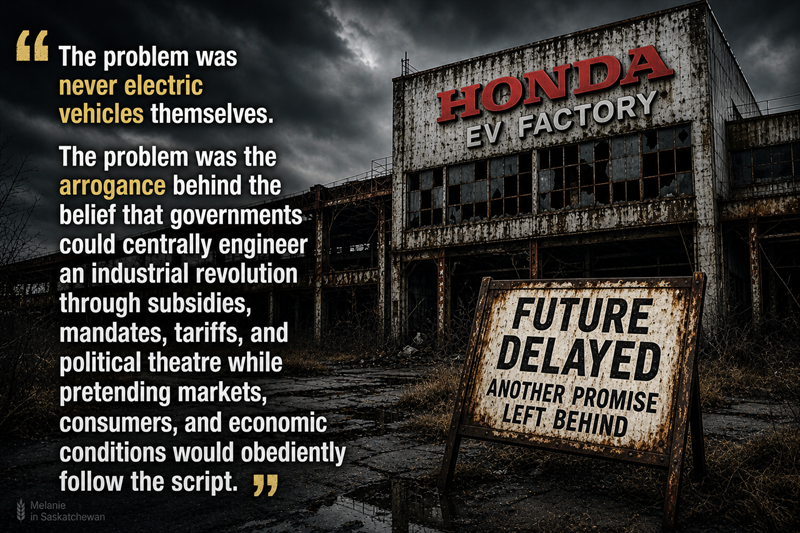
Great success! Honda “postpones” their Ontario EV project
As part of their mindless fanboyism for anything remotely related to “Net Zero”, the federal government and the Ontario provincial government have been serving up subsidies for electric vehicles and hastening the “inevitable transition” away from internal combustion vehicles. Through legislation and regulation, they’ve been doing everything they can to close down the traditional car and truck manufacturing sector and replace them with zero emission vehicles. The various governments have handed out subsidies amounting to billions, and yet one after another after another the much ballyhoo’d EV factories, battery plants, and other futuristic projects fall by the wayside, leaving very little in exchange for those billions:
There was a time, not very long ago, when Liberal politicians treated EV battery announcements like moon landings.
Hard hats. Safety glasses. Giant ceremonial cheques. Breathless speeches about “the future”. Every battery plant was “historic”. Every subsidy package was “transformational”. Every corporate press conference looked like a motivational seminar for people who think buzzwords are infrastructure.
All we were missing was a fog machine and Bono.
Meanwhile ordinary Canadians were standing in grocery aisles doing mental math over bacon prices, delaying dental work, and wondering whether they could survive another winter utility bill without sacrificing whatever scraps remained of their savings.
But while Canadians were trying to keep their heads above water, Ottawa was busy launching one of the most expensive industrial subsidy experiments in modern Canadian history.
AI-generated image from Melanie in Saskatchewan
The Honda EV project in Ontario was supposed to be one of the crown jewels of this brave new green economy. Politicians lined up in hard hats and safety glasses like a traveling theatre troupe performing The Future Is Here. Canadians were assured this was proof the country was becoming an EV superpower.
Turns out it may have been more of a very expensive PowerPoint presentation with taxpayer financing attached.
[…]
In March 2020, Prime Minister Justin Trudeau appointed Mark Carney as an informal economic adviser during the COVID recovery period. Over the following years, Carney increasingly promoted “green transition” investment frameworks, climate-linked financial systems, ESG-focused economic planning, and massive public-private investment partnerships tied to decarbonization strategies.
Which is important context now, because the EV subsidy era did not emerge out of thin air. It grew out of a broader worldview that treated government-directed green investment as both economic policy and moral mission. The assumption underneath all of this was breathtakingly simple:
“If government wants it badly enough, reality will cooperate.”
That is usually where things begin going sideways.
Canadians were told the EV transition was inevitable. Questions about affordability, charging infrastructure, winter range, electrical grid capacity, or consumer demand were often brushed aside like annoying little details raised by peasants who simply lacked sufficient enlightenment.
Then came the subsidy gold rush.
[…]
Corporations are not charities. They are not loyal patriots. They are not emotionally attached to government slogans.
They follow incentives. They chase profitability. They change direction when conditions change.
That is exactly what Honda did.
Meanwhile Canadians are left holding the bill for another “historic transformation” that produced:
- endless announcements
- glossy photo ops
- consultant buzzwords
- government self-congratulation
- escalating subsidy exposure
- and corporate renegotiations every time market conditions shifted
- while producing no completed Honda EV manufacturing hub and no fleet of Canadian-built EVs rolling proudly off Ontario assembly lines.
What remains instead is a stalled megaproject, a confused tariff policy, a government spinning contradictory narratives depending on the week, and taxpayers once again discovering they were voluntold into becoming venture capitalists for political vanity projects.
Apparently this is what “economic leadership” looks like now.
Hard hats. Press releases. Fifty-plus billion dollars in EV-related exposure. And a factory plan slowly evaporating into the mist while Chinese EVs roll through the front gate anyway.
February 26, 2026
The Hidden Engineering of Niagara Falls
Practical Engineering
Published 21 Oct 2025All the things I love about Niagara Falls
The same thing that makes Niagara Falls impressive for tourists (the big drop) makes it valuable for power and a major challenge for shipping. And out of that comes all kinds of fascinating infrastructure.
Practical Engineering is a YouTube channel about infrastructure and the human-made world around us. It is hosted, written, and produced by Grady Hillhouse. We have new videos posted regularly, so please subscribe for updates. If you enjoyed the video, hit that “like” button, give us a comment, or watch another of our videos!
(more…)
February 24, 2026
Canada’s climate follies, a brief update
On Substack, John Robson looks at the Canadian federal government’s lofty climate goals and their pathetic strategies to achieve those goals and the vast chasm between the two:
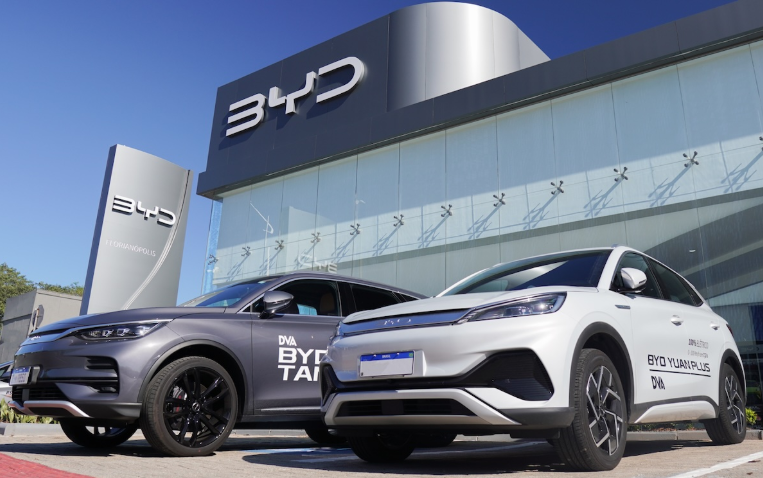
Chinese electric vehicles are likely coming to Canadian roads, like these BYD models.
Forgive us for being fixated on Canada’s climate follies just because we live here. But they are revealing, including the U-turn on EVs that we mentioned last week where the government yanked the steering wheel so hard they did a 360 from banning gasoline vehicles by law to banning them by regulation. Raising the question whether they actually know what they’re doing and, if so, whether they regard themselves as commendably devious or just way smarter than everyone else. We hope not the latter because the policy is going to fail big-time. As Randall Denley just warned in the National Post, “To summarize, the Carney plan relies on electric vehicles (EVs) that Ontario plants don’t produce, a sudden and dramatic new appetite for buying EVs and an imagined export market that doesn’t exist. To top it off, the federal government will provide $2.3 billion in EV rebates that will encourage Canadians to buy cars made elsewhere.” Apart from that, a stroke of genius of the sort that, through decades of diligent effort, has made the nation tragically poorer without hitting any of our targets including the one where they get more humble.
As a Globe & Mail news story blurted out:
A new study published Friday by the Canadian Climate Institute says Canada is not on track to meet any of its climate targets – not the 2026 interim emissions reduction target, the 2030 Paris Agreement commitment, or even the long-term goal of reaching net-zero emissions by 2050.
Oh. Pretty hard to make that one sound like an achievement, isn’t it? Or to sound as if the people who pulled it off should be trusted with the next one.
Now as we’ve complained before, the “Canadian Climate Institute” bills itself as some sort of dispassionate neutral observer when in fact it’s a creature of the state. And, worse, one of those lavishly-funded outfits (we deniers may have all the money, but they got $30 million from the Canadian government and we did not … uh no, that was just one grant, the total’s higher) that exists to push the government to do things it wants to do anyway but needs the appearance of “civil society” support to pull off.
Thus, the Globe sonorously informs us, the problem isn’t that the targets were impractical or the politicians and bureaucrats inept. Heck no. As usual with Thomas Sowell’s “unconstrained vision” of public policy, all you need is love:
The report suggests Canada has moved away from its climate goals thanks to “a slackening of policy effort over the past year, marked by the removal or weakening of climate policies across the country”.
Which gives the impression they had been on track to meet their goals up until some recent backsliding, whereas in reality they have never shown any sign of meeting them. After all, what policies have actually changed since Carney took over as Prime Minister in ways that could possibly affect long-term trends? And how close was Canada to meeting “its climate goals” before this disastrous swerve into the camp of the deniers?
It’s not even true that “Canada” as a collective has collective “climate goals”. The government has climate goals, and they come bundled with a host of other policies at election time, especially since even our “Conservative” party is terrified of challenging climate orthodoxy. Public support for those goals is weak, sporadic and prone to vanish when real costs hove into view. But ignoring that piece of typical collectivist prose, Mark Carney has spent most of his prime ministership flying around virtue-signaling in the presence of others doing the same. (No, really. It’s been less than a year and he’s taken almost three dozen flights.) He hasn’t been in the office shredding this and demolishing that.
November 14, 2025
Isn’t it time we scrapped a temporary WW1 practice and stop moving the clocks back and forth?
I don’t know anyone who likes the twice-a-year exercise of resetting all the various clocks in the house, but we still end up doing it (I almost said “like clockwork”). Here in Ontario, we have a law on the books that allows us to dispense with the practice as soon as our immediate neighbours do (Quebec, Manitoba, New York, Michigan and Minnesota … not sure if Pennsylvania and Ohio are included). Mark Naylor says the pressure to get rid of it is certainly building in Europe:
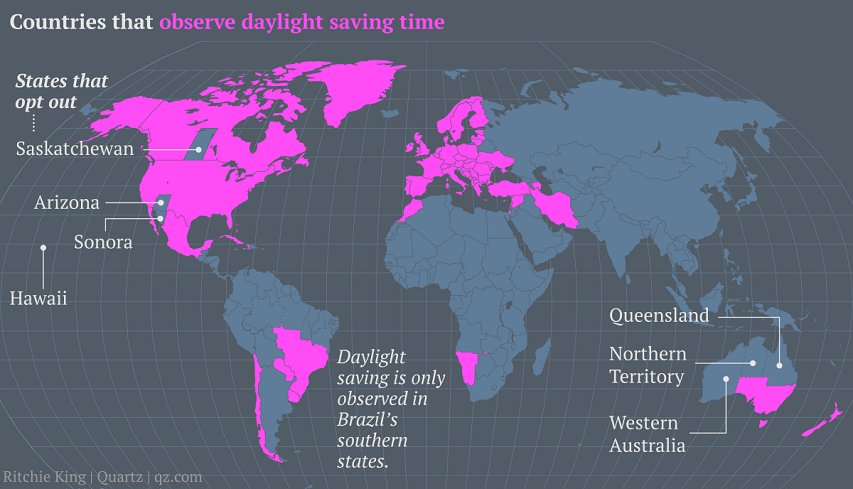
Graphic originally from Quartz, 2013.
The debate about Daylight Saving Time (DST) has reignited in both Europe and the United States. Spain’s Socialist prime minister Pedro Sánchez is lobbying the EU to put an end to the bi-annual clock change, although he hasn’t stated whether he favors permanent summer (DST) or winter time (also referred to as Standard Time/ST) — which means more light in the evening or morning, respectively. It is a rare point of agreement between the Spanish premier and Donald Trump, who also wants to scrap the clock change, in his case to make summer time permanent.
Both leaders seem to have the public on their side. In a 2018 survey of 4.6 million European citizens, 84% favored abolishing the twice-yearly time changes (in Spain, that figure rose to 93%). A recent poll in the US found that just 12% are in favor of retaining the status quo; 47% are opposed to DST (including 27% who are “strongly opposed”), while 40% are neutral. Legislation passed in 1966 enabled individual states to choose whether or not to implement the practice; today, the only states that don’t are Arizona and Hawaii.
[…]
Sánchez has a strong case. Studies in the US and Europe have shown that the energy saved by DST is negligible. In the 1970s, the US Department of Transportation found that changing the clocks reduced the nation’s electricity consumption by just 1%. A report on Slovakia’s energy usage between 2010 and 2017 put that figure at 0.8%. In Indiana, which switched to DST in 2006, researchers found that the practice led to a 1% increase in consumption, as households used more power for air conditioning on summer evenings and heating on late fall and early spring mornings.
Studies have also linked clock-changing to an increased risk of mood disorders, heart attacks, strokes, and traffic accidents—all a result of the disruption caused to our internal circadian rhythms. “Left to themselves,” says David Ray, a professor of endocrinology at Oxford University, “[these] naturally align with the light–dark cycle, so the only problem comes when you start arbitrarily defining time based on a clock.” A new study by scientists at Stanford University has found that adopting permanent ST, or winter time, would be the best way for us to align with the sun’s cycle, preventing 300,000 strokes a year and resulting in 2.6 million fewer people with obesity.
Trump, meanwhile, has flagged the economic case against bi-annual clock changes. In April, he wrote on Truth Social that the idea of switching to permanent summer time is “Very popular and, most importantly, [there would be] no more changing of the clocks, a big inconvenience and, for our government, A VERY COSTLY EVENT!”
September 20, 2025
QotD: Why modern dishwashers suck
The current standards for dishwashers took effect in 2013. The standards, which were based on a consensus agreement between manufacturers and efficiency advocates, specify minimum energy and water efficiency levels. The standards require that standard-size dishwashers use no more than 307 kWh per year and 5.0 gallons of water per cycle.
In 2024, DOE finalized amended standards for dishwashers based on a joint recommendation from manufacturers and efficiency advocates. The new standards for dishwashers will cost-effectively reduce energy consumption by 15% relative to the current standards while also cutting water waste. Dishwashers
It is a general problem, but what started me thinking about it was being told by my dishwasher that it would take three and a half hours to wash the dishes. That seems, judging by a quick search online, to be longer than average but still within the normal range. I have not been able to find figures online for how long dishwashers took twenty or thirty years ago but, by what I remember, it was substantially less — and the dishes ended up dry, which ours don’t.
The explanation is in the final word of the quote above, “waste”. The owners of dishwashers pay for water and power, so if making them more efficient in those dimensions was costless, did not require giving up something else, there would be no need for the Department of Energy to make the manufacturers do it. I conclude that it was not costless, that it either made dishwashers cost more or do their job less well — take longer, not dry the dishes as well, not clean them as well. Using more power or water to do a better job is not waste.
David Friedman, “Optimizing On A Single Variable”, David Friedman’s Substack, 2025-06-02.
September 13, 2025
“It was about control before green policy became popular, and it is about control now”
In the National Post, Carson Jerema identifies the common thread among all of Prime Minister Mark Carney’s efforts since becoming Liberal party leader:

Then-Governor of the Bank of Canada Mark Carney at the 2012 Annual Meeting of the World Economic Forum in Davos, Switzerland.
WEF photo via Wikimedia Commons.
Prime Minister Mark Carney may not be as obnoxiously progressive as Justin Trudeau, but that doesn’t mean he isn’t stubbornly left wing in his own right, though he has managed to convince many critics otherwise.
Over the past decade, the Liberals were particularly self-righteous over climate policy, so much so that the deviations made by Carney since assuming office have been met with praise — or, on the left, with scorn — that he is somehow pro-business and represents the return of the centre-right Liberals. Some even think he’s a conservative. Others have suggested that Conservative Leader Pierre Poilievre is now entirely redundant.
This narrative is just more proof of how utterly captured the media is in this country by the Liberal party. It is true that Carney gives the appearance that he is abandoning many of the government’s environmental policies. He set the carbon tax rate to zero, paused the EV mandate and, on Thursday, he refused to endorse his government’s own carbon-emissions targets.
None of this, however, should be taken as evidence that Carney represents some sort of rightward or pro-business shift in the Liberal party. He is not proposing to let markets determine what infrastructure projects get built. Nor is he proposing to minimize regulations to attract investment.
Instead, Carney wants to command the economy by himself, laying bare the reality that what attracts left-wing politicians to climate policy is not saving the planet from carbon, but using environmental objectives to manage the economy. It was about control before green policy became popular, and it is about control now. For Carney specifically, before he entered politics, “decarbonizing” markets was quite remunerative in his various banking roles.
Noticeably absent from the five infrastructure projects that the prime minister said on Thursday would be fast-tracked under the Major Projects Office was an oil and gas pipeline. Also noticeable was the fact that all five of the projects had already been approved, but the government tried to pass them off as something new anyway.
Even if the projects had been all brand new, the lack of a pipeline would still be of no surprise, as what private investor would be willing to back a pipeline when the Liberals’ Impact Assessment Act, tanker ban and emissions cap all exist to conspire against energy projects of any kind?
One thing that became incredibly obvious early in Justin Trudeau’s premiership was that the prime minister — and his ministers in general — really did seem to believe that talking about doing something was as effective in solving problems as actually doing the thing. Many had hoped that Mark Carney would be different … but as Dan Knight points out, he may actually be worse:
From there, [Poilievre] broadened the attack. He spoke of an entire generation priced out of homeownership, of immigration growing “three times faster than housing and jobs”, of crime rising, and of what he called “the worst economy in the G7”. And then he turned squarely on Carney: “Mr. Carney is actually more irresponsible than even Justin Trudeau was“, citing an 8% increase in government spending, 37% more for consultants, and 62 billion dollars in lost investment — the largest outflow in Canadian history, according to the National Bank.
The message was simple: Liberals talk, Conservatives build. Poilievre painted Carney as a man of speeches and promises, not results. “The mistake the media is making is they’re judging him by his words rather than his deeds“, he said.
It was an opening statement designed less to introduce policy — those details came later — and more to frame the battle. For Poilievre, Carney isn’t just Trudeau’s replacement. He’s Trudeau’s sequel, and in some ways worse.
[…]
Pierre Poilievre didn’t hold back when asked about Mark Carney’s record. His words: “Mr. Carney is actually more irresponsible than even Justin Trudeau was“. That’s not a throwaway line, he backed it with numbers.
According to Poilievre, Carney inherited what he called a “morbidly obese government” from Trudeau and made it worse: 8% bigger overall, 37% more for consultants, and 6% more bureaucracy. He says Carney’s deficit is set to be even larger than Trudeau’s.
Then the jobs number: 86,000 more unemployed people under Carney than under Trudeau. That, Poilievre argued, is the real measure, not the polished speeches Carney gives. His line: “The mistake the media is making is they’re judging him by his words rather than his deeds“.
September 4, 2025
Net Zero targets and Britain’s ever-declining car industry
At the Foundation for Economic Education, Jake Scott charts the decline of the British auto manufacturing centres and the government’s allegiance to its Net Zero programs:

Custom image by FEE
Britain was once a giant of car manufacturing. In the 1950s, we were the second-largest producer in the world and the biggest exporter. Coventry, Birmingham, and Oxford built not just cars, but the reputation of an industrial nation; to this day, it is a source of great pride that Jaguar–Land Rover, a global automotive icon, still stands between Coventry and Birmingham. By the 1970s, we were producing more than 1.6 million vehicles a year.
Today? We have fallen back to 1950s levels. Last year, Britain built fewer than half our peak output—800,000 cars, and the lowest outside the pandemic since 1954. Half a year later, by mid-2025, production has slumped a further 12%. The country that once led the automotive revolution is now struggling to stay afloat, and fighting to remain relevant.
This is why the news that BMW will end car production at Oxford’s Mini plant, shifting work to China, is so damning, bringing this decline into sharp focus. The Mini is not only a classic British car; Alec Issigonis’s original design made it an international icon. For decades, the Mini has been the bridge between British design flair and foreign investment. Its departure leaves 1,500 jobs at risk at a time when the government is desperate to fuel growth and convince a wavering consumer market that there is no tension between industrial production and Net Zero goals.
It’s a bitter reminder that we in Britain have been here before: letting an industrial crown jewel slip away.
The usual explanations will be offered: global competition, exchange rates, supply chains. All true, in the midst of a global trade war that is heating up and damaging major British exports. But such a diagnosis is incomplete. The truth is that Britain’s car industry is being squeezed by a mix of geopolitical realignment and government missteps.
The car industry has become the frontline of a new trade war. Washington has already moved aggressively to shield its own firms: the Inflation Reduction Act offers vast subsidies for US-made EVs and batteries, an unapologetic attempt to onshore production, and something that became a flashpoint of tension in Trump’s negotiation with the EU in the latest trade deal. On the production side, the Act has poured billions into US manufacturing: investment in EV and battery plants hit around $11 billion per quarter in 2024.
Ripples have been sent across the world in the US’s wake: Europe, faced with a flood of cheap Chinese EVs, has imposed tariffs of up to 35% after an anti-subsidy investigation. Talks have even turned to a system of minimum import prices instead of tariffs. Unsurprisingly, China has threatened retaliation against European luxury marques, while experts warn the tariffs may slow the EU’s green transition by raising prices.
This is no longer a free market: cars are treated as strategic assets, the 21st-century equivalent of shipbuilding or steel. Whoever controls the supply chains, particularly for EV batteries and the mining of lithium, controls not only the future of the industry but an important lever of national power.
The results are visible. In July 2025, Tesla’s UK sales collapsed nearly 60%, while Chinese giant BYD’s deliveries quadrupled. Europe responded by talking up new tariffs. Britain did nothing. In this asymmetric contest, our market risks becoming a showroom for foreign producers — subsidizing both sides of the trade war without defending our own.
July 7, 2025
The federal government’s EV mandate cannot stand
Following its established pattern, the Canadian government will seek any possible path other than economic reality, especially when it comes to things like mandating that all vehicles sold in Canada must be EVs by 2035:
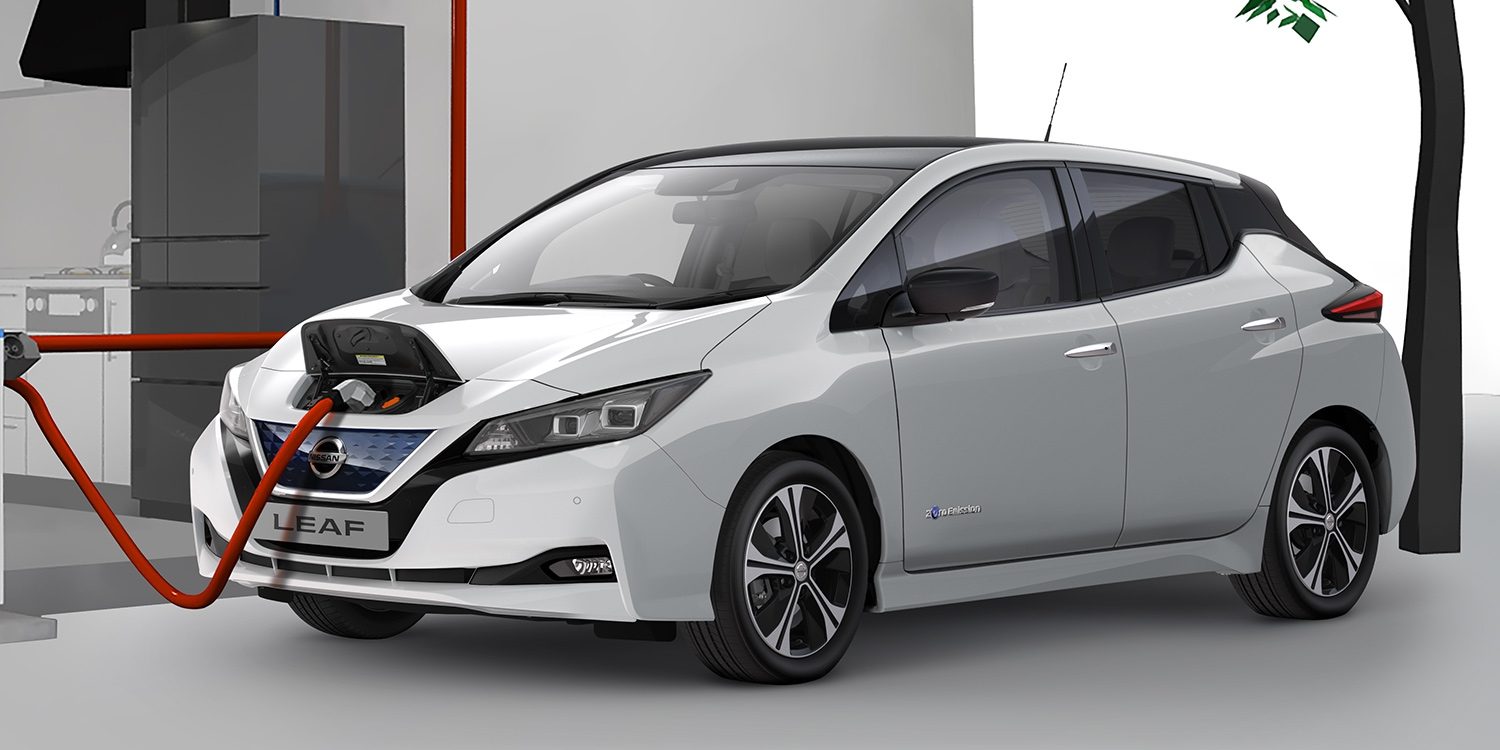
Nissan Leaf electric vehicle charging.
Photo by Nissan UK
It’s not always the unexpected that gets governments in trouble — often enough it’s their own bad judgement, poor timing or general clumsiness that gets in the way. But the unanticipated does happen a lot.
Parties and politicians put time and effort into concocting a set of policies aimed at winning votes by proposing remedies to problems identified as occupying top rungs of current voter concern. If they’re lucky they get elected, presumably intending to put those policies into effect at the earliest opportunity. Then the world shifts and pulls the rug from under them.
Former prime minister Justin Trudeau was a big fan of the attention-getting promise. Especially if it was a pledge timed well into the future when he was unlikely to still be around to be held responsible. Carbon reductions too ambitious to be realistic. Budget targets too unlikely to be believed. Statist planning projects that tended increasingly to the surreal.
Mark Carney is left with the detritus and the problem of what to do about it. As prime minister he’s already acted on a few of the problematic leftovers, ditching the carbon tax even though he’d previously supported it as a good idea; scrapping an increased tax on capital gains although the Treasury could certainly use the money; “caving,” as the Trump administration so tastefully put it, on a digital services tax that was a bad idea to begin with but pushed through by the Trudeau government anyway.
There’s an argument to be made, and not a bad one, that each retreat was the right move for the moment. And if there are mistakes that need abandoning, the early days of a new government is proverbially the best time to do it.
But righting wrongs has confronted Carney with a new predicament, in that there are so many Trudeau-era wrongs that need righting. Washington was still in the midst of its victory dance over its digital tax triumph when Canada’s auto industry came along to plead for similar treatment from Ottawa, insisting automakers couldn’t possibly meet previously-set electric vehicle targets and urging the new Liberal government to backtrack post haste.
Carney hosted the session with Canada’s chief executives for Ford, Stellantis and General Motors. Brian Kingston, chief executive of the Canadian Vehicle Manufacturers Association, was blunt in identifying the targets set for electric vehicle (EV) production as the main topic.
“The EV mandate itself is not sustainable. The targets that have been established cannot be met,” he said on arriving for the meeting. Afterwards he told Politico‘s online news site, “At a time when the industry is under immense pressure, the damaging and redundant ZEV mandate must be urgently removed”.
April 30, 2025
Low-energy Europe
Depending on who you read, it appears that the massive power outage in southwestern Europe nearly expanded across the continent, as Spain and Portugal went dark taking parts of other neighbouring countries’ networks down as well. James Price explains that this sort of thing is likely to be a recurring phenomenon as Europe leans ever more heavily on unreliable sources of electricity:

In his 2017 book The Strange Death of Europe, Douglas Murray accused Western European nations of Geschichtsmüde, being weary of history. President Trump might translate this by recycling a sobriquet he used against Jeb Bush — being low-energy.
This is now literally the case in both the United Kingdom and Germany, who have the most expensive energy costs in the developed world. The consequences have been catastrophic, in economic, political, environmental, and even geostrategic terms.
The true tragedy is that so much of the pain is self-inflicted, the result of bad, rushed policy designed to make people feel warm and fuzzy inside, rather than actually keeping people warm.
Net Zero
The commitment in Britain to “net zero emissions by 2050” was signed into law in the dying days of Theresa May’s premiership, as an attempt to give her a “legacy” after three painful years as Prime Minister. That legacy is likely to be lost, like the works of Ozymandias, as the world comes crashing back to economic reality.
The debate over the introduction of net zero was conducted during the Conservative Party’s leadership contest to succeed May, and therefore all attention was away from what would prove to be the most impactful economic decision of the year. The debate lasted all of 90 minutes.
The results have been completely devastating for Britain’s economy in all sorts of corrosive ways. For one, 169 years after Henry Bessemer worked out how to mass-produce steel in Sheffield, Yorkshire, Britain almost lost its ability to make the stuff here in Britain. Global factors like Chinese dumping play a part, but the extent of environmental regulation on British industry is making it impossible to sustain any kind of heavy industry. And now, British Steel has been nationalized once more, lumping the taxpayer with the losses and liabilities, but without doing anything to address the root causes.
But the government meddling does not stop there. In agriculture, a cruel, ideological attack on farmers (over whether farms can be charged inheritance tax) is going to spur more prime farmland to be turned into solar panel fields in a country where the sun often doesn’t shine.
There are now many statutory requirements to push environmental policies in all sorts of areas, to the complete detriment of other requirements, namely economic prosperity, that would otherwise be carefully balanced. So new homes in Britain have to have small windows, to increase insulation efficiency.
HS2, a much delayed and hideously over-budget high speed rail line between London and Birmingham, is building a one-kilometer-long tunnel to prevent bats being harmed by high-speed trains. The tunnel will cost over £100 million to build. Not only is there no evidence that the trains would interfere with bats, but there is also some evidence that the bat tunnel may actually be a bat-killing tunnel.
Hinkley Point C, the only nuclear power station being constructed at the moment in Britain, is having to construct a “fish disco” at huge costs to push fish away from being sucked into the cooling system.
This kind of environmental “everythingism” is not just holding back progress, not just costing huge amounts; it is corrosive of every attempt by people who just want to get on with building and growing — even “green” enterprises. Orsted, an offshore wind company, had to fill in forms five times longer than Tolstoy’s War and Peace, and had to wait nearly three years for a decision to build one farm.
And specifically about the Spanish situation that nearly triggered a Europe-wide blackout, from the social media network formerly known as Twitter:
SPAIN BLACKOUTS: AN ANONYMOUS EXPERT VIEW
From a deep groupchat, last night, translated from Spanish, written by an expert in transmission and distribution of power. Not my words.
“What has happened on April 28 has a well-located origin: the Aragón-Catalonia corridor, which is one of the most important electric highways in Spain. There is not only the electricity produced by our solar and wind farms in the northeast, but also the electricity that we import from France. This international interconnection, although weak (it can only contribute 3% of our demand, well below the minimum of 10% that marks the EU), in times of stress is essential to balance the network.
“At 12:32 p.m., in that Aragón-Catalonia corridor there was an electric [shake]. What exactly does “shake” mean? It means that suddenly and abnormally, the power that flowed through those lines began to vary violently, rising and falling in a very short time. Such abrupt variability can be due to three main causes:
“1. That a relay or transformer on that electric highway detects an abnormal flow of current or voltage (higher or lower than expected) and automatically disconnected to avoid burning or [being] destroyed. This is called that “opens” a relay or switch: it jumps and cuts the passage of electricity to protect itself.
“2. That the enormous concentration of renewable energy in that area (mainly solar and wind) has created an electrical resonance: electronic inverters, which synchronize current, can sometimes be amplified between them if a small voltage alteration (for example, due to clouds, strong wind or a slight failure) extends like an echo to all devices, causing widespread oscillations.
“3. That a wrong control order has been sent (by mistake or attack) from the SCADA systems, disconnecting or reducing the generation of multiple hit plants. There is no confirmation of this possibility yet, but it is being investigated.
“What is known is that as a consequence of that shake, the interconnection with France jumped: we were isolated just at the worst time, when the peninsula needed external support to stabilize.
“Without that French help, the frequency of the peninsular network (which should always be 50 Hz exact) began to drop quickly. The frequency is like the heartbeat of the network: if it falls too much, the systems understand that the patient (the network) is collapsing and automatically disconnected so as not to self-destruct. Thus, in just five seconds, the solar and wind farms were turned off — [they are] very sensitive to frequency variations — 15 GW of power was lost suddenly (60% of all the electricity generated at that time), and the network could not take it anymore: it collapsed completely, showing the Redeia Platform (REE) a “0 MW” nationwide. That does not mean that all the turbines were physically turned off, but there was no generator synchronized at the common frequency of 50 Hz. It was, for practical purposes, a country [turned] off.
“To [restart] a completely dead network, one essential thing is needed: plants that can start in black, that is, without receiving energy from anywhere else. Spain has identified five large hydroelectric jumps capable of doing this. However, and here is one of the great negligences that are coming to light, three of those five groups were stopped in scheduled maintenance, by business decision supervised by the administration. Only two were operational. That made the recovery much slower and weaker than it should be in a normal contingency plan.
“The result is that, after almost 10 hours, only 35% to 40% of the national supply has been recovered, and there are still large areas in the dark or under scheduled cuts.
“The situation reveals a very serious underlying problem:
“Spain is still an energy island: it only has 3% foreign exchange capacity compared to its total demand.”
Part 2:
“The network depends a lot on variable renewables, which are disconnected quickly in the face of any instability.
“The lack of physical inertia reserves (i.e. large rotating masses such as thermal power plants or classic hydraulics) prevents the disturbances from damping.
“And poor maintenance planning left without enough hydraulic muscle to respond to a crisis.
“The most likely causes, with current data, are:
“A combination of technical failure in protection or in synchronization, added to a serious lack of operational forecast and maintenance (probability ≈ 40%).
“The possibility of an intentional cyber-physical attack remains in analysis (≈ 25% estimated probability).
“Other factors such as human error, punctual atmospheric phenomenon or mixed causes complete the rest.
“In short: an initial shake at the most sensitive point of the Spanish network — the Aragón-Catalonia corridor, door to Europe — left the peninsula isolated and vulnerable. The network could not sustain its own demand because it did not have sufficient assistance, nor stable physical reserve, nor enough bootable plants in black. Three of five hydroelectric jumps were out of service when they were most needed.
“For this reason, Spain went out in five seconds, and that is why it still continues to light little by little, fragile, slow and exposed.”
April 9, 2025
“South Africa is what happens when a country becomes ungovernable”
Niccolo Soldo’s weekend roundup includes some quotes from Lawrence Thomas on what he terms a “racketeer party state“, what the “Rainbow Nation” of South Africa has degenerated into since the end of Apartheid:

South Africa is what happens when a country becomes ungovernable. From endemic sexual crime to farm murders, rolling blackouts, and expropriation, the rest is just the details. What has come to be termed “South Africanization” is not the failed development of a Third-World nation such as Afghanistan or Somalia, but the structural de-development of a once fully modern state that had its own nuclear weapons program. President Trump’s support of Afrikaner farmers has brought global attention to the decaying state of the country and is perhaps the most high-level recognition yet that the 1990s “Rainbow Nation” dream is dead. What’s strange about it all is how much of it happened on purpose.
What may be worse is that the very system of law and government itself has become an instrument to be captured and used to further the mass looting of the country. South Africans of all races inherit a Western political culture and economy. The average South African experiences a strong civic identity, highly active political parties, popular national media networks, a market economy, and a parliamentary constitutional order. The last thirty years saw a coalition of political actors, patronage networks, and organized criminal gangs seize control of and use all the infrastructure of modern government for their own ends.
[…]
While songs like “Kill the Boer” at rallies tend to grab headlines, the most consequential development of late is the passing of expropriation without compensation into law by the supposedly moderate President Cyril Ramaphosa. In addition to further eroding property rights, it emboldens a widespread movement that sees land redistribution as the sole resolution to the country’s racial conflict and views the presence of any white population as fundamentally illegitimate. The radicalization of race politics is the means through which political fights are won, since it plays on the country’s major divides and wins over those who feel left out of the spoils.
On the ground, reports tell of ANC officials tacitly allowing invasions of private and public land by squatters. Occupations of this sort have sometimes preceded the farm murders which have gained media attention internationally, and squatters have now begun to invoke the Expropriation Act. Such groups become the shock troops of political pressure: they can harass and pressure the occupants of the lands they occupy, or worse, while becoming a media story about the “landless oppressed” used to justify broader government action. The broad facilitation of ground-level conflict and crime by those with political power is the defining feature of South Africanization.
[…]
In other words, decay is a burden without benefit. There is no “rock bottom”. Business, political organization, social fabric, and all other forms of Western cultural life just face increasing costs. Some are direct, while others are opportunity costs: how much doesn’t happen because almost no one can guarantee electricity? In a relatively developed country, there’s still much more to break down and expropriate.
The combination of social progressivism with an economic model of managed decline has become orthodoxy in many establishment parties across the developed world. South Africa is a study of the political phenomenon in its advanced stage and a demonstration of what is at stake in defeating it in the rest of the Western world. Flip Buys, leader of the Afrikaner trade union Solidariteit, was likely prophetic when he foresaw that South Africa would become home to the “first large grouping of Westerners living in a post-Western country”.
Emphasis from Niccolo’s excerpts.


