Quotulatiousness

February 24, 2026

The political spectrum in Canadian media runs from the far left all the way to the left-of-centre

Filed under: Cancon, Government, Media, Politics — Tags: , , , , , , — Nicholas @ 05:00

The federal government isn’t noted for being good with money. Yes, I know, understatement of the century … But they did make one investment that has been fantastically beneficial. For the Liberal Party, if not for Canadians in general. That investment was buying the support of almost all of the surviving mainstream media outlets by directly subsidizing their payrolls. Most media folks lean left anyway, but once their paycheque literally depended on keeping the Liberals happy, they joyfully co-operated in ways that 1930s German newspapers would blush at. On her Substack, Melanie In Saskatchewan explains just how far away from representative the media political spectrum has drifted (leftwards, of course, always leftwards):

If you were to draw a Venn diagram of the real Canadian political landscape and the pundit ecosystem on legacy networks, you’d find they barely overlap.

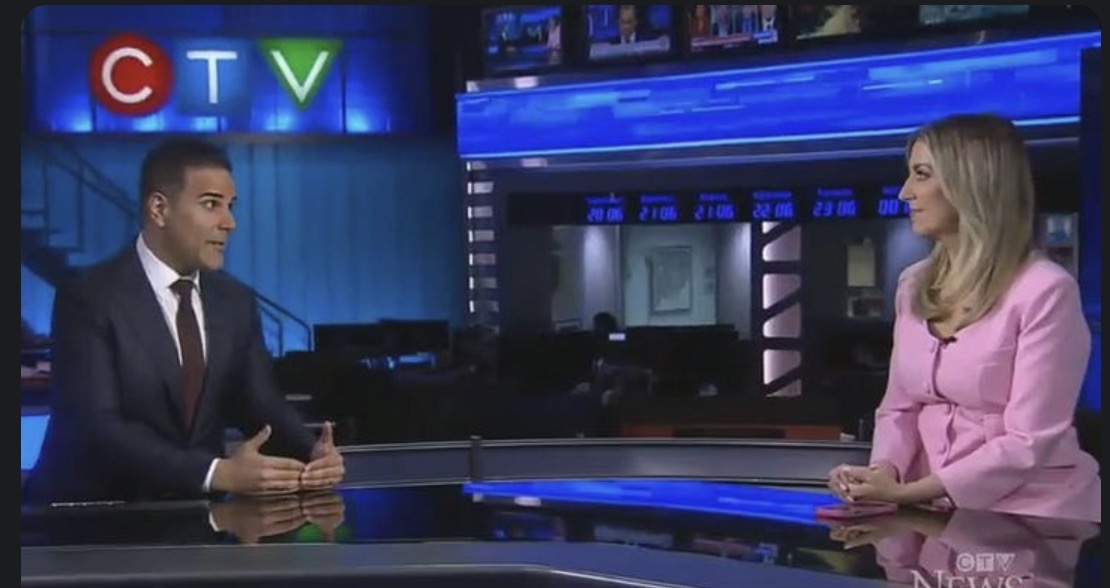
Rosemary Barton is the undisputed matriarch of the CBC’s political brand. As host of At Issue and Rosemary Barton Live, she shapes the entire panel tone for CBC political discourse and anchors the network’s election coverage. She has been at the helm of federal election panels since 2016, interviewing party leaders and moderating debates from coast to coast.

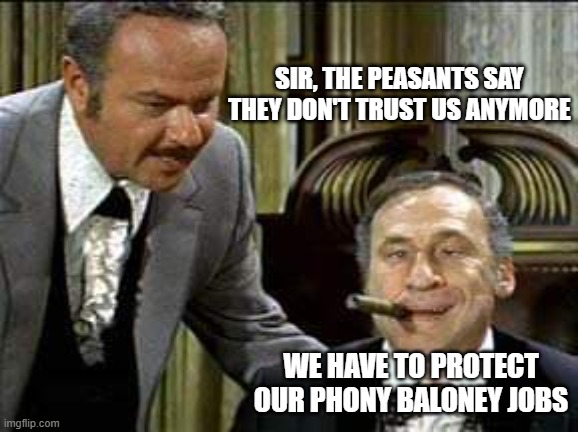
Canada’s mainstream media as Liberal Party propagandists.
Image from Melanie In Saskatchewan

Now ask yourself this: if half the population consistently feels unheard by these panels, is that a coincidence, or the predictable result of decades of the same ideological herd wandering through the same studios?

Here is the rub. The At Issue panel rarely rotates through voices that actually represent today’s conservative electorate. Instead, it routinely features professional journalists and political insiders who debate among themselves, talking about conservatives far more often than they engage with conservatives whose voters make up a massive share of the country. That is not centrism. It is an echo chamber assembled by committee.

Then there is Andrew Coyne. He is often presented as the token ideological counterweight on At Issue, the panel’s supposed nod to conservatism. After all, he has spent decades as a columnist and editorial thinker, comfortably critiquing governments from a well upholstered perch.

But let us be clear. Coyne is not remotely representative of today’s conservative electorate. He is not a reflection of the current Conservative Party base. He is not channeling the instincts of voters outside the Ottawa and Toronto corridor.

Positioning him as the conservative voice on a national panel is not balance. It is branding. It allows producers to claim ideological diversity without ever inviting someone who actually carries the convictions, tone, or priorities of the modern conservative movement. Coyne is not a grassroots conservative. He is a professional pundit whose worldview fits tidily within the Ottawa insider class. That is not ideological contrast. It is controlled opposition dressed up as pluralism.

Meanwhile, audiences have been increasingly vocal online about the sense that these panels sound like academic seminars, not reflections of the lived experience of Canadians who didn’t spend their twenties in Ottawa press galleries.

February 20, 2026

Stephen A. Smith as a Democratic Trump

Filed under: Media, Politics, Sports, USA — Tags: , , , — Nicholas @ 05:00

It’s been noted many times that the Democratic Party has had a logjam of aged boomers at the top of their “bench” for future leadership positions. This is a serious problem for the self-described “Party of Youth”, that they have remarkably few viable Gen X, Millennial or Gen Z rising stars who might be future presidential candidates. Donald Trump took the political insiders by surprise in 2015/16, because he was an outsider with no political track record but a huge media profile. He may be the template that Stephen A. Smith hopes to follow on the Democratic side:

Stephen A. Smith at The Moody College of Communications, 23 January 2021.
Wikimedia Commons.

Stephen A. Smith is flirting with a run for president. In a recent CBS News interview, the telegenic ESPN commentator openly entertained the possibility of seeking the Democratic nomination in 2028. He offered additional comments on policy that were striking in their normalcy. He dismissed the idea that racism defines contemporary American life, rejected “defund the police”, and emphasized economic flourishing as the surest path to social stability.

Smith has a gift for performance, a fondness for hyperbole, and a resume devoid of elective office. Historically, that would have made him an unorthodox fit for the White House. But since Donald Trump’s 2016 election, those facts do less to disqualify a figure than to clarify his potential appeal.

And Smith seems to be taking the possibility seriously. His CBS interview builds on previous comments criticizing politicians who support income caps or engage in class-war rhetoric, framing prosperity as a moral and civic good, and condemning the Democratic Party’s excesses on cultural matters like transgenderism. In these comments, Smith captured the sensibility of millions of voters who feel alienated by the ideological vocabulary of contemporary Democratic politics.

While it’s tempting to write off Smith’s flirtation as unserious celebrity theater, that impulse overlooks the weakness of the Democratic field. Kamala Harris enters the cycle as the nominal frontrunner, but her standing reflects name recognition more than enthusiasm. Gavin Newsom commands attention through media savvy and partisan combativeness but carries the burden of California’s abysmal policy record. Other prospective contenders — none of whom have managed to crack double-digit support — may offer competence without excitement or excitement without coalitional appeal.

A primary defined by such choices creates space for an outsider, especially one who can command attention and articulate a distinct political persona. Smith lacks the accumulated baggage of conventional politicians. Even more importantly, he speaks like someone accustomed to unscripted confrontation. Two decades of live television have trained him to think quickly, read audiences, and project conviction. While such skills cannot substitute for governing experience, they matter a great deal in an era where voters evaluate authenticity and affect alongside ideology.

In fact, Donald Trump demonstrates that a candidate who pairs ideological flexibility with rhetorical aggression can reshape a party. Trump softened Republican orthodoxy on entitlement reform, health care, and even social issues — like gay marriage, guns, and abortion — at various points. Yet he maintained the loyalty of a base that valued his willingness to fight. That in turn forced GOP insiders to capitulate to many of his views. Smith shares Trump’s intensity, and could by the same method push the Democrats to moderate.

At the same time, his nascent platform could complicate Democratic coalition politics. The party’s donor and activist classes exert powerful pressure against moderation. These interests remain influential in candidate recruitment, messaging, and resource allocation. That influence often produces nominees who align with activist priorities even when those priorities diverge from median Democratic voter preferences.

February 15, 2026

Everything you see in the media is kayfabe

Filed under: Government, Law, Media, Politics, USA — Tags: , , , , — Nicholas @ 03:00

Wikipedia defines kayfabe as “the portrayal of staged elements within professional wrestling (such as characters, rivalries, and storylines) as legitimate or real. Although it remains primarily a wrestling term, it has evolved into a code word for maintaining the pretense of ‘reality’ in front of an audience.” It’s hard not to see modern political theatre in that light, as Damian Penny points out:

Sgt. Slaughter and The Grand Wizard, February 1984.
Photo from Wrestling’s MAIN EVENT magazine via Wikimedia Commons.

I know a guy who was obsessed with WWF wrestling (yes, I said WWF wrestling, because you kids better get off my lawn before Diagnosis Murder comes on) when he was younger and got to see it live when it came to his city. After the show, he was shocked to see several of the wrestlers — some of them good-guy “faces”, others bad-guy “heels” — being driven from the arena in the same minivan.

For someone who took the “sport” of professional wrestling seriously1 and was extremely emotionally invested in the performer rivalries, this was kind of like finding out that Santa Claus wasn’t real.2

That’s the first thing I thought about when I came across this piece by Christianity Today‘s Russell Moore, a rare evangelical leader who actually held on to his integrity in the age of Trump, about the Epstein Files:

    Reading through the names of those connected with Epstein, one can hardly believe the range listed there. Some were unsurprising: for instance, creepy filmmaker Woody Allen or the man formerly known as Prince Andrew. But even then, the scope is unsettling. Even the Dalai Lama had to put out a statement noting that he was never involved with Epstein. Just as incredible, many of the people listed were partying with those they spend a lot of time telling the rest of us to hate.

    Both Donald Trump and Bill Clinton were apparently friendly with Epstein. The New Age syncretist Deepak Chopra is in the documents many times — often with shady, enigmatic phrases — but so are those who accused the pope of New Age syncretism. With Middle Eastern tensions what they are, still the files include both sheikhs and Israelis. All over the files are connections with both left-wing populist provocateur Noam Chomsky and right-wing populist provocateur Steve Bannon. Epstein makes fun of evangelicals yet recommends a James Dobson article.

    How can this be?

    Maybe one reason is that Jeffrey Epstein figured out the deep, dark secret of this moment: The people who fight culture wars often believe what they say, but the people who lead culture wars often don’t.

[…] And if the Epstein revelations didn’t blackpill you hard enough, check this out:

To be fair, I’m not sure it’s an entirely bad thing that so many decision-makers and “thought leaders” who are sworn enemies in public get along just fine when the cameras are turned off. If they really hated each other, our political culture might be even more messed up.


  1. YouTuber Drew Allen says you should take wrestling seriously, and honestly he makes a darned good argument.
  2. I’ll never forget when I found out Santa Claus wasn’t real, and how I was so depressed and hopeless and wouldn’t leave my bed for days. Finally my mother came into my bedroom, sat down on the side my bed and said, “honey, I know you’re sad but you’re in your second year of law school and really we thought you’d have figured this out long ago“.

February 11, 2026

The rise and fall of the “Western” on TV and in movies

Filed under: History, Media, USA — Tags: , , , , , — Nicholas @ 03:00

Ted Gioia reconsiders his childhood loathing of the TV western (because of massive over-exposure to the genre):

I hated cowboys when I was a youngster. Not real cowboys — I never met a single gunslinger, cowpoke, or desperado in in my urban neighborhood. My loathing was reserved for cowboys on TV.

And they were everywhere.

At one point, eight of the top ten shows on the flickering tube were westerns. And it got worse from there — Hollywood kept churning out more and more cowboy movies and TV series. I tried to avoid them, as did many of my buddies, but it was like dodging bullets in Dodge. There was nowhere to hide.

That’s because our parents loved these simple stories of frontier justice. They couldn’t get enough of them. And when they weren’t watching them on TV, they dragged us off to movie theaters to see The Magnificent Seven (128 minutes), The Alamo (138 minutes) or How the West Was Won (an excruciating 164 minutes).

In 1959, Warner Bros posed some of their TV cowboy stars in a single photo (Source)

[…]

Many aspects of these films still put me off. I struggle with the clichés and tired formulas. But I’ve gradually acquired an affection for the genre — or maybe an affection for the audiences of an earlier day who could put such trust and faith in a sheriff or US marshal or gunslinger for hire.

Do any of us have that kind of faith in any authority figure nowadays? I doubt it. But I wish we could. And that’s impressed powerfully on my mind when I see Gary Cooper take on outlaws in the deserted western street of High Noon. Or James Stewart confront the dangerous Liberty Valance. Or John Wayne battle with a gang of desperadoes in Rio Bravo.

So forget all the shootouts and cattle drives and fancy roping. The real foundation of the western genre was moral authority. And Hollywood never let you forget it — that’s why heroes wore white hats and villains dressed in black.

The audience didn’t even have to think about it.

[…]

Because that’s exactly what happened to the western. Just consider the unsettling film The Good, the Bad and the Ugly — which came out around the time the western genre died. Despite the movie’s title, it’s hard to identify any character in this film as good — instead they merely differ in their degrees of badness and ugliness.

And the same is true of The Wild Bunch or Once Upon a Time in the West and so many other films from that era. There are no heroes on display here, only various pathways into nihilism.

So long John Wayne. Hello Friedrich Nietzsche.

But this made perfect sense. The entire US of A was traumatized by the Vietnam War, and then Watergate — along with assassinations, riots, sex, drugs, and rock & roll. The moral sureness of the Eisenhower years, along with the complacent righteousness of so much of the public started to erode. At first it happened slowly, and then rapidly.

The classic western could not survive this.

February 7, 2026

Food hang-ups by generation

Filed under: Food, Health, Media, USA — Tags: , , , , , , , , — Nicholas @ 05:00

Around the early to mid-80s, I started to notice trends in the kind of health information being pushed by the mainstream media. One of the big topics of the day was the dangers of … eggs. Eggs were so dangerous that “experts” were warning adults to avoid eating more than one or two per week. Three was the absolute limit and you were dicing with death if you went over that “healthy” limit. Then, a few years later, eggs were “the perfect food” and we weren’t eating enough of these formerly abominated death pills. A few years after that, OMG! Apples, people, apples! Danger, danger, danger! That was around the time I stopped putting any credence into health reporting in the media. However, as Lisa De Pasquale points out, food issues have been an ongoing struggle for each succeeding generation:

In the ’80s, the ultimate healthy Boomer breakfast was a bran muffin. There were also various cereals like Grape-Nuts and Raisin Bran. There definitely wasn’t room for their parents’ bacon and eggs unless you had a death wish. Boomers settled on eggs as the devil’s snack when the American Heart Association warned in the 1960s that people shouldn’t consume more than three eggs per week. Like social distancing six feet from others during COVID and eight 8oz glasses of water per day, the recommendation wasn’t based on science, but on being a simple number Americans could remember.

Thanks, but this Gen Xer will stick to getting my 8,675,309 steps per year as my guiding fitness principle.

[…]

The Millennial Food Pyramid

Level One: Genetically Modified Organism and Nonorganic Foods — Use Sparingly

While Gen X was at ground zero in doubting Big Food’s pyramid, our Millennial colleagues and kids really continued the battle. Like luxury logos, they seek out the organic and non-GMO labels. It’s a virtue signal of both their values and what they can afford. Erewhon smoothies, anyone?

Level Two: Various Overpriced Coffee Drinks — Two to Three Servings

Gen Xers link coffee to work and responsibility; caffeine is a tool to get through the morning. Millennials view coffee drinks as self-care. It’s about treating themselves to dessert any time of day — a major win for marketing executives.

Level Three: Charcuterie Boards, Wine, Hard Seltzers, Craft Beers — Three to Five Servings

Millennials love to entertain. Nothing shows sophistication and “adulting” in your 30s and early 40s like a charcuterie board. Lunchables upgraded! They came of drinking age at the same time as small-batch beers, American boutique wineries, and hard seltzers.

Level Four: Instagram-Worthy Food — Six to Eleven Servings

Camera phones leveled up the entertainment value of food consumption. Like organic labels, what Millennials eat signals their open-mindedness. As they get older, they straddle the line of wanting to be in on the trends (avocado toast and açai bowls) and the dive you haven’t heard of with authentic phở.

The Generation Z and Generation Alpha Food Pyramid

Level One: Real Meat, Dairy, and Peanuts — Use Sparingly

The Gen X and Millennial generations dabbled in veggie burgers, but Gen Z and Gen Alpha went whole lab-created hog into plant-based meats and milks, to the point that meat and milk no longer have a meaning until a company gets sued for using the words. To be fair, they are also embracing biohacking trends and ditching seed oils. Due to the growing prevalence of allergies, peanuts are a universal no-no food in public spaces.

Level Two: TikTok Recipes — Two to Three Servings

The term “recipe” is used loosely. I’ve come across a TikTok video for making a cream sauce from a block of cream cheese, water, and dried pasta. There is a positive aspect of trying these TikTok recipes, though: it prepares them for trying new things and for failure when a recipe doesn’t come out right.

Level Three: Food Delivery Service Meals — Three to Five Servings

Postmates, Uber Eats, Grubhub, and DoorDash are staples at mealtime. Following their surge during the COVID era as restaurants struggled to stay in business, accounts linked to their parents’ bank accounts became as common as sharing a cell phone plan.

Level Four: Gamer Food and Drinks — Six to Eleven Servings

Living next to a park has taught me one thing about Gen Z and Gen Alpha — they’re all inside. I mostly see neighborhood kids on Halloween, and every year, I recognize fewer and fewer costumes because they’re dressed as video game characters. Their snacks are manufactured for their attention span: quick hits of spicy, sour, or sweet while on pause. The gamer culture and H Mart remove barriers as Japanese snacks dominate.

So, where does this leave Gen X? We’re not immune to the powers of Big Food. In fact, recent research shows that ultra-processed food addiction began with us thanks to the explosion and availability of ultra palatable foods with added refined carbs and fats. StudyFinds reported researchers from the University of Michigan said, “Individuals who are now older adults were in developmentally sensitive stages during the 1970s and 1980s, precisely when tobacco-owned food manufacturers were shaping the market with addictive ultra-processed foods”.

February 3, 2026

Conformity is a very powerful force among western women

Filed under: Media, Politics, USA — Tags: , , , , , — Nicholas @ 03:00

On the social media site formerly known as Twitter, Devon Eriksen responded to a post by Meghan Murphy that began “Unfortunately for women, the extent of retardation I’m seeing in the Instagram stories of women I know is making me think women are retarded”:

No, women are not retarded.

They are conformist.

To fall for, actually fall for, narratives like the Covid story, the BLM story, the ICE is Gestapo story, to actually whole-heartedly believe them, yeah, you would have to be kinda retarded.

But women didn’t “fall for” those stories. Not exactly.

They aligned to them.

This means they went along with them, repeated them, reinforced them, not because they were convinced by evidence, but because they were convinced by the appearance of consensus.

Women are evolved to believe what the rest of the tribe appears to believe. Evidence is not considered.

Why?

Well, humans are smart. We survive by being smart. And in order to be smart, we need to grow big brains, and get started growing those brains early.

Which means human babies have giant heads. And in order to deliver those giant heads, human babies have to be born prematurely. Otherwise, head won’t fit through pelvic girdle, and baby and mother both die.

This means all human babies are premature. That’s why horses can run at the age of six hours, but humans can’t lift our giant heads for months.

This means that human women, whether they are pregnant with a giant-headed baby, caring for a giant-headed baby, or just might be either one at any moment, are uniquely helpless and dependent on the support and goodwill of the tribe.

Metaphorically, and often literally, a woman lives in someone else’s house — not because she’s a useless layabout, but because she is too busy building the future to support herself in the present.

When you’re in that position, you have to keep your controversial ideas to yourself.

And when you evolve in that position, you evolve to have no controversial ideas.

This was fine for millions of years. There was a division of labor. Women made people, men made stuff. And because the women made all those biological sacrifices to make men with big brains, the men were really good at making stuff. And the stuff was really, really useful, and it became big piles of stuff called “cities”, and then it became a global system of stuff called “civilization”.

The stuff became so valuable that there were big arguments about what to do with the stuff, which was called “politics”. But the women stayed out of politics, because politics was about stuff, stuff was men’s job, and no matter who won the arguments, the winners always made sure the women had enough stuff.

Why?

Because dependent, future-investing, conformist women didn’t evolve in a vacuum. Men evolved along with them. When you have dependent women, you evolve protective men, because tribes full of men who aren’t protective don’t have future generations.

So women didn’t wield political power directly. They were represented by men, and had a lot less skin in the game.

Eventually, someone decided this was unfair. This idea didn’t happen suddenly, and for no reason at all, but that’s a topic for another day.

But something funny happens when you give political power to women, especially in the form of a vote.

You see, then you have a situation where 50% of the vote is held by people who require a great variety of different persuasion techniques or evidence to convince them of something. And the other 50% is held by women, who are persuaded by only one thing … the appearance of prevailing consensus and power.

And what form of persuasion do you think is cheapest and easiest to project?

Women’s suffrage removes evidence and discourse from politics, and replaces it with “consensus theater” … a puppet show designed to create the illusion of a single prevailing opinion.

When a narrative prevails, women vote for it, not because they are persuaded, but because it prevails.

This is an explosive feedback loop — a reverse thermostat which turns the air conditioner on when it’s freezing, and runs the furnace all summer.

Because women’s idea of how urgent an issue is comes not from an analysis of the situation, but an analysis of how many people endorse it.

And any opinion, no matter how contrary to obvious facts, no matter how retarded, no matter how destructive, can become the prevailing political platform, so long as women can be convince that most other people think so.

Covid was a Chinese bioweapon. The Covid shot was toxic and did not protect against Covid.

George Floyd was violent drug zombie who died of an overdose, and Derek Chauvin is in prison merely for being the last guy to touch him.

Police officers do not disproportionately kill innocent black men who are minding their own business, and body cams prove this.

Men cannot become women. The technology doesn’t exist, and may not ever exist.

Diversity is, in fact, our greatest weakness. Diversity + integration = war.

America is better off without the vast majority of immigrants, even the ones who don’t murder and steal.

Socialism doesn’t work in any unit larger than the extended family. Communism has never worked, and cannot work.

Cows are health food. Plants are usually not.

Some kids are smarter than others, and we need to invest more effort in them, not less.

All of these things are inherently obvious, and women are not too retarded to see that, because they are not retarded at all. They are merely conformist. Susceptible to political theater.

So democracies cannot permanently survive female suffrage. No one is particularly happy about this, not even curmudgeonly iconoclasts like me who are willing to say it out loud. It’s not only unfair in principle, it’s decidedly inconvenient in practice.

The universe, of course, does not care.

We cannot change women. We can only change politics.

That won’t be easy, either. But it’s possible, even if the eventual process involves a lot more violence, or space colonization, than we find convenient.

January 29, 2026

“The meme works because Amelia has perfectly normal, mainstream opinions”

Filed under: Britain, Government, Humour, Liberty, Media, Politics — Tags: , , , , , , — Nicholas @ 03:00

On the social media site formerly known as Twitter, The Little Platoon responds to a lamestream media report on the Amelia phenomenon:

This story was quite funny enough before it got noticed by the rickety old goblin creatures of the mainstream media.

Amelia is not a “purple-haired AI goth girl”, she is a government-created videogame character designed to teach kids that “liking the national flag” and “attending protests where that flag might be seen” makes you a potential terrorist.

That really was the extent of it. The game she comes from is extremely non-specific about the content you’ve been radicalised by. At no point do you think, “yes, I can see why this was terrorist behaviour”.

The actual storyline is not a million miles away from Winston Smith and Julia in Nineteen Eighty-Four.

So the effect is: you have this totally normal opinion that most people have? You’ve been seduced by Amelia and now the Hijabi Hero (IRONY) at Prevent is going to send you to jail.

Amelia hasn’t been “hijacked by the far-right”, she’s just a textbook example of Death of the Author.

The government wanted to have her demonstrate the dangers of online radicalisation. But because this is the British government, they made it seem cool, justified, and you’ll probably get a hot goth girlfriend out of it.

The meme works because Amelia has perfectly normal, mainstream opinions.

She can say “I like pork sausages and dogs”, like roughly 98% of British people, and this will send a certain sort of person — the government, the Anti-Extremism Lead at Generic NGO — into a full-on panic attack.

It’s about the disconnect between the values of the government and those of the people they govern. The joke is that Amelia could ever be considered “Far Right”.

(Ironically, the interviewee in this clip is just as AI-coded as the actual AI clip they play. He’d probably require fewer tokens to generate.)

Meme coins remain extremely cringe, however.

At The Hungarian Conservative, Joakim Scheffer discusses the reaction of the caught-flat-footed mainstream media as their attempts to downplay Amelia’s impact serve to increase interest and attention:

British outlets The Guardian and LBC published strikingly similar articles about Amelia in recent days, both concluding that the purple-haired goth girl, who stands against mass migration and in favour of traditional British values and culture, is, in fact, racist and fuels hatred.

The Guardian introduces Amelia as a girl “who proudly carries a mini Union flag and appears to have a penchant for racism“, before lamenting the “plethora of increasingly sophisticated AI-generated iterations” of her, including “real-life” encounters between Amelia and movie characters, “accompanied by racist language and far-right messaging”.

Since her “birth”, Amelia has indeed become increasingly popular. From an average of around 500 posts a day when she was first introduced, the figure rose to roughly 10,000 daily posts starting on 15 January, when the meme broke through to international audiences. Amelia has since reached the highest levels of the right-wing internet ecosystem, even being reposted by Elon Musk himself.

January 15, 2026

Having it both ways, thanks to the miraculous powers of “climate change”

Filed under: Environment, Media, Politics — Tags: , , , , , — Nicholas @ 05:00

Remember those news reports from a few years back, when the media urgently informed you that your home town was “warming twice as fast as the rest of the planet”? Sure you do, because every major outlet latched on to the idea and juiced it for that local angle. In the days before the internet and social media, it would have worked, too. This is an example of the amazing powers of climate change, but far from the only one. Apparently the wonders of climate change can both speed up and slow down the rotation of the entire planet:

Here is a headline from Forbes 4 August 2022:

Here, five short days later, is a headline from The Independent 9 August 2022:

It is possible to reconcile these two messages, if you are are dedicated The Science follower who greatly fears being called a science denier.

This is how: that on or before 8 August 2022, you swear the earth is spinning faster, and you say that any who doubts this is a troglodyte MAGAtard, and that 9 August 2022 and after, you swear the earth is spinning slower, and say that any who doubts this is mouth-breathing redneck.

The Science is self-correcting in this way.

Now what is amusing about this is not the hubris and over-certainty of scientists, which because scientists are people have characteristics in them no different than in non-scientists. What matters to us are (a) the alleged causes of the changes in rotational speed, and (b) AI.

[…]

I have been trying, with little success, to explain that AI is programmed to be sycophantic, to give users a feeling that what they (the users) believe is right, and that they are right to believe whatever it is they want to believe. Press any of these AI models strongly and consistently enough, and you can get them to “admit” just about anything — that they haven’t been hard coded not to notice. DIE is still with us, even, or especially in, AI.

AI has sworn that earth is both speeding up and slowing down, promising both were true with searches I did (for the article titles) separated by less than a minute.

Now this is partly to blame on the training material, because scientists themselves are claiming the same things AI found. Which brings us to the alleged causes of both.

Climate change.

Well of course it was climate change. Climate change, as we discovered earlier, is responsible for all things on earth. All bad things, that is. Climate change simultaneously causes earth to spin both slower and faster. Climate change is therefore a branch of quantum mechanics, where outcomes both happen and don’t happen, depending on which scientist is looking.

January 13, 2026

“In a world in which stylistic innovation is no longer possible, all that is left is to imitate dead styles”

Filed under: Government, Media, Politics, USA — Tags: , , , , — Nicholas @ 04:00

Chris Bray was travelling the other day and therefore subjected himself to watching the “news” on television. He now relates “the Fall of Soygon” from that painful experience:

Minneapolis is [Current Thing], and a significant part of the population is for that. Standard reference, insert own text:

BLACK LIVES MATTER FREE PALESTINE NEW PROGRAM LOADING.

The point of the performance is the performance, like art that exists only to comment on the meaning of art. They’re borrowing: “Hence, once again, pastiche: in a world in which stylistic innovation is no longer possible, all that is left is to imitate dead styles, to speak through the masks and with the voices of the styles in the imaginary museum”.

I’m briefly on the road in California, and watched television news last night. A protest in Fresno stood up to those bastards from ICE, who embody American imperialism and also something that George Orwell told us, details unclear. But then, almost inevitably, a protester told the television camera that he also marched across the Edmund Pettus Bridge on Bloody Sunday, and now he’s protesting again against the Trump administration and all its enablers, “who are trying to take our country away from us”.

Of course, something something Selma something something. “Selma envy”, the performative seeking, the wish to be a soldier in a great cause: insert great cause here. George Wallace was apparently also opposed to widespread Somali social welfare fraud, the great beating heart of the Civil Rights Movement. All causes are the same cause. “I’m against this situation that is happening”, the protesters explain. Arresting someone who has a deportation order is functionally identical to beating people who march against segregation, because in a world in which stylistic innovation is no longer possible, all that is left is to imitate dead styles. Monday, rage in the streets, Tuesday, rage in the streets, Wednesday, rage in the streets …

The Minneapolis circle jerk is producing endless video of middle-aged white leftist women doing THE SAME performance, endlessly, like there are a thousand pieces of footage that all show the same moment with different faces. Here, go watch one. Come back when you’re done.

Update, 15 January: Welcome, Instapundit readers! Have a look around at some of my other posts you may find of interest. I send out a daily summary of posts here through my Substackhttps://substack.com/@nicholasrusson that you can subscribe to if you’d like to be informed of new posts in the future.

January 12, 2026

Britain’s new “war against misogyny”

Filed under: Britain, Media, Politics — Tags: , , , , , , — Nicholas @ 05:00

At Oxford Sour, Christopher Gage explains how a Netflix show ended up as a key exhibit in the British chattering classes’ latest crusade:

Under our Labour government, the dictionary of euphemisms has swollen to rival War and Peace. Each day mints a fresh brick of Lego Language — words pressed together into sentence shapes that feel moral without actually meaning anything. Euphemism is not just annoying speech; it is a habit of mind. The mouth that traffics in euphemisms aligns with the mind that thinks in euphemisms too.

Nowhere is this clearer than in Labour’s declared War on Misogyny. According to our betters, Britain is a scorched plain over which misogynists roam, knuckles dragging, hypnotised by Andrew Tate and the Manosphere. These creatures, we are told, stalk the land, muttering statistics about male athletic advantage like a swarm of demented Daleks.

Our Labour government, its approval rating currently three percent lower than the percentage of Brits who believe there is a monster living in Loch Ness Lake, will train teachers to spot misogyny in boys and send “high-risk” offenders to courses to “tackle the root causes of misogyny”.


Misogyny, however, is not a vibes-based category. The word comes from the Ancient Greek misos (hatred) and gunē (woman): hatred of women. Until recently, it described a pathological condition involving fear, control, and violence directed at women. Such brutal men exist. They always have. But are they representative of the average British schoolboy doom-scrolling through social-media nonsense? Press X to doubt.

Yet this is where the campaign now lands: in classrooms of adolescent boys, taught to interrogate their latent depravity before it has manifested. It is not behaviour being punished, but probability.

In a culture strapped to the algorithm, only the most extreme definitions float to the surface. The brain, trained by screens, learns to seek the sensational, the novel, the ludicrous. And so, Labour shapes its moral imagination on content rather than evidence.

The Netflix drama Adolescence perfectly captures this drift. For the unacquainted, the series — an incel murder story drugged liberally with “that Andrew Tate shit” — was received as revealed truth. For The Guardian, it was “the best TV show ever”. It was not. Even a semi-literate eye would charge Adolescence as, well … adolescent.

Nevertheless, Adolescence assumed the status of revealed truth. On a BBC news panel, Tory leader Kemi Badenoch was interrogated for admitting she had not yet seen it. Middle-class parents dutifully watched alongside their sons, scanning their offspring for signs of misogyny leaking from its gills. Fiction hardened into diagnosis.

Life now imitates social media. Labour’s plan to tackle misogyny appears lifted directly from the website formerly known as Twitter. Schools will teach boys that it is not acceptable to act like barbarians. One wonders who imagined otherwise.


What these awareness seminars will not address — naturally — are the forms of misogyny that are neither hypothetical nor algorithmically inferred, but routine, organised, and existing beyond a Twitter feed or a Netflix menu.

They will not dwell on forced veiling, female genital mutilation, so-called honour violence, or acid attacks — practices documented in Britain and overwhelmingly concentrated within small but electorally critical communities governed by brutal patriarchal codes.

A rational observer might reasonably conclude that such practices meet any serious definition of misogyny: not ironic hatred, not incel posturing, but actual coercion, violence, and control exercised over women’s bodies and lives. You know, the very domination that Iranian women (and men) are currently risking their lives — quite literally — to uproot.

Yet these realities remain untouched and unmentioned, whilst classrooms revert into courtrooms enlisted to pre-emptively correct the imagined sins of adolescent boys. The reason is not moral complexity but political convenience. Euphemism thrives where naming the problem would threaten electoral arithmetic.

And so, the language grows ever softer around real brutality, even as it hardens against boys whose only crime is to physically resemble a fictitious incel murderer on Netflix.

QotD: The death of satire

The English comedian, Harry Enfield, made a return to the BBC between 2007 and 2012. Compared to his more observation-based comedy in the early ’90s, there was clearly a more reactionary turn in his 2000s work. Targets included a multitude of establishment celebrities and pompous television presenters, Eastern European immigrants, the band U2, and, most brutally of all, upper-middle-class liberals.

Enfield was doing what all court jesters should do: delivering uncomfortable truths to those in power. The jester’s often painful or embarrassing jibes can be taken in good faith and acted upon, ignored, or worse. The idea is to convey what everyone outside the court is thinking and how the ordinary person perceives those with power and influence. While Enfield’s work of this era certainly merits a more focused analysis, here I’d like to zoom in on one sketch based on a favourite Enfield target, the show Dragons’ Den.

Enfield excoriates the ludicrously pompous panel of wealthy, high-status business owners and their seeming right to supreme arrogance justified simply by their wealth. In one skit, Enfield and Paul Whitehouse arrive to pitch an idea as bumbling English entrepreneurs trying to get the “Dragons” to invest in their concept called “I can’t believe it’s not custard”. The Dragons, also played by Enfield and Whitehouse, sneer and spit venom at the Englishmen and their stupid idea, swiftly sending them away with no investment whatsoever.

The two white men later return, adorned in black-face and Jamaican accents with a pitch called “Me kyan believe it nat custard” and the Dragons fall at their feet, showering them with money. They then begin to compete with each other in sycophantically grovelling, fearful that the least enthusiastic of them will be deemed racist.

The sketch hits like a thunderbolt because Enfield holds up a mirror to a particular class of people, saying, “This is what you are!” We, as the common folk, take great delight in this lampooning because we know it to be a painful, somewhat grotesque truth. In an ocean of noise, it is a clear, bright signal that something is not right.

It is both a commentary on multiculturalism and a critique of those with power and influence. Yet, for some reason, this sketch lands harder than, say, a Spitting Image sketch in the 1980s targeting Margaret Thatcher’s economic policies. There is a sense that an agreed-upon lie is being teased out into the glare of daylight and unceremoniously prodded and kicked about. The morality of the pretentious Dragons is a sham, and as such, their status is deflated before us.

Enfield revealed, in that single clip, the inherent fragility of the managerial classes dedicated to propagating via “virtue signalling” the values of the multicultural state. The millionaires of the Dragons’ Den panel adopt the attitudes and worldview of brutal free-market meritocrats, with the only subject of interest to them being whether or not a product or service is worthy of investment. Enfield implied that this worldview was a lie, a charade, and that they were no more outside of the central multicultural metanarrative than a Guardian journalist. The Dragons’ Den panel, and therefore neoliberalism, was not an alternative or competitor, but rather subordinate to the politically correct dogma of the age.

From the perspective of Britain’s liberal elite, Enfield committed a multitude of sins against them and their values, which probably explains why, after his show was shuffled off to BBC 2 to die, they never allowed themselves to be confronted with such lampooning ever again. The external frame from which people can gaze back into the general narrative would be kept permanently locked out.

Yet, this also marked a transition from a Blairite neoliberalism, in which the justification for mass immigration was to infuse British society with fresh energy and dynamism, into a more stagnant form wherein the upholding of the multicultural order became its own justification.

Morgoth, “How Multiculturalism Consumes Everything”, Morgoth’s Review, 2025-10-04.

January 11, 2026

Iran in the news

Filed under: Media, Middle East, Politics, Religion — Tags: , , , , , — Nicholas @ 03:00

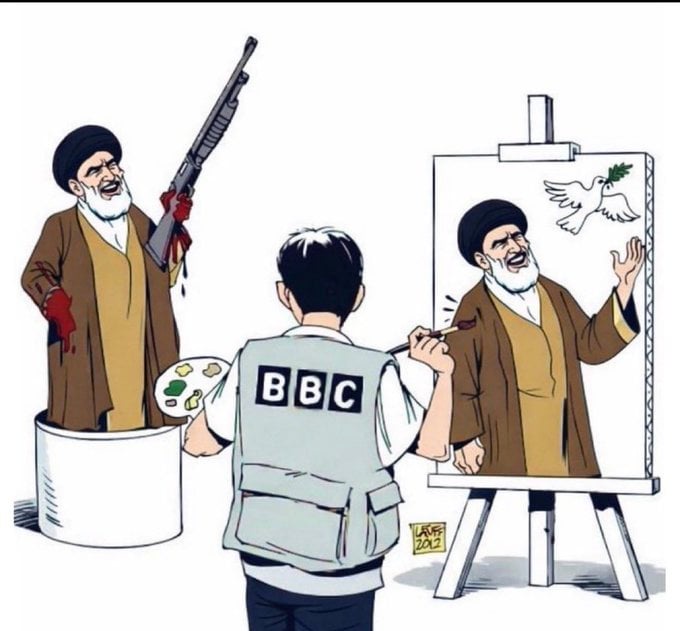
There’s a major upheaval going on in Iran, but the western media seem to be incapable of covering it with any depth — or in far too many cases, at all — even though it’s exactly the sort of thing they used to be very interested in. On the social media site formerly known as Twitter, Tahmineh Dehbozorgi provides useful context:

The Western liberal media is ignoring the Iranian uprising because explaining it would force an admission it is desperate to avoid: the Iranian people are rebelling against Islam itself, and that fact shatters the moral framework through which these institutions understand the world.

Ideally, to cover an uprising is not just to show crowds and slogans. It requires answering a basic question: why are people risking death? In Iran, the answer is simple and unavoidable. The people are rising up because the Islamic Republic of Iran has spent decades suffocating every aspect of life — speech, work, family, art, women, and economic survival — under a clerical system that treats liberty as a crime. There is no way to tell that story without confronting the nature of the regime.

Western media refuses to do so because it has fundamentally misunderstood Islam. Or worse, it has chosen not to understand it.

Islam, in Western progressive discourse, has been racialized. It is treated not as a belief system or a political ideology, but as a stand-in for race or ethnicity. Criticizing Islam is framed as an attack on “brown people”, Arabs, or “the Middle East”, as if Islam were a skin color rather than a doctrine.

This confusion is rooted in historical illiteracy. Western liberal media routinely collapses entire civilizations into a single stereotype: “all Middle Easterners are Arabs”, “all Arabs are Muslim”, and “all Muslims are a monolithic, oppressed identity group by white European colonizers”. Iranians disappear entirely in this framework. Their language, history, and culture — Persian, not Arab; ancient, not colonial; distinct, not interchangeable — are erased.

By treating Islam as a racial identity rather than an ideology, Western media strips millions of people of their ability to reject it. Iranian protesters become unintelligible. Their rebellion cannot be processed without breaking the rule that Islam must not be criticized. So instead of listening to Iranians, the media speaks over them — or ignores them entirely.

There is another reason the Iranian uprising is so threatening to Western media is economic issues.

As you know, Iran is not only a religious dictatorship. It is a centrally controlled, state-dominated economy where markets are strangled, private enterprise is criminalized or co-opted, and economic survival depends on proximity to political power. Decades of price controls, subsidies, nationalization, and bureaucratic micromanagement have obliterated the middle class and entrenched corruption as the only functional system. The result is not equality or justice. It is poverty, stagnation, and dependence on government’s dark void of empty promises.

Covering Iran honestly would require acknowledging that these policies are harmful. They have been tried. They have failed. Catastrophically.

This is deeply inconvenient for Western media institutions that routinely promote expansive state control, centralized economic planning, and technocratic governance as morally enlightened alternatives to liberal capitalism. Iran demonstrates where such systems lead when insulated from accountability and enforced by ideology. It shows that when the state controls livelihoods, non-conformity becomes existentially dangerous. That lesson cannot be acknowledged without undermining the moral authority of those who advocate similar ideas in softer language.

Western liberal media prefers not to hear this. Acknowledging it would require abandoning the lazy moral categories that dominate modern discourse: oppressor and oppressed, colonizer and colonized, white and non-white. Iranian protesters do not fit. They show that authoritarianism is not a Western invention imposed from outside, but something many societies are actively trying to escape.

That is what terrifies Western liberal media. And that is why the Iranian people are being ignored.

So the silence continues.

John Cleese:

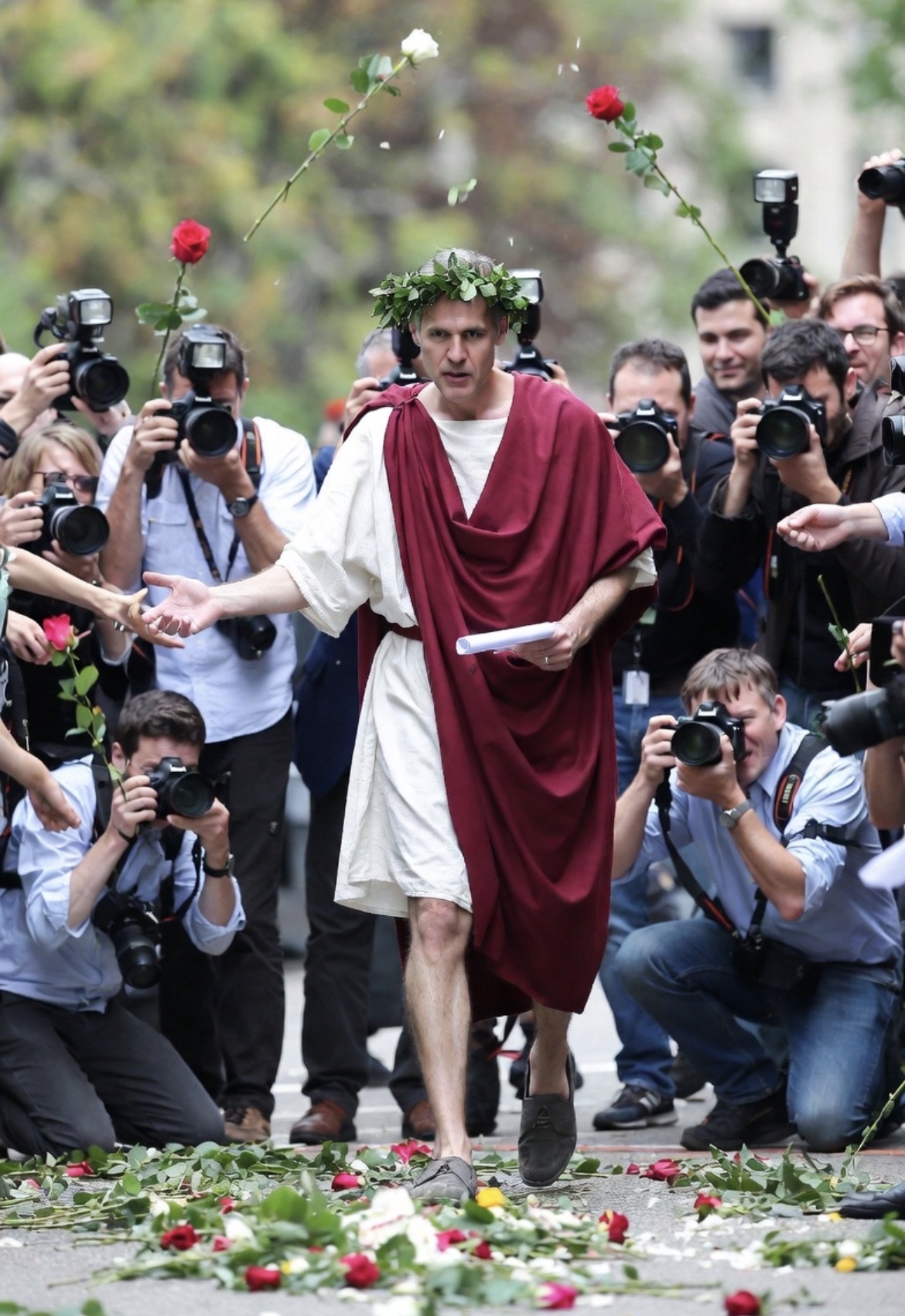
On Substack Notes, Fergus Mason shares what might be the most iconic photo of the young year:

Update, 12 January: Welcome, Instapundit readers! Have a look around at some of my other posts you may find of interest. I send out a daily summary of posts here through my Substackhttps://substack.com/@nicholasrusson that you can subscribe to if you’d like to be informed of new posts in the future.

January 5, 2026

International law is more like International “law”

On the social media site formerly known as Twitter, Konstantin Kisin points out that calling it “International Law” gives it a semi-mythic quality that it absolutely does not deserve:

All the bleating about “international law” shows just how completely deluded some of our elites have become.

International law was a pleasant fiction that lasted for a few decades. It was never real and now the world has reverted to its default setting: Great Power politics.

This is why, as a strong Ukraine supporter, I have never talked about international law or called Putin’s attack an “illegal invasion”.

Laws are based on submission to an overarching authority backed by force. There is no such international authority and even if you view the UN as one, it does not have the ability to use force against those who violate “international law” other than against small countries with weak militaries.

When the US attacked Iraq, the UN did nothing.
When Russia invaded Ukraine, the UN did nothing.
If China invades Taiwan tomorrow, the UN will do nothing.

If you cannot enforce a law, it’s not a law.

I do not support Ukraine because naughty Vlad broke the rules. I support Ukraine because it’s not in OUR interest in the West to have Russia marauding its way through friendly countries on the borders of Europe. It’s in our interest for us to be as strong as possible and for our adversaries to be as weak as possible.

President Trump is a realist and a pragmatist. He sees through the fictions other “leaders” cling to.

A good leader advances the national interests of his country. If more Western leaders did this, our civilisation would be in a much better place.

I commented on another post that,

For a lot of people (Canadian Liberals and American Democrats in particular), the invocation “international law” has a mesmerizing effect on their ability to reason [insert usual disclaimer that if they could foresee the results of their enlightened beliefs, they wouldn’t be progressives]. They seem to have a quasi-religious belief in the UN as if it were some kind of God-given supergovernment that is always right and must always be obeyed. “World opinion” might as well be the hand of God to them, so any time the legacy media can portray the US (and Trump in particular) as going against “world opinion” they want to get out the sackcloth and ashes … or sack a city and turn it into ashes, whichever comes first.

vittorio analyzes the default position of most progressives on the social media site formerly known as Twitter:

most political issues nowadays can be explained by understanding that american leftists dont have positions, they have oppositions.

their entire belief system is defined by negation of whatever the right supports. this is why portland chants “free maduro” while actual venezuelans celebrate in the streets. they’re not pro-venezuelan or pro democracies, or pro tyrant, or pro maduro, they’re simply anti-american-right.

they’ve outsourced their worldview to institutional narratives for so long that genuine self-reflection would require questioning everything. for them it’s much easier to just oppose. the beliefs arent coherent because they were never meant to be coherent. they only need to signal tribal membership, and leftist membership is gained by opposing the right.

trump does X? the left screams and cries because they wanted Y

trump does Y? the left screams and cries and riots because even if they said they wanted Y, what they meant is that X was the way to go

trump cures cancer? they’ll argue that the cancer cells are alive have a right of free determination

trump saves lives? they’ll protest because somehow those lives didn’t matter and should have been ended

no coherent word model. no logic. pure opposition

at some point you just have to stop engaging with it as if it’s a real political position. it’s not. it’s aesthetic opposition wearing the costume of ideology

As Severian at Founding Questions often remarks, progressives’ core belief is The Great Inversion: “whatever is, is wrong”.

Bingo Bobbins makes the case that “International law is fake and gay”:

Was this operation necessary? Was Maduro really a “narcoterrorist”? I admit that I haven’t really been following all the drama with Venezuela recently, but my intuition is that Maduro was probably accepting bribes to look the other way with regards to drug trafficking, rather than being directly involved. And sure, he was a socialist dictator but there’s plenty of those around. The US doesn’t go and topple dictators unless there is a perceived US interest in doing so.

What Maduro was actually doing was cozying up to China. In fact, he had just finished a meeting with some Chinese ambassadors hours before Delta Force snatched him up by the scruff. This was actually a warning to China not to mess around in our hemisphere. The Trump administration is re-establishing the Monroe Doctrine, or, as he recently called in a press conference, “The Donroe Doctrine“. As far as I can see, this is completely in keeping with my preferred Vitalist Foreign Policy.

You can agree or disagree with this show of force, but please don’t whine to me about “International Law”. International Law is fake and gay. I certainly don’t care that the Trump administration “targeted a political leader”. This is the complaint being leveled by many leftists in regard to the operation. Really, this is just because leftists are anti-American third-worldists, and they are filled with butthurt because “their guy” lost. But, let’s examine this “rule” of not being allowed to target a countries rulers, because it’s particularly ridiculous.

If you have a problem with a specific country, who do you really have a problem with? You have a problem with that country’s leaders, since they are the ones making the decisions. Why wouldn’t you target the leaders? The only reason is that all the leaders from all the countries got together and agreed that they wouldn’t target each other. They would rather resolve their differences by throwing cannon fodder at each other, while keeping themselves off the table. And sure, I understand why that is great for them, but not why it would be great for me (or you).

Of course, the CIA has been ignoring this “international law” for decades, but they’ve been doing it in a very effeminate way, skulking about the world, funding Color Revolutions and clandestinely arming insurgent groups in order to subvert existing regimes. The Donroe Doctrine is much better. Imagine if the Trump administration had tried to handle Maduro the way the Obama administration tried to handle Assad. Fund a decades long civil war, accidentally establish a caliphate, fight a war against said caliphate, facilitate the deaths of tens of thousands of Christians, all to have an even worse dictator eventually rise to power.

Update, 6 January: Welcome, Instapundit readers! Please do have a look around at some of my other posts you may find of interest. I send out a daily summary of posts here through my Substackhttps://substack.com/@nicholasrusson that you can subscribe to if you’d like to be informed of new posts in the future.

December 30, 2025

Childhood’s End (Youtube Copyright Edit)

Filed under: Books, Bureaucracy, Media, Space — Tags: , , — Nicholas @ 02:00

Feral Historian
Published 30 Jul 2024

The 2015 adaptation of Arthur C. Clarke’s Childhood’s End has a lot going on. But Youtube won’t let me use clips from it, so here’s a stills-only recut covering the major points. A far superior cut is available at my Patreon page, along with a few other exclusives in what will surely be a growing collection of Youtube no-nos.

🔹 Patreon | patreon.com/FeralHistorian

December 19, 2025

The strange rebirth of English patriotism

Filed under: Britain, Media, Politics, Religion — Tags: , , , , , , , — Nicholas @ 04:00

In The Conservative Woman, Niall McCrae discusses what he calls “a new crusade” as the downtrodden English rediscover — or in many cases, discover for the first time — patriotic feelings for their nation, and earn the scorn and contempt of the ruling class and their media fart-catchers:

“Union Jacks and crosses of St George” by Ben Sutherland is licensed under CC BY 2.0 .

A wave of patriotism swept across England last summer. Flags were tied to lampposts up and down the country, but while these displays had wide public support, the intelligentsia were troubled, particularly as the colours were often flown in areas of cultural diversity or on roads passing hotels accommodating illegal immigrants. This suggested provocation, rather than the use of national flags to celebrate sporting success.

Politicians and Guardian commentators were careful not to appear too negative, but they emphasised unity and inclusion over nationalistic fervour. The Union Jack was preferable to the St George’s Cross, because they associated the latter more with the far right (this is not accurate, as groups such as the National Front and BNP rallied under the Union Jack).

The Union Jack (properly termed “flag” as a jack is hoisted at sea), comprises the crosses of St George, St Andrew and St Patrick. It is perhaps the most impressive flag in the world, a classic design of great cultural impact. How globalists, the EU and Islamists would like to banish it!

The “Unite the Kingdom” march led by Tommy Robinson in September, which brought a million people to the streets of London, was a marvellous spectacle of patriotism. For the counter-Jihad movement, conflict in the Middle East is regarded as an existential struggle against militant Islam. Israeli flags are often waved towards pro-Palestine marchers, and the London rally gave several Zionists a platform at Whitehall. However, the vast majority of marchers were there for one country only – their own. This was truly a British event, with a roughly equal mix of Union and St George flags, alongside some Welsh dragons and Scottish saltires, and Irish tricolours too.

Significantly, there was another symbol prominently at the London march: the Christian cross. A poignant moment was at the ramparts of Westminster Bridge, where a fearless young man mounted the head of the stone lion and from that precarious pedestal raised in one hand the flag of St George, and in the other a wooden cross. (https://www.instagram.com/reel/DOpagGvkQk9/)

I first observed the resurgence of Christian faith at the huge protests against the Covid-19 regime. Several marchers bore crosses, or placards asserting the power of God over earthly evil. The Book of Revelation was quoted, and when the “vaccine” was launched it was cast as the “Mark of the Beast”.

Socially unacceptable they may have been, but now St George and Christian crosses are regularly appearing together in gatherings for patriotic or traditional causes. In his book Worth Dying For: The Power and Politics of Flags (2017), Tim Marshall observed that “with the rise of Islam in Europe, these symbols are likely to be increasingly used by the far right to try to define the continent as what they think it is, and in opposition to what they think it is not”. You can’t get a book released by a mainstream publisher without expressing such approved outlook, but Marshall is making the mistake of blaming patriots for the devaluing of their national flag; it is surely the subversive ideology of the progressive left that has taught generations that national pride is regressive and bigoted. Meanwhile “woke” warriors are not shy of waving the Pride rainbow, transgender stripes and the flag of Palestine. And the likes of Hope Not Hate had no complaint about huge fascist-style marches awash in the blue and yellow stars of the EU.

« Newer PostsOlder Posts »

Powered by WordPress