Quotulatiousness

December 27, 2025

Diversity is not our strength, no matter how many times they say it is

On the social media site formerly known as Twitter, John Carter responds to a post from Martin Sellner on the visible results of institutionalized “diversity”:

These are the consequences of anti-white policies!

“DEI” has robbed an entire white generation of their careers and thus the realization of their life plans.

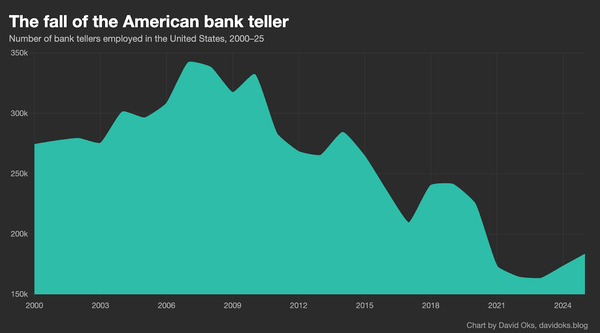
The infographics show the impact of the “DEI” policies on a whole generation of white male millennials.

John Carter:

The young white men whose lives were derailed by this psychosis amount to millions of quiet personal tragedies — careers that didn’t launch, marriages that never happened, children who were never born.

But the civilizational fallout is even worse.

The diversity shoved into the places that should have gone to talented young white men has proven itself unequal to the task, to put it mildly. They weren’t smart enough to be mentored for the positions they occupied. As the boomers shuffle away into retirement, they’ll take their knowledge and skills with them — knowledge and skills that weren’t passed onto the diversity (which was incapable of learning it), but also weren’t passed on to talented young white men (who could have mastered it, but were prevented from doing so). Since the diversity is too dumb to master that material, it’s certainly too dumb to pass it on. The chain of knowledge transmission is broken.

Autodidacticism only goes so far. There’s only so much you can learn from books and YouTube videos. There’s ultimately no replacement for hands on professional training. Those talented young white men have gotten very good at podcasting, trading crypto, growing their presence in the attention economy … But by and large they haven’t been allowed to become doctors, lawyers, engineers, etc. Maybe that won’t matter in the end because of AI, but in the meantime, if you think the quality of everything has nosedived throughout the Cancelled Years, you really haven’t seen anything yet. The dwindling old guard of white male boomers is the only force keeping the lights on. When they leave, the real darkness closes in.

December 23, 2025

Suspicious work-permit activity in Saskatoon

Filed under: Business, Cancon, Government — Tags: , , , — Nicholas @ 03:00

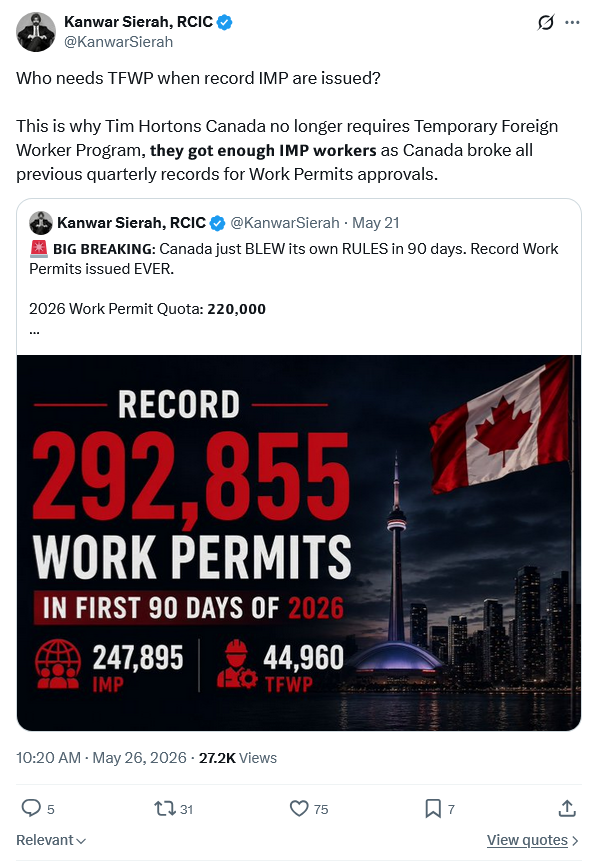
On the social media site formerly known as Twitter, Darshan Maharaja links to a detailed Reddit post that reveals some pretty shady stuff operated out of a small office in Saskatoon:

The Reddit user, /u/SimonBirchDied, says this is the result of only fifteen minutes of investigation:

Like countless others, I’ve grown disheartened and disillusioned with the hiring process in Saskatoon and Canada as a whole. Some of you may have seen more attention around job postings on JobBank offering seemingly great wages, yet applying for LMIA’s due to no suitable local candidates. This post is simply meant to expose what appear to be obvious scams in Saskatoon, so please don’t let it devolve into derogatory racial or immigration issues. This is about the exploitation of both immigrants and the Canadian working class.

Looking at Saskatoon on lmiamap.org, which is a webmap that takes data from JobBank showing businesses that have been approved for LMIA permits, you can see business that have been granted LMIA’s to hire temporary foreign workers. A permit given “>only if no suitable Canadian citizen or permanent resident is available to fill the position. The process is designed to ensure that Canadian workers are considered first for available jobs.”

For example, in 2024 Road Rex Trucking Inc. was granted 5 LMIA permits. When you search Road Rex Trucking Inc., their company address is 2002 Quebec Ave, which is a small generic office building home to the likes of the famous MLM “World Financial Group”. Oddly enough, from one angle on Google Street View the building is blurred, which means someone has specifically reached out to Google and requested it be blurred for privacy.

When you look at their website, https://roadrextrucking.com/team-2/, their “Team” has very generic, obviously stock photos with names that, on the surface, don’t seem to match.

Oddly, the website makes no mention of the sole registered director of Road Rex Trucking Inc, Jaspreet Singh Dhaliwal. There is only one result for that name in Saskatoon, and here is his Facebook account, flexing in front of fancy cars and on vacations. Some of his pictures appear to match the buildings in the Saskatoon neighborhood of Road Rex Trucking Inc’s corporate registered address.

When you Google the name of their founder, Alaxis. D. Dowson, there’s dozens of websites with the exact same template as Road Rex Trucking Inc, with the same layout and “team members”, but for different businesses like electronics, solar panels etc., and listed in all sorts of locations from Edmonton to Dubai.

As they say on the interwebs, Read the whole thing.

December 21, 2025

Women are walking away from the corporate world

Filed under: Business, Media, Politics, USA — Tags: , , , — Nicholas @ 05:00

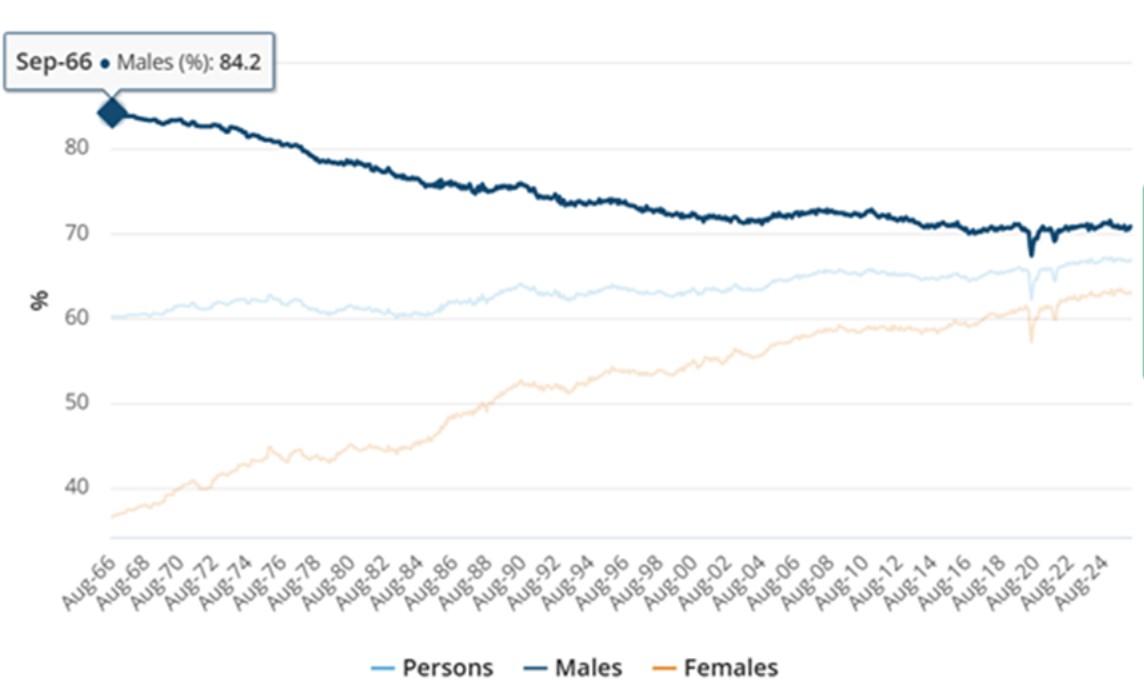
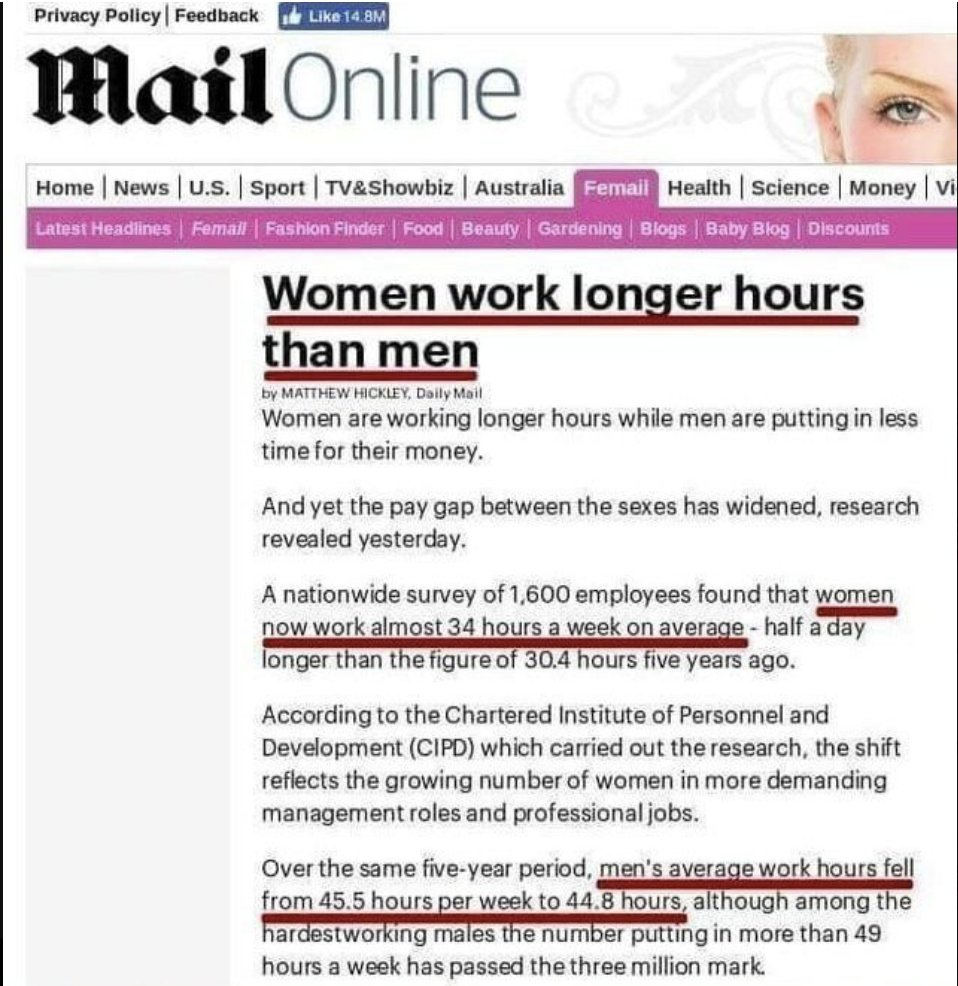
On her Substack, Elizabeth Nickson starts her most recent post with the shocking headline that “400,000 women left the workforce this year”:

Digging into these reports, it seems the problem is that no one wants to mentor young women, as seniors traditionally have done for young men. No one seems to want to promote women as equally as they do men. Also women don’t want to “work as hard”. They aren’t “as ambitious” as men.

Also women do twice as much uncompensated labor as men, taking on the great majority of household chores, and, as well, are expected to organize the Christmas party. Not me, I might add — on a personal note. I cook. He does everything else.(editors note)

This means they are over-burdened and resentful and they are quitting. Four hundred thousand women left the workforce in 2025, putting down their tools and refusing to spend their lives working for “the man”.

The reports and accompanying “analyses” in the mainstream cry that government and corporations should do more! More of other people’s money chasing a fruitless dream that goes against human nature and sets sex against sex, turns family dynamics into a conflict zone, and takes away yet another chunk of private life to be traded on the market.

Quitting is the right choice.

    Rather than leaving a job they love, they are quitting for a better life. As one creator said, “Women, during the pandemic, got a sense of what it felt like to not be tied to a desk five days a week in an office. Women started to expand their dreams, expand what was inside of them, and they started to really tun into what was in their gut and in their heart. And a lot of that was ‘I don’t want to work for somebody else’s dreams. I want to spend more time with my kids, I want to spend more time in community, I want to launch a business, I wanna a robust side hustle. I want to be an author, I want to be a content creator.’ I’m excited to see what women build when they are untethered to a corporate job. For a lot of millennial women, it’s I’m going to do something better, I’m gonna do something different.”

This in fact, is enormously exciting to me. Because our towns and cities are bereft of female genius — which is not moving widgets around for McKinsey. Our main streets are mostly barren wastes of utility, and the only town center in most places is the parking lot of a big box store. Unless you live in a tourist town and then it’s commercial cosplaying of an earlier better time.

Charitable work is equally as utilitarian, and the assignment of care of the weak to government is brutal and failing. There are more homeless, more lost and broken people every single year. It’s as if the vast, resplendently-funded homeless bureaucracies think that filing quarterly and annual reports filled with noble-sounding “initiatives” is the same as actually solving the problem. I had one middle-class woman warrior in my house say that they were trying to get more hookers on the streets of good neighborhoods. These people are literally, insane.

Women individuating and returning to a private life indicates they are yearning after a more traditional and based occupation for women and I’m not talking about submission, early child bearing and a boss daddy. My pioneer family women, all ten thousand of them ran small businesses, a home farm, the general store, did bookkeeping, ran a workshop, and/or (usually and) some kind of business in town that was charitable, before that was taken over by corporatism and the ravenous maw of the public service who never saw an innovation they didn’t want to ruin by systematizing and ripping out the heart and purpose.

That and only that is the history of women in America, not this cobbled together whining, mewling, weak, oppressed, screeching, “stressed”, “exhausted”, victim. Women, from 1600-1950 had real problems to solve. They were fully adult.

The generations since tried corporate life. It sucked. And they’re not going back. I think this is a forerunner of the life pattern of women into the future. In fact, in millennial-world, one person with a W-2 job and one person with an entrepreneurial spirit is touted as how you game the system to perfection. Taxes are limited, security is up-levelled, and you can actually build something together, rather than both partners slaving away in the globalist maw.

I expect this to take flight almost immediately.

Because women in corporate life?

Nightmare.

This is what these reports are ignoring. Senior officers do not want to mentor or promote women because they are nightmares to work with. They have been trained by their universities and culture to be ideological freaks, demanding and whining and surreptitiously tearing each other down. There was a study done in the 80’s, before ideology took over social research, that found women in corporate life practiced Power Dead Even, which meant crabs in a bucket, baby. If someone was perceived as too powerful, tear them down.

Introduce that into corporate “culture” and nothing gets done. No wonder senior executives don’t mentor or promote women.

Update, 22 December: Welcome, Instapundit readers! Please do have a look around at some of my other posts you may find of interest. I send out a daily summary of posts here through my Substackhttps://substack.com/@nicholasrusson that you can subscribe to if you’d like to be informed of new posts in the future.

December 20, 2025

Ours is a culture that actively conspires against and sabotages its own children

Filed under: Business, Economics, Education, Government, Media, Politics — Tags: , , , , , — Nicholas @ 05:00

Following up on yesterdays post (here) on the viral essay about the Millennial “lost generation”, John Carter enumerates the extent of damage done to Millennials in general and Millennial men in particular:

A Bloomberg report from 2023 tracked reported hiring by 88 Standard & Poor’s 100 companies and of 323,094 reported hires from 2018-2021, only 6% were white.

The response to the essay has been an outpouring of suppressed rage that has been simmering for years in an emotional pressure cooker of silenced frustration. The author, Jacob Savage, provides a ground-level view of the DEI revolution’s human cost, beginning with his personal experiences as an aspiring screenwriter, and then widening the reader’s perspective via interviews with would-be journalists and academics. Every subject described a similar pattern of frustrated ambitions in which, starting around the middle of the 2010s, their careers stalled out for no other reason than their melanin-deficiency and y-chromosome superfluity. Young white men were systematically excluded from every institutional avenue of prestige and prosperity. Doors were closed in academia, in journalism, in entertainment, in the performing arts, in publishing, in tech, in the civil service, in the corporate world. It didn’t matter if you wanted to be a journalist, a novelist, a scientist, an engineer, a software developer, a musician, a comedian, a lawyer, a doctor, an investment banker, or an actor. In every direction, Diversity Is Our Strength and The Future Is Female; every job posting particularly encourages applications from traditionally underrepresented and equity-seeking groups including women, Black and Indigenous People Of Colour, LGBTQ+, and the disabled … a litany of identities in which “white men” was always conspicuous by its absence.

The Lost Generation does not rely only on the pathos of anecdote. Savage includes endless reams of data, demonstrating how white men virtually disappeared from Hollywood writing rooms, editorial staff, university admissions, tenure-track positions, new media journalism, legacy media, and internships. He shows how, after the 2020s, they even stopped bothering to apply, because what was the point? The comprehensive push to exclude young white men from employment wasn’t limited to prestigious creative industries, of course. The corporate sector has also adopted a practice of hiring anyone but white men, as revealed two years ago by a Bloomberg article which gloated that well over 90% of new hires at America’s largest corporations weren’t white.

The Bloomberg article was criticized for methodological flaws, but judging by the outpouring of stories it elicited (just see the several hundred comments my own essay got, the best of which I summarized here) it was certainly directionally accurate.

The real strength of Savage’s article isn’t the cold statistics, though, but the heartrending poignancy with which it highlights the emotional wreckage left in the wake of this cultural revolution.

Hiring processes are opaque. If an employer doesn’t extend an offer, they rarely explain why; at best one receives a formulaic “thank you for your interest in the position, but we have decided to move forward with another applicant. We wish you the best of luck in your endeavours.” They certainly never come out and say that you didn’t get hired because you’re a white man, which is generally technically illegal, for whatever that is worth in an atmosphere in which the unspoken de facto trumps the written de jure. Candidates are not privy to the internal deliberations of hiring committees, which will always publicly claim that they hired the best candidate. Officially a facade of meritocracy was maintained, even as meritocracy was systematically dismantled from within.

The power suit-clad feminists who body-checked their padded shoulder into C-suites and academic departments in the 1970s flattered themselves that they were subduing sexist male chauvinism by outdoing the boys at their own game and forcing the patriarchy to acknowledge their natural female excellence. Growing up I would often hear professional women say things like “as a woman, to get half as far as a man, you have to be twice as good and work twice as hard”. [NR: usually with a smug “fortunately, that’s not difficult” tacked on] The implication of this was that women were just overall better than men, because the old boy’s club held the fairer sex to a higher standard than it did the good old boys. Of course this was almost never true, these women were overwhelmingly the beneficiaries of affirmative action programs motivated by anti-discrimination legislation that opened up any corporation that didn’t put a sufficient number females on the payroll to ruinous lawsuits. Moreover, a fair fraction of them were really being recruited as decorative additions to the secretarial harems of upper management. Nevertheless it helped lay the foundation for the Future Is Female boosterism that stole the future from a generation of young men.

There was a time, not so long ago, where I naively assumed that my own situation was simply the inverse of the one women had faced in the 70s and 80s. I was aware that I was being rather openly discriminated against, but imagined that this simply meant that I had to perform to a higher standard, that if I was good enough, the excellence of my work would shatter the institutional barriers and force someone to employ me. It took me several long and agonizing years to realize that this just wasn’t true. The crotchety patriarchs of the declining West may have been principled men capable of putting stereotypes aside to recognize merit; in fact, the historical evidence suggests that they overwhelmingly prized merit above any other consideration (just as the evidence suggests that their stereotypes were overwhelmingly correct). The priestesses of the present gynocracy hold themselves to no such standard. They don’t care about your promise or your performance, at all. If anything, performing well is a strike against you, because it threatens them. Nothing makes them seethe more than being outperformed by men. They champion mediocrity as much to punish as to promote.

Young white men had been raised to expect meritocracy. They’d also been raised to be racial and sexual egalitarians. People in the past, they believed, had been bigoted, believing superstitious stereotypes about differences of ability and temperament between the sexes and races that had no foundation in reality, pernicious falsehoods that were developed and propagated as intersectional systems of oppression with the purpose of justifying slavery, colonialism, imperialism, and genocide. Naturally they were appalled to have such charges laid at their feet, and so they they agreed that we were all going to try and correct this injustice, and we’d do it by carefully eliminating every potential source of racial or sexual bias, eliminating all the unfair barriers to advancement within society, in particular although not certainly not exclusively via university admissions and institutional hiring. That was the original official line on DEI: that it wasn’t about excluding white men, heaven forbid, no, it was simply about including everyone else, widening the talent pool so that we could ensure both the fairest possible system of advancement, and that the best possible candidates were given access to opportunity. In practice, we were told, this wouldn’t be a quota system: everything would still be meritocratic, but if it came down to a coin flip between two equally qualified candidates, one of whom was a white man and the other of whom was not, the not would win. Fair enough, the young white men thought at first: we’ll all compete on a level playing field, in fact we’ll even accept a bit of a handicap in the interests of correcting historical injustices, and may the best human win.

But the DEI commissars had absolutely no interest in a level playing field. That the playing field wasn’t already as level as it could be was, in fact, one of their most infamous lies. The arena has always been level: physics plays no favourites in the eternal struggle for survival and mastery. If some always end up on top – certain individuals, certain families, certain nations, certain races – this is invariably due to their own innate advantages over their competitors. An interesting example of this was provided by the Russian revolution. The Bolsheviks cast down the old Czarist aristocracy, stripping them of land, wealth, and status, and then discriminated against them in every way possible; a century later, their descendants had clawed their way back to power and prominence. The only possible conclusion from this is that the Russian aristocrats were, at least to some degree, aristos – the best, the noblest – in some sense that went beyond inherited estates.

The young white men did not think of themselves as aristocrats with a blood right to a certain position in life, but as contestants in a fair competition, who would rise or fall on their own merits and by their own efforts. They then abruptly found themselves competing in a system in which it was simply impossible for them to rise, but which also lied to them about the impassable barrier that had been placed in their way. If you noticed the unfairness, you were told that this was ridiculous, that as a white man you were automatically and massively privileged, that it was impossible to discriminate against you because of this, and that in addition to being a bigoted racist you were also quite clearly mediocre, a bitter little man filled with envy for the winners in life, the brilliant beautiful black women who had obviously outcompeted you because they were just so much smarter, so much more dedicated, and so much better because after all they had succeeded in spite of the deck being stacked against them whereas you had failed despite having been born with every unearned advantage in the world.

An entire generation had their future ripped from their hands, and were then told that it was their fault, their inadequacy. They were gaslit that there was no systemic discrimination against them, that their failure to launch was purely due to their individual failings … while at the same time being told that those who were so clearly the beneficiaries of a heavy thumb on the scale were the victims of discrimination, that the oppressors were the oppressed, and that to cry “oppression” yourself was therefore itself a form of oppression.

Do you see how cruel that is? How sadistic? It is more psychologically vicious by far than anything the Bolsheviks did to the Russian aristocracy. At least the Bolsheviks were honest. Although, it must be said, the psychological sadism of the gay race commissars is part of a tradition, communists have often been noted for their demonic cruelty.

December 19, 2025

“2014 was the hinge, the year DEI became institutionalized across American life”

Filed under: Business, Education, Government, Media, Politics, USA — Tags: , , , , , — Nicholas @ 05:00

In Compact, Jacob Savage talks about the “Lost Generation” … not a reference to the group before the “Greatest Generation” who fought and died in their millions in the trenches of World War One … but a much more recent group who are still becoming living casualties of a war fought without weapons and uniforms, but just as bitter and unnecessary:

In retrospect, 2014 was the hinge, the year DEI became institutionalized across American life.

In industry after industry, gatekeepers promised extra consideration to anyone who wasn’t a white man — and then provided just that. “With every announcement of promotions, there was a desire to put extra emphasis on gender [or race],” a former management consultant recalled. “And when you don’t fall into those groups, that message gets louder and louder, and gains more and more emphasis. On the one hand, you want to celebrate people who have been at a disadvantage. On the other hand, you look and you say, wow, the world is not rooting for you — in fact, it’s deliberately rooting against you.”

As the Trump Administration takes a chainsaw to the diversity, equity, and inclusion apparatus, there’s a tendency to portray DEI as a series of well-meaning but ineffectual HR modules. “Undoubtedly, there has been ham-fisted DEI programming that is intrusive or even alienating,” explained Keeanga-Yamahtta Taylor in The New Yorker. “But, for the most part, it is a relatively benign practice meant to increase diversity, while also sending a message that workplaces should be fair and open to everyone.”

This may be how Boomer and Gen-X white men experienced DEI. But for white male millennials, DEI wasn’t a gentle rebalancing — it was a profound shift in how power and prestige were distributed. Yet practically none of the thousands of articles and think-pieces about diversity have considered the issue by cohort.

This isn’t a story about all white men. It’s a story about white male millennials in professional America, about those who stayed, and who (mostly) stayed quiet. The same identity, a decade apart, meant entirely different professional fates. If you were forty in 2014 — born in 1974, beginning your career in the late-90s — you were already established. If you were thirty in 2014, you hit the wall.

Because the mandates to diversify didn’t fall on older white men, who in many cases still wield enormous power: They landed on us.

[…]

Institutions pursuing diversity decided that there would be no backsliding. If a position was vacated by a woman or person of color, the expectation was it would be filled by another woman or person of color. “The hope was always that you were going to hire a diverse candidate,” a senior hiring editor at a major outlet told me. “If there was a black woman at the beginning of her career you wanted to hire, you could find someone … but if she was any good you knew she would get accelerated to The New York Times or The Washington Post in short order.”

The truth is, after years of concerted effort, most news outlets had already reached and quietly surpassed gender parity. By 2019, the newsrooms of ProPublica, The Washington Post, and The New York Times were majority female, as were New Media upstarts Vice, Vox, Buzzfeed, and The Huffington Post.

And then 2020 happened, and the wheels came off.

[…]

There are many stories we tell ourselves about race and gender, especially in academia. But the one thing everyone I spoke to seemed to agree on is it’s best not to talk about it, at least not in public, at least not with your name attached. “The humanities are so small,” a millennial professor nervously explained. “There’s a difference between thinking something and making common knowledge that you think it,” said another.

So it came as a bit of a shock when David Austin Walsh, a Yale postdoc and left-wing Twitter personality, decided to detonate any chance he had at a career with a single tweet.

“I’m 35 years old, I’m 4+ years post-Ph.D, and — quite frankly — I’m also a white dude,” he wrote on X. “Combine those factors together and I’m for all intents and purposes unemployable as a 20th-century American historian.”

The pile-on was swift and vicious. “You are all just laughable,” wrote The New York Times‘ Nikole Hannah-Jones. “Have you seen the data on professorships?” “White males are 30 percent of the US population but nearly 40 percent of faculty,” tweeted a tenured professor at GWU. “Hard to make the case for systemic discrimination.”

It didn’t matter that as far back as 2012 women were more likely to be tenure-track across the humanities than men, or that a 2015 peer-reviewed study suggested that STEM hiring favored women, or even that CUPAHR, an association of academic DEI professionals, found that “assistant professors of color (35 percent) and female assistant professors (52 percent) are overrepresented in comparison to US doctoral degree recipients (32 percent and 44 percent respectively).”

As in other industries, what mattered were the optics. When people looked at academia, they still saw old white men. Lots of them.

“A big part of why it’s hard to diversify is the turnover is really slow,” a tenured millennial professor explained. “And that’s become worse now, because Boomers live a long time.” Many elite universities once had mandatory retirement at 70. But in 1994, Congress sunsetted the academic exemption for age discrimination, locking in the demographics of the largely white male professoriate for a generation.

White men may still be 55 percent of Harvard’s Arts & Sciences faculty (down from 63 percent a decade ago), but this is a legacy of Boomer and Gen-X employment patterns. For tenure-track positions — the pipeline for future faculty — white men have gone from 49 percent in 2014 to 27 percent in 2024 (in the humanities, they’ve gone from 39 percent to 21 percent).

December 5, 2025

Abolish the Temporary Foreign Worker program

Filed under: Business, Cancon, Food, India — Tags: , , , — Nicholas @ 03:00

The CBC presented a sob story about a restaurant owner in Lloydminster who had to reject over a hundred job applicants because they couldn’t cook Indian food to her satisfaction. I’m no great cook, but there are about a dozen Indian dishes I make regularly that are, in my opinion, nearly as good as I can get from any of our local Indian restaurants. I’ve never been trained in cooking and I don’t have access to all the ingredients, but I do well enough. I’m sure that with some training and access to a proper restaurant kitchen I could do much better … as could a lot of those rejected job applicants, I bet.

Ms. Garner added the next day:

The more I think about this story the more preposterous the assumption behind it becomes — that no one out of the 100 applicants the owner rejected could be taught to cook at this place.

Yet the article essentially accepts this preposterousness as fact.

Abolish the TFW program.

As Fortissax responded:

December 2, 2025

The elites will continue pushing high immigration despite the obvious social costs it imposes

One of the very tip-top luxury beliefs is that massive immigration is always and under all circumstances a good thing. A great thing, even. One of the things about the holders of luxury beliefs is that they are almost always completely insulated from any of the consequences of their beliefs, and this is especially true in this case. As Lorenzo Warby points out, the elites’ devotion to this cause contributes to collapsing levels of trust in the society absorbing all those immigrants and deeply undermines confidence that the leadership have anyone else’s but their own best interests at heart:

There is a straightforward, respectable view on immigration to Western countries. More people means more transactions, means more gains from trade, so immigration is a good thing. Immigration grows the economy, it increases GDP, so sensible folk support immigration.

There are extra bells and whistles, such as providing needed skills; compensating for falling fertility; willingness to do jobs locals are not. All the extra bells and whistles have responses. Why not train locals (i.e., citizens)? Won’t the immigrants’ fertility also fall? (Yes, though possibly more slowly.) The real willingness is to do jobs at lower wages and conditions than the locals would accept. For instance, potentially using US H1B visas to bring in entry-level employees who will work for less, and in worse conditions, than the locals.

Moreover, increasing total GDP is not the same as increasing per capita GDP. Even with per capita GDP, there are always questions about the distribution of those gains to GDP.

Nevertheless, the basic intuition is: immigration means more transactions, more gains from trade. Those who believe in markets — in positive-sum interactions — should support immigration.

This is not the trumping response it appears to be. Immigration does not only import workers—nor even just increase mutual-gain transactions — it imports people, so potentially affects all aspects of the receiving society. This means, of course, that there are a much wider range of possible concerns about immigration that “yes, but more gains from trade” is not an adequate response to.

Efficiency and number of transactions are not the only issues for a social order, particularly not a flourishing social order. There are also issues of social cohesion; social resilience; connections and social capital; the distribution of GDP gains; effects on relative prices; congestion costs; how well institutions are managing the influx; effects on local communities; cultural differences; social coordination issues and the ability to manage collective action problems; increased competition for positional goods — goods that cannot, or are blocked from, responding to increased demand.

These are all legitimate grounds for concern that are not answered by “yes, but more gains from trade“. How many of those “yes, but more gains from trade” folk have grappled with mass rape and sexual exploitation of young women and girls as a cost of culturally divergent immigration (and its systematic mismanagement)? How many of those “yes, but more gains from trade” folk have grappled with violent disturbance, even civil war, as a potential cost of immigration, even though we have historical examples of precisely that?

If, on one hand, the respectable people insist “yes, but more gains from trade” is an adequate response, and that other concerns are not legitimate, this will almost certainly be taken as the contemptuous dismissal it is. Not only will it not be persuasive, it will (and does) generate anger and resentment.

If people have concerns that the “reasonable”, “liberal-minded” folk will not deal with — or, worse, are dismissive of such concerns even being raised — then people will turn to unreasonable and illiberal folk, if they are the only people who will respond to their concerns. Significant gaps in political markets will be filled by political entrepreneurs.

If folk are told that “if you believe in markets, you have to support (high levels of) immigration” then many folk will respond with “OK, I reject markets“. Moreover, it is simply false that market economics entails that mass immigration is a good thing.

The idea that there is some economic phenomena such that marginal costs exceeds marginal benefits for all people over all ranges in all forms is not Economic thinking, it is magical thinking. (More precisely, it is class-signalling parading as Economics.)

It is magical thinking that falls foul of economist Thomas Sowell‘s dictum that there are no solutions, only trade-offs. Immigrants may be engaging in lots of positive-sum, gains from trade transactions, yet still be imposing more costs than benefits on a society, and on resident citizens, precisely because societies are not just efficiency arenas for free-floating transactions and no one is just an economic transactor.

Update, 3 December: Welcome, Instapundit readers! Please do have a look around at some of my other posts you may find of interest. I send out a daily summary of posts here through my Substackhttps://substack.com/@nicholasrusson that you can subscribe to if you’d like to be informed of new posts in the future.

November 30, 2025

QotD: US illegal immigration, or, creating a new helot class

Filed under: Media, Politics, Quotations, USA — Tags: , , , , , , — Nicholas @ 01:00

    I see many comments to the effect that restricting illegal immigration will cause all sorts of shortages in agriculture and construction. I call bullshit on this for two simple reasons. Before the Great Replacement became enshrined into law in 1965 we had few immigrants of any sort and somehow we managed to pick our own cotton and build houses. We did it the old fashioned way – white and black Americans worked. High school kids would work the fields at harvest time. Black people didn’t have welfare so they did unskilled and even skilled work – bricklayers, lathe-and-plaster work, etc. Is there any reason we can’t do this today?

None whatsoever. The Democrats (which includes the Republicans) don’t know the word “helot“, of course, but that’s what all this boils down to: They’re importing a helot class. It’s probably futile, attempting to pinpoint the exact moment in time when America transformed into AINO, but my best guess is “The moment the phrase ‘jobs Americans won’t do’ was uttered for the first time”. Who the fuck are you, to declare that work, any work, is beneath you?

That’s probably the main reason America became a word-bestriding colossus: Our bone-deep belief in the fundamental dignity of labor. Well within my lifetime, “He’s a hard worker” was considered high praise, at least among people who were still Americans (as opposed to AINO-ites). He might not have anything else going for him, but he pulls his weight, and that’s enough.

What’s more, the LEFT understood this, well within my lifetime. I never tire of pointing out that you could read well-written, well-supported, logically airtight articles against illegal immigration in the pages of The Nation and Mother Jones, right up to the very end of the 20th century. The poor negroes, for instance, can’t “break the cycle of poverty” — a phrase never heard anymore — because all the jobs once available to them have been taken from them by illegals.

But somehow, the Left convinced themselves that the only “jobs” worth having involve clicking a mouse; everything else is an insult to their special wonderfulness. And since the Left control everything, that became one of the defining assumptions of AINO culture — if you can’t do it with a laptop, it’s for peons. Compared to “the laptop class”, the Ancien Regime were kind, tolerant social reformers.

Severian, “Friday Mailbag”, Founding Questions, 2025-01-31.

Update, 1 December: Welcome, Instapundit readers! Please do have a look around at some of my other posts you may find of interest. I send out a daily summary of posts here through my Substackhttps://substack.com/@nicholasrusson that you can subscribe to if you’d like to be informed of new posts in the future.

November 8, 2025

The Boomers didn’t do it, but they could have reversed it

Filed under: Government, History, Media, Politics, USA — Tags: , , , , , — Nicholas @ 03:00

On the social media site formerly known as Twitter, John Carter takes the entire Baby Boom generation out to the woodshed for a well-deserved talking-to:

    toking-the-abacus @_toking

    It’s amazing how catastrophically bad the current job market is in the US. No one wants to train anyone. They want 5-10 years experience in skills that you don’t get unless someone mentors you in a more junior role. Then you have rampant visa abuse.

Boomers mostly got paid to get trained on the job for their jobs.

Then they turned around and demanded college for everything. At a steep markup.

Then they rugpulled all the college grads by hiring foreigners to do the jobs people went into debt learning how to do.


Whole lotta incensed geriatrics in the replies saying “That wasn’t boomers, that was Griggs v Duke Power! Those judges were silent generation!”

Yes. And that was 1970. 55 years ago.

That’s kind of the point.

You were the largest generation in history, boomers. You could have reversed that insane decision. You could have ended the crazy practice of disparate impact. You could have ended the systemic bigotry of affirmative action, which discriminated not only against you, but against your own sons and, now, your grandsons. You could have used your institutional and electoral power to block DEI.

You could have done a lot of things.

But you didn’t.

At most you grumbled some, but not too loudly, because after all dad fought in the big war and you didn’t want to do a Hitler. A lot of you supported all of it wholeheartedly, because John Lennon had an imagination and MLK had a dream and remember Woodstock, man. Some of you profited from it handsomely. As a generation, as a group, whether by action or inaction, you entrenched it in every aspect of law and institutional culture.

You participated, each in your own way, in redesigning our entire society around women’s feelings, black self esteem, and sabotaging the minds, bodies, spirits, and lives of your white sons.

Don’t run from your part in this.

I’m not saying this to be mean.

I’m saying this because we fucking need you.

We need your votes, because as a direct result of the immigration policies of the last half century – which, again, yes, have their origin with Greatest and Silents, but whose most severe consequences unfolded on YOUR watch – we are absolutely, 100% screwed if we don’t deport an absolutely incredible, historically unprecedented number of people in a very short period of time. If that doesn’t happen it’s game over for America and, frankly, Western civilization. For now, for as long as you’re still breathing and capable of casting a ballot, whites are a bare majority. When you’re gone we’re outnumbered, the third world swallows the first, and it’s over.

We need you to confront the consequences of your actions and your complacency, to really feel what its done to your descendants, and to be filled with rage at the way you were misled by evil and selfish men, and an implacable determination to spend what remains to you of your lives doing whatever you can to reverse enough of the damage you allowed to be done to salvage something from this crumbling wreck of a society.

That is why we bully you.

Because we need you to see.

October 28, 2025

Arguments against importing skilled workers

Filed under: Business, Cancon, Economics, Government, Media, Politics — Tags: , , , , — Nicholas @ 03:00

I’ve been against the importation of huge numbers of unskilled workers — which we have been doing at an ever-increasing rate over the last ten years — but I generally accepted the need for bringing in those immigrants with skills and talents we needed. On his Substack, Spaceman Spiff argues against even skilled immigration:

In most Western countries there is a determined campaign to normalize skilled immigration. It is not just pursued but celebrated as both enlightened and necessary for our survival.

This is so much a part of the West we overlook the observation it is rejected in most parts of the world.

Foreign people now compete with us inside our borders rather than safely outside. Individuals with whom we will typically share no history, heritage or even outlook, all needed for a stable society. In some cases, groups hostile to our way of living and unwilling to maintain it, even working to undermine it, a recipe for conflict.

When explained in plain English it clearly is an unusual thing for anyone to accept.

We need skilled workers

The importation of skilled workers is always sold as a positive. They are educated or they bring niche talents. They improve our competitiveness to help us take on the world.

The sales pitch is relentless. Even those uncomfortable with rapid demographic change parrot claims about the benefits of foreign workers who then compete with domestic workers.

We are told we are lucky to be able to attract such amazing talent as if the immigrants are choosing from a buffet of impressive options rather than fleeing poverty and corruption as is usually the case.

When all else fails, and the narratives are questioned, they trot out the classic line, that the immigrants do the work our own people won’t do. Naturally they erase the last clause in that sentence, they do the work our own people won’t do for the money offered.

Interchangeable units

We are told many of the blessings of the West would not be possible without importing talented foreigners, despite all evidence to the contrary, not the least of which is the social, economic and technological black holes many of them come from.

If they are so talented why are their homelands so disastrous?

Such obvious questions are discouraged. Instead we are encouraged to think of it as gaining access to the best from around the world, as if countries are just collections of interchangeable economic units.

We are told it is like building up a sports team. The emphasis is on the excellence of the players. The world-class performance is a consequence of being able to cast such a wide net.

But it is really more like drafting in men to play in women’s sports leagues.

October 20, 2025

The real reason we’re suddenly discussing “The Great Feminization” now

Filed under: Media, Politics, USA — Tags: , , , , — Nicholas @ 03:00

On the social media site formerly known as Twitter, Clifton Duncan offers an explanation for why “The Great Feminization” is a hot topic of discussion, and I think he has a valid point:

The only reason people are talking about “The Great Feminization” now is because it’s affecting women.

Men young and old have been talking about it for decades.

For decades boys and men have had their desires dismissed; had fathers denigrated and denied them; had their spaces, interests and hobbies invaded; had primary and higher education weaponized against them; had jobs and promotions unjustly denied them; had reputations ruined by false allegations; watched pop culture fester with anti-male slop; had wealth and progeny stripped away by prejudiced family courts.

What happened when they voiced these complaints?

They were called misogynists, resentful of their inability to match women’s success as they seethed over the dismantling of the patriarchy.

They were called losers, whiners and complainers who should shut up, grow up, man up and get married.

But now —

As men avoid women at work, or withdraw from the labor force altogether; as men leave the church; as men abandon dating and marriage; as men reciprocate women’s embrace of modernism and rejection of traditionalism; and as womanhood faces erasure, ironically (but predictably) at the hands of the very liberals and progressives women celebrate for hatcheting away manhood and masculinity —

Only now, as the consequences of treating women’s needs as all that matter and men’s needs as superfluous (and offensive) are evident,

Only now, as men usher in a new sexual revolution by unapologetically focusing on themselves and their own happiness, refusing to serve a society that’s signaled repeatedly that it no longer values them and prompting more and more women to wonder “Where Have All the (Good) Men Gone?”

Only now has it become safe for *women* to broach the topic of “The Great Feminization” and be lavished with acclaim for making the exact same points men have been chastised for making for over 25 years.

Symbolic.

Update: Francisco at Small Dead Animals posted this video of Camille Paglia talking about what women have lost through Feminism:

October 16, 2025

RIFfing the US federal workforce

Filed under: Government, Media, Politics, USA — Tags: , , , , — Nicholas @ 03:00

In Reason, J.D. Tuccille considers the impact of the US government shutdown on the federal civil service:

“Lincoln Memorial During Government Shutdown 2013” by Flickr user reivax is licensed under CC BY-SA 2.0 .

As promised — or threatened, if you wandered over to Reason by accident — the Trump administration has started using the government sort-of-shutdown as an opportunity to engage in mass layoffs of federal employees. In the game of chicken between Republicans and Democrats over just how much the government should overspend and on what, the losers so far appear to be some of the almost 3 million Americans who thought federal employment would be a comfortable way to collect a paycheck.

Setting thousands of former government workers loose to seek jobs elsewhere — preferably not involving money forcibly extracted from taxpayers — is a step in the right direction.

Shutdowns Are (Mostly) Political Theater

As we all should know by now, government shutdowns are largely political theater. National parks and museums are closed to inconvenience the public into believing something big is happening even as taxes keep getting collected and government enforcers continue twisting arms to make sure people comply with laws and rules that never should have been imposed.

The Brookings Institution’s David Wessel pointed out last week, “the Justice Department said 90% of its employees would be exempted from the furlough” and “the Department of Homeland Security said in its 76-page contingency plan that roughly 95% of its nearly 272,000 employees would remain on the job if a shutdown occurred”. Agencies accomplish this by defining “essential” employees who remain on the job in the broadest way possible.

Paychecks may be delayed during the shutdown. But after it ends, “employees who were required to perform excepted work during the lapse will receive retroactive pay” and “employees who were furloughed as the result of the lapse will receive retroactive pay for those furlough periods” according to the Office of Personnel Management. Basically, all federal employees eventually get paid whether they continue to work or are sent home for the duration of the “shutdown”.

An Opportunity To Reduce the Federal Workforce

At least, that’s how it usually works. This time is a little different because the Trump administration came into office promising to downsize the federal government. The Department of Government Efficiency (DOGE) was supposed to accomplish that goal, but the shutdown offers another opportunity. Even before furloughs began, the Office of Management and Budget (OMB) sent out a memo noting:

    With respect to those Federal programs whose funding would lapse and which are otherwise unfunded, such programs are no longer statutorily required to be carried out. Therefore, consistent with applicable law, including the requirements of 5 C.F.R. part 351, agencies are directed to use this opportunity to consider Reduction in Force (RIF) notices for all employees in programs, projects, or activities (PPAs) that satisfy all three of the following conditions: (1) discretionary funding lapses on October 1, 2025; (2) another source of funding, such as H.R. 1 (Public Law 119-21) is not currently available; and (3) the PPA is not consistent with the President’s priorities.

The White House is apparently taking this opportunity seriously. “Around 4,200 employees were laid off in total on Friday,” reports Eric Katz of Government Executive. The biggest cuts were at the Department of the Treasury (1,446 employees) and the Department of Health and Human Services (between 1,100 and 1,200 employees). The Department of Education, which President Trump proposes to totally eliminate, also experienced layoffs (466 or nearly 20 percent of its remaining workforce), as did the Environmental Protection Agency, Homeland Security, and Housing and Urban Development.

Everything this administration does seems to involve a bit of chaos, and the latest rounds of reductions in force are no different. While hundreds of employees of the Centers for Disease Control and Prevention (CDC) were included in the layoffs, some were fired by accident and immediately rehired.

Chris Bray notes that — stop me if you’ve heard this before — a district court judge has ruled that the President doesn’t have the power to do, well, pretty much anything to do with the federal workforce (what is it with the executive branch thinking they have powers that haven’t been explicitly approved by the judiciary?):

After a just absolutely bizarre hearing in a Northern California federal court, a judge has forbidden the Trump administration from laying off government employees. The hearing may have been held in the Court of the Red Queen: After Counsel to the Assistant Attorney General Elizabeth Hedges argued that she wasn’t going to get into the legal merits of the Trump administration’s layoffs because the court lacked jurisdiction and the plaintiffs hadn’t met the legal standards for filing a lawsuit, Judge Susan Illston warned that, actual quote, “This hatchet is falling on the heads of employees all across the nation and you’re not even prepared to address whether that’s legal?” Getting laid off is a hatchet attack, so we skip the arguments about ripeness and standing. It’s emotionally dire, a thing that feels very bad. Judges talk like this, now. OH GOD COUNSEL THIS IS LIKE A THING WITH A KNIFE THAT WOUNDS ME. Objection, your honor, inadequate trigger warning. […]

Illston declared the existence of a temporary restraining order from the bench, and I’ve been waiting for her written order to land on PACER. It’s here, and it’s … very … Well, okay: It has a lot of feelings. […]

Opening paragraphs, first page:

Note that the first paragraph frames federal RIFs as historically unprecedented, while the second paragraph frames the current federal RIFS as not ordinary: different than the way RIFs are usually conducted. So this is unprecedented, but it has happened before, and the problem with the unprecedented thing is that it’s not being done the way the thing that has never been done before is usually done.

But anyway, a reduction in force of federal personnel during a shutdown is “unprecedented in our country’s history”. Of course, a reduction of force alone is not at all unprecedented, and the Clinton administration reduced the size of the federal bureaucracy by about 400,000 people. Illston doesn’t articulate a reason why reducing the bureaucracy during a shutdown is worse, or a reason why Clinton RIFs were good but Trump RIFs are a violent hatchet attack, but she clearly feels it. Of course, during a shutdown, the agencies being shrunk have no approved funding, so it would seem to make more sense to be careful about personnel costs, but this argument means that I just hurt people with a hatchet.

Above all, note that the argument out of the gate is a normative argument, not a legal argument. This is unprecedented! This is not ordinary! If a judge feels that something is a little off, she can order it stopped.

October 14, 2025

QotD: The trade in fake doctor’s notes

Filed under: Britain, Bureaucracy, Business, Health, Quotations — Tags: , , , , — Nicholas @ 01:00

A suspended doctor in England is running a company that sells people sick notes to excuse them on medical grounds from their work. “When you’re ill,” said an advertisement for the company, “our prices will make you feel better”.

A reporter for the Daily Telegraph newspaper managed to obtain a certificate from the company to excuse him from work for five months, because he claimed (falsely) to be suffering from the long-term effects of COVID. He obtained the note without providing any medical evidence whatsoever.

The only thing that surprised me about this was that anyone thought that it was necessary in Britain to buy or pay for such a certificate. I thought of the famous lines of Humbert Wolfe, the otherwise all-but-forgotten England man of letters:

    You cannot hope
    to bribe or twist,
    thank God! the
    British journalist.
    But, seeing what
    the man will do
    unbribed, there’s
    no occasion to.

The same might almost be said of British doctors, many of whom, I suspect, issue such certificates incontinently, for one of two reasons: fear of their patients, and sentimentality.

Not surprisingly, doctors do not like unpleasant scenes in their consulting rooms, and refusal of requests for time off sick can easily lead to such scenes, and occasionally to threatened or actual violence.

Naturally, no doctor likes to think of himself as a coward, the kind of person who caves in to such threats. The best way to avoid so humiliating a thought is never to risk having to think it, that is to say by granting the patients’ wishes in this matter immediately.

But in order to do this without feeling self-contempt, it is necessary to rationalize, that is to say to find supposed reasons for why everyone who wants a certificate should be given one. The English philosopher F.H. Bradley once said that metaphysics is the finding of bad reasons for what we believe on instinct, adding however that it was a human propensity to do so. In like fashion, we could say that doctors find bad reasons for giving sick certificates when they suspect that not to do so might lead to a confrontation with a patient.

Thus they convince themselves that if a person tells them that they are unfit for work, for whatever reason, it would be wrong to question it. No one would make a claim to be unable to work unless he were in some way discontented, unhappy, depressed, anxious, stressed, in a word suffering, and it is the object of doctors to reduce human suffering.

The doctor is aided in this train of thought by the looseness of psychiatric diagnosis, so that practically all forms of distress can be fitted into the procrustean bed of diagnosis. Even outright faking can now be construed as an illness or disorder, provided only that it goes on for long enough or is deceptive enough.

Does this mean that the patients seeking sick notes are all faking it? The matter is more complex than this would suggest. There is, of course, conscious, outright fraud, but this is comparatively rare. Just as doctors don’t like to think of themselves as cowards in the face of their patients, so patients don’t like to think of themselves as frauds.

Distress can be conjured out of almost anything and is not necessarily proportional to whatever causes it. Dwelling on the ill treatment one has suffered — and who has not suffered ill treatment at some time in his life? — can magnify something minor into something major, to the point at which it seems almost to have ruined one’s life. And it is certainly capable of rendering a person unfit for work in his own estimation — though in fact continuing at work would be a remedy for, rather than an exacerbation of, the problem.

However, where economic loss is not too severe when stopping work on medical grounds is possible, medical grounds will be both sought and found. In the days of the Soviet Union, the workers had a saying: “We pretend to work, and they pretend to pay us.” In our kinder and more enlightened societies, we pretend to be ill, and they pretend to treat us — except that the word “pretend” does not quite capture the subtlety of the transactions between doctor and patients.

Theodore Dalrymple, “Make Me Sick”, New English Review, 2025-07-04.

September 21, 2025

From Eat Pray Love to plotting a murder

Filed under: Books, Health, Media, Religion — Tags: , , , , — Nicholas @ 05:00

On Substack, Elizabeth Nickson charts the career of Elizabeth Gilbert who wrote Eat Pray Love and more recently a memoir of her life up to the point where she planned to murder her “once in a million year” partner:

Gilbert, you certainly know, wrote Eat Pray Love which was a massive international bestseller made into a film with Julia Roberts, which was also very successful. During the Pray portion, Gilbert retreated to an ashram in India to worship a living sub-deity called The Mother. At the time I was still tangentially aware of life in the world of moderately successful upscale arty women from the mega-cities and I’d heard of the Mother and her clinging clanging worship sessions — Siddha Yoga — going round the Pilates and yoga studios and the upscale self-help programs. The Mother’s satsangs were guaranteed to put you into an ecstatic state where you fused with the divine. And then you’d heal. From the abuse of the Patriarchy.

During the Pray section, Gilbert had a series of intense moments, which &mddash; coupled with an earlier session on the bathroom floor where God told her to wash her face and go to bed — meant, to her, a great deal. Her “God” gave her direction and purpose, where before she was caught in an unhappy marriage, being apparently the breadwinner in that marriage with a husband who a) didn’t work, b) wanted her to buy more and more stuff and c) have a child.

This seems a poor choice for a husband, but never mind. Gilbert was successful in the New York world of publishing and magazines and much occupied with that pursuit, a business which I now suspect is financed by the drug trade and used to launder money. In that world where success is one in ten thousand, one hundred thousand, and where Gilbert experienced perhaps the biggest literary success of her generation. She became universally, ridiculously, excessively loved.

And embrace it she did. For the past 15 years, Gilbert has traveled the world, usually with a woman companion to keep her on the rails, dishing out nostrums and platitudes with relish meant to show you how to “find yourself” and “live your truth” to women searching for purpose. “Creativity” or “art” is now substituted for what women in the before times used to call service to their communities and families, which is now called slavery to the patriarchy.

The following is the progression of “evolving” for modern left-of-center women, for whom finding a meaningful work is the number one priority, children being the last, as the below illustrates.

When the recognition of slim to no talent or at least un-sellable talent, is made and a future of grinding for multinationals is revealed, and spiritual enlightenment or Kundalini awakening seems out of reach, the desperation moves onto Democrat politics, and ends in middle-aged and elderly woman on the streets, face contorted in rage. Those women, a full 40% of whom are childless and family-less, spend their lives slogging away in some corporate or health or educational structure, becoming semi-insane. As an aside note, in my years-long investigation of voter fraud, many of the operators are women just like these below: middle-aged, put together, well dressed, polite, fully criminal.

In searching for your creativity — the highest good — you have to become fully aligned with your child self, your spiritual self, and that self becomes the most cherished part of you. Your intelligence, your executive function is demoted. Your creativity, your spirituality, then becomes fused to others whom you perceive being as weak as that child self you have elevated as spiritually superior. Women, it seems hardwired, must have people to care about. In the absence of family, it is the helpless to whom you assign your life.

Gilbert’s once-in-a-million-years love was a gay Syrian immigrant hairdresser with a history of heroin addiction and incarceration. No more victimish victim can be found.

For Gilbert’s millions of acolytes, spiritual worth, meaning,creative power is found in allyship with the weak, with whom they fully identify. And meaning is also found in hysterical advocacy and fury on behalf of the weak. There is no thinking attached to any of this, no analysis, no study. Just intense emotionality.

September 13, 2025

QotD: The Peter Principle in football, the military, and life in general

Filed under: Bureaucracy, Football, Military, Quotations, USA — Tags: , , , , , — Nicholas @ 01:00

There needs to be a word for that inflection point where the “player” and “coach” levels don’t just diverge, but actually seem to become opposites. Is that an organizational thing, a cultural thing, or what? It’s all “football”, and you probably don’t want guys who have never taken a snap to suddenly be calling plays from the sidelines, but it seems like rising to the top of one side almost by definition precludes you from doing well on the other side (for every great player who was a terrible coach, there’s a great coach who was a terrible player. I don’t think there’s any doubt that Bill Belichick is the best coach currently in the NFL, and he’s got to be a strong contender for best coach of all time, but his playing career topped out at Wesleyan University in Middletown, CT).

Is that true in other jobs where you need a combo of a certain physique, a certain IQ, and a certain attitude? The military, say, or the police? Would the average platoon sergeant be a better lieutenant than the average lieutenant? (I’m seriously asking, even though I know that the average corporal’s opinion of the average butterbar lieutenant and vice versa makes the town-gown split in college look like a friendly rivalry). What about the best NCO — would he make a good general? How about the best patrolman vs. the best detective?

And of course this is complicated by the outliers. SWAT guys generally don’t become police chiefs, Special Forces guys don’t become generals (that McChrystal bastard being an unfortunate exception), and so on, but those are extreme outliers, like quarterbacks — physical freaks with fast-firing heads; they don’t want desk jobs, I imagine.

The reason I’m rambling on about this (other than “I’m jet lagged and I have the flu”) is that our whole society seems to have fucked up its competence sorting mechanism, and that flaw seems to be structural. You don’t want a coach who never played, or a general who never fought, but at the same time there’s fuck-all relationship between “being good at playing / fighting” and “being good at coaching / strategizing” that I can see. The same applies in all bureaucracies, of course, we call it the “Peter Principle” — the guy who was good at answering phones in the call center might or might not be any good at supervising the call center, but there’s only one way to find out …

… or is there? Football is interesting in that there’s only one metric for success, and it’s easy for everyone to see. There’s absolutely zero question that So-and-So was a good player, in the same way that there’s zero question So-and-So was a good coach. You can always find nerds and lawyers to niggle around the edges — oh, So-and-So is overrated, and here’s my charts and graphs to prove it — but we all know what that’s worth. Figuring out a better way to sort talent in a binary system like football would go a long way to help us figure out how to fix our society’s fucked-up competence sorting mechanism.

Severian, “Friday Etc.”, Founding Questions, 2022-02-04.

« Newer PostsOlder Posts »

Powered by WordPress