We’ve all read reports on how bold and forward-focussed the European Union is, but do we give them equal credit for their diligent efforts to revive dying industries?
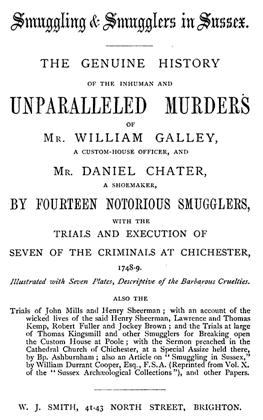
Title page of a book covering the trial of seven smugglers for the murder of two revenue officers. In the preface the author says “I do assure the Public that I took down the facts in writing from the mouths of the witnesses, that I frequently conversed with the prisoners, both before and after condemnation; by which I had an opportunity of procuring those letters which are herein after inserted, and other intelligence of some secret transactions among them, which were never communicated to any other person.”
W.J. Smith, Smuggling and Smugglers in Sussex, 1749, via Wikimedia Commons.
In late March, European Union (E.U.) officials announced they had taken down a five-country cigarette-smuggling operation and seized over 40 tons of tobacco products. The ambitious network reportedly transshipped the cigarettes far and wide to obscure their sources and destinations, while also hiding them in hidden compartments built into cargo containers. Why would smugglers go through such effort to move perfectly legal products, and why would the authorities care? In Europe, as in the United States, the answer is the same: sky-high taxes.
Smuggled Smokes in Hidden Compartments
In announcing its efforts against the smuggling network operating in Italy, France, Poland, Switzerland, and the U.K., the European Public Prosecutor’s Office, which worked with international law enforcement agencies as well as police in all five countries, noted the smugglers used “maritime and commercial routes designed to evade customs inspections”, passed shipments “through Georgia, Kenya, the Netherlands and Turkey, in order to hide the true origin of the illicit goods”, and that “false bottoms were used as hidden compartments built into containers to conceal the tobacco”.
At the conclusion of the investigation, “enforcement activities were carried out at the Port of Genoa, leading to the seizure of close to 41 tonnes of manufactured cigarettes, with an estimated loss of customs duties, excise duties and VAT exceeding €10 million”.
Absolutely nothing motivates government officials like the extraction of taxes from the public. And lots of tax money is at stake when it comes to cigarettes.
Taxes Make Up Most of the Price of Cigarettes
This month, the Tax Foundation, which has a branch in Brussels, reported that “cigarette smokers in the European Union pay far more in excise taxes than they do for the cigarettes themselves”. Report authors Jacob Macumber-Rosin and Adam Hoffer wrote that excise taxes in the E.U., which are intended to deter smoking as much as to raise revenue, start at the equivalent of $2.11 per pack and that the “total excise duty is at least 60 percent of the national weighted average retail price”. Value-added taxes are tallied after excise duties are levied.
“The highest tax in the EU is levied in Ireland at €10.71 ($12.58) per pack of 20 cigarettes, followed by France at €8.09 ($9.51) and the Netherlands at €7.77 ($9.13)”, they added.