
Quotulatiousness

April 1, 2026

“Facilitated Communication (FC) is a discredited technique that should not be used”

Filed under: Health, Media, USA — Tags: , , , , , , — Nicholas @ 05:00

Perhaps it’s just me, but I read Freddie deBoer‘s refutation of Facilitated Communication with a kind of rising horror, that a parent or trusted adult could so take advantage of a disabled person to commit this kind of fraud:
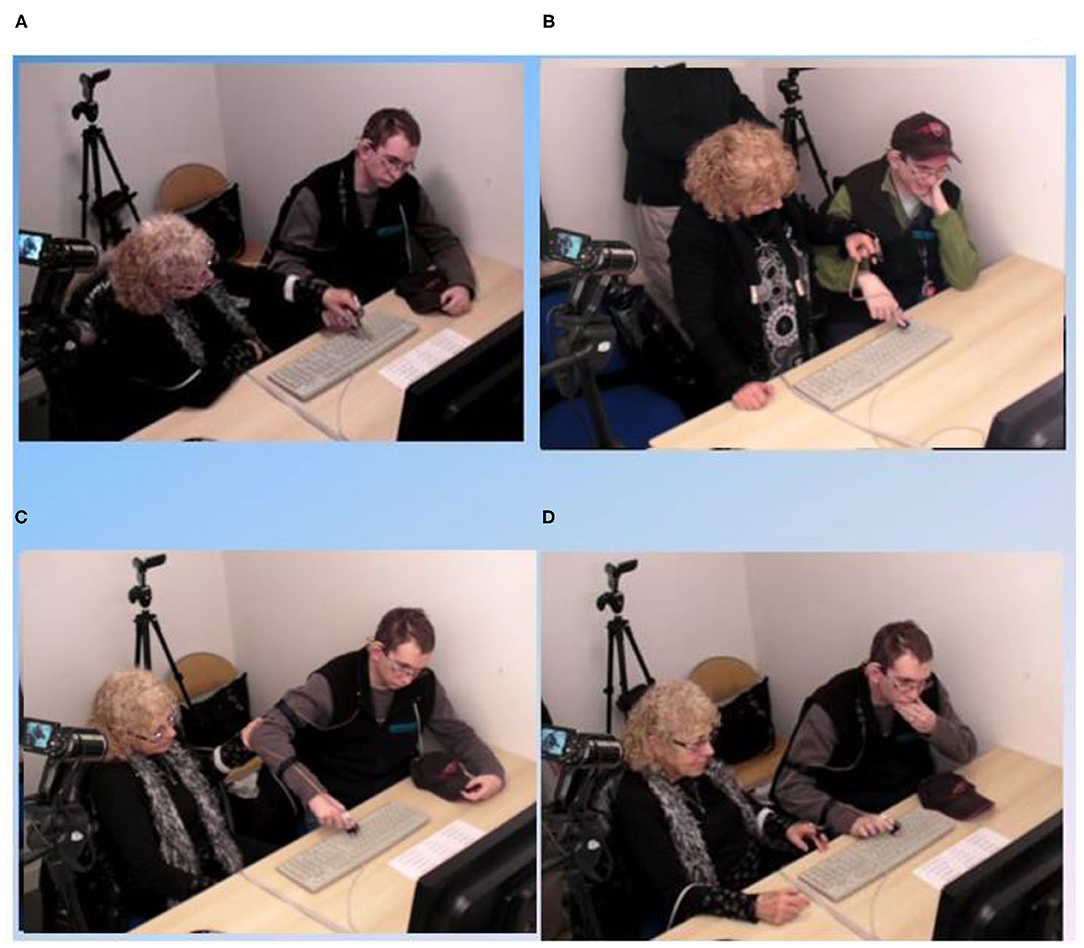
“Facilitated Communication” by Faure P, Legou T and Gepner B is licensed under CC BY-SA 4.0 .

Stop me if you’ve heard this one before: The New York Times has again casually endorsed facilitated communication, or FC, a relentlessly-discredited practice that plays on the desperation and credulousness of parents of severely disabled children. As in the past, they’ve done this while barely seeming to understand that they’re doing something controversial at all. The culprit this time is a review of the new novel Upward Bound “by” Woody Brown, a man with severe autism who has been nonverbal his entire life and dictated his book through FC, which is also the means through which he earned a masters degree and other remarkable feats. Brown, like so many others who have been “saved” through FC, was found to have all manner of remarkable intellectual abilities once someone else was “facilitating” his communication.

The review describes Brown “tapping letters on a board” while his mother interprets and voices the words. That is the textbook structure of FC: a disabled person who cannot otherwise communicate produces output while a facilitator mediates, guides, or stabilizes the process. Or so proponents claim. Without the facilitator, the disabled person is mute; with their guidance, they suddenly become remarkably verbally proficient, often learned and verbose. If you’re new to the FC debate, you should trust your skepticism: the fact that the mother has to be present and participating, the fact that Brown cannot manipulate the board without the mother’s involvement, the fact that he has never been subject to rigorous research that involves “message-passing” or “double-blind” tests … This is the inconvenient, damning reality.

Message passing, or double-blind, tests are simple and remarkably effective. Information is provided to both the disabled person and the facilitator, often in the form of pictures or individual words, with both the facilitator and the test subject receiving the same information some times and discordant information other times. That is to say, the disabled person and the facilitator will sometimes both be shown a star or a watermelon or a flower or a bird, while at other times one might get the star picture while the other gets the bird, etc. If the disabled person genuinely crafts their responses, this should be a trivially easy test to pass: the facilitated communication will produce the information that the disabled subject received. And yet very close to literally 100% of the time in rigorous research, across dozens of studies with thousands of combined attempts, interactions produce the information the facilitator received and not the information the disabled person received. Surveying the literature, the consistency of this finding is remarkable — and there is no coherent explanation for how this could happen if indeed FC results in messages being sent from a conscious and alert test subject. Instead, these findings are perfectly consistent with Occam’s razor and the assumption that the facilitator is the one speaking.

Thanks to this overwhelming body of research literature, professional societies have tended to be unusually blunt about FC. The American Speech-Language-Hearing Association, the leading professional body in this field, states unequivocally: “Facilitated Communication (FC) is a discredited technique that should not be used”. It continues: “There is no scientific evidence of the validity of FC, and there is extensive scientific evidence … that messages are authored by the ‘facilitator’ rather than the person with a disability”. This is not a marginal view; it reflects decades of careful studies across multiple countries. There are many other statements from relevant medical organizations and expert bodies that reach the same conclusion, which is to be expected, considering that the evidence points in only one direction. Are the facilitators deliberately engaging in fraud? No, it’s very likely that they’re being sincere, at least in the large majority of cases. The explanation is the ideomotor effect, the same unconscious motor influence that drives Ouija boards. The facilitator is not deliberately faking communication but unknowingly producing it, usually to satisfy their own desperate longing to connect with the disabled person.

So how did we get here? I guess the Times feels like it’s fine to smuggle in flagrant pseudoscience under the guise of a book review. Hey, it’s just a book review! But I’m afraid that claims of fact that appear in the paper’s pages are the paper’s responsibility, and this review represents a profound journalistic failure. The review treats FC as valid, when in fact FC has been exhaustively discredited for decades. In doing so, it does something worse than merely misinform; it participates in a harmful fiction that exploits vulnerable families and misrepresents disabled individuals. As I’ve said before, this issue is difficult to address in part because the families who fall for FC are so sympathetic. And the FC community goes to great lengths to enable this form of wishful thinking; they’ve created a number of superficially-different approaches to avoid scrutiny and defy the debunkings of the past, including avoiding the term “facilitated communication” itself. They now tend endorse tools like letter boards and techniques like “spelling”, which they claim are fundamentally different. But it’s all still FC, all still a matter of a verbal and cognitively-unimpaired adult “interpreting” the language of a severely disabled person and producing language that they’re consistently and conspicuously incapable of producing on their own.

The Korean War Week 93: Who Wants To Be President? – March 31, 1952

Filed under: China, History, Military, USA — Tags: , , , , — Nicholas @ 04:00

The Korean War by Indy Neidell
Published 31 Mar 2026

A surprise announcement this week leaves the US wondering just who is going to run for President — the election is this fall. Whoever does run and win, it can’t help but have an impact on this war. As for what’s going on in the war, Operation Mixmaster winds up, having moved the US 1st Marine Division far to the west along the front lines. The operation was a success, but there are a host of new dangers to deal with in the new defenses. Operation Saturate goes into action- this is another aerial interdiction campaign against Communist logistics, but early results are disappointing, and the future composition of the South Korean armed forces because more and more an issue of contention.

00:00 Intro
00:46 Recap
01:14 Truman Won’t Run
07:04 Operation Mixmaster
11:04 Operation Saturate
13:17 Increase the ROK
16:32 Summary
16:46 Conclusion
(more…)

The fall of Rome and the rise of Islam

Filed under: Books, Economics, Europe, History, Religion — Tags: , , , , — Nicholas @ 03:00

Gustavo Jalife points out that a work from nearly a century ago identified the rise of Islam as being far more disruptive to western civilization than the fall of the western Roman Empire (and the surge of Islamic power destroyed the Persian Empire and nearly toppled Constantinople as well):

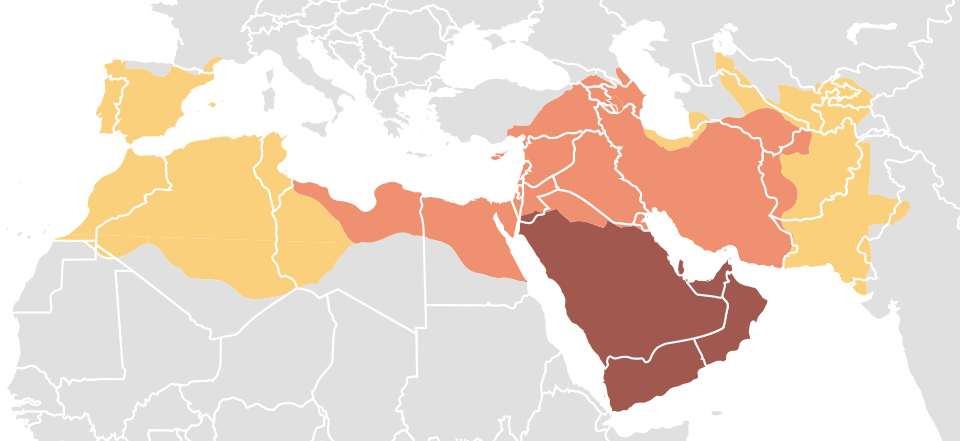
Expansion of the Caliphate: Mohammed, 622-632 (red), Rashidun Caliphate, 632-661 (orange), and the Umayyad Caliphate, 661-750 (yellow).
Wikimedia Commons.

In Mohammed and Charlemagne – posthumously published in 1937 – renowned historian Henri Pirenne (1862-1935) advanced a thesis at once simple and much contested: that the true rupture between Late Antiquity and the beginning of the Middle Ages was not the fall of Rome in the fifth century, as traditionally held, but the expansion of Islam in the seventh. The Germanic kingdoms, he argued, had preserved much of the Roman economic and cultural architecture. Trade across the Mediterranean continued; cities, though diminished, remained nodes in a wider network sustained by the circulation of goods and by administration. For the Romans, the mare nostrum was a highway rather than a barrier.

If a good article starts after it ends, one might say that a civilisation reveals itself most clearly not in its proclamations, but in the modification of its habits – when what was once assumed becomes contested. In such subtle alterations, Pirenne discerned the end of the ancient world.

With the Islamic expansion the greater part of the Mediterranean’s southern and eastern shores fell under Muslim control, from the Levant and Egypt to North Africa and the Iberian Peninsula. The sea was no longer a unified Roman basin, but a divided one. Authority and function shifted: the Mediterranean ceased to operate as a shared commercial zone. Long-distance trade dwindled, the flow of goods between East and West was disrupted and with it the urban and monetary life that depended upon it. Only then did Western Europe withdraw inward, shrinking into the medieval world as it is recognised today.

The argument has been debated, qualified, and revised. Yet its inner core endures: civilisations are sustained not merely by armies or laws, but by the invisible fibres of exchange – commercial, intellectual and cultural – that bind their parts together. Sever those threads and, without even the cut of a sword, a whole order may vanish into a rumour.

To draw a parallel with present-day Europe is to tread on disputed ground. The language of “invasion” is often employed with more heat than light; yet to deny that significant demographic and cultural changes are under way would be equally unhelpful. The question, then, is whether Pirenne’s model can illuminate what many believe is a tragedy without reducing it to a farce.

The spread of Islam in the seventh and eighth centuries was a series of military conquests. The Arab fleets that took North Africa and Spain, the armies that crossed into Gaul, and the long struggle for control of the Mediterranean were enterprises of war and empire. Contemporary migration into Europe, by contrast, occurs largely through civilian movement, legal and illegal. However, both historical processes demonstrate that massive migratory movements, whatever their specific nature, do not merely add numbers to a population; they introduce new networks, new loyalties, new values and new norms that eventually fracture the existing state of affairs.

Before the eighth century, the Mediterranean economy continues to function, vibrant and connected. After the eighth century, that system is shattered. The sea is closed. Trade disappears. Europe faces an empire whose only wealth is the land, where the movement of goods is reduced to a bare minimum. Far from advancing, society regresses.

Pirenne’s thesis gains thrust and edge in presenting the Islamic expansion as embodying a fundamental alteration in coexistence.

Generation Jones and the Temple of Boom(ers)

Filed under: History, Media, USA — Tags: , , , , , , — Nicholas @ 02:00

Wee Nips
Published 19 Sept 2025

Generation Jones and the Temple of Boom(ers) explores the fascinating differences — and surprising overlaps — between Baby Boomers, Generation X, and the often-overlooked Generation Jones.

Were you too young for Woodstock but too old for grunge? Stuck between disco and Nirvana? You might just be a Joneser.

In this video, we’ll compare:

🎵 The cultural touchstones of Boomers, Gen X, and Jonesers

📉 The low points in history that shaped each generation’s outlook

💰 The economic conditions that defined their opportunities

🧠 The attitudes and stereotypes that still stick today

Generation Jones isn’t just a footnote — they’re the missing link between the optimism of the Boomers and the skepticism of Gen X.

0:00 Introduction
1:38 Definitions
2:42 Cultural Touchstones
3:38 Low Points in History
4:53 Economic Conditions
5:42 Social and Attitude Differences
6:38 Humorous Stereotypes
7:09 Overlaps and Connections
8:02 Closing
(more…)

QotD: “Colour-blind” casting

Filed under: Britain, History, Humour, Media, Quotations — Tags: , , , , — Nicholas @ 01:00

Is noticing somebody’s skin colour an important factor in addressing your privilege, or is noticing race itself racist? And should white actors ever play a character whose historical and/or geographical context suggests that they should be played by people of colour? I ask, because people who have been watching the TV adaptation of Hilary Mantel’s Wolf Hall have noticed that there are lots of global majority actors playing roles that — back in the distant past of Series 1 — would have been played by white actors. Should people have noticed that? And should historical accuracy have a part to play? It certainly used to be the case that only racists noticed race, but then racists started trying to disguise themselves by not noticing race, which made not noticing race racist again.

As a regular reader of this column, I have no doubt that you want to remain on the right side of history, and I imagine your instincts are to applaud anything that is annoying for conservatives, like diverse casting in historical dramas. Sometimes being an anti-racist can be hard work, but we don’t tell people to “do the work” for nothing.

First, we need to dispense with the “historical accuracy” argument. There are two ways to do this and the first is to say accuracy should play second fiddle to representation. This is apparently the Hilary Mantel argument. The Times says the Wolf Hall author blessed colour-blind casting before she died, saying that although it was difficult: “you’re in the realm of representation. I think we have to take on board the new thinking.” Everything in 21st Century Britain should reflect 21st Century Britain. We’re in year zero, and hence not employing non-white actors in a production made today, even though there were very few non-white people in sixteenth century England, is simply racist.

The second option is to straightforwardly argue that there were lots of Black and Brown people pottering around the court of Henry VIII, so the production is historically accurate. This is the BBC Horrible History approach. Were you there? Can you prove that it wasn’t full of People of Colour? And is it worth losing your job to do so?

I prefer to hold both of these arguments in my head at the same time. Too much consistency seems a bit right-wing.

Next we need to look at specifically who is being played. Thankfully, the “colour-blind casting” didn’t select any PoGMSTs (People of Global Majority Skin Tones) to play bad guys. This was both on purpose, because oppressed people cannot be bad, and it was also not on purpose, because otherwise it wouldn’t be colour-blind casting. Whichever one it was — and it was both — without PoGMSTs actors playing historic fictionalised evil people, we can avoid the completely random casting process being labelled as racist.

David Scullion, “People of Colour television”, The Critic, 2024-11-12.

Powered by WordPress


