
Quotulatiousness

April 4, 2026

If we think that “ordinary criticism and disagreement are bullying, then we have an infantilized and feminized culture”

Filed under: Government, Media, Politics, USA — Tags: , , , , , , , — Nicholas @ 05:00

Chris Bray finds a highly accurate label for the pearl-clutching “elites” who — to a persyn — believe that your words are violence, but their violence (delivered through third parties, of course) is merely emphatic communication to the distasteful lower orders:

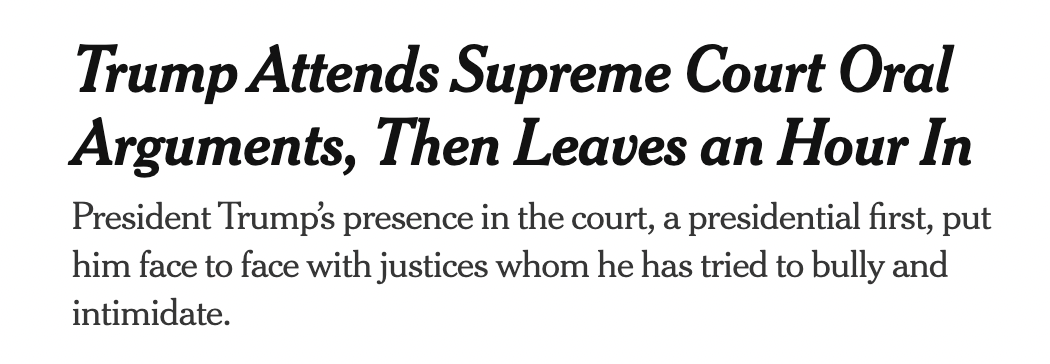
Donald Trump is a mean man. He’s a bully!

Oh no SCARY, he’s trying to BULLY the Supreme Court! I wrote at the Federalist this week about the stupidity of this argument — what is he implying he can do to the life-tenured justices, for crying out loud? — but I suspect I undersold the underlying sickness. Adults don’t use the word “bully” to talk about other adults, arguably outside of a few very narrow spaces involving things like domestic violence. It’s a preschool word. The easy recourse to toddler language at the New York Times is a sign of cultural regression. But it’s also a sign of habitual and persistent dishonesty. They’re pretending. I suspect they’ve pretended so much that they’ve forgotten they’re pretending, and the mask has become the face, but at root, they’re pretending.

We have fictional characters like Willie Stark and Frank Underwood because no one on the planet is dumb enough to think that politics is nice. The federal government spends $7 trillion a year, and the lure of that bucket of money brings out a bunch of throatcutters. This is possibly one of the most obvious realities of human existence. Politics is a knife fight. […]

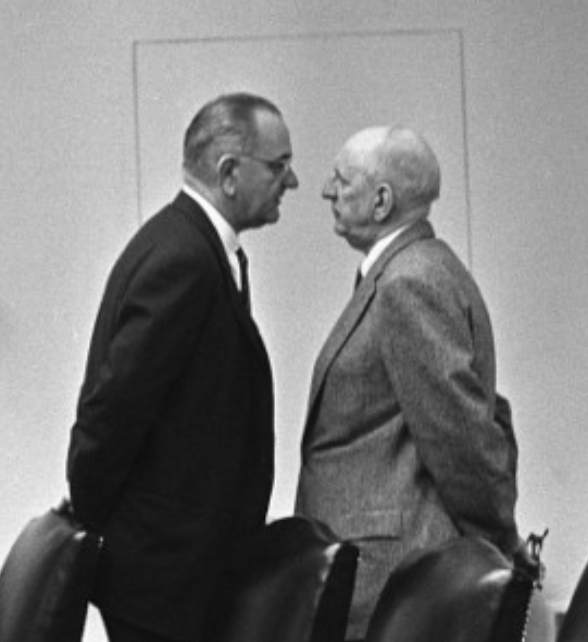
Quite famously, members of Congress who suggested that they would oppose the legislative priorities of President Lyndon Johnson would get phone calls in the middle night from the man himself, waking them up and letting them know that they were dead men. He’s supposed to have said things like, “I’m gonna cut your balls off, you cocksucker”, though it’s not like anyone had a stenographer on the calls to nail the quotes. He was threatening and nasty on all days ending in -y, and got bills passed by, among other things, actually, physically intimidating people who didn’t roll over. He was a leaner. He got in faces, constantly and openly.

You gonna pass my bill [insert string of highly personal threats and profanity], or is your political career over? Pressure, threats, and horsetrading are the default behaviors, the normal stuff. Andrew Jackson got the Indian Removal Act through Congress by handing out government sinecures. The premise that I can take care of you or I can go to war with you, and it’s your choice which one happens is … politics. The make-believe story about Mean Donald Trump bullying the Supreme Court by tweeting at them or sitting in a chair where they could see him is playtime, clutching at Fisher-Price pearls. Somewhat remarkably, Trump appears to bully institutional opponents quite a bit less than the historical norm, and Lisa Murkowski can do whatever she wants without consequence. I am personally calling for Donald Trump to start actually bullying some people who have it coming, but be sure to have a fainting couch ready in the newsroom at Times Square.
Update, 6 March: Welcome, Instapundit readers! Have a look around at some of my other posts you may find of interest. I send out a daily summary of posts here through my Substackhttps://substack.com/@nicholasrusson that you can subscribe to if you’d like to be informed of new posts in the future.
Be on the lookout for “toxic confidence”

Filed under: Health, Media, USA — Tags: , , , — Nicholas @ 04:00

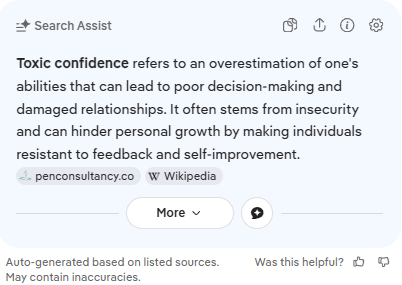
Freddie deBoer disagrees with a recent New York Times piece which proclaims that “toxic confidence” is the current psychological tic of choice:

[…] But then, the whole theatrical embrace of imposter syndrome wasn’t really about a sincere belief that they didn’t belong in the program, that they had gotten in through some mistake. It was, instead, an expression of a very weird element of Millennial culture, which is the embrace of insecurity as a means of belonging.

Which brings me to Savannah Sobrevilla and her recent trend piece, destined to be a New York Times classic, “Toxic Confidence Has Taken Over”. You can already guess the argument here, but I’ll give you the nut anyway:

    … it used to be that “impostor syndrome” dominated conversations, the anxious stance of millennials with adult responsibilities and women leading corporate workplaces trying not to rankle. Even if you felt deserving of accolades, the social graces of the time required the expression of modesty.

    Now, in an era of aggressively handsome incels and macho political posturing, cultivated humility feels trite. A younger generation, coming out of high school and college in Covid lockdown, feels less beholden to dampening their light. Who has time for affected meekness when playing the braggart not only tickles the soul, but has the potential to convince others of one’s own greatness?

The phrase itself, “toxic confidence”, is doing a lot of work in this essay, and I can just imagine an NYT editor reading the pitch, seeing that phrase, and salivating. But there’s not a lot there, really. Strip away the arch tone and the carefully curated examples (reality-television grifters, Trump-administration blusterers) and what you’re left with is a fairly straightforward complaint: some people believe in themselves too much, and it’s making a certain kind of person uncomfortable. Of course, there’s always been braggarts and narcissists and perennially self-impressed people around us, in any era, and that they’re annoying is not generally considered newsworthy. What makes this a classic NYT trend piece is that it makes an observation that’s comprehensible only to a certain strata of reader — middle aged or younger, culturally savvy, educated, urban in ethos if not necessarily in geography, too online. These people aren’t experiencing the age-old frustration with the conventionally overconfident, but are facing (if Sobrevilla is to be believed) the demise of a recent generational embrace of performative insecurity, which makes them uncomfortable. That discomfort is worth examining, because it reveals less about a cultural pathology than about whose neuroses we’ve decided to normalize.

As usual, I blame my own generation. For roughly fifteen years, Millennial culture ran a remarkable experiment: it rebranded anxiety, self-doubt, and chronic insecurity as virtues. This is certainly connected to the phenomenon of illness as identity and disorder as fashion I’m always complaining about […] but is, I think, a distinct phenomenon, the rearrangement of healthy confidence into pathology and pathological self-doubt into virtue. The weird affordances of social media gave certain culturally and socially influential people the ability to imprint their own neuroses onto the wider culture, recasting that neuroses as a sort of down-to-earth norm. In that context, impostor syndrome ceased to be something to overcome and became a membership card. Everybody started bragging about their social anxiety; people gleefully declared their FOGO; “I’m the worst”, said with the right ironic lilt, became fodder for bonding. Vulnerability, performed on cue, was currency. The implicit agreement was powerful and, when you examine it, fairly cruel: if you seemed too assured, too unbothered by your own inadequacy, you were either deluded or dangerous. The rules had been rewritten by indoor kids, the chronic overthinkers, the people who had built entire identities around their relationship with self-doubt, and the rules said confidence was suspect.

What Sobrevilla calls “toxic confidence” is largely just the renegotiation of those rules, an attempt to cast an incipient reclamation of basic, uncomplicated self-assurance as some sort of aggressive masculinist cult. A couple of examples that Sobrevilla calls out specifically include Olympic free skier Eileen Gu and actor Timothée Chalamet; I’m afraid these examples just make Sobrevilla seem afraid of excellence. When Gu — an Olympic gold medalist, a celebrity, a Stanford student, and a burgeoning entrepreneur — says that being inside her own head is “not a bad place to be”, that isn’t pathology; it’s the statement of a young woman who has done the work and is honest about it. (And wouldn’t we prefer for everyone to feel like insider their own head is a nice place to be?) Maybe Gu is a genuinely awful human being, I don’t know, but nothing Sobrevilla references rises to the level of narcissism or whatever other pseudo-medical accusation we’re throwing around these days. I find Chalamet a little aggravating, but when he says that he aspires to be considered among the great actors of his time, when all is said and done, that’s not a statement of Trumpian bellicosity but instead a reflection of honest, healthy ambition. We’ve been so conditioned to expect performative self-deprecation that accurate self-assessment reads as arrogance.

Artemis II – later than hoped, but better now than never

Filed under: Cancon, Space, USA — Tags: , , , — Nicholas @ 03:00

CDR Salamander goes fullbore (because it’s Friday, and that’s what he normally does on a Friday):

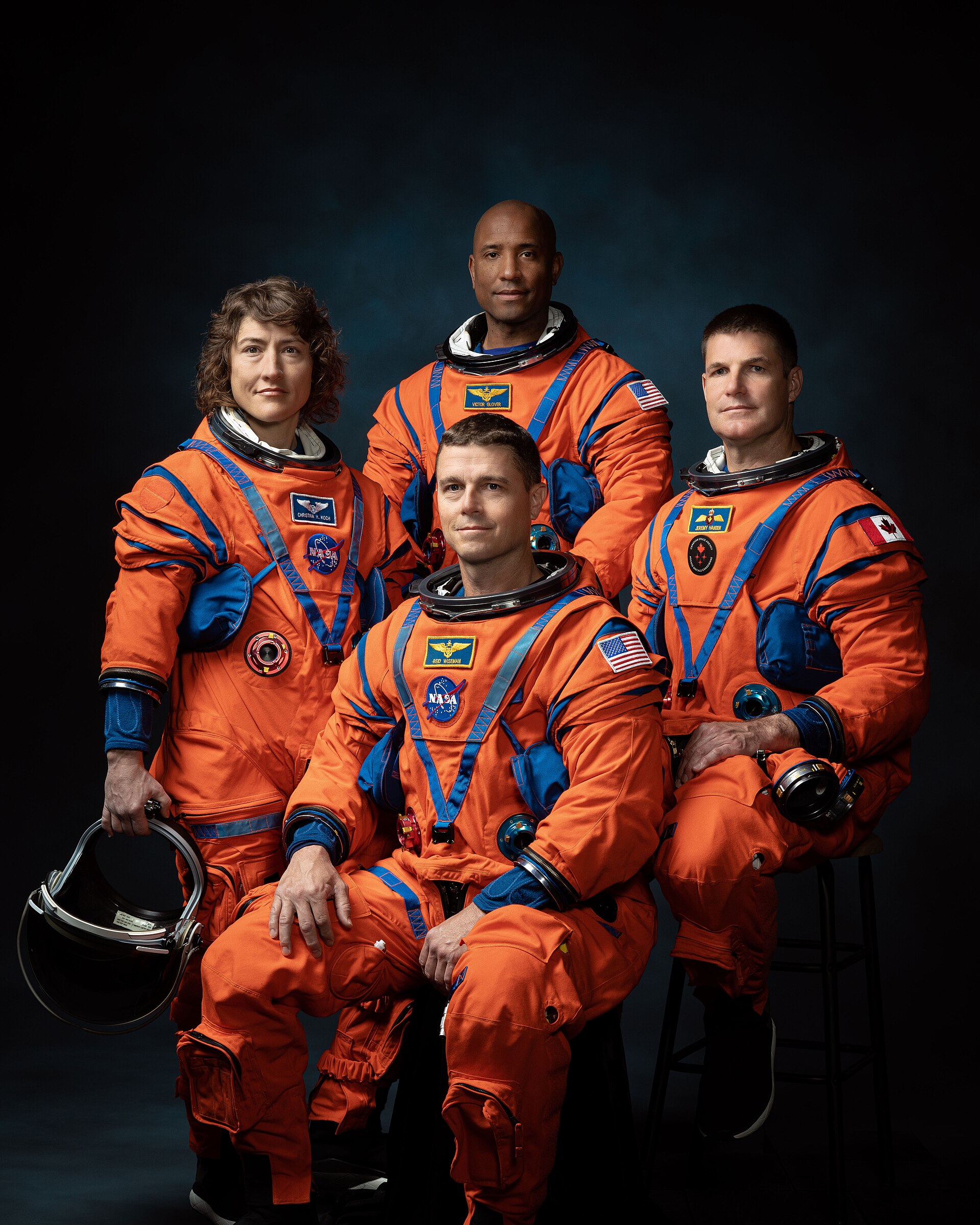
Official crew portrait for Artemis II, from left: NASA Astronauts Christina Koch, Victor Glover, Reid Wiseman, Canadian Space Agency Astronaut Jeremy Hansen.
Photo by Josh Valcarcel for NASA

I grew up with the Apollo Program and some of my earliest memories were watching astronauts during the lunar landings. You could see the Saturn V launches from my backyard.

Just as I was getting old enough to really enjoy it, it all stopped.

The 1970s.

The worst people for the worst reasons killed the space program as it became part of the national malaise of the 1970s, the core of which was defined by the period from the last person on the moon in 1972 through the fall of Saigon three years later, and bookended by the Iranian hostage crisis of 1979-80.

For those who received the promise of 1968’s 2001: A Space Odyssey as to what the future in space would be never fulfilled, we tried to get excited by partial measures — Skylab; the Space Shuttle and its disasters; the downgrading of Reagan’s Space Station Freedom into the “Model UN in space”, the International Space Station; and the lingering malaise and distraction that we endured during the Clinton and Obama administrations.

Here we are 53 years later, and at last we are reaching for the moon again. We never should have left.

[…]

And so North America—three Americans and a Canadian—is heading to the moon.

Back at last.

The Commander Reid Wiseman, is a U.S. Navy Captain and former F-14 driver. The Pilot is another U.S. Navy Captain, Victor Glover, though he was a F/A-18 bubba.

Navy wins again!

Mission Specialist Christina Koch comes from a great ACC school, and for comic relief, we have our Canadian Mission Specialist, Jeremy Hansen, the only one who is on their first space flight.

Somewhere there are plenty of young men and women who, I hope, are watching as my generation did, the best of mankind again reaching out.

Let’s not let the momentum stop this time. Keep pushing out. It is what our species does best, and it brings the best out of us.

RESISTANCE and REBELLION – The Conquered and the Proud 19

Adrian Goldsworthy. Historian and Novelist
Published 10 Sept 2025

Today we think about attitudes to Roman rule and discuss how frequent rebellions were in the Roman empire’s provinces and what were their causes. In particular we think about Judaea, and the Jewish population of the empire more generally, in the first and second centuries AD. Why was there a big rebellion in AD 66 against Nero’s rule, another of the Jewish population in Egypt, North Africa and Cyprus but NOT Judaea against Trajan, and then the final major rebellion in Judaea under Hadrian.

QotD: Protect us from “disinformation”, Big Brother!

Filed under: Liberty, Media, Politics, Quotations — Tags: , , , — Nicholas @ 01:00

    Troy Westwood @TroyWestwood
    The only thing more important than “free speech” is protecting society from disinformation.

Troy is trying to sound enlightened, but unfortunately he has the IQ of a lobster. “The only thing more important than ‘free speech’ is protecting society from disinformation.”

Translation: “I’m terrified of ideas I don’t like, so please, Big Brother, put a nanny filter on everyone else’s brain … just to keep us all safe, of course.”

Nothing says “I trust the marketplace of ideas” quite like demanding a government-approved Ministry of Truth to decide what’s true for the rest of us. Bonus points for implying that the plebs can’t possibly sort fact from fiction without an elite class holding their hand.

Truly the hallmark of a deep thinker. Admitting you don’t believe people are capable of handling freedom, then dressing it up as noble concern for society.

If free speech is dangerous, the most dangerous speech of all is the one declaring that some authority should get to silence the rest. But don’t worry, comrade, they’ll only censor the bad information. Promise.

Another swing and a miss for Troy.

Martyupnorth, The social media site formerly known as Twitter, 2025-12-28.

Powered by WordPress



