Jen Gerson on the Artemis II launch on April 1st:
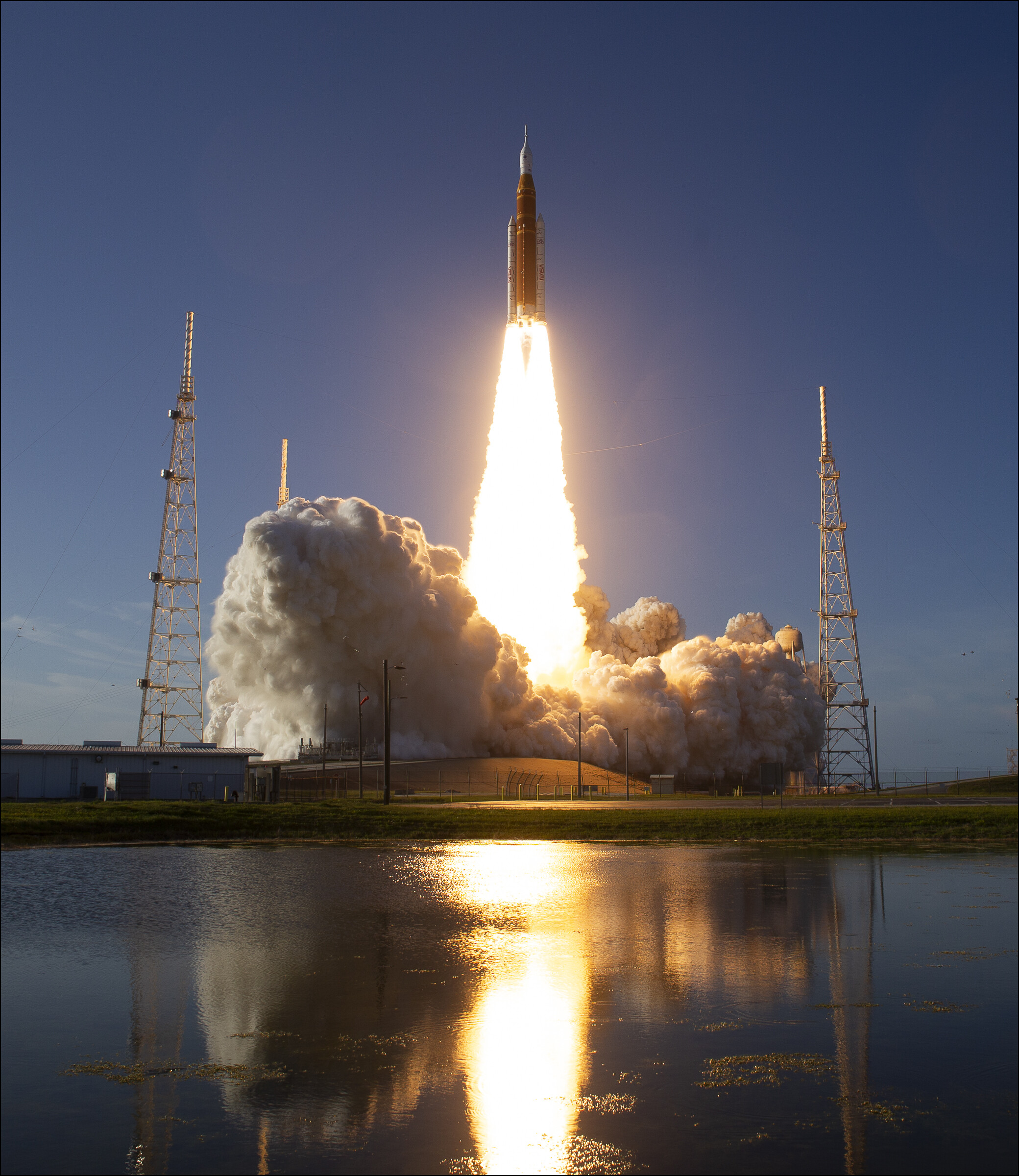
Artemis II launch, 1 April, 2026
NASA imageI’m not The Line‘s resident space dork; and, yet, I, like everyone likely reading this piece, watched the launch of Artemis II last night, enraptured and hopeful for a successful slingshot around the moon.
My son watched with me, he counted down from 10, and he jumped up when the rockets lit up, throwing four astronauts in a tin can into space.
This stuff is cool on its own merit, but it hits us all somewhere a little deeper than mere wonder at the extraordinary mechanics.
Watching a manned rocket launch is the barest little window-crack opening into a distant future. It’s a monumental effort to throw a fine fishing line into the darkness, hoping against hope that some great destiny is on the other side just waiting for us to tug at it.
By all rational accounts space travel is dumb. It’s an extraordinarily expensive use of human capital and time and resources to reach into nothingness and expanse. We all love pictures of stars and planets and nebulae, but we may never glean much of real material value from these investments in our own lifetimes. Or our great-grandchildren’s lifetimes.
There may be nothing but lifeless rock and death beyond our own ecosystem; no other place we will ever call home.
In fact, from where we sit today, that’s probably true.
Yet we do this stupid thing anyway. We must do the stupid thing anyway.
[…]
Rocket launches are America at its best, and perhaps now more than usual, we need to remind ourselves that this best still exists. Perhaps especially on the same night we sat fearing the President would announce that NATO was over and the world was breaking. (He didn’t, and I guess it’s not for now.)
And regardless of what nation we belong to, whether we’re accountants, butlers, or mothers, every single one of us carries that thin thread of life forward. We all take part in the project. We all have a place. Some of the big roles may be assigned to individual players, but the destiny of humanity is shared. (Whether we like it or not.)
So, we can all be moved together in these moments. We can all imagine what great-great-great grandchildren who have long forgotten our own names might think while watching archival footage of the Artemis II launch. What even greater world might they achieve. What more fanciful ambitions might be open to them. Maybe they will say that this was the moment we started to get our priorities right and our acts together. Maybe things will get better.
Maybe Artemis II, absurd and wasteful, is neither. Who knows how my son will metabolize the video stream of this really cool rocket; I cannot say who he may come to be for witnessing it.
Our craziest aspirations are the way we send our love to the children too far distant for us to see or know.
For my own part, I caught the space bug very early through science fiction of the 1950s and 60s, especially from the writings of Robert Heinlein and Arthur C. Clarke. Earth is just our starting point, and one planet isn’t enough to ensure the survival of our species, so exploring space is an evolutionary necessity.