Quotulatiousness

April 4, 2026

Artemis II – later than hoped, but better now than never

Filed under: Cancon, Space, USA — Tags: , , , — Nicholas @ 03:00

CDR Salamander goes fullbore (because it’s Friday, and that’s what he normally does on a Friday):

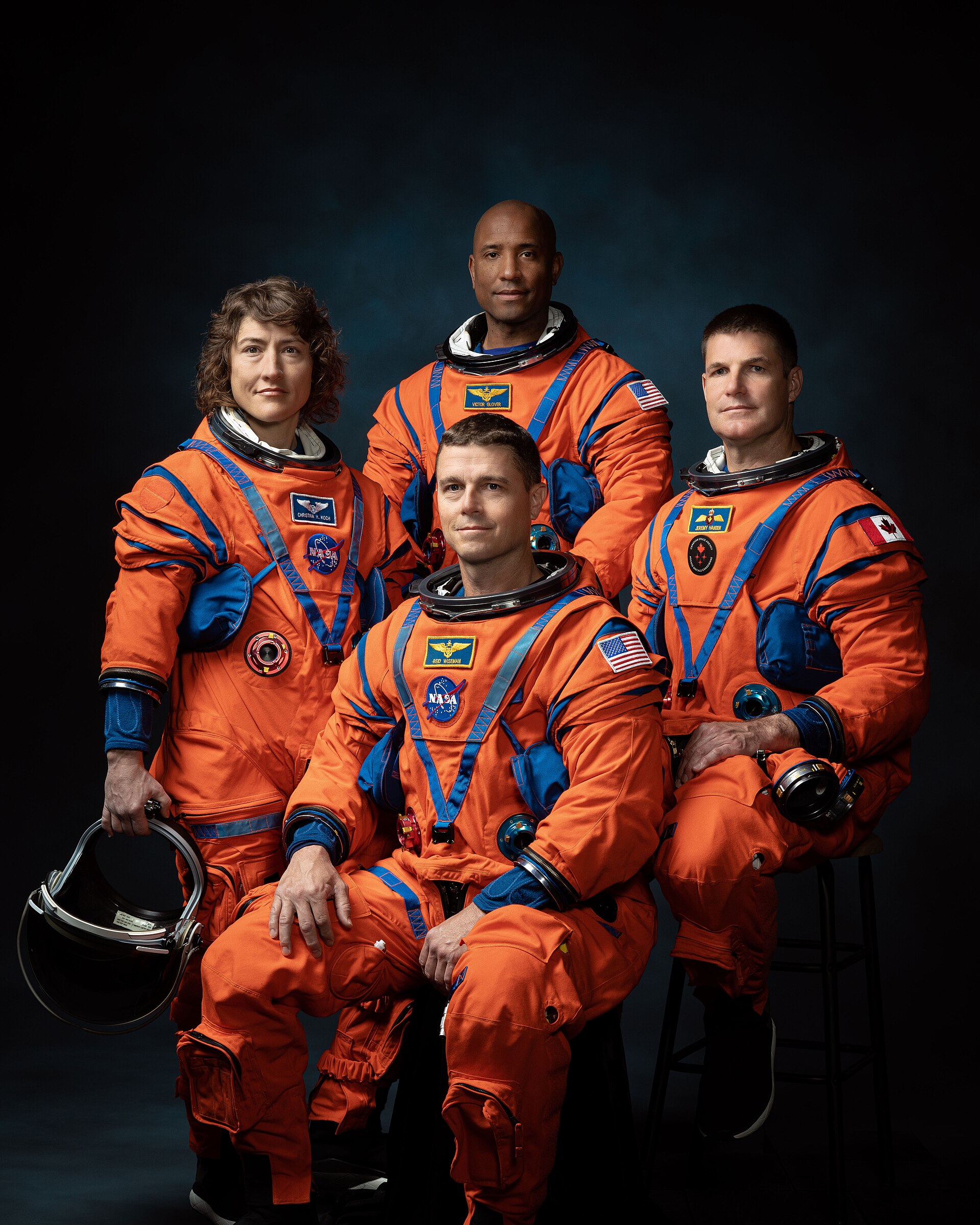
Official crew portrait for Artemis II, from left: NASA Astronauts Christina Koch, Victor Glover, Reid Wiseman, Canadian Space Agency Astronaut Jeremy Hansen.
Photo by Josh Valcarcel for NASA

I grew up with the Apollo Program and some of my earliest memories were watching astronauts during the lunar landings. You could see the Saturn V launches from my backyard.

Just as I was getting old enough to really enjoy it, it all stopped.

The 1970s.

The worst people for the worst reasons killed the space program as it became part of the national malaise of the 1970s, the core of which was defined by the period from the last person on the moon in 1972 through the fall of Saigon three years later, and bookended by the Iranian hostage crisis of 1979-80.

For those who received the promise of 1968’s 2001: A Space Odyssey as to what the future in space would be never fulfilled, we tried to get excited by partial measures — Skylab; the Space Shuttle and its disasters; the downgrading of Reagan’s Space Station Freedom into the “Model UN in space”, the International Space Station; and the lingering malaise and distraction that we endured during the Clinton and Obama administrations.

Here we are 53 years later, and at last we are reaching for the moon again. We never should have left.

[…]

And so North America—three Americans and a Canadian—is heading to the moon.

Back at last.

The Commander Reid Wiseman, is a U.S. Navy Captain and former F-14 driver. The Pilot is another U.S. Navy Captain, Victor Glover, though he was a F/A-18 bubba.

Navy wins again!

Mission Specialist Christina Koch comes from a great ACC school, and for comic relief, we have our Canadian Mission Specialist, Jeremy Hansen, the only one who is on their first space flight.

Somewhere there are plenty of young men and women who, I hope, are watching as my generation did, the best of mankind again reaching out.

Let’s not let the momentum stop this time. Keep pushing out. It is what our species does best, and it brings the best out of us.

April 3, 2026

“Rocket launches are America at its best”

Filed under: Space, Technology, USA — Tags: , , — Nicholas @ 04:00

Jen Gerson on the Artemis II launch on April 1st:

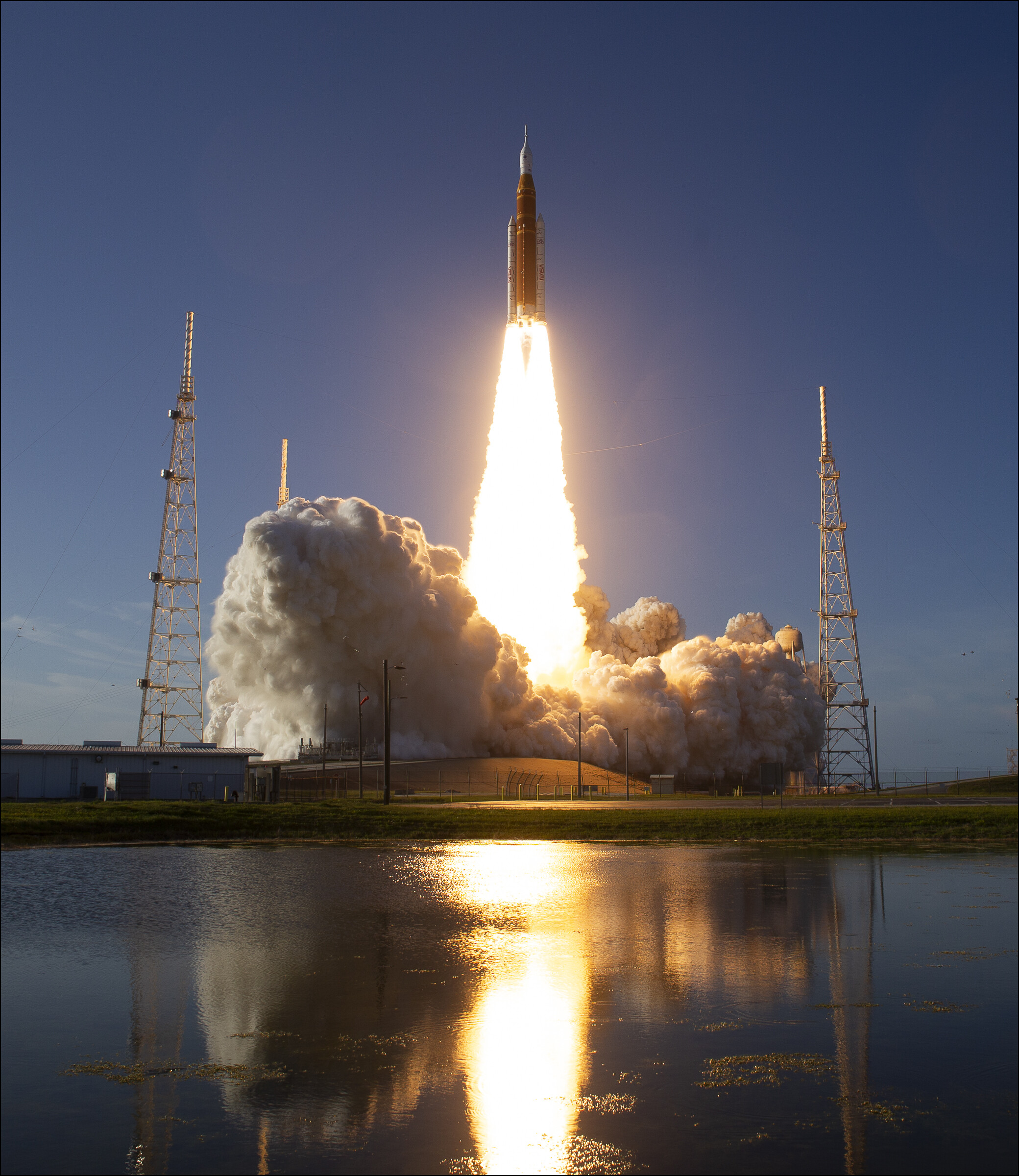
Artemis II launch, 1 April, 2026
NASA image

I’m not The Line‘s resident space dork; and, yet, I, like everyone likely reading this piece, watched the launch of Artemis II last night, enraptured and hopeful for a successful slingshot around the moon.

My son watched with me, he counted down from 10, and he jumped up when the rockets lit up, throwing four astronauts in a tin can into space.

This stuff is cool on its own merit, but it hits us all somewhere a little deeper than mere wonder at the extraordinary mechanics.

Watching a manned rocket launch is the barest little window-crack opening into a distant future. It’s a monumental effort to throw a fine fishing line into the darkness, hoping against hope that some great destiny is on the other side just waiting for us to tug at it.

By all rational accounts space travel is dumb. It’s an extraordinarily expensive use of human capital and time and resources to reach into nothingness and expanse. We all love pictures of stars and planets and nebulae, but we may never glean much of real material value from these investments in our own lifetimes. Or our great-grandchildren’s lifetimes.

There may be nothing but lifeless rock and death beyond our own ecosystem; no other place we will ever call home.

In fact, from where we sit today, that’s probably true.

Yet we do this stupid thing anyway. We must do the stupid thing anyway.

[…]

Rocket launches are America at its best, and perhaps now more than usual, we need to remind ourselves that this best still exists. Perhaps especially on the same night we sat fearing the President would announce that NATO was over and the world was breaking. (He didn’t, and I guess it’s not for now.)

And regardless of what nation we belong to, whether we’re accountants, butlers, or mothers, every single one of us carries that thin thread of life forward. We all take part in the project. We all have a place. Some of the big roles may be assigned to individual players, but the destiny of humanity is shared. (Whether we like it or not.)

So, we can all be moved together in these moments. We can all imagine what great-great-great grandchildren who have long forgotten our own names might think while watching archival footage of the Artemis II launch. What even greater world might they achieve. What more fanciful ambitions might be open to them. Maybe they will say that this was the moment we started to get our priorities right and our acts together. Maybe things will get better.

Maybe Artemis II, absurd and wasteful, is neither. Who knows how my son will metabolize the video stream of this really cool rocket; I cannot say who he may come to be for witnessing it.

Our craziest aspirations are the way we send our love to the children too far distant for us to see or know.

For my own part, I caught the space bug very early through science fiction of the 1950s and 60s, especially from the writings of Robert Heinlein and Arthur C. Clarke. Earth is just our starting point, and one planet isn’t enough to ensure the survival of our species, so exploring space is an evolutionary necessity.

November 16, 2025

QotD: Elon the gambler

Thus, despite being a large, valuable company with a very successful and profitable business, SpaceX regularly takes existential gambles that could destroy the entire company if they go wrong. By the time the Falcon 9 was up and running, SpaceX had essentially won: they could have rested on their laurels and enjoyed their monopoly for the next few decades. Instead, they bet the entire company on propellant densification (which blew up a rocket or two and indeed nearly destroyed the company).1 Then, once that was working, they bet the entire company on the Falcon Heavy rocket, whose development program nearly bankrupted the business. After that, they bet the entire company on the Starlink satellite constellation. Most recently, they have taken every bit of money and talent the company has and redirected them away from the rockets that make all their money and towards the utterly gratuitous Starship system.

Each of these bets might have been a smart one in a statistical sense, but it still requires a special kind of person to take a $200 billion market cap and bet it all on black. So why has Elon done this? Does he just not believe in the St. Petersburg paradox, like Sam Bankman-Fried claimed to do? No! It’s actually very simple: remember all that stuff about how SpaceX is less of a company and more of a religious movement, with a goal of making life multi-planetary? Elon and SpaceX behave the way that they do because they believe that stuff very sincerely. A version of SpaceX that merely became worth trillions of dollars, but never enabled the colonization of Mars, would be a disastrous failure in Elon’s eyes.

Every bit of company strategy is evaluated on the basis of whether it makes Mars more or less likely. This fully explains all the choices that look crazy from the outside. SpaceX does things that look incredibly risky to conventional business analysts because they reduce the risk of never getting to Mars, and that’s the only risk that matters. This has the nice side-benefit for shareholders that it’s revolutionized space travel several times and built several durable monopolies, but if Elon decided that actually blowing up the business increased the odds of getting to Mars, he would do it in a heartbeat. He’s said as much. This all has very important implications that we will return to in a moment.

A necessary, and to me charming, component of this approach is an utter disregard for bad press. Most corporate communications departments live in flinching terror of the slightest whiff of negative PR. Meanwhile, SpaceX’s puts out official blooper reels of exploding rockets. More seriously, one of the company’s lowest points came in the aftermath of the CRS-7 mission, when a rocket exploded two and a half minutes after launch and totally destroyed its payload. Most companies would do everything possible to minimize the risk of the following “return-to-flight” mission. SpaceX instead used it to debut a completely untested overhaul of the rocket and to attempt the first ever solid ground landing of an orbital-class booster. (It succeeded.)

Hopefully by now it’s not a mystery why SpaceX is a far more effective organization than NASA, but I think this last point is underappreciated. NASA, unfortunately, has boxed itself into a corner where it cannot publicly fail at anything.2 But if you aren’t failing, you aren’t learning, and you certainly aren’t trying to do things that are very hard. SpaceX, conversely, rapidly iterates in public and blows up rockets to deafening cheers. Permission to fail in public is one of the most powerful assets an organization has, and it flows directly from the top. This, too, is something for which Musk deserves credit.

The last thing I’ll say about Elon is that he is notably, uhhh, unafraid to disagree with people. In fact, this book literally has a chapter subheading called “Musk versus the entire human spaceflight community”.3 This quality can be a bit of a two-edged sword, but it’s safe to say that without it the company would never have gotten anywhere. Practically from the moment SpaceX came into existence, its enemies were trying to destroy it. Anybody who followed space policy in the early-to-mid 2010s knows what I’m talking about — politicians like the imbecilic NASA administrator Charles Bolden and the flamboyantly corrupt US Senator Richard Shelby did everything in their power to make life difficult for SpaceX and to smother the newborn company in its crib.

It’s a sign of how total SpaceX’s victory has been that some of those old episodes feel surreal in hindsight. Not just the antics of clowns like Bolden and crooks like Shelby, but also the honest-to-goodness competition in the form of Boeing and Lockheed, who fought dirty from the very beginning. For instance, they lobbied hard to block SpaceX from having any place to launch rockets at all, and dispatched their employees to stand around SpaceX facilities mocking and jeering while taking photographs of operations. In those early, desperate days, it would only have taken one or two successes of Boeing’s massive lobbying team to lock SpaceX completely out of government contracts and starve them of business. It was only Elon’s reputation as “a lunatic who will sue everyone” that prevented NASA from awarding the entire Commercial Crew Program to Boeing despite SpaceX offering to do it for about half as much money.4 And of course Elon actually did sue the Air Force when under intense lobbying they froze SpaceX out of the EELV program.

All of this is ancient history now. SpaceX’s competitors are no longer trying to stop the company with lawfare, because SpaceX no longer has any meaningful competition. But there are still people trying to slow down and sabotage the company; they’re just doing it for ideological rather than economic reasons. In the early days of SpaceX, the “deep state” of unelected bureaucrats who direct and control the United States government were huge supporters of the company, because back then the reigning ideology of that set was a sort of good-government technocratic progressivism and the idea of a scrappy new launch provider disrupting the incumbents genuinely pleased and excited them. A few years later, the state religion changed, and a few years after that, Musk revealed himself to be a definite heretic. And so, in utterly predictable and mechanistic fashion, the agencies that once made exceptions for SpaceX now began demanding years of delays in the Starship program in order to study the effects of sonic booms on tadpoles and so on.

One might be tempted to rage about how detrimental this all is to the rule of law. Think of the norms. Berger is certainly upset by it, and he ends his book (published in September 2024) by urging Musk to self-censor and stop antagonizing powerful forces with his political activism. Implicit to this demand is the advice, “If you just act like a good boy and stop making trouble, they’ll go back to leaving you alone.” Obviously, Musk did not take this advice. He instead further kicked the hornet’s nest by redoubling his support for Donald Trump. By October, the social network formerly known as Twitter was teeming with employees of US spy agencies and their allies demanding that SpaceX be nationalized and that Musk be deported.5 Given that Trump’s election was no sure thing, why would he take this risk?

There was a famous uprising against the Qin dynasty that happened when two generals realized that (1) they were going to be late, and (2) that the punishment for being late was death, and (3) that the punishment for treason was … also death. Elon Musk thinks being late to Mars is just as bad as being deported and having his companies taken away from him. He has already gambled the entire future of SpaceX on a coin flip five or six times, because he considers partial success and total failure to be literally equivalent. When it became clear that an FAA empowered by a Harris administration would put one roadblock after another in front of him, his only choice was to rebel and to flip the coin one more time.

When I saw Musk charging into the lion’s den back in October, I immediately thought of the Haywood Algorithm and its dreadful, stark simplicity. “Make a list of everything you need to do in order to succeed, and then do each item on your list.” When you run a normal company, the algorithm sometimes demands that you stay late at work or come in on a weekend. When you run a rocket company, the algorithm sometimes demands that you buy Twitter6 and use it to take over the United States government. It’s far from the riskiest thing Musk has done on his path to Mars. At this point, it might be wise to stop betting against him.

John Psmith, “REVIEW: Reentry, by Eric Berger”, Mr. and Mrs. Psmith’s Bookshelf, 2024-12-09.


  1. “Propellant densification” may sound like a nerdy topic, but it’s actually one of the most interesting subplots in the entire book. In the interest of making the Falcon 9 the highest performing rocket ever, and especially in the interest of improving the economics of booster landing and reuse, SpaceX decided to try to just pack more fuel and oxidizer into the tanks. The way you fit more of a gas or liquid into a given volume is by making it colder. So they developed a way to chill liquid oxygen down to -340 degrees Fahrenheit, way colder than anybody had ever made it before. What they weren’t prepared for was that at these temperatures, liquid oxygen starts making all kinds of horrible, eerie noises that made the engineers not want to be around it.
  2. Remember propellant densification? NASA considered it in the 80s and 90s, but dismissed it. Not for technical reasons, but because the need to destructively test pressure vessels might result in negative news stories.
  3. The subject of this section is whether it’s acceptable to fuel a rocket when the astronauts are already inside. The position of “the entire human spaceflight community” was that fueling can be dangerous, so better to complete propellant loading first, wait for everything to settle, and only afterwards being the astronauts on board. Seems sensible enough, but remember propellant densification? SpaceX’s ultra-cold liquid oxygen immediately begins heating up after loading, so the only practical way to use it is to load at the last minute and then immediately launch the rocket. Densification was vital to eking out the last bit of performance margin that makes rocket reuse possible, so Musk stuck to his guns. So far zero astronauts have died as a result.
  4. NASA’s pretext for favoring Boeing over SpaceX was the former’s “reliability” and “experience” and “technical superiority”. In the decade since then, SpaceX has completely dozens of missions flawlessly, while Boeing has yet to actually make it to the International Space Station and back.
  5. It’s hard to tell when the radical centrists mean things “seriously but not literally”, but I sincerely think that had Trump lost the best case outcome for Musk would be something like Jack Ma: chastened, humiliated, wings clipped, freedom of action greatly reduced.
  6. It’s become fashionable to mock Musk for running Twitter into the ground, but control over the social network’s content policies probably had a major effect on the election outcome. Even if Twitter literally becomes worth zero dollars (which given Musk’s track record I doubt), surely you can imagine how when you have a tremendous amount of money, $44 billion might seem like a small price to pay to have the President of the United States owe you some major favors.

June 6, 2025

Marc Garneau, the first Canadian in space, RIP

Filed under: Cancon, Media, Military, Politics, Space — Tags: , , , — Nicholas @ 05:00

The career of Marc Garneau is summarized by Tom Spears for The Line:

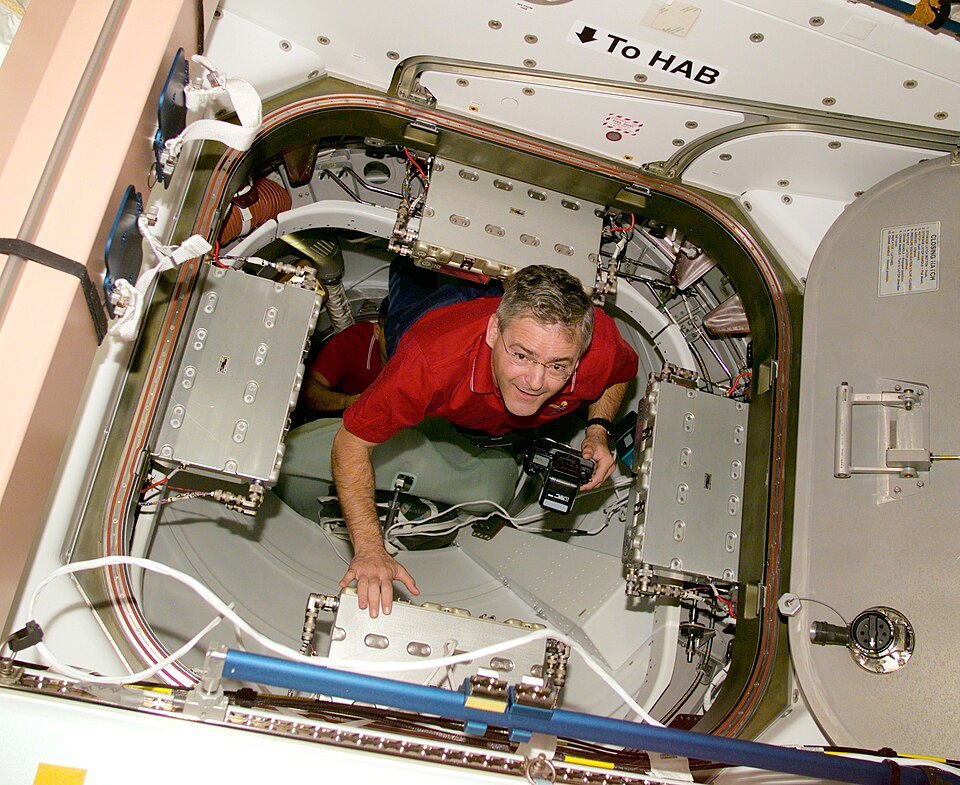
Astronaut Marc Garneau, with a camera in hand, floats in the hatchway that leads from Unity to Pressurized Mating Adapter-3 (PMA-3), which leads to Endeavour. Garneau, STS-97 mission specialist representing the Canadian Space Agency (CSA), and his four crew mates went into the International Space Station (ISS) following hatch opening. The photograph was taken with a digital still camera, 8 December 2000.
NASA photo via Wikimedia Commons.

Marc Garneau died Wednesday, at the age of 76. His passing was announced by his wife, Pam, who said that he’d been surrounded by family at the end, and had received excellent care during an unspecified short illness. (Other reports have cited cancer as the ailment.) The news was met with an immediate outpouring of grief from Canadians from across the political spectrum, as befitted a man of his profile and stature.

He had earned that profile gradually over the decades. Back in 1983 Garneau was a young naval officer with a fine pedigree — graduate of Royal Military College, PhD in electrical engineering from Imperial College London — but unknown to most Canadians. Then he joined our country’s first group of astronauts, becoming an instant celebrity.

Even more sudden was his first assignment. He was named to a space shuttle crew that would fly the following year — lightning-fast career advancement, considering he had not yet undergone the usual training as a mission specialist in NASA’s astronaut school.

That vaulted him ahead of many more senior astronauts, and he felt it keenly. He told the Ottawa Citizen years later that he felt his colleagues’ eyes “boring holes in my back” as he walked by them. Crewmate Dave Leestma later recalled how the rookie gained the respect of those around him through quiet competence.

Indeed, Garneau always looked calm, but his mother, Jean, said as he prepared for a second flight in 1996: “There’s a lot of controlled excitement there, and happiness … He figures he’s very, very lucky.”

[…]

“Everybody was always brutally honest about how they screwed up … about how we let the team down,” Garneau says. “If we’re not going to be very honest with each other, if we’re going to find excuses … Nobody tries to evade responsibility.”

Given his background and experience, I wonder how he was able to handle being a member of the Liberal government of the day, where evading responsibility was perhaps their top competency.

August 5, 2024

What the First Astronauts Ate – Food in Space

Filed under: Food, History, Space, Technology, USA — Tags: , , , , — Nicholas @ 02:00

Tasting History with Max Miller
Published Apr 23, 2024

Smooth, sweet, and sour Tang pie in a graham cracker crust

City/Region: United States of America
Time Period: 1960s

Contrary to popular belief, NASA did not invent Tang, but the company that did, General Foods, used the association in a lot of their marketing. They even developed this recipe for Tang pie, also called astronaut pie.

The texture of the pie is smooth and very nice, but it had too much of a sour zip in it, or “tang” if you will, for me. If you like sour notes like in lemon meringue or key lime pies, or if you just like Tang, then I think you’ll like this. You can use a ready-made graham cracker crust to make this pie even easier to put together.

    Tang Pie. It’s the pie of the future. Here it goes space boys and girls:

    TANG Pie
    1 can sweetened condensed milk
    3/4 C. Tang® powder drink mix
    1/2 C. sour cream
    1 (9 oz.) tub Cool Whip®
    1 graham cracker pie crust.
    Mix condensed milk and Tang. Add in sour cream until well blended. Then fold in tub of Cool Whip. Pour into pie crust and refrigerate for 4 hours or until set and cold.

(more…)

May 25, 2024

Fathers of Light and Darkness – Rockets and Explosives – Sabaton History 126 [Official]

Filed under: Europe, Germany, History, Media, Military, Science, Space, Technology, USA, Weapons — Tags: , , , , , — Nicholas @ 02:00

Sabaton History
Published Feb 7, 2024

There are many inventors whose creations have been turned into weapons of war. A couple that really stand out are Alfred Nobel and Wernher von Braun. Today we’ll take a deep dive into their stories and the paradox of using destructive weapons for good, or creative weapons for destruction.
(more…)

June 18, 2023

Don’t Drop your Tools in Space

Filed under: Space, Tools, USA — Tags: , , — Nicholas @ 02:00

Real Engineering
Published 11 Mar 2023
(more…)

October 27, 2021

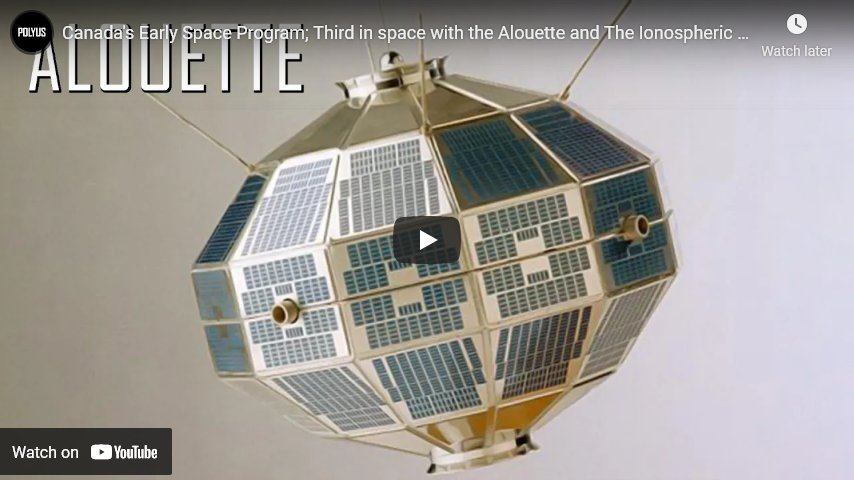
Alouette and The Ionospheric Satellites; A Beginners Guide To The Early Canadian Space Program

Filed under: Cancon, History, Space, Technology, USA — Tags: , , , , — Nicholas @ 02:00

Polyus Studios
Published 22 Aug 2109

Don’t forget to like the video and subscribe to my channel!
Support me on Patreon – https://www.patreon.com/polyusstudios

In the early 1960s Canada was among the early pioneers of space technology and research. Scientists and engineers took advantage of then cutting edge technologies like the transistor and solar panels, to produce the Alouette and ISIS series of satellites. It was an immense engineering challenge that represented the high water mark of a tradition of ionospheric research that began back before the establishment of Canada as a nation. The Alouette and ISIS series of satellites produced more than 1200 research papers exploring all aspects of the Earth’s ionosphere, the aurora, and other phenomena. They also demonstrated to the world that Canada was a world leader in peaceful space technology.

0:00 Intro
0:29 Arctic exploration and early magnetic field research
2:40 New technologies promote new questions
5:35 Birth of the Canadian Space Program
9:25 Testing and Launch of Alouette
13:04 ISIS series of satellites
17:12 Legacy and Conclusion

Music:
“Denmark” – Portland Cello Project

Research sources:
https://nssdc.gsfc.nasa.gov/nmc/space…
https://space.skyrocket.de/doc_sdat/i…
http://www.friendsofcrc.ca/Projects/I…
https://www.ieee.ca/millennium/alouet…
https://www.ieee.ca/millennium/isis/i…
http://www.asc-csa.gc.ca/eng/satellit…
http://friendsofcrc.ca/Projects/ISIS/…
https://nssdc.gsfc.nasa.gov/nmc/space…
http://acuriousguy.blogspot.com/2017/…
https://photostories.ca/explore/photo…
http://www.ieee.dreamhosters.com/digl…
https://www.ieee.ca/millennium/alouet…

#Spacecraft #PolyusStudios #CanadianAerospace

December 14, 2019

History of Space Travel – Guided by Starlight – Extra History – #6

Filed under: Bureaucracy, Government, History, Space, USA — Tags: , , , , — Nicholas @ 04:00

Extra Credits
Published 12 Dec 2019

What happened after we touched down on the moon? And where are we going in the future? While we may have lost the glitz and glamor of the Space Race, we have continued to make incredible progress in reaching the stars. We’ve come together to build space stations while in space, create the international space station, and started developing new technologies that could take us to Mars and beyond.

Start your Warframe journey now and prepare to face your personal nemesis, the Kuva Lich — an enemy that only grows stronger with every defeat. Take down this deadly foe, then get ready to take flight in Empyrean! Coming soon! http://bit.ly/EHWarframe

December 7, 2019

History of Space Travel – One Small Step – Extra History – #5

Filed under: History, Russia, Space, Technology, USA — Tags: , , , , , , — Nicholas @ 06:00

Extra Credits
Published 5 Dec 2019

Start your Warframe journey now and prepare to face your personal nemesis, the Kuva Lich — an enemy that only grows stronger with every defeat. Take down this deadly foe, then get ready to take flight in Empyrean! Coming soon! http://bit.ly/EHWarframe

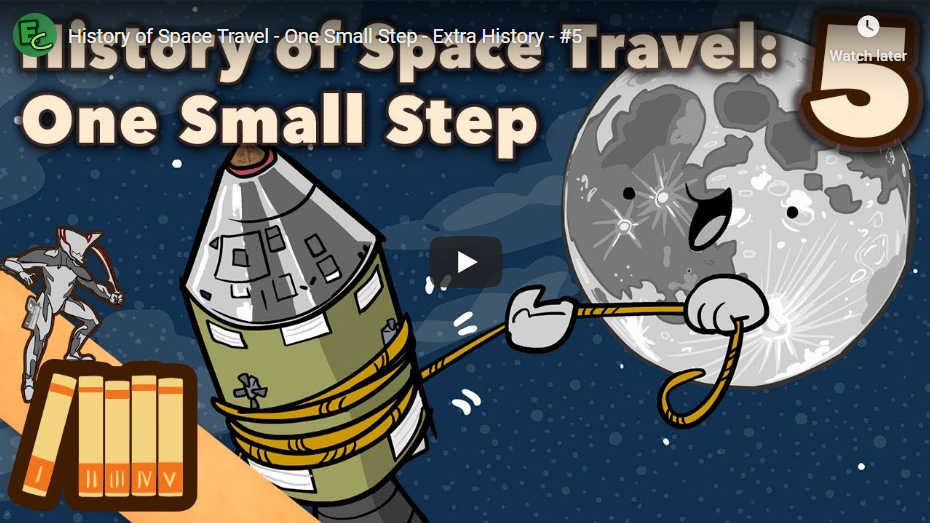
The United States was losing the space race. A number of unfortunate missteps and mistakes had hindered their progress. But the United States had also structured its space program entirely differently from the USSR. Instead of being helmed by the military, the National Aeronautics & Space Administration was created by Eisenhower with an emphasis on exploration and research. And in the end, the later but more advanced satellites will collect the data required a dream firmly placed in the American consciousness by JFK. A dream to place a man on the moon.

From the comments:

Extra Credits
19 hours ago
The plaque still gives me goosebumps in the best way possible. Hopefully one day we can live up to its promise of peace. Be good to one another. ❤️

And thanks to Rebecca Ford (the voice of Lotus) for voicing space mom at the end of each of these episodes. They’ve been a blast to make and we hope that you all have enjoyed this trip to the stars.

November 29, 2019

History of Space Travel – Red Star – Extra History – #4

Filed under: History, Military, Russia, Space, USA — Tags: , , , , , — Nicholas @ 06:00

Extra Credits
Published 28 Nov 2019

Start your Warframe journey now and prepare to face your personal nemesis, the Kuva Lich — an enemy that only grows stronger with every defeat. Take down this deadly foe, then get ready to take flight in Empyrean! Coming soon! http://bit.ly/EHWarframe

While rockets had been proven to be indispensable to the Second World War, the idea to send people up into orbit was still seen as fantasy. Space was important only as a method to further the range of missiles meant to land oceans away from their original launch point. But a man named Korolev will change all of that, with work so secretive, he will be referred to as Chief Designer for nearly his entire life. But we all know the name of his first project into space: Sputnik.

From the comments:

Extra Credits
1 day ago
We weren’t able to fit her into the episode, but the other famous first cosmonaut in space is Laika, the Soviet space dog. She was a stray who was taken in by the program to test the Sputnik 2 and some of its life support features (like a coolant fan). Unfortunately, Laika did not return from her mission alive but she’s still regarded highly in the history of space flight and has become a symbol for the space race and animal testing in general. Look her up!

I remember reading in Robert Heinlein’s Expanded Universe of the day on his tour of the Soviet Union in 1960 when he and his wife were told by a group of Red Army cadets of a Soviet rocket launch carrying a human into orbit for the first time. The story was officially denied and the capsule was said to be unmanned after all. Wikipedia says:

According to Gagarin’s biography, these rumours were likely started as a result of two Vostok missions equipped with dummies (Ivan Ivanovich) and human voice tape recordings (to test if the radio worked) that were made just prior to Gagarin’s flight.

In a U.S. press conference on February 23, 1962, colonel Barney Oldfield revealed that an uncrewed space capsule had indeed been orbiting the Earth since 1960, as it had become jammed into its booster rocket. According to the NASA NSSDC Master Catalog, Korabl Sputnik 1, designated at the time 1KP or Vostok 1P, did launch on May 15, 1960 (one year before Gagarin). It was a prototype of the later Zenit and Vostok launch vehicles. The onboard TDU (Braking Engine Unit) had ordered the retrorockets to fire to recover, but due to a malfunction of the attitude control system, the spacecraft was oriented upside-down, and the firing put the craft into a higher orbit. The re-entry capsule lacked a heat shield as there were no plans to recover it. Engineers had planned to use the vessel’s telemetry data to determine if the guidance system had functioned correctly, so recovery was unnecessary.

November 16, 2019

History of Space Travel – Kill Devil to V-2 – Extra History – #3

Filed under: Germany, History, Military, Russia, Space, Technology, USA, WW2 — Tags: , , , , — Nicholas @ 06:00

Extra Credits
Published 14 Nov 2019

Start your Warframe journey now and prepare to face your personal nemesis, the Kuva Lich — an enemy that only grows stronger with every defeat. Take down this deadly foe, then get ready to take flight in Empyrean! Coming soon! http://bit.ly/EHWarframe

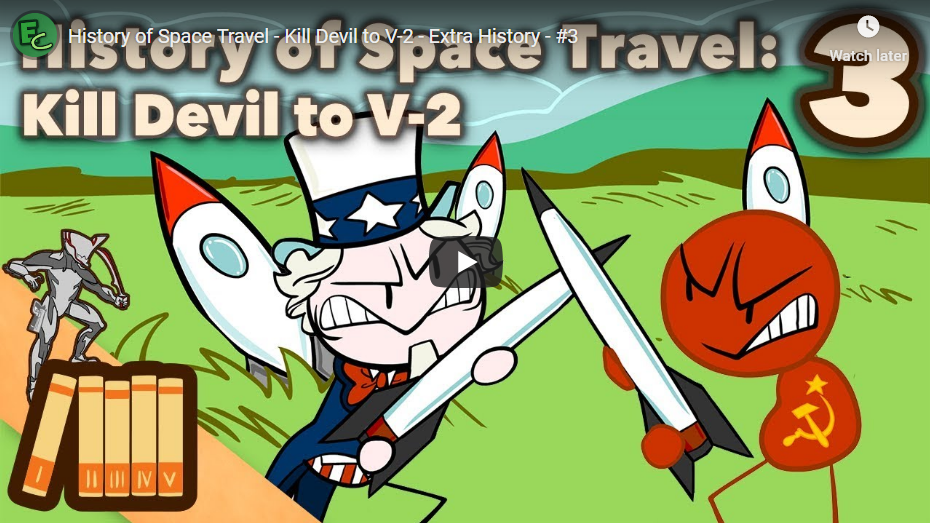
Early flight started as a utopian dream but quickly became the military’s top priority: first as reconnaissance vehicles, and then as weapons in their own right. After WW1, the threat of German aircraft led to the Treaty of Versailles banning Germany from having an airforce at all. But the Germans also found a loophole: rockets didn’t count as an airforce. Enter Werner Von Braun & the V-2 rockets.

November 6, 2019

How Did The Saturn 5 Rocket Work? | James May: On The Moon | Earth Lab

Filed under: History, Space, Technology, USA — Tags: , , , , — Nicholas @ 02:00

BBC Earth Lab
Published 3 Jan 2017

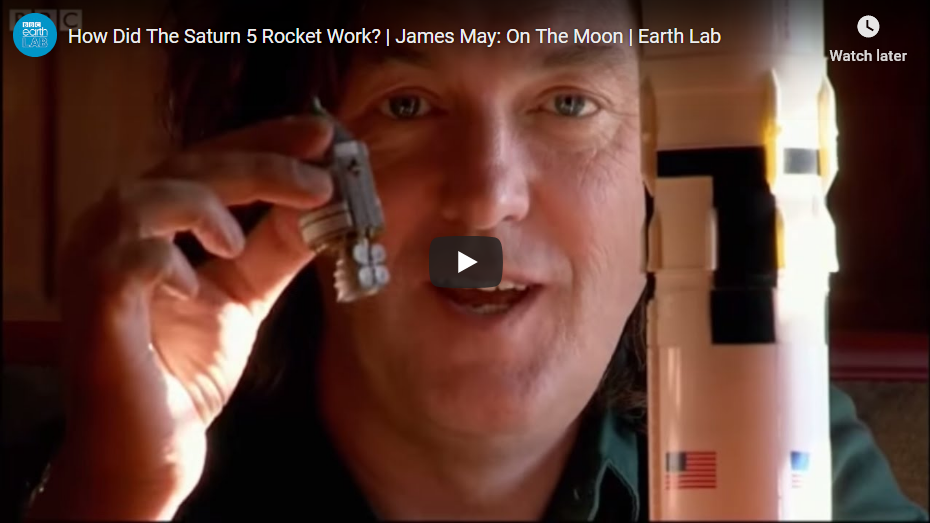
James May meets Harrison Schmitt, one of the last men to ride Saturn 5 and learns a bit about the science behind a rocket with six million components.

Taken From James May: On the Moon

Welcome to BBC Earth Lab! Here we answer all your curious questions about science in the world around you (and further afield too). If there’s a question you have that we haven’t yet answered let us know in the comments on any of our videos and it could be answered by one of our Earth Lab experts.

July 20, 2019

50th anniversary

Filed under: History, Space, Technology, USA — Tags: , , — Nicholas @ 11:41

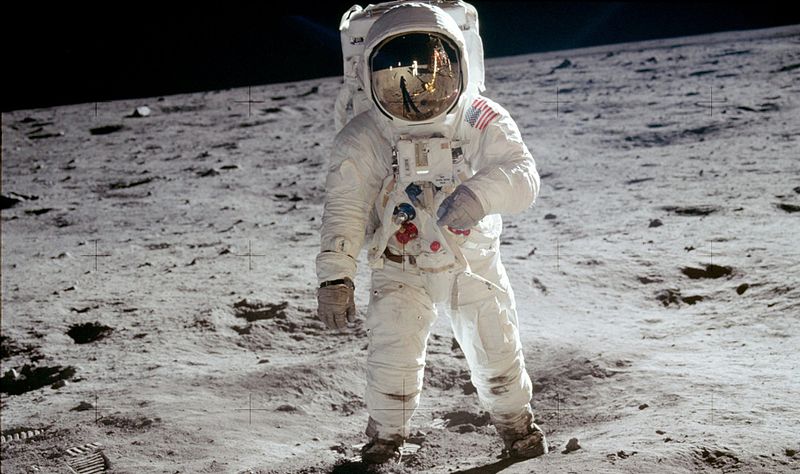
Astronaut Buzz Aldrin, lunar module pilot, stands on the surface of the moon near the leg of the lunar module, Eagle, during the Apollo 11 moonwalk. Astronaut Neil Armstrong, mission commander, took this photograph with a 70mm lunar surface camera. While Armstrong and Aldrin descended in the lunar module to explore the Sea of Tranquility, astronaut Michael Collins, command module pilot, remained in lunar orbit with the Command and Service Module, Columbia. *This is the actual photograph as exposed on the moon by Armstrong. He held the camera slightly rotated so that the camera frame did not include the top of Aldrin’s portable life support system (“backpack”). A communications antenna mounted on top of the backpack is also cut off in this picture. When the image was released to the public, it was rotated clockwise to restore the astronaut to vertical for a more harmonious composition, and a black area was added above his head to recreate the missing black lunar “sky”. The edited version is the one most commonly reproduced and known to the public, but the original version, above, is the authentic exposure.

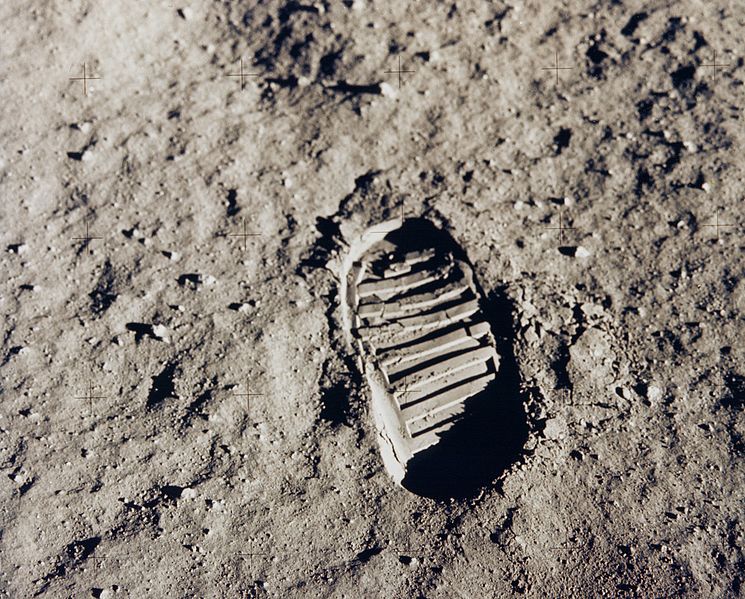
Bootprint in lunar dust created and photographed by Buzz Aldrin for the boot penetration (soil mechanics) task during the Apollo 11 moon walk.

June 26, 2019

“… what’s happening now is even better than Apollo”

Filed under: Space, Technology, USA — Tags: , , , , , — Nicholas @ 05:00

At Popular Mechanics, Joe Pappalardo reminds us that the 50th anniversary of the Apollo 11 lunar landing is coming up next month, but that current developments in space are worth celebrating too:

Astronaut Buzz Aldrin, lunar module pilot, stands on the surface of the moon near the leg of the lunar module, Eagle, during the Apollo 11 moonwalk. Astronaut Neil Armstrong, mission commander, took this photograph with a 70mm lunar surface camera. While Armstrong and Aldrin descended in the lunar module to explore the Sea of Tranquility, astronaut Michael Collins, command module pilot, remained in lunar orbit with the Command and Service Module, Columbia.

Apollo was born of Cold War desperation: a political exercise that paid enormous scientific and technological dividends. After the launch of Sputnik in 1957, it became vital to beat the Soviet Union to the Moon, a geopolitical urge that created an enormous budgetary effort.

The problem with politically motivated — well, anything — is that the faucet of support can be closed just as quickly as it opened. It happened to Apollo, as follow on missions were cancelled and the focus shifted to a reusable craft to service low-earth orbit. This pattern of shifting space priorities and strategies whipsawed NASA, most noticeably when the Obama administration’s cancellation of the Bush-era Constellation moon program in 2010.

But multiple private companies pursuing their niches in space have an obvious redundancy. While companies may rise and fall, the very nature of a commercial effort isn’t as dependent on government funding. If it’s worth doing, especially if it makes money, space industry will endure political shifts. The objectives of a well-run company do not change that much every four years.

That leaves today’s NASA with a choice: Do it themselves and control everything (the traditional way), or fund private companies to develop the tech the agency needs and then allow them to sell their services to any nation, company, or individual (the new way). With those services on the open market, NASA would be one of many customers for a new U.S.-based space economy.

This debate is boiling over right now. The ongoing effort to return to the moon, called Artemis (after Apollo’s sister), is becoming a lesson in the advantages of the commercial model.

[…]

If only investment guaranteed results. For those who miss bloated, government-run spaceflight, there is already a NASA spacecraft mired in the old ways of thinking. The feds have sunk a lot of money into the Space Launch System, a mega-rocket built to NASA specs for deep space missions. It was supposed to fly in 2017, but we’ll be lucky to see a first flight in 2020 — and it busted the $9.7 billion estimated budget, now costing about $12 billion.

But something happened during these SLS delays: the commercial space industry started delivering on its promises. Most visibly, private firms have been delivering supplies to the International Space Station for years and (hopefully soon) will ferry astronauts as well. Blue Origin and SpaceX has started development of crewed spacecraft able to reach to the moon and Mars. Elon Musk even sold a moon trip to a Japanese billionaire.

Older Posts »

Powered by WordPress