
Quotulatiousness

April 8, 2026

“Queering the Past”

Filed under: Britain, History, Media, Politics — Tags: , , , , — Nicholas @ 05:00

It sometimes seems as though modern historians are spending all their time postulating that pretty much every prominent figure in western history was gay or lesbian or trans*. The latest attempt to present someone from British history as being trans is Queen Elizabeth I (admittedly in a drama rather than a documentary):
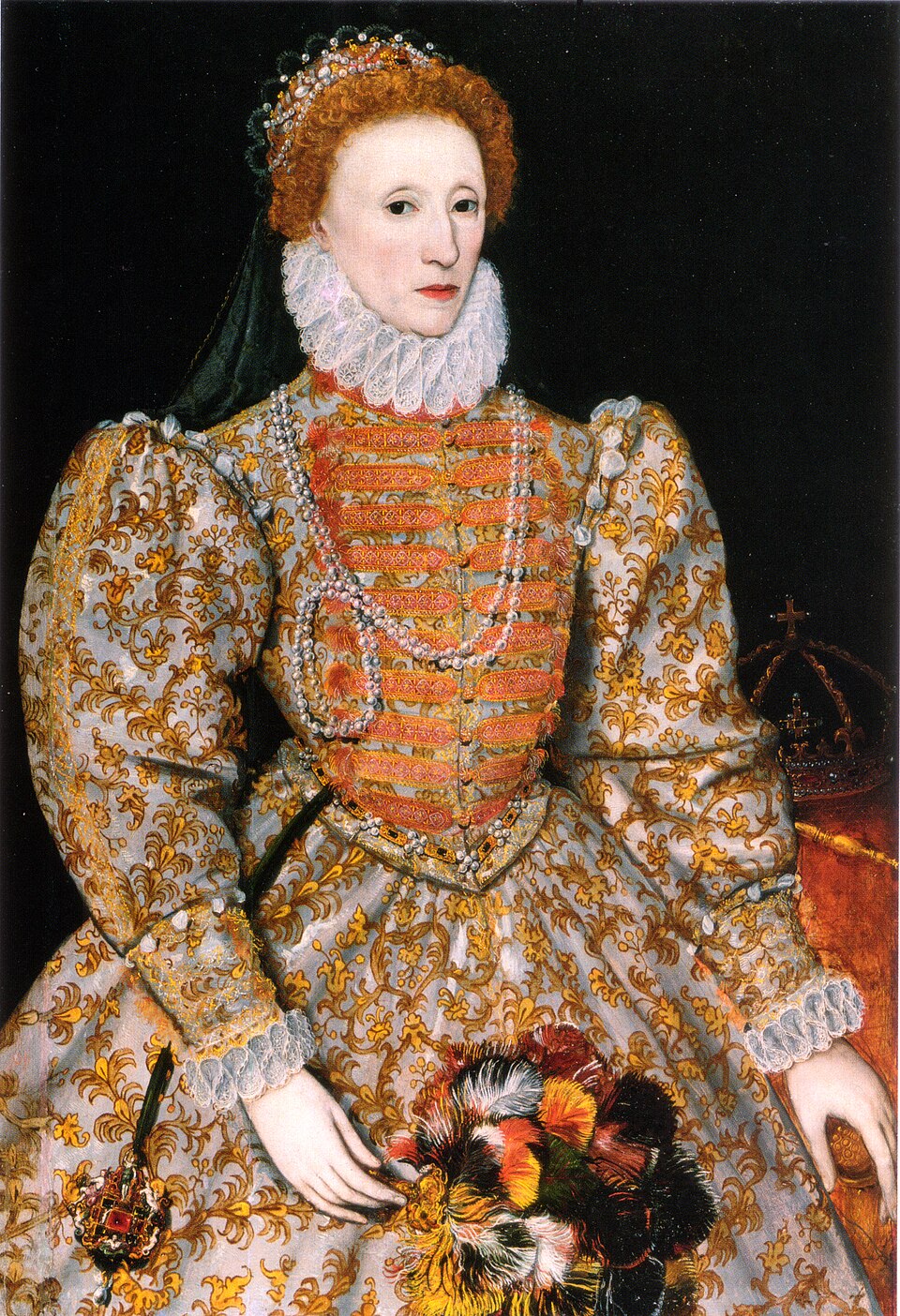
The “Darnley Portrait” of Elizabeth I of England (circa 1575).
National Portrait Gallery via Wikimedia Commons.

Appropriately, it was April Fool’s Day when I read that Queen Elizabeth I is to be portrayed as a cross-dressing man in a forthcoming television show. But we live in times when the more silly and outlandish a rumoured cultural or political plan, the more likely it is to be true. Majesty – an oddly “heritage” title for a project that clearly considers itself “transgressive” – is set to film this summer, and is seeking “trans actresses” (what we used to call cross-dressers, before they got really cross) to play the monarch.

The Sun, which first reported it, seemed drearily inclined to go along with the usual sexist claims of the trans lobby. “She is known for having traits associated with a male monarch”, it mouthed in a mealy manner in an article last week. What would those be – not getting her tits out for, if not the cameras, then the portrait painters of the era? “Some have speculated she had male pseudo-hermaphroditism, known as testicular feminisation”, the Sun continued, also noting that “others are obsessed with the Bisley Boy myth”. Yes, “obsessed” isn’t too extreme a word here – I often hear people at bus stops discussing the Bisley Boy myth. This is the claim that Princess Elizabeth died in her youth and was replaced by a local boy with red hair. It was popularised by Bram Stoker in his 1910 book, Famous Imposters – because Bram “Dracula” Stoker never made up far-fetched stories based extremely loosely on real people, did he?

The Sun quoted a “TV insider” who insists: “Most historians dismiss the claims as misogyny motivated by the idea no woman could be as strong or capable without actually being a man. But it’s a theory which captures the imagination and appears to answer a lot of other questions around the unique queen.”

What would these questions be? That Elizabeth never married and had no children? Must be a bloke, then – what real woman would forego such unqualified pleasures? It’s a sign that trans thought is so woefully conventional, so gender straitjacketed, that it just doesn’t seem able to grasp, in this case, why a woman would refuse to hand over her hard-won power to a man by marrying a stranger who didn’t even speak her language. Or that she said on the eve of the Spanish Armada invasion: “I know I have the body of a weak and feeble woman, but I have the heart and stomach of a king”? It’s called wordplay, I believe, and was extremely common until people with Tin Ear Syndrome – a disease affecting the “trans community” and their inordinate number of “allies” – became so prevalent among those in the arts and media.

This, of course, is our old mate “Queering the Past” (or “lying” as those not educated beyond all common sense and honesty know it) beloved of universities, museums and other beclowned institutions. There have been some truly rib-tickling examples of it, such as the claim that “trans Vikings” existed, which sounds like a Monty Python sketch; sometimes the whole circus gets too much even for the most proudly gay public figure. In 2023, the museum dedicated to conserving the Mary Rose hosted a blog, promising to understand the collection of everyday objects found on the 16th-century ship “through a queer lens”. This prompted the great Philip Hensher to post on X: “I am as keen as anyone on gay sex, but I have to say to these curators – you’re fucking mental”.

The Korean War Week 94: Mines, Marines, and Mayhem – April 7, 1952

Filed under: China, History, Military, USA — Tags: , , , , , , — Nicholas @ 04:00

The Korean War by Indy Neidell
Published 7 Apr 2026

In order to try and make some progress on the thorny issue of POW repatriation, the UN offers to screen all the POWs they hold to get an exact number of who refuses to be sent back. The Communists agree and the plans are put in motion. Plans in the field are finishing up, with the US 1st Marine Division having moved to new positions in the west, but they now have to deal with the unforeseen issue of thousands of landmines. They did not see that coming.

00:00 Intro
00:47 Recap
01:27 POW Issues
05:58 New Operations
07:18 Marine Defenses
10:53 Landmines
14:18 Summary
15:01 Conclusion

Architectural nostalgia in our hyper-bland modern world

Filed under: Architecture, History, Media — Tags: , , — Nicholas @ 03:00

Freddie deBoer considers the all-too-frequent social media wave of real or performative nostalgia for the more appealing styles of older buildings followed by the inevitable anti-nostalgic backlash:

There’s a meme, of sorts, that pops up on Twitter from time to time: why don’t we build beautiful buildings anymore? The sentiment is associated with a more general yearning for the past, the kind that asserts that America or Western civilization or human culture are in decline. There certainly must be a lot of people who harbor similar concerns, as evidenced by how these tweets tend to rack up thousands of “likes”. They’ll share a picture of some beautiful old building — Art Deco classics like the Chrysler Building are common, but also Gothic buildings, and neoclassical, and others — and ask why we don’t, or can’t, or won’t make beautiful buildings anymore. They’ll point to the aesthetic qualities of older buildings, remind us that we have vastly more advanced technology and are far richer today than when those beautiful buildings were built, and wonder why we don’t build for beauty these days.

Why are so many new fancy buildings generic and forgettable works of brushed steel and glass? Why so many new ordinary buildings cookie-cutter rectilinear jobs, almost entirely free of embellishment or decoration, all flat roofs and sharp edges, and neutral in both color and effect? Why do they all look like … that? You know what I mean by “that”. Sometimes the style is referred to as Late International or The Glass Box Style, but perhaps the term Value-Engineered Modernism is more apt. Whatever you call it, this kind of building is the architectural equivalent of a default font, a soul-crushing assembly line of sterile glass monoliths that erases local identity in favor of the numbing, cookie-cutter uniformity of global bureaucracy. It’s the corporation in building form.

As is true with all social media phenomena, there is a counter-chorus, and it expresses itself in condescending, sighing, superior tones. Part of this is related to the fact that the accounts lamenting the death of public aesthetics are often right-coded; certainly a lot of the complaints are coming from Twitter users with Greek statues for profile pictures. And really, any sentiment that’s repeated often enough on social media will attract mockery in time. But a good deal of the derision comes from the online side of the YIMBY movement, which in the last decade or so has become something like the caricature mainstream Dems made of the Bernie Sanders online army back in 2016 — that is, snarky, self-righteous, and fundamentally concerned with achieving in-group status through the mechanism of arguing about politics. YIMBYs are an imperfect but important force in a country that desperately needs to build more housing and which has all manner of stupid and sclerotic zoning rules. It’s generically true, though, that the more online you get the less useful any given political movement becomes, and Twitter YIMBYs seem absolutely attached to representing all of the worst elements of that group — they’re incurious, rude, reductive, averse to basic best practices of messaging, and above all else, tribal. (Politics gets stupid when politics becomes a way to belong rather than a way to to do things.) And they’ll have you know that lamenting the death of beautiful buildings is dumb, lol lol lol lol.

The Twitter YIMBYs tend to treat concern for aesthetics as a decadent demand in a world where we need to JUST BUILD. And their particular tactic is to insist that we don’t build attractive buildings anymore because doing so is just too expensive, and really, what’s more important, the unconquerable human desire to live surrounded by beauty, or our need to put people in homes??? Case closed! But not really. It turns out that it’s simply not true that building stylish and ornamented buildings is relatively more expensive today than it was in eras past. Read all about it. Yes, Baumol’s cost disease is real, and construction is a manpower-intensive industry, but almost a century after the Empire State Building was erected, we’ve got the benefit of modern logistics and supply chains and automated production of essential parts and so on. The cost of labor cannot explain the death of decoration in modern building design. And increasingly, there seems to be an acknowledgment that it’s easier to move the public to accept new construction when said new construction is inspiring. King YIMBY Matt Yglesias had a good post on this recently; as he says, we can look at the premium people will pay to live in townhouse neighborhoods where most of the construction happened 100+ years ago as a clue to what people actually like. Housing is expensive in both Park Slope and Hudson Yards, but there’s no question that the former is an aspirational bourgie vision that has stood the test of time while the latter is barely tolerated. And aesthetics plays a large role in that.

We’re wired to pursue beauty. We are not, however, wired to pursue authenticity.

Ian McCollum’s Perfect Car: Driving His Citroen 2CV

Filed under: France, History — Tags: , , , , — Nicholas @ 02:00

Jimports
Published 22 Nov 2025

This isn’t Forgotten Weapons, this is James Reeves here for Jimports with my close personal friend Ian McCollum, and today we are looking at what might be the most on-brand car on all of YouTube, Ian’s Citroen 2CV. This is a late production 1988 car, but it traces its roots back to the 1930s as a French farmer’s replacement for a horse and cart, and Ian walks us through how it survived World War II, why it shares DNA with cars like the VW Beetle and Fiat 500, and how a two cylinder, 26 horsepower French tin can can still cruise at 60 miles per hour and somehow feel great. We talk about the bizarre but clever suspension, inboard front disc brakes, the “French bolt action” shifter, the fold up windows, roll back roof, and all of the little details that make the 2CV weird, practical, and weirdly desirable. If you know Ian from Forgotten Weapons you already know how deep he goes on history and engineering, and this is that same energy pointed at one of the coolest European classics ever made. Check out Forgotten Weapons and Deep Dive With Ian if you have not already, and if you are new here, subscribe to Jimports so I can justify buying more dumb cars like this.

QotD: Without You, There is No Us, by Suki Kim

Filed under: Asia, Books, Education, Quotations — Tags: , , , , , — Nicholas @ 01:00

Without You, There is No Us, by Suki Kim. Aka A Portrait of the Basic College Girl as a Young Woman. Be advised: Be current on your blood pressure meds before you check this one out from the library. Maybe have one of those defibrillator kits on hand, because it’ll get your blood boiling like no other. Kim scams an American missionary organization into sending her to North Korea as an English teacher. She’s well aware that the organization will be destroyed when she’s exposed. She’s also well aware that the young boys she’s teaching — the sons of high Party officials — are going to face potentially lethal consequences, along with their entire families. None of that bothers her a bit. No, her main problem is that all those North Korean boys find Mx. Suki Kim so irresistibly sexy, OMG, she just can’t even.

Also note the passages about Her Relationship. That’s how she refers to the poor bastard. It’s something along those lines, I forget — maybe it’s “My Ex” — but either way, he never even gets the goddamn common courtesy of being referred to by name … because to Mx. Kim, he really doesn’t have one. He’s just another interchangeable character in the all-encompassing soap opera that is her life.

Severian, “Recommended Reading”, Founding Questions, 2022-06-09.

Powered by WordPress


