
Zooming out even further, why Roman victory in the Roman-Seleucid War? I think there are a few clear factors here.
Ironically for a post covering land battles, the most important factor may be naval: Rome’s superior naval resources (and better naval allies), which gave the Romans an enormous operational advantage against Antiochus. In the initial phase, the Romans could get more troops to Greece than the king could, while further on, Roman naval supremacy allowed Roman armies to operate in Anatolia in force (while Antiochus, even had he won in Greece, had no hope of operating in Italy). Neutralizing Antiochus’ navy both opened up options for the Romans and closed down options for Antiochus, setting the conditions for Roman victory. It would have also neutered any Roman defeat. If Antiochus wins at Magnesia, he cannot then immediately go on the offensive, after all: he has merely bought perhaps a year or two of time to rebuild his navy and try to contest the Aegean again. Given the astounding naval mobilizations Rome had shown itself capable of in the third century, one cannot imagine Antiochus was likely to win that contest.
Meanwhile, the Romans had better allies, in part as a consequence of the Romans being better at getting allies. The Romans benefit substantially from allied Achaean, Pergamese and Rhodian ships and troops, as well as support from the now-humbled Philip V of Macedon and even supplies and auxiliaries from Numidia and Carthage. Alliance-management is a fairly consistent Roman strength and it shows here. It certainly seems to help that Roman protestations that they had little interest in a permanent presence in Greece seem to have been somewhat true; Rome won’t set up a permanent provincia in Macedonia until 146 (though the Romans do expect their influence to predominate before then). By contrast, Antiochus III, clearly bent on rebuilding Alexander’s empire, was a more obvious threat to the long-term independence and autonomy of Greek states like the Pergamum or Rhodes.
Finally, there is the remarkable Seleucid glass jaw. The Romans, after all, sustained a defeat very much like Magnesia against Hannibal in 216 (the Battle of Cannae) and kept fighting. By contrast, Antiochus is forced into a humiliating peace after Magnesia, in which he cedes all of Anatolia, gives up any kind of navy and is forced to pay a crippling financial indemnity which will fatally undermine the reign of his successor and son Seleucus IV (leading to his assassination in 175, leading to yet further Seleucid weakness). Part of this glass jaw may have been political: after Magnesia, Antiochus’ own aristocrats seem pretty well done with their king’s adventurism against Rome.
But at the same time, some of it was clearly military. Antiochus didn’t have a second army to fall back on and Magnesia represented essentially a peak “all-call” Seleucid mobilization. A similar defeat at Raphia had forced a similarly unfavorable peace earlier in his reign, after all. Part of the problem, I would argue, is that the Seleucids needed their army for more than just war: they needed it to enforce taxation and tribute on their own recalcitrant subjects. As a result, no Seleucid king could afford to “go for broke” the way the Roman Republic could, nor could the Seleucids ever fully mobilize the massive population of their realm. The very nature of the Hellenistic kingdom’s ethnic hierarchy made fully tapping the potential resources of the kingdom impossible.
As a result, while Antiochus III was not an incompetent general, he ruled a deceptively weak giant. Massive revenues were offset by equally massive security obligations and the Seleucids seem to have been perenially cash strapped (with a nasty habit of looting temples to make up for it). The very nature of the Seleucid Empire – like the Ptolemaic one – as an ethnic empire where Macedonians ruled and non-Macedonians were ruled kept Antiochus from being able to fully mobilize his subjects. It may also explain why so many of those light infantry auxiliaries seem to have run off without much of a fight. Eumenes and his Pergamese troops fought for their independence, the Romans for the greater glory of Rome and the socii for their own status and loot within the Roman system, but what could Antiochus offer a subjected Carian or Cilician except a paycheck and a future of continued subjugation? That’s not much to die for.
Bret Devereaux, “Collections: Phalanx’s Twilight, Legion’s Triumph, Part IVb: Antiochus III”, A Collection of Unmitigated Pedantry, 2024-04-05.
February 17, 2025
QotD: Decisive factors in the Roman victory over the Seleucids
February 10, 2025
QotD: The Roman Republic versus the heirs of Alexander the Great
Well, I hope you got your fill of Hellenistic armies winning battles because it is all downhill from here (even when we’re fighting uphill). For the first half of the second century, from 200 to 168, the Romans achieve an astounding series of lopsided victories against both (Antigonid) Macedonian and Seleucid Hellenistic armies, while simultaneously reducing several other major players (Pergamon, Egypt) to client states. And unlike Pyrrhus, the Romans are in a position to “convert” on each victory, successfully achieving their strategic objectives. It was this string of victories, so shocking in the Greek world, that prompted Polybius to write his own history, covering the period from 264 to 146 to try to explain what the heck happened (much of that history is lost, but Polybius opens by suggesting that anyone paying attention to the First Punic War (264-241) ought to have seen this coming).
That said, this series of victories is complex. Of the five major engagements (The River Aous, Cynoscephalae, Thermopylae, Magnesia, and Pydna) Rome commandingly wins all of them, but each battle is strange in its own way. So we’re going to look at each battle and also take a chance to lay out a bit of the broader campaigns, asking at each stage why does Rome win here? Both in the tactical sense (why do they win the battle) and also in the strategic sense (why do they win the war).
We’re going to start with the war that brought Rome truly into the political battle royale of the Eastern Mediterranean, the Second Macedonian War (200-196). Rome was acting, in essence, as an interloper in long-running conflicts between the various successor dynasties of Alexander the Great as well as smaller Greek states caught in the middle of these larger brawling empires. Briefly, the major players are the Ptolemaic Dynasty, in Egypt (the richest state), the Seleucid Dynasty out of Syria and Mesopotamia (the largest state) and the Antigonid Kingdom in Macedonia (the smallest and weakest state, but punching above its weight with the best man-for-man army). The minor but significant players are the Attalid dynasty in Pergamon, a mid-sized Hellenistic power trapped between the ambitions of the big players, two broad alliances of Greek poleis in the Greek mainland the Aetolian and Achaean Leagues, and finally a few freewheeling poleis, notably Athens and Rhodes. The large states are trying to dominate the system, the small states trying to retain their independence and everyone is about to get rolled by the Romans.
Bret Devereaux, “Collections: Phalanx’s Twilight, Legion’s Triumph, Part IVa: Philip V”, A Collection of Unmitigated Pedantry, 2024-03-15.
February 2, 2025
Hierapolis: a city encased in stone
Scenic Routes to the Past
Published 18 Oct 2024Hierapolis — modern Pamukkale, Turkey — was built over hot springs. During the Middle Ages, these encased much of the city in gleaming travertine.
See my upcoming trips to Turkey and other historical destinations: https://trovatrip.com/host/profiles/g…
January 15, 2025
Desert Storm: The Gulf War 1990-1991
Real Time History
Published 6 Sept 2024When Saddam Hussein invaded Kuwait in the summer of 1990, he didn’t anticipate a massive international backslash and unanimous Security Council response. Soon a broad military Coalition under leadership of the United States assembled and kicked the Iraqi Army out of Kuwait. In the aftermath several Iraqi groups rose up against Saddam but the Coalition didn’t support a regime change.
CHAPTERS:
00:00 Intro
00:29 Saddam Hussein Victorious (but Broke)
03:49 Iraqi Invasion of Kuwait
06:02 The Coalition Against Iraq Forms
08:37 Operation Desert Shield
10:55 Operation Desert Storm
20:26 Iraqi Highway of Death
21:39 Iraqi Uprisings
(more…)
January 11, 2025
QotD: “Composite” pre-gunpowder infantry units
This is actually a very old concept. The Neo-Assyrian Empire (911-609 BC) is one of the earliest states where we have pretty good evidence for how their infantry functioned – there was of course infantry earlier than this, but Bronze Age royal records from Egypt, Mesopotamia or Anatolia tend to focus on the role of elites who, by the late Bronze Age, are increasingly on chariots. But for the early Iron Age Neo-Assyrian empire, the fearsome effectiveness of its regular (probably professional) infantry, especially in sieges, was a key component of its foreign-policy-by-intimidation strategy, so we see a lot more of them.
That infantry was split between archers and spear-and-shield troops, called alternately spearmen (nas asmare) or shield-bearers (sab ariti). In Assyrian artwork, they are almost always shown in matched pairs, each spearman paired off with a single archer, physically shielding the archer from attack while the archer shoots. The spearmen are shown with one-handed thrusting spears (of a fairly typical design: iron blade, around 7 feet long) and a shield, either a smaller round shield or a larger “tower” shield. Assyrian records, meanwhile, reinforce the sense that these troops were paired off, since the number of archers and spearmen typically match perfectly (although the spearmen might have subtypes, particularly the “Qurreans” who may have been a specialist type of spearman recruited from a particular ethnic group; where the Qurreans show up, if you add Qurrean spearmen to Assyrian spearmen, you get the number of archers). From the artwork, these troops seem to have generally worked together, probably lined up in lines (in some cases perhaps several pairs deep).
The tactical value of this kind of composite formation is obvious: the archers can develop fire, while the spearmen provide moving cover (in the form of their shields) and protection against sudden enemy attack by chariot or cavalry with their spears. The formation could also engage in shock combat when necessary; the archers were at least sometimes armored and carried swords for use in close combat and of course could benefit (at least initially) from the shields of the front rank of spearmen.
The result was self-shielding shock-capable foot archer formations. Total War: Warhammer also flirts with this idea with foot archers who have their own shields, but often simply adopts the nonsense solution of having those archers carry their shields on their backs and still gain the benefit of their protection when firing, which is not how shields work (somewhat better are the handful of units that use their shields as a firing rest for crossbows, akin to a medieval pavisse).
We see a more complex version of this kind of composite infantry organization in the armies of the Warring States (476-221 BC) and Han Dynasty (202 BC – 220 AD) periods in China. Chinese infantry in this period used a mix of weapons, chiefly swords (used with shields), crossbows and a polearm, the ji which had both a long spearpoint but also a hook and a striking blade. In Total War: Three Kingdoms, which represents the late Han military, these troop-types are represented in distinct units: you have a regiment of ji-polearm armed troops, or a regiment of sword-and-shield troops, or a regiment of crossbowmen, which maneuver separately. So you can have a block of polearms or a block of crossbowmen, but you cannot have a mixed formation of both.
Except that there is a significant amount of evidence suggesting that this is exactly how the armies of the Han Dynasty used these troops! What seems to have been common is that infantry were organized into five-man squads with different weapon-types, which would shift their position based on the enemy’s proximity. So against a cavalry or chariot charge, the ji might take the front rank with heavier crossbows in support, while the sword-armed infantry moved to the back (getting them out of the way of the crossbows while still providing mass to the formation). Of course against infantry or arrow attack, the swordsmen might be moved forward, or the crossbowmen or so on (sometimes there were also spearmen or archers in these squads as well). These squads could then be lined up next to each other to make a larger infantry formation, presenting a solid line to the enemy.
(For more on both of these military systems – as well as more specialist bibliography on them – see Lee, Waging War (2016), 89-99, 137-141.)
Bret Devereaux, “Collection: Total War‘s Missing Infantry-Type”, A Collection of Unmitigated Pedantry, 2022-04-01.
January 1, 2025
3,500 Years of Hangover Cures – Kishkiyya from Baghdad
Tasting History with Max Miller
Published 31 Dec 2024A slightly sour lamb stew with herbs, chickpeas, and fat, eaten as a hangover cure in 10th century Baghdad
City/Region: Baghdad
Time Period: 10th CenturyWhere there are hangovers, there are hangover cures. Throughout history they’ve varied from having a good wash, drinking lemonade while drinking alcohol, and the dubious prairie oyster. This stew is kind of like 10th century Baghdad’s version of my favorite hangover food: a greasy burger and fries.
Fatty lamb is stewed with kishka (a dried yogurt-like dairy product), verjuice, chickpeas, herbs, and greens, along with some olive oil just to make sure there’s enough grease involved. It doesn’t look all that pretty, but it tastes good. It’s complex and layered, with each flavor following the last, and the variety of textures is wonderful.
Wash 3 ratls meat and put it in a pot. Add ½ ratl chopped onion, ¼ ratl fresh herbs, a handful of chickpeas, 1 piece galangal, and ¼ ratl olive oil. Pour water to submerge the ingredients in the pot. Let the pot cook until meat is almost done. Add any of the seasonal green vegetables and a little chard. When everything in the pot is cooked, add 3 pieces of sour kishk, and ½ ratl kishk of Albu-Sahar, Mawsili, or Bahaki. Pound them into fine powder and dissolve them in 1 ratl (2 cups) ma’hisrim (juice of unripe sour grapes).
When kishk is done, add 2 dirhams (6 grams) cumin and an equal amount of cassia. Add a handful of finely chopped onion. Do not stir the pot. When the onion cooks and falls apart, add to the pot 2 danaqs (1 gram) cloves and a similar amount of spikenard.
Stop fueling the fire, let the pot simmer and rest on the remaining heat then take it down, God willing.
— Kitāb al-Tabīkh by ibn Sayyār al-Warrāq, 10th Century, translation from Annals of the Caliph’s Kitchen by Nawal Nasrallah
December 26, 2024
Historian Reviews the Best and Worst Depictions of the Roman Empire in Film and TV
History Hit
Published 9 Sept 2024Tristan Hughes, host of “The Ancients” podcast, reviews scenes from famous movies and TV shows set in the Roman period.
00:00 Intro
00:58 HBO Rome
12:54 The Last Legion
15:55 Monty Python’s Life of Brian
24:32 Centurion
31:40 Doctor Who
(more…)
December 20, 2024
The Murder of Egypt’s Forgotten Queen – Shajar al-Durr & Om Ali
Tasting History with Max Miller
Published Aug 13, 2024The national dessert of Egypt: bread pudding made from crisp flatbread, pistachios, almonds, sultanas, spices, and rose water
City/Region: Egypt | Baghdad
Time Period: 10th-13th CenturiesOm Ali is the national dessert of Egypt, and its roots go back at least to the 10th century, when we get the base recipe for my version. I took inspiration from other medieval recipes and added the nuts, sultanas, and spices, though they would also use ingredients like camphor, chicken, poppyseeds, and musk.
I really like the flavors, and the dish is sweet without being too sweet, but the bread gives it a kind of noodle-like texture which is a bit odd. Modern versions often use dry croissants, so I won’t judge if you use them or something like phyllo or puff pastry in place of the homemade roqaq.
Take semolina or white bread and soak it in milk until saturated. Then, take half a pound of sugar, or as much as is needed for the amount of bread, crush it, and mix it with the bread. Then, take a clean and shallow pot … add the soaked bread, milk, and sugar … Return the pot to slow burning coals. When the filling is cooked and set, remove the pot from the fire, turn it out onto a wide bowl and serve, God willing.
— Kitab al-Tabikh by Ibn Sayyar al-Warraq, 10th Century
December 19, 2024
“A decree went out from Caesar Augustus” – The evidence for the date of the birth of Jesus
Adrian Goldsworthy. Historian and Novelist
Published 18 Dec 2024It’s December, with Christmas fast approaching, and I suspect that a fair few people who never think much about the Romans will hear mention of Caesar Augustus because of this verse from Luke’s Gospel. I have an appendix about this in my biography of Augustus, so thought that I would talk about how the New Testament dates the Christmas story and how well this fits with our other sources for the Ancient World.
December 15, 2024
The fall of the house of Assad
In the New English Review, Theodore Dalrymple considers the fall of Syria’s dictator as the al-Assad family is finally toppled from power:
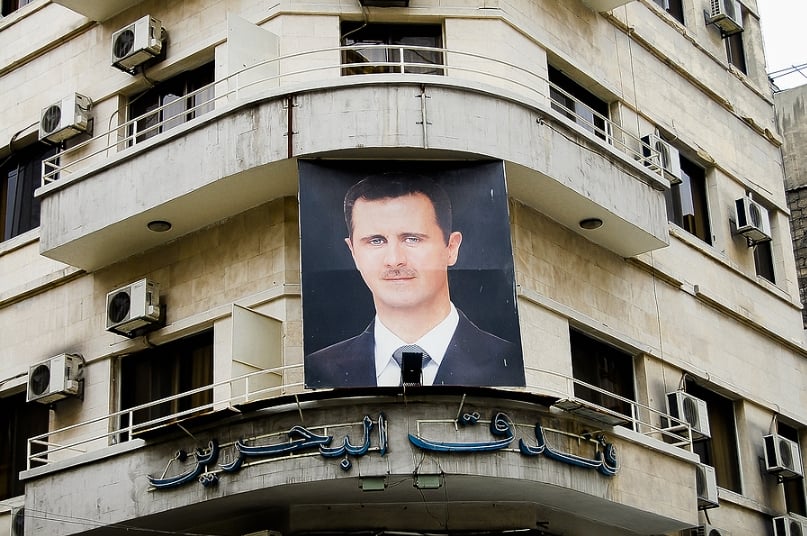
When I saw video clips of the joyful toppling of statues of Bashar al-Assad, as well as the tearing from walls of his ubiquitous portrait, I wondered what it must be like to be a dictator and see images of yourself everywhere (not that I have any ambitions myself in that direction).
Do you come to imagine, for example, that they are a manifestation of genuine popular affection for yourself, or are you like the Nicaraguan dictator Anastasio Somoza, of the poem by Ernesto Cardenal “Somoza Unveils a Statue of Somoza in the Somoza Stadium” (the fact that Cardenal, a Nicaraguan priest, was a commie doesn’t mean that he wasn’t a good poet).
The Somoza of the poem is perfectly clear-sighted. He knows that people didn’t erect the statue spontaneously, out of love for him, because he knows that he himself ordered it to be erected. Nor does he think that it will be a perpetual monument to himself because he knows also that the people will tear it down as soon as they can. No, he had it erected because he knew that the people would hate it, in other words that it would humiliate them, and a humiliated people is easy to cow into submission, at least until — to use a word of slightly different zoological connotation — the worm turns. (A note to pedants before they write in: I do not think that the verb to cow has any etymological link with the female herbivore known as the cow.)
It seems to me, however, that Cardenal may have simplified a little. Such is the complexity and potential dishonesty of the human mind that a dictator would be perfectly capable of imagining that a statue of himself is a manifestation of people’s affection for him and that there are people plotting to bring down both the statue and him because they hate him. This is not totally irrational or impossible. After all, as Americans know, even in a free democracy some people love the leader and some people hate him (usually more of the latter after he has been in power for some time).
Assad junior, it seems to me, is a living refutation of Solzhenitsyn’s famous remark that Macbeth was capable of killing only a handful of people because he was motivated by no ideology, and it requires an ideology to bring about hecatombs of the Nazis or Communists. Assad junior had a self-justification for his rule, no doubt, as every ruler and dictator has and must have, but he did not really possess a full-blown ideology in Solzhenitsyn’s sense. His trajectory is worth recalling.
The son of a monstrous dictator, he seems at first to have had no inclinations in that direction himself. Among other things, he didn’t seem to have the physical attributes of a dictator, but rather of someone pliant and weak, more herbivore than carnivore, more giraffe rather lion (though giraffes can kick a lion to death). And it spoke rather well of him that he should qualify as a doctor, apparently quite genuinely so, and wish to become an ophthalmologist, to which end he studied in London, where his conduct was not that of a spoilt brat but by all accounts rather modest — laudably so, in the circumstances.
December 14, 2024
Matt Gurney’s final thoughts from the Halifax International Security Forum
One of the things I regret about being totally broke is that I can’t pay for a full subscription to The Line, which is one of Canada’s best sources of (relatively) unbiased commentary on current events both in Canada and around the world. This is the third instalment of Matt Gurney’s report from the recent Halifax International Security Forum (earlier parts linked here and here):

This next one is going to be very brief, since it’s really just an observation. There was very little discussion of Israel. As I noted at the top, there was discussion of the situation in the Middle East. But it was mostly in the context of “The world is currently a mess”. Parts of the Forum involve breaking into smaller groups for more focused discussion on specific issues, and some of those might have focused on Israel or the Middle East more broadly. I can’t speak to what I didn’t see. But I was surprised by a relative lack of focus on the ongoing fighting around Israel in the main events.
A notable exception was the presence of Dr. Cochav Elkayam-Levy on one of the on-record panels. An international law expert, she has spent the months since the October 7th attacks documenting the mass sexual violence that was such an awful feature of Hamas’s attack. Her comments were brief but powerful and can be seen here starting at around the nine-minute mark. I’d like to zoom in on one comment in particular. Dr. Elkayam-Levy told the audience how the invaders were able to capture the personal devices of many of their victims, and use those devices to broadcast the abuse and sometimes murder of these victims via the victims’ own social media apps. This was something that was discussed shortly after the October 7 attacks but not much after: by seizing the victims’ phones, the invaders were able to spread terror and traumatize the loved ones of the victims by showing their friends and family, via photos and videos and live streams, exactly what the victims were being made to suffer.
“I thought I had seen the worst,” the doctor told the assembled audience. “But really, if there is hell, this is what it looks like. Someone abusing your kin. Someone killing your loved ones in front of your eyes.”
Though it was only a small part of the official agenda, Dr. Elkayam-Levy’s comments left an outsized impression on me, and I suspect on many others.
He also discussed his own professional path which he regrets didn’t include a lot of traditional on-the-spot reporting on tragedies and interviewing survivors, as he feels he doesn’t have a good “game face” for those times when he now finds himself doing that kind of work:
I am 100 per cent on side with Ukraine in its war with Russia. I’m not blind to flaws in Ukraine today or in Ukraine’s history, but I have absolutely no doubt who’s the good guy and the bad guy in that ongoing war. I’ve had wonderful opportunities to speak with many Ukrainians since their country was invaded. I have heard their stories and tried to share them on my platforms. I’ve also had opportunities to meet and talk to many Ukrainians who are living now in my own hometown, mostly women with young children, who fled the fighting or once lived in parts of the country that are now occupied by Russia.
I feel so profoundly that these people have been wronged, and tremendously wronged. I believe so sincerely that they should have our full backing as they try and drive back the invaders and liberate their country. That their cause is not just in the West’s strategic interests, and I very much think that it is, but also that it is morally just.
But I have concluded that they’re screwed. We’ve lost interest, and Ukrainians are about to get the Kurd treatment, if I can be so crass. And I just didn’t have the heart to tell them that. I don’t even know how I’d begin to say that to them. I write and speak for a living. And words still failed me.
During a meal in Halifax, a woman who’d flown in to give a presentation on the work her organization does in Ukraine assisting displaced people told me a story of her own experience with the war. The original Russian invasion in 2014 hadn’t been anywhere near where she lived. She was somewhat shocked, she told me, when in 2022, her hometown came under attack. She described the first time she heard air raid sirens. The first time she heard a bomb blast. The first time she could hear the gunfire of advancing ground troops. She told me about the first person from her small community to die, a paramedic who was on her way to collect wounded when their ambulance was hit. And then she told me how, months later, she realized she couldn’t remember any of those things anymore, except for the first time, because they’d happened so much. Constant sirens. Constant bombings. Constant gunfire. The deaths of more people she personally knew than she could even remember.
And as she told me this story, I found myself near tears. I was able to cover it up, I think. I wish I had better game face, but I have some. But my tears weren’t even of sympathy. I wasn’t overwhelmed by her sad story, though it was awfully goddamned sad. No, the tears I felt were tears of shame. I knew that at the end of the conference, I’d get to go home. Toronto is a bit rougher than it was when I was growing up, but it ain’t a war zone.
This woman doesn’t get to go home, assuming her home is even still standing. She knew it, I think. I knew it. I think we both knew that the other knew. But we talked around it.
History is going to judge us harshly for our failure to do more, faster, to help Ukrainians defend themselves.
And alas, we’ll deserve it.
December 13, 2024
The influence of Mesopotamian cultures on ancient Greece
James Pew and Scott Miller begin their series on the history of western education by looking at the way Greek civilization was influenced by the Mesopotamian cultures who used cuneiform writing for three thousand years:

An example of a clay tablet inscribed with cuneiform text (in this case, a portion of the Epic of Gilgamesh)
In the 19th century, three new discoveries began to militate against “the image of pure, self-contained Hellenism”. They were: “the reemergence of the ancient Near East and Egypt through the decipherment of cuneiform and hieroglyphic writing, the unearthing of Mycenaean civilization, and the recognition of an Orientalizing phase in the development of archaic Greek art”.
To sketch the significance of just one of these discoveries, what the discovery of cuneiform writing means for the history of writing and literature, we have with cuneiform not only the first writing system in human history, but also the longest running (it was in use for over 3,000 years); cuneiform texts are, at the same time, the best preserved and most numerous textual records from the ancient world by far (there are hundreds of thousands of cuneiform documents in museum archives today because the signs were inscribed on clay tablets which preserve better across time than other materials used for writing in ancient times). This complex writing system, consisting of thousands of signs, was developed first in Mesopotamia by the Sumerians and, subsequently, it was adopted by the Akkadians, Babylonians and Assyrians in the same area. It emerged c. 3200 B.C. as a response to social and economic complexities generated by the world’s first cities: invariably, the impetus to create a writing system comes down to the need to document and track the transfer of food stuffs, material goods, temple offerings, and so forth, the administration of complex urban society. On the other hand, written literature in the form of myth, poetry and the like, are secondary developments that may follow a long time later (if at all). In centuries to follow, Mesopotamian scribes would begin to write down epic tales telling the exploits of heroic kings, such as Gilgamesh, along with hymns and prayers to the Mesopotamia gods, incantations to ward off demons and diseases, texts containing lists of known phenomena, proverbs, reports of astrological phenomena and their omens, medical and magical texts to be used by the healing expert, and many text types besides.
On the Question of Greek Borrowing from the more ancient East: This series will delve into the work of many of these cutting-edge historical scholars who follow the evidence from Orient to Occident. Academic’s like Albin Lesky, M.L. West, Walter Burkert, Margalit Finkelberg, Harald Haarmann, Daniel Ogden, Mark Griffith, and more.
It is no easy task to establish links between Greece and ancient Near Eastern civilizations, and the difficulty has to do with more than vast expanses of time and space. Typically, modern scholars of classical Greece have a tendency to “transform ‘oriental’ and ‘occidental’ into a polarity, implying antithesis and conflict”. According to Burkert, it was not until the Greeks fought back the Persian Empire that they became aware of their distinct identity (as separate from the orient). In addition, it was not until many years later, during the crusades, that “the concept and the term ‘Orient’ actually enter(ed) the languages of the West”. The reluctance on the part of many scholars to accept a universal conception of cultural development which involved “borrowing”, “loan words”, and “cultural diffusion” amongst the different ancient peoples living in both the Near East and the Aegean regions, is due to intellectual currents that first took shape in Germany over two centuries ago. In Burkert’s words, “Increasing specialization of scholarship converged with ideological protectionism, and both constructed an image of a pure, classical Greece in splendid isolation”.
It was essentially a trio of academic fads that “erected their own boundaries and collectively fractured the Orient-Greece axis”. The first was the breaking apart of theology and philology. Until well into the 18th century, “the Hebrew Bible naturally stood next to the Greek classics, and the existence of cross-connections did not present any problems”. The second was the rise of the ideology of Romantic Nationalism, “which held literature and spiritual culture to be intimately connected with an individual people, tribe, or race. Origins and organic development rather than reciprocal cultural influences became the key to understanding”. And the third was the discovery by linguistic scholars of “Indo-European”, the “common archetype” of most European languages (as well as Persian and Sanskrit).
Ulrich von Wilamowitz-Moellendorff offered a “scornful assessment” indicative of the faddish and far more isolated conception of ancient Greece in 1884: “the peoples and states of the Semites and the Egyptians which had been decaying for centuries and which, in spite of the antiquity of their culture, were unable to contribute anything to the Hellenes [the Greeks] other than a few manual skills, costumes, and implements of bad taste, antiquated ornaments, repulsive fetishes for even more repulsive fake divinities …” A common take at the time which would later prove to be quite incomplete. It should be noted that Romantic Nationalism, coupled with the discovery of Indo-European (which demonstrates no link between European and Semitic languages) seems to have contributed to what gave “anti-Semitism a chance”. Tragically, it was at the point when the Jews were finally being granted full legal equality in Europe when national-romantic consciousness and the rejection of orientalism helped set the stage for the escalation in Jewish persecution that eventually led to the horror of horrors: the Holocaust.
The Mesopotamians would never, as the later Greeks did c. 600 B.C., formulate an abstract concept of “nature” and analyze phenomena as having a natural developmental explanation rather than the traditional explanation (that being, e.g. the gods made it so). Thus, they would never develop philosophy or science as we think of it, and so there are certain categories of analysis and knowledge that are uniquely Greek in the ancient world. However, as the innovators of a form of agrarian society that was productive and sophisticated enough to sustain the world’s first cities, Mesopotamians needed to be able to examine and quantify time (in order to know when to plant) and so they developed the lunar calendar of 12 months, they developed the 12 double-hour day, they gave names to the observable planets and charted the night sky into constellations; They needed to be able to measure physical space and allot pieces of land to land owners, and so they created the world’s earliest form of basic geometry. The types of knowledge just named are the types of knowledge that scholars believe would have been of interest to the Greeks, and, indeed, many suspect that iron age Greeks borrowed these insights from the Babylonians. Whether the Greek story of Heracles could have been influenced by Mesopotamian hero epics such as the Epic of Gilgamesh is a more contentious — though intriguing — topic.
So, how did Greece find itself in a position to receive the baton of civilization and even to carry it further forward? Because of the great work of modern scholars, we know that an informal but early (proto) archetypal version of education (not yet organized education) begins in the Mediterranean, in archaic Greece, before the classical period. Even before this, although it is not exactly clear as to the extent, it has been determined that Bronze Age Greek cultures located around the area of the Aegean sea (also known as Aegean Civilization) – the Mycenaean on mainland Greece, the Minoan on the island of Crete and the Cyclades (also known as the Aegean Islands) – were not only in contact with each other, but also with neighboring civilizations: Egypt, Mesopotamia, Asia Minor, and the Levant.
November 27, 2024
The Deadly Job of Royal Food Taster
Tasting History with Max Miller
Published Jul 23, 2024Sautéed mushrooms in a honey, long pepper, and garum glaze
City/Region: Rome
Time Period: 1st CenturyFood tasters checking for poison aren’t around so much anymore, but it was an important job for thousands of years. But what happens when the food taster is the one adding in the poison?
Emperor Claudius found this out the hard way when he supposedly ate some of his favorite mushrooms, and then became the victim of a double-poisoning by his taster and his physician.
We can’t know for sure what Emperor Claudius’s favorite mushroom dish was, but I wouldn’t be surprised if it was this. I don’t care for the texture of mushrooms, but the flavor is excellent. The sweetness from the honey, spiciness from the long pepper, and the earthiness of the mushrooms combine for a complex dish that is delicious.
Another Method for Mushrooms
Place the chopped stalks in a clean pan, adding pepper, lovage, and a little honey. Mix with garum. Add a little oil.
— Apicius de re coquinaria, 1st century
QotD: The Great Library and its competitors
The Ptolemies were not the only successors to Alexander who built a Mouseion with a library; their Seleucid rivals in Syria also built one in Antioch in the reigns of Antiochus IX Eusebes (114-95 BC) or Antiochus X Philopater (95-92 BC). Roman aristocrats and rulers also included the establishment of substantial libraries as part of their civic service. Julius Caesar had intended to establish a library next to the Forum in Rome but this was ultimately achieved after his death by Gaius Asinius Pollio (75 BC – 4 AD), a soldier, politician and scholar who retired to a life of study after the tumults of the Civil Wars. Augustus established the Palatine Library in the Temple of Apollo and founded another one in the Portus Octaviae, next to the Theatre of Marcellus at the southern end of the Field of Mars. Vespasian established one in the Temple of Peace in 70 AD, but probably the largest of the Roman libraries was that of Trajan in his new forum beside the famous column that celebrates his Dacian wars. As mentioned above, this large building probably contained around 20,000 scrolls and had two main chambers – one for Greek and the other for Latin authors. Trajan’s library also seems to have established a design and layout that would be the model for libraries for centuries: a hall with desks and tables for readers with books in niches or shelves around the walls and on a mezzanine level. Libraries also came to be established in Roman bath complexes, with a very large one at the Baths of Caracalla and another at the Baths of Diocletian.
Several of these libraries were substantial. The Library of Celsus at Ephesus was built in c. 117 AD by the son of Tiberius Julius Celsus Polemaeanus in honour of his father, who had been a senator and consul in Rome, and its reconstructed facade is one of the major archaeological features of the site today. It was said to be the third largest library in the ancient world, surpassed only by the great libraries of Pergamon and Alexandria. The Great Library of Pergamon was established by the Attalid rulers of that city state and it was the true rival of the library of the Alexandrian Mouseion. It is said that the Ptolemies were so threatened by its size and the reputation of its scholars that they banned the export of papyrus to Pergamon, causing the Attalids to commission the invention of parchment as a substitute, though this is most likely a legend. What is absolutely clear, however, is that the idea that the Great Library of Alexandria was unique, whether in nature or even in size, is nonsense.
The weird idea that the loss of the Great Library was some kind of singular disaster is at least partially due to the fact that none of the various other great libraries of the ancient world are known to casual readers, so it may be easy for them to assume it was somehow unique. It also seems to stem, again, from the emphasis in popular sources on the mythical immense size of its collection which, as discussed above, is based on a naive acceptance of varied and wildly exaggerated sources. Finally, it seems to stem in no small part from (yet again) Sagan’s influential but fanciful picture of the institution as a distinctively secular hub of scientific research and, by implication, technological innovation.
Tim O’Neill, “The Great Myths 5: The Destruction Of The Great Library Of Alexandria”, History for Atheists, 2017-07-02.
November 14, 2024
Early Christianity – from ~1,000 to 40 million believers in the Roman Empire
The latest book review at Astral Codex Ten is Rodney Stark’s The Rise of Christianity:
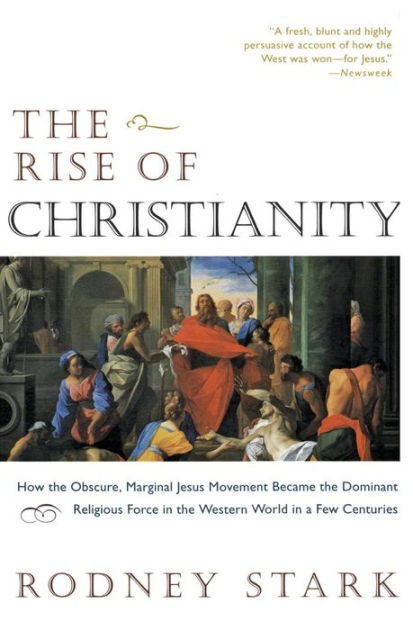
The rise of Christianity is a great puzzle. In 40 AD, there were maybe a thousand Christians. Their Messiah had just been executed, and they were on the wrong side of an intercontinental empire that had crushed all previous foes. By 400, there were forty million, and they were set to dominate the next millennium of Western history.
Imagine taking a time machine to the year 2300 AD, and everyone is Scientologist. The United States is >99% Scientologist. So is Latin America and most of Europe. The Middle East follows some heretical pseudo-Scientology that thinks L Ron Hubbard was a great prophet, but maybe not the greatest prophet.
This can only begin to capture how surprised the early Imperial Romans would be to learn of the triumph of Christianity. At least Scientology has a lot of money and a cut-throat recruitment arm! At least they fight back when you persecute them! At least they seem to be in the game!
Rodney Stark was a sociologist of religion. He started off studying cults, and got his big break when the first missionaries of the Unification Church (“Moonies”) in the US let him tag along and observe their activities. After a long and successful career in academia, he turned his attention to the greatest cult of all and wrote The Rise Of Christianity. He spends much of it apologizing for not being a classical historian, but it’s fine — he’s obviously done his homework, and he hopes to bring a new, modern-religion-informed perspective to the ancient question.
So: how did early Christianity win?


