
World War Two
Published 21 Apr 2023As the RAF closes in on Berlin and the German Army is running dangerously low on men, the Nazi leadership is determined to use their resources to spread their crimes deeper into Hungary and Italy.
(more…)
April 22, 2023
Hitler’s Revenge on the Italian People – War Against Humanity 101
Comments Off on Hitler’s Revenge on the Italian People – War Against Humanity 101
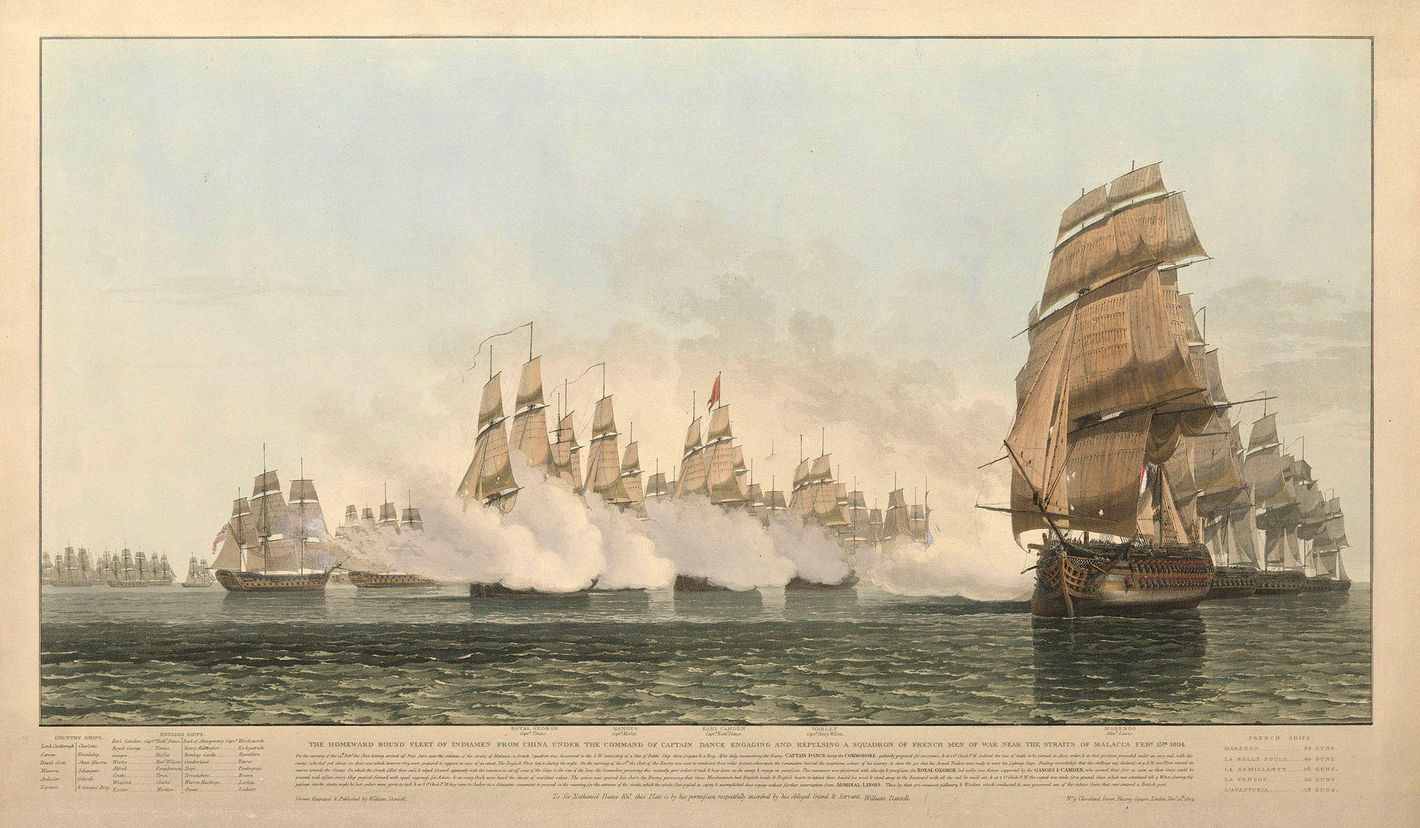
The action off Pula Aura, February 1804
Ned Donovan recounts a very dangerous moment for the British East India Company — and the larger British economy — as a French naval squadron threatened the EIC’s China Fleet carrying a cargo that would be the rough equivalent of £750 million in today’s money:
It will not be surprising to any reader that the East India Company was arrogant. A company that, as William Dalrymple describes, had become “an empire within an empire”. It controlled much of India, had its own army, and its revenues kept Britain afloat. Its navy was also not to be sniffed at, made up of large, well-built ships (known as Indiamen) capable of being as armed as any British warship, but its commercial arrogance prevented this. Rather than fill these Indiamen with cannons and the hundreds of sailors needed to man them, it instead filled its gun ports with dummy cannons and its decks with luxurious cabins and storage for trade goods, maintaining crews only large enough to sail these ships and be stewards to its paying passengers.
Commodore Dance would have been pondering those dummy cannons as the ships he had sent to look at the four strange sail in the southwest reported back that it was four French warships, Linois’s squadron. He was practically defenceless. To protect his 30 ships and their precious cargo, he had one small armed brig named the Ganges with around a dozen guns. Up against him were the 186 guns of the French squadron, 74 in Marengo, 40 in Belle Poule, 36 in Semillante, 20 in Berceau and 16 in Aventurier. As Dance watched through his telescope, the French ships hoisted their colours, and the admiral’s flag of Linois broke out above Marengo. He needed a plan. Fast.
The lead East Indiamen challenge Admiral Linois
After a night of cat and mouse between the French and British, Dance ordered his convoy into a long single line and at the front put four of the largest Indiamen – the Royal George, Earl Camden, Warley, and Alfred. He then commanded that these four hoist blue ensigns, the sign of Royal Navy ships. This wasn’t the most absurd plan; the East India Company, in their arrogance, had a policy of painting their Indiamen to look like Royal Navy ships – as Dance records in his despatch: “We hoisted our colours and offered him battle.” But Linois and his ships continued to approach the convoy slowly, with Dance realising that the French intended to separate the convoy and take it apart piece by piece. It was now or never, and Dance took the initiative. At 1 pm, he ordered the Ganges, Royal George, Earl Camden, Warley and Alfred to turn and intercept the French. All the ships turned perfectly and crossed Linois, and at 1:15 pm, the French opened fire on the Royal George. In the preceding night, the convoy had put all the guns they had on these five ships and filled them with as many brave volunteers as they could. All five returned fire on the French warships, and one sailor on the Royal George was killed. I will let Dance take over here:
“But before any other ship could get into action, the enemy hauled their wind and stood away to the east under all the sail they could set. At 2 pm, I made the signal for a general chase and we pursued them until 4 pm.”
In around 40 minutes, Dance and his handful of real guns and dummy cannons had forced the French warships to withdraw under the belief it had engaged an elite squadron of Royal Navy ships. Not content with this victory, he then ordered his ships to chase the French down and stop them from returning. By the later afternoon, it was clear Linois had run, and Dance ordered his convoy to regroup and make for the safety of Malacca.
In the Straits of Malacca, Dance met the ships the Royal Navy had sent to escort him on the outbreak of war but would have been too late had the commodore not thought fast. The China Fleet passed the rest of its voyage without incident, returning to Britain in the summer of 1804.
To say the country was ecstatic would be an understatement. If the China Fleet and its £8 million had been taken, as Linois would have been perfectly able to do, it is evident that both the East India Company and Lloyds of London would have faced bankruptcy and collapse. Nathaniel Dance was knighted by George III and given a fantastic sword by Lloyds worth 100 guineas. With the sword came £5,000 (£403,000 today) from the Bombay Insurance Company and £500 a year (£40,000 today) from the East India Company, along with a share in the £50,000 given to all who sailed in convoy. Sir Nathaniel retired immediately and never took to the sea again, dying peacefully in 1827.
Poor Admiral Linois, on the other hand, never lived down the fracas, with Napoleon writing after the event, “[Linois] has shown want of courage of mind, that kind of courage which I consider the highest quality in a leader”. Despite that, Linois remained in the French navy … only to once again run into the fickleness of fate:
It is worth remarking that following the defeat at Pulo Aura, Linois had a similarly pathetic rest of the war that ended in a wonderfully ironic way. In 1806, the admiral was captured when he mistook a British squadron of warships for a merchant convoy.
Irony? That’s cosmic level stuff.
Comments Off on The action off Pula Aura, February 1804
The Big Four
Jago Hazzard
Published 1 Jan 2023It’s 100 years since the Grouping – what happened, why and how?
(more…)
Comments Off on The Big Four
April 21, 2023
Localism versus centralism
Theophilus Chilton offers some support to localism as an antidote to the centralization of powers we’ve seen in every western nation since the early “nation state” era at the end of the Middle Ages:
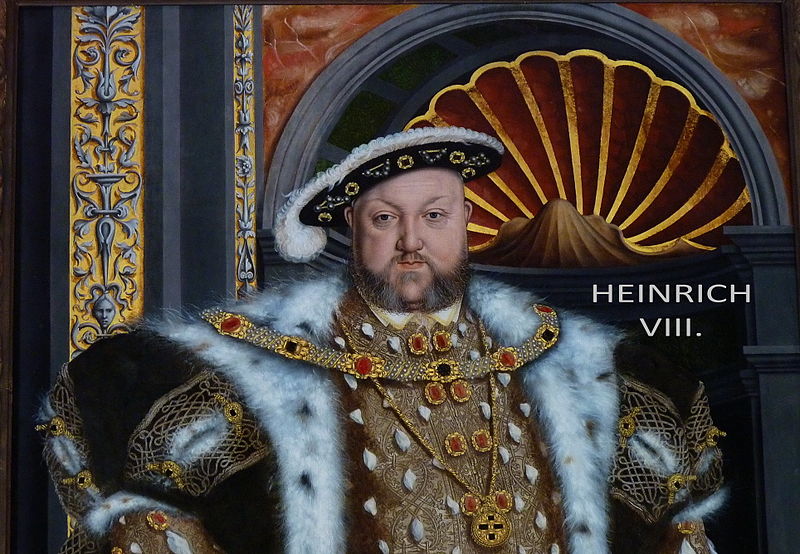
Cropped image of a Hans Holbein the Younger portrait of King Henry VIII at Petworth House.
Photo by Hans Bernhard via Wikimedia Commons.
The history of the West has, among other things, included a long, drawn-out conflict between two functional organizing principles – localism and centralization. The former involves the devolution of power to more narrowly defined provincial, parochial centers, while the later involves the concentration of power into the hands of an absolutist system. The tendency toward centralization began as far back as the high Middle Ages, during which the English and French monarchies began the reduction of aristocratic privileges and local divisions and the folding of this power into the rising bureaucratic state with a permanently established capital city and rapacious desire for provincial monies and personnel. The trend towards the development of absolute monarchy continued through the Baroque period, and the replacement of divinely-sanctioned kingship with popular forms of government (republicanism, democracy, communism) did not abate the process, but merely redirected power into different hands. The ultimate form of centralization, not yet come to pass, would be the sort of borderless one-world government desired by today’s globalists, whether they be neoconservatives or neoliberals, which would involve the ultimate consolidation of all power everywhere into one or a few hands in some place like Geneva or New York City.
[…]
The historical transition from localism to centralization in medieval Europe was seen in the decline of aristocratic rights and the institution of peer kingship, and their replacement with consolidated administrative control over a much larger and generally contiguous geographic area. This control was manifested in the person of the absolute monarch, and was exercised through an impersonal, disinterested bureaucratic apparatus which came to demand a greater and greater share of the national wealth to cover its expenses. This process, I believe, can ultimately be traced back to the strengthening of English and French royal power beginning in the 13th century, especially under Philip IV of France. Its fruition came (while monarchy still exercised effectual power in Europe) in the 17th-18th centuries before being undermined by Enlightenment and democratic dogmas which merely transferred the centralizing power to demagogues claiming to speak “for the people.”
Under the old aristocratic system, executive power formed a distributed system and rested on local nobility ruling over a local population with whom they were knowledgeable and on generally good terms. Despite the jaundiced modern view that feudalism was always “tyrannical” and “oppressive,” the fact is that most aristocrats in that era were genuinely devoted to the welfare of the commoners in their land, and it was the responsibility of the nobility to dispense justice and to right wrongs. The picture presented in Kipling’s poem “Norman and Saxon” most likely serves as a fair reflection of the relationship between lord and commoner. Kingship certainly existed, but the king was viewed as a “first among equals”, one who was the prime lord over his vassals, but who could also himself be a vassal of other kings of equal power and authority (as many of the earlier Plantagenet kings were to the Kings of France, by virtue of their holding fiefs as Dukes of Aquitaine).
False impressions about the role of the aristocracy generally correlate with false impressions about serfdom, the dominant labor relationship of the time. Contrary to popular notions, serfdom was generally not some cruel form of slavery that destroyed human dignity. Indeed, many serfs had liberties approach those of freemen, could transfer allegiances between nobles, enjoyed dozens of feast days (which were effectively vacation days to be devoted to family and community), and could even take themselves off to one of the many free cities which existed and be reasonably sure of not being compelled to return to their former master unless their case was especially egregious.
However, under centralization, the nobility was generally reduced to being ornaments of the royal court, their judicial and administrative functions removed and replaced by a bureaucracy personally loyal to the king. This, in effect, served to remove opportunities for serfs and other commoners to “get away” from the rule of a bad king. Whereas before, a serf could at least hope for the opportunity to flee a bad ruler and seek shelter with a good one, under the uniform rule of the absolute monarch, this was no longer an option unless the commoner wished to flee his entire nation and culture completely. Likewise, the ever-increasing regulation of his daily life by the bureaucracy followed him everywhere he went. By the end of the period, the centralization of power and the rise of crony capitalism led to the destruction of serfdom and the rise of wage capitalism, acting to reduce serfs and freemen alike to the status of cogs in profit-generating machines. The rise of absolute monarchy, part and parcel with the appearance of bureaucracy and the professionalization of military power, led directly to the rise of the modern managerial state.
Comments Off on Localism versus centralism
April 20, 2023
We strongly believe in academic freedom, except when research turns up “inconvenient” results
Tom Knighton on a sad situation at a London university with publicly funded research having arrived at a politically unwelcome result:

Two people at EuroPride 2019 in Vienna holding an LGBTQ+ pride rainbow flag featuring a design by Daniel Quasar; this variation of the rainbow flag was initially promoted as “Progress” a PRIDE Flag Reboot.
Photo by Bojan Cvetanović via Wikimedia Commons.
In the UK, one academic decided to look at the “gender wars”, particularly how academics feel silenced on the whole trans issue.
It sounds to me like both an interesting subject for study and one that might be very necessary in this day and age.
It seems that while the researcher in question was approved to study it, her findings are problematic and that got her canned.
From The Telegraph:
A university has “confiscated” the findings of an academic studying Britain’s gender wars in a row over her “dangerous” research data, The Telegraph can reveal.
Dr Laura Favaro began the first ever taxpayer-funded study into whether social scientists at universities feel censored over their views on transgender issues in March 2020 at City, University of London.
But it has descended into chaos, with the study’s author allegedly hounded out of the university, stripped of the findings she collected and barred from publishing them amid claims of transphobia.
[…]
Her study involved 50 individual interviews with academics in gender studies who identified as feminists, a representative survey of social scientists with 650 responses and hundreds of documents and tweets.
Scholars told her that they had threats of violence in the gender debate, hostility from colleagues, and others said they felt their careers “can’t survive that sort of backlash”, and that they have to have “secret conversations” to avoid reprisal and because “we are all so afraid”.
Her final work has not been published, as it was derailed by complaints about an article for Times Higher Education in which she warned that “a culture of discrimination, silencing and fear has taken hold”.
Following this, she says, her line managers told her that the study had “become an institutionally sensitive issue” and that “City considers my data to be dangerous” and is “frightened of making it public”.
So, what Favaro was finding was accurate.
That’s the big takeaway for me here. She said that academics were concerned about being attacked or that they had been because they didn’t play along with the trans agenda, and she was attacked and basically canceled because of it.
What’s even dumber is that Favaro was lured to City University from Spain so that she could conduct this research. She received roughly £28,000 from the British government via two different governmental entities to conduct the research.
Then she was silenced because the research found inconvenient truths.
That’s not what academia is supposed to be about. That’s not what academic freedom is about.
Freedom of any kind requires one to accept things that we would rather not have to accept. If you’re not free to say or do something that doesn’t actually harm a specific person but is otherwise objectionable, you don’t really have any freedom.
Comments Off on We strongly believe in academic freedom, except when research turns up “inconvenient” results
April 19, 2023
QotD: Transsexuals before Trans* politicization
In a not terribly long life, I have known well three transsexuals (as we used to say), and another three not so well. Not because I especially sought out their company, but just because I’ve spent a lot of my time around theatre and music and areas that attract those who feel “different”. Two of those three friends I didn’t know were transsexual until they were “outed”, one very publicly — although with hindsight certain curious aspects of both their physiognomy and behavior suddenly made a lot more sense.
But that’s the point: Even those far closer to them than I was weren’t aware — because back then the object of having a “sex change” (also as we used to say) was to change from being a man to being a woman. There were still only two teams and you were simply crossing over to bat for the other side. The trans-life had little in common with “gay pride” — because the object wasn’t to come out of the closet, but to blend into it so smoothly no one would know you hadn’t always been there. Before their outing, the two ladies in question were more lady-ier than thou: both used to show up once a month with a box of Tampax “discreetly” poking out from the top of their handbags — even though, as we all understood in retrospect, they had no need of it. But they had chosen to live as women, and so they wished to be as other women. And they were mortified when they were exposed.
This was the conventional view as late as the Nineties, when Armistead Maupin’s celebration of the gay life, Tales Of The City, became must-see TV for sophisticated liberals on Britain’s Channel 4 and America’s PBS. The big plot point was the matriarch Mrs Madrigal (Olympia Dukakis) “revealing” her “secret” — that she was not born a woman.
To be sure, as the chromosomocentrists argue, one cannot, biologically, “change sex”. But I’ll skip that argument, because, as usual, conservatives are fighting over ground the left has already scorched and moved on from for new conquests. I have no great objection to a grown man who “identifies” as a woman and wishes to live as one. Guys have been doing that, to one degree or another, throughout history, and all that’s happened is that cosmetic surgery has caught up with their desires. If half the women in California can walk around with breast implants, I don’t see why the chaps can’t.
But the chromosomocentrists are missing the point. The left’s saying, “Yeah, XY chromosomes, big deal. You’re right, but so what? No one’s saying she’s a woman. We’re saying she’s a transwoman — a new, separate and way more glamorous category that’s taking its seat at the American table and demanding public affirmation. This isn’t your father’s sex change. Changing from man to woman is so last century.”
Mark Steyn, “Birth of the New”, Steyn Online, 2015-06-05.
Comments Off on QotD: Transsexuals before Trans* politicization
April 18, 2023
“Here it is then. This is The Hill.”
Simon Evans rightfully decides that fighting the bowdlerization of P.G. Wodehouse is the hill to die on:
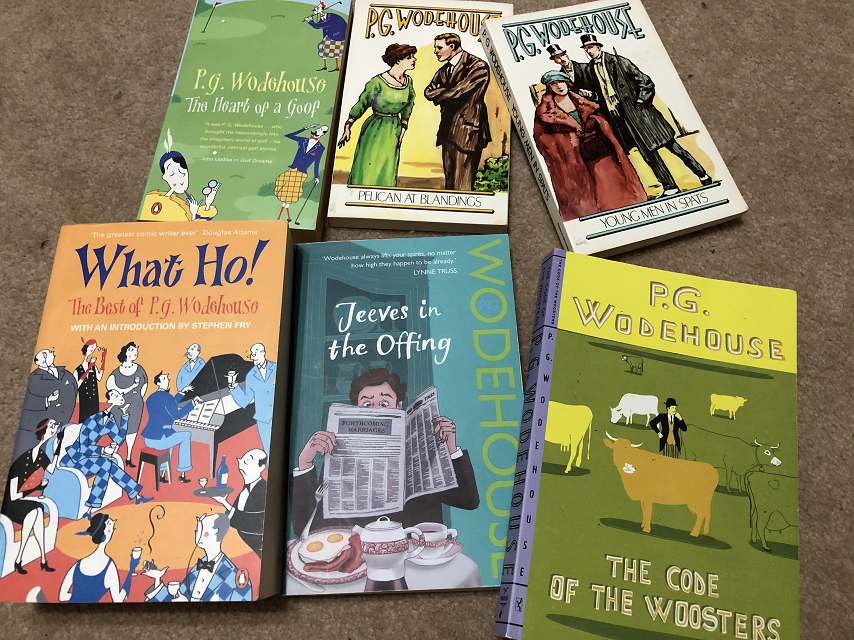
PG Wodehouse has become the latest author to fall victim to the “sensitivity readers”. Passages have been purged and words have been altered for the new editions of his Jeeves and Wooster novels, including Thank You, Jeeves and Right Ho, Jeeves. According to Penguin, the publishers, some of the racial language and themes of these 1930s novels are “outdated” and “unacceptable”. This includes the use of the n-word.
When I saw the news, my tweet sort of fell out of me before I’d consciously drafted it: “Here it is then. This is The Hill.”
There is an interesting contrast here. We live in a time when every much-loved and out-of-copyright literary artefact that is brought to the screens is being stiffened, like an old Christmas pudding recipe that clearly needs more brandy, with swearing and novel scenes of sexual deviation never imagined in the original. Just think of the BBC’s recent modernising and coarsening of Charles Dickens, Agatha Christie et al, which have rendered them all but unwatchable for millions. So it is more than a little odd that Wodehouse, the mildest, most weightless comedy of the last century, should suddenly seem deserving of the nit comb.Yes, it is true that Wodehouse uses the n-word. And no other word is now, or arguably ever has been, quite so radioactive, so sui generis in its capacity for offence. It is not that I want to defend this word. Rather, the hill on which I will die is the pristine perfection of Wodehouse’s prose, and its right to remain so. He is – and by an extraordinary degree of consensus, in a field that is almost maddeningly subjective – the Bach of comic literature. And I’m sorry, but you just don’t tinker with Bach.
Though a fan, Christopher Hitchens, in a review of a Wodehouse biography, wrote of the tiresome habit of certain people in referring to Wodehouse as “The Master”, so I will try to avoid that unctuous, fulsome tone. But one of the very few writers of my lifetime who approached him for touch (though sadly not in output) was Douglas Adams, who often referred to Wodehouse as just that: “He’s up in the stratosphere of what the human mind can do, above tragedy and strenuous thought, where you will find Bach, Mozart, Einstein, Feynman and Louis Armstrong, in the realms of pure, creative playfulness.”
The point is not that the presence of the odd unfortunate archaic usage, which might indeed jolt the casual reader into a brief awareness that they are reading something older than their grandfather, is necessarily a good thing. It is simply, who the hell do the sensitivity readers think they are, to decide what stays and what goes?
Comments Off on “Here it is then. This is The Hill.”
April 17, 2023
Orwell’s The Road to Wigan Pier
Daniel Nuccio on one of George Orwell’s early works that prefigured the bestsellers he is best known for today:
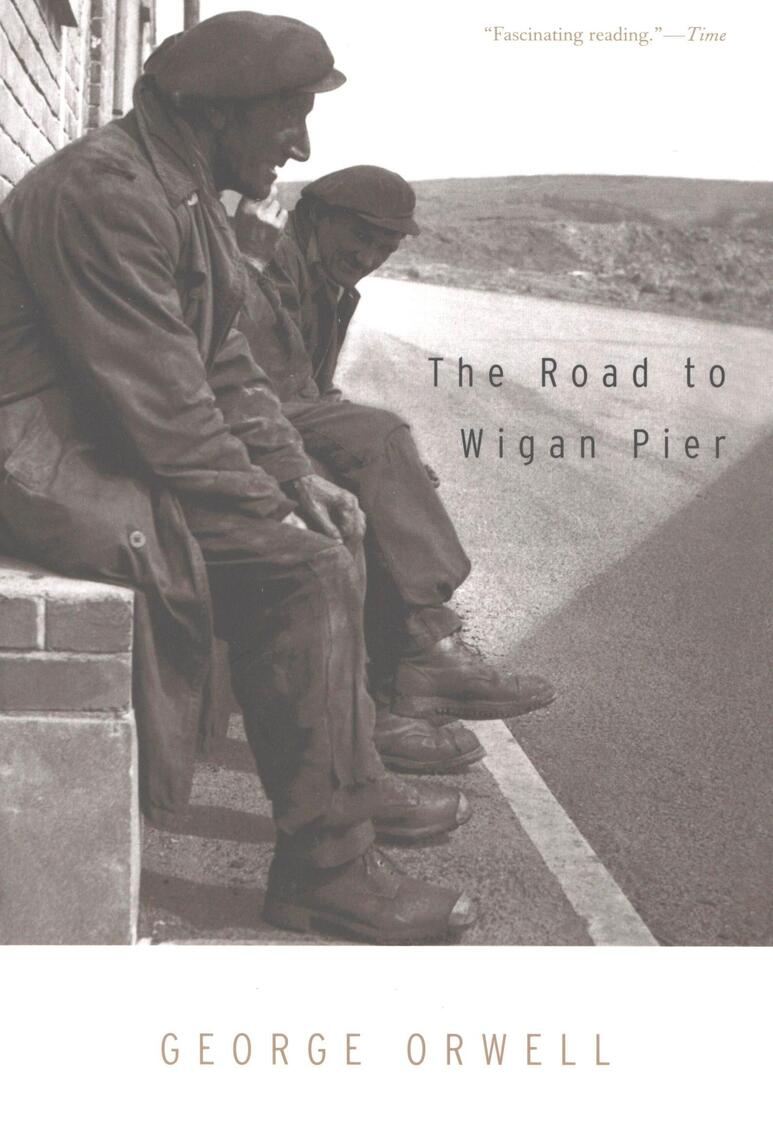
Written for a group of British socialists known as the Left Book Club, the oeuvre is part documentation of the life of Britain’s impoverished working class with particular focus on the dignity and importance of coal miners and part autobiographical account of Orwell overcoming his own class prejudices, united by themes developed throughout regarding the economic commonalities of and social distinctions between Britain’s low-level bourgeoisie and working class, as well as the downside of industrialization and hypocrisy of fashionable socialism.
By Orwell’s account, Britain’s class system at the time, partly based on economic stratification, partly in an unofficial caste system, fostered a seemingly contradictory world in which middle-class bourgeoisie and the working class might experience little difference in income, but drastic differences in their respective places in British society. Yet, even as unemployment and poverty festered and spread, with the middle class eventually “feeling the pinch”, social distinctions, Orwell reported, naturally won out over the narrowing economic gap between classes. Lower-level middle class Brits, despite being working class by any objective economic metric, still chose to identify as bourgeoisie.
Rampant industrialism likely exacerbated these problems as it fundamentally transformed Britain into a machine society, likely to its detriment, according to Orwell’s description. Consequently, these and other factors, Orwell argued, positioned Britain at a crossroads at which the country and its people inevitably would be forced to choose between socialism and fascism.
From his depiction of 1930s British society, it would seem fascism was perhaps going to win out (and perhaps would have if not for later events unbeknownst to Orwell at the time). His prescribed antidote was socialism. Yet, Orwell claimed, the hypocrisy, offensiveness, and buffoonish self-satirizing nature of many socialists tended to drive most normal people away.
Reading The Road to Wigan Pier as an American more than eighty years after its publication, the world Orwell depicts in some ways seems foreign. In many others it is amusingly, if not unsettlingly familiar.
Although not as ingrained as in Britain, the United States maintains its own version of a class system in the form of a superficial yet meaningful distinction between middle class and working class that many Americans yoke to personal character and economic reality.
Nowhere is this more obvious than America’s approach to higher education and the jobs afforded to those with a college degree versus those without. Attaining a degree from a four-year college or university, at least to many members of the American middle class, is seen as something of a sacrament that affirms one’s position in the American middle class. Receiving the sacrament of higher education signals one’s position along with one’s sophistication, respectability, and intelligence. It saves one from the indignity of blue-collar work and the impecunious state with which such work is associated.
Comments Off on Orwell’s The Road to Wigan Pier
April 16, 2023
The short-term mindset in architecture
Our house was built in the first half of the 19th century, although we’re not sure exactly when. We know it was here in the early 1840s but it could be 20 years older than that … in the first half of the 1800s, you didn’t need to get a building permit in Upper Canada before you started, and there was minimal government record-keeping at the time. Our house isn’t anything special architecturally, but it was built extremely solidly. It was intended to stand the test of time. This is not at all true for most of what we build today:
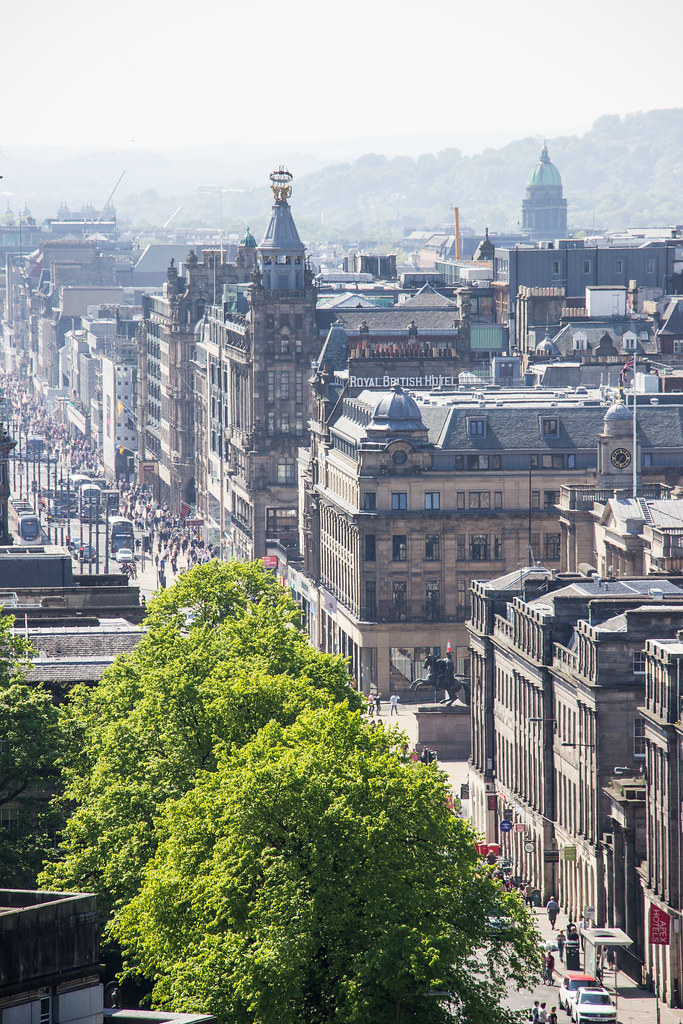
“Princes Street, New Town, Edinburgh, Scotland” by Billy Wilson Photography is licensed under CC BY-NC 2.0 

 .
.
I have had some work done on my house recently. For context, it’s an Edwardian terrace with a rear extension built sometime in the 1980s. Oddly fascinating for me was the sheer difference in build quality between the original section of the property and the newer part at the back. The older part of the house is sturdy, solid and lauded by the workmen as a “proper building”. The newer section has been a huge source of ridicule and contempt: shoddy timber placement, wobbly floors, dangerous electrical wiring, crumbling cement and poor brickwork plague it.
The tradesmen’s comments had me thinking a lot about the general quality of our infrastructure, both national and local, and how we sometimes take for granted the fact that a huge portion of what we use every day is so old. Not only that, but a lot of it is almost universally considered very beautiful and important to our shared cultural heritage.
Take a stroll through any city in Great Britain, and you are more than likely to at some point come across the “old town”. Despite the Luftwaffe’s (and post war town planner’s) best efforts, a lot of pre-war buildings still inhabit the centres of our towns and cities. These prove to be fine examples of the world we used to live in. Even in the poorest of cities, my own town of Hull for example, there exists a great plethora of dramatic and beautiful buildings which were constructed, almost exclusively, by the late Georgians, Victorians and Edwardians. Take a trip to London, Edinburgh, central Durham and a number of other places, and you will see that even the lampposts are adorned gorgeously, with striking and intricate ironwork.
Why is this? Why did they bother to do such a good job? Why do we still heavily rely on their work for our own sense of cultural identity and our basic infrastructural needs? Why can’t our own contemporary efforts compete, despite great advances in the field of civil engineering and construction materials? I think the answer boils down to one thing: civic pride.
The Victorians were building for eternity; we build for temporary needs in a utilitarian fashion. They knew their “mission”, and they saw it an absolute necessity to make everything they did permanent; we do not. They designed buildings to be functional and beautiful; we seek to make buildings which will be functional for 50 years before they are “recycled”.
Speak to a modern student of architecture about their course, and you will find that very few opportunities exist for those who want to pursue a path for traditional design techniques. Their learning aim is to make things which can be used temporarily, then pulled down for something else. This is an attitude which would be totally alien to the Victorians who designed and built the lecture halls these students now learn in.
Comments Off on The short-term mindset in architecture
4,000 German teens trapped in Tarnopol – WW2 – Week 242 – April 15, 1944
World War Two
Published 15 Apr 2023Thousands of German soldiers, mostly new teenage recruits, are obeying Hitler’s “Fortress Directive” and are surrounded in Tarnopol; it does not go well for them. German forces in Ukraine manage to all pull back across the Dniester, but they are under serious pressure in the Crimea. Meanwhile, in India, the Japanese siege of Kohima continues, and in China they are poised to launch a gigantic offensive.
(more…)
Comments Off on 4,000 German teens trapped in Tarnopol – WW2 – Week 242 – April 15, 1944
QotD: Homo electronicus and the permanent caloric surplus
Excess fat cranks up estrogen levels. You don’t need to be House MD to interpret this finding:
In males with increasing obesity there is increased aromatase activity, which irreversibly converts testosterone to estradiol resulting in decreased testosterone and elevated estrogen levels.
Or this one:
A study supports the link between excess weight and higher hormone levels. The study found that estrogen and testosterone levels dropped quite a bit when overweight and obese women lost weight.
This is not to say those swishy subalterns were fat — indeed, they were comically scrawny compared to Postmodern people. But a little goes a long way when it comes to hormones, especially in a world where “intermittent fasting” wasn’t a fad diet, but a way of life. Any one of us would keel over from hunger if we were forced to eat the kind of diet George Orwell described as his public school’s standard fare.
Follow that trend out to the Current Year, when pretty much everyone is grossly obese compared to even the Silent Generation. Heartiste and other “game” bloggers loved pointing out that the average modern woman weighs as much as the average man did in the 1960s. And while I think that’s overblown — we’re also several inches taller, on average, than 1960s people — there’s definitely something to it, especially when you consider how far the bell curve has shifted to the fat end. Not only do people weigh a lot more on average, the people who weigh more than average now weigh a hell of a lot more than heavier-than-average people did back when. See, for example, the ballooning weight of offensive linemen, who are professionally fat — in 2011 a quarterback, Cam Newton, weighed more than the average offensive lineman in the 1960s.
Put the two trends together and you have, on average, a hormone cocktail way, way different than even 50 years ago … and that’s before you add in things like all-but-universal hormonal contraception, lots of which ends up in municipal drinking water.
Severian, “Recent Evolution”, Rotten Chestnuts, 2020-09-28.
Comments Off on QotD: Homo electronicus and the permanent caloric surplus
April 15, 2023
Do the Germans Know About Operation Overlord?
World War Two
Published 14 Apr 2023We are getting closer and closer to D-Day and the potential liberation of Nazi Europe. But how much do the Germans know about this? Is the leak inside the British Embassy in Ankara enough to thwart the efforts of Operation Bodyguard, Operation Fortitude, and everything else the Allies are doing to deceive Adolf Hitler? Let’s find out. This is the story of Cicero.
(more…)
Comments Off on Do the Germans Know About Operation Overlord?
April 13, 2023
Beeching plus 60
In The Critic, Peter Caddick-Adams notes that it’s just past 60 years since one of the most controversial documents the British government published during the latter half of the 20th century: The Beeching Report.
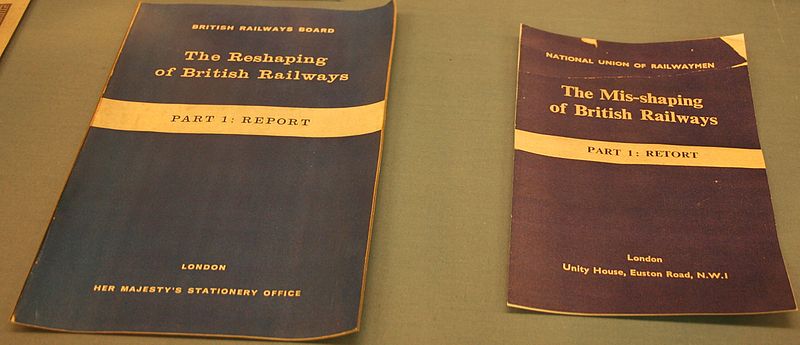
The British Railways Board’s publication The Reshaping of British Railways, Part 1: Report, Beeching’s first report, which famously recommended the closure of many uneconomic British railway lines. Many of the closures were implemented. This copy is displayed at the National Railway Museum in York beside a copy of the National Union of Railwaymen’s published response, The Mis-shaping of British Railways, Part 1: Retort.
Photo by RobertG via Wikimedia Commons.
Wednesday, 27 March 1963 marked the day when a civil servant with a doctorate in physics, seconded from ICI, proudly flourished a report he had written. That man was Dr Richard Beeching, and the result of his recommendations contained in The Reshaping of British Railways are with us to this day.
Beeching identified many unprofitable rail services and suggested the widespread elimination of a huge number of routes. He identified 2,363 stations for closure, along with 6,000 miles of track — a third of the existing network — with the loss of 67,700 jobs. His stated aim was to prune the railway system back into a profitable concern. Behind Beeching, seconded to the newly-established British Railways Board, stood the figure of the publisher-turned-Prime Minister, Harold Macmillan. He knew a thing or two about railways, having been a pre-nationalisation director of the Great Western Railway. It put him in the delightful position of never having to pay for a train ticket.
Macmillan observed from a shareholder’s point of view, “you can pour all in money you want, but you can never make the damned things pay for themselves”. In his view, the railway network and infrastructure of wagon works, tiny branch lines, cottages for signallers, crossings keepers and station masters, with most halts staffed 18 hours a day, amounted to a social service, albeit an expensive one. It had made the prosperity of Victorian Britain possible and was sustaining it still. From nationalisation in 1948, the railways themselves had attempted to make savings, closing 3,000 miles of track and reducing staff from 648,000 to 474,000. That famous Ealing comedy film of 1953, The Titfield Thunderbolt, about a group of villagers trying to keep their branch line operating after British Railways decided to close it, already reflected concern and railway nostalgia.
Britain’s literary and celluloid love affair with iron rails and steam began as long ago as 1905 with the publication of Edith Nesbit’s The Railway Children, a success which peaked when the book was made into a highly successful movie in 1970. Meanwhile, professional sleuths and loafers like Sherlock Holmes, Bulldog Drummond, Lord Peter Wimsey, Hercule Poirot and Bertie Wooster capitalised on the branch line network in their methodology of moving swiftly about pastoral England in their hunts for miscreants. It was the success of The Lady Vanishes, a 1938 mystery thriller set on a continental train, that launched Alfred Hitchcock as a world-class director. David Lean’s Brief Encounter of 1945, based on Noël Coward’s earlier one-act play, Still Life, attached deep romance to station platforms and waiting rooms, reminiscent of so much heartache in the recently fought world war. It is still regarded as one of the greatest of all British-made films. None of this mattered to Beeching, the man who was “Britain’s most-hated civil servant” at his death in 1985, a moniker still used today.
There’s an argument that Beeching was deliberately set up as a patsy for the real villains, Ernest Marples and Harold MacMillan:
The cold, dispassionate Beeching was absolutely the wrong man for the job. As he told the Daily Mirror at the time, “I have no experience of railways, except as a passenger. So, I am not a practical railwayman. But I am a very practical man.” John Betjeman, writing persuasively and eloquently in the Daily Telegraph each week, and later Ian Hislop, hit the right note in observing that Beeching, and all he stood for were technocrats. They “weren’t open to arguments of romantic notions of rural England, or the warp-and-weft of the train in our national identity. They didn’t buy any of that, and went for a straightforward profit and loss approach, from which we are still reeling today”.
However, it has also been argued that Beeching was the unwitting fall-guy for the Minister of Transport of the day, Ernest Marples. He was a self-made businessman who “got things done”, but he retained an air of shadiness about him. Macmillan should have known better. Marples had been managing director of Marples Ridgway, awarded contracts to build the first motorways. When challenged about a conflict of interest, he sold his 80 per cent shareholding to his wife. Elevated to the peerage, Marples fled to Monaco in 1975 to avoid prosecution for tax fraud. So, in some ways, the thing was a stitch-up. Marples directly benefited from the widespread cuts advocated by his subordinate, Beeching. Macmillan had his eye off the ball and was already considering retirement, hastened by an operation for prostate cancer six months after Beeching’s report.
The Prime Minister was astute enough to ensure the press presented the cuts in a positive way, however. From the Cabinet papers of the day, we now know the day before the publication of The Reshaping of British Railways, Beeching’s findings were rewritten to suggest the cuts were the first phase of a co-ordinated national transport policy, with advanced plans to replace the axed rail networks with improved minor roads and local bus services. In reality this was political fantasy (my inner lawyer cautions against more extremist language), for the bus-road subsidy would have cost more than that already paid to the railways. The promise of replacement bus services should have come with a guarantee of remaining in place for at least 10-15 years, because most were withdrawn after two, forcing more motor traffic onto an already inadequate road network.
Comments Off on Beeching plus 60
A Brief History of Gin
No Nonsense Gin Drinking
Published 21 Jul 2019Pay attention class! No running, shouting or talking at the back! It’s time to learn all about gin!
(more…)
Comments Off on A Brief History of Gin
April 12, 2023
Miniature Railway (1959)
British Pathé
Published 13 Apr 2014Romney, Kent.
L/S of a lovely looking train locomotive. A man stands next to it and one realises how small the train is. It is one third of an ordinary train size — says voiceover. However, this is not a toy but a regular public railway, smallest in the world. It is officially known as the Romney Hythe and Dymchurch Railway, it runs between Romney and Dungeness and its passengers are children. This tiny railway must conform to the same Ministry of Transport regulations as any other trains. M/S of a driver Mr Bill Hart, checking the train. C/U shot of a plaque reading “Winston Churchill”. This is the engine’s name. Several shots of Mr Hart checking the train. Mr Hart enters his cabin and starts shovelling coal into the boiler. C/U shot of the coal being thrown in and a little door closed. This train takes one third of the coal needed for a regular size train. The train starts moving.
L/S of the two men turning locomotive on turntable to place it on rails. M/S of a woman cleaning windows along the train. Children arrive and station master, Reg Marsh, directs them to their coaches. M/S of the group of girls entering the train. M/S of the station master Mr Marsh blowing a whistle as a sign that train leaves the station. M/S of an elderly man looking at a huge pocket watch on a chain, and afterwards, in direction of the train. He is Captain Howey, a man responsible for having the line built. C/U shot of the watch — Roman numerals. M/S of Mr Howey as he puts the watch in his pocket. C/U shot of Mr Howey’s face.
M/S of the little train moving. C/U shot of its little chimney with a smoke coming out. M/S of the Rose family from Sanderstead, Surrey with their dog Trixie enjoying the ride C/U shot of driver’s face with the smoke covering it up to the point it becomes invisible. Another little train passes it going in different direction. Several shots of the two little trains moving. A car stops to wait for the train to pass. L/S of the little train as it approaches the station.
Note: Another driver appearing in the film is Peter Catt. Combined print for this story is missing.
(more…)
Comments Off on Miniature Railway (1959)


