
spiked
Published 27 Jan 2023Tom Slater, Fraser Myers and Ella Whelan discuss the World Economic Forum, men in women’s prisons and Facebook’s unbanning of Donald Trump. Plus, Timandra Harkness explains the dangers of the UK’s Online Safety Bill.
(more…)
January 30, 2023
Eff the WEF | The spiked podcast
Comments Off on Eff the WEF | The spiked podcast
The Royal Marines at War: Rough Weather Landing
Royal Marines
Published 31 Aug 2012Rough Weather Landing is a secret film recording of “an experiment by No4 Commando” demonstrating their ability to launch a surprise attack on a seemingly impregnable coastline.
From the comments:
ogdiver
8 years ago
“That’s right lad, you’re going to land from a boat with all the reserve buoyancy of a digestive biscuit onto a rocky shore, in a pounding surf, with a 3″ mortar base plate strapped to your back and tackety boots for swimming. But don’t worry, we’ll give you the the inflated inner tube off an Austin 7 to cling to and we’ll be doing it in daylight for the cameras.” Those blokes were nails.
Comments Off on The Royal Marines at War: Rough Weather Landing
January 29, 2023
Anzio Begins – Allies Already Pinned Down – Week 231 – January 28, 1944
World War Two
Published 28 Jan 2023Some big news is the Allies amphibious offensive to hit the Germans behind their lines at Anzio in Italy, some other big news is that after nearly two and a half years, the Soviets have broken the siege of Leningrad and their twin northern offensives keep pushing back the enemy. Yet more big news is that the Soviets have managed to surround and cut off over 50,000 Axis troops near Korsun. This is one big week of action!
(more…)
Comments Off on Anzio Begins – Allies Already Pinned Down – Week 231 – January 28, 1944
January 28, 2023
What made the Queen so good at her job?
Lindybeige
Published 24 Sept 2022Queen Elizabeth II of England (I of Scotland) was very good at her job, but why was this? What are the ideal qualities of a modern constitutional monarch? I stand in a dark shirt and talk.
End photograph by Jazzy Lemon.
It has been pointed out to me that the officers who attempted a coup in Spain in 1981 were ‘Civil Guard’ and not ‘army’ as I said. This is a distinction which exists in Spain but not in Britain.
(more…)
Comments Off on What made the Queen so good at her job?
QotD: Allied anti-semitism in WW2
The following leaflet (printed) was passed to an acquaintance of mine in a pub:
LONG LIVE THE IRISH!The first American soldier to kill a Jap was Mike Murphy.
The first American pilot to sink a Jap battleship was Colin Kelly.
The first American family to lose five sons in one action and have a naval vessel named after them were the Sullivans.
The first American to shoot a Jap plane was Dutch O’Hara.
The first coastguardsman to spot a German spy was John Conlan.
The first American soldier to be decorated by the President was Pat Powers.
The first American admiral to be killed leading his ship into battle was Dan Callahan.
The first American son-of-a-bitch to get four new tyres from the Ration Board was Abie Goldstein.The origin of this thing might just possibly be Irish, but it is much likelier to be American. There is nothing to indicate where it was printed, but it probably comes from the printing-shop of some American organization in this country. If any further manifestos of the same kind turn up, I shall be interested to hear of them.
George Orwell, “As I Please”, Tribune, 1944-12-08.
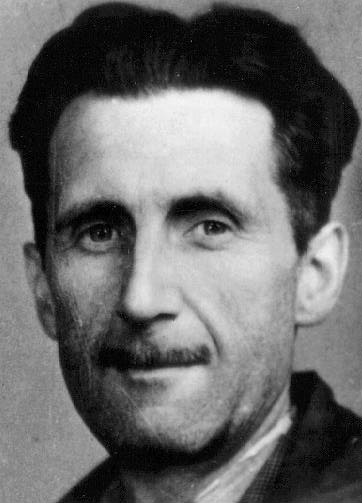
Orwell’s press card portrait, 1943
Comments Off on QotD: Allied anti-semitism in WW2
January 26, 2023
Ukraine to receive Challenger II, M1 Abrams, and Leopard 2 tanks … both a solution and a new set of problems
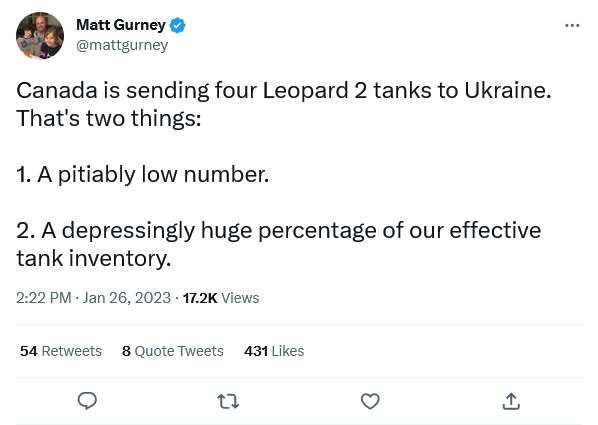
In The Line, Matt Gurney outlines some of the benefits Ukraine will receive with this new transfusion of AFVs … and also the new and exacerbated set of practical problems that goes along with fielding so many different makes and models of tanks:

A British army Challenger Main Battle Tank, of 1 Royal Regiment of Fusiliers (1RRF), is shown returning to base after completing a firing mission as part of Exercise MedMan.
1RRF Battle group were based at the British Army Training Unit Suffield (BATUS) in Canada.
MOD photo by Mike Weston via Wikimedia Commons.
A column getting into all the details of why [the German government] were withholding said blessing would be several times longer than this one will be. Suffice it to say this is just the latest manifestation of Germany’s extreme discomfort with this war. Some of it relates to the lingering fallout of Germany’s blood-soaked history. But we would be naïve not to attribute at least some of the reluctance to Russia’s deep influence among some segments of the German ruling elite.
Germany has contributed to the defence of Ukraine, and it would be unfair to deny that. It would not be unfair to note that Germany has typically only done so later than the other allies, and under enormous pressure.
As part of the deals being announced, the United States will be sending several dozen of its M1 Abrams tanks, and Germany will send Leopards. Berlin will also allow other allies to send further Leopards. (Canada hasn’t committed to sending any of ours yet, but our few remaining Leopards are reported to be in poor shape, and are also all the way across an ocean, so we might not even be asked.) The British will send the Challengers. This gives Germany the ability to claim, with a reasonably straight face, that it has not chosen to escalate the conflict. Heavens, no! It’s simply moving in lockstep with its allies! As fig leaves go, it’s a pretty small and transparent one, but for the purposes of diplomacy and maintaining the appearance of allied solidarity, it’ll do.
And this brings us to the problem that the plan is exacerbating. A year ago, the Ukrainian military was largely armed and equipped along Russian lines — both militaries were, after all, descendants of the Soviet Red Army. Since then, much of its original equipment has been destroyed or lost, but this has generally been offset by an influx of Western weapons into the country as the allies empty their arsenals and get their production lines running again. This has allowed Ukraine to keep fighting, far more effectively than the Russians, among many others, expected. Despite huge losses of manpower, the Ukrainian military seems to actually have grown stronger as the war has gone on, thanks to the power of its new weapons.
Sending news is good news to that extent. It will make Ukraine stronger still. But it is also producing a situation where the Ukrainians are armed with an absurdly unwieldy mix of weapon systems. This is laying the groundwork for a future logistics disaster.
Any individual soldier can learn to use any specific piece of equipment. That’s just a matter of training and experience. Soldiers are smart. The longer they serve, the quicker they’ll get at picking up new pieces of equipment and kit. The challenge is more on the backend. The logistics of sustaining an arsenal of completely mixed weapon systems is a nightmare. Not only must Ukraine procure a huge variety of calibers of ammunition, it must also procure, sort, and then distribute a bewildering array of spare parts to keep all these weapons running. It’s not that this is impossible. The fact that Ukraine fights on is proof that it is not. But it adds tremendous cost and complexity, and requires a much larger effort to sustain than would be the case if Ukrainian units were equipped with standard weapons across comparable units.
The numbers of NATO tanks are initially small enough that only a few battalions can be re-equipped with the donated AFVs, but each different “brand” needs its own specialized support in the way of maintenace, repair, and re-supply. Ukraine is going to have to have at least a company-sized, fully trained maintenance unit for each battalion of NATO tanks and the logistics system will have to ensure that the different types of ammunition and ordinary wear-and-tear maintenance spares are delivered quickly enough to keep those battalions combat-ready. Some NATO nations with much better facilities sometimes struggle to do this for a single type of AFV, never mind for several different types.
Update: Can’t help but agree with Matt here.
Comments Off on Ukraine to receive Challenger II, M1 Abrams, and Leopard 2 tanks … both a solution and a new set of problems
Tank Chats #165 | Striker | The Tank Museum
The Tank Museum
Published 30 Sept 2022In this weeks video, David Fletcher discusses the development and features of Striker, another vehicle from the CVRT family.
(more…)
Comments Off on Tank Chats #165 | Striker | The Tank Museum
January 23, 2023
Who was John Wilkes?
Lawrence W. Reed on the life of John Wilkes, a British parliamentarian in the reign of George III:
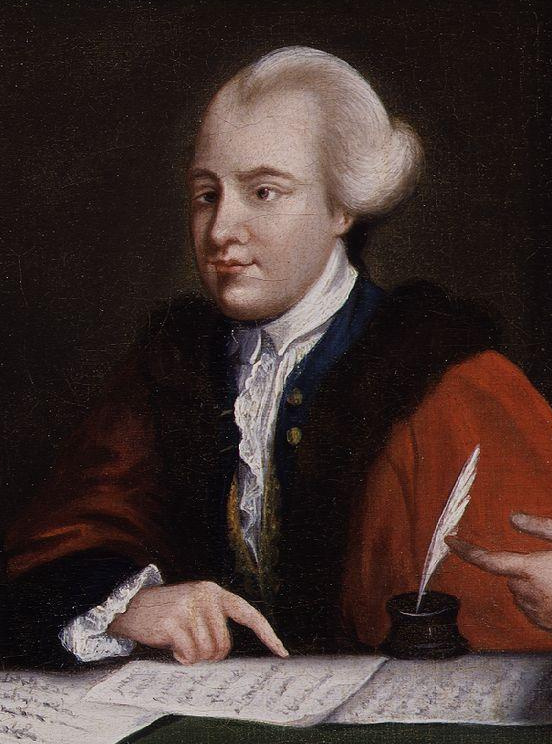
John Wilkes (1725-1797)
Cropped from a larger painting entitled “John Glynn, John Wilkes and John Horne Tooke” in the National Portrait Gallery via Wikimedia Commons.
In the long history of memorably scintillating exchanges between British parliamentarians, one ranks as my personal favorite. Though attribution is sometimes disputed, it seems most likely that the principals were John Montagu, 4th Earl of Sandwich, and the member from Middlesex, John Wilkes.
Montagu: Sir, I do not know whether you will die on the gallows or of the pox.
Wilkes: That depends, my lord, on whether I embrace your lordship’s principles or your mistress.
Repartee doesn’t get much better than that. And it certainly fits the style and reputation of Wilkes. Once when a constituent told him he would rather vote for the devil, Wilkes famously responded, “Naturally. And if your friend decides against standing, can I count on your vote?”
Wilkes deserves applause for his rapier wit, but also for something much more important: challenging the arrogance of power. He was known in his day as a “radical” on the matter. Today, we might label him “libertarian” in principles and policy and perhaps even “libertine” in personal habits (he was a notorious womanizer). His pugnacious quarrels with a King and a Prime Minister are my focus in this essay.
Born in London in 1725, Wilkes in his adult life was cursed with bad looks. Widely known as “the ugliest man in England”, he countered his unattractive countenance with eloquence, humor, and an eagerness to assault the powers-that-be with truth as he saw it. Fortunately, the voters in Middlesex appreciated his boldness more than his appearance. He charmed his way into election to the House of Commons as a devotee of William Pitt the Elder and, like Pitt, became a vociferous opponent of King George III’s war against the American colonies.
Pitt’s successor as PM in 1762, Lord Bute of Scotland, earned the wrath of Wilkes for the whole of his brief premiership. Bute negotiated the treaty that ended the Seven Years War (known in America as the French & Indian War), which Wilkes thought gave too many concessions to the French. Wilkes also opposed Bute’s plan to tax the Americans to pay for the war.
[…]
George III took it personally. He ordered the arrest of Wilkes and dozens of his followers on charges of seditious libel. For most of the nearly thousand years of British monarchy, kings would have remanded foes like Wilkes to the gallows forthwith. But as a measure of the steady progress of British liberty (from Magna Carta in 1215 through the English Bill of Rights in 1689), the case went to the courts.
Wilkes argued that as a member of Parliament, he was exempt from libel charges against the monarch. The Lord Chief Justice agreed. Wilkes was released and took his seat again in the House of Commons. He resumed his attacks on the government, Bute’s successor George Grenville in particular.
Comments Off on Who was John Wilkes?
Monte Cassino, the Battle Begins – Ep 230 – January 21, 1944
World War Two
Published 21 Jan 2023The Allies have reached the linchpin of the German defenses in Italy, but a first attack proves disastrous. It does, though, divert troops from where they soon plan to make landings behind enemy lines. Meanwhile in the USSR, the huge Soviet offensive in the north makes great gains against the stunned Axis forces.
(more…)
Comments Off on Monte Cassino, the Battle Begins – Ep 230 – January 21, 1944
Jeremy Clarkson and “the swamp of arrogant prejudice and self-gratification which sits at the bottom of the brain”
Nicholas Harris recounts the story of Jeremy Clarkson’s steady rise and sudden recent fall after a crude reference to someone or other in a newspaper article:
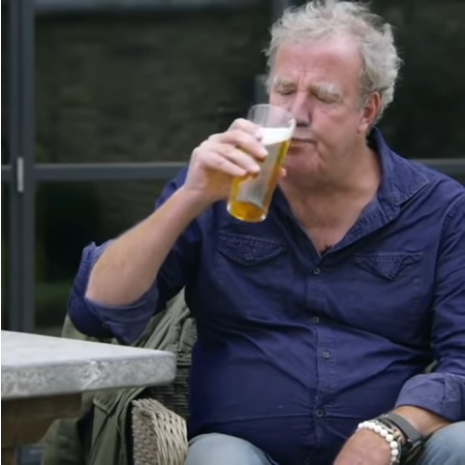
Screencap from Jeremy Clarkson’s banned Hawkstone Lager ad
“Ask Clarkson. Clarkson knows — people like fast cars, they like females with big boobies, and they don’t want the Euro, and that’s all there is to it.” This surmise, from Peep Show, captures the essence of Jeremy Clarkson’s Noughties appeal — approvingly for those who liked him, and scandalously for those who didn’t. The spawn and spokesman of the English male id. Insular, impudent and straightforward in taste. And if that weren’t enough, he was also into cigs, engines and the Second World War.
For the minority of a more severe, moralistic, and joyless disposition, this made him a national-psychological defect to be suppressed, or ideally exposed and exorcised. Before Piers Morgan, Nigel Farage or Donald Trump provided such stern competition, it was a small badge of honour on the Left to publicly hate Clarkson. But for many of us (probably a majority at his peak) he was a vulgar treat to indulge. For the length of a Sunday column or an episode of Top Gear, we could wallow harmlessly in the swamp of arrogant prejudice and self-gratification which sits at the bottom of the brain. At a time of minimal collective loyalty, the nation could reliably divide into those two tribes. Clarkson the monster, or Clarkson the geezer. Wokery vs blokery. A version of the same split is fuelling the current Clarkson row, but with the weight of opinion reversed.
[…]
But his spiritual and popular appointment to the English is a far tougher thing to dismiss. He is, like it or not, quite a lot of us writ ludicrously, satirically large. Like a 21st-century John Bull: to paraphrase Auden, a self-confident, swaggering bully of meaty neck and clumsy jest. Whatever Clarkson’s professional fate, the question of whether our society can tolerate him has implications for the stomach and sensibility of the national character, of which he is a significant avatar and champion. And his rise and fall reads as a history of a changing English firmament, one in which public morality has come to supersede mere entertainment.
Plenty of time and work went into the germination of such a figure. Clarkson’s early life is a whistle-stop tour of the English class system. He was born rural, lower-middle class, Yorkshire. But, in a wonderful twist of fate, the Clarkson family came into money after his parents won the exclusive rights to sell Paddington Bear dolls, based on the ones they had made for him and his sister. With aspirational intent, Clarkson was sent to Repton, one of the North’s oldest private schools. There, he smoked, pranked and failed his way to expulsion, developing the likeable loutishness which is his career mainstay. And then he jumped social tracks again, entering the lowest rungs of the Fourth Estate at the Rotherham Advertiser.
A public schoolboy who can still boast that he crashed out of education with a C and two Us at A Level. The ingredients were in place for a broad, classless appeal. But Clarkson really came of professional age in the new meritocracy of Thatcher and Murdoch, a place where common touch came to supersede common background (something also exploited by Boris Johnson and Nigel Farage). It was an England of quick, coarse wit, and quicker, coarser money; of the triumphant red-top, and the unrepentant “lad”. It suited Clarkson perfectly. Flush with entrepreneurial spirit, in Eighties London he had the wheeze of syndicating car news and reviews from his own company to the regional press. It was a money-maker which introduced him to motoring journalism and eventually to the producers of Top Gear.
Comments Off on Jeremy Clarkson and “the swamp of arrogant prejudice and self-gratification which sits at the bottom of the brain”
January 22, 2023
Where The British Army Figured Out Tanks: Cambrai 1917
The Great War
Published 20 Jan 2023The Battle of Cambrai in 1917 didn’t have a clear winner, but the conclusions that Germany and Britain drew from it, particularly about the use of the tank (in combination with other arms), would have far reaching consequences in 1918.
(more…)
Comments Off on Where The British Army Figured Out Tanks: Cambrai 1917
QotD: Evolution of the nation-state
The Hundred Years’ War laid the foundations for the modern state. Exaggerating only a little for effect, when “England” and “France” went to war over some convoluted feudal nonsense in 1337, nobody not directly in the armies’ path cared. By 1453, though, both sides had to clearly articulate just why they were fighting in order to keep the war going. “National chauvinism” turned out to be a pretty good answer for the French — who, after all, were on the receiving end of most of the physical damage — but it worked ok for England, too. Early Modern English history makes a lot more sense when you know about the Pale of Calais.
It took the rest of Europe another 150 years, but the Thirty Years’ War did the trick. What started as another of the endless doctrinal conflicts kicked off by the Reformation ended with the creation of the modern nation-state. Cardinal Richelieu really was a Cardinal — a prince of the Roman Catholic Church, a guy with a legitimate chance of being elected Pope. This man brought Catholic France into the war on the Protestant side for “reasons of state”. This made sense in 1631 … and the war still had another 17 years to run.
Speaking of, the treaty that ended the Thirty Years’ War, the famous Peace of Westphalia, is credited with creating the modern nation-state. Which it did, but since we decided back in 1946 that nationalism was the worst possible sin, we Postmoderns forgot what everyone around the treaty table knew: That “nation” and “state” are inseparable. The nation-state, which for clarity’s sake will henceforth be known as the ethno-state, is the biggest stable form of human organization.
Severian, “The Libertarian Moment?”, Rotten Chestnuts, 2020-03-19.
Comments Off on QotD: Evolution of the nation-state
January 21, 2023
When did England become that sneered-at “nation of shopkeepers”?
In the latest Age of Invention newsletter, Anton Howes considers when the English stopped being a “normal” European nation and embraced industry and commerce instead of aristocratic privilege:
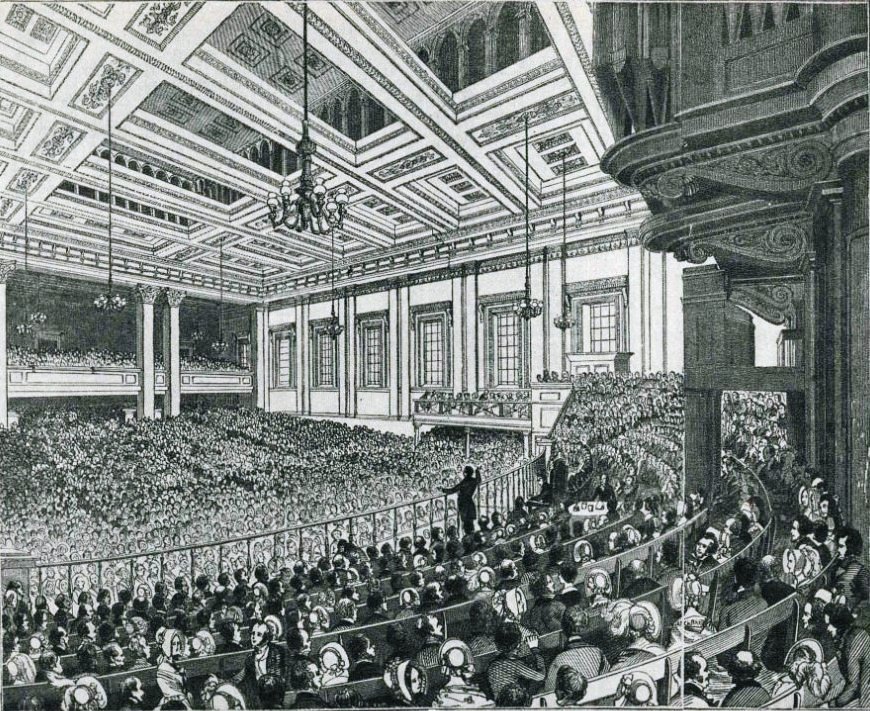
A meeting of the Anti-Corn Law League in Exeter Hall in 1846.
Wikimedia Commons.
England in the late eighteenth century was often complimented or disparaged as a “nation of shopkeepers” — a sign of its thriving industry and commerce, and the influence of those interests on its politics.
But when did England start seeing itself as a primarily commercial nation? When did the interests of its merchants and manufacturers begin to hold sway against the interests of its landed aristocracy? The early nineteenth century certainly saw major battles between these competing camps. When European trade resumed in 1815 after the Napoleonic Wars, an influx of cheap grain threatened the interests of the farmers and the landowners to whom they paid rent. Britain’s parliament responded by severely restricting grain imports, propping up the price of grain in order to keep rents high. These restrictions came to be known as the Corn Laws (grain was then generally referred to as “corn”, nothing to do with maize). The Corn Laws were to become one of the most important dividing lines in British politics for decades, as the opposing interests of the cities — workers and their employers alike, united under the banner of Free Trade — first won greater political representation in the 1830s and then repeal of the Corn Laws in the 1840s.
The Corn Laws are infamous, but I’ve increasingly come to see their introduction as merely the landed gentry’s last gasp — them taking advantage of a brief window, after over two centuries of the declining economic importance of English agriculture, when their political influence was disproportionately large. In fact, I’ve noticed quite a few signs of the rising influence of urban, commercial interests as early as the early seventeenth century. And strangely enough, this week I noticed that in 1621 the English parliament debated a bill that was almost identical to the 1815 Corn Laws — a bill designed to ban the importation of foreign grain below certain prices.
But in this case, it failed. In the 1620s it seems that the interests of the cities — of commerce and manufacturing — had already become powerful enough to stop it.
The bill appeared in the context of a major economic crisis that, for want of a better term, ought to be called the Silver Crisis of 1619-23. Because of the outbreak of the Thirty Years War, the various mints of the states, cities, and princelings of Germany began to outbid one another for silver, debasing their silver currencies in the process. The knock-on effect was to draw the silver coinage — the lifeblood of all trade — out of England, and at a time when the country was already unusually vulnerable to a silver outflow. (For fuller details of the Silver Crisis and why England was so vulnerable to it, I’ve written up how it all worked here.)
The sudden lack of silver currency was a major problem, and all the more confusing because it coincided with a spate of especially bountiful harvests. As one politician put it, “the farmer is not able to pay his rent, not for want of cattle or corn but money”. A good harvest might seem a time for farmers and their landlords to rejoice, but it could also lead to a dramatic drop in the price of grain. Good harvests tended to cause deflation (which the Silver Crisis may have made much worse than usual by disrupting the foreign market for English grain exports). An influential court gossip noted in a letter of November of 1620 that “corn and cattle were never at so low a rate since I can remember … and yet can they get no riddance at that price”. Just a few months later, in February 1621, the already unbelievable prices he quoted had dropped even further.
Despite food being unusually cheap, however, the cities and towns that ought to have benefitted were also struggling. The Silver Crisis, along with the general disruption of trade thanks to the Thirty Years War, had reduced the demand for English cloth exports. And this, in turn, threatened to worsen the general shortage of silver coin — having a trade surplus, from the value of exports exceeding imports, was one of the only known ways to boost the amount of silver coming into the country. England had no major silver mines of its own.
It’s in this context that some MPs proposed a ban on any grain imports below a certain price. They argued that not only were low prices and low rents harming their farming and landowning constituents, but that importing foreign grain was undermining the country’s balance of trade. They argued that it was one of the many causes of silver being drawn abroad and worsening the crisis.
Comments Off on When did England become that sneered-at “nation of shopkeepers”?
When the SS Go Too Far – War Against Humanity 096
World War Two
Published 20 Jan 2023The internal conflict between Poland and the other United Nations Allies deepens as Churchill faces them with diplomatic defeat over Soviet land grab. In the Occupied Netherlands and Poland the Nazis continue their atrocities.
(more…)
Comments Off on When the SS Go Too Far – War Against Humanity 096
QotD: Farmers’ markets are a scam
Carefully navigating the Bugaboos, words leapt out at me from the stalls: “gluten free”, “vegan”, “no added sugar”, “no saturated fats”. It was more like advice from a doctor than things to eat. At the cheese stall I admit I was tempted by the chilli jam accompaniment, as it was described as “rich, tangy tomato with purple shallots and plump sultanas”, but all I needed to do was look at the price — a startling £10 for the small jar with a handwritten label — to decide that the Branston pickle sitting in my store cupboard would do just fine.
An older woman standing by the cheese stall looks as if she is about to pass out. It’s not the heat; rather she has just been informed by the vendor, a young woman with green hair and several face piercings, the price for a piece of Brie and a couple of small goat cheeses. And to add insult to injury, when the customer hands over the £20 to pay she is told, “We only take cards.”
So much for a local, friendly community space. The truth is, these markets are a rip-off, aimed at posturing fools with more money than sense, and food snobs that believe if food isn’t prohibitively expensive for the masses, it’s not good enough to take home and store in their gigantic Smeg fridge.
Julie Bindel, “Mugged by a mud-caked spud”, The Critic, 2022-10-15.
Comments Off on QotD: Farmers’ markets are a scam


