
World War Two
Published 11 Feb 2023It is crisis mode in the Korsun Pocket this week for the Axis troops surrounded, but they are also losing ground all over the Eastern Front this week, including the big prize of Nikopol. In Italy, it is a different story as the Germans play offense at Anzio, though with only small gains.
(more…)
February 12, 2023
German Desperation in Korsun Pocket – Week 233 – February 11, 1944
Comments Off on German Desperation in Korsun Pocket – Week 233 – February 11, 1944
Avro Vulcan: What made the Vulcan the best V bomber?
Imperial War Museums
Published 28 Apr 2021The Avro Vulcan Bomber, the most famous of the British V bombers, is known for its distinctive howl and delta wing. Initially one of the delivery agents of Britain’s independent nuclear deterrent during the Cold War, the Vulcan later fulfilled another role, undertaking the longest bombing raid in history for Operation Black Buck in the Falklands Campaign of 1982. One of the first operational RAF aircraft with a delta wing, this impressive Cold War jet has never lost its appeal. In this video, events and experiences coordinator Liam Shaw takes us through the extraordinary history and technological achievements of the Avro Vulcan. We go into the cockpit and hear first-hand from the people who flew this unique machine throughout its long and remarkable history.
(more…)
Comments Off on Avro Vulcan: What made the Vulcan the best V bomber?
QotD: The heyday of Victorian newspapers
A few years ago, I did some research on three early Victorian murders that caused me to read several provincial newspapers of the time. I discovered incidentally to my research that the owners or editors of about half of the British provincial newspapers also sold patent medicines; and this made perfect sense, for by far the greatest advertisers in provincial newspapers were the manufacturers of patent medicines. The owners or editors of the newspapers sold advertisements to the producers of patent medicines, then they sold the newspapers in which the advertisements appeared, and finally they sold the products themselves to the readers. It was an excellent example of rational commercial synergy. (About half of the medicines, by the way, were either to cure or to prevent syphilis — a disease, then, that was a great support to the press of the time.)
Now, the principal quality or characteristic of the sellers of patent medicine has always been effrontery, that is to say the blatant insinuation of the false. Thomas Holloway’s innovation was to insinuate such falsehood on a mass or industrial scale. There was hardly a newspaper in which he did not place a weekly advertisement; moreover, he pioneered the advertisement that masquerades as news story. He would ensure that reports of miracle cures in faraway places, supposedly wrought by his pills and ointment, and written as matter-of-factly as possible, were placed in every newspaper, reports whose veracity no one could possibly check for himself, of course.
As Napoleon once said, repetition is the only rhetorical technique that really works — besides which hope and fear render people susceptible to effrontery. In Thomas Holloway’s time, the fear of illness was often, and the hope of cure rarely, justified; at least Holloway’s preparations were unlikely to do much harm (they contained aloe, myrrh, and saffron), unlike the prescriptions of the orthodox doctors of the time. They allowed for the possibility of natural recovery, whereas orthodox medicine often hurried its consumers into their graves. Nevertheless, the claims Holloway made for his ointment and pills were preposterous, and something is not curative just because it fails to kill.
Holloway made an immense fortune by his effrontery and founded a women’s college in the University of London on the proceeds.
Theodore Dalrymple, “The Way of Che”, Taki’s Magazine, 2017-10-28.
Comments Off on QotD: The heyday of Victorian newspapers
February 10, 2023
Hitler’s Jazz Band – WW2 Documentary Special
World War Two
Published 9 Feb 2023Does Adolf Hitler like Duke Ellington? No, and nor do many National Socialists. But the story of the music in the Third Reich is more complicated than you might think. What if we told you that Joseph Goebbels has tried to create a Nazi-approved swing band tasked with bringing the Jazz War to the Allies?
(more…)
Comments Off on Hitler’s Jazz Band – WW2 Documentary Special
QotD: Before Star Wars or the MCU there was … the Arthurian Narrative Universe
The situation is almost exactly the same as the Marvel Cinematic Universe. We have a major character named King Arthur, but he was linked to numerous spinoffs and sequels. The other heroes connected to him soon established their own brands — including Lancelot, Merlin, Gawain, Tristan, Percival, and many others. Readers who enjoyed one of the heroes, often became fans of others.
If you make a list, the Arthurian Narrative Universe (ANU) has more than fifty protagonists. Not all of them became major brands, but that’s no different from the movie business, where even Disney can’t keep every superhero on the payroll.
Even more to the point, these stories were business initiatives, expected to enrich their owners. It’s hardly a coincidence that the most influential collection of stories about King Arthur in English, Le Morte d’Arthur published in 1485, originated as a profit-making venture by the earliest commercial publisher in Britain.
William Caxton was not only the first person to set up a printing press in England, but also the first retailer of printed books in the country. He acquired the manuscript of Le Morte d’Arthur from Thomas Malory, the Stan Lee of his day, and turned it into the single most influential secular British book between the time of Chaucer and the rise of Shakespeare.
He didn’t do it because he loved English history. (The painful truth is that very little — in fact next to nothing — in the Arthurian tales comes from documented historical events.) He didn’t even publish the book because he loved a good story. Caxton wanted to make a buck — or a pound sterling, I ought to say. He had identified the right brand franchise, much like the Walt Disney Company in the current day, and would milk it for all it was worth.
But here’s the most amazing thing about his brand franchise: Arthurian stories had been circulating in manuscript for more than 300 years at this point. And many of the details in these narratives are much older than that, reaching back to accounts of knights who fought in the Crusades, if not earlier.
We can trace the story of Lancelot and his adulterous romance with Queen Guinevere at least back to 1180. The story of the knights’ quest for the Holy Grail dates at least back to 1190. The first mention of King Arthur is no later than 828 AD.
Stop and consider the implications. King Arthur was the most popular brand franchise in secular narratives when he was 650 years old!
Of course, it was absurd. Nobody undertook knightly adventures of this sort during the Renaissance, but storytellers pretended otherwise. Everything about these narratives was outdated, unrealistic, and repetitive — the people who read these tales didn’t own suits of armor or compete in jousting tournaments. Those things had disappeared from society. But the audience still wanted these stories, so the same plots and characters got recycled again and again.
Ted Gioia, “Don Quixote Tells Us How the Star Wars Franchise Ends”, The Honest Broker, 2022-11-09.
Comments Off on QotD: Before Star Wars or the MCU there was … the Arthurian Narrative Universe
February 8, 2023
“Smoking has been a net gain for the Treasury ever since King James I started taxing it heavily in the 1600s”
Christopher Snowden asks whether we should believe the consistent claims of public health advocates on how much things they disapprove of (smoking, drinking, etc.) “cost” the taxpayer:
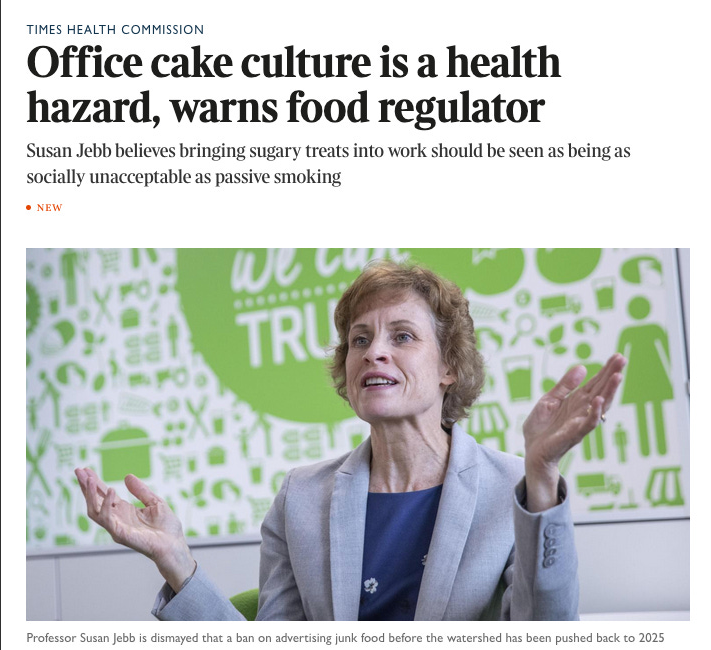
If smoking costs the taxpayers £173 billion, then how much does widespread forced feeding of office pastries cost?
If you say that a certain activity costs society £10 billion a year, most people would assume that if that activity disappears, society will save £10 billion a year.
They might have different ideas of what “society” means. Some will assume that the £10 billion is a cost to taxpayers while others will assume that some of the cost is borne by private individuals and businesses. But the majority will, quite reasonably, assume that the cost is to other people, i.e. those who do not participate in the activity.
And nearly everyone will assume that the £10 billion is money in the conventional sense of cash that can be exchanged for goods and services.
But when it comes to estimates from “public health” campaigners about the cost of drinking/smoking/obesity, all these assumptions would be wrong. Most of the “costs” are to the people engaged in the activity and they are not financial costs. Taxpayers would not pay less tax if they disappeared. In general, they would pay more.
Last month I mentioned an estimate of the “cost” of gambling in the UK and said:
These studies have no merit as economic research. They are purely driven by advocacy. The hope is that the average person will wrongly assume that the costs are to taxpayers and agitate for change.
The main aim of these Big Numbers is to convince the public that heavily-taxed activities place a burden on society that exceeds the tax revenue, thereby justifying yet more taxes and prohibitions.
In the case of smoking, this has become more and more difficult. Smoking has been a net gain for the Treasury ever since King James I started taxing it heavily in the 1600s. Today, as the smoking rate dwindles and tobacco duty rises ever higher, anti-smoking campaigners have got their work cut out duping non-smokers into thinking otherwise.
Tobacco duty brings in about £12 billion a year. For years, groups like Action on Smoking and Health (ASH) used a figure of £13.74 billion as the “cost of smoking”. This came from a flimsy Policy Exchange report which included £5.4 billion as the cost of smoking breaks and £4.8 billion as the cost of lost productivity due to premature mortality. Neither of these are costs to the taxpayer. They are not even external costs, i.e. costs to non-smokers.
Last year, in a review commissioned by the Department of Health, Javed Khan came up with a figure of “around £17 billion” as the “societal cost” of smoking. This included “reduced employment levels” (£5.69 billion) and “reduced wages for smokers” (£6.04 billion). Again, these costs fall on smokers themselves and are not external costs. They are, in other words, none of the government’s business.
Last week, a report commissioned by Action on Smoking and Health (ASH) pulled out all the stops and announced that the cost of smoking to Britain was now — wait for it! — £173 billion. Go big or go home, eh?
Comments Off on “Smoking has been a net gain for the Treasury ever since King James I started taxing it heavily in the 1600s”
February 6, 2023
Why Traditional English Cheddar Is Aged In Caves | Regional Eats
Food Insider
Published 9 Oct 2019The earliest record of cheddar anywhere is at Cheddar, in Somerset, in 1170. The land around this village has been at the heart of English cheesemaking since the 15th century. Today, as many Cheddar producers have upscaled and require more land, there is only one traditional cheesemaker left in the village.
(more…)
Comments Off on Why Traditional English Cheddar Is Aged In Caves | Regional Eats
February 5, 2023
Leningrad: NO STEP BACK! – Week 232 – February 4, 1944
World War Two
Published 4 Feb 2023The Allies begin a new operation in the Pacific this week: assaulting the Marshall Islands. They also make big attacks from their beachhead in Italy at Anzio, but these are called off after only a few days in the face of heavy enemy resistance. However, in the USSR there are several successes against the Axis, as they are pushed back both in the far north and the far south of the front, and still surrounded near Korsun.
(more…)
Comments Off on Leningrad: NO STEP BACK! – Week 232 – February 4, 1944
February 4, 2023
Poland’s Descent into Civil War – War Against Humanity 097
World War Two
Published 2 Feb 2023Poland, occupied, abandoned or even threatened by her allies is left to fight her own war. A war that under the influence of internal and external forces looks more and more like a full blown civil war inside the world war.
(more…)
Comments Off on Poland’s Descent into Civil War – War Against Humanity 097
A lobster tale (that does not involve Jordan Peterson)
In the latest Age of Invention newsletter, Anton Howes relates some of his recent research on the Parliament of 1621 (promising much more in future newsletters) and highlights one of the Royal monopolies that came under challenge in the life of that Parliament:

European lobster (Hommarus gammarus)
Photo by Bart Braun via Wikimedia Commons.
One of the great things about the 1621 Parliament, as a historian of invention, is that MPs summoned dozens of patentees before them, to examine whether their patents were “grievances” — illegal and oppressive monopolies that ought to be declared void. Because of these proceedings, along with the back-and-forth of debate between patentees and their enemies, we can learn some fascinating details about particular industries.
Like how 1610s London had a supply of fresh lobsters. The patent in question was acquired in 1616 by one Paul Bassano, who had learned of a Dutch method of keeping lobsters fresh — essentially, to use a custom-made broad-bottomed ship containing a well of seawater, in which the lobsters could be kept alive. Bassano, in his petitions to the House of Commons, made it very clear that he was not the original inventor and had imported the technique. This was exactly the sort of thing that early monopoly patents were supposed to encourage: technological transfer, and not just original invention.
The problem was that the patent didn’t just cover the use of the new technique. It gave Bassano and his partners a monopoly over all imported lobsters too. This was grounded in a kind of industrial policy, whereby blocking the Dutch-caught lobsters would allow Bassano to compete. He noted that Dutch sailors were much hardier and needed fewer provisions than the English, and that capital was available there at interest rates of just 4-5%, so that a return on sales of just 10% allowed for a healthy profit. In England, by comparison, interest rates of about 10% meant that he needed a return on sales of at least 15%, especially given the occasional loss of ships and goods to the capriciousness of the sea — he noted that he had already lost two ships to the rocks.
At the same time, patent monopolies were designed to nurture expertise. Bassano noted that he still needed to rely on the Dutch, who were forced to sell to the English market either through him or by working on his ships. But he had been paying his English sailors higher wages, so that over time the trade would come to be dominated by the English. (This training element was a key reason that most patents tended to be given for 14 or 21 years — the duration of two or three apprenticeships — though Bassano’s was somewhat unusual in that it was to last for a whopping 31.)
But the blocking of competing imports — especially foodstuffs, which were necessaries of life — could be very controversial, especially when done by patent rather than parliamentary statute. Monopolies could lawfully only be given for entirely new industries, as they otherwise infringed on people’s pre-existing practices and trades. Bassano had worked out a way to avoid complaints, however, which was essentially to make a deal with the fishmongers who had previously imported lobsters, taking them into his partnership. He offered them a win-win, which they readily accepted. In fact, the 1616 patent came with the explicit support of the Fishmongers’ Company.
It sounds like it became a large enterprise, and I suspect that it probably did lower the price of lobsters in London, bringing them in regularly and fresh. With a fleet of twenty ships, and otherwise supplementing their catch with those caught by the Dutch, Bassano boasted of how he was able to send a fully laden ship to the city every day (wind-permitting). This stood in stark contrast to the state of things before, when a Dutch ship might have arrived with a fresh catch only every few weeks or months, and when they felt that scarcity would have driven the prices high.
Comments Off on A lobster tale (that does not involve Jordan Peterson)
February 2, 2023
Gerry Rafferty’s “Baker Street” lyrics
When I first subscribed to Ted Gioia’s Honest Broker substack, I figured I’d find one or two posts a month that I found interesting enough to share on the blog … I have to be careful not to link to several of his posts every week. He writes a lot about the music industry, so when this popped up in my inbox, I assumed it was Ted and got to the point of scheduling it before I realized it was Jon Miltimore instead:
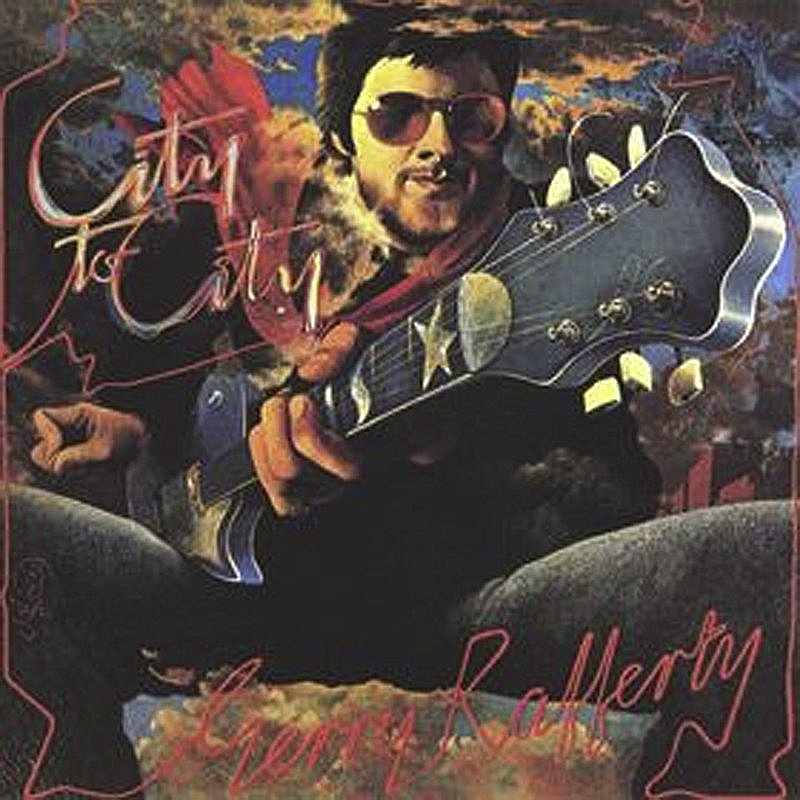
I was recently in a bar having dinner with a friend when Gerry Rafferty’s hit 1978 song “Baker Street” came on. When my friend mentioned that he loved the song, I agreed and noted the song’s powerful lyrics.
“Really?” he responded. “I never paid much attention to the lyrics.”
Most people, of course, remember “Baker Street” for its wailing saxophone, and my friend was no different. Nor was I, for many years. But at some point—I don’t know when—I began to pay attention to the song’s lyrics. They go like this:
Winding your way down on Baker Street
Light in your head and dead on your feet
Well, another crazy day
You’ll drink the night away
And forget about everythingThis city desert makes you feel so cold
It’s got so many people, but it’s got no soul
And it’s taken you so long
To find out you were wrong
When you thought it held everythingYou used to think that it was so easy
You used to say that it was so easy
But you’re trying, you’re trying now
Another year and then you’d be happy
Just one more year and then you’d be happy
But you’re crying, you’re crying nowWay down the street there’s a light in his place
He opens the door, he’s got that look on his face
And he asks you where you’ve been
You tell him who you’ve seen
And you talk about anythingHe’s got this dream about buying some land
He’s gonna give up the booze and the one-night stands
And then he’ll settle down
In some quiet little town
And forget about everythingBut you know he’ll always keep moving
You know he’s never gonna stop moving
‘Cause he’s rolling, he’s the rolling stone
And when you wake up, it’s a new morning
The sun is shining, it’s a new morning
And you’re going, you’re going homeThe lyrics — in contrast to the seductive sax and upbeat strings and keyboard — are rather dark. It’s not your typical rock/pop song about finding or losing love.
I’ve never heard “Baker Street” explained, but my take on the song is this: It’s about two lonely people in a city. They find comfort in booze, chemicals, and (occasionally) each other. The relationship is probably dysfunctional, but they are struggling to change. Struggling to grow. Struggling to find meaning.
“Baker Street” peaked at #3 in the UK and held the #2 spot in the U.S. for six consecutive weeks. I think part of the reason the song was such a success is because the lyrics touched on something a little deeper than most rock tunes, something that resonated with audiences. And though the song is 40 years old now, I have a hunch it resonates even more now than it did then.
February 1, 2023
Surviving on Leather
Tasting History with Max Miller
Published 31 Jan 2023
(more…)
Comments Off on Surviving on Leather
It’s the job of the music critic to be loudly and confidently wrong as often as possible
Ted Gioia points out that a lot of musical criticism does not pass the test of time … and sometimes it’s shown to be wrong before the ink is dry:
When I was in my twenties, I embarked on writing an in-depth history of West Coast jazz. At that juncture in my life, it was the biggest project I’d ever tackled. Just gathering the research materials took several years.
There was no Internet back then, and so I had to spend weeks and months in various libraries going through old newspapers and magazines — sometimes on microfilm (a cursed format I hope has disappeared from the face of the earth), and occasionally with physical copies.
At one juncture, I went page-by-page through hundreds of old issues of Downbeat magazine, the leading American jazz periodical founded back in 1934. And I couldn’t believe what I was reading. Again and again, the most important jazz recordings — cherished classics nowadays — were savagely attacked or smugly dismissed at the time of their initial release.
The opinions not only were wrong-headed, but they repeatedly served up exactly the opposite opinion of posterity.
Back in my twenties, I was dumbfounded by this.
I considered music critics as experts, and hoped to learn from them. But now I saw how often they got things wrong — and not just by a wee bit. They were completely off the mark.
Nowadays, this doesn’t surprise me at all. I’m painfully aware of all the compromised agendas at work in reviews — writers trying to please an editor, or impress other critics, or take a fashionable pose, or curry favor with the tenure committee, or whatever. But there is also something deeper at play in these huge historical mistakes in critical judgments, and I want to get to the bottom of it.
Let’s consider the case of the Beatles.
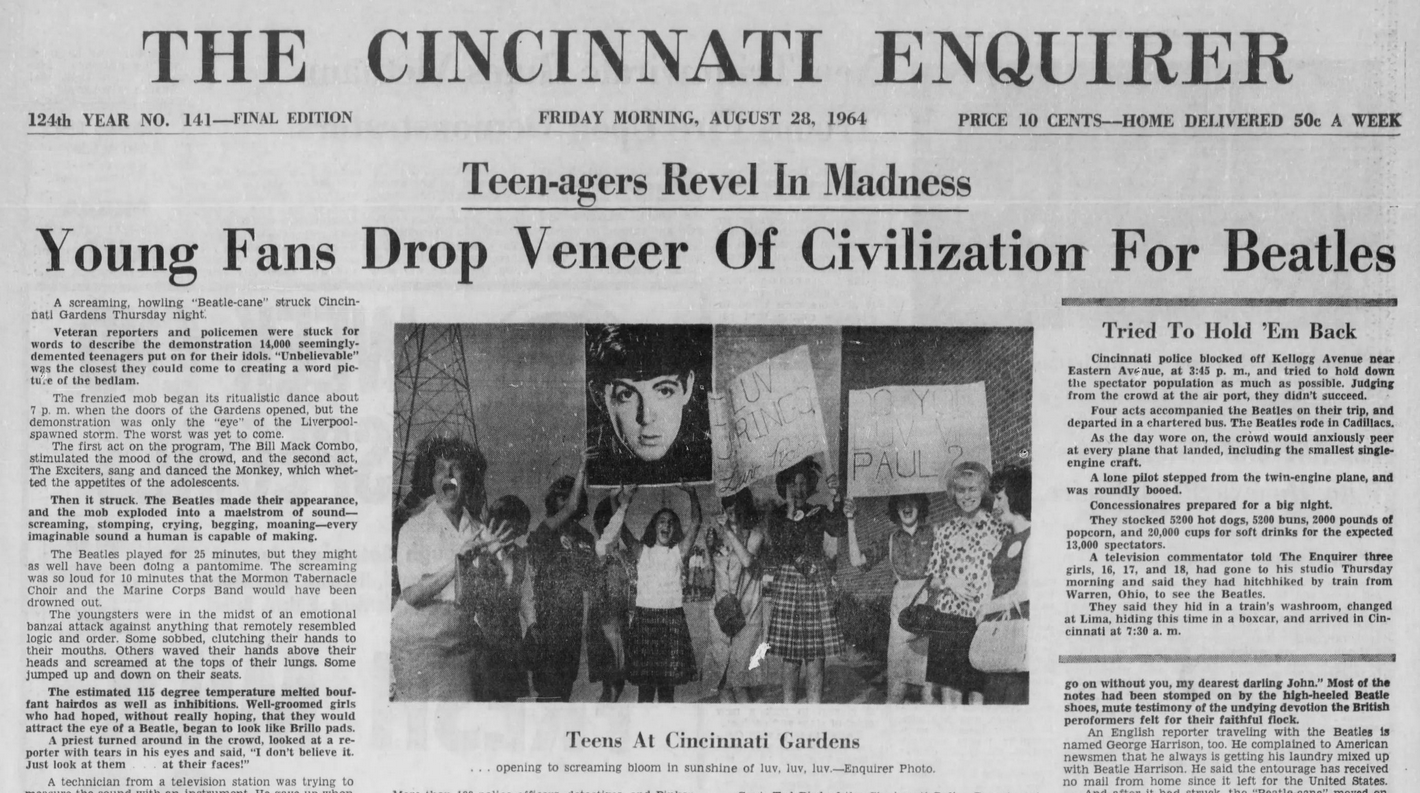
When the Beatles went on the road, stories like this followed them everywhere
On the 50th anniversary of Sgt. Pepper’s Lonely Hearts Club Band, the New York Times bravely reprinted the original review that ran in the newspaper on June 18, 1967. I commend the courage of the decision-makers who were willing to make Gray Lady look so silly. But it was a wise move — if only because readers deserve a reminder of how wrong critics can be.
“Like an over-attended child, ‘Sergeant Pepper’ is spoiled,” critic Richard Goldstein announced. And he had a long list of complaints. The album was just a pastiche, and “reeks of horns and harps, harmonica quartets, assorted animal noises and a 91-piece orchestra”. He mocks the lyrics as “dismal and dull”. Above all the album fails due to an “obsession with production, coupled with a surprising shoddiness in composition”. This flaw doesn’t just destroy the occasional song, but “permeates the entire album”.
Goldstein has many other criticisms — he gripes about dissonance, reverb, echo, electronic meandering, etc. He concludes by branding the entire record as an “undistinguished collection of work”, and even attacks the famous Sgt. Pepper’s cover — lauded today as one of the most creative album designs of all time — as “busy, hip, and cluttered”.
The bottom line, according to the newspaper of record: “There is nothing beautiful on ‘Sergeant Pepper’. Nothing is real and there is nothing to get hung about.”
How could he get it so wrong?
Comments Off on It’s the job of the music critic to be loudly and confidently wrong as often as possible
What’s the Greatest Machine of the 1980s … the FV107 Scimitar?
Engine Porn
Published 19 Jan 2015Light, agile and very fast on all types of terrain, the fabulous Scimitar FV107 armoured reconnaissance vehicle was developed by car manufacturer Alvis, who were asked to build a fast military vehicle that was light enough to be airdropped — simply not an option for full sized battle tanks at the time, which averaged around 13 tonnes. [NR: I think they mean “light tanks” here, as MBTs of the era would have been more like 50+ tons.]
Alvis got the weight down to under 8 tonnes by using a new type of aluminium alloy and minimising armour rating in favour of speed. They built the Scimitar around a 220 horsepower, six cylinder, 4.2 litre Jaguar sports car engine with ground-breaking transmission that allowed differential power to each set of tracks. The result was a sports car of the the military world that might not be the toughest in the field, but could race its way out of trouble at speeds of up to 70 miles an hour.
What makes it great: A revolutionary armoured vehicle that brought the very best of British sports car performance to the battlefield.
Time Warp: The Scimitar was the only armoured vehicle to be used by the British Army in the Falklands War.
This short film features Chris Barrie taking the Scimitar for a spin.
(more…)
Comments Off on What’s the Greatest Machine of the 1980s … the FV107 Scimitar?
January 31, 2023
The Allied Flying Aces of World War Two – Documentary Special
World War Two
Published 30 Jan 2023Young, daring, and handsome, the Allied fighter aces of World War Two have captivated the public with their thrilling exploits. Join us as we take a look at the top scorers! Thanks to Curiosity Stream for sponsoring today’s video.
(more…)
Comments Off on The Allied Flying Aces of World War Two – Documentary Special


