
… the Wilson government wasn’t an aberration, for political history is littered with examples of people being found out, often in the most embarrassing possible circumstances. Now that he’s remembered as a byword for complacent failure, it’s easy to forget that David Cameron was a straight-A student who won an exhibition to Brasenose College, Oxford and was described by his tutor, Professor Vernon Bogdanor, as “one of the ablest” students he’d ever taught. (By now you should have spotted a theme.) An even more glaring example, however, comes from across the Atlantic.
Google “Michael Ignatieff” and you wonder if it was really legal for one man to have enjoyed so many blessings. Everything the Canadian intellectual touched turned to gold. At boarding school in Toronto in the Sixties he was captain of the soccer team and editor of the yearbook. He taught at Oxford and the London School of Economics. He presented The Late Show for the BBC and wrote columns for the Observer. His documentaries won awards; his biography of Isaiah Berlin was shortlisted for some of the world’s most prestigious non-fiction prizes; his novel was even shortlisted for the Booker Prize. He was awarded a professorial chair at Harvard, then another at Toronto. And when his friends in the Canadian Liberal Party invited him to make a bid for the leadership, further glory seemed inevitable.
What happened next, however, makes Kwarteng’s stewardship of the Treasury look like a triumph. In 2011 Ignatieff led the Liberals to the worst defeat in their history, finishing third with just 34 seats. What was worse, he even lost his own seat in Etobicoke–Lakeshore, the first Canadian opposition leader to do so since 1900. His staff were in tears, the world was watching, and all those book prizes must have seemed an awfully long way away. In the cruellest twist imaginable, the man who always came top in exams had failed the most public exam of all.
Dominic Sandbrook, “Kwasi Kwarteng was the wrong sort of clever”, UnHerd, 2022-10-17.
January 20, 2023
QotD: Michael Ignatieff
January 19, 2023
“Sir, was everyone in history a racist?”
At The Critic, Fred Skulthorp explains how British history is being taught in schools these days:
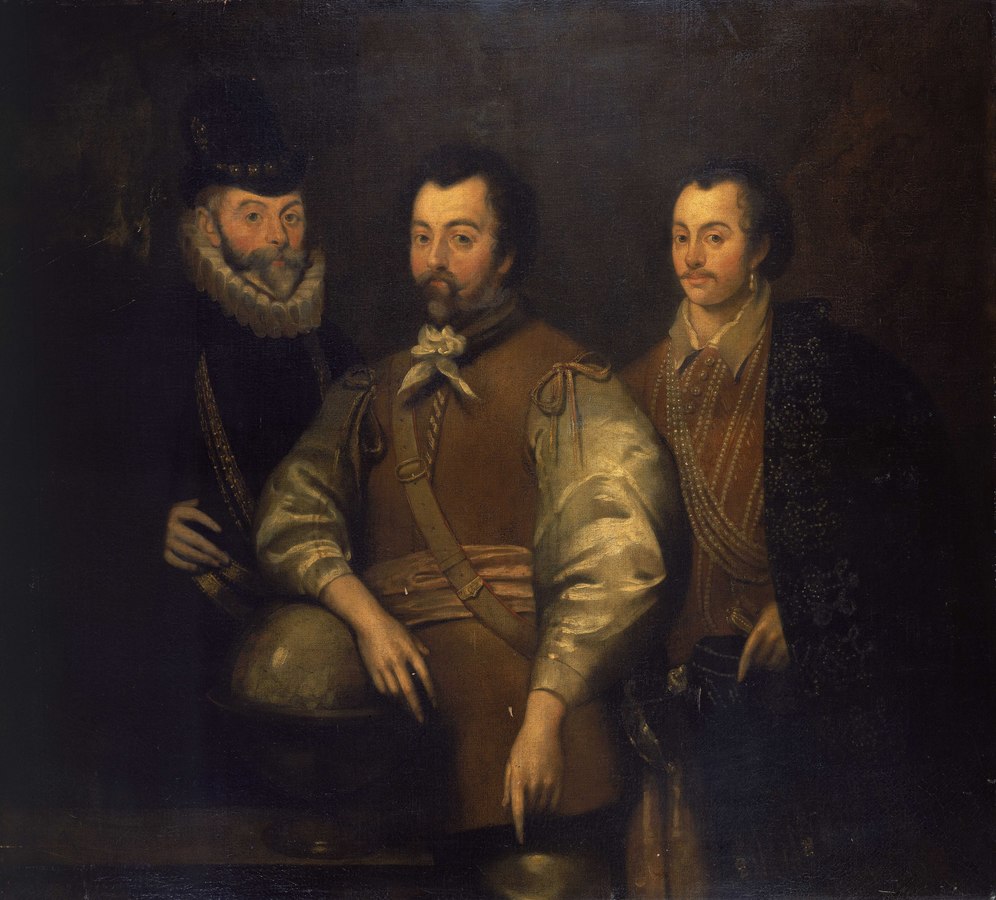
Sir John Hawkins (1532-1595), Sir Francis Drake (1540?-1596), and Thomas Cavendish (1560-1592).
Probably a copy of Daniel Myten’s’ painting of the same subject, now part of the Royal Museums Greenwich collection via Wikimedia Commons.
“Sir, was everyone in history a racist?” said Daniel one slow Thursday afternoon at my old school in North London. Daniel hadn’t put up his hand, so of course, I had to tell him off. Even worse, being in my usual teacherly bad mood, I wasn’t exactly Mr Chips with my response. What a silly question, I snapped, before going back to trying to teach a set of pandemic weary teenagers about the Reformation.
Daniel deserved a better answer than that. Not least because some version of his question has now worked its way onto the lips of the certain adults who run schools. The latest “yes” in a primary school in Lewisham saw an “overwhelming” majority vote to remove the stain of Sir Francis Drake’s name from the school. Who knows what arguments went into the decision, but one can only hope they delved a little bit more into his career than the BBC who initially served him up as a “16th century slave trader”.
The decision didn’t surprise me. I had briefly taught in another secondary school just down the road, and another in North London, where making the curriculum inclusive, diverse, decolonised, equal etc was all the rage. For me, Drake was a fascinating target. I had actually taught the man to a class of Year 8s. Funnily enough then, Drake was one of the few old white men of British history deemed more accessible — largely given his relationship with an escaped slave called Diego. According to Miranda Kaufman, whose book Black Tudors was gleefully worked into our history curriculum, Diego became Drake’s “right-hand man” in his various endeavours across the high seas.
This wasn’t enough to exonerate him in Lewisham. When it comes to slavery and being a dead white man, even flirt with it and you’re out. Beyond the expected uproar, the bigger issue here is the increasingly strange way we feel compelled to serve up our history to make it accessible for “minorities” in the name of “diversity, equality and inclusivity”.
Both schools I taught in during my short-lived career were some of the most diverse in London. This isn’t something that particularly interested me, but it certainly played on the conscience of some of my colleagues. One of the most cringe-inducing conversations I have ever had was with a fellow teacher, who on discussing changes to the curriculum in the name of “diversity” recalled something along the lines of: that they had looked down the register, seen the names and wondered how we might better tell their story. Presumably, this meant anything other than the usual fare of boring old “white” British history
What exactly is their story? As British citizens, their story is our story; our history, their history and vice versa. The attempts to presume exactly what these teenagers found relatable end up pretty disingenuous. Roman Britain? Ever heard of Ivory Bangle Lady? The Tudors? All old dead white guys, huh? Nope, check out this cool black trumpeter who was in the court of Henry VII! These are interesting curios, but sprinkling them throughout the curriculum all too often seemed to advance the misconception that Britain has always been a multiracial, multicultural society — something not only historically inaccurate but incredibly patronising to the children of second, third, even fourth generation immigrants.
This all came to a head during a unit on World War One, which our head of department insisted be based on the book The World’s War: Forgotten Soldiers of Empire by David Olusoga. The book is an interesting piece of revisionism about the role of colonial soldiers in WW1. In obsessing over race and teaching the Western Front, it does at some point have to contend with the fact that the vast majority who died there were, err … white men. In one particularly painful lesson, I ended up having to teach the Battle of the Somme by asking the class: what does the story of Chinese labourers reveal about World War One? Funnily enough, as it turns out, not that much! I’m sure being subjected to racial slurs whilst doing manual labour behind the front wasn’t much fun. But I felt something fundamentally dishonest, even borderline offensive, in prioritising their story over those of the Pals Battalions who went over the top that morning.
You must be protected from coworkers who threaten your health … by bringing in cake?
Christopher Snowden knows a slippery slope when the media pushes another nanny state health concern as serious as cake in the workplace:
If nobody brought in cakes into the office, I would not eat cakes in the day, but because people do bring cakes in, I eat them.
Who is this co-worker from hell? Who is this whining, snivelling infant demanding that the rest of the world forfeits their small pleasures because she has no self-control?
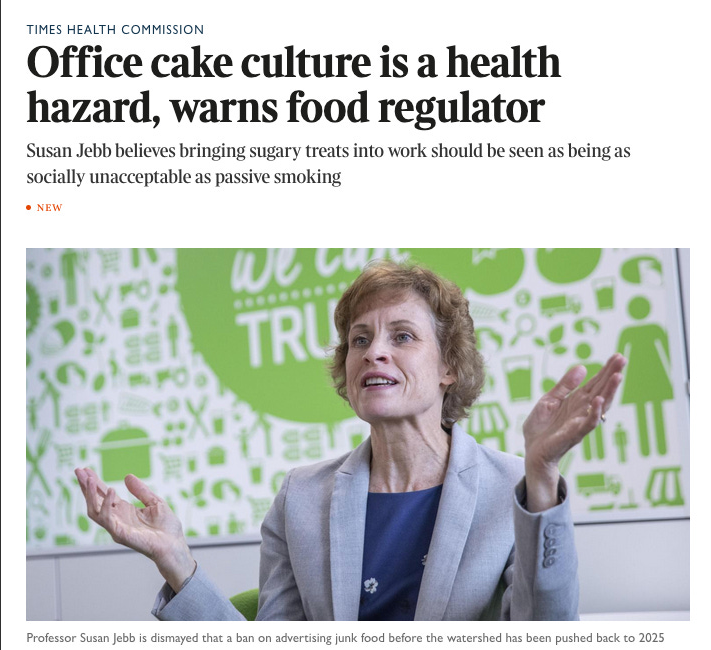
It is none other than the head of the Food Standards Agency, Susan Jebb, who is in The Times tomorrow comparing cakes to passive smoking.
The full quote reads:
“We all like to think we’re rational, intelligent, educated people who make informed choices the whole time and we undervalue the impact of the environment”, she said. “If nobody brought in cakes into the office, I would not eat cakes in the day, but because people do bring cakes in, I eat them. Now, OK, I have made a choice, but people were making a choice to go into a smoky pub.”
Indeed they were, Susan, before people like you took that choice away to such an extent that even a pub that put up a sign saying “SMOKERS ONLY” on the door and employed no one but smokers would still forbidden from accommodating them.
I’ve made a few slippery slope arguments in my time — contrary to midwit opinion, they are often valid — but even I never imagined that a workplace smoking ban would evolve into a workplace cupcake ban. Talk about the thin end of the wedge!
While saying the two issues were not identical, Jebb argued that passive smoking inflicted harm on others “and exactly the same is true of food”.
To inflict something on someone implies that it is done without their consent. In that sense — and leaving aside the question of whether wisps of secondhand smoke are actually harmful — passive smoking doesn’t inflict harm on a person who knowingly goes to a smoky pub. The same is obviously true of someone who offers you a cake. If they held you down and physically shoved it down your throat, that would be a different matter, but surely that is already illegal under some law or other?
Meanwhile, Canadian nanny state enablers are trying to do battlespace prep to get the government to mandate new warning labels to containers of alcoholic beverages and to significantly cut the already low maximum “recommended consumption”:
… a report on the new drinking guidance released Tuesday by the Canadian Centre on Substance Use and Addiction says the warning labels could inform consumers about serious health risks including cancer, the number of standard drinks in a container and the benefits of limiting consumption to two drinks a week.
“Consuming more than two standard drinks per drinking occasion is associated with an increased risk of harms to self and others, including injuries and violence,” the report says.
The guidance is based on the findings of a panel of 23 experts who reviewed nearly 6,000 peer-reviewed studies as part of a two-year process that also considered feedback from 4,845 people during an online public consultation process in spring 2021.
The most recent available data show that alcohol causes nearly 7,000 cancer deaths each year in Canada, with most cases being breast or colon cancer, followed by cancers of the rectum, mouth and throat, liver, esophagus and larynx. Liver disease and most types of cardiovascular diseases are also linked to alcohol use.
The guidance updates Canada’s Low-Risk Drinking Guidelines set in 2011, when two drinks a day were considered low risk and it was believed that women could safely consume up to 10 drinks a week and men could have 15 drinks.
January 18, 2023
QotD: Tanks for Ukraine?
It looks like the inhibition on sending tanks is finally cracking, though. While Germany is still dithering over letting Poland send some of its Leopard 2’s, Britain has announced it’s sending 14 Challenger 2 main battle tanks.
I found that particular number interesting. Late Cold War and post-Cold War Russian armored units use three-tank platoons and three platoons plus a commander’s tank make a ten tank company.
The British Army, from whose stores the Challengers will be pulled, uses some archaic TO&E, possibly left over from the Wars of the Roses or Cromwell’s New Model Army, wherein four tanks equal a Bonnet*, and four Bonnets plus two more tanks in a headquarters Bonnet equal an eighteen-tank Spanner†.
Fourteen tanks, however, is enough for three four-tank platoons plus two tanks for an HQ platoon, equalling a fourteen tank US-style armored company. Apparently the Ukies are using a US/(most of)NATO TO&E for their armored units. So the Ukrainians will have at least one company of Western MBTs.
* Bonnet = Troop
† Spanner = SquadronTamara Keel, “Clank Clank Goes the Tank”, View From The Porch, 2023-01-15.
January 17, 2023
“Karl Marx was one hollow and rotten tree, inside and out, from beginning to end”
To mark the passing of Paul Johnson, the Foundation for Economic Education reposted an appreciation of Johnson’s Intellectuals by Lawrence W. Reed praising his essay on Karl Marx:
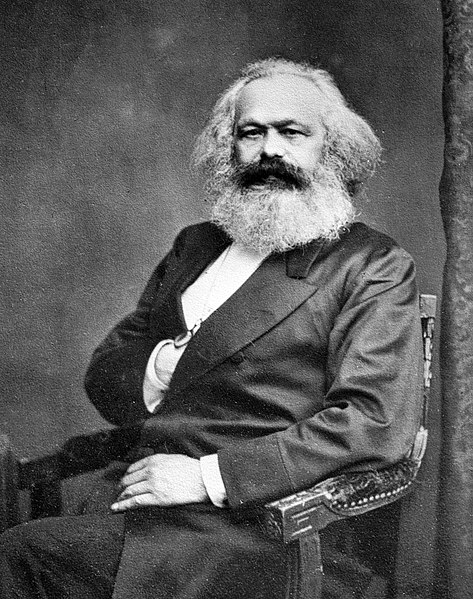
None of Johnson’s subjects can match Karl Marx for sheer loathsomeness and shameless fakery. He was a virulent racist and anti-Semite with a vicious temper (“Jewish n****r” was one of his favorite epithets). On a good day, he enjoyed threatening those who disagreed with him by blurting, “I will annihilate you!” His personal hygiene was, well, suffice it to say he had none. He was heartlessly cruel to his family and anyone who crossed him. This is the same man who postured as a thinker whose ideas would save humanity.
We learn in Intellectuals that the chef who cooked up communism professed to be “scientific”. In reality, Johnson argues, “there was nothing scientific about him; indeed, in all that matters he was anti-scientific”. His most famous lines — including “religion is the opiate of the masses” and workers “have nothing to lose but their chains” — were flagrantly ripped off from other authors. He “never set foot in a mill, factory, mine or other industrial workplace in the whole of his life”, steadfastly abjured invitations to do so, and denounced fellow revolutionaries who did. He never let a fact or a glimmer of reality stem the flow of poison from his pen. He had no money because he refused to work for it, then cursed those who had it and didn’t share it with him. His own mother said she wished her son “would accumulate some capital instead of just writing about it”.
And that’s for starters. Read Johnson’s chapter on Marx, and you’ll begin to understand the connection between the evil within the man and the evil his gibberish wrought. The Black Book of Communism estimates the death toll from attempts to put the rantings of this detestable lunatic into practice at minimally 100 million.
“What emerges from a reading of Capital is Marx’s fundamental failure to understand capitalism”, writes Johnson.
He failed precisely because he was unscientific: he would not investigate the facts himself, or use objectively the facts investigated by others. From start to finish, not just Capital but all his work reflects a disregard for truth which at times amounts to contempt. That is the primary reason why Marxism, as a system, cannot produce the results claimed for it; and to call it “scientific” is preposterous.
Many people who don’t know better, and an awful lot of those in “intellectual” circles who should, still think Karl Marx was some sort of prescient genius motivated by compassion for workers. Some even disgrace themselves with T-shirts bearing his unkempt image. They really ought to thank Paul Johnson for doing the thinking they themselves never made time for.
Actually, we were warned about people like Marx 2,000 years before Johnson. Matthew 7:16 wisely counsels:
Beware of false prophets. They come to you in sheep’s clothing, but inwardly they are ravenous wolves. By their fruit you will know them. Are grapes gathered from thornbushes, or figs from thistles? Likewise, every good tree bears good fruit, but a bad tree bears bad fruit.
Karl Marx was one hollow and rotten tree, inside and out, from beginning to end.
How ideological programming in British schools make men like Andrew Tate inevitable
To be honest, I don’t think I’d ever heard of Andrew Tate before his legal troubles in Romania hit the headlines, and I’m not well-versed on his achievements (such as they might be). Janice Fiamengo also admits that Tate wasn’t on her radar before then, but she’s done some work to try to put him into perspective:
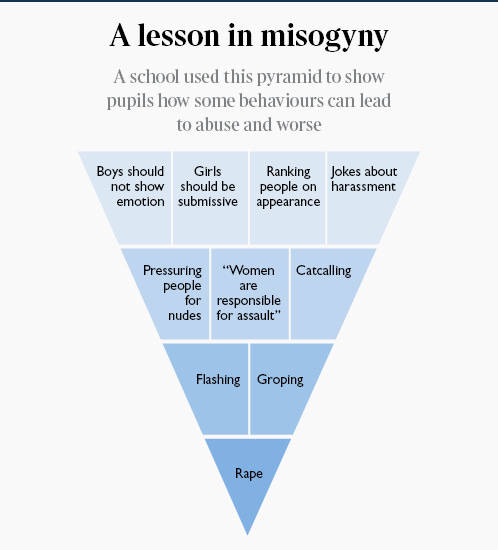
What has Tate got to do with UK education, except perhaps as a telling symbol of its unintended consequences? Why not just model and enforce ideals such as courtesy, self-restraint, and hard work, while upholding high academic standards? The article demonstrates how deeply committed schools have become to ideological programming. Some schools have drawn up “entire lessons focused on Tate” (!!!) while others deal more generally with “misogyny and gender stereotypes”. Whatever the particulars, the general message is unvarying: “We’ve all got to work collaboratively and collectively to support young men to reframe masculinity—away from this toxic ideology that’s presented by the likes of Tate.”
No one who’s been following the feminist narrative over the past decade or two will be surprised by the dogmatic reference to “toxic ideology,” now standard in any discussion of “reframing” boyhood. There is just one problem for the concerned teachers: Tate is five steps ahead of them, having already made clear to his millions of followers why injunctions about “reframing masculinity” are just code for the continual marginalization that most boys naturally want nothing to do with. The moment Tate and his allies expressed their scorn for the project, it lost its power overs the millions of boys forced to sit in feminist classrooms across the UK. Tate confirmed what boys intuitively knew: having their masculinity “reframed” will prevent them from pursuing masculine dreams, from being proud of themselves as male, admired by their male peers, and able to attract the interest of pretty girls. Teachers can keep on telling boys that peer approval through masculine moxy isn’t important, but that won’t make it true.
The point is not whether Tate’s (“I’ve got 33 cars“) program is an unalloyedly good one; the point is that it is manifestly better than the recipe for self-loathing and irrelevance being offered by the schools. The school’s program is the same that has been tried for years without any enthusiastic uptake because it offers nothing affirmatively male for young men to be and do (see especially White Ribbon UK, which has been trying for years to turn boys into handmaidens of feminism). All the normal things that centuries of boys in every major civilization on earth have cared about—competitiveness, status, toughness, mastery, knowledge, self-reliance, stoicism, high-jinks, displays of ability, and male bonding—are now frowned upon and must be replaced by feminine traits like empathy, egalitarianism, conformity, verbal display, and tone-policing. It doesn’t take a gender studies specialist to see that the life being offered these boys is one of deference, self-suppression, and self-contempt. No boy should want that.
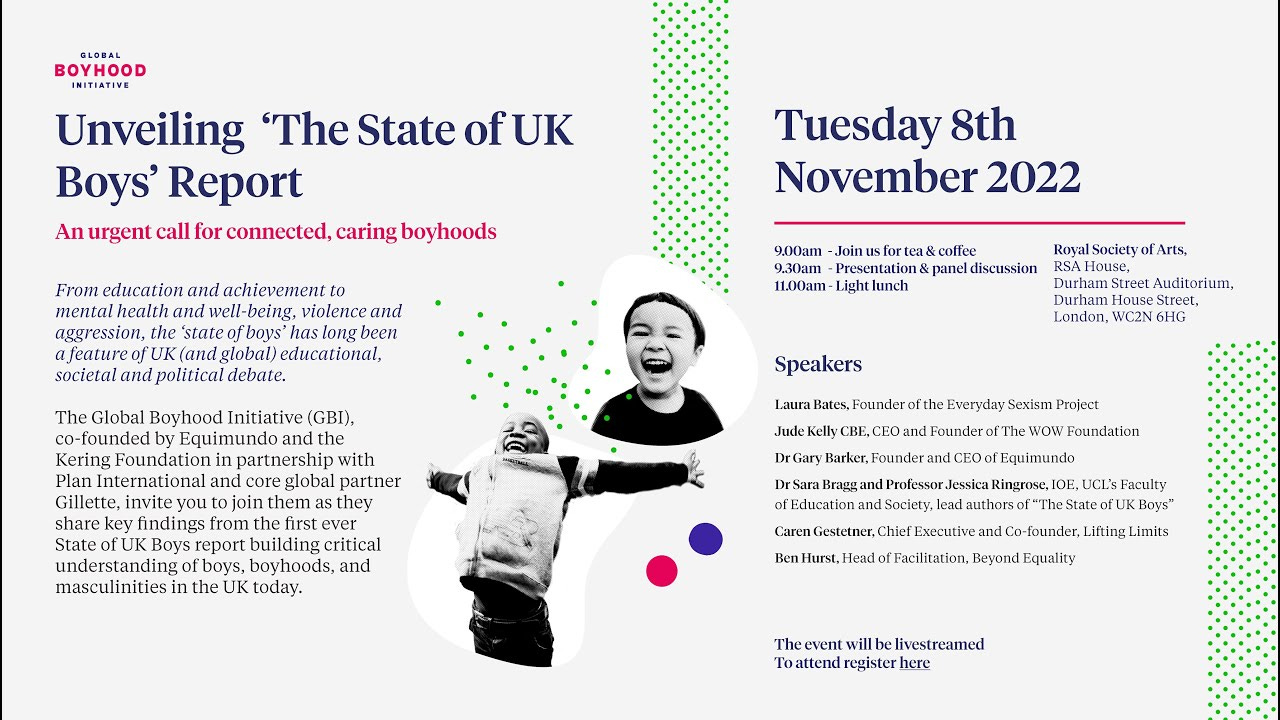
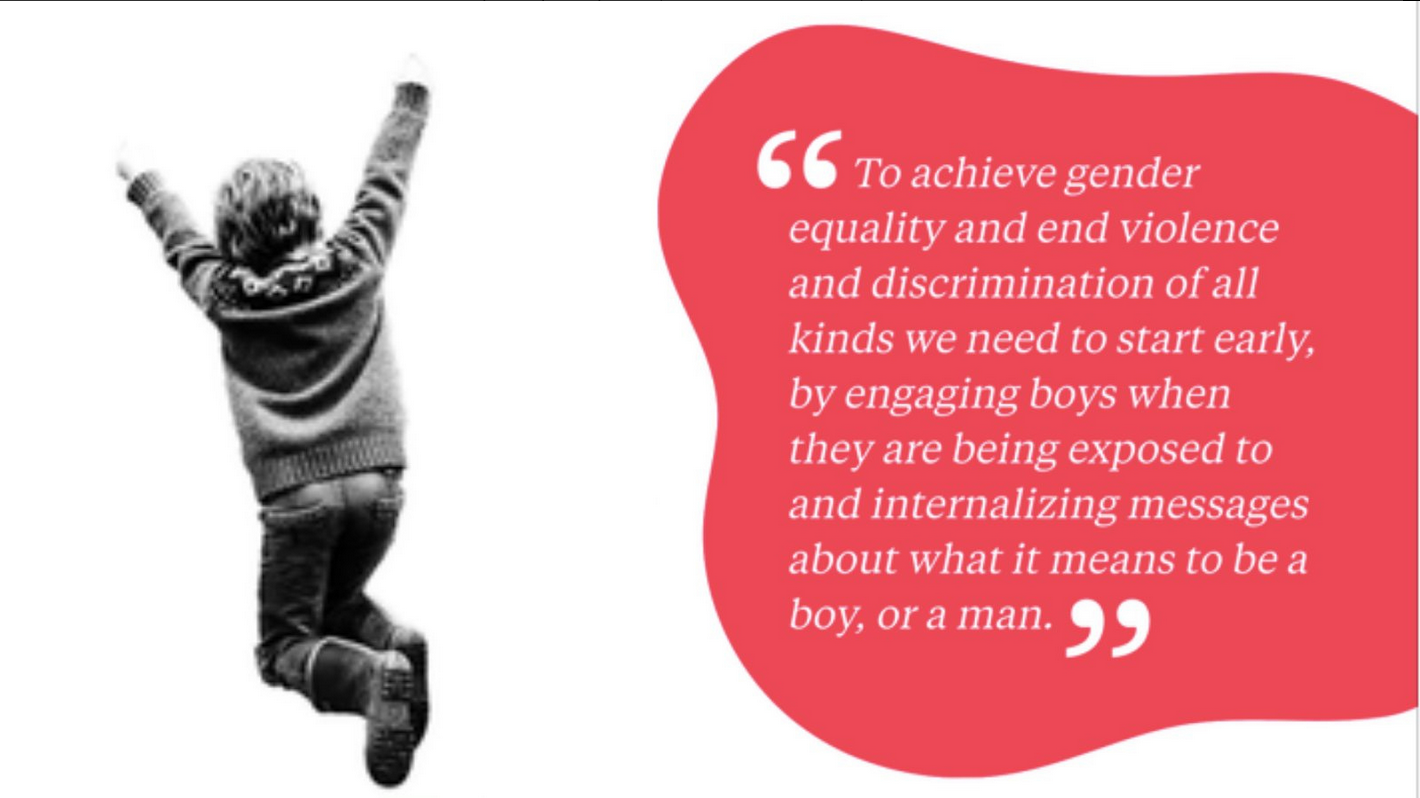
In case you doubt my characterization, take a look at the Global Boyhood Initiative’s report on The State of UK Boys: Understanding and Transforming Gender in the Lives of UK Boys, published in 2022. The report was written for “teachers, youth workers, early-years practitioners and other professionals” to achieve “gender equity and social justice”.
Incidentally, the report includes a section attacking an alleged “overemphasis” on research showing boys and men as victims of intimate partner violence by women. While the report enthusiastically promotes the end of “gender” through transgenderism and social constructivism, it emphatically does not support the end of gendered norms about which sex is violent. On this front, the report laments that “even young boys” now believe that male persons can be victimized by female persons, citing the case of Johnny Depp’s abuse by Amber Heard. Nothing could more clearly signal the report authors’ chagrined awareness of the difficulty of controlling boys’ thoughts in the internet age.
The rest of the report explores pathways to weaken masculinity. On a number of occasions, it takes aim at “simplistic notions that boys require male ‘role models'” because such notions “frame women as inadequate to parent and teach boys”. Taking for granted that “gender is not tied to sex organs, hormones, or biological traits” (one wonders, then, why trans persons elect to take hormones and to change their sex organs), the emphasis throughout the report is on “realigning” masculinity to highlight gender fluidity, transgenderism, and inclusion of girls. The document has absolutely nothing good to say about masculinity, which it describes, variously, as “a seductive form of power”, “hegemonic”, and “oppressive”. It even uses the derogatory term “boysplaining” to stigmatize boys’ alleged way of talking.
Even such seemingly benign behaviors as “laughter, banter, and entertaining one another” are said to be “laddish” and linked to the exclusion of women and homosexuals. Taking pleasure in being good at sport is also given a negative valence by being associated with bullying.
As in all such feminist propaganda, the report seeks the evacuation of all positive content from masculinity. “Realigned” boys are to anchor their sense of self mainly in not being what boys have always been. They are to shun the allegedly “hegemonic” characteristics of “physical, sexual, and mental prowess; being action-oriented; ‘knowing’; having autonomy […]; and being emotionally tough.” It is surely no coincidence that modern boys and young men have fallen well behind their female peers in educational attainment, economic status, and performance on the job market. “Prowess” is out, knowing is out, being active is out, toughness is out. No wonder so many boys feel lost, disaffected, and resentful, and no wonder some see Andrew Tate as a hero.
QotD: The Activist-Wanker Caste
For instance,
It’s interesting just how often “social justice” posturing entails something that looks an awful lot like spite or petty malice, or an attempt to harass and dominate, or some other obnoxious behaviour. Behaviour that, without a “social justice” pretext, might get you called a wanker or a bitch. A coincidence, I’m sure.
It is, I think, worth pondering why it is that these supposed displays of righteousness routinely take the form of obnoxious or bullying or sociopathic behaviour, whereby random people are screwed over and dominated, and often reduced to pleading. Pleading just to get home, to children, or to work, or to get to the doctor’s surgery. Even ambulances and fire engines can be obstructed, indefinitely, with moral indifference. Among our self-imagined betters, it seems to be the go-to approach for practically any purported cause. Which seems terribly convenient. Almost as if the supposed activism were more of a pretext, an excuse, a license to indulge pre-existing urges.
And what kind of person would have urges like that?
David Thompson, “Make Way For The Activist-Wanker Caste”, DavidThompson, 2022-10-16.
January 15, 2023
Time to Liberate Leningrad! – Ep 229 – January 14, 1944
World War Two
Published 14 Jan 2023Three Soviet Fronts launch major offensives to try and finally free Leningrad, under siege for nearly two and a half years now. The Soviets are, in fact, making attacks along most of the Eastern Front. In the South Pacific, the Allies step up their aerial assault to wreck Rabaul’s air power, thus neutralizing it as a base.
(more…)
How Lea & Perrins Makes Worcestershire Sauce Using A 185-Year-Old Recipe | Regional Eats
Food Insider
Published 25 Dec 2019We visited Lea & Perrins factory in Worcester to see how they produce their ever-popular Worcestershire sauce.
(more…)
January 14, 2023
Colonial History on the Mississippi River
Scenic Routes to the Past
Published 13 Jan 2023This video explores the surprising traces of French and American colonial history along the 150 miles of Mississippi River between St. Louis and Cairo, Illinois.
(more…)
January 12, 2023
Early royal “spares” in English history
Ed West considers the time-honoured Ottoman habit of strangling the new Sultan’s half-brothers on his accession to the throne and notes that after the practice was discontinued, many notables in the empire thought it also marked a down-turn in the quality of later Sultans. The British crown never had such a formal tradition, although brotherly love seems to have been in very short supply a thousand years ago:
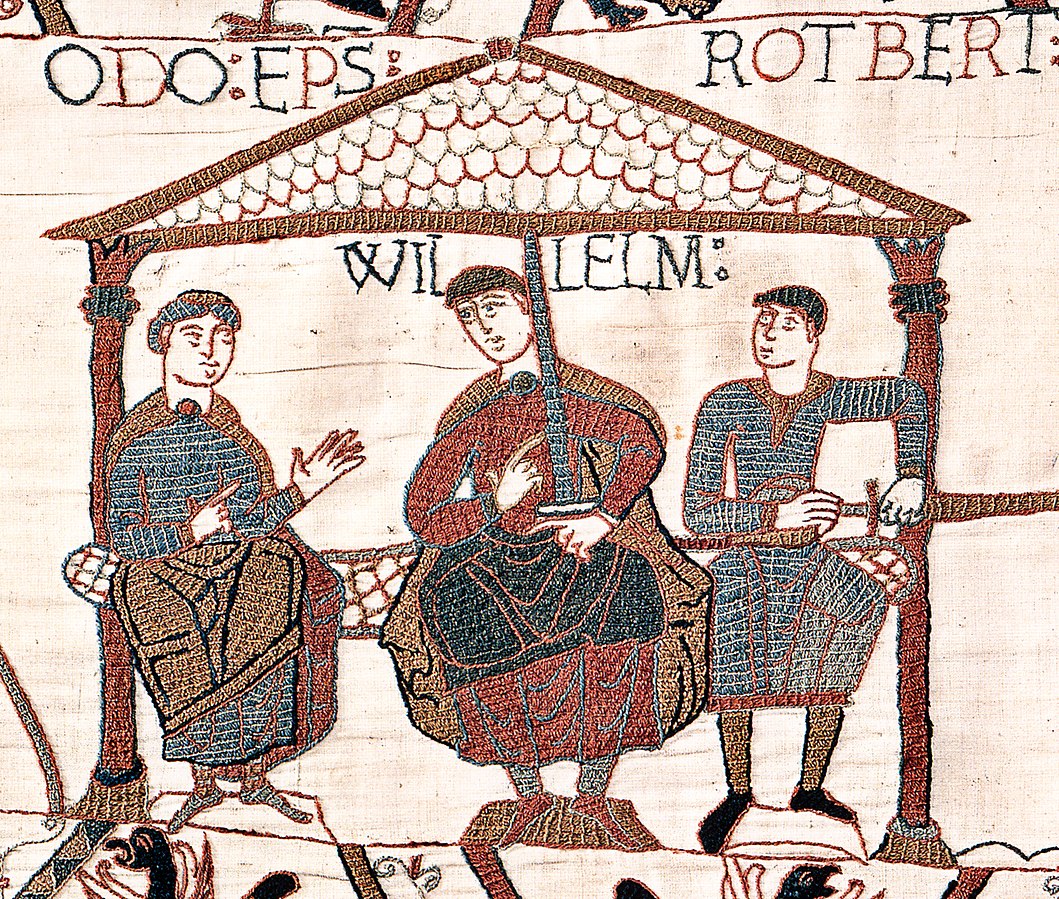
Panel from the Bayeux Tapestry – this one depicts Bishop Odo of Bayeux, Duke William, and Count Robert of Mortain.
Scan from Lucien Musset’s The Bayeux Tapestry via Wikimedia Commons.
Tales of royal brothers at war are a common theme, a staple of Norse sagas in particular, a recent example being the television series Vikings, and the brothers Ragnar and Rollo. William and Harry’s own family story in England begins with a tale told in one 14th century Icelandic saga, Hemings þáttr, which draws on older Norwegian stories to recall two royal brothers who became deadly rivals, Harold and Tostig.
Harold, as Earl of Wessex and the second most powerful man in England, had had his brother installed as Earl of Northumbria, where he had made himself immensely unpopular and provoked an uprising. When in 1065 Harold did a deal with the northerners to remove his sibling — presumably in exchange for the Northumbrians supporting his claim to the throne when the ailing King Edward passed away — Tostig fled abroad, embittered and determined to get revenge. Later accounts suggest that Harold and Tostig were rivals from an early age, one story having the young brothers fighting at the royal court as youngsters. Who knows, maybe Harold got the bigger room.
Tostig, now an exile, travelled around the North Sea looking for someone to help him invade England, finally finding his man with the terrifying Norwegian giant Harald Hardraada. Tostig had told all the Norwegians he was popular back home, but when they arrived in York they found that their English ally was in fact widely despised, and that not a single person came out to greet the former earl.
Tostig was killed soon after, in battle with his brother, having first (supposedly) exchanged words in this legendary meeting.
Harold himself would follow soon, victim of the English aristocracy’s great forefather William the Conqueror, whose success is illustrated by the naming patterns that followed. Harold’s brothers were Sweyn, Tostig, Gyrth, Leofwine and Wulfnoth; the Conqueror’s sons Robert, Richard, William and Henry. We haven’t had any Prince Wulfnoths recently.
The Conqueror’s son Richard having died in a hunting accident, the surviving Norman brothers had similarly fallen out, by one account the feud starting with a practical joke where William and Henry had poured a bucket of urine over eldest brother Robert. But mainly it was over land and power: after their father’s death Robert was made Duke of Normandy, the middle brother became William II of England, while Henry had to make do with just a cash payment.
Yet when William died in a mysterious hunting accident in the New Forest in 1100, Henry was conveniently close enough to reach the Treasury at Winchester within an hour to claim the crown. Six years later he invaded Normandy, with a partly English army, and captured his surviving brother, keeping Robert imprisoned for the rest of his life.
Henry I ruled for 35 years, but his long reign was followed by a civil war between his daughter Matilda and nephew Stephen, resulting in the rise of a new dynasty, the House of Anjou, or Plantagenets — so defined by internal conflict that Francis Bacon called them “a race much dipped in their own blood”.
Matilda’s husband Geoffrey Plantagenet had his brother Elias imprisoned, and Geoffrey’s son, King Henry II, had also gone to war with his younger brother, also Geoffrey. Even Geoffrey Plantagenet’s grandfather Fulk “the Quarreller” had spent over 30 years fighting for control of the county with his older brother, yet another Geoffrey.
Henry II in contrast fought his four sons and, after his death, his heir Richard I would also face rebellion from his younger brother John. When the Lionheart returned from crusade to deal with his deeply unlovable sibling he was remarkably forgiving, telling him: “Think no more of it, brother: you are but a child who has had evil counsellors.” This was despite John being 27 at the time.
More than two centuries later the House of Plantagenet came crashing down with a war pitting cousin against cousin, although brothers also fell out in the form of Edward IV and George, Duke of Clarence.
Both men were tall, blond and handsome, and both had a cruel and violent streak, but here the younger brother was impulsive, vain and foolish. He lacked maturity or self-control, was easily flattered and tempted into unwise decisions. He had been given vast estates and a lavish household but resented his older brother, who had also blocked his marriage to the daughter of the country’s largest landowner.
So Clarence had joined in the overthrow of Edward in 1470, while the youngest brother Richard, Duke of Gloucester, had remained loyal. However, when Edward returned to England the following March and Clarence led 4,000 men out to fight him, he was talked into changing sides again.
Clarence was forgiven, but the two brothers looked upon each other “with no very fraternal eyes”, and five years later he seems to have lost his mind after his wife died during childbirth. He accused the king of “necromancy” and of poisoning his subjects, and when brought before his brother made things much worse by claiming that Edward was a bastard. He was put to death.
Apparently, a soothsayer had also told King Edward that “G” would take his crown, and this must have fuelled his paranoia about George; after all, his other brother, the loyal Richard of Gloucester, would never do such a thing.
Such fraternal feuding ended with the rise of the Tudors and the conflicts between the House of Stuart and Parliament. There would be no more point in younger brothers threatening the monarch because the monarch no longer really had power; the royal family had evolved into a business, “the firm”, one in which hierarchies were clear and immovable, and the fortunes of family members were clearly joined.
Tank Chats #163 | Scorpion & Sabre | The Tank Museum
The Tank Museum
Published 9 Sep 2022In this episode of Tank Chats, David Fletcher details Scorpion and Sabre from the CVRT collection.
(more…)
January 10, 2023
Persuading women not to have families because it “helps the GDP”
In The Critic, Niall Gooch stands up for family life despite the regular hand-wringing articles pointing out just how “expensive” children are and how much money women forego in the working world to take time off and have a family, as if no other economic decisions in life have opportunity costs attached:

Every so often, a publication called something like Bosses Quarterly or Money Patrol will report a new study investigating the financial costs of having children. “Average child now costs £200,000”, they breathlessly inform us, or perhaps “Women Who Become Mothers Lose £400,000 In Earnings Over Their Lifetime”.
I have no idea how they generate these figures. Presumably they have at least some basis in proper empirical research. It doesn’t seem inherently implausible that middle-class parents in Britain spend well into six figures on their children one way and another, when you factor in childcare, holidays, clothes, food, transportation, birthday parties and university attendance. Raising children is undoubtedly costly, from a financial perspective, even if you are frugal. If my wife and I did not have children, our lifestyle would be considerably more affluent than it is at present. The “motherhood penalty” in lifetime wages does seem to be a real phenomenon – although it is one that many women are willing to accept.
But the accuracy or otherwise of the calculations is beside the point. There is something profoundly wrong-headed about the whole endeavour of trying to evaluate the good of family life in economic terms, or to treat the raising of children as simply one option among many in the great lifestyle marketplace. And yet many people persist with doing so. Sam Freedman, the policy analyst and writer, claimed on Twitter earlier this week, in defence of expanding subsidies for nurseries, that “it’s a lot cheaper for one person to look after several children than each parent to look after their own and not work”. This person noted “the long term impact on (nearly always) women’s career prospects which has a big effect on GDP”. He also argued against replacing subsidies to nurseries with direct payments to parents, noting that “giving money direct to parents would encourage people to leave the workforce when we need the opposite to happen”.
Even on its own terms, this is dubious. Low birth rates are a significant drag on economic growth, and making it harder for women to spend more time at home with their children is hardly conducive to increasing the birth rate. Besides which, there are big socio-economic problems connected to the modern norm of two parents working more or less full-time — house-price inflation for example, or the decline of communal organisations and lack of time for family caring responsibilities.
January 8, 2023
The (historical) lure of London
In the latest Age of Invention newsletter, Anton Howes considers the puzzle that was the phenomenol growth of London, even at a time that England had a competitive advantage in agricultural exports to the continent:
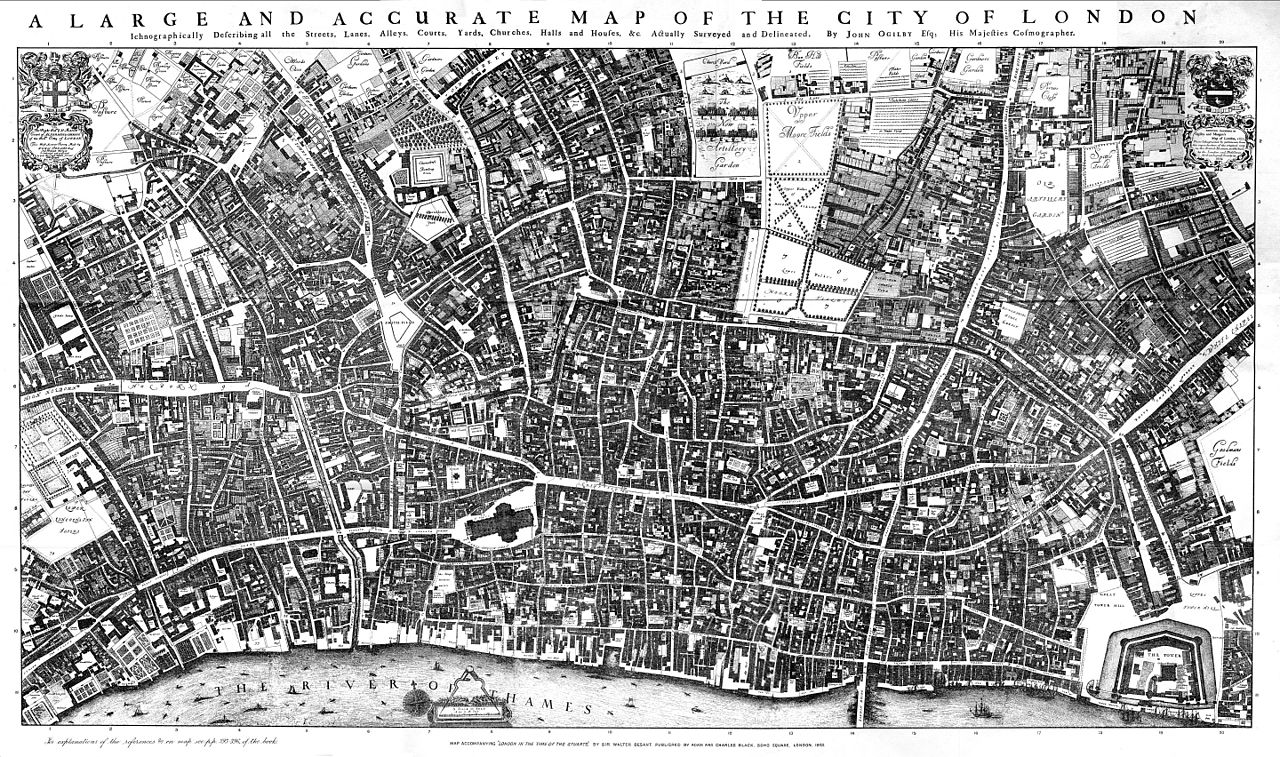
Ogilby & Morgan’s Map of London, 1677.
Scanned copy of reproduction in Maps of Old London (1908).
… the extraordinary inflow of migrants to London in the period when it grew eightfold — from an unremarkable city of a mere 50,000 souls in 1550, to one of the largest cities in Europe in 1650, boasting 400,000. I’ve written about that growth a few times before, especially here. It may not sound like much today, but it has to be one of the most important facts in British economic history. It is, in my view, the first sign of an “Industrial Revolution”, and certainly the first indication that there was something economically weird about England. It requires proper explanation.
In brief, the key question is whether the migrants to London — almost all of whom came from elsewhere in England — were pushed out of the countryside, thrown off their land thanks to things like enclosure, or pulled by London’s attractions.
I think the evidence is overwhelmingly that they were pulled and not pushed:
- The English rural population continued to grow in absolute terms, even if a larger proportion of the total population made their way to London. The population working in agriculture swelled from 2.1 million in 1550 to about 3.3 million in 1650. Hardly a sign of widespread displacement.
- As for the people outside of agriculture, many remained in or even fled to the countryside. In the 1560s, for example, York’s textile industry left for the countryside and smaller towns, pursuing lower costs of living and perhaps trying to escape the city’s guild restrictions. In 1550-1650, the population engaged in rural industry — largely spinning and weaving in their homes — swelled from about 0.7 to 1.5 million. Again, it doesn’t exactly suggest rural displacement. If anything, the opposite.
- There were in fact large economic pressures for England to stay rural. England for the entire period was a net exporter of grain, feeding the urban centres of the Netherlands and Italy. The usual pattern for already-agrarian economies, when faced with the demands of foreign cities, is to specialise further — to stay agrarian, if not agrarianise more. It’s what happened in much of the Baltic, which also fed the Dutch and Italian cities. Despite the same pressures for England to agrarianise, however, London still grew. To my mind, it suggests that London had developed an independent economic gravity of its own, helping to pull an ever larger proportion of the whole country’s population out of agriculture and into the industries needed to supply the city.
- As for the supposed push factor, enclosure, the timing just doesn’t fit. Enclosure had been happening in a piecemeal and often voluntary way since at least the fourteenth century. By 1550, before London’s growth had even begun, by one estimate almost half of the country’s total surface had already been enclosed, with a further quarter gradually enclosed over the course of the seventeenth century. A more recent estimate suggests that by 1600 already 73% of England’s land had been enclosed. As for the small remainder, this was mopped up by Parliament’s infamous enclosure acts from the 1760s onwards — much too late to explain London’s population explosion.
- Perhaps most importantly, people flocked specifically to London. In 1550 only about 3-4% of the population lived in cities. By 1650, it was 9%, a whopping 85% of whom lived in London alone. And this even understates the scale of the migration to the city, because so many Londoners were dropping dead. It was full of disease in even a good year, and in the bad it could lose tens of thousands — figures equivalent or even larger than the entire populations of the next largest cities. Waves upon waves of newcomers were needed just to keep the city’s population stable, let alone to grow it eightfold. In the seventeenth century the city absorbed an estimated half of the entire natural increase in England’s population from extra births. If England’s urbanisation had been thanks to rural displacement, you’d expect people to have flocked to the closest, and much safer, cities, rather than making the long trek to London alone.
It’s this last point that I’ve long wanted to flesh out some more. The further people were willing to trek to London, the more strongly it suggests that the city had a specific pull. I’d so far put together a few dribs and drabs of evidence for this. Whereas towns like Sheffield drew its apprentices from within a radius of about twenty miles, London attracted young people from hundreds of miles away, with especially many coming from the midlands and the north of England. Indeed, London’s radius seems to have shrunk over the course of the seventeenth century, suggested that they came from further afield during the initial stages of growth. Records of court witnesses also suggest that only a quarter of men in some of London’s eastern suburbs were born in the city or its surrounding counties.
“Russians 27 miles from Poland!” – Ep 228 – January 7, 1944
World War Two
Published 7 Jan 2023That’s what the headlines say as the Red Army continues its advance in Ukraine. There are also plans afoot for a northern offensive to end the siege of Leningrad. There are also plans afoot for an Allied amphibious attack in Italy at Anzio. Both of these are set to go off within a couple weeks, so January promises to be full of active conflict.
(more…)


