
The Korean War by Indy Neidell
Published 1 Oct 2024My, how the tide has turned. Less than two weeks ago, US X Corps landed at Incheon, far behind enemy lines, and already this week they take Seoul, the South Korean capital. Not without a fight, however, and the result is serious tension in US High Command. There are more UN advances in the field, though, and troops of US 8th Army advance north, and link up with those of X Corps, making a solid, united front, trapping many thousands of North Korean soldiers in South Korea.
(more…)
October 2, 2024
The Korean War 015 – The Liberation of Seoul – October 1, 1950
Comments Off on The Korean War 015 – The Liberation of Seoul – October 1, 1950
Duelling reports on how Javier Milei’s Argentinian “shock therapy” is working
At Astral Codex Ten, Scott Alexander tries to find something approaching the truth between the pantingly enthusiastic libertarian reports and the angrily negative progressive reports:
How is Javier Milei, the new-ish libertarian president of Argentina doing?
According to right-wing sources, he’s doing amazing, inflation is vanquished, and Argentina is on the road to First World status.
According to left-wing sources, he’s devastating the country, inflation has ballooned, and Argentina is mired in unprecedented dire poverty.
I was confused enough to investigate further. Going through various topics in more depth:
1: Government Surplus
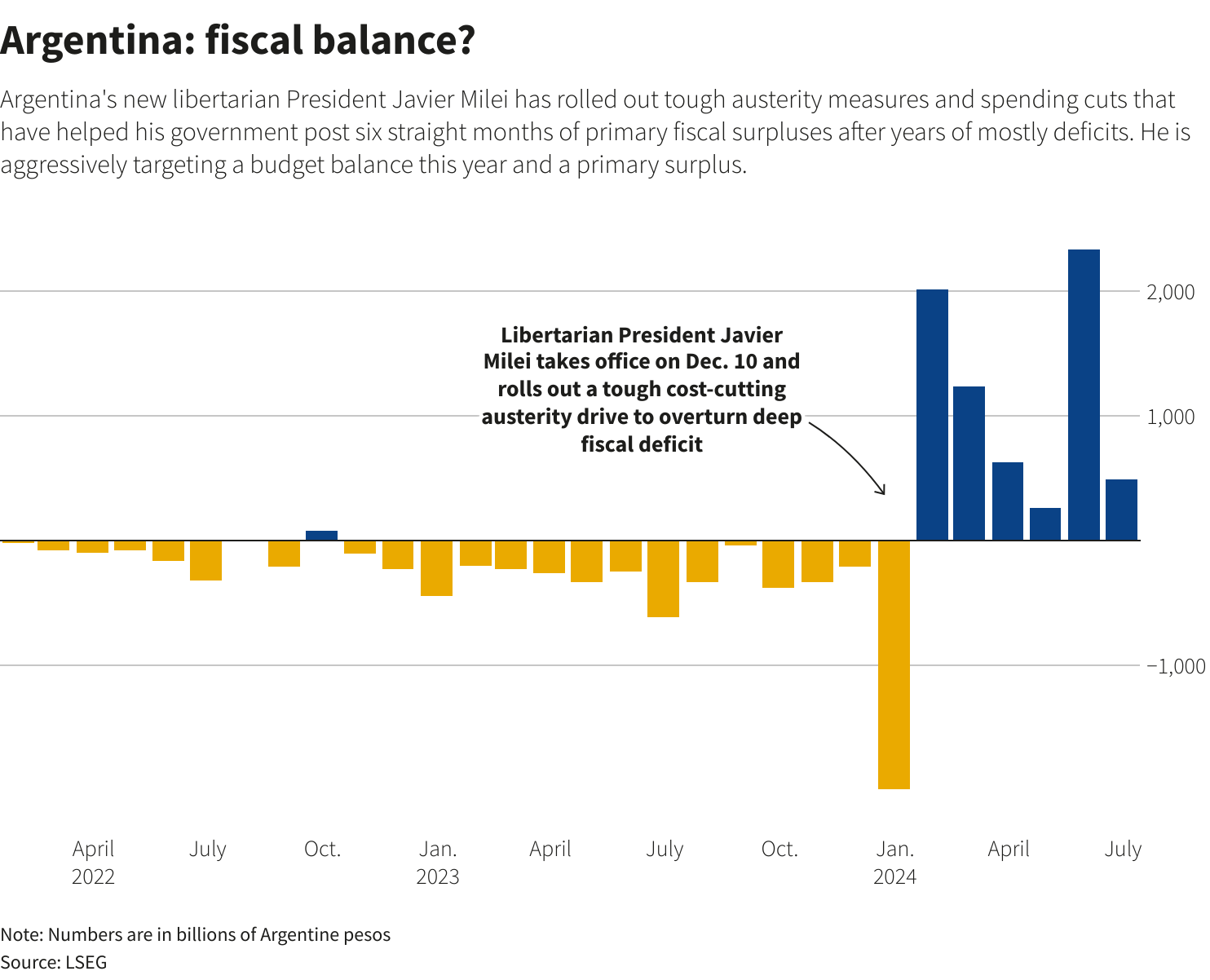
When Milei was elected, Argentina went from constant deficits to almost unprecedented government surplus, and has continued to run a surplus for the past six months.
This wasn’t fancy macroeconomic magic. Milei just cut government spending:
- He eliminated 9 of 18 government ministries, including the Ministry of Culture and the Ministry of Women, Gender, and Diversity.
- He laid off 24,000 government workers (and hopes to increase that to 70,000).
- He cut fuel subsidies (paywalled link)
- He may have cut (or at least not increased, which given inflation levels is an effective cut) funding for universities, which now complain they have no electricity and are giving classes in the dark.
- He has changed the way inflation affects pensions in what was realistically a large budget cut.
- Et cetera.
This source says he cut the size of government by about 30% overall. Unsurprisingly, this eliminated the Argentine deficit.
[…]
6: Overall
When Javier Milei took office, he promised to do shock therapy that would short-term plunge Argentina into a recession, but long-term end its economic woes.
He has fulfilled his campaign promise to plunge Argentina into a recession. Whether this will long-term end its economic woes remains to be seen.
I think he gets credit for some purely political victories (completing the budget cuts he said he would complete), for decreasing inflation, and for improving the housing market. But in the end, history will judge him for whether his shock therapy eventually bears fruit. I don’t think that judgment can be made yet, and I don’t see many economists eager to go out on a limb and say that there are strong signs that his particular brand of shock therapy will definitely work/fail.
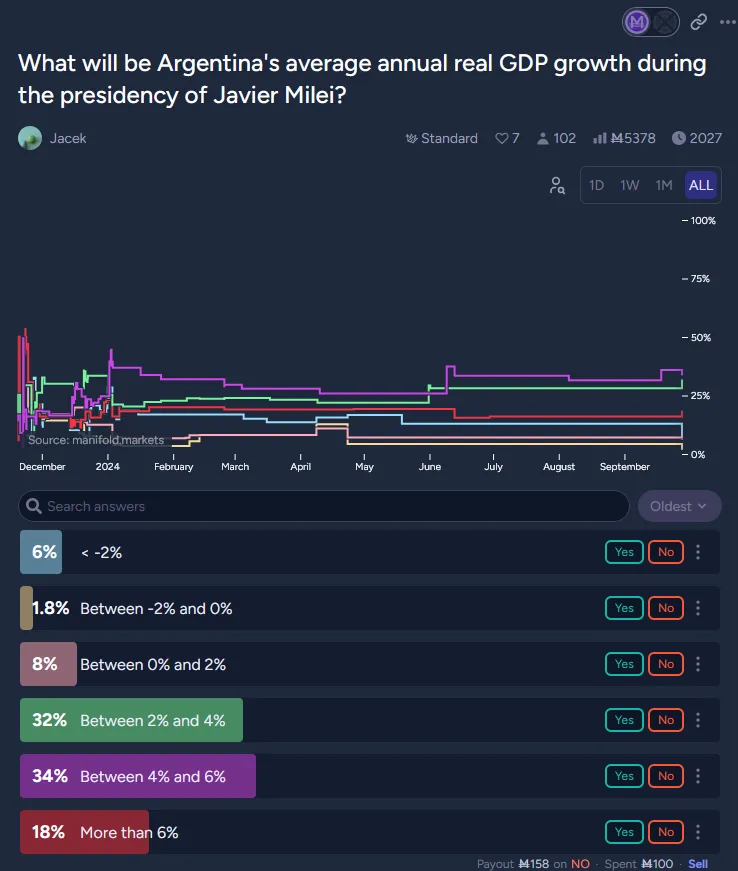
There are disappointingly few Milei prediction markets, probably because it’s hard to operationalize “he makes the economy good”. This multi-pronged mega-market has few traders, and weakly predicts a mix of good and bad things, maybe leaning a little good. But here is a more specific one:
… which compared to Argentina’s historical GDP growth rate seems — no, sorry, Argentina’s historical GDP growth rate is too weird to draw any conclusions.
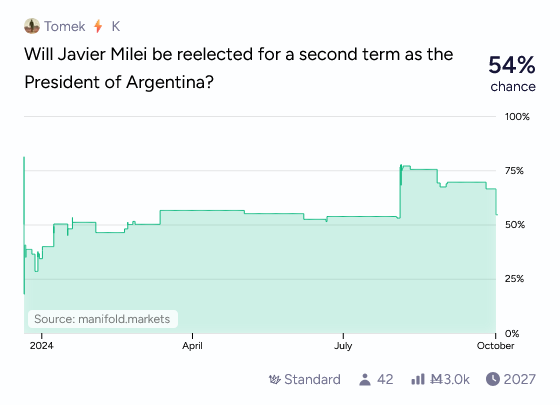
And maybe the most important test:
How Gold Rush Miners Ate in the Wild West
Tasting History with Max Miller
Published Jun 18, 2024Biscuits topped with salt pork milk gravy
City/Region: United States of America
Time Period: 1881Food prices skyrocketed during the Gold Rush. A single egg could cost $1 (in the mid-1800s!), and a barrel of flour went from $3 to a whopping $400, which equals about $16,000 today. Once you had some flour and a few other staples, including the newly invented canned evaporated milk, you could make these biscuits and gravy.
I love biscuits and gravy, and while the best biscuits and gravy I’ve ever had will always be my grandpa’s, this is pretty good. My biscuits turned out a little flat, but that’s just because I forgot the baking soda.
Cream of Tartar Biscuits
Mrs. Milliken
One quart of flour, three heaping teaspoonfuls of pure cream of tartar, a piece of butter two-thirds the size of an egg, well worked in flour, one heaping teaspoonful of Babbit’s salaratus, dissolved in sweet milk. Make the dough as soft as can be kneaded conveniently; roll a half inch thick, cut in biscuits, and bake in a quick oven.
— Los Angeles Cookery, 1881
Comments Off on How Gold Rush Miners Ate in the Wild West
QotD: Alternative history Operation Barbarossa
Trying to predict specific events is of course a mug’s game, but the trend lines are easy to spot. The danger is the nearly irresistible temptation to retcon psychological events into political decisions.
Knowing full well how dumb it is to bring up World War II on the Internet, consider that a pretty reasonable case can be constructed for Operation Barbarossa. Having purged all their competent, experienced officers, the Red Army had just gotten their clocks cleaned by the Finns in the Winter War. Yeah, the Soviets “won” in the end, but with that disparity of forces, there’s pretty much no possible “win” that doesn’t look like a loss … and the Soviets, to put it mildly, were nowhere near that best-case scenario. Moreover, even if you took the show trials for exactly that — kangaroo courts — their very existence showed there was a deep rift at the very top of the Soviet leadership. Anyone, not just Hitler, could be forgiven for thinking that the Soviet Union would collapse under one big sledgehammer blow.1
It works the other way, too. If we accept the “Suvorov Thesis”, that Hitler only attacked Stalin because Stalin was gearing up to attack Hitler, then we can easily construct a similar case from The Boss’s perspective: The Wehrmacht can’t play defense. The one time they came up against anything approaching a real opponent with technological parity (the Battle of Britain), it was at best a bloody draw, more than likely a stinging defeat. And the Hitler regime was reeling, internally. No show trials for der Führer, but Rudolf Hess, who was at least the number three man in the Reich and at the time Hitler’s heir apparent, had just defected to the British. Anyone, not just Stalin, could be forgiven for thinking that the Third Reich would collapse under one big sledgehammer blow.
See what I mean? Both of those cases are quite plausible, and fit with most known historical facts … and yet, they’re retcons. “Rationalizations” might even be a better word, because the thing is, even though those arguments are “logical”, and might indeed have been convincing to important people at the time, that’s not why Hitler did what he did, or why Stalin would’ve done what he would’ve done under the Suvorov Thesis. No, the truth is simpler, and much more horrifying: They would’ve done it anyway, because that’s who they were.
That’s what the Castle Wolfenstein people got right about the Nazis. Same deal with that Amazon show (which was interesting for a season) The Man in the High Castle. In the real world, there’s no possible way the Nazis could’ve invaded the USA, no matter how it turned out on the Eastern Front …
… but in the real world they would’ve tried nonetheless, somehow, because that’s just who they were. Everything Stalin, Khrushchev, et al did during the Cold War here in the real world, Hitler, Heydrich, and the gang would’ve done in the Castle Wolfenstein world where the Battles of Stalingrad and Kursk went the other way.2 They couldn’t have done any different, without being different people, and while it’s fun to speculate on questions like “who would’ve been the Nazi Gorbachev, who self-destructed the Reich by attempting however you say ‘perestroika‘ in German”, it’s not really germane.
Severian, “The Man in the High Chair”, Rotten Chestnuts, 2021-07-05.
1. And Soviet losses were stupendous, utterly mind-boggling, in the first few months of Barbarossa. Tanks and planes destroyed in their tens of thousands, prisoners captured in millions. Even as it became clear that OKW had underestimated Red Army strength by orders of magnitude, it was still almost inconceivable that they had anything left to fight with. Just one more push …
2. This is actually the world of a fun novel, Robert Harris’s Fatherland.
Comments Off on QotD: Alternative history Operation Barbarossa
October 1, 2024
TikTok’s Dissociative Identity Disorder (DID) community
The more we experience the joys of widespread social media, the more people seem to discover ways to bring attention to themselves for genuine or dishonest reasons. Freddie deBoer looks at the DID-sufferers on TikTok and assesses the chance that such a rare disorder can have had so many newly discovered sufferers:
Let me turn back to the TikTok “systems”, the strange, maybe-shrinking world of adolescent women on social media who pretend to have an incredibly rare and debilitating mental illness and treat it as a fun and quirky alternative lifestyle.
This piece from The Verge, though a little misguided, is a good jumping off point for this topic. The basic story is pretty simple. Dissociative identity disorder (DID), long referred to as multiple personality disorder, is a remarkably controversial diagnosis that has long captured the public imagination. It’s not hard to see why; the idea of someone who switches from one personality to the other is lurid and dramatic, making it easy fodder for television. (The number of episodes of legal dramas about DID is immense.) The condition also invites a particularly stark consideration of the question of individual agency and culpability for bad deeds. As you can imagine, pretending to have “alters” can be very convenient; a notorious case involved an embezzler whose only defense for his crimes was that he had multiple personalities and one of them stole the money. There have long been researchers and clinicians in psychiatry who doubt the very existence of DID, and even among those who are friendlier to the concept, the disorder is known to be incredibly rare. Many prominent cases of DID have proven in time to be fraudulent. The most famous American case, that of “Sybil“, was particularly tragic. The woman who supposedly suffered from the disorder, who faced a childhood of abuse and neglect, would go on to admit to her psychiatrist that she had made the alternate personalities up. (We know because we have the letters.) But the doctor, who had been made wealthy and famous thanks to her work with Sybil, threatened to withdrawn her financial support if Sybil did not recant that confession. Having no other choice, she did.
What DID TikTok asks us to believe is that, in the span of maybe half a decade, tens of thousands of adolescent women developed DID, an exceedingly rare disorder marked by symptoms entirely unlike those on your For You page. The Verge article, written by Jessica Lucas, is typical of the media’s take on this issue, to the degree that they’ve written about it at all: relentlessly sympathetic to the DID TikTok adolescents even when grudgingly admitting that there’s a lot of fakery. And admit that she does, as it would be essentially impossible to pretend otherwise. Even the wokest wokie couldn’t help but look at this shit and conclude that a lot of it is bullshit.
The cases of DID that are considered to be particularly valid or believable are very few, and the people who have suffered in them have been people living absolutely wasted lives, lives filled with abuse and instability and addiction and misery; the overwhelming majority of DID TikTokers appear to be living perfectly stable and successful adolescent lives. Those with DID have almost never professed to be able to switch from one alter to another on command; many DID TikTokers playact that exact behavior for their viewers. Alters are notoriously uncooperative towards each other; TikTok DID videos routinely feature alters happily participating in “roll calls” in which they switch from one identity to the next, conveniently timed for the creation of #content. (The DID people claim that really they’re just opportunistically capturing organic switches, but a) it’s very clear that many of these videos are filmed in one day and b) that would still require alters to willingly turn the camera on and get into the costume etc, which is not at all how alters have traditionally acted.) In the DID literature alters are almost never aware of what’s happening when another alter is “fronting”; on DID TikTok they almost universally are, justified with the convenient idea of “co-consciousness,” which is one of many evolutions of DID these people have implemented to allow their little pageant to continue. Most people with DID diagnosis, historically, have not been photogenic women with an interest in getting more followers. I could go on.
Lucas’s piece is particularly useful for the remarkable, remarkably depressing story of Dr. Matthew Robinson, a clinician and researcher from Harvard Medical School’s McLean Hospital. (The site of Girl, Interrupted, among other things.) Like a lot of people in psychiatry, Robinson noted with alarm that his hospital had “been inundated with referrals and requests from schools, parents, and our own adolescent treatment and testing services to assess for symptoms of what [patients] call DID.” He proceeded to discuss the difficulties this sort of situation provokes in an already-overtaxed mental health system, and spoke frankly about the fact that a considerable number of the people presenting with this disorder obviously do not in fact have it. He stated plainly that which many are too circumspect to say, which is that these TikTokers are faking. The consequence, of saying this in a lecture with his professional peers, was review-bombing of the hospital online, threats, a call to have Robinson’s medical license revoked, and sufficient harassment that McLean pulled online videos of the lecture. The online mob engaged in the typical social justice-vocabulary freakout campaign, McLean folded, and as stated in the piece, most researchers are now too scared to publicly comment on this absurd situation. If someone tells you that there is no such thing as a social justice-inflected cancellation campaign, you can point to this exact scenario and to the vicious and vengeful disability rights movement in general.
To be clear, I think that probably literally zero of the people who perform DID on TikTok have the disorder. Zero. I imagine that a significant portion of them have deluded themselves into thinking they do. But I’m quite confident that most of them are very well aware that they’re faking.

Comments Off on TikTok’s Dissociative Identity Disorder (DID) community
Devastation in the Carolinas
My oldest friend moved to the United States many years ago, moving around the country as his job dictated, but a few years back he and his wife found their perfect house near Asheville, NC. We had emailed to see how they were doing, but got no answer. Yesterday, I got a call from my friend’s cell phone to say that he and his wife were fine and they’d taken in an elderly neighbour until things get back to normal, but they currently don’t have electricity, land line telephone, or municipal water, but they’re otherwise fine. Their house is well above flood level, and he has sufficient camping supplies to keep them going for a while. He loaned his chainsaw to another neighbour who was trying to organize work parties to cut away fallen trees and branches and get more of the local roads open again (my friend recently had lyme disease and doesn’t want to trust his hands doing something as risky as running a chainsaw). We kept the call as short as possible, as he’ll have to manually recharge his phone until power is restored.
Virginia Postrel is originally from that same area of western North Carolina and northwestern South Carolina and reports on how her family in the area is doing in the aftermath of Hurricane Helene:

One of the many examples of the “horizontal forest” on nearly every road in Greenville, SC.
Photo by Virginia’s brother Sam M. Inman IV.
If you read my autobiographical reminiscences, you may have realized that I have family in Upstate South Carolina and western North Carolina, which have been hit hard by the unexpected ferocity of Hurricane Helene. Power has been out in Greenville, SC, for days and roads are nearly impassable because of downed trees on nearly every block.
My brother Sam, who went out in a truck on Friday to buy gasoline for his generator, said only about half the stations that had working pumps and were running out of gas quickly. “Lines of cars around the block … reminiscent of the 1970s”, he texted. He went out again today and found a stark difference between local QuikTrip stations and others. At QT, the lines were longer but flowed faster because stations had closed all but a single entrance and exit. Elsewhere, stations were chaotic traffic jams. At one point, he found himself unable to exit after fueling up because the cars behind and in front of him left no to maneuver room. (He persuaded the one behind him to ease away from his bumper.)
The assisted living place where my mother lives has a generator and at first continued to operate its kitchen and elevators. By today, however, the generator had become unreliable, the lights were flickering, few employees could get to work, and the kitchen was offering dry Cheerios for breakfast. Sam brought our mom to his house, which has no power. He later realized that he needed to return to get her medicine, which usually is delivered daily. I can only imagine how residents who don’t have local family — or who are in the memory care wing! — are managing.
Even people who were prepared with generators, many bought after a blizzard 20 years ago, needed gasoline to power them and, they soon realized, adapters to connect them to household appliances. The adapter aisle at Home Depot was quickly depleted.
The good news is that food is available. Grocery stores are operating more or less as normal, assuming you can get to them. When you sell frozen food, you apparently install large, reliable generators.
Meanwhile, my cousin in Asheville finally got weak cell signal back today. We’d been unable to communicate with her before now. With her husband, pets, and 95-year-old mother, she’s evacuating to Winston-Salem through the weekend, hoping Duke Power will live up to promises that power will be restored by Friday but preparing in case it takes a few days longer.
Although terrible in some areas, the flooding isn’t as bad as it might be, thanks to the region’s many man-made lakes. They absorbed water that otherwise would have flowed into populated towns.
Comments Off on Devastation in the Carolinas
The pros and cons of living the digital life
Spaceman Spiff considers how much of modern western life is now being experienced online rather than in the real world and what are the trade-offs inherent in the switch to the life digital:
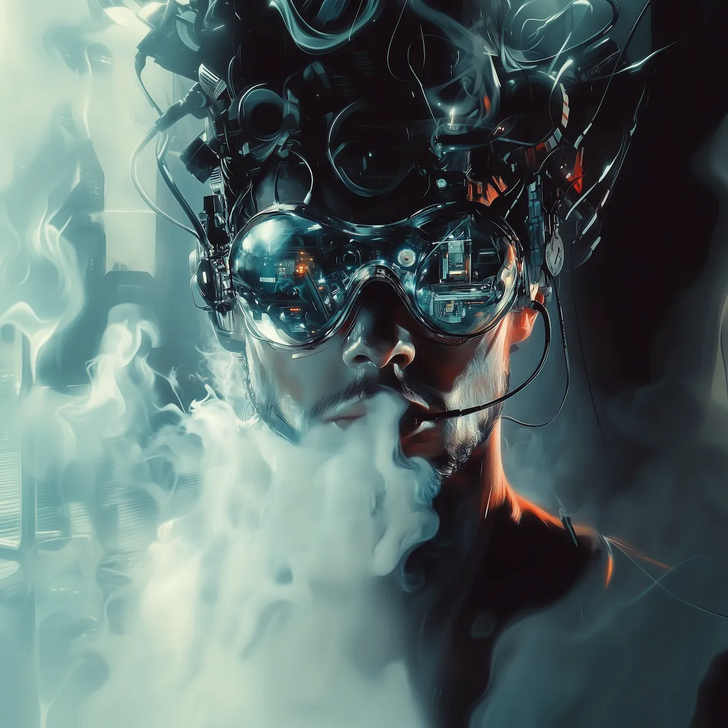
Life is what you pay attention to. Increasingly many of us are immersing into virtual worlds and spending less time out in the real world. We are attending to digital realms.
Everything it seems is going online, from shopping to entertainment to work. Almost no aspect of life remains untouched by the slow creep of technology.
Our entertainment is digital and our social networks are found online. For increasing numbers this may be their only connection to others.
Even work is becoming unavoidably remote with Zoom and comparable tools now standard fare.
The digitization of life continues apace. As a result, we are present in the real world less and less and this cannot be altogether healthy.
Many benefits
There are obvious benefits to our new digital world.
Thanks to the internet much has become convenient and easy. We can access a wide array of goods and have them delivered for a small fee.
The scale of the options is impossible to beat. The real world could not possibly provide the options on display. We can peruse virtual warehouses with everything. No bookstore is as big as Amazon.
The post-Covid world accelerated aspects of digital adoption, particularly video-based conferencing and other virtual tools. This is now ubiquitous, particularly in work settings.
One-click ordering and fast delivery makes everything else seem unreasonably tedious and complicated. It is a hassle going to a physical location to buy clothes or books or food when you can pay a slave to deliver it.
But people sense they lose something with digital tools even when it is convenient to not travel or leave home. It is not the same as face to face. Importantly it brings the world into our homes, so we cannot easily escape.
Other less visible changes are apparent too. We seem to socialize less. We go out less often.
We dine in and often by having unhealthy food delivered, all chosen and prepared by others. The appeal of going out and mixing with strangers is waning.
Behind this is a gradual bureaucratization of everything as we are continually reminded of external dangers; germs, extreme weather, domestic terrorism, none of which are likely to ever touch us but we are told are ever present. These require interventions we never get to vote on but affect us nonetheless.
The safety-obsessed post-Covid world wants you at home where you are safe and sound. Digital tools have proliferated to serve this need.
But of course, for all the benefits we can enjoy for living the internet lifestyle, there are also significant negatives …
Comments Off on The pros and cons of living the digital life
ZH-29 Semiauto Rifle
Forgotten Weapons
Published Apr 16, 2015The ZH-29 was the brainchild of noted Czech arms designer Emmanuel Holek in the late 1920s. It was one of the earliest practical and reliable semiauto rifles available, although Holek and the Brno factory were unable to secure any large orders for it (the three known orders total about 500 rifles, for China, Lithuania, and Ethiopia). Several other countries tested the rifle (including the United States), but none adopted it. The ZH29 was a long-stroke gas piston operated rifle with a tilting bolt which actually pivoted sideways into the left side of the receiver to lock. This design choice led to some unusual geometry to the gun, as the barrel is mounted at an angle to the receiver, so as to be perpendicular to the breech face when the bolt is in its locked position. Manufacturing quality was excellent on these rifles, and they all display a very pretty plum patina today. This particular example has no magazine with it, but my understanding is that ZB26 LMG magazines are a perfect fit.
Comments Off on ZH-29 Semiauto Rifle
QotD: Napoleon Bonaparte and Tsar Alexander I
the houseRussia! — but even without knowing how horribly that turns out, you feel sorry for the guy. Napoleon thinks they have something important in common, and Alexander thinks Napoleon’s very existence is the enemy of the entire old world of authority and tradition and monarchy that he represents.Good thing the Russian Empire never gets decadent and unknowingly harbors the seeds of its own destruction!
John: Yeah, I think you’ve got the correct two finalists, but there’s one episode in particular on St. Helena that edges out his time bro-ing out with Tsar Alexander on the raft. It’s the supremely unlikely scene where old, beaten, obese, dying Napoleon strikes up a bizarre friendship with a young English girl. It all begins when she trolls him successfully over his army freezing to death in the smoldering ruins of Moscow, and after a moment of anger he takes an instant liking to her and starts pouring out his heart to her, teaching her all he knows about military strategy, and playing games in her parents’ yard where the two of them pretend to conquer Europe. Call me weird, but I think this above all really showcases Napoleon’s greatness of soul. That little girl later published her memoirs, btw, and I really want to read them someday.
Jane and John Psmith, “JOINT REVIEW: Napoleon the Great, by Andrew Roberts”, Mr. and Mrs. Psmith’s Bookshelf, 2023-01-21.
Comments Off on QotD: Napoleon Bonaparte and Tsar Alexander I
September 30, 2024
British and Australian schools are teaching boys to hate themselves
Janice Fiamengo discusses the sort of things British and Australian boys are being taught about themselves and their role in society:
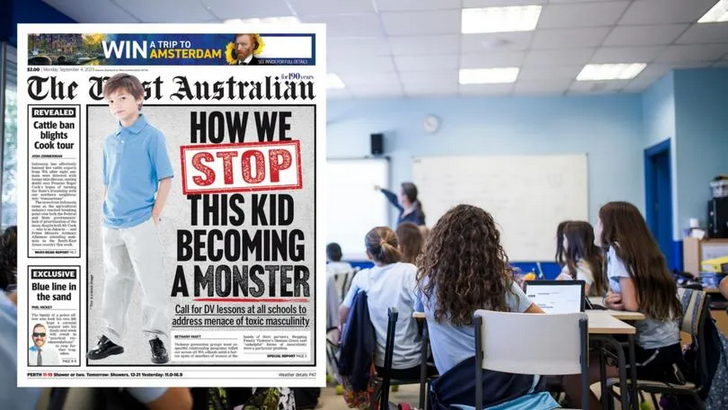
For years, feminists in the English-speaking school systems have done everything they can to psychologically destroy a generation of boys, calling their masculinity “problematic”, “hegemonic” and “toxic”.
At their least malign, feminist teachers have made it clear to boys that their perspectives and experiences aren’t as important as those of girls. Many businesses and organizations support programs aimed at girls’ academic success; there are no equivalent programs for boys. When study after study shows boys lagging behind girls in school, many feminists don’t even pretend to care, blaming the boys, as did Australian feminist Jane Caro, for their alleged privilege. Such ideologues continue to call for more feminist teaching, and moreover take direct aim at schoolboys’ maleness in what scholar Paul Nathanson has identified as a form of identity harassment, a pervasive psychological assault that creates doubt, shame, and alienation.
Under the feminist model, boys learn from a young age that their sex is responsible for violence and other serious harms, and that they must take personal responsibility for it. A few years ago, it came to light that the female principal of an Australian school thought it a good idea to hold an assembly in which the boys were to apologize for male misbehavior to the girl next to them. Naturally, no girls are ever expected to apologize to boys for the misdeeds of the female sex.
Calls regularly circulate, as in the West Australian‘s “How We Stop This Kid Becoming a Monster“, for teaching to address the problem of predatory masculinity. Unless the feminist deprogrammers can get to work in the early years, we’re told, the boys will succumb to their inner monster. Boys learn that they can hurt girls and women even without meaning to, just by looking at them or holding traditional views. As we’ll see, any boy who objects to his own vilification will learn that objecting itself is a technique of domination.
Teaching Toxic Masculinity
A recent report on UK schools provided a glimpse into what feminist instruction looks like, revealing that terms such as “hegemonic masculinity” and “toxic masculinity”, until a decade ago part of the radical feminist fringe, are now in the mainstream of pedagogy even in the lower grades.
The Family Education Trust surveyed materials used by UK schools in their sex education classes. Out of 197 schools that responded to a request for information (more than 100 did not respond), 62 schools confirmed that they were teaching about toxic masculinity. 10 schools even admitted to teaching that “men and boys possess traits that are inherently toxic and negative for society“. (One would be relieved to hear that the principals of such schools and all participating teachers were immediately sanctioned, or at least told to stop such claptrap — but of course such has not occurred.)
One slide from a lesson on toxic masculinity stated that while “masculinity in and of itself is not necessarily a harmful thing […] the way that masculinity is traditionally defined in society can be problematic”. Some of the materials don’t even make sense, as for example the statement that traditional masculine traits “can be limiting for women, girls and other people who don’t identify as men, who are not expected to display these traits”.
Comments Off on British and Australian schools are teaching boys to hate themselves
“This quite obviously proves that free speech is a tyrannical concept”
At The Critic, Titania McGrath decries the manifest horrors of letting ordinary people say whatever they want … without punishment:

“Titania McGrath” and Andrew Doyle
The government has repeatedly pointed out that the riots in the UK were directly caused by bad words on the internet. One of those arrested was an elderly retired midwife from Devon, who had accidentally read an inflammatory Facebook post whilst browsing for cupcake recipes. Within ten minutes, she found herself punching Persian toddlers and throwing grenades at a mosque.
For all the endless whingeing of free speech extremists, Starmer appreciates that words must be controlled to ensure that his subjects behave themselves. Surely most reasonable people would rather have their liberties restricted than live in a fascist state?
The next step is to see Elon Musk extradited. It was bad enough that he renamed Twitter as “X”, which is just a swastika with a few bits chopped off. But he has also allowed users to say whatever they like. As a result, wrong opinions are being duplicated at an alarming rate.
“Regulators around the world should threaten Musk with arrest if he doesn’t stop disseminating lies and hate on X,” wrote Robert Reich in the Guardian. Although I don’t approve of his surname, he makes a valid case.
Back in 2013, Starmer was quoted as saying that too many Twitter prosecutions could “have a chilling effect for free speech”. These were dangerous words, and although Starmer has since changed his mind, he should probably be calling for his own prosecution.
If you don’t want to be arrested, don’t say the wrong things. It really is that simple.
Comments Off on “This quite obviously proves that free speech is a tyrannical concept”
Saving German democracy seems to require not following the law for some reason
[Update below] I’m sure that Germany is being well-served by their politicians who only seem to want to obey the law when it suits them. I mean, that’s how you save democracy, right? By ignoring democratic laws for a “higher good” every now and again?

Jürgen Treutler, the supergenius fascist who discovered that all you need to do to establish fascism is follow all democratic laws and procedures rigorously and to the letter.
They never tire of telling us that we live in a democracy.
This means that that dreaded mass known as “the people” are permitted – with however much groaning and reluctance – to present themselves every four years to choose their representatives. These representatives then betake themselves to the parliament, where they form some manner of government, which proceeds to rule us in highly democratic ways. This is is literally the best thing ever, except for the fact that “the people”, in their profound stupidity, cannot always be relied upon to vote for the right parties. Sometimes they vote for the wrong ones, and in these cases democratic solutions must be found to rein in the rabble’s undemocratic exercise of democracy.
The people of Thüringen have proven themselves particularly inconvenient to democracy, in that they have exercised their democratic rights to vote overwhelmingly for the evil, fascist and antidemocratic party known as Alternative für Deutschland. What makes the AfD so evil and fascist is never quite explained, but we hear all the time that they are very bad so the point must be beyond question. The people of Thüringen transgressed against democracy so powerfully, that they gave the AfD 32 seats of their 88-seat state parliament – far more than they granted to any of the upstanding, democratic parties. These parties include such paragons of democratic virtue as Die Linke (the Left Party), which somehow manages to be both officially democratic and also the direct successor to the DDR-era Socialist Unity Party (they got a mere 12 seats); the Linke-offshoot party known as the Bündnis Sahra Wageknecht (they got 15 seats); the Christian Democrats (they got 23 seats); and the Social Democrats (they got 6 seats, lol).
Now, a naive person might think that the AfD, being the party most favoured by the people of Thüringen, should enjoy certain parliamentary prerogatives. Existing procedures, for example, grant the strongest party the right to propose candidates for the office of parliamentary president. The president is the person who presides over the meetings of the parliament; he is like a glorified committee chair and his powers are not all that great. The very idea that the AfD might have the right to suggest their own candidates for president, however, strikes enormous fear into the hearts of the “democratic” parties, who are determined to save Thuringian democracy by all the antidemocratic means at their disposal. If necessary, we must destroy democracy itself, to save the Thuringian parliament from the spectre of a democratically elected AfD president.
This brings us to the absolute unprecedented clownshow that unfolded yesterday at the Thuringian parliament in Erfurt. It was set to be a day of boring, routine procedure, when the newly elected parliament would constitute itself and elect a president. Thüringen is anomalous, in that this state – alone of all the federal states of Germany – has a specific law mandating adherence to parliamentary procedures. New parliaments cannot just change these procedures on the fly; they have to be officially constituted as a legislative body first. These legally mandated procedures require that an acting “senior president” preside over the first meeting of the new parliament. This senior president is simply the oldest member of the dominant party – in this case an affable rotund AfD politician named Jürgen Treutler.
Update: eugyppius updates the state of play in Thuringia after the relevant court rules that the law can be set aside in this case:
In not-so-good news (but as I predicted), the state constitutional court in Thüringen ruled in favour of the CDU last Friday. The other parties were able to change the procedural rules in the Thuringian parliament and exclude the AfD not only from the office of president, but also from the entire executive committee of the Landtag. The “democratic” parties have also altered procedural rules to reduce AfD representation on parliamentary committees, effectively preventing the strongest party in the Landtag from exercising their blocking minority there.
They really are determined to destroy the democracy to save it.
Comments Off on Saving German democracy seems to require not following the law for some reason
Sulla, civil war, and dictatorship
Adrian Goldsworthy. Historian and Novelist
Published Jun 5, 2024The latest instalment of the Conquered and the Proud looks at the first few decades of the first century BC. We deal with the final days of Marius, the rise of Sulla, the escalating spiral of civil wars and massacres as Rome’s traditional political system starts breaking down.
Primary Sources – Plutarch, Marius, Sulla, Pompey, Crassus, Cicero and Caesar. Appian Civil Wars and Mithridatic Wars.
Secondary (a small selection) –
P. Brunt, Social Conflicts in the Roman Republic & The Fall of The Roman Republic
A. Keaveney, Sulla – the last Republican
R. Seager, Pompey the Great: A political Biography
Comments Off on Sulla, civil war, and dictatorship
QotD: Compound eyes as models of how the surveillance state operates
The compound eye is a good way to imagine how the surveillance state will keep tabs on the subjects in the near future. Unlike the dystopian future imagined by science fiction, it will not be one eye focusing on one heretic, following him around as he goes about his business. Instead it will be tens of millions of eyes obtaining various bits of information, sending it back to the data-centers run by Big Tech. That information will be assembled into the broad mosaic that is daily life.
For example, rather than use informants and undercover operatives to flesh out conspiracies against the state, the surveillance state will use community detection to model the network of heretics. Since everyone is hooked into the grid in some fashion and everyone addresses nodes of the grid on a regular basis, keeping track of someone is now something that can be done from a cubicle. There is no need to actually follow someone around as they go about their life.
For example, everyone has a mobile phone. At every point, the phone is tracking its location, which means it is tracking your location. It also knows the time and day when you go into various businesses. Most people use cards to pay miscellaneous items, so just that information would tell the curious a lot about you. Combine that information with the same information from other phones that come into close proximity with your phone and figuring out the community structure is simple.
Of course, the mobile phone is not the only input device. Over Christmas, millions of Americans were encouraged to install surveillance devices in their homes by friends and family. Maybe it was an Alexa listening device from Amazon or a Nest Doorbell surveillance device from Google. All of these gadgets are collecting data on your life inside and around your home. It is then fed to the same data-centers that have all of your movements and associations collected from your phone.
The Z Man, “The Compound Eye”, The Z Blog, 2020-01-08.
Comments Off on QotD: Compound eyes as models of how the surveillance state operates
September 29, 2024
Fleeced: Canadians Versus Their Banks by Andrew Spence
In the latest SHuSH newsletter, Ken Whyte talks about one of Sutherland House’s most recent publications:
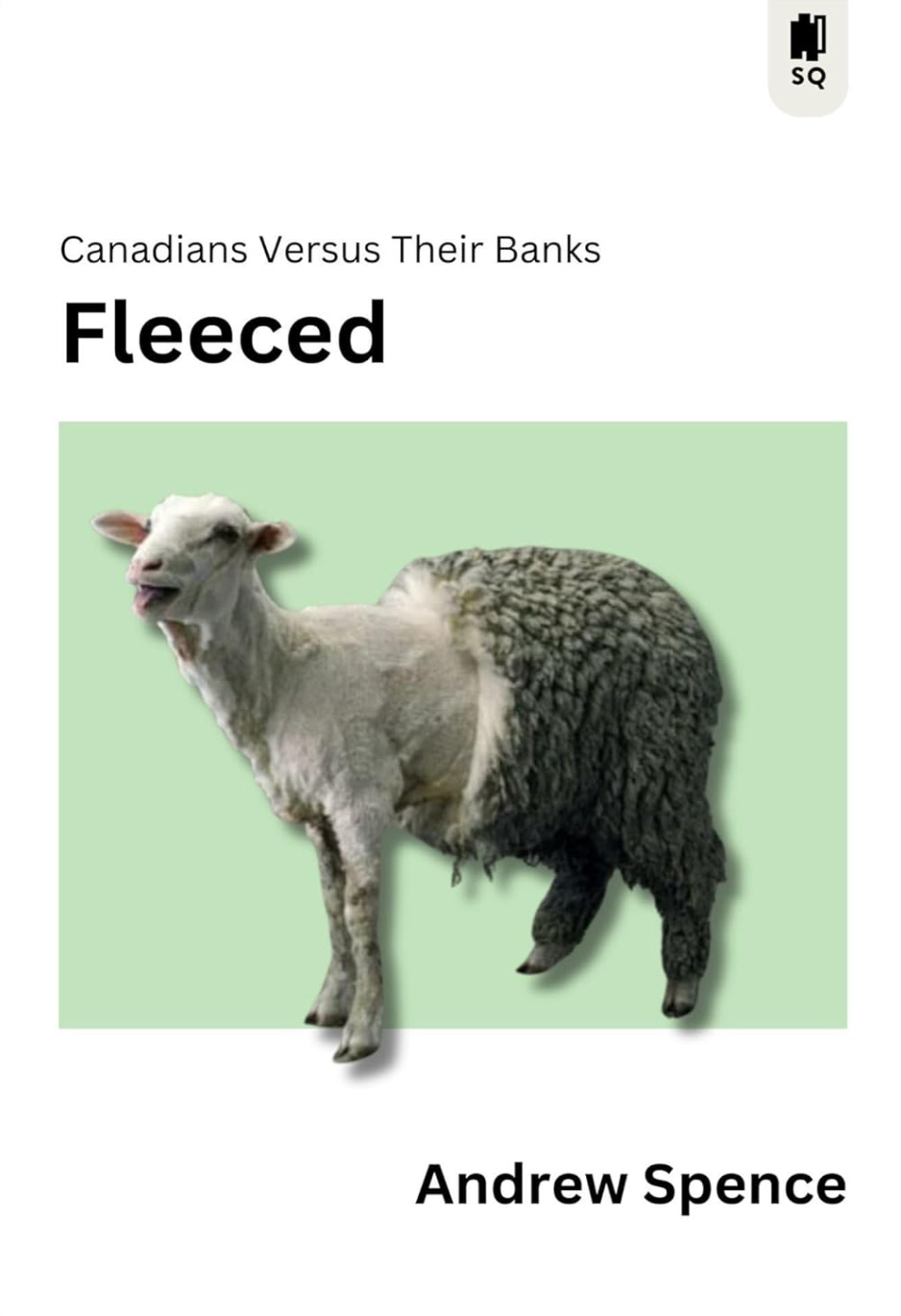
I could write about eight versions of this post based on the many revelations in Andrew Spence’s Fleeced: Canadians Versus Their Banks, the latest edition of Sutherland Quarterly, released this week. I’m going to run with the version most relevant to my fellow publishers and small business people in Canada.
Andrew lays out in aggravating detail how Canadian banks, although chartered by the federal government to facilitate economic activity in the broader economy, do all they can to avoid lending to small and medium businesses, never mind that small and medium businesses employ two-thirds of our private-sector labour force and account for half of Canada’s gross domestic product.
By OECD standards, small businesses in Canada are starved of bank credit, and when they are able to secure a loan, they pay through the nose. The spread between interest rates on loans to small businesses and large businesses in Canada is a whopping 2.48 percent, compared to .42 percent in the US—more than five times higher.
Why? Because Canada’s banks are a tight little oligopoly, impervious to meaningful competition. Their cozy situation allows them to be exceedingly greedy. Their profits and returns to shareholders are wildly beyond those of banks in the US and UK (and, as Andrew demonstrates, their returns from their Canadian operations are far in excess of those from the US market, meaning they screw the home market hardest.)
Our banks never miss an opportunity to impose a new fee, or off-load risk. From their perspective, small business involves too much risk — some of them will inevitably fail. The banks prefer that publishers and dry-cleaners and restaurateurs either finance themselves by pledging their homes, or use their credit cards to cover fluctuations in cash flow or make investments that will help them hire, expand, and grow. And that’s what entrepreneurs do. According to a survey by the Canadian Federation of Independent Business, only one in five respondents accessed a bank loan or line of credit. Half of respondents financed themselves, tapped existing equity and personal lines of credit, and about 30 percent used their high-interest credit cards.
(The banks, incidentally, claim they need to keep credit card rates around 20 percent because their clients are high credit risks when their own data shows the risk is minimal. They simply prefer to gouge customers. To a banker, forcing hundreds of thousands of small businesses to use their credit cards to finance their businesses rather than giving them proper small business loans at reasonable rates is great business.)
By severely rationing credit and making it exceedingly expensive, Canada’s banks siphon off an ungodly share of entrepreneurial profit to themselves while leaving the entrepreneur with all the risk. Their insistence on putting their own profits above service to the Canadian economy is one of the main reasons Canada has such a slow-growing, unproductive economy and a stagnant standard of living.
There is much else in this slim volume to make your blood boil: exorbitant fees on chequing and savings accounts; mutual fund expenses that torpedo investments; ridiculous mortgage restrictions, infuriating customer service …
Comments Off on Fleeced: Canadians Versus Their Banks by Andrew Spence


