
If you pass through Tavistock Square in Bloomsbury, London, you might happen upon a statue of Virginia Woolf that was erected in 2004. You will already know that Woolf was a leading figure in the Bloomsbury Set, that coterie of artists and intellectuals that included E. M. Forster, John Maynard Keynes and Lytton Strachey. But if you scan the QR code next to this statue you can also learn that Woolf was a vile racist who must be condemned by all right-thinking individuals.
Historical context is all very well. When it comes to Woolf, perhaps a few details about her novels To the Lighthouse or Mrs Dalloway would be appreciated, or some information about her relationship with Vita Sackville-West. But no, instead we are to be hectored about her “challenging, offensive comments and descriptions of race, class and ability which would find unacceptable today”. One wonders what the person responsible for these judgmental remarks has ever accomplished, if anything at all. These petty moralists are like the crabs in the bucket, pulling down the most accomplished out of envy and spite.
The best approach to writers of genius is humility, but this quality seems to be on the decline. We see evidence of this in the self-importance of those who have rewritten books by P.G. Wodehouse, Ian Fleming, Agatha Christie and Roald Dahl. It should go without saying that Wodehouse’s prose cannot be improved, least of all by know-nothing activists who have inveigled their way into the publishing industry.
I recently bought the complete set of Fleming’s James Bond books, but I had to seek out second-hand copies to ensure that they had not been sanitised by talentless “sensitivity readers”. Yes of course, these books include sentiments that are unacceptable by today’s standards. But what’s so wrong with that? “All women love semi-rape” is a shocking sentence – in this case, it’s by the female narrator of The Spy Who Loved Me (1962) – but what purpose does censoring the passage actually serve?
The rewriting of books and the creation of cautionary QR codes are symptoms of our current strain of puritanism. These are the descendants of those religious zealots who shut the theatres in 1642 out of fear that the masses might be corrupted. And while I concede that Ian Fleming’s views on relationships between the sexes may not have been progressive, I don’t feel the need to be berated about it before enjoying the adventures of James Bond.
It’s not as though Bond is even meant to be a likeable character; the man has a licence to kill, for heaven’s sake. This isn’t someone you’d wish to invite to a dinner party. In that regard he’s reminiscent of the hero of George MacDonald Fraser’s Flashman series, a character based on the bully from Tom Brown’s School Days by Thomas Hughes. He’s a violent boorish rapist, but the novels are still entertaining because most of us aren’t reading them for moral instruction.
In exploring the gamut of human experience, writers will often feel compelled to recreate the grotesque, the uncomfortable, the outrageous, even the downright evil. Who ever supposed that works of fiction should restrict themselves to rose-tinted idealisations of human existence? Imagine Macbeth without the regicide, or King Lear without the eye-gouging, or Titus Andronicus without the cannibalism. Would Dante’s Divine Comedy retain its power if some “sensitivity reader” excised the Inferno?
Andrew Doyle, “Putting the past on trial”, Andrew Doyle, 2024-07-04.
October 6, 2024
QotD: Putting the past on trial
October 5, 2024
Scary words of 2024 – “Luckily, FEMA is on the case”
As I recounted a few days back, I was relieved to hear from my friend in the Asheville NC area after the region absorbed the damage from Hurricane Helene. Tom Knighton had a similar experience:

A friend of mine lives at the edge of where Helene did her worst. He just got power back on yesterday and was finally able to let me know he was OK. I was worried for obvious reasons.
In the deepest, worst parts of where the storm ripped things to shreds, they’re trying to just make it to the next day. They’re struggling to find clean drinking water, food, shelter, the works.
Luckily, FEMA is on the case.
They took to social media yesterday and posted this crap.
That’s right. People who don’t have internet, phone service, or electricity should call, download an app, or log onto the FEMA website.
I won’t ask how stupid can the federal government be, but I’m worried they’d take it as a challenge.
Back in the day, FEMA would roll into a disaster area with paper applications and facilitate all of that right there. While the internet and smartphones are glorious things, this is a prime example of when they’re a terrible option for people.
Right now, American citizens are struggling. They’re thankful to be alive and are working their butts off to keep themselves alive. They’ve paid taxes their entire lives, and now that they need some of theirs back, their federal government is telling them to do what is physically impossible for many of them.
I can’t help but see this and think that their claims of having enough money in spite of spending hundreds of billions on illegal immigrants ring a tad hollow.
If they have the money, why not put boots on the ground getting people signed up for any assistance they may be entitled to?
Honestly, while I’ve commented before about the gross incompetence of the government in disaster response — and I’ll agree that maliciousness is most definitely a possibility, if not a probability in these instances — this is just weapons-grade … whatever, be it stupidity, meanness, or a combination of both.
Heads should roll.

Update: David Warren notes that it’s not merely FEMA incompetence, it’s active deterrence for private relief efforts by all federal agencies.
From the Internet (for instance updates from Elon Musk), we note that non-governmental charitable efforts are not merely “discouraged”. The government is seizing and impounding desperately-needed local goods and services. The rest of the federal bureaucracy is also “chipping in”, to stifle relief efforts. The FAA, for instance, is restricting private aircraft with supplies, and making it almost impossible to fly drones, demanding that flights be individually approved by their slothful trolls. Those who wish to bring help to the survivors have both the wreckage of the storm, and government agents to block them.
This is how things work in this world, and have worked, since the Reformation, when the state took over welfare, hospitals, schools, and all other eleemosynary institutions. Rather than allow inspiring expressions of Christian charity, they became the means for cynical political posturing and control. And with “democracy”, we have detailed laws and policies, to prevent the people from helping themselves — as they would do, by laws of nature.
Did South Korea Provoke the Korean War?
The Korean War by Indy Neidell
Published 4 Oct 2024Was South Korea on the verge of invading North Korea in 1949? Today Indy looks at the bloody fighting across the Korean border in the years leading up to war. Then he asks the question, why did Kim finally decide to invade South Korea in the early months of 1950?
(more…)
David Friedman on falling birth rates
In the west, generally speaking, female employment and economic power has been rising and birth rates have been falling, except among religious minorities. David Friedman provides some explanations:

“Tetra Pak® – Housewife at the dairy counter in a Swedish shop” by Tetra Pak is licensed under CC BY-SA 2.0 

 .
.
One possible explanation is changes in norms and legal rules that make mate search more difficult. An example is a norm against dating fellow employees and a stronger norm against dating someone who has authority over you or you have some authority over.
For many people, their job is the only context in which they routinely interact with lots of other people, the best environment for mate search. The interaction often provides a way of evaluating someone for characteristics such as honesty and competence as well as compatibility, much harder to do in the context of dating, harder still in computer dating. It works better for people who not only are fellow employees but are actually working together, which often means one just above the other in the office hierarchy.
The same issue arises in the university context. Undergraduates are free to date each other — mate search is arguably one of the main functions of college. Junior faculty members, likely to be unmarried, are commonly not supposed to date students, even students not taking classes from them, certainly not students who are. I am not sure what current norms are for graduate student/undergraduate interaction, expect graduate student/faculty romance to be at least somewhat frowned upon, especially if the faculty member has some authority over the student which is likely if they are in the same field, the context in which they are most likely to get know each other.
Another cause for declining birth rates might be changing norms of courtship. I have not been part of that market for over forty years but I gather from what younger people say online that many men believe that making advances that do not turn out to be wanted is not only embarrassing but dangerous, that they risk being accused of harassment or some related offense. In the student context, many men believe that if a romantic partner changes her mind she can get him into a great deal of trouble by taking advantage of a college disciplinary process heavily biased against men. I do not know to what degree that belief is true but many men believe it is, which could be expected to discourage courtship.
Along related lines:
Also, when I was working for a big time international consulting firm, they tried to come out with a formal rule that said that you were allowed to ask out a co-worker, but only one time. If they said no, you could never ask again. Apparently the Italians howled with laughter and insisted that if this rule was enforced in Italy, no one would ever have kids, as the typical Italian courtship approach involves like a dozen rejections before ultimately the woman finally gives in. (GoneAnon)
That cannot be the full explanation since Italian birth rates are down too. Since birth rates are down in all or almost all developed countries and many less developed ones, it is worth investigating how widespread the relevant norms are.
Housewife Becoming a Low Status Profession
For a very long time, the default system for producing and rearing children was a married couple, with the husband producing income and the wife in charge of running the household and rearing the children. Over recent decades, the woman’s role in that division of labor has become a low status activity, lower status than making a living in the marketplace, much lower than professional success.1 Being an unmarried adult woman used to be, in most contexts, low status, on the presumption that if she could have caught a man she would have. At present, in much of western society, that has reversed — being a married housewife is lower status than being an employed single woman.
…arguments from the stay-at-home moms I know, who say people are constantly giving them grief about it, and who are often looking for some part-time make-work job they can take just so people will stop giving them grief about being a stay-at-home mother (Scott Alexander)
It is possible for a married woman to have both a job and children or for an unmarried woman to have children, but the former is more difficult than for a full time housewife, the latter much more difficult.
1. For a much more detailed presentation of this explanation, along with arguments against a variety of alternatives, see It’s embarrassing to be a stay-at-home mom.
The Woodworker (1940) – Vocational training film
Charlie Dean Archives
Published Aug 10, 2013http://archive.org/details/Woodwork1940
Woodworking in mills, construction and cabinetmaking.
CharlieDeanArchives – Archive footage from the 20th century making history come alive!
QotD: The polis as a physical place
But in a larger polis – and remember, a lot of Greeks lived in larger poleis even though they were few, because they were large – the chora was going to be large enough to have nucleated settlements like villages in it; for very large poleis it might have whole small towns (like Eleusis or Thoricus/Laurion in Attica, the territory of Athens) as part of the chora. But we usually do not see a sort of nested heirarchy of sites in larger poleis; instead there is the astu and then the chora, the latter absorbing into its meaning any small towns, villages (the term here is usually kome), isolated homesteads or other settlements. The polis in the sense of the core city at the center of the community was not a settlement first-among-equals but qualitatively different from every other settlement in the polis – an ideal neatly expressed in that the name of the city served as synecdoche for the entire community (imagine if it was normal to refer to all Canadians as “Ottawans” regardless of if they lived in Ottawa and indeed to usually do so and to only say “Canada” when it was very clear you meant the full extent of its land area).
That is not to say that the astu and chora were undivided. Many poleis broke up their territory into neighborhood units, called demes (δημοι) or komai (κῶμαι, the plural of kome used already) for voting or organizational purposes and we know in Athens at least these demes had some local governing functions, organizing local festivals and sometimes even local legal functions, but never its own council or council hall (that is, no boule or bouleuterion; we’ll get to these next time), nor its own mint, nor the ability to make or unmake citizen status.
There are also some physical places in the town center itself we should talk about. Most poleis were walled (Sparta was unusual in this respect not being so), with the city core enclosed in a defensive circuit that clearly delineated the difference between the astu and the chora; smaller settlements on the chora were almost never walled. But then most poleis has a second fortified zone in the city, an acropolis (ἀκρόπολις, literally “high city”), an elevated citadel within the city. The acropolis often had its own walls, or (as implied by the name) was on some forbidding height within the city or frequently both. This developed in one of two ways: in many cases settlement began on some defensible hill and then as the city grew it spilled out into the lowlands around it; in other cases villages coalesced together and these poleis might not have an acropolis, but they often did anyway. The acropolis of a polis generally wasn’t further built on, but rather its space was reserved for temples and sometimes other public buildings (though “oops [almost] all temples” acropoleis aren’t rare; temples were the most important buildings to protect so they go in the most protected place!).
While the street structure of poleis was generally organic (and thus disorganized), almost every polis also had an agora (ἀγορά), a open central square which seems to have served first as a meeting or assembly place, but also quickly became a central market. In most poleis, the agora would remain the site for the assembly (ekklesia, ἐκκλησία, literally “meeting” or “assembly”), a gathering-and-voting-body of all citizens (of a certain status in some systems); in very large poleis (especially democratic ones) a special place for the assembly might exist outside the agora to allow enough space. In Athens this was the Pnyx but in other large poleis it might be called a ekklesiasterion. The agora would almost always have a council house called a bouleuterion where a select council, the boule (βουλή) would meet; we’ll talk about these next time but it is worth noting that in most poleis it was the boule, not the ekklesia that was the core institution that defined polis government. In addition the agora would also house in every polis a prytaneion, a building for the leading magistrates which always had a dining room where important guests and citizens (most notably citizens who were Olympic victors) could be dined at state expense. Dedicated court buildings might also be on the agora, but these are rarer; in smaller poleis often other state buildings were used to house court proceedings. Also, there are almost always temples in the agora as well; please note the agora is never on the acropolis, but almost always located at the foot of the hill on which the acropolis sits, as in Athens.
And this is a good point to reiterate how these are general rules, especially in terms of names. Every polis is a little different, but only a little. So the Athenian ekklesiaterion was normally on the Pnyx (and sometimes in the Theater of Dionysus, an expedient used in other poleis too since theaters made good assembly halls), the Spartan boule is the gerousia, the acropolis of Thebes was the Cadmeia and so on. Every polis is a little different, but the basic forms are recognizable in each, even in relatively strange poleis like Sparta or Athens. But it really is striking that self-governing Greek settlements from Emporiae (Today, Empúries, Spain) to Massalia (Marseille, France) to Cyrene (in modern Libya) to Panticapaeum (in Crimea, which is part of Ukraine) tend to feature identifiably similar public buildings mirroring their generally similar governing forms.
Bret Devereaux, “Collections: How to Polis, 101: Component Parts”, A Collection of Unmitigated Pedantry, 2023-03-10.
October 4, 2024
Star Trek – “From Quoting Shakespeare to Diversity Woman’s Hour”
Every week, Substack helpfully compiles a list of posts that might be of interest to me, like this one by Isaac Young, discusses the fading phenomenon of Star Trek. (Disclaimer: I was a huge fan of the original TV series, but stopped watching the various Star Trek TV shows late in the Next Generation era and haven’t seen much after that … this essay covers parts of the canon that are largely terra incognita for me.)

In order to understand what a thing is, I believe you must first understand how it dies. Endings are the most important part of a story because they are the culmination of everything that came before. They dictate the legacy and the memory. It is through the ending that we can finally put the body of work in its proper context. What is Romeo and Juliet if we cut the final act out, and can you really understand the play if you stop just before their suicide? So therefore, in order to understand this franchise, I have to begin this essay with Star Trek‘s suicide.
Whatever we make of the heroism of James T. Kirk, the high-minded principles of Jean-Luc Picard, and the reactionary realism of Benjamin Sisko, we have to come to grips with the tragic reality that those things did not last. They were discarded for feminism, queerness, and diversity. And what do those things mean? Modern Star Trek has been quite clear about that. It’s about emasculated men and raging girlbosses. It’s about celebrating every sexual appetite except the one that produces functional families. It’s about fetishizing racial revenge and elevating mediocrity at the expense of excellence.
You’ll find Star Trek has never been more vulgar, more profane, more debauched. It’s small-minded in everything from the cast to production values to the storytelling. It’s about lecturing to the untouchables about their privilege and holding victimhood as the highest virtue. All those tiny elements which we ignored or snickered at in previous shows became the substance of their successors, while those parts we loved about Star Trek — the parts that made it great — were left behind or turned into nostalgia-bait.
The awkward reality of being a normal person from twenty years ago is that every franchise and IP has stabbed you in the back — viciously. And yet despite this, I still harbor a great love for the films and tv series of yesteryear. If I hadn’t, I wouldn’t be writing this essay. It is out of a great sense of love and admiration that I am dedicating this piece, and that is how I want readers to understand my review. I’m not here to tell you Star Trek was evil or anything like that. I’m here to tell you that Star Trek was great — brilliant even, but the rot was there from the beginning.
Looking back, what should I say was the core of Star Trek? Or rather, what was the nature of Star Trek? Was it in those ephemeral elements which turned out to only be in passing? Or was it those elements which had been there from the beginning, and are only now being noticed, like flesh peeling away to reveal the bones of a rotting corpse? And to continue this metaphor, what should I make of this bloated, festering body when its soul has clearly long departed?
But how can I judge old Trek for the new? How can I possibly analyze this franchise with this lens when it has clearly fallen to ideologically captured writers? Surely this once beloved series will course correct once Hollywood hears all the negative feedback from fans.
I don’t know who still believes that anymore, but I feel obligated to address this criticism for that one person who still doesn’t understand how we got here. The world didn’t suddenly turn crazy in 2016. Wokeness is not an aberration or an anomaly, but the logical endpoint of liberalism. It is egalitarianism, personal freedom, and materialism taken to their natural conclusions. It is Star Trek‘s values as they actually operate in the real world.
I can look at franchise, see it as a product of the Left, and reliably chart its degeneration through understanding those values and their decline. Star Trek isn’t bad because it fell to a bad writer’s room or predatory corporate interests. It’s bad because we’re currently in a culture-wide crisis that is affecting every form of media entertainment.
If there is one thing I want to get across in this essay, it’s that what we’re witnessing is the real Star Trek as it springs from its stated values. This is the most honest the series has ever been. Once you strip away the Shakespeare, the heroic characters, the sci-fi concepts, the witty banter, and all the moral framing, this rot is what you’ll find underneath. It’s always been there. The bad news is that Star Trek as the political propaganda it has always been is quite ugly. The good news is that those things which made Star Trek great, those things which reached for the good, the true, and the beautiful—those things are eternal. And they aren’t going to die with Star Trek.
You know the jig is up for “renewables” when even Silicon Valley techbros turn against it
JoNova on the remarkably quick change of opinion among the big tech companies on the whole renewable energy question:
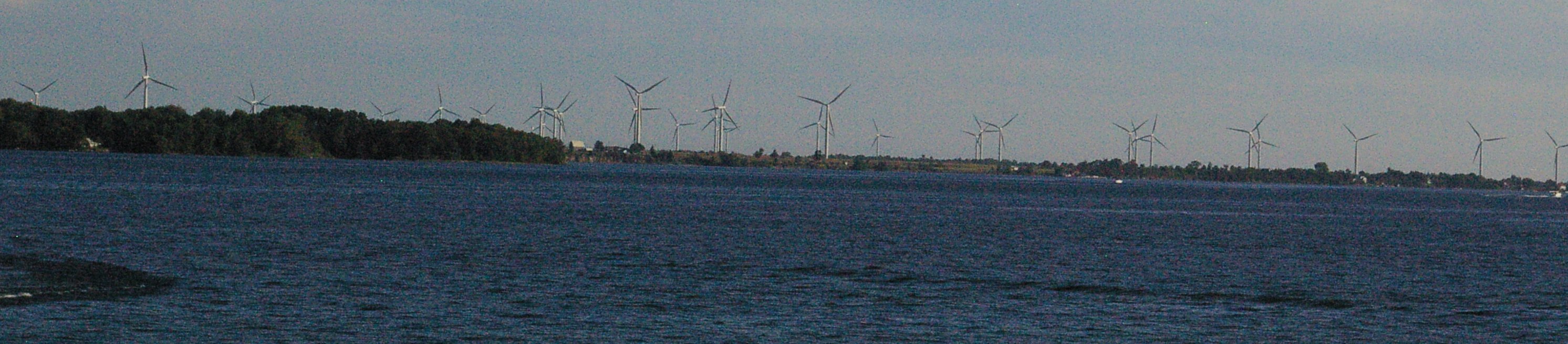
Google, Oracle, Microsoft were all raving fans of renewable energy, but all of them have given up trying to reach “net zero” with wind and solar power. In the rush to feed the baby AI gargoyle, instead of lining the streets with wind turbines and battery packs, they’re all suddenly buying, building and talking about nuclear power. For some reason, when running $100 billion dollar data centres, no one seems to want to use random electricity and turn them on and off when the wind stops. Probably because without electricity AI is a dumb rock.
In a sense, AI is a form of energy. The guy with the biggest gigawatts has a head start, and the guy with unreliable generators isn’t in the race.
It’s all turned on a dime. It was only in May that Microsoft was making the “biggest ever renewable energy agreement” in order to power AI and be carbon neutral. Ten minutes later and it’s resurrecting the old Three Mile Island nuclear plant. Lucky Americans don’t blow up their old power plants.
Oracle is building the world’s largest datacentre and wants to power it with three small modular reactors. Amazon Web Services has bought a data centre next to a nuclear plant, and is running job ads for a nuclear engineer. Recently, Alphabet CEO Sundar Pichai, spoke about small modular reactors. The chief of Open AI also happens to chair the boards of two nuclear start-ups.
Gustloff VG1-5 Nazi Last Ditch Rifles
Forgotten Weapons
Published Nov 20, 2015The Volkssturmgewehr Gustloff, more commonly (albeit incorrectly) known as the VG1-5, was one of the few semiautomatic Volkssturm weapons produced at the end of WWII. I have discussed these rifles before, but wanted to take advantage of the opportunity to take a close look at two more examples of the type.
Mechanically the Gustloff uses a system quite unusual in rifles — gas delayed blowback. Chambered for the 8×33 Kurz cartridge, there are 4 small gas vent holes in the front half of the barrel which vent gas into a chamber in the front muzzle plug. Pressure in this chamber acts to keep the slide closed, thus delayed the opening of the action. A nearly identical system is used in the much later Steyr GB pistol.
One of these in particular still has its original sling, which is a neat feature (the other clearly was issued with a sling but has lost it). In total 10,000 of these were manufactured, but they were not able to make a significant impact to prolong Germany’s war effort.
QotD: Farmers and slaves in ancient Mesopotamia
Scott Alexander, “Book Review: Against The Grain“, Slate Star Codex, 2019-10-15.
October 3, 2024
Middle East situation – “There are really two international delusions we are seeing in play”
CDR Salamander on the situation in the Middle East as we come up on the one-year anniversary of the Hamas terrorist attacks on Israeli civilians on the border between Israel and Gaza:

“Israeli flag, Tel Aviv, Star of David” by Tim Pearce, Los Gatos is licensed under CC BY 2.0 .
Less than a week since the invasion of Israel from Gaza and the resulting pogrom that witnessed the largest one day murder, rape, kidnapping and tortures of Jews since World War Two — it is clear that Israel has decided that it was finally time to reset and repair the damage from decades of bad international theory and delusion.
There are really two international delusions we are seeing in play, one Israel has more control over, one has yet to be fully revealed to be the folly it is.
You can see the threads heading back decades earlier, but the first delusion hit its peak during the Clinton Administration in the 1990s, the withdrawal from the Southern Lebanon security zone in 2000, and finished its summit with Israel’s withdrawal from Gaza in 2005.
The delusion was that The Smartest People in the Room™ in DC, New York, Brussels, and Tel Aviv could, if they talked enough, wished enough, and said nice things to each other enough, would find a way to get the various Palestinian. Hope, wishes, and a mistaken trust in international organizations convinced Israel to give peace a chance.
Peace had a chance, and it culminated on October 7th, 2023.
Now, it appears, Israel will take the world as it is, not as it and others wished it to be. The key part of “this world” that some schools of international security affairs for decades have refused to recognize is the common, evil thread connecting them all: The Islamic Republic of Iran.
Gaza
Hamas was always a proxy for Iran. It could not have been able to be the threat it was without two things: 1) Iran; 2) UN. There can be no returning to the world of October 6th, 2023.
Whatever status Gaza winds up having in the future, it will not be like the past. While there remains much hard work to be done in Gaza, the hardest military part is done. It will be pacified thoroughly, and then the really hard part — what will happen to the population and territory of Gaza — will have to be worked out.
Egypt wants nothing to do with it. The Arab nations have already let it be known they don’t want that radicalized population, and Israel cannot let another Hamas like governance take over that strip of land that points in to Israel like a dagger.
It appears that Israel is following a variation of my COA-A I posted four days after last year’s attacks. The bitter fruit of a half-century of bad theory will have to be fixed, somehow.
Lebanon
From its birth as a Shia militia boosted by Iran, Hezbollah has, even more than Hamas, been a proxy for Iran. Only vaguely connected to the Palestinian cause, it has simply become an advanced military force for Iran’s Islamic Revolutionary Guard Corps.
For a year, well over 60,000 Israeli citizens have been internally displaced from their homes in Northern Israel due to unending rocket attack from Hezbollah in Southern Lebanon. As they rightfully focused on the war in Gaza, (as President Lincoln advised, “One war at a time“), Israel took the blows with minimal response until the last few weeks.
The formerly Christian led government of Lebanon cannot police their own nation, and have not been able to for decades, and the UN is more of a problem than a solution, Israel will have to take steps to secure her own safety.
Like the Gaza situation, this will create problems down the road because the hostile population is not going anywhere. That is an issue for later. For now, the rockets must stop.
Refuting one old myth about “shouting ‘fire’ in a crowded theatre”
In the visible portion of a pay-walled post, Andrew Doyle explains why we should stop using the hoary old anti-free speech cliché that was refuted nearly 50 years ago by the US Supreme Court:
There are few people who are courageous enough to openly admit that they oppose freedom of speech, and so we would be forgiven for thinking that the authoritarian mindset is rare. In truth, those who believe that censorship can be justified typically resort to a set of hackneyed and specious arguments. It doesn’t seem to matter how often these misconceptions are conclusively rebutted, they continue to be trotted out with depressing regularity.
Take yesterday’s Vice Presidential debate between JD Vance and Tim Walz, in which one of these very misconceptions was parroted once again. This is how it happened:
JD Vance: You guys attack us for not believing in democracy. The most sacred right under the United States democracy is the First Amendment. You yourself have said there’s no First Amendment right to misinformation. Kamala Harris wants to …
Tim Walz: Or threatening, or hate speech …
JD Vance: … use the power of government and big tech to silence people from speaking their minds. That is a threat to democracy that will long outlive this present political moment. I would like Democrats and Republicans to both reject censorship. Let’s persuade one another. Let’s argue about ideas, and then let’s come together afterwards.
Tim Walz: You can’t yell fire in a crowded theatre. That’s the test. That’s the Supreme Court test.
The cliché that “you can’t shout ‘fire’ in a crowded theatre” originates in the 1917 United States Supreme Court ruling against Charles Schenck, a socialist who had issued a broadside calling for young men to refuse military conscription and was convicted under the Espionage Act. These were the circumstances under which Justice Oliver Wendell Holmes wrote the statement: “The most stringent protection of free speech would not protect a man in falsely shouting ‘Fire!’ in a theatre and causing a panic”. Note that the word “falsely” is invariably dropped when quoted by advocates for censorship.
Leaving that telling little edit aside, it should be remembered that this was never a legally binding statement. Walz maintains that this is “the Supreme Court test”, but Holmes merely used the analogy to justify upholding Schenck’s prosecution. In fact, the decision of the court in Schenck v. United States was overruled in 1969.

Do I need to say that I didn’t watch the debate? I don’t even watch the debates when I actually have a vote to cast, so I’m going on highly selective sources to at least pretend to care about the VP debate. I do like a waspish line on almost any politician, so Bridget Phetasy’s description gave me a mental image of the event that seems highly truthy: “The vibe of this debate is adult confronting the coach who molested him”. J.D. Tuccille has more:
To illustrate the contrast between the recent presidential debate and this week’s vice-presidential match, I’ll say that I dread either Donald Trump or Kamala Harris taking office as president, but I fear the policies of veep hopefuls J.D. Vance and Tim Walz. At the top of both party’s tickets are individuals of uncertain competence and shaky basic decency, while their sidekicks come off as the designated adults, ready to step in if the winning presidential candidate falters, and more than excited to implement their chosen programs, God help us. That said, Vance had a much better night than Walz.
From the very beginning, J.D. Vance gave us a glimpse of what Trump might be like minus a personality disorder and with focus. He looked cool and collected, with his arguments organized in his head. He was also able to quickly pivot to address — or dodge (this is politics, after all) — the CBS moderators’ questions.
By contrast, Walz appeared like he was sweat-soaking his notes into illegibility as he tried to remember which part of the previous night’s memorized cram session he should spit out. He eventually regained some of his footing, though he generally seemed nervous and unprepared.
“The vibe of this debate is adult confronting the coach who molested him,” quipped podcaster and writer Bridget Phetasy, who isn’t known for being merciful.
The Democrat’s discomfort probably came to a head when he was asked to explain why he long claimed to have been in Hong Kong in 1989, with front-row seats to the Tiananmen Square massacre, when news reports and photographic evidence showed he was at home in Nebraska. Much hemming, hawing and references to a small-town upbringing ensued, which was painful to watch. The closest he came to admitting he lied was conceding, “I’m a knucklehead at times” and that he “misspoke.”
D-Day 80th Anniversary Special, Part 2: Landings with firearms expert Jonathan Ferguson
Royal Armouries
Published Jun 12, 2024This year marks the 80th anniversary of D-Day, the Allied invasion of France which took place on 6th June 1944. From landing on the beaches of Normandy, the Allies would push the Nazi war machine and breach Hitler’s Atlantic Wall.
To commemorate this, we’re collaborating with IWM to release a special two-part episode as Jonathan will look at some of the weapons that influenced and shaped this historic moment in history.
Part 2 is all about the pivotal landings, including allied efforts to aid in its success.
0:00 Intro
0:25 Twin Vickers K Gun
2:03 Pointe du Hoc
2:45 Water off a DUKW’s back?
3:50 Magazines x3
4:07 Usage & History
5:50 Bring up the PIAT!
7:00 Dispelling (Or Projecting via Spigot) Myths
7:55 PIAT Firing Process
9:50 PIAT Details
10:31 Usage in D-Day
13:19 Pegasus Bridge
15:05 MG 42
15:41 Defensive Machine Gun
16:37 1200 RPM
17:35 Replaceable Barrel
19:08 Usage in D-Day
21:37 Sexton Self-Propelled Gun
21:33 Artillery in D-Day
22:15 Run-In Shoot
22:40 The Need for Mobile Artillery
23:25 Usage in D-Day
24:21 17-Pounder Gun
25:11 Function & Usage
26:05 Usage in D-Day
28:00 IWM at HMS Belfast
30:27 Outro
(more…)
QotD: Historical echoes in the American left and right
The Trump movement does have some real [historical Nazi] characteristics. Many low-level people feel remarkably empowered to do things, to get creative to help the cause (and also make some coin; how many Trump medals, flags, and coffee cups does one buy?), and to get out there and just stir the pot for the Orange guy. Then we saw The Donald at the top not exercising real power, other than to exhort others to get shit done, whatever unnamed shit that needed doing.
My first run-through suggests that calling the Juggs and their minions “filthy commies” actually is not just a kneejerk response, but it lands mostly true, in the ways that matter. The Jugg argument that Trump and his people are a bunch of Nazis also has some real truthy elements to it as well (though the true elements are generally probably far afield from the Nazi stuff the Juggs have in mind).
Commies and Nazis gain traction when the basic job of governance is found lacking, and the caliber of people tasked with getting things back in line is not up to the task. Then the various totalitarian solutions become more popular. Even when the intentions are pure (I will give most of the Trump people that assumption), unfettered ambitions, allowed to flower, will go bad if the normal checks and balances of the system are all out of whack. It is just human nature.
Our systems are all out of whack. That is why AOC can call for impeachment of [six US Supreme Court justices] with a straight face, and there is no broadly based “hey, wait a minute, Bucko” response. Things might be too far gone, and there is no way to pull back into a system that actually well serves the average American (think of what constituencies the typical elected official actually serves — the deep state apparat, the ultra-rich guys, and the corporate lobbyists). It all means the Trump movement is a tool, not to restore something, but to accelerate the “get through it and start afresh”. With that in mind, the November results tend to be more of “six of one, half a dozen of the other” than people think they are.
“Dutch”, commenting on “How Juggs Think the World Works”, Founding Questions, 2024-07-02.
October 2, 2024
Poilievre should learn from “Two Tier” Keir’s political stumbles
Sir Keir Starmer swept into office just four months ago, but if you tracked the unforced errors, gaffes, stumbles and bumbles it might as well have been four years instead. Most politicians winning nearly 2/3rds of the seats in Parliament can expect a lengthy “honeymoon” period, but “Two Tier” Keir is far from a typical politician … he’s terrible at his new job. In The Line, Andrew MacDougall charts some of the worst self-inflicted wounds Starmer’s government has suffered and indicates how Pierre Poilievre can avoid them:

Prime Ministers Starmer and Trudeau at the NATO summit in Washington.
Image from Justin Trudeau’s X account.
If Conservative leader Pierre Poilievre thinks he’s halfway home to a happy life in power, he should look across the pond to see the misery now engulfing Sir Keir Starmer and his new Labour government.
Where to start? Sadly for Starmer, there is a smorgasbord of bad political choice.
[…]
And while Starmer did his level best to stay vague during the election campaign about his planned solutions, as all good opposition leaders do in order to minimize incoming attacks, he was meant to have a plan to sort it all out once he got into the building. But there’s no plan. And that’s according to sources inside 10 Downing Street. That’s right: we’re just three months into a majority parliament and a government with a virtually unopposable mandate and the calls are already coming from inside the building saying it’s all gone to shit.
As I was saying, it’s all very late-stage Trudeau.
Fortunately for Canadians who are desperate for a diversion from Trudeau’s path, Pierre Poilievre is a better politician than Keir Starmer. A vastly better politician. And while that might sound like a pejorative in an era where no politician is trusted, the pile of public policy muck heaps facing Western governments won’t be cleared without someone who understands — deeply and intuitively — the politics of the current time.
Starmer understands none of the current dynamic. He defeated the U.K. Conservatives because the U.K. Conservatives defeated themselves. The country would have taken anyone to stop the Tory psychodrama, even a boring North London lawyer who wouldn’t know politics if it smacked him on his newly-tailored arse. People are angry that nothing appears to be working as it should. Not the hospitals. Not the borders. Not the economy. And not their culture. Everything feels different and/or worse to what they’ve come to expect and they blame the (waves arms frantically) “establishment” for their ills. There’s a reason Nigel Farage’s Reform party won its first seats and came second in nearly a hundred more.
People who are already feeling stretched don’t want to hear, as they’ve heard from Starmer, that their taxes are going up. They want to hear they’re going to go down. “Axe the tax”, anyone? They don’t want to hear that things suck; they want to hear how things will get better. They don’t want to be sung hymns about the benefits of immigration. They want to see someone spot the problem that’s gotten out of control and assure them that it’s not racist to do something about it. They want someone who looks and sounds like them, not another politician in a suit saying things politicians in suits always say. They want radical change, not minor dial adjusting on the dashboards of power. Anything else is more of the discredited same.
Canada’s late-stage Trudeau inheritance is daunting. It cannot be avoided. But it must first be acknowledged, not by simply pointing at the last guy and saying “It’s all his fault” (i.e. the classic politician move), but by mirroring the real distress being felt by the many who’ve lost out where and as the traditional power brokers have won. This is where the room to manoeuvre comes from. Something has gone wrong and it’s going to take something different to produce a different result.


