
English Heritage
Published 23 Nov 2018📖 Order your copy of Mrs Crocombe’s cookery book here: http://bit.ly/2RPyrvQ 📖
Join Mrs Crocombe as she makes a traditional plum pudding at Audley End House. This recipe comes from Modern Cookery by Eliza Acton, who is understood to have been the first person to call it “Christmas Pudding”.
Plan a visit to Mrs Crocombe’s kitchen: http://bit.ly/2BtBzoO
Discover the history of Christmas pudding: http://bit.ly/2Bu2WyS
(more…)
December 23, 2024
How to Make Christmas Pudding – The Victorian Way
Comments Off on How to Make Christmas Pudding – The Victorian Way
December 22, 2024
Canada’s founding peoples
Fortissax contrasts Canadians and Americans ethnically, culturally, and historically. Here he discusses Anglo-Canadians and French-Canadians:

The arms of Canada include those of England, Scotland, Ireland and France in that order.
To understand Canada, you must first understand its foundations.
Canada is a breakaway society from the United States, like the United States was a breakaway society from the British Empire. You might even argue that Britain represented a thesis, America an antithesis, and Canada the synthesis.
Anglo-Canadians
Anglo-Canadians are descendants of the Loyalists from the American Revolution. They were North Americans, not British transplants, as depicted in American propaganda like Mel Gibson’s The Patriot. They shared the same pioneering and independent spirit as their Patriot counterparts. All were English “Yeoman” or free men. American history from the Mayflower to 1776 is also Canadian history. It is why both nations share Thanksgiving. Some historians have identified the American Revolution as an English civil war, and this is a fairly accurate assessment.
The United States’ founding philosophy was rooted in liberalism; it is a proposition nation based on creed over blood, shaped by Enlightenment thinkers like Edmund Burke and John Locke, now considered “conservative”. American revolutionaries embraced ideals of meritocracy, individualism, property rights, capitalism, free enterprise, republicanism, and democracy, which empowered the emerging middle class.
Anglo-Canada’s founding philosophy is British Toryism, emerging as a traditionalist and reactionary force in direct response to the American Revolution. During the revolution, many Loyalists had their private property seized or redistributed, suffered beatings in the streets, and in the worst cases, faced public executions or the infamous punishment of tar and feathering. Canadian philosopher George Grant, who is considered the father of Anglo-Canadian nationalism, traced their roots to Elizabethan-era Anglican theologian Richard Hooker.
Canada’s motto, Peace, Order, and Good Government (POGG), reflects a philosophy in stark contrast to the American ideal of life, liberty, and the pursuit of happiness. Anglo-Canadians valued God, King, and Country, emphasizing public morality, the common good, and Tory virtues like noblesse oblige — the expectation and obligation of elites to act benevolently within an organic hierarchy. While liberty was important, it was never to come at the expense of order. Canadian conservatism before the 1960s was not a variation of liberalism, as in the U.S., but a much older, European, and genuinely traditional ideology focused on community, public order, self-restraint, and loyalty to the state — values embedded in Canada’s founding documents.
Section 91 of the Constitution Act, 1867, empowers Parliament to legislate for the “peace, order, and good government” of Canada, giving rise to Crown corporations like Ontario Hydro, the CBC, and Canadian National Railway — state-owned enterprises. Canada’s tradition of mixed economic policies is often misunderstood by Americans as socialism, communism, or totalitarianism. These state-owned enterprises have historical precedents, such as state-controlled factories during Europe’s industrial revolution, often run by landed nobility. Going further back, state-owned mines in ancient Athens and Roman Empire granaries also exemplify this model, which cannot be simplistically labeled as “Islamofascist communism” — a mischaracterization of anything not aligned with liberalism by many Americans, and increasingly many populist Canadians.
It is also a lesser-known historical fact that Canada was almost ennobled into a kingdom rather than a dominion. This idea was suggested by Thomas D’Arcy McGee, a prominent Irish-Canadian politician, journalist, and one of the Fathers of Confederation. Deeply involved in the creation of Canada as a nation, McGee proposed in the 1860s that Canada could be formed as a monarchy with a hereditary nobility, possibly with a viceroyal king, likely a son of Queen Victoria and Prince Albert. He believed this would provide stability and continuity to the fledgling nation. While this idea was not realized, its influence can be seen in the entrenched elites of Canada, who, in a sense, became an unofficial aristocracy.
An element of Canada’s conservative origins can also be found in its use of traditional British and French heraldry. Every province, for example, has a medieval-style coat of arms, often displayed on its flag, which reinforces this connection to the old-world traditions McGee sought to preserve.
McGee’s vision was rooted in his belief in the importance of monarchical institutions and his desire to strengthen Canada’s bond with the British Crown while fostering a distinct Canadian identity. He argued that ennobling Canada would give the country legitimacy and elevate it in the eyes of Europe and the wider world.
French-Canadians
French Canada, with Quebec as its largest and most influential component, has a distinct history shaped by its French colonial roots. Quebec was primarily settled by French colonists, and its unique culture and identity have evolved over the centuries, heavily influenced by Catholicism and monarchical traditions.
The Jesuits and other Catholic organizations played a pivotal role in shaping early French Canadian society. They not only spread Christianity but also laid the foundation for Quebec’s social and cultural identity. The Jesuits, part of the Society of Jesus, were among the first Catholic missionaries to arrive in New France. Invited by Samuel de Champlain, the founder of Quebec, in 1611, they helped convert Indigenous populations to Catholicism but often remained separate from them. By 1625, they had established missions among various Indigenous nations, including the Huron, Algonquin, and Iroquois.
Unlike France, Quebec bypassed the upheavals of the French Revolution and the Reign of Terror. Isolated from the homeland, the Catholic Church in Quebec consolidated its power, and French colonists faced the threat of extinction due to their initially low numbers, particularly during the one-hundred-year war with the Iroquois. This struggle only strengthened their resolve. Over time, this foundation gave rise to Clerico-Nationalism, particularly exemplified by figures like Abbé Lionel Groulx, a theocratic monarchist and ultramontanist influenced by anti-liberal Catholic nationalist movements in France. Groulx and his contemporaries emphasized loyalty to the Pope over secular governments, and their influence was so strong that the Union Nationale government of Maurice Duplessis embodied many of their beliefs.
Attempts to secularize education in the 1860s were thwarted, as the Catholic theocracy shut them down and restored control to the Church. Quebec remained a theocracy well into the 20th century, with the Catholic Church controlling public schooling and provincial healthcare until the 1960s. For much of its history, Quebecois culture saw itself as the last bastion of the traditionalist, Catholic, monarchist Ancien Régime of the fallen Bourbon monarchy. Liberal republicanism and the French Revolution were regarded as abominations, and French-Canadians believed they were the true French.
This mindset persists today, especially regarding Quebecois French. The 400-year-old dialect, rooted in Norman French and royal court French, is still regarded by many French-Canadians as “true French”. However, Europeans often deny this claim, pointing out the influence of anglicisms and the use of joual, a working-class dialect that was deliberately encouraged by Marxist intellectuals and separatists during the Quiet Revolution of the 1960s to proletarianize the population.
December 19, 2024
Learning to Drive a Train with GB Railfreight
Jago Hazzard
Published Aug 23, 2024Training day.
(more…)
Comments Off on Learning to Drive a Train with GB Railfreight
December 18, 2024
The modern Furies
In Greek mythology, the Erinyes (the Furies) — euphemized as the Eumenides (the “Gracious ones”) were the goddesses of vengeance. You may dismiss the ancient Greeks and their beliefs, yet they often encapsulate hidden wisdom for those who know how to interpret their stories. Today, as Janice Fiamengo points out, we have no need for mythological Furies, as they’re frequently embodied in otherwise ordinary women:
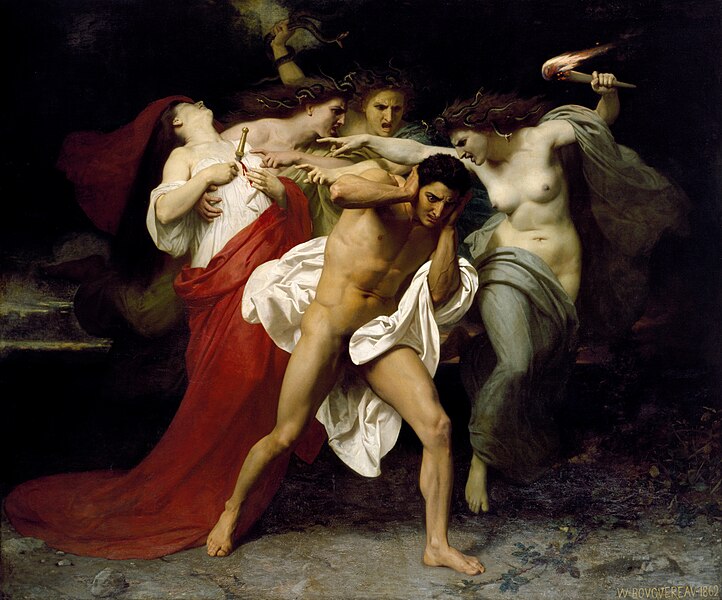
The Remorse of Orestes or Orestes Pursued by the Furies
Oil painting by William-Adolphe Bouguereau, 1862, in the Chrysler Museum of Art via Wikimedia Commons.
Feminist uproar over Trump’s election was easy to predict, and not long in coming. Within ten days of the election, Clara Jeffery wrote in Mother Jones that “Women are furious — in a Greek mythology sort of way“. Taking examples from TikTok, Jeffery chronicled abundant “sorrow, disbelief and terror, but also incandescent rage”, which many women vowed to exorcise on men: “‘If his ballot was red, his balls stay blue‘”, she quoted one.
In The New York Times, a 16-year-old girl, Naomi Beinart, charted her tumultuous emotions, which included a sense of betrayal because her male classmates had carried on with their lives on the day after the election, seemingly immune to the girls’ all-pervasive gloom and outrage. “Many of them didn’t seem to share our rage, our fear, our despair. We don’t even share the same future,” Beinart opined melodramatically.
No one with even a minimal acquaintance with social media can have missed the many similar, raging reactions: the heads being shaved, the death threats, the promised sex strikes, the fantasies of revenge against Trump-voting husbands. We are to understand that the re-election of a man rumored to lack sufficient pro-abortion commitment justifies thousands of self-recorded screams, imprecations, and poisoning plots.
At least one group of women gathered physically in Wisconsin to shout their angst and anger at Lake Michigan, and there have already been tentative (though apparently less enthusiastic than formerly) plans for a revival of the anti-Trump Women’s March protests, in which women with vulgar placards and pink hats exhibited their “collective rage“.
Women’s rage is all the rage.
It is not enough, it seems, for these women to say that they are disappointed by Trump’s win, and certainly inadequate for them to state strong disagreement with his policies or style. Expressing evidence-based positions is the sort of thing a rational person would do, and significant groups of women appear increasingly uninterested in rational talk or behavior. Instead, they reach for the most extreme language, tone of voice, postures and actions to express what feminist journalist Rhiannon Lucy Cosslett called the “visceral” “body horror” produced by the Trump victory, including the “profound physical revulsion” Cosslett and many of her sisters allegedly feel simply as a result of seeing one of Trump’s tweets (talk about fragility!).
Like so many feminist pundits telling us of women’s “horror” and “fury“, the emphasis is squarely on feeling and the female body, as if to bypass the intellect and the will altogether. The idea some feminists once scorned — that women are less reasonable and self-controlled than men — seems to have become a feminist axiom.
[NR: Edited to fix the broken URL.]
Comments Off on The modern Furies
December 16, 2024
The Price of Victory by N.A.M. Rodger
In The Critic, Phil Weir reviews the final volume in N.A.M. Rodger’s three-book study of the history of the Royal Navy:
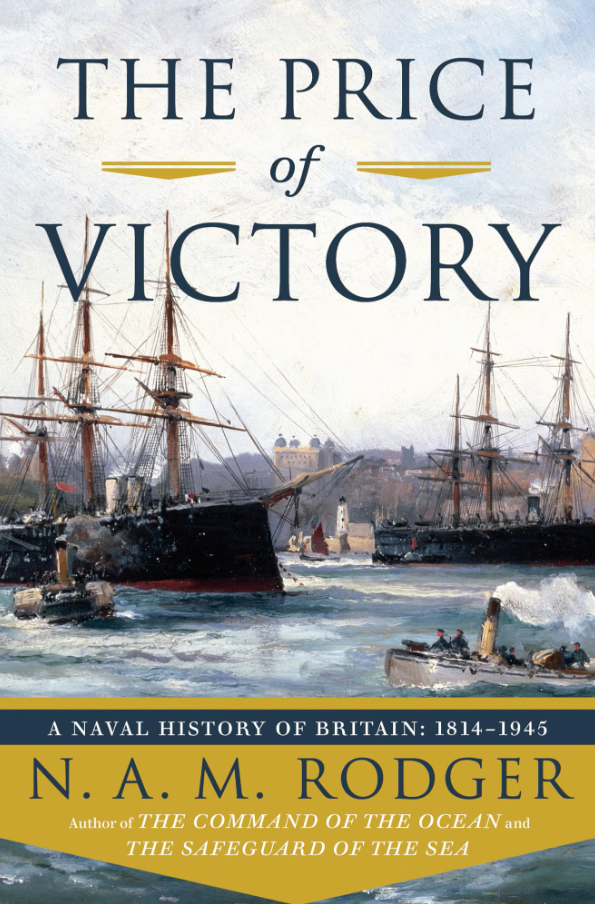
This October a major scholarly achievement was realised with the publication of The Price of Victory, the third and final instalment of N.A.M. Rodger’s great trilogy on the naval history of Britain from 660 AD to 1945. It has been an odyssey, albeit one that to complete took more than three times longer than Homer’s hero took to journey home.
The first volume, Safeguard of the Sea, was published back in 1997, some six years after Rodger had left his job as Assistant Keeper of the Public Records at the then Public Records Office to join the National Maritime Museum. Having moved to Exeter University, he completed the second volume, Command of the Ocean, covering the period from 1649 to 1815, in 2004.
Mindful of the fates of others who have attempted grand, multi-volume naval histories of Britain, Nicholas Rodger, now aged 74, was known to quip that one of his key aims was to become the first historian to live to see it completed. What he describes as “an exciting episode of brain surgery” delayed the completion of the final volume for several years, and left achieving this a closer-run thing than was — one suspects — entirely comfortable.
To the immense relief of all, Rodger recovered to complete his great work, and it has, emphatically, been well worth the wait. The Price of Victory is, like its predecessors, a most substantial work in both physical and scholarly senses.
At the outset of his task, Rodger aimed to create “not a self-contained ‘company history’ of the Royal Navy, but a survey of the contribution which naval warfare with all its associated activities has made to national history”. In doing so, he sought to link naval warfare “to political, social, economic, diplomatic, administrative, agricultural, medical, religious and other histories which will never be complete until the naval component of them is understood”.
He has succeeded handsomely, firmly entwining naval and naval-related matters into the core fabric of the history of the British Isles. The Price of Victory is a worthy conclusion to an epic series that will both stand in its own right and, as he hopes, serve as a baseline for future scholarly endeavours.
The vast, polyglot erudition underpinning Rodger’s prose wears no disguise. Yet, for all its great length and the density of knowledge each page imparts, The Price of Victory is, like its two preceding volumes, a lively read, leavened with the author’s dry wit.
Comments Off on The Price of Victory by N.A.M. Rodger
The academic battle over the legacy of the British Empire
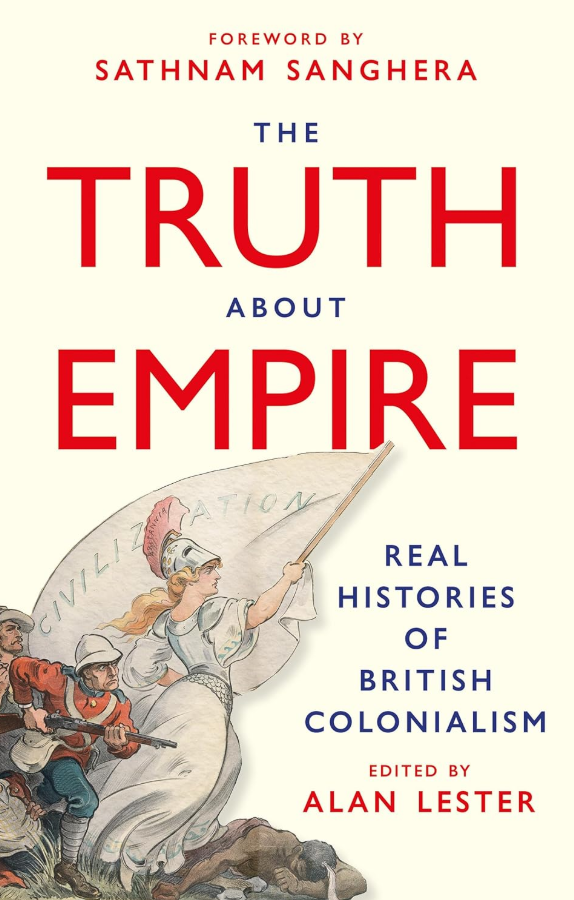
In the Washington Examiner, Yuan Yi Zhu reviews The Truth About Empire: Real histories of British Colonialism edited by Alan Lester:
… the story fitted awkwardly with the new dominant historical narrative in Britain, according to which the British Empire was an unequivocally evil institution whose lingering miasma still corrupts not only its former territories but also modern-day Britain.
When Kipling lamented, “What do they know of England, who only England know?” he was not being elegiac as much as describing a statistical fact. Contrary to modern caricatures, apart from episodic busts of enthusiasm, Britons were never very interested in their empire. At its Victorian peak, the great public controversies were more likely to be liturgical than imperial. In 1948, 51% of the British public could not name a single British colony; three years later, the figure had risen to 59%. Admittedly, this was after Indian independence, but it should not have been that hard. Proponents of the “imperial miasma” theory are right in saying that British people are woefully ignorant about their imperial past; but that was the case even when much of the world was colored red.
The Truth About Empire: Real Histories of British Colonialism is a collection of essays edited by Alan Lester, an academic at the University of Sussex who has been at the forefront of the cultural conflict over British imperialism on the “miasma” side — though, like all combatants, he denies being a participant. Indeed, one of the book’s declared aims is to show that its contributors are not engaged in cultural warring.
Their nemesis, whose name appears 376 times in this book (more often than the word “Britain”) is Nigel Biggar, a retired theologian and priest at the University of Oxford. In 2017, Biggar began a project to study the ethics of empire alongside John Darwin, a distinguished imperial historian. The now-familiar academic denunciations then came along, and Darwin, on the cusp of a quiet retirement, withdrew from the project.
Lester was not part of the initial assault on Biggar but has since then emerged as his most voluble critic. He disclaims any political aims, protesting that he and his colleagues are engaged in a purely scholarly enterprise, based on facts and the study of the evidence.
Yet some of Lester’s public interventions — he recently described a poll showing that British people are less proud of their history than before as an “encouraging sign” — are hard to square with this denial. Biggar, by contrast, is refreshingly honest that his aims are both intellectual and political. I must add that both men are serious scholars, which is perhaps why neither has been able to decisively bloody the other in their jousts.
[…]
“What about slavery?” asks Dubow’s Cambridge colleague Bronwen Everill. Unfortunately, her four pages, which read like a last-minute student essay, do not enlighten us. The most she can manage is to point to an 18th-century African monarch abolishing the slave trade as evidence that the British do not deserve any plaudits for their abolitionist efforts across the world, whose cost has been estimated at 1.8% of its gross domestic product over a period of 60 years.
Meanwhile, Abd al Qadir Kane, Everill’s abolitionist monarch, only objected to the enslavement of Muslims but not to slavery generally, his progressive reputation resting mainly on the misunderstandings of Thomas Clarkson, an overenthusiastic English abolitionist. (Either cleverly or lazily, Everill quotes Clarkson’s misleading account, thus avoiding the need to engage with the historiography on Islamic slavery in Africa.)
Everill’s central argument is that abolitionism allowed Britain to rove the world as a moral policeman and to overthrow rulers who refused to abolish slavery. It is never clear, however, why this was morally bad. If anything, Britain did not go far enough: Well into the 1960s, British representatives still manumitted slaves on an ad hoc basis in its Gulf protectorates, when the moral thing would have been to force their rulers to abolish slavery, at gunpoint if necessary.
Comments Off on The academic battle over the legacy of the British Empire
Whippet – Fast and Furious 1918 | Tank Chats Reloaded
The Tank Museum
Published Aug 16, 2024Was the British Medium Mk A Whippet the world’s first proper tank?
Able to do 8mph, but incredibly difficult to drive, Whippet was far faster than the British heavy tanks of WW1. Using their speed, Whippets were able to operate behind the enemy front line to destroy enemy formations and create chaos. At a stroke, the tank was transformed from what was effectively a siege engine to a fast-moving weapon of attack and exploitation.
At Amiens in August 1918, a Whippet called Musical Box went on a nine-hour rampage in the German Army’s rearward area destroying an infantry battalion, a divisional supply column and an artillery battery, an unheard of feat.
In this film, we look at the Tank Museum’s rare surviving Whippet, what she was like to crew and fight, tell the story of Musical Box‘s rampage and examine the unique achievement of the Whippet on the WW1 battlefield.
00:00 | Intro
02:08 | Breaking the Stalemate
03:45 | A New Design
08:29 | Does It Work?
09:36 | The Tank Corps’ Surprise
11:41 | Proving Its Worth
16:25 | Armoured Warfare RevolutionisedThis video features archive footage courtesy of British Pathé.
Comments Off on Whippet – Fast and Furious 1918 | Tank Chats Reloaded
December 13, 2024
Kemi Badenoch … a Thatcher for the 2020s?
In The Free Press, Oliver Wiseman wonders if new British Conservative Party leader Kemi Badenoch will do for her party what Margaret Thatcher did after she was elected leader in 1975:

“I like fixing things that are broken,” says Kemi Badenoch in her interview with Bari on the latest episode of Honestly. Badenoch, 44, was elected as the new leader of the UK’s Conservatives last month. And luckily for her, there are a lot of things that are broken.
One of them is her party.
In July, after fourteen years in office, the Tories were unceremoniously booted from power. They lost more than 250 of their Members of Parliament in the biggest electoral defeat in the party’s history. On the long road back to power, Badenoch must contend not only with a Labour government with a huge majority in Parliament, but also Nigel Farage — the Brexit-backing populist is on a mission to supplant the Conservative Party as the main alternative to Labour.
If Badenoch somehow manages to fix her party and return to power, she must then figure out a way to fix Britain — a country where wages have stagnated for a generation, public debt has ballooned, and there’s widespread anger at high rates of immigration. As another Brit, Free Press columnist Niall Ferguson, put it recently in these pages: “Lately it seems that mine is a country with a death wish.” (Read his full account of what ails the UK here.)
In other words, Badenoch has a daunting in tray. And yet many — including Niall — are bullish on Badenoch, who he believes could be a “black Thatcher”.
As a woman in charge of the Conservative Party, Badenoch was bound to be compared to the Iron Lady. But in this case there are undeniable parallels. Much like Thatcher, Badenoch mixes steely determination with charm and charisma. She also, like Thatcher, knows what she believes. Her diagnosis of her party’s problems is straightforward: It has strayed too far from the values that have historically made it — and Britain — so successful.
And while Thatcher and Badenoch’s backgrounds are very different — one grew up in provincial England, the other spent most of her childhood in Nigeria — they are both self-made women with an appetite for hard work. Badenoch’s own story, and her family’s, is central to her politics. “I know what it is like to be wealthy and also to be poor,” she says today on Honestly.
There’s one other Badenoch–Thatcher parallel: the circumstances in which they took over their party’s leadership. Thatcher became Tory leader in 1975 — then, like today, a malaise had descended over the country, one that would lift during her time in office. These comparisons may be unavoidable, but does Badenoch welcome them? Bari asked her that in their conversation. “She is a heroine of mine. So it’s very flattering,” said Badenoch. “But it’s also quite heavy and she’s a different person. I admire her. But I want people to recognize that I’m not a pastiche of this person, that I am my own person.”
Comments Off on Kemi Badenoch … a Thatcher for the 2020s?
December 12, 2024
QotD: The “natural cycle” of empire
One of the recurrent concepts in the study of history is that of the “natural cycle”, and its most enticing form is that of “collapse”. The Rise and Fall of the Roman Empire. The Rise and Fall of Feudalism. The Rise and Fall of the British Empire. All of these are, of course, ridiculous oversimplifications.
Arguably the evolution of the British Empire into a Commonwealth of 70-odd self-governing nations, many of them with stable democratic governments, who can all get together and play cricket and have Commonwealth Games (and impose sanctions and suspensions on undemocratic members): cannot be considered much of a “collapse” when compared to say the Inca or Aztec civilisations. Nor can post Medieval Europe be considered a “collapsed” version. Even Rome left a series of successor states across Europe – some successful and some not. (Though there was clearly a collapse of economics and general living standards in these successor states.) The fact that the Roman Empire survived in various forms both East – Byzantium – and west – Holy Roman Empire, Catholic Church, Christendom, etc – would also argue somewhat against total collapse. Still the idea has been popular with both publishers and readers.
Yet the “natural cycle” theory has been revisited recently by economic historians in such appalling works on “Imperialism and Collapse”, as The Rise and Fall of the Great Powers. [That’s the one where the Paul Kennedy explained how US power “has been declining relatively faster than Russia’s over the last few decades” (p.665) – just before the Berlin Wall came down.]
Nigel Davies, “The Empires of Britain and the United States – Toying with Historical Analogy”, rethinking history, 2009-01-10.
Comments Off on QotD: The “natural cycle” of empire
December 11, 2024
The Korean War 025 – UN Forces Abandon Pyongyang – December 10, 1950
The Korean War by Indy Neidell
Published 10 Dec 2024This week, UN forces in the west pull out of the North Korean capital Pyongyang. In the east, the marines continue to fight their way towards safety. Over in Washington, the aftershocks of the Chinese intervention have shaken high command as much as they have the troops on the ground, and America’s allies, especially Britain, grow alarmed over the US response.
Chapters
00:00 Intro
00:26 Recap
01:20 The Blame Game
03:58 Retreat in the West
07:43 The Chinese Situation
10:59 Escaping Chosin
13:57 Atoms and Attlees
18:07 Summary
18:20 Conclusion
(more…)
Comments Off on The Korean War 025 – UN Forces Abandon Pyongyang – December 10, 1950
QotD: Simon Leys on George Orwell
What Leys wrote in 1984 in a short book about George Orwell might just as well have been written about him: “In contrast to certified specialists and senior academics, he saw the evidence in front of his eyes; in contrast to wily politicians and fashionable intellectuals, he was not afraid to give it a name; and in contrast to the sociologists and political scientists, he knew how to spell it out in understandable language.”
Leys drew a distinction between simplicity and simplification: Orwell had the first without indulgence in the second. Again, the same might be said of Leys — who, of course, like Orwell, had taken a pseudonym, and with whose work there were many parallels in his own.
But immense as was Leys’s achievement in destroying the ridiculous illusions of Western intellectuals, as Orwell had tried to do before him, it was a task thrust upon him by circumstance rather than one that he would have chosen for himself. He was by nature an aesthete and a man of letters, and I confess that great was my surprise (and pleasurable awe) when I discovered that he was, in addition to being a great sinologist, a great literary essayist.
Theodore Dalrymple, “Rare and Common Sense”, First Things, 2017-11.
Comments Off on QotD: Simon Leys on George Orwell
December 9, 2024
Public wash-house Liverpool (1959) | BFI National Archive
BFI
Published Dec 12, 2017Admire the industriousness of the Liverpool women who transport huge bundles of laundry to and from the local wash-house every week, crammed into old prams or balanced skilfully on their heads. The wash-house doubles as a social hub for the women, with a cafe and creche facilities. At the time of filming, this one in the Pontack Lane area was one of 13 remaining original public wash-houses in the city, although new more modernised buildings were under construction. Liverpool’s last working wash-house closed in 1995.
The peppy documentary not only looks at the modern wash-house, but introduces the story of Kitty Wilkinson, “the Saint of the Slums”, who pioneered the public wash-house movement in Liverpool during the 1832 cholera epidemic. John Abbot Productions, who made the film, specialised in sponsored non-fiction films from the late 1950s to the late 1970s.
(more…)
Comments Off on Public wash-house Liverpool (1959) | BFI National Archive
December 8, 2024
Why your landscape photos are boring 🥱
Yorkshire Photo Walks
Published Jun 9, 2024In this video Tom outlines a five-step process for turning your landscape photos from flat, boring shots to professional looking images.
(more…)
Comments Off on Why your landscape photos are boring 🥱
QotD: Who invented the vending machine?
Richard Carlile was a shit-disturbing English bookseller. He insisted on selling Thomas Paine’s The Age of Reason despite it being seditious and blasphemous for its attacks on organized religion, particularly the Church of England. Impressively stubborn, Carlile was arrested in 1819, imprisoned, and fined a massive £1,500 for selling Paine’s work. While a guest of the state, his wife, Jane, and other associates kept selling The Age of Reason, leading to more arrests.
Sometime around his release in 1822, Carlile came up with the idea of automating sales. His device was crude, but effective. A person inserted coins and pulled a lever that opened a compartment from which a copy of The Age of Reason could be retrieved without human intervention. Police had no one to arrest for selling seditious material.
The book vending machine didn’t keep Carlisle out of jail — he would spend nine years locked up for acts of political rebellion. Nor was he able to patent his device. I admire the hell out of him, tho.
Jump ahead to the early twentieth century and vending machines were being used in France and Germany to sell newspapers, postcards, maps, as well as books. The idea crossed the English Channel in 1937. Allen Lane, who single-handedly invented the modern paperback and founded Penguin Books with his brothers in 1935, launched the Penguincubator two years later. Based on the German machines, it was described by the Times as “an unfamiliar contraption of metal and glass”. Lane installed it at 66 Charing Cross Road, outside Collet’s bookshop.
Lane’s contraption was no more successful than Carlile’s. It got wheeled out of Collet’s shop at closing time every night and wheeled back in every morning when the shop opened. Another Charing Cross bookseller recalled seeing letters shoved under the shop’s door each morning complaining of coins lost in the machine. Customers also learned that you only had to pound the side of the box in order for it to disgorge about a third of its inventory. The Bookseller reported that when this was pointed out to the manager of Collet’s, he “gave his incontinent robot a terrific thrashing. As a result of this all the rest of the Penguin’s promptly fell out.”
That perhaps explains why I couldn’t find a mention of the Penguincubator in Stuart Kells’ otherwise excellent book, Penguin and the Lane Brothers: The Untold Story of a Publishing Revolution.
Ken Whyte, “Have I got a business for you!”, SHuSH, 2024-09-06.
Comments Off on QotD: Who invented the vending machine?
December 6, 2024
Victoria’s Canada through the eyes of British visitors
In UnHerd, Michael Ledger-Lomas considers what earlier British visitors to Canada after Confederation wrote about their experiences:
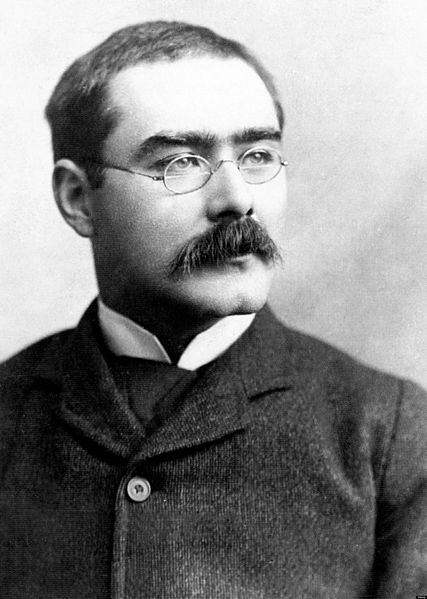
Portrait of Rudyard Kipling from the biography Rudyard Kipling by John Palmer, 1895.
Photo via Wikimedia Commons.
… The re-election of Donald Trump, who has already daydreamed about turning Canada into his 51st state, might even rekindle Tory patriotism. After all, their Victorian ancestors created the dominion of Canada in 1867 to keep British North America from the clutches of the United States.
A longer view shows that Canada has allured but also vexed British observers ever since its creation. The Edwardian era produced an especially rich crop of writings on Canada. In 1887, the year of Queen Victoria’s Golden Jubilee, the first train from Montreal pulled into Vancouver. This completion of the Canadian Pacific Railway (CPR) had persuaded the Crown colony of British Columbia to join in the new federation. In expanding Canada, the CPR also made it easier for British people to see the country. Having crossed from Liverpool to Montreal on a fast liner, they could visit most of its major cities, which were found on or near the railway.
Literary celebrities did so in enviable conditions. The CPR’s bosses loaned the poet Rudyard Kipling his own carriage in 1907, so he could travel in comfort and at his own speed. His impressions, which appeared in newspapers and then as Letters to the Family (1908), make for particularly resonant reading today. Although a man of strong prejudices, he had seen the country up close, rather than merely retweeting allegations about it, and was prepared to be surprised as well as disappointed by it.
Kipling’s contemporaries travelled with heavier and very different ideological baggage than we carry today. It was not wokery that worried them, but irreligion and greed, two poisons that had crept north from America. When the clergyman Hensley Henson steamed into Vancouver, in July 1909, he was horrified to see its beaches plastered with “vulgar advertisements”. The further [East] he travelled, the worse things became. The Anglican clergy were “weaklings” who made no dent on a materialistic society. Winnipeg was given over to “graft”. Young people in Ontario spoke like gum-chewing Yankees. Quebeckers were despoiling their province by setting up hydroelectric dams on its waterfalls.
Kipling did not share Henson’s churchy desire to scold his Canadian hosts. He was a cheerful freethinker who considered materialism a necessary part of nation-building. Canada had “big skies, and the big chances”: he admired its railway workers and lumberjacks for their insouciant and sometimes drunken swagger. Boom towns like Winnipeg excited him: he loved to see office blocks rise and streets flare with natural gas lamps; he lost considerable sums speculating on Vancouver real estate.
What worried him was rather Canada’s fading strategic commitment to the Empire. The modern Right understands Canada as a battleground for the values of “the West”. Kipling, who had married an American and lived for some years in Vermont, naturally believed in and did much to formulate the fervent if vague sense that English-speaking peoples share a civilisation. Yet this did not weaken his overriding concern for the political cohesion of the British Empire. Canada’s failure to join as enthusiastically in Britain’s recent war against the rebellious Dutch Boers of South Africa as he would have liked weighed on him — so much so that he kept calling the prairie the “veldt”. Kipling regarded the scepticism of Liberals and Socialists at home about whether the Empire offered value for money as a “blight”: now this “rot” seemed to be spreading like Bubonic plague, “with every steamer” to Canada.
The way to draw the dominion back to the motherland was to fill it with English settlers who shared his distaste for domestic Socialism. The dilution of English Canada worried Kipling. He allowed the Francophone Catholics of Quebec their differences — he found their basilicas romantic — but the policy of settling the prairies with hardy Slavs from the Habsburg and Russian Empires appalled him. These “beady-eyed, muddy-skinned, aproned women, with handkerchiefs on their heads and Oriental bundles in their hands” could never assimilate to English Canada. Nor did he care that many were fleeing oppression: people who renounce their country have “broken the rules of the game”.
Comments Off on Victoria’s Canada through the eyes of British visitors


