Quotulatiousness

April 2, 2022

Lessons from Operation Unifier — Canada’s military training mission in Ukraine (2015-present)

Filed under: Cancon, Europe, Military — Tags: , , , — Nicholas @ 03:00

In The Line, Paul Wells talks to Lieutenant Colonel Melanie Lake, Royal Canadian Engineers, who commanded Operation Unifier from March to September, 2021:

Operation Unifier shoulder patch for Canadian troops in Ukraine.
Detail from a photo in the Operation Unifier image gallery – https://www.canada.ca/en/department-national-defence/services/operations/military-operations/current-operations/operation-unifier.html

Lake has had a hell of a career, as high-ranking soldiers usually have, though I cover soldiers rarely enough that I always manage to be surprised. She’s from Churchill Falls, Labrador and has a degree in chemical engineering from the Royal Military College. She served three tours in Afghanistan, including one collecting HUMINT, or human intelligence — interviewing Afghans in Kandahar for information on the insurgency. Later she led an explosives-clearance operation at Winisk, ON, way up north on Hudson Bay, where a DEW Line outpost had been shut down so quickly in the 1960s that large quantities of TNT had been left buried too close to the ground for comfort. This involved a lot of camping and trying to figure out how to explode only those parts of the landscape they wanted to explode, while trying not to explode one another. Canadian Forces Rangers worked with Lake’s team, keeping polar bears away. She really is a problem solver.

Lake confirmed both of my hunches about Op Unifier, at least in part. She sees a Ukrainian army that is performing well for specific important reasons, and a Russian army that is having serious trouble its commanders should have expected. She does think she and her colleagues in Op Unifier and other Western training missions — the United States, United Kingdom and Lithuania — can take some satisfaction in contributing to the substantial improvement of the Ukrainian defence effort since 2014. But she was careful to put a low ceiling over that effect.

“Certainly what the training missions provided have helped,” she said. “But I want to be really careful about taking credit for the performance that we’re seeing right now. We can’t teach courage. And [the Ukrainians] are showing that in spades.”

Where did training help? “The area where I think we had a really big influence is in helping them understand or institutionalize the idea of mission command. And decentralized decision-making — pushing authority and decision-making power down to lower levels. And helping them build a professional senior NCO corps. Those are things that, you know, when you look at the old Soviet system were certainly non-existent.”

Let’s unpack this. “Mission command” is a term of art in Western militaries. It holds commanders, down to quite junior levels, accountable for results while leaving them wide latitude to decide methods. How junior? “Senior NCO” refers to sergeants — career soldiers who’ve risen from the enlisted ranks and who are responsible for a section, which is between 6 and 20 soldiers. Canadian doctrine, American doctrine, NATO standards dictate that it should be routine for higher echelons to trust a section sergeant to figure out how to accomplish a task, and that’s something the Canadians have passed on to their Ukrainian colleagues.

The Russians haven’t built that trust into their system. This is an understatement. “A lot of what you’re seeing on the Russian side — you know, we keep talking about these general officers who are getting picked off, because they’re so far forward. They have no decentralized decision-making and their communication chain is breaking down. So you’ve got these generals going forward, way too far forward, trying to sort things out. And they’re just getting picked off left, right and centre. So training matters. Training matters an awful lot.”

To an Ottawa political reporter in the Trudeau era, there is a metaphor here as big as a billboard about what happens when too much decision-making is too centralized. But maybe just this once, I’ll resist the urge to jump in, more than I just did, and I’ll let Lake keep telling her story.

March 31, 2022

Canada’s F-35 procurement process — “Dysfunctional, but, like, a masterpiece of dysfunction.”

In The Line, Matt Gurney reveals the embarrassing secret of his life: he has “a favourite Canadian military procurement fiasco”. He’s quite right that there’s a distressingly wide variety of procurement cock-ups to choose from since the 1960s, but in his opinion the F-35 saga is the best:

“F-35 Lightning II completes Edwards testing” by MultiplyLeadership is licensed under CC BY 2.0

Having a favourite Canadian military procurement fiasco feels perverse, in a way. It’s like having a favourite gruesome sports injury. Procurement fiascos are bad. We want fewer of them. There’s nothing to be celebrated when yet another one barfs all over the national rug. And yet I find myself indulging a bizarre fondness for a mostly overlooked low point in our long, embarrassing journey to this week’s re-decision to buy a fleet of F-35 fighter jets for the Royal Canadian Air Force. As bad as the low point was — and it was really bad — it also so perfectly summed up our utterly manifest dysfunction that I’ve come to almost admire it. It’s awful, but it’s a pure form of awful. Dysfunctional, but, like, a masterpiece of dysfunction. You couldn’t ask for a better example of what’s wrong with us.

[…]

That wasn’t the original plan; the Liberals first proposed buying 18 new F-18 SuperHornets, the more advanced American successor to the original F-18. That idea fell through due to a trade spat between Canadian darling Bombardier and Boeing, the SuperHornet manufacturer. This was the point of no return: the Boeing dispute was another opportunity for the Liberals to sigh, pop a few Tums and then just do the right thing and proceed with the full replacement as quickly as possible.

They did not. And this, dear readers, is where this embarrassing chapter of our already pathetic history of military procurement reached maximum absurdity.

With our CF-18 fleet at a state of exhaustion, and Boeing in Trudeau’s dog house, instead of actually replacing our old, exhausted jets with new jets, we just gave the air force enough old, exhausted Australian jets so that the RCAF could cobble enough workable jets and spare parts together to allow the Liberals to further delay any decision on a real replacement program.

When you write a lot about military procurement, as I certainly have, you can’t help but grow a bit (!) jaded and cynical. Even by the standards of my appallingly lowered expectations, though, this was an outrageous decision. As I said above, it’s so bad, so cynical, so crassly political, that it has perversely become something I almost admire, in a twisted way. It’s an almost too-brutal-to-be-believed example of politicians dodging accountability and leadership like Keanu bobbing and weaving out of the path of CGI bullets. Every dollar and hour of time we put into scooping up Australia’s leftover jets — they were unneeded because Australia was competent enough to procure more advanced SuperHornets and, ahem, F-35s — was money and time spent not to improve the readiness and capabilities of the Canadian Armed Forces, but to permit the Liberals to avoid acknowledging they’d made a dumb campaign promise.

Stephen Harper failed the Canadian Armed Forces and Canada generally by not getting the ball rolling on a replacement during his majority term. This was a major failure by the Conservatives that they get all awkward and squirmy about when you bring up, but we should bring it up. The CPC botched this, badly, and should feel shame. Justin Trudeau then repeated that failure, and then took it up a level. In this race to the bottom, where no one looks good, Trudeau “wins” by simple virtue of snapping up used jets — the last of which only arrived last spring! — to buy his government time to do absolutely nothing.

March 30, 2022

The RCAF’s long, sad F-35 story

In The Line, Mitch Heimpel tries (without either laughing or crying) to tell the story of how the Canadian government finally got around to admitting they should have bought the F-35 fourteen years ago (when the RCAF told them it was the best fit for our national requirements):

If you’re looking for a simple meta-explanation for all of us, it would be this: Canadian politicians refuse to tell the public one simple truth — military procurement is expensive. There isn’t an inexpensive version of this. That doesn’t mean we should accept any and all costs just because it’s going to be expensive. It does mean that politicians have to stop trying to sell us on there being an inexpensive, or perfect, version of this. There is no MacGyver version of military procurement. No amount of rubber bands and paper clips replaces jet engines and submarines, no matter how many times we pretend it will. Indeed, the longer you delay, the more it’ll cost — the weapons generally get more expensive, and you end up spending more money to wring every last bit of use out of what equipment you already have, instead of replacing it in an efficient, orderly way.

So, let’s recap: We are, in fact, so bad at procurement that we ran a process for years, and then cancelled it. And then pledged not to buy the jets we’d originally pleged to buy. We then bought seven old Australian F-18s so we could keep our elderly and dwindling CF-18 fleet from experiencing a “capability gap” caused mostly by not just buying the F-35 in the first place. Then, almost 12 years after announcing we were going to buy the F-35, after all the drama above, we’ve announced we’ll buy the F-35, after all. Eighty eight of them, in fact. So there’s that, I guess.

In so many ways, the F-35 saga is another symbol of seven years of Trudeau governance. In 2015, the Liberals could not have been more clear in their campaign platform, which included a whole section titled “We will not buy the F-35 stealth bomber-fighter.”

What were Ministers Anand and Tassi out saying when the F-35 announcement was made this week? “Best plane” and “best price.” Which was true in 2008 when we were first told it was the only fighter that met our needs. It was still true when the Harper government blinked in 2012, and still true when Justin Trudeau was accusing the government of “whipping out” our CF-18s while on the opposition benches in 2014. Remained true in 2015 when the Liberals campaigned against it, too, and every year since.

We have no reason to believe that what is supposed to be a $19-billion announcement for 88 planes to begin delivery in 2025 will actually end up being any of those things. Don’t be surprised if we spend more money to get fewer jets at a later date. But we are now well past the point of being able to blame anyone other than ourselves for cost overruns or late deliveries. The Canadian government failed the Royal Canadian Air Force in this procurement. That is beyond dispute. These guys need the planes. They have for years.

Let’s hope we’ve at least been sufficiently embarrassed by this experience to be more serious when we have to talk about submarines, which is now, come to think of it.

But I doubt it.

March 28, 2022

The only question in my mind is why the NDP thought they’d benefit from propping up Trudeau the Lesser

Filed under: Cancon, Government, Politics — Tags: , , , , — Nicholas @ 03:00

The editors at The Line, having taken last week off to look after kids on March break, sent out a brief round-up post on the deal Jagmeet Singh made with the Devil Justin Trudeau to keep the Liberals comfortably in power for (potentially) the full term:

The key question here that we can’t really think up an answer for is what this deal changes. In big picture terms, the NDP is going to keep the Liberals alive for a while, and the Liberals will serve up some goodies the NDP base will like. That’s what the parties have agreed to, distilled to the most basic essence.

And this is new how? This has changed what?

The NDP doesn’t want an election right now. The Liberals don’t want an election right now. The Liberals are led by a guy who has already moved the party toward the left and seemed quite happy to do it. The Liberals were getting along just fine with NDP support until they rolled the electoral dice and tried to secure a majority in summer of 2021; they fell short, and now they’ll continue getting along just fine with NDP support.

Well, gee. Stop the presses.

Yes, yes, there’s more specific commitments. The parties have put on paper what they’ll work jointly to achieve. But look at those commitments. Anything surprising? Is this not precisely what any random collection of reasonably bright high schoolers in a mandatory civics class could have guessed when their teacher told them to write a five-paragraph essay on things the NDP and Liberals agree on?

We aren’t particularly swayed by arguments, largely from angry Conservatives, that this deal suddenly leaves the Liberals immune from accountability. Again, the NDP was already playing ball to avoid an election. A week ago, the Liberals were going to be held precisely as accountable as Singh found convenient, and that’s just as true now as it was then. It’s not that the angry Conservatives are wrong about the Liberals being immune from accountability. It’s just that they essentially already were, NDP protestations aside. The NDP will tighten the screws enough to make Trudeau uncomfortable but not enough to trigger an election. They won’t be an opposition, but they’ll play one on TikTok. This sucks, but it is what it is, folks.

Nor do we expect the deal to last the full four years. Hey, it could happen. Both parties could find reasons to keep it going. But remember: this is a gentlemen’s agreement between gentlemen that don’t like each other. Gentlemen who are both pursuing different personal and political agendas. This deal will last right up until the moment one of them sees more advantage in stabbing the other guy than in continuing to play nice-nice.

We admit we really aren’t sure what the Liberals are thinking here. Trudeau had a largely free hand already. This is, to us, baffling.

And as for the NDP, well, gosh, all we can say is good luck, fellers. An old grizzled political observer your Line editors once knew liked to joke that being the junior partner in these kinds of arrangements is like being the mistress of a rich, married man. If you don’t know that you will be dumped while your former lover runs back to his family — the base voters, the caucus, the donors — well, sorry, sweetheart, but that’s on you. We saw a version of this play out in Ontario just a few years ago: the provincial NDP propped up the minority Liberals in exchange for a pledge to cut auto-insurance premiums. The Liberals failed to deliver, ran another election, won another majority and shrugged off the NDP’s complaints. The auto-insurance promise? Meh. That was just a stretch goal.

March 26, 2022

Long-delayed pair of Canadian Coast Guard icebreakers now expected to cost C$7.25 billion

Filed under: Bureaucracy, Cancon, Government — Tags: , , — Nicholas @ 03:00

It’s not just the Canadian Armed Forces that suffer from galloping cost increases for their equipment, as the Canadian Coast Guard’s original (2008) $720 million budget for a new icebreaker to be called CCGS John G. Diefenbaker is a dim distant memory:

Originally ordered in 2008 for delivery in 2017, the CCGS John G. Diefenbaker is now expected to enter service in 2030.
Canadian Coast Guard conceptual rendering, 2012.

Canada could face problems buying the specialized steel needed for its new $7-billion polar icebreakers, further driving up costs for taxpayers.

The polar-class icebreaker project was originally supposed to cost $1.3 billion for the construction of one vessel. Two icebreakers will now be built, but the cost has skyrocketed to an estimated $7.25 billion.

One of the top problems now facing shipbuilders is obtaining the special hardened steel needed for the icebreakers. In a response to questions from the House of Commons, the Canadian Coast Guard outlined the top 10 risks associated with the icebreaker project. Number one was listed as “Challenges sourcing specialized EH50 steel, which may impact cost, schedule and scope” of the project.

Other issues involved the type of helicopter that would operate from the vessels, the capacity of shipyards to do the work and potential design changes. All could contribute to boosting the project’s cost even further.

[…]

In 2021, the Liberal government decided to purchase two polar-class icebreakers, one to be built at Seaspan and the other at Davie in Quebec. Last year, Parliamentary Budget Officer Yves Giroux produced a report warning the cost of the two new ships was now estimated at $7.25 billion.

The CCGS Louis S. St-Laurent retires from service in 2030.

The construction of the two icebreakers will be done simultaneously at Seaspan and Davie. “In order to maximize vessel similarities across the two ships, the two yards will be encouraged to establish a strong relationship both between themselves and with firms that are engaged in the ship design phase to help ensure commonality,” parliamentarians were told by the coast guard in its response to questions. Such co-operation could prevent the project from slipping behind schedule, it added.

March 25, 2022

Jordan Peterson — noted collector of early Soviet art

Filed under: Cancon, History, Media, Russia — Tags: , , — Nicholas @ 03:00

Jordan Peterson is probably the second-most polarizing living Canadian — after Justin the Lesser, of course — but his collection of early Soviet art and propaganda posters is perhaps one of the more surprising things about him:

“Mother Russia” by topsafari is licensed under CC BY-NC-ND 2.0

I’ve been in homes that have displayed unusual artwork, including one house decorated in African-themed pieces that many would consider pornographic. But I don’t believe I’ve ever seen anything quite as unusual and unique as the art in Jordan Peterson’s home.

To be clear, I’ve never actually visited Peterson’s house. But his home and its artwork are described in some detail by Norman Doidge, who wrote the foreword to Peterson’s best-selling book 12 Rules for Life.

Doidge met Peterson in 2004 at a gathering hosted by mutual friends, a pair of Polish emigres who came of age during the days of the Soviet empire. At the time, Peterson was a professor at the University of Toronto, and he and Doidge — a psychiatrist and psychoanalyst — soon became friends. (Apart from their scientific interests, it seems the men shared a passion for the great books, particularly “soulful Russian novels”.)

Doidge visited Peterson on more than one occasion, and he describes the Peterson house as “the most fascinating and shocking middle-class home I had seen.” Among the fascinations was an impressive collection of unusual artwork.

“They had art, some carved masks, and abstract portraits, but they were overwhelmed by a huge collection of original Socialist Realist paintings of Lenin and the early Communists commissioned by the USSR,” writes Doidge. “Paintings lionizing the Soviet revolutionary spirit completely filled every single wall, the ceilings, even the bathrooms.”

Books and art can tell you a great deal about people, as I said, but one must be careful to not draw the wrong conclusions. Which invites an important question: Why was Peterson’s home covered in Soviet era artwork?

One might assume that Peterson was a socialist. Yet, this is not the case. Or maybe, one might guess, Peterson began gobbling up Soviet propaganda pieces following the fall of the Soviet Union simply as investment. (I wish I had possessed the foresight to buy up a bunch of vintage Soviet art following the fall of the Soviet empire; alas, I was only 12.) Perhaps, but this wouldn’t explain why it’s displayed throughout his home.

Fortunately, Doidge offers us an answer.

“The paintings were not there because Jordan had any totalitarian sympathies, but because he wanted to remind himself of something he knew he and everyone else would rather forget: that over a hundred million people were murdered in the name of utopia,” Doidge writes.

Avro Canada CF-105 Arrow; Footage from its first flight

Filed under: Cancon, History, Military, Technology, Weapons — Tags: , , , , — Nicholas @ 02:00

Polyus Studios
Published 7 Jul 2020

Full documentary is still in development, enjoy the teaser!
(more…)

March 24, 2022

What a bunch of hosers! Take off, eh?

Filed under: Cancon, History, Humour, Media — Tags: , , , , , , — Nicholas @ 03:00

In The Line (which is operating on skeleton staff due to March break), Laura Mitchell considers the existential question of Canadian nationhood: what if we’re just a bunch of hosers?

Bob and Doug MacKenzie’s “Great White North” on SCTV.
Screencapture from YouTube.

Remember Bob and Doug MacKenzie? I’m old enough to have owned a bag featuring this pair, Canada’s quintessential Hosers. But for those of you who might not remember, Bob and Doug were a pair of TV characters played by Canadian comedians Rick Moranis and Dave Thomas, who played up Canada’s silly, self-deprecating sense of humour on SCTV.

[…]

Now, The Canadian Encyclopedia has a definition and an entry to define this particular personality subtype, and it’s not terribly flattering:

    Hoser: is a slang word for a Canadian of limited intelligence and little education.

I profoundly disagree. Hoser is all of us and we are all hosers.

Hidden in the silliness of baby bottle beer chugging and yodelling, there is subtle genius to the premise behind these characters (beyond the genius of the entire concept, of course — Bob and Doug sketches were cheekily and overtly mocking “CanCon” rules by providing government regulators content that was wildly over the top in its stereotypical portrayal of an average Canadian). In this particular sketch, we see just two normal dudes concerned about local matters and asking basic questions. They don’t try to be anything more than they are and they don’t apologize.

In the entry above in the Canadian Encyclopedia, there is much hand wringing over the idea that a hoser has to be white. This obviously stems from the fact Rick Moranis and Dave Thomas are white and the skits are set in rural Ontario in the early ’80s, when Canada was noticeably less diverse. But focusing on race misses the point of the whole thing. Hoserdom isn’t racial, it is a state of mind. To be a Hoser is to accept your place in the world and to be at peace with it.

[…]

The Canada of the 21st century is suffering from an identity crisis — somewhere along the line we stopped feeling inferior and began to fancy ourselves superior. Whether it be our health-care system, immigration policies, perceived influence on global affairs or success of some of our celebrities (looking at you, Celine Dion), we took on a feeling of grandiose majesty we simply don’t deserve. Our current prime minister is the personification of this collective delusion — pretty on the outside but hollow and fake beneath. Canada is alarmingly little more than a two-bit Instagram influencer with a closet full of free designer clothes but no ability to pay the gas bill.

March 22, 2022

The LAST Tribal-Class Destroyer — HMCS Haida

Filed under: Cancon, History, Military, WW2 — Tags: , , , , , , — Nicholas @ 06:00

Royal Canadian Navy / Marine Royale Canadienne
Published 21 Mar 2022

HMCS Haida has a long and distinguished naval career of service during the Second World War, the Korean Conflict and the Cold War, that’s why Canada’s “fightingest ship” is today a National Historic Site and the ceremonial flagship of the Royal Canadian Navy.

BUT … have you heard the rest of the story?

The incredible journey of saving Haida after being decommissioned in 1963 is told as you’ve never heard it before directly from the last survivor of HAIDA Inc., the group responsible for rescuing the aging Tribal-class destroyer from the scrap heap.

March 21, 2022

For some reason, Canadians’ interest in alternative currencies has risen substantially since February

Filed under: Cancon, Economics, Government, Technology — Tags: , , , , — Nicholas @ 03:00

I’m far from alone in taking the Canadian government’s absurd over-reaction to the Freedom Convoy 2022 political protest in February as a reason to be concerned about the Canadian banking system. Until then I’d paid very little attention to alternative currency options like Bitcoin and the like, but I now understand that they may be a key element in future financial planning. At Quillette, Jonathan Kay explains that he realized at the same time he needed to know much more about crypto:

“Bitcoin – from WSJ” by MarkGregory007 is licensed under CC BY-NC-SA 2.0

On February 15th, following weeks of anti-vaccine-mandate protests in downtown Ottawa, Justin Trudeau lurched from complete inaction to absurd overreaction by declaring a national emergency. One effect of this was that banks were suddenly authorized to freeze the personal assets of citizens linked with the protests, civil liberties be damned. Around the same time, moreover, hackers acquired and published identifying information associated with thousands of people who’d donated money to the protest movement. Rather than denounce this apparent criminal data breach, many public figures — including Gerald Butts, who’d been Trudeau’s right-hand man before resigning amid scandal in 2019 — actually celebrated this doxxing. Some media outlets even tried to mine the dox information for clickbait before being stung by a public backlash. While I hadn’t donated to the Freedom Convoy movement, I was sufficiently appalled by these developments that I started educating myself about how one might donate to a similar cause without government officials and social-media hyenas exploiting these transactions as a pretext to attack my assets and reputation.

The easiest way to get into the crypto market, I learned, is simply to open an account at an exchange platform such as Coinbase or Wealthsimple. But while they’re easy to use, exchange platforms also generally require clients to supply government-issued ID when they secure their accounts, and transactions are traceable by authorities. To assure myself of real anonymity and theft-protection, my tutor instructed me, a better (if more complex) option is “cold storage”. This is a real physical device — in my case, something called a Ledger — that acts as a personal crypto wallet.

My Ledger (which looks like a large USB key drive) contains the data required to generate the “private keys” (which look like long passwords, though that isn’t quite what they are) that allow me to send my crypto to other people. And that spending can be done only in those moments when the device is connected to the Internet, after which it can be relegated to a drawer or safe (thus the metaphorical concept of “cold storage”). On the other hand, I can receive money even if the Ledger is offline, so long as the sender has my public key, which (unlike a private key) is generally safe to give to others (such as, say, a prospective donor to any charitable cause that I might establish).

Bitcoin’s basic mechanics were set out in 2009 by the much-mythologized pseudonymous author (or collective) known as “Satoshi Nakamoto”. In a legendary white paper titled Bitcoin: A Peer-to-Peer Electronic Cash System, Satoshi describes the newly conceived electronic coin as consisting of a chain of digital signatures (a blockchain) that build one upon the next through a mathematical mechanism known as a cryptographic hash function — a one-way function whose output doesn’t expose the original private key to reverse-engineering. So once a bitcoin transaction is recorded and added in verified form to the blockchain by everyone — this being the “public distributed ledger” that bitcoin users are part of — the transaction can’t be erased or reversed (with one important theoretical exception, described later on).

Image contained in Bitcoin: A Peer-to-Peer Electronic Cash System, demonstrating the use of public and private keys to verify and sign bitcoin transactions.

Of course, you don’t need to understand how this cryptography works to use cryptocurrency. But it is worth getting your head around an important concept that fundamentally separates crypto from conventional assets such as, say, money that sits in a bank account. Your bank account number doesn’t have any value in and of itself: It’s just an institutional convenience that tells you and your bank where your actual money’s been filed (which is why that account number sits in plain sight on every physical check you sign, assuming you still use checks). But in the case of bitcoin, a private key basically is money — in the sense that anyone with access to such a key can spend the associated funds. And so if you lose your private-key information, or it gets stolen by a thief, there’s no 1-800 helpdesk number. It’s gone forever.

March 20, 2022

Canada Carries On — The Fighting Sea Fleas (1944)

Filed under: Britain, Cancon, History, Military, WW2 — Tags: , , , , — Nicholas @ 02:00

PeriscopeFilm
Published 24 Dec 2012

Support Our Channel: https://www.patreon.com/PeriscopeFilm

World War 2 propaganda film narrated by Lorne Greene about Canadian Motor Torpedo Boats crews and their actions. Shows life aboard Motor Torpedo Boats during the Battle of the Atlantic, fending off attacks by German U-Boats and commerce raiders. Motor Torpedo Boat (MTB) was the name given to fast torpedo boats by the Royal Navy and the Royal Canadian Navy. The “Motor” in the formal designation, referring to the use of petrol engines, was to distinguish them from the majority of other naval craft that used steam turbines or reciprocating engines. Produced & Directed by Sydney Newman, and released in 1944.

This film is part of the Periscope Film LLC archive, one of the largest historic military, transportation, and aviation stock footage collections in the USA. Entirely film backed, this material is available for licensing in 24p HD. For more information visit http://www.PeriscopeFilm.com

March 18, 2022

Jean Charest tries to position himself as the pro-military Conservative leadership candidate

Filed under: Cancon, Government, Military, Politics — Tags: , , , — Nicholas @ 03:00

Canadian politicians — generally speaking — are unwilling to tread too far into discussions of the Canadian Armed Forces and the utter disaster that is our federal government’s procurement “process”. There are lots of good, electoral reasons for this: Canadians have been propagandized over the last two generations to see Canada as a country with no real enemies and having no need of military force except for overseas peacekeeping and disaster relief. Any identified need for new equipment or even just updated replacements for existing capabilities is always a politically dangerous discussion, as it’s remarkably easy to get public support for almost any non-military spending instead of anything even vaguely warlike. Worse, on those few occasions when the government of the day bites the bullet to buy new ships/tanks/planes/helicopters/etc., the top priority isn’t military effectiveness or even lowest-price but where the money will be spent. Bidders for Canadian military contracts can’t just crank off a few extra units of the weapon or vehicle on existing production lines (which in almost every case would be both militarily better and economically cheaper): the government almost always demands new, expensive production facilities be constructed in Canada or for the foreign supplier to “partner” with an existing Canadian company to produce as much in Canada as possible.

This procurement charade usually means the Canadian Forces end up with far fewer weapons or vehicles because the increased costs of partial or complete production in Canada gobble up far more of the allocated budget. For example, back in 2017, we purchased a batch of new machineguns. It was the same model already in use with the Canadian army and with many of our NATO allies. If we’d just bought from one of the foreign manufacturers who already had production lines and tooling set up, each gun would have cost between US$6,000 and US$9,000 depending on configuration. But because we insisted on having Colt Canada set up a new production line, each weapon ended up costing C$28,000!

Multiply this across the entire range of equipment needed by the Canadian Army, the Royal Canadian Navy, and the Royal Canadian Air Force, and it’s quickly obvious that we’re running one of the least efficient military procurement systems in human history. And even on a domestic spin-off/job creation/vote buying spectrum, it’s insanely expensive and wasteful.

All of that out of the way, here’s Conservative leadership hopeful Jean Charest deliberately touching one of the “third rails” of Canadian politics by proposing an increase in funding for the military:

Our military procurement system is broken. For years experts have been warning about our incompetence at making major defence purchases. The past few weeks have shown us the price of our inaction.

While our allies, the United States, the United Kingdom and Australia, have entered into a new security pact to counter China in the Pacific, Canada wasn’t even invited to the table.

Germany, Sweden, and other NATO allies promise to increase their military spending to prepare for the uncertain times ahead. Canada has a moral responsibility to act. Now is the time.

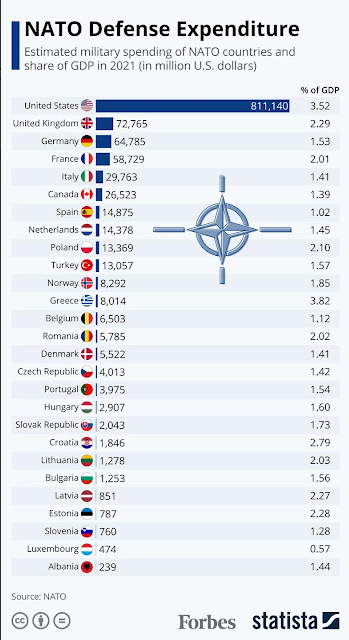
If elected as the leader, my Conservative government will make significant changes and upgrades to our nation’s military capabilities. I will move quickly to ramp up Canadian defence spending to two percent of GDP, increase personnel to 100,000 and equip our forces for the challenging times ahead. I will modernize our cyber security infrastructure to prepare for future risks. And I will fix our embarrassing procurement system to ensure we get the equipment we desperately need.

The current conflict has also driven home the need to assert our sovereignty, especially in our North. As major sea lanes, essential to global trade and export of our natural resources, open within our arctic territory, we must be on high alert to Russian and Chinese encroachment. Neither recognizes our sovereignty there. In fact, no one really recognizes our sovereignty there and the imbalance in our military investments compared to our allies explains why that’s the case.

The war in Ukraine is a cruel reminder of why we cannot ignore these threats. Russia has a modern military base in the arctic — another area where indecision and delay could be extremely costly unless addressed.

A proud Canada must assert its sovereignty in the North and generate military support through major investments in equipment and coordination with our NATO allies. We need to get our act together.

The threats remain real and demand immediate attention from leaders willing to act in the best interests of their respective nations.

Canadians need experience and expertise overseeing our military. We need a government that supports our military.

March 17, 2022

The “Three-Block”, “Four-Block”, or “n-Block” war

Filed under: Cancon, History, Military, USA — Tags: , , , , — Nicholas @ 05:00

In The Line, Andrew Potter explains the genesis of the original “Three-Block War” idea and how a Canadian general tried to put theory into practice:

During General Rick Hillier’s first visit to Colorado Springs as Chief of Defence Staff, he takes a few minutes to talk with Tech. Sgt. Devin Fisher of NORAD and USNORTHCOM Public Affairs about Canada-U.S. Relations
Public domain image via Wikimedia Commons.

In 1999, a US Marine general named Charles Krulak wrote a piece in which he claimed that the future of combat for the Marines would be in urban environments in failed or failing states. In these situations, front line infantry might be doing humanitarian relief in one part of the city, performing peacekeeping duties in another, while doing intense urban combat in a third. He called this the “Three Block War“. Figuring out how to prepare and train for this scenario would be the central military challenge of the 21st century.

While the Three Block War was picked up and booted around as an interesting idea, it was never formalized into Marine doctrine. But one person who did take it seriously was Rick Hillier, the former head of the Canadian military who brought it into the Canadian forces when he took over as chief of the land staff in 2003, arguing that the Three Block War in failed and failing states was the future of warfare. He wanted a CAF that was trained and kitted out for this reality. When he became Chief of the Defence Staff in 2005, Hillier kept pushing this idea on Paul Martin and the Liberals, who loved his “vision” and firm sense of priority-setting.

In Hillier’s hands, the Three Block War concept was a disaster. Some American analysts blamed the strategy for Canada’s elevated casualty rates in Kandahar. The concept also came under considerable scrutiny from Canadian military analysts. In a highly critical paper, Walter Dorn and Michael Varey described the three block war idea as “fatally flawed“. While the Three Block War concept might have served as a useful description of a certain type of tactical reality (amplified maybe by a few too many viewings of Black Hawk Down), as a strategic concept it had a number of problems. For example, it wasn’t clear how it would apply to other armed services, or to theatres other than urban centres. It seemed to threaten the specificity of mandate and mission that is crucial to military operations. It clearly ran the risk of “block inflation” — why not throw governance, economic development, general nation building, and anything else you think you can get the military to do into the hopper? Indeed, in 2005 General James Mathis co-authored a piece proposing the concept of the four block war, which added psychological and information operations to the mix.

Ultimately, Dorn and Varey were concerned that crucial distinctions central to warfare were being elided. As they put it, the whole point of doctrine is to make a clear delineation between things that are “war” and things that are “not war”, and the Three Block War threatens to make everything into a type of war.

Two decades later the verdict is in, and it looks like everyone was right. When it comes to the tactical environment, people like Krulak, Hillier, and Mathis were more prescient than they might ever have imagined, at least if Ukraine is any template for how modern warfare is evolving. Yet at the same time, everything the critics of the Three Block War concept worried about has also come to pass: the confusion of mission and mandates, the endless proliferation of “blocks”, and most seriously, the assimilation of everything, and everyone, into “war”.

In his original article, Krulak argued that the reality of the Three Block War meant that any local engagement or interaction could have repercussions on the mission as a whole. For example, if a squad of Marines based in a “peacekeeping” block of the city gets jumpy and opens fire on a civilian truck carrying humanitarian aid (and not a truck bomb), that could have serious impacts for the entire strategic effort. And so he coined the notion of the “strategic corporal”, a front line soldier who would have the training, judgement, and moral fibre to do his or her job in a way that would always support strategic objectives.

March 16, 2022

Canada’s rejection of the rules of a “free and democratic society” under Justin Trudeau

Filed under: Cancon, Government, Liberty — Tags: , , , — Nicholas @ 05:00

We’re now a month past the day that marked when Justin Trudeau’s government stopped even paying lip service to the Canadian Charter of Rights and Freedoms, as Madeline Weld points out:

It is noteworthy that in the aforementioned Munk Debate in which the leaders of the three major national parties – Conservative, Liberal, and NDP – butted heads, that Trudeau declared in praising the legacy of his father, Pierre Elliott Trudeau:

    First and foremost is the Charter of Rights and Freedoms, which has defined Canada as a country that stands up for individual rights, even against governments who want to take those away.

Fast forward to 2021, and those rights are no more. When it comes to getting vaccinated for Covid, it’s get the jab or get lost. Far from standing up for individual rights, Justin Trudeau’s government is snatching them away and redefining them as privileges that the government will deign to give back once a person has obeyed its edict and gotten jabbed. In August of that year, he announced that his government, if re-elected, would spend a billion dollars to help provinces create their own vaccine passports for domestic use. Trudeau also said he wouldn’t force anyone to get a Covid shot but would restrict the “privileges” of those who refuse to get one without a medical reason (which is so narrowly defined as to make it almost impossible to get an exemption). So, per Trudeau, people were free to “choose” to get the jab or lose their “privileges” of holding a job and earning a living, going to “non-essential” venues like restaurants, gyms, and theatres, and traveling on planes, trains or cruise ships. No “force” to see here, folks, move along.

So much for “standing up for individual rights, even against governments who want to take those away.” The current government’s edicts on forced vaccination violate the right to “security of the person” as defined under Section 7 of the Charter and the concept of “informed consent” as understood both in Canadian law and the United Nations’ Nuremberg Code. The Nuremberg Code was created following the Nuremberg trials of Nazi officials who conducted medical experiments on prisoners. Given that the current vaccines, employing a novel technology of mRNA encased in lipid nanoparticles or DNA carried in an adenovirus, are being used only under emergency Interim Orders, people who have them injected into their bodies, whether willingly or for fear of losing their newly defined “privileges” of holding a job, earning a living, and participating in society, are indeed participating in a medical experiment. But regardless of the state of development of the vaccines, no one should be subjected to a medical treatment they don’t want.

Trudeau did not hide his contempt for the unvaccinated during his election campaign of 2021. In a campaign speech on September 1st, he referred to a nearby group of protesters as “anti-vaxxers”. Emphasizing the importance of vaccine passports, he said the federal government would pay for “the development of those privileges that you get once you get vaccinated”. “Everyone needs to get vaccinated, and THOSE PEOPLE,” he said, turning around and pointing at the demonstrators, “are putting us all at risk.” (“The science” – to use the current phrase – concerning Covid infections does not bear him out, but that’s another discussion.) Trudeau then contemptuously refers to his Conservative opponent Erin O’Toole as “siding with THEM” as he pointed backward with his thumb. He dismisses O’Toole’s expressed concerns about “personal choice”. “What about my choice to keep my kids safe?” He berates O’Toole, “You need to condemn those people; you need to correct them.”

Had Harper referred to terrorists or terrorist wannabes as “THOSE PEOPLE” during that Munk Debate in 2015 and said they needed to be condemned and corrected, Trudeau would no doubt have given him an earful. In fact, Trudeau is remarkably reluctant to condemn terrorists. Following the beheading of Paris school teacher Samuel Paty by a Muslim incensed that Paty had shown the Danish Mohammad cartoons in his class while discussing free speech, Trudeau said, “We will always defend freedom of expression … But freedom of expression is not without limits … In a pluralist, diverse and respectful society like ours, we owe it to ourselves to be aware of the impact of our words, of our actions on others, particularly these communities and populations who still experience a great deal of discrimination.” He said not a word about needing to “condemn” and “correct” people who kill when they’ve been offended.

But when it comes to expressing his opinions about those who decline to be injected with an experimental mRNA or DNA product, Trudeau does not seem much concerned about the impact of his words on others. For example, on a French-language TV program in September 2021, Trudeau claims that many vaccine-decliners are racist and misogynist and wonders if they should even be tolerated. Such was his diatribe that People’s Party of Canada leader Maxime Bernier tweeted a video titled “Psychopathe fasciste” (fascist psychopath).

H/T to Robert at SDA for the link.

Update: Doh! Forgot to provide the URL for Robert’s post.

March 15, 2022

For military procurement blunders, “no nation has mastered the ability to step on every bloody rake quite as well as Canada”

Germany has announced that they will be purchasing US F-35 stealth fighters as part of their re-armament program. My favourite headline on this was over at Blazing Cat Fur: “Germany To Buy 35 Lockheed F-35 Fighter Jets From U.S. Amid Ukraine Crisis … Canada Will Buy Cool ‘Fighter Jet Stickers’ With Eco-Friendly Adhesive”

On a more serious tone — but with sadly the same basic message — Mitch Heimpel looks at the multi-generational rolling catastrophe that is Canadian military procurement since the unification of the forces in 1968:

Browning High Power 9mm, the standard side-arm of the Canadian army since WW2. When I was in the reserves, we were told this was due for replacement in a few years. I was in the reserves from 1976-1980. It still hasn’t been replaced.

To say we have a checkered history with military procurement, fails to capture exactly how bad it is. Our political leadership has failed us continually over the course of half a century. No party has done it well. Some have done it better than others. But no one can claim any kind of bragging rights.

Fighter jet procurement in this country is so fraught it once caused the birth of a new political party. Trying to buy helicopters helped bring down a government. We only successfully bought those helicopters after they [the old helicopters] became a greater danger to the personnel manning them than they were to any potential adversary. We have been running a procurement for the next generation of fighter jets for an entire generation. Even Yes, Minister writers would have given up on something that absurd.

Our submarine fleet seems to be almost permanently in dry dock. Our most recent ship procurement resulted in the absolutely monstrous prosecution of one of the country’s most accomplished military leaders.

And we just issued a revised bid to finally replace our Second World War-era pistols … last week.

Just cataloguing that level of incompetence is exhausting. No leader or party looks good. The civil service, as the one constant through all these cartoonish blunders, surely has to wear some of this, too. The fact that we seem to repeat the same mistakes can, at least in part, be attributed to a significant institutional memory failure on the part of the people trusted with having the institutional memory.

Now, it is worth noting in fairness that no nation has an easy time with large scale military procurement. Ask the Americans about the development of the V-22 sometime. But, still, no nation has mastered the ability to step on every bloody rake quite as well as Canada.

I’m not a hardware expert. I can’t tell you which pistol we should buy. There’s also genuine policy questions here that need to be settled — I don’t know whether we should focus on the navy because we’re an Arctic nation, or the air force because it allows us to participate more readily in allied force projection exercises — like, say, no-fly zones? The necessary mix for Canada is no doubt some of both, and it’s fine to have disagreements between parties on what the right mix is.

But setting that aside, I want to talk about what it would take politically, to get us to start taking procurement seriously — just a few basic rules that any government would need to follow to procure anything that they chose was important for Canada to have.

« Newer PostsOlder Posts »

Powered by WordPress