Quotulatiousness

January 2, 2025

Why Germany Lost the Battle of Britain

Real Time History
Published 2 Aug 2024

Summer 1940. The United Kingdom is gripped by the fear of a German invasion. Even if the Luftwaffe secures the sky over Britain, could Germany’s Operation Sea Lion ever really work?
(more…)

January 1, 2025

The EU emulates King Canute

Filed under: Bureaucracy, Business, Europe, Technology — Tags: , , — Nicholas @ 05:00

The headline is a bit misleading, as Canute’s failed attempt to control the tides was intended to refute courtiers’ exaggerations about his royal powers. The EU, on the other hand, is determined to impose stasis on a very dynamic and changing field:

The European Union will have the continent-wide standard for the buggy whip real soon now. That’s the logical conclusion to draw from that recent announcement about USB-C.

For those who’ve not been following along at home the European Commission is very proud of itself. They’ve managed to pass a law mandating that USB-C (don’t worry, it’s a shape of cable) be the only flavour of connector now allowed within the EU. This has caused the less intellectual of our own rulers — St Stella for example — to just quiver, gasp, with excitement. This is proof of the ability of the collective bureaucracy to really stick one to The Man or something. A vast victory over Big Cable it seems.

Well, yes. Those with a little history to their name will know that the EU has been trying to do this for some time now. So much time that they’d originally intended to make Micro-USB the Europe-spanning insistence but it took them so long to make their rules that USB-C had already superseded it.

At which point we might draw a couple of conclusions. Even, suggest an insistence or two. That first insistence would be that a time of rapid technological change is really not quite le moment juste to be insisting upon only the one way of doing things. Because change, d’ye see? No, this is important for we know, absolutely, that there’re people out there just itching to insist upon the one connector for electric vehicles. Who would, in the name of a vapid uniformity, insist upon freezing technology at its current state rather than allow it to develop.

We could, should, also go on to insist that such a legal insistence on the only form allowed means that technological development cannot happen any more. For, in order to advance or even just change it will be necessary to change that law, that definition.

Legal changes in the European Union are not easy. Of course, the Parliament cannot do it — they are not allowed to even propose law changes, let alone enact them. It is necessary first to convince the European Commission of the need for a change. That means convincing the bureaucracy of course. Once that’s done it must pass the Council of Ministers, which is all the national governments. Parliament is then allowed to say yes. Then, and only then, would it be possible to put the new technology — say, a new cable — on the market.

But the only method we’ve got of testing whether a new cable is better is by putting it on the market. That is — no, really — the only process by which we find out whether consumers desire this new cable with all its delights, at the price that suppliers are willing to make it. But in the European system they cannot undertake the basic usefulness test until they’ve convinced a continent full of politicians that the new is in fact necessary and compulsory.

The Korean War 028 – Happy Nuke Year! – December 31, 1950

The Korean War by Indy Neidell
Published 31 Dec 2024

Matt Ridgway arrives in Korea to find his Eighth Army broken and dysfunctional from top to bottom. He has a mere few days to rectify these issues and get them combat-ready before the Communist Chinese forces approach once more. But the stakes are high; UN forces commander Douglas MacArthur continues to pressure Washington to expand the war, through either conventional or atomic means. As 1950 expires, the doomsday clock is ticking.
(more…)

December 31, 2024

“Britzkrieg” – Did British Tactics Help Create Blitzkrieg?

Filed under: Britain, Germany, History, Military, WW1, WW2 — Tags: , , , , — Nicholas @ 02:00

The Tank Museum
Published 30 Aug 2024

Where did Blitzkrieg, the tactics that enabled Germany to conquer most of Europe in the first years of WW II come from?

Throughout the 1920s and into the ’30s, the German Army was forbidden from developing tanks or experimenting with armoured warfare, but in the same period, the British Army was at the forefront of mechanization and the use of armour on the battlefield.

In this film, we will look at how British tacticians like JFC Fuller and Basil Liddell Hart developed a new and revolutionary way of warfighting and how these principles were taken up and used to devastating effect by the German Army in 1939 and 1940.

00:00 | Intro
02:14 | A New Form of Warfare
04:12 | Plan 1919
07:54 | New Technology – Better Tanks
14:01 | Trials and Tribulations
17:10 | Partly There
20:12 | Fuller’s Children

This video features archive footage courtesy of British Pathé.

#tankmuseum

QotD: Pre-revolution Russia satirized by Dostoevsky

Filed under: Books, History, Quotations, Russia — Tags: , , , , , , — Nicholas @ 01:00

The opening of Demons tries to fool you into thinking it’s a comedy of manners about liberal, cosmopolitan Russian aristocrats in the 1840s. The vibe is that of a Jane Austen novel, but hidden within the comforting shell of a society tale, there’s something dark and spiky. Dostoevsky pokes fun at his characters in ways that translate alarming well into 2020s America. Everybody wants to #DefundTheOkhrana and free the serfs, but is terrified that the serfs might move in next door. Characters move to Brookl … I mean to St. Petersburg to start a left-wing magazine and promptly get canceled by other leftists for it. Academics endlessly posture as the #resistance to a tyrannical sovereign (who is unaware of their existence), and try to get exiled so they can cash in on that sweet exile clout. There are polycules.1

As the book unfolds, the satire gets more and more brutal. The real Dostoevsky knew this scene well — remember he spent his early years as a St. Petersburg hipster literary magazine guy himself — and he roasts it with exquisite savagery. As a friend who read the book with me put it: the men are fatuous, deluded about their importance, lazy, their liberal politics a mere extension of their narcissism. The woman are bitchy, incurious about the world except as far as it’s relevant to their status-chasing, viewing everyone and everything instrumentally. Nobody has any actual beliefs, and everybody is motivated solely by pretension and by the desire to sneer at their country.

But this is no conservative apologia for the system these people are rebelling against either, Dostoevsky’s poison pen is omnidirectional. Many right-wing satirists are good at showing us the debased preening and backbiting, like crabs in a bucket, that surplus elites fall into when there’s a vacuum of authority. But Dostoevsky admits what too many conservatives won’t, that the libs can only do this stuff because the society they despise is actually everything that they say it is: rotting from the inside, unjust, corrupt, and worst of all ridiculous. Thus he introduces representatives of the old order, like the conceited and slow-witted general who constantly misses the point and gets offended by imagined slights. Or like the governor of the podunk town where the action takes place, who instead of addressing the various looming disasters, sublimates his anxiety over them into constructing little cardboard models.2 If there’s a vacuum of authority, it’s because men like these are undeserving of it, failing to exercise it, allowing it to slip through their fingers.

All of this is very fun,3 and yet not exactly what I expect from a Dostoevsky novel. It’s a little … frivolous? Where are the agonizingly complex psychological portraits, the weighty metaphysical debates, the surreal stroboscopic fever-dreams culminating in murder, the 3am vodka-fueled conversations about damnation? Don’t worry, it’s coming, he’s just lulling you into a false sense of security. After a few hundred pages a thunderbolt falls, the book takes a screaming swerve into darkness, and you realize that the whole first third of this novel is like the scenes at the beginning of a horror movie where everybody is walking around in the daylight, acting like stuff is normal and ignoring the ever-growing threat around them.

John Psmith, “REVIEW: Demons, by Fyodor Dostoevsky”, Mr. and Mrs. Psmith’s Bookshelf, 2023-07-17.


    1. In an incredible bit of translation-enabled nominative determinism, the main cuckold is a character named Virginsky. I kept waiting for a “Chadsky” to show up, but alas he never did.

    2. Look, the fact that he’s sitting there painting minis while the world burns makes the guy undeniably relatable. If you transported him to the present day he would obviously be an autistic gamer, and some of my best friends, etc., etc. Nevertheless, though, he should not be the governor.

    3. For some reason, there are people who are surprised that Demons is funny. I don’t know why they’re surprised, Dostoevsky is frequently funny. The Brothers Karamazov is hilarious!

December 30, 2024

What was a Viking Funeral really like?

Filed under: Europe, Food, History — Tags: , , , , , , — Nicholas @ 02:00

Tasting History with Max Miller
Published 20 Aug 2024

Multigrain flatbread strung on a metal ring in the style of findings at Viking funeral sites

City/Region: Various Viking Sites
Time Period: 9th-11th Centuries

While there is evidence of bread being laid beside the dead during Viking funerals, we have no written recipe. Analysis of the ingredients of fragments from various Viking funeral sites shows that there was no one way of making funeral bread, so you can either follow my recipe or make up your own using a combination of barley, oat, wheat, rye, peas, flaxseeds, water, milk, butter, whey, and blood. Any version is just as likely as being accurate as another.

In my version, the mix of rye, whole wheat, and oat flour bring more complexity and depth to an otherwise very pita-like flatbread. You could cook the bread longer to get a drier, more cracker-like bread, and I think that they would be great with butter (a period-accurate accompaniment).
(more…)

QotD: The auxilia troops of the Imperial Roman armies

Filed under: Europe, History, Military, Quotations — Tags: , , , , , — Nicholas @ 01:00

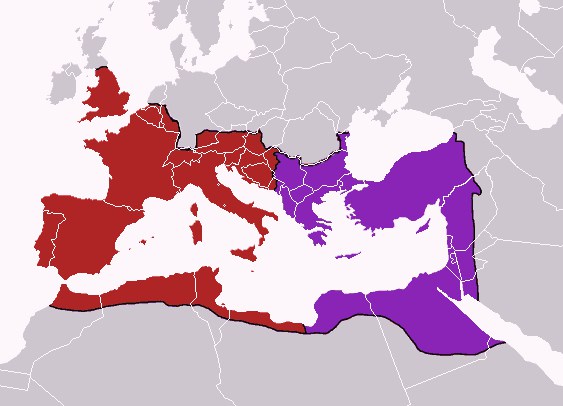
As we’ve seen, there had always been non-Romans fighting alongside Roman citizens in the army, for as long as we have reliable records to judge the point. In the Republic (until the 80s BC) these had consisted mostly of the socii, Rome’s Italian allies. These were supplemented by troops from whatever allies Rome might have at the time, but there was a key difference in that the socii were integrated permanently into the Roman army’s structure, with an established place in the “org. chart”, compared to the forces of allies who might fight under their own leaders with an ad hoc relationship to the Roman army they were fighting with. The end of the Social War (91-87BC) brought the Italians into the Roman citizen body and thus their soldiers into the legions themselves; it marked the effective end of the socii system, which hadn’t been expanded outside of Italy in any case.

But almost immediately we see the emergence of a new system for incorporating non-Romans, this time provincial non-Romans, into the Roman army. These troops, called auxilia (literally, “helpers”) first appear in the Civil Wars, particularly with Caesar‘s heavy reliance on Gallic cavalry to support his legions (which at this time seem not to have featured their own integrated cavalry support, as they had earlier in the republic and as they would later in the empire). The system is at this point very ad hoc and the auxiliaries here are a fairly small part of Roman armies. But when Augustus sets out to institutionalize and stabilize the Roman army after the Battle of Actium (31BC) and the end of the civil wars, the auxilia emerge as a permanent, institutional part of the Roman army. Clearly, they were vastly expanded; by 23 AD they made up half of the total strength of the Roman army (Tac. Ann. 4.5) a rough equivalence that seems to persist at least as far as the Constitutio Antoniniana in 212.

Of course it was no particular new thing for the Romans to attempt to use their imperial subjects as part of their army. The Achaemenid army had incorporated a bewildering array of subject peoples with their own distinctive fighting styles, a fact that Achaemenid rulers liked to commemorate […] The Seleucid army at Magnesia (189) which the Romans defeated also had numerous non-Macedonian supporting troops: Cappadocians, Galatians, Carians, Cilicians, Illyrians, Dahae, Mysians, Arabs, Cyrtians and Elamites. At Raphia (217) the Ptolemaic army incorporated Egyptian troops into the phalanx for the first time, but also included Cretans, Greek mercenaries, Thracians, Gauls and Libyans, inter alia. Most empires try to do this.

The difference here is the relative performance that Rome gets out of these subject-troops (both the socii and the auxilia). Take those examples. Quite a number of the ethnicities on Xerxes monument both served in the armies of Darius III fighting against Alexander but then swiftly switched sides to Alexander after he won the battles – the Ionians, Egypt, and Babylon greeted Alexander as a liberator (at least initially) which is part of why the Achaemenid Empire could crumble so fast so long as Alexander kept winning battles. Apart from Tyre and Gaza, the tough sieges and guerilla resistance didn’t start until he reached the Persian homeland. The auxiliaries in the Seleucid army at Magnesia famously fell apart under pressure, whereas the Roman socii stuck in the fight as well as the legions; our sources give us no sense at any point that the socii were ever meaningfully weaker fighters than the legions (if anything, Livy sometimes represents them as more spirited, though he has an agenda here, as discussed). And the Ptolemaic decision to arm their Egyptian troops in the Macedonian manner won the battle (turns out, Egyptians could fight just as well as Greeks and Macedonians with the right organization and training) but their subsequent apparent decision not to pay or respect those troops as well as their Macedonians seems to have led quite directly to the “Great Revolt” which crippled the kingdom (there is some scholarly argument about this last point, but while I think Polybius’ pro-Greek, anti-Egyptian bias creeps in to his analysis, he is fundamentally right to see the connection (Plb. 5.107). Polybius thinks it was foolish to arm non-Greeks, but the solution here to saving the Ptolemaic kingdom would have been arming the Egyptians and then incorporating them into the system of rule rather than attempting to keep up the ethnic hierarchy with a now-armed, angry and underpaid underclass. The Greek-speakers-only-club system of Ptolemaic rule was unsustainable in either case, especially with Rome on the horizon).

By contrast, the auxilia were mostly very reliable. The one major exception comes from 69 AD – the “Year of the Four Emperors” to give some sense of its chaos – when the Batavian chieftain Julius Civilis (himself an auxiliary veteran and a Roman citizen) revolted and brought one ala and eight cohorts drawn from the Batavi (probably around 4,500 men or so) with him, out of an empire-wide total of c. 150,000 auxilia (so maybe something like 3.3% of the total auxilia). Indeed, the legions had worse mutinies – the mutiny on the Rhine (Tac. Ann. 1.16ff in 14AD) had involved six legions (c. 30,000 troops, nearly a quarter of Rome’s 25 legions at the time). This despite the fact that the auxilia were often deployed away from the legions, sometimes in their own forts (you’ll see older works of scholarship suggest that the auxilia were kept logistically dependent on the legions, but more recent archaeology on exactly where they were has tended to push against this view). Indeed, the auxilia were often the only military forces (albeit in small detachments) in the otherwise demilitarized “senatorial” provinces (which comprised most of the wealthy, populous “core” of the empire); they could be trusted with the job, provided they weren’t the only forces in their own home provinces (and after 69, they never were). And the auxilia fought hard and quite well. The Romans occasionally won battles with nothing but the auxilia, was with the Battle of Mons Graupius (83 AD, Tac. Agricola 35ff) where the legions were held in reserve and never committed, the auxilia winning the battle effectively on their own. Viewers of the Column of Trajan’s spiral frieze have long noted that the auxilia on the monument (the troop-types are recognizable by their equipment) do most of the fighting, while the legions mostly perform support and combat engineering tasks. We aren’t well informed about the training the auxilia went through, but what we do know points to long-service professionals who were drilled every bit as hard as the famously well-drilled legions. Consequently, they had exactly the sort of professional cohesion that we’ve already discussed.

Why this difference in effectiveness and reliability? The answer is to be found in the difference in the terms under which they served. Rather than being treated as the disposable native auxiliaries of other empires, the Romans acted like the auxilia mattered … because they did.

First of all, the auxilia were paid. Our evidence here is imperfect and still much argued about, but it seems that auxilia were paid 5/6ths of the wages of the legionary counterparts, with the cavalry auxilia actually paid more than the infantry legionaries. While it might sound frustrating to be systematically paid 1/6th less than your legionary equivalent, the legions were paid fairly well. The auxilia probably made in wages about as much as a normal day-laborer, but the wage was guaranteed (something very much not the case for civilian laborers) and while the cost of their rations was deducted from their pay, that deduction was a fixed amount that seems to have been set substantially below the market value of their rations, building in another subsidy. Most auxiliaries seem to have been volunteers, because the deal in being an auxiliary was good enough to attract volunteers looking to serve a full tour of duty (around 20 years; this was a long-service professional army now so joining it meant making a career out of it).

And most importantly, eventually (perhaps under Tiberius or shortly thereafter) the auxilia began to receive a special grant of citizenship on finishing that tour of duty, one which covered the soldier, and any children he might have had by his subsequent spouse (including children had, it seems, before he left the army; Roman soldiers in this period were legally barred from contracting legal marriages while serving, so the grant is framed so that it retroactively legitimizes any children produced in a quasi-marriage when the tour of service is completed). Consequently, whereas a soldier being dragooned or hired as a mercenary into other multi-ethnic imperial armies might end his service and go back to being an oppressed subject, the Roman auxiliary, by virtue of his service, became Roman and thus essentially joined the ruling class at least in ethnic status. Auxiliaries also clearly got a share of the loot when offensive warfare happened and while there is a lot of debate as to if they also received the praemia (the large retirement bonus legionaries got), epigraphically it is pretty clear that auxiliaries who were careful with their money could establish themselves fairly well after their service. I should also note that what we see of auxiliaries suggests they were generally well armed (with some exceptions, which may have more to do with stereotyped depictions of certain kinds of “barbarians” than anything else): metal helmets, mail shirts (an expensive and high quality armor for the period), oval shields, a spear and the spatha – a Roman version of the classic Gallic one-handed cutting sword – are the standard visual indicator in Roman artwork for generic “auxiliaries”. That is actually a fairly high-end kit; it is no surprise that the auxilia could win battles with it.

The attentive should already be noting many of the components of the old socii system now in a new form: the non-Roman troops serve under similar conditions with the Romans, get similar pay and rations (forts occupied by the auxilia show no deviation from the standard Roman military diet), a share of loot and glory and can finally be rewarded for loyal service by being inducted into the Roman citizen body itself (which could mean their sons might well enroll in the legions, a thing which does seem to have happened, as we do see a fair bit of evidence for “military families” over multiple generations).

(For those looking for more detail on the auxilia, a lot of this is drawn from a book I have already recommended, Ian Haynes, Blood of the Provinces: The Roman auxilia and the Making of Provincial Society from Augustus to the Severans (2013). Also still useful for the history of the development of the auxilia is D.B. Saddington, The Development of the Roman auxiliary Forces from Caesar to Vespasian (1982); this is, alas, not an easy book to find as it is – to my knowledge – long out of print, but your library may be able to track down a copy.)

Bret Devereaux, “Collections: The Queen’s Latin or Who Were the Romans, Part V: Saving and Losing and Empire”, A Collection of Unmitigated Pedantry, 2021-07-30.

December 29, 2024

Armies of the Soviet Union, Charge! – Prokhorovka Part 3

Filed under: Germany, History, Military, Russia, WW2 — Tags: , , , , — Nicholas @ 04:00

World War Two
Published 28 Dec 2024

On the morning of July 12, 1943, the Battle of Prokhorovka begins! Pavel Rotmistrov’s 5th Guards Tank Army charges into a storm of anti-tank fire from Paul Hausser’s Waffen SS divisions. As vehicles clash and burn, fierce hand-to-hand combat rages all around. In this episode, Indy takes you into the heart of the action as one of history’s most ferocious battles unfolds hour by hour.
(more…)

wz.35: Poland’s Remarkably Misunderstood Antitank Rifle

Filed under: Europe, Germany, History, Military, Weapons, WW2 — Tags: , , , , , , — Nicholas @ 02:00

Forgotten Weapons
Published Aug 26, 2024

In the 1930s, Poland decided to develop an anti-tank rifle, and the young designer Józef Maroszek came up with the winning system by scaling up a bolt-action service rifle he had already drawn up. The project was kept very secret, out of concern that Germany or Russia would up-armor their tanks if the Polish rifle’s existence and capabilities became known. This secrecy has led to a lot of misconceptions about the rifle today …

Interestingly, the ammunition for the wz.35 used a plain lead core. Polish engineers found that at its incredible 4200 fps (1280 m/s) muzzle velocity, the lead core had excellent armor penetrating capacity. When the German Army later captured and reused the rifles, they didn’t trust this, and reloaded captured Polish ammunition with German tungsten-cored projectiles made for the PzB-39.

Rather than explain the full story of the wz.35 in detail here, I will refer you to http://www.forgottenweapons.com/wz-35/, where I have posted a full monograph on the rifle written by Leszek Erenfeicht.
(more…)

QotD: Churchill as author and Prime Minister

Filed under: Books, Britain, History, Quotations — Tags: , , , — Nicholas @ 01:00

“Writing a book is an adventure. To begin with it is a toy, an amusement; then it becomes a mistress, and then a master, and then a tyrant.” Those owning a business plan, devising an advertising proposal, plotting a military stratagem, drafting an architectural blueprint, painting a picture, crafting sculpture or ceramics, penning a volume, sermon or speech — or editing The Critic — will, I suspect, be nodding in recognition of this.

The words were those of Winston Churchill, the 150th anniversary of whose birthday, 30 November 1874, falls this year. In addition to submitting canvases to the Royal Academy of Arts under the pseudonym David Winter — which resulted in his election as Honorary Academician in 1948 — and twice being Prime Minister for a total of eight years and 240 days, he has merited far more biographies than all his predecessors and successors put together. This summer I completed one more volume to add to the vast collection. My purpose here is less to blow my own trumpet than to ponder why Churchill remains so popular as a subject and survey what is new in print for this anniversary year.

It is tempting to see his career through many different lenses, for his achievements during a ninety-year lifespan spanning six monarchs encompassed so much more than politics, including that of painter. The only British premier to take part in a cavalry charge under fire, at Omdurman on 2 September 1898, he was also the first to possess an atomic weapon, when a test device was detonated in Western Australia on 3 October 1952. Besides being known as an animal breeder, aristocrat, aviator, big-game hunter, bon viveur, bricklayer, broadcaster, connoisseur of cigars and fine fines (his preferred Martini recipe included Plymouth gin and ice, “supplemented with a nod toward France”), essayist, gambler, global traveller, horseman, journalist, landscape gardener, lepidopterist, monarchist, newspaper editor, Nobel Prize-winner, novelist, orchid-collector, parliamentarian, polo player, prison escapee, public schools fencing champion, rose-grower, sailor, soldier, speechmaker, statesman, war correspondent, war hero, warlord and wit, one of his many lives was that of writer-historian.

Most of his long life revolved around words and his use of them. Hansard recorded 29,232 contributions made by Churchill in the Commons; he penned one novel, thirty non-fiction books, and published twenty-seven volumes of speeches in his lifetime, in addition to thousands of newspaper despatches, book chapters and magazine articles. Historically, much understanding of his time is framed around the words he wrote about himself. “Not only did Mr. Churchill both get his war and run it: he also got in the first account of it” was the verdict of one writer, which might be the wish of many successive public figures. Acknowledging his rhetorical powers, which set him apart from all other twentieth century politicians, his patronymic has gravitated into the English language: Churchillian resonates far beyond adherence to a set of policies, which is the narrow lot of most adjectival political surnames.

“I have frequently been forced to eat my words. I have always found them a most nourishing diet”, Churchill once quipped at a dinner party, and on another occasion, “history will be kind to me for I intend to write it”. Yet “Winston” and “Churchill” are the words of a conjuror, that immediately convey a romance, a spell, and wonder that one man could have achieved so much. It is an enduring magic, and difficult to penetrate. In 2002, by way of example, he was ranked first in a BBC poll of the 100 Greatest Britons of All Time — amongst many similar accolades. A less well-known survey of modern politics and history academics conducted by MORI and the University of Leeds in November 2004 placed Attlee above Churchill as the 20th Century’s most successful prime minister in legislative terms — but he was still in second place of the twenty-one PMs from Salisbury to Blair.

Peter Caddick-Adams, “Reading Winston Churchill”, The Critic, 2024-09-22.

December 27, 2024

The First Triumvirate – The Conquered and the Proud 10

Filed under: Europe, History, Military — Tags: , , , , , , — Nicholas @ 02:00

Adrian Goldsworthy. Historian and Novelist
Published Jul 10, 2024

This time we take a look at the Fifties BC, the formation of the first triumvirate, Caesar’s consulship, Clodius and Milo’s organised violence, Caesar in Gaul, Crassus in Syria and Parthia. The context is conquest and Roman success abroad with spiralling chaos at home. A big theme is the build-up to the Civil War and Caesar crossing the Rubicon in January 49 BC. We end with a quick run through the campaigns of the Civil War.

Primary sources include Caesar’s War Commentaries, Cicero’s letters and speeches, Plutarch’s Lives, Appian’s Civil War.

December 26, 2024

Historian Reviews the Best and Worst Depictions of the Roman Empire in Film and TV

Filed under: Europe, History, Media, Middle East — Tags: , , , , , , , — Nicholas @ 02:00

History Hit
Published 9 Sept 2024

Tristan Hughes, host of “The Ancients” podcast, reviews scenes from famous movies and TV shows set in the Roman period.

00:00 Intro
00:58 HBO Rome
12:54 The Last Legion
15:55 Monty Python’s Life of Brian
24:32 Centurion
31:40 Doctor Who
(more…)

QotD: The essence of journalism

Filed under: Britain, Business, Media, Quotations — Tags: , , — Nicholas @ 01:00

Journalism is the craft of filling in the white bits between the advertisements.

It’s not a profession, it’s not a calling and it has no public purpose. Trial and error has shown that peeps out there just won’t go out and buy booklets of adverts. They won’t even pay all that much attention to free books of them stuffed through their letterboxes as local freesheets show.

In order to get people to see the piccies of fine cavalry twill trousers (an ad that has been running beside the Telegraph crossword for at least four decades), or to drool over offers of lushly organic bath salts, experience has indicated that someone needs to be employed to write about the footie – see that parrot bein’ sick? – or the weather – cloudy with a chance of meatballs – or the thespian who should only have been stepped out with – Meghan Steals Our Prince! – or you know what they’re doing with your money – Tax Rise Shocker! – to fill in the blanks between the commercial offers.

And that’s it. That’s what we do.

We can even prove this. The editorial line of absolutely every publication is one that follows the prejudices of its readers. When setting up a new one the big question is, well, who are we going to appeal to? Not what truths are we going to tell but who will look at the ads based upon the truths we decide to tell.

All that speaking truth to power, interrogation of structures and inequalities, that’s for the awards season. It has as much to do with reality as calling politicians statesmen – entirely irrelevant to the working day and something more suited to those dead.

Entirely true that journalism comes in flavours, even layers, styles and stratified along socioeconomic lines. But then so do restaurants come in manners that appeal to different audiences despite their output all ending up in the same place – the U-bend – some limited number of hours after consumption.

Journalism is simply entertainment that is, journalists just those who do so with words. There is a market for that truth-telling to power stuff, just as there is one for vegan meals. But they’re both limited to those who are entertained by such which is why Maccy D’s bestrides the world and the Mail and The Sun outsell Tribune, Counterpunch and Salon.

Tim Worstall, “The Grandiosity Of Modern Journalism”, Continental Telegraph, 2020-05-02.

December 25, 2024

Repost – “Fairytale of New York”

Filed under: Europe, Media, USA — Tags: , , , — Nicholas @ 04:00

Time:

“Fairytale of New York” by The Pogues featuring Kirsty MacColl

This song came into being after Elvis Costello bet The Pogues’ lead singer Shane MacGowan that he couldn’t write a decent Christmas duet. The outcome: a call-and-response between a bickering couple that’s just as sweet as it is salty.

December 24, 2024

The Korean War 027 – The US General Dies! – December 24, 1950

Filed under: Asia, Britain, China, History, Military, USA — Tags: , , , , , — Nicholas @ 13:38

The Korean War by Indy Neidell
Published 24 Dec 2024

UN forces commander Douglas MacArthur continues to insist more troops are needed to fight the Chinese Communists. They aren’t coming anytime soon. But UN troops in the North do at least pull off a miraculous evacuation from Hungnam and arrive in South Korea and begin defensive preparations, as Eighth Army commander Walton Walker embarks on an ill-fated trip north of Seoul…
(more…)

« Newer PostsOlder Posts »

Powered by WordPress