
World War Two
Published 10 May 2025In this Fireside Chat, Indy and Sparty answer questions on the German invasions of Yugoslavia and Greece. Why did the Yugoslav state fall so quickly? Why were the Greeks able to hold out so much better? And why was the airborne assault on Crete so chaotic on both sides?
(more…)
May 11, 2025
Why Yugoslavia Fell in Just 11 Days?
Comments Off on Why Yugoslavia Fell in Just 11 Days?
History of Britain, I: Hail Prettanike! Early References to the British Isles
Thersites the Historian
Published 6 Jan 2025The natural starting point for examining the history of Britain is to look at how the island and its inhabitants first entered the historical record.
Comments Off on History of Britain, I: Hail Prettanike! Early References to the British Isles
May 10, 2025
“Train how you fight” – British plod edition
At Restoration, Connor Tomlinson looks at how British police forces are training and what it tells us about who they think they’ll be fighting:
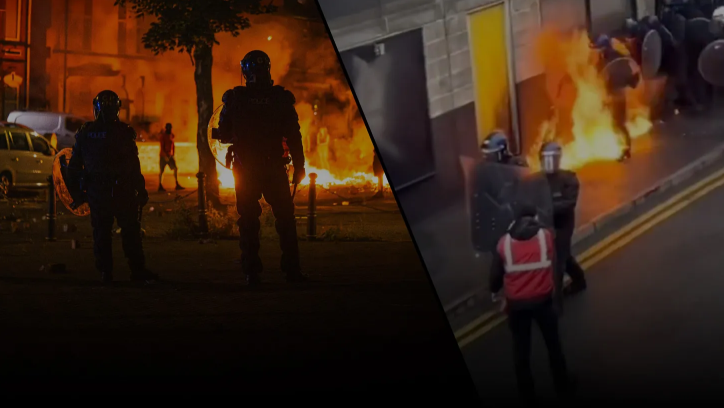
Britain’s police aren’t training to stop riots—they’re preparing to crush the public.
One of the infamous quotes from George Orwell’s Nineteen Eighty-Four is, “If you want a picture of the future, imagine a boot stamping on a human face — forever”. He forgot to add, “on TikTok”. Last Thursday, the Metropolitan Police posted a montage of officers at the Metropolitan Police Specialist Training Centre in Kent, undergoing riot training. The caption read, “Bricks, bottles and fire bombs – our officers prepare for every eventuality at the Met’s elite training centre in Gravesend so they can keep you safe. Stronger tactics means safer communities.” It seems they had one specific “eventuality” in mind, as the mock rioters were wearing the Union flag. There wasn’t a keffiyeh or “Only good TERF is a dead TERF” sign in sight.
But fear not. The same Met Police who defended now-proscribed group Hizb ut-Tahrir’s demonstration after October 7th, saying “The word jihad has a number of meanings“, now insist that “The fact one of the t-shirts has a union flag on it is entirely coincidental”. Well, that’s me convinced. In fact, the Met are exhausted by your conspiracy theories, writing that “It’s disappointing we are increasingly having to challenge this sort of misinformation which only serves to increase divisions and tensions”. But the plummeting public trust in Britain’s police and justice system are of its own making. Britain’s security state is setting itself in opposition to the largely law-abiding indigenous host majority, while gaslighting them about the non-existence of a two-tier justice system that favors tribal minorities.
One might think, as Sam Bidwell suggests, the police should preoccupy themselves with preventing street conflicts not between Britain’s indigenous host and immigrant populations, but between its Indian diaspora and Pakistani enclaves. On April 22, Pakistani Islamist group Lashkar-e-Taiba killed 26 and injured 20 more in Indian-controlled Kashmir. Both nations cancelled the other’s visas, and are in the process of expelling foreign nationals before they expire. Pakistan has suspended all trade with and air travel from India. Hindu nationalist Prime Minister Modi has warned, “India will identify, track and punish every terrorist, their handlers and their backers, [and] we will pursue them to the ends of the earth.”
Thanks to decades of mass immigration and multiculturalism, Britain is home to powerful Indian and Pakistani ethno-political lobbies. Around 3 million Indians and 1.9 million Pakistanis live legally in the UK. They are substantially younger than the white British host population, and already brought Leicester to an ungovernable standstill in 2022 when Muslims and Hindus rioted for a month over a cricket match. Last Friday, both factions gathered outside the Pakistani Embassy in London for a mixture of a protest and a dance-off, replete with Indian, Pakistani, Israeli, and Palestinian flags. Most alarming was when Colonel Taimur Rahat of the Pakistani military appeared to make a throat-slitting gesture toward Indian protestors.
Both subcontinental factions have sympathetic politicians. They weaponize domestic antidiscrimination law to pursue foreign policy goals: for example, listing the denial of an independent Palestine and Kashmir as an example of Islamophobia, in guidance adopted by local councils. Conservative-party candidates committed to a Hindu Manifesto at the last general election, promising to further liberalize visa rules for dependents and elderly parents of Hindus already in Britain. Indian-heritage cabinet ministers, like Priti Patel and Rishi Sunak, instigated an unprecedented rise in Indian migration after Brexit. Patel described these migrants as “living bridges”, using Prime Minister Modi’s term.
Comments Off on “Train how you fight” – British plod edition
How did ancient people travel without maps? | How did they imagine the world?
Historia Militum
Published 15 Nov 2024Today we are straying away from the Roman military, but only a bit! Travel and Geography is still a very important aspect to understand when thinking about the military logistics of the Roman Empire, but it was just as important for its administration and civilian life. This video explains why most pop culture and visual depictions of Roman maps are wrong!
Scale Maps? (0:00)
Case 1: The Island Mosaic (2:55)
Case 2: Notitia Dignitatum (3:38)
Case 3: Madaba Mosaic (4:10)
Travel itineraries (5:07)
Cursus Publicus (8:06)
The Antonine Itinerary (8:47)
Galen’s Adventure (10:10)
Milestones (13:25)
Crossroads and visual itineraries (14:56)Small mistake! At 16:36, I meant to say “topological” diagrams, which disregard the accuracy of both scale and direction. “Topographical” diagrams, on the other hand, are very much to scale!
Primary Sources:
Historia Augusta, Alexander Severus 45, 2–3
Galen, De simplicium medicamentorum temperamentis 9Secondary Sources:
Adams, C., & Laurence, R. (Eds.) (2001). Travel and Geography in the Roman Empire
The Antonine Itinerary by Bernd Löhberg: https://www.tabulae-geographicae.de/e…
Comments Off on How did ancient people travel without maps? | How did they imagine the world?
May 9, 2025
They keep saying the quiet part out loud – democracy is a threat to the establishment
N.S. Lyons went to Barad-dûr Ottawa earlier this month to speak at the 2025 Civitas Canada Conference, and posted his remarks on his Substack:
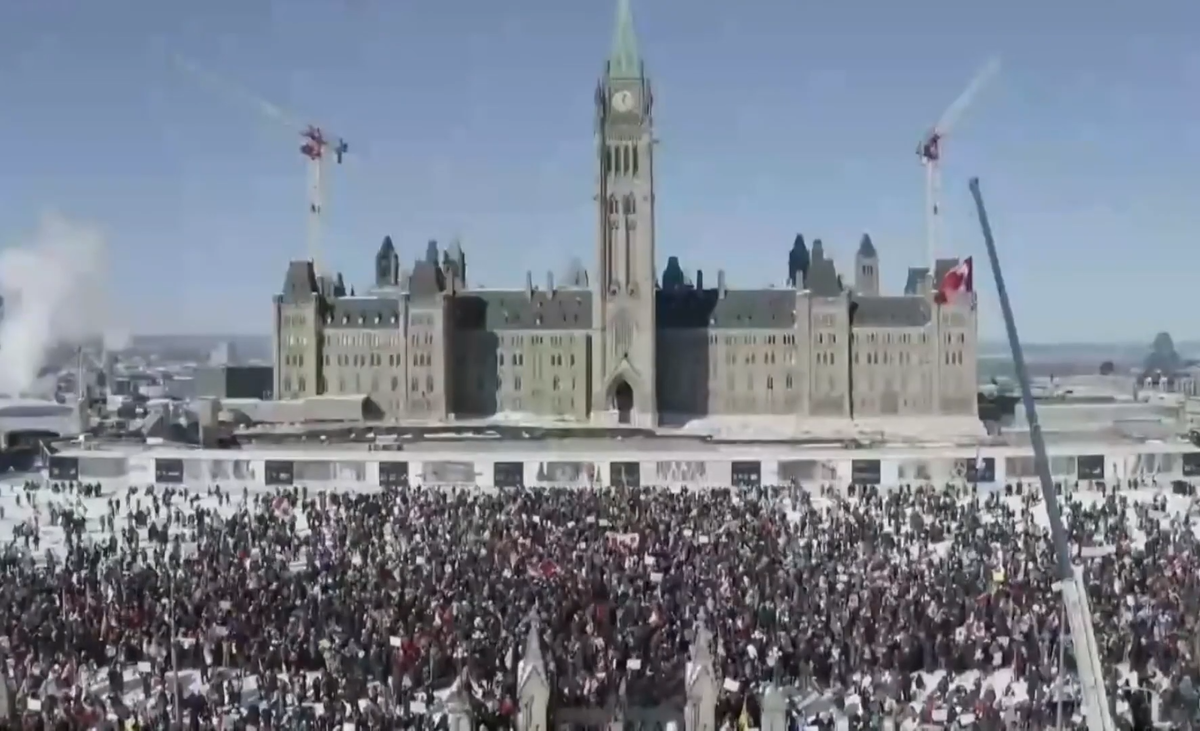
The 2022 Freedom Convoy induced a state of panic in the Canadian federal government, yet the elected representatives proved completely unwilling to even talk to anyone from the protests. The government clearly persuaded itself that this was an actual insurrection, and waited for the violence to break out … and there was no violence, other than that provided by the police and a few paid actors.
A screenshot from a YouTube video showing the protest in front of Parliament in Ottawa on 30 January, 2022.
Photo via Wikimedia Commons.
Good evening ladies and gentlemen! It’s a pleasure to visit the North and get a glimpse behind the new Iron Curtain …
As it happens, the official theme of this conference is “Freedom and its Discontents: Liberal Democracy at a Crossroads”. That is a timely theme indeed. Because I think it isn’t too extreme to say that, all around the Western world today, democracy is under assault — even that it risks extinction. It risks extinction because the authorities that run our societies seem to find the practice, values, and very spirit of democracy to be increasingly intolerable.
In France, where the ruling government maintains power despite being the most widely hated in decades, the most popular candidate of the most popular political party has been barred from challenging that government in upcoming elections, on legal grounds that are openly political.
In Romania, when the “wrong” outsider candidate appeared poised to win an election, authorities simply canceled the election outright and then had him arrested, the unelected national security state inventing entirely unsupported excuses about foreign meddling to justify their coup d’état against the democratic process.
In Germany, the state has now begun the process of banning the country’s most popular party, supported by more than a quarter of the voting population, in order to avoid facing any real political opposition. “We did it in Romania, and we will obviously have to do it in Germany, if necessary”, is how a former European Commissioner confidently foreshadowed events on live television a few months ago.
One gets the sense that the honest view of our exasperated political elites is as captured in a Bloomberg News headline from last year which read: “2024 is a year of elections, and that’s a threat to democracy”.
In country after country, governments are moving to desperately tighten their grip over the people they rule, sharply curtailing freedom of speech and access to information, and using alleged threats to security and stability to justify granting themselves emergency powers, weaponizing the law, criminalizing dissent, and suppressing any meaningful political opposition.
In the United Kingdom, more than 12,000 people per year (that’s 33 per day on average) — are now arrested for speech- and literal thought-crimes, including silent prayer. UK jails now hold hundreds of political prisoners, more than anywhere else in Europe outside of Russia and Belarus. These are people persecuted for, essentially, voicing dissent over their government’s catastrophic policies. Recently, for instance, a British woman with no criminal history was jailed for more than two years for a single Facebook post criticizing the state’s willful failure to stop illegal migration.
In Brazil, a single Supreme Court judge, in alliance with the country’s leftist president, has effectively established a judicial dictatorship, locking up political rivals by decree, silencing the speech of opposition figures, and utilizing state leverage over the financial system to punish political enemies by banishing them from public economic life.
But of course Brazil’s authorities learned these tactics by observation. Observation of Canada, to be precise, where Justin Trudeau’s government first employed debanking — along with a little brute force — as a tool to crush peaceful protest of his draconian and disastrous pandemic lockdown policies.
Today, the Canadian government’s weaponization of the legal system and public institutions, including state-funded media, to impose a quasi-totalitarian progressive ideological regime, censor and jail dissenters, and effectively transform Canada into a one-party state, has, I’m afraid, won your country a real measure of global infamy. Many Canadians here may not be aware of just how your government appears from the outside, but I’m afraid it’s not a good look at all. Unfortunately I must report that when many of us look at Canada what we see is a global leader in progressive authoritarianism, out-of-control migration, growing anarcho-tyranny, foreign subversion, and ideologically-induced economic stagnation.
But then, what we might realistically call the liberal-authoritarian model is, sadly, the new normal in the West, where many hyphenated liberal-democracies seem to have concluded that they must now begin to cast off the democratic half of that historical compact.
It may seem that this hardening of control is a response to the rise of so-called populism, which has swept the Western world. Certainly many authoritarian measures have been justified, without any sense of irony, as necessary to defend “our democracy” (so-called) against the dissatisfaction of the actual demos. And it’s true that fear of populism — which is really fear of genuine democracy — does seem to consistently provoke a spiral of ham-fisted reactions by our increasingly authoritarian states. But the reality is that populism is itself a reaction, an organic immune response to the particularly unresponsive and anti-democratic new form of governance that has visibly overtaken the West in recent decades.
Nazi vs. Nazi – The Rebellion Within – Rise of Hitler 16, April 1931
World War Two
Published 8 May 2025April 1931 plunges Hitler’s Nazis into crisis as SA leader Walter Stennes leads a dramatic internal revolt, challenging Hitler’s oath to legality. Meanwhile the Nazis loose their only ministerial post and President Hindenburg’s emergency decree intensifies clashes with communists, leading to mass arrests during banned protests.
(more…)
Comments Off on Nazi vs. Nazi – The Rebellion Within – Rise of Hitler 16, April 1931
May 8, 2025
Aftermath
I’ve read a few books on what happened in Europe after the surrender of Nazi Germany in May of 1945, but there is always more to learn about a continent-wide struggle to recover from a disaster of the magnitude of World War Two:
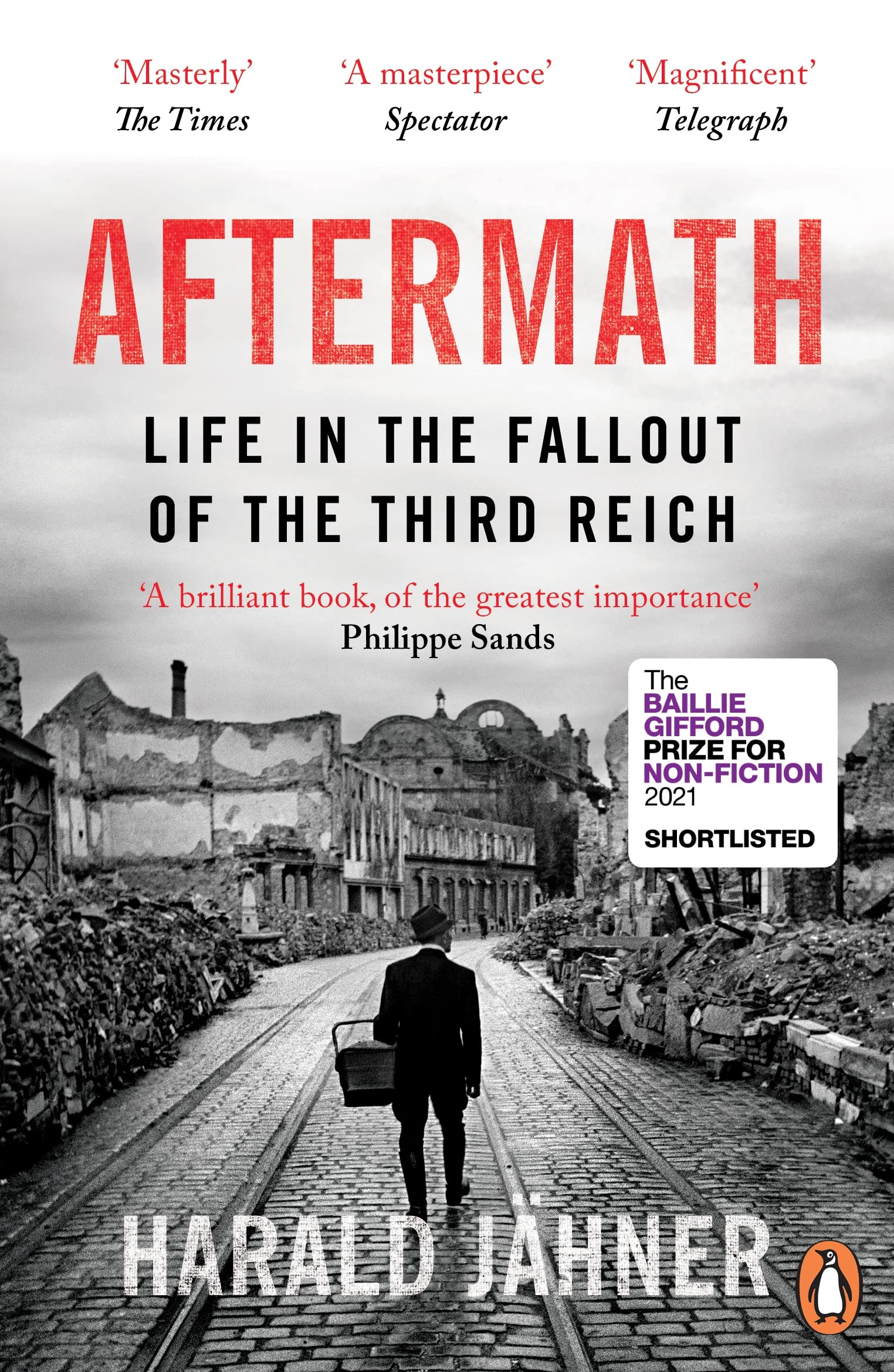
On a train journey earlier this year between Cologne and Berlin, I began to read Harald Jähner’s Aftermath, a fascinating account of the years when Germany emerged from the destruction and shame of the Third Reich.
The war ended 80 years ago today, and in the defeated nation the scenes were primeval and apocalyptic. In Berlin, journalist Ruth Andreas-Friedrich, along with a doctor, actor and musical conductor, discovered a white ox wandering through the streets and, after finding a Russian soldier to shoot it, found themselves suddenly surrounded by a ravenous mob. She recalled: “Suddenly, as if the underworld had been spying on them, a noisy crowd gathered around the dead ox. They crept from a hundred basements. Women, men, children. Were they lured by the smell of blood? Within minutes they were scrambling for meat.” The bourgeois of Middle Europe reduced to an animal state.
Germany was a pile of rubble; the ruins in the Reich‘s capital amounted to 55 million cubic metres, enough for a wall 30 metres wide and 5 metres high stretching all the way to Cologne. In West Berlin, for the next 22 years, up to 800 lorries a day unloaded so much rubble on the former Factory of Armaments Technology that it became known as Teufelsberg, or Devil’s Mountain. The last “rubble brigade” in Dresden only finished work in 1977.
Although Nazi party members were made to clear rubble as a punishment, the Germans hardly needed encouragement; on 23 April, the war not yet over, the municipal building of Mannheim had already declared WE ARE REBUILDING.
The communal process of clearing away seemed to serve a psychological function for a hungry, defeated people, and was encouraged by the new authorities — all the “heroic cinematic rhetoric” employed by the UFA film company of the Nazi regime now used to get the country clearing up. There was even a cinema genre called Trümmerfilm, rubble films, one — And The Heavens Above Us — ending with the Lord’s Prayer being recited among the ruins of Germany.
German POWs, “dispirited, disciplined and dutiful to the point of submissiveness”, made life easy for occupying soldiers while their former victims were far more troublesome. (Russian POWs in France caused such anarchy that they called in a Soviet liaison officer who selected ten at random and shot them, bringing the mob under control.) This led to a bizarre alliance between Allied and German law enforcement working hand-in-hand from the early days of the occupation, with joint raids and weapons searches on displaced persons from Poland and the Soviet Union, which the Poles and Russians “of course saw as an intolerable provocation”.
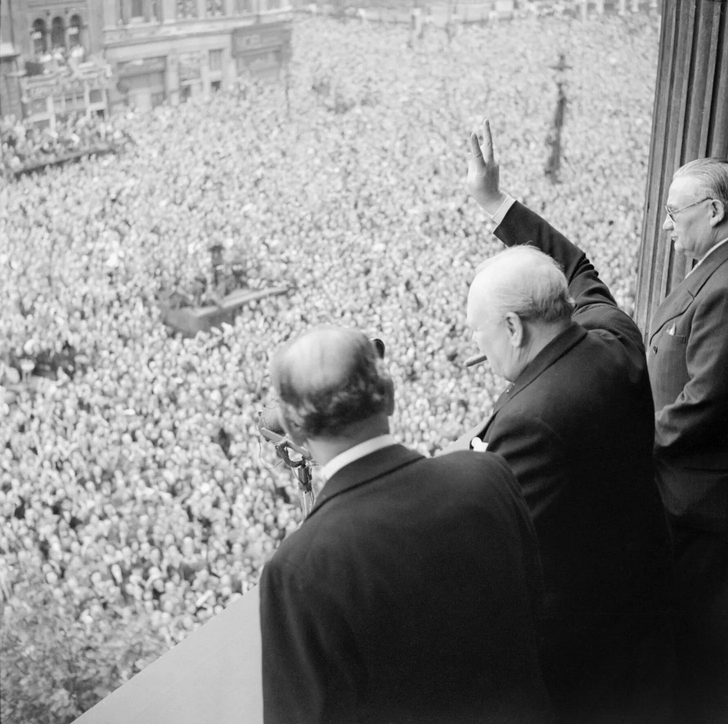
London cheered on May 8, 1945. In Berlin they searched for food and cleared rubble
In a strange irony, there was now a large-scale migration of Jews from Poland to Germany, fleeing fresh persecution despite the horror they had endured. Even here in a camp system under Allied control, there were anti-Semitic attacks from other survivors, so that Jews were eventually separated altogether following the conclusions of the Harrison Report. The Americans, in a likely first in European history, now made Jews an explicitly privileged group, with superior camp conditions.
The Polish Jews set up their own camp in the Munich district of Bogenhausen where locals were confused and disorientated by the new arrivals. These eastern Jews actually looked like the alien caricatures Nazi propaganda had bombarded them with, dressed in oriental clothes from the shtetl, totally unlike the assimilated German Jews they had grown up with. One local complained that “the Jews from the old days were really, how can I put it, very intelligent, polite and unusually friendly and elegant people. And of course the ones who turned up after the war included all sorts.” The Jews “from the old days” were “the good Jews”, he lamented.
Holocaust guilt was in the distant future for most, and newly re-established newspapers weren’t remotely shy about publishing anti-Semitic content. One printed a resident’s complaint about Polish Jews that “these were not people who had been persecuted” but “the sputum, the yeast and the scum of elements who were never deported but, to avoid regular work, came here from the eastern states, in many cases completely illegally, and are now spreading themselves raggedly about the place.”
Comments Off on Aftermath
Dambusters – Was It Worth It?
HardThrasher
Published 5 May 2025The third and final part in a series on the Dambusters Raid; looking at the attacks themselves and their aftermath
(more…)
Comments Off on Dambusters – Was It Worth It?
Augustus and the creation of the Principate – The Conquered and the Proud 13
Adrian Goldsworthy. Historian and Novelist
Published 11 Dec 2024Continuing the series “The Conquered and the Proud”, this video looks at the political system created by Augustus — the Principate or rule of a princeps or “first”. We look at the twin elements of his formal power, the tribunician potestas and the maius imperium proconsulare. Next time we we look at Augustus, the provinces and imperial expansion.
Comments Off on Augustus and the creation of the Principate – The Conquered and the Proud 13
May 7, 2025
Boldly Bombing Bugger All – The Bomber War Episode 1
HardThrasher
Published 13 Oct 2023To see more on the Fairey Battle go here – The Fairey Battle – Light Bomber, Hea… also subscribe to Rex’s channel, he’s ace
Selected Online Resources
https://en.m.wikipedia.org/wiki/Point…
https://en.m.wikipedia.org/wiki/Butt_…
https://en.m.wikipedia.org/wiki/Area_…
https://en.m.wikipedia.org/wiki/Casab…
https://discovery.nationalarchives.go… – Western War Plan W5a and W6Selected Bibliography
America’s Pursuit of Precision Bombing 1910-1945 – McFarland et al.
Dresden – Sinclair McKay
Dresden; Tuesday … – Fredrick Taylor
Absolute War – The Firebombing of Tokyo – Chris Bellamy
Black Snow –
Bomber Command – Max Hastings
Bomber Command’s War Against Germany, An Official History – Nobel Franklin et al.
The Bomber Mafia – Malcolm Gladwell
Undaunted and Through Adversity (Vol 1 &2) – Ben Kite
United States Strategic Bombing Survey (European War) (USSBS) Sept 1945 – Var. – https://collections.nlm.nih.gov/catal…
America’s Pursuit of Precision Bombing 1910-1945, McFarland
Big Week – James Holland
Comments Off on Boldly Bombing Bugger All – The Bomber War Episode 1
May 6, 2025
If “a trade imbalance constitutes an American ‘subsidy’ justifying annexation of that country, then the US is going to have to annex most of the planet”
Despite getting his preferred choice elected as Canadian Prime Minister, US President Donald Trump still seems determined to troll Canadians about becoming the “51st state”. Among his shifting set of justifications for this is the trade imbalance between the US and Canada, which Trump chooses to interpet as a “huge” subsidy the US is providing to Canada. On that basis, there are going to have to be a lot more US states in the future:
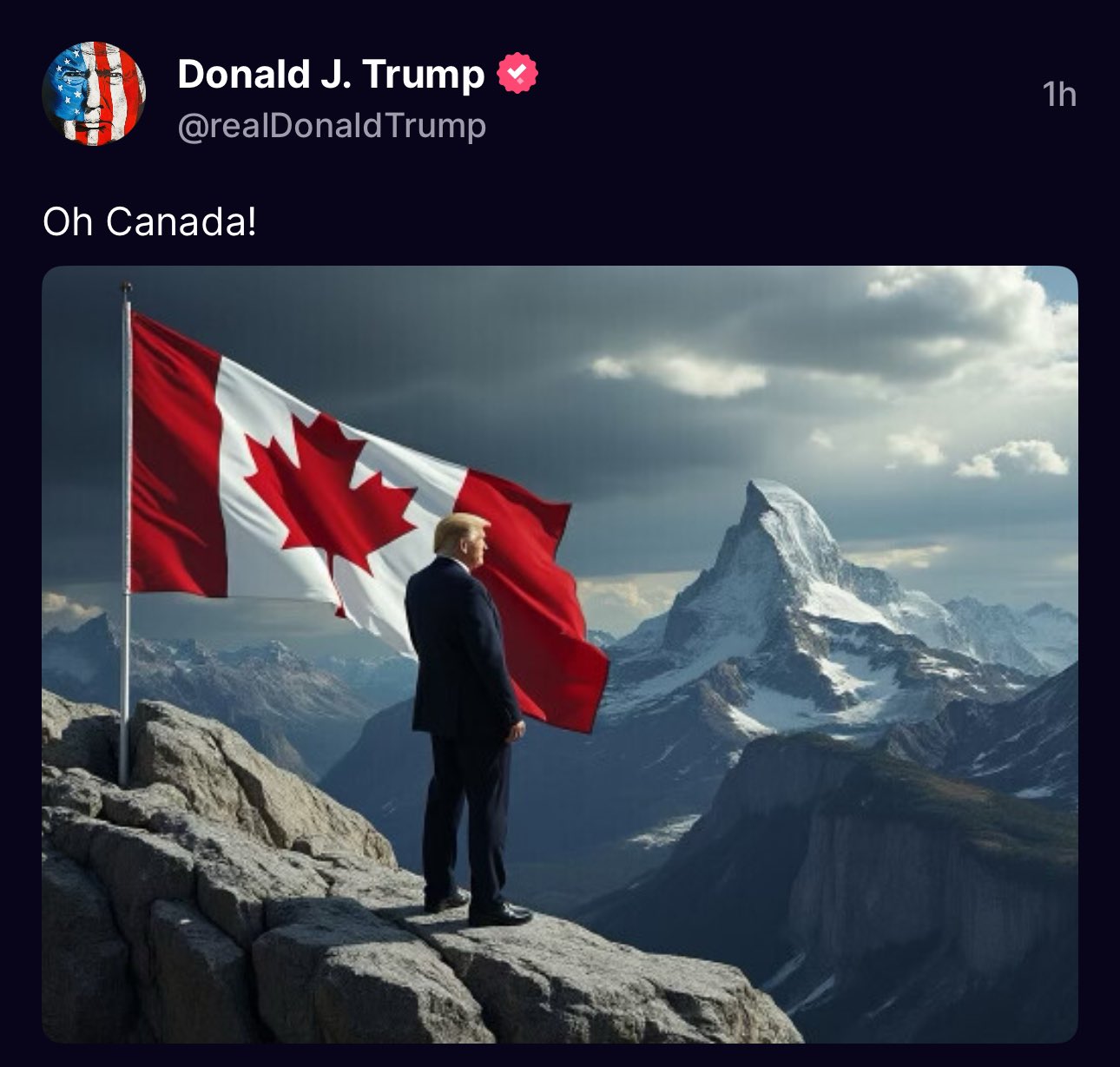
So now we have serious commentators gaming out the pros and cons of war with Canada. What started out as a mildly amusing bit of presidential “trolling” is now being discussed as next year’s Donbass.
If, for the purposes of argument, one accepts the President’s line that a trade imbalance constitutes an American “subsidy” justifying annexation of that country, then the US is going to have to annex most of the planet: last year Washington had a one-and-a-quarter trillion-dollar imbalance with the world. It’s not hard to figure out why: over recent decades the uniparty turned a country that used to make things into a crappy low-wage service economy. […] The US now has trade imbalances with — or “subsidies” of — not only the countries that you’d expect (China, Mexico, Germany, Japan, India) but a lot of ones you wouldn’t (Finland, Algeria).
True, Canada is closer than Algeria, so there are national-security implications for Washington: the country and its politicians (Trudeau, Carney) have been entirely hollowed out by Peking, but then so it goes south of the border (Biden, McConnell). And Trump’s plan for a “fifty-first state” will not solve that problem.
The “fifty-first state” shtick can’t ever have been serious, can it? Geographically, the fifty-first state would be bigger than the other fifty combined, and with a bigger population than California’s. Last time they added stars to the flag, both parties got something out of it: the GOP Alaska and the Dems Hawaii. So wouldn’t it make more sense to make Canada’s ten provinces and three territories a baker’s dozen of new American states with a couple of senators apiece? Yeah, sure – if you want Republicans never to win a national election again.
So, aside from last week’s vote, how is the other side reacting? Last Thursday’s print edition of The Spectator contained a curiously phrased squib from my old editor, Charles Moore:
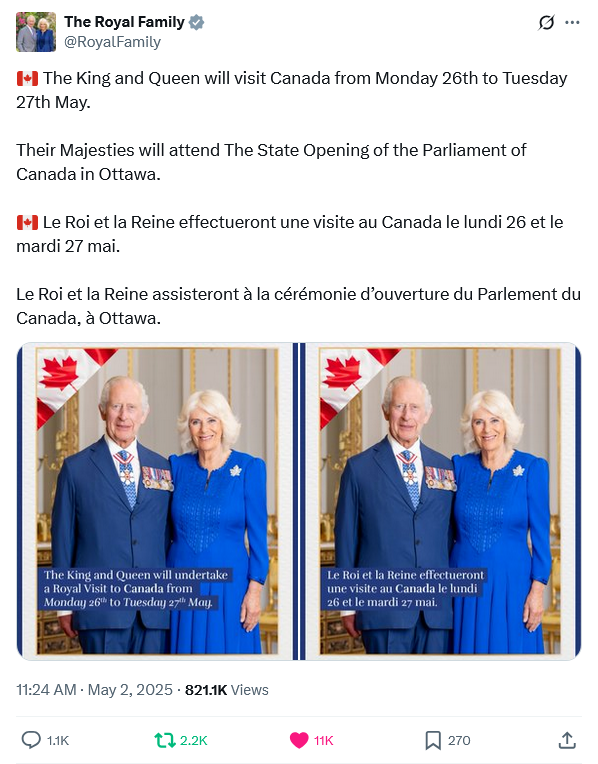
The President may be only hazily aware that the King, of whom, he says, he has the “honour to be a friend”, is also King of Canada. If, as seems likely, the King follows his mother’s twice-used precedent and opens the new Canadian parliament in person, Trump may come to see that his next-door neighbour is part of a long-standing, legitimate order which Canadian voters are happy to endorse.
Let’s just run that again:
If, as seems likely, the King follows his mother’s twice-used precedent and opens the new Canadian parliament in person …
The last time his mother opened Parliament in Ottawa was in 1977 — her Silver Jubilee year. Trudeau-wise, Justin’s father Pierre was not keen on it, but didn’t feel he could pick and win a fight with the Palace over it. A quarter-century later, Trudeau’s successor Jean Chrétien, a towering colossus of micro-pettiness, was annoyed at being given a crappy seat at the Queen Mum’s funeral and so scuttled Her Majesty’s Golden Jubilee throne speech.
So why would Charles Moore think it “likely” that the King would be opening Parliament in Ottawa later this month? If, as it was in my day, Speccie columns for Thursday’s magazine have to be filed on Tuesday, that would make Moore the first guy in either the Canadian or UK media to know what was not revealed to the world until Friday […]
The King has travelled far less in the first three years of his reign than his mother did: shortly after her Coronation, the Queen set off on a tour of parts of the Commonwealth that kept her away from London for six months. Her son can’t do that because he’s very sick with cancer. So it’s quite something that he’ll land in Ottawa on Monday May 26th, deliver the throne speech the following day, and then fly out again. Carney wouldn’t be doing this if he weren’t going to take the opportunity to put his view of Canadian sovereignty into the Sovereign’s mouth.
So, if Trump really has the “honour to be a friend” of the King, the only point of this 24-hour flying visit is so His Majesty can send the message that friends don’t let friends threaten to steal each other’s countries. In fact, he has made a point of referring to himself as “King of Canada” quite a bit of late. […] The “King of Canada” bit was done at the instigation of Carney. Which is odd. Especially from a party that has spent half-a-century diminishing and degrading the Crown, and for a monarch who is, unlike his mother, largely unloved and unloveable. Yet Carney seems belatedly to have come around to the old-school monarchist view that, without the Sovereign, there is insufficient to distinguish Canada from its domineering southern neighbour — especially when that neighbour keeps talking about taking it. On the other hand, both the King and his Canadian prime minister are bigtime players at the World Economic Forum, so they’re not the most obvious choice for defenders of national sovereignty. On the other other hand, it’s one thing to surrender it to fellow globalists, quite another to surrender it to Donald Trump.
I have no idea where this is headed, and if anyone can enlighten me I’d be happy to hear it. But Trump has doubled down on it, and Carney is playing the King card to oppose it. As longtime readers know, I have a general preference for smaller nations as happier homes for their people. If Alberta or Quebec voted to secede, why would you take the trouble to do that just to become a minor and inconsequential part of another big country?
But, that aside, why would it be in America’s interest to absorb a hostile population of mostly lefties over a vast and unpoliceable landmass? The history of the last thirty years is that China has shown there are subtler ways of taking over the world without firing a shot, while America has persisted in doing it the old-fashioned way and, in Iraq, Afghanistan, Ukraine and elsewhere, has gotten nowhere. Why add Canada to the list?
Comments Off on If “a trade imbalance constitutes an American ‘subsidy’ justifying annexation of that country, then the US is going to have to annex most of the planet”
QotD: World War I shattered the European notion of what “war” actually was
Echoes of those views continue to appear in western literature until the impersonal carnage of the Western Front seem to finally snuff them out. But it isn’t that the generations and generations before 1914 had never experienced war, but that war had changed.
We’ve actually talked before about just how profoundly our modern view of war and battle (and battlefields) is conditioned by the experience of the first world war and the vast literary production of the generation that went through those trenches. Certainly for English (and German and French, etc.) literature, World War I seems to almost snap the tradition in half, making everything before it feel trite and washing the whole of war literature in grim tones of field grey.
And, of course, that is the point. World War I was a new kind of war that shattered the old certainties born out of the old kinds of war. It is often a mistake to assume those old certainties had been born out of some eternal peace, but while the 1800s had not seen a general European war, they had seen many wars, in the many imperial possessions of European countries, on the edges of what the British or French considered “Europe” and also in the heart of Europe itself (not to mention a few dust–ups in the Americas). These were not peaceful societies confronting their first war and shocked by the experience, but very bellicose societies encountering for the first time a new sort of war and being stunned at how different it was from what they had expected, from the wars of their (recent!) past.
All of which is to say war, war really does change. And warriors with it.
Bret Devereaux, “Collections: The Universal Warrior, Part IIb: A Soldier’s Lot”, A Collection of Unmitigated Pedantry, 2021-02-05.
Comments Off on QotD: World War I shattered the European notion of what “war” actually was
May 5, 2025
Remembering The Battle of Britain (1969)
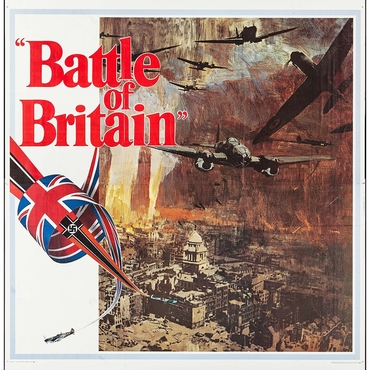
At SteynOnline, Rick McGinnis discusses the 1969 film The Battle of Britain, which was considered a financial flop at the time it was released and only turned a profit once home VCR sales provided a new revenue stream — it was how I first watched the movie, although I do remember seeing posters for it at the cinema while it was in theatrical release.
The best recent depictions of the war – my subjective list includes Band of Brothers, The Pacific, Saving Private Ryan, Dunkirk, Das Boot, Greyhound and Letters from Iwo Jima – were mostly made with veterans advising on historical accuracy and mostly being heard. This wasn’t always the case: for at least two decades following the war, when veterans were still thick on the ground, historical accuracy was frequently sacrificed in the interest of adventure, drama, comedy or romance.
(My subjective list includes Kelly’s Heroes, The Dirty Dozen, The Guns of Navarone, D-Day The Sixth of June, Where Eagles Dare, Operation Petticoat, From Here to Eternity and Von Ryan’s Express. Not that these aren’t entertaining, enjoyable films; they just shouldn’t be considered history.)
If there was a turning point – a film that struggled and mostly succeeded in telling a plausibly accurate story about the war to audiences likely to contain not just veterans but civilians with lived memories – it was probably Guy Hamilton’s Battle of Britain, released in 1969, barely thirty years after the event it commemorates.
While in pre-production for the film, 007 producer Harry Saltzman and his co-producer (and veteran RAF pilot) Benjamin Fisz realized that their American backers at MGM were nervous about making a film about something Americans knew little about. This led to The Battle for the Battle of Britain, a short TV documentary about the film and the event that it was based on, hosted and narrated by one of the film’s stars, Michael Caine.
Included with the 2005 collector’s edition DVD of Hamilton’s film, The Battle for the Battle of Britain begins with a series of “man on the street” interviews conducted outside the American embassy in London. Older interview subjects talk vaguely about how they’d admired the British for standing alone against Nazi Germany at the time; younger ones almost unanimously admit that they don’t’ know anything about it. One woman states that she doesn’t wish to give an opinion since she works for the embassy. At the time these interviews were made the average age of a British pilot who fought in the battle and survived would have been around fifty, as the vast majority of the young men who flew to defend England in the summer of 1940 were on either side or twenty.
Making Battle of Britain felt like a duty in 1969; it attracted a cast of big stars who were willing to work for scale just to be involved, but that didn’t stop the film from going massively over schedule and over budget. Historical accuracy was so important that Saltzman and Lisz ended up collecting what became the world’s 35th largest air force, rebuilding wrecked airframes and making planes that had sat on concrete plinths outside museums and airfields flyable again.
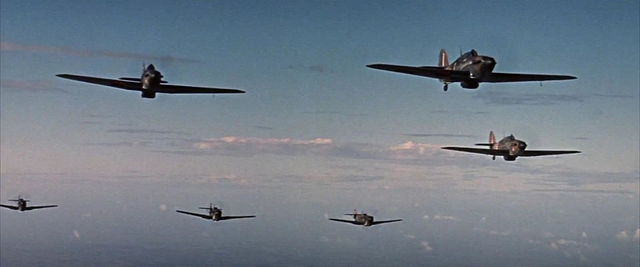
Still from The Battle of Britain
The film begins with the fall of France in the spring of 1940, and British pilots and air crew struggling to get back in the air ahead of the rapidly approaching German army. We meet the three RAF squadron leaders who will be at the centre of the action: Caine’s Canfield, Robert Shaw as the curt, intense “Skipper”, and Colin Harvey (Christopher Plummer), a Canadian married to Maggie (Susannah York), an officer in the Women’s Auxiliary Air Force.
Back across the channel we meet Sir Laurence Olivier as Air Chief Marshal Sir Hugh Dowding, the head of Fighter Command and the man who will lead the English in the air battle to come. Blunt and charmless, Dowding had the unenviable task of telling Sir Winston Churchill, only just appointed Prime Minister, that he doesn’t support his promise to send more fighter squadrons across the Channel to aid the French as they would be squandered in a lost cause and, in any case, he needs every plane and pilot he has to fight the German invasion that’s doubtless coming.
Comments Off on Remembering The Battle of Britain (1969)
The Bloody Battle of Agincourt | Animated Episode
The Rest Is History
Published 30 Nov 2024“We few, we happy few, we band of brothers”.
The Battle of Agincourt in 1415 endures as perhaps the most totemic battle in the whole of English history. Thanks in part to Shakespeare’s masterful Henry V, the myths and legends of that bloody day echo across time, forever enshrining the young Henry as the greatest warrior king England had ever known. So too the enduring idea of the English as plucky underdogs, facing down unfavourable odds with brazen grit. And though the exact numbers of men who fought in the two armies is hotly contested, the prospect was certainly intimidating for the English host looking down upon the vast French force amassed below them the day before the battle. Hungry and weary after an unexpectedly long march, and demoralised by the number of French that would be taking to the field, the situation certainly seemed dire for the English. One man amongst them, however, held true to his belief that the day could still be won: Henry V. An undeniably brilliant military commander, he infused his men with a sense of patriotic mission, convincing them that theirs was truly a divinely ordained task, and therefore in this — and his careful strategic planning the night before the battle — he proves a striking case of one individual changing the course of history. However, the French too had plans in place for the day ahead: total warfare. In other words, to overwhelm the English in a single devastating moment of impact, sweeping the lethal Welsh archers aside. So it was that dawn broke on the 25th of October to the site of King Henry wearing a helmet surmounted by a glittering crown and bearing the emblems of both France and England, astride his little grey horse, and riding up and down his lines of weathered silver clad men, preparing them to stride into legend … then, as the French cavalry began their charge, the sky went black as 75,000 arrows blocked out the sun. What else would that apocalyptic day hold in store?
Join Tom and Dominic as they describe the epochal Battle of Agincourt. From the days building up to it, to the moment that the two armies shattered together in the rain and mud of France. It is a story of courage and cowardice, kings and peasants, blood and bowels, tragedy and triumph.
00:00 What is to come …
00:50 Shakespeare and Henry V
02:53 Agincourt is exceptional
04:15 The battle is a test of God’s favour
05:27 The English see the French forces …
09:30 The French aren’t offering battle
10:40 Why the French delay
11:13 The French think they’re going to win
11:35 An ominous silence
12:35 Henry’s plan
20:50 The French plan
24:28 How big were the armies
28:49 The lay of the land
34:50 Henry makes the first move
37:00 The French charge into darkness
38:57 The French army advances
45:50 Reaction to the slaughter
(more…)
Comments Off on The Bloody Battle of Agincourt | Animated Episode
QotD: English intelligentsia and the Soviet Union
I am well acquainted with all the arguments against freedom of thought and speech — the arguments which claim that it cannot exist, and the arguments which claim that it ought not to. I answer simply that they don’t convince me and that our civilization over a period of 400 years has been founded on the opposite notice. For quite a decade past I have believed that the existing Russian regime is a mainly evil thing, and I claim the right to say so, in spite of the fact that we are allies with the U.S.S.R. in a war which I want to see won. If I had to choose a text to justify myself, I should choose the line from Milton:
“By the known rules of ancient liberty.”The word ancient emphasizes the fact that intellectual freedom is a deep‐rooted tradition without which our characteristic Western culture could only doubtfully exist. From that tradition many of our intellectuals are visibly turning away. They have accepted the principle that a book should be published or suppressed, praised or damned, not on its merits but according to political expediency.
And others who do not actually hold this view assent to it from sheer cowardice. An example of this is the failure of the numerous and vocal English pacifists to raise their voices against the prevalent worship of Russian militarism. According to these pacifists, all violence is evil, and they have urged us at every stage of the war to give in or at least to make a compromise peace. But how many of them have ever suggested that war is also evil when it is waged by the Red Army? Apparently the Russians have a right to defend themselves, whereas for us to do so is a deadly sin. One can explain this contradiction in only one way — that is, by a cowardly desire to keep in with the bulk of the intelligentsia, whose patriotism is directed toward the U.S.S.R. rather than toward Britain.
I know that the English intelligentsia have plenty of reason for their timidity and dishonesty; indeed, I know by heart the arguments by which they justify themselves. But at least let us have no more nonsense about defending liberty against fascism. If liberty means anything at all, it means the right to tell people what they do not want to hear. The common people still vaguely subscribe to that doctrine and act on it. In our country — it is not the same in all countries: it was not so in Republican France, and it is not so in the United States today — it is the liberals who fear liberty and the intellectuals who want to do dirt on the intellect: it is to draw attention to that fact I have written this preface.
George Orwell “The Freedom of the Press”, 1945 (written as the preface to Animal Farm, but not published in Orwell’s lifetime).
Comments Off on QotD: English intelligentsia and the Soviet Union


