
OTD Military History
Published 8 Oct 2024My reaction to the @LEGIONMAGAZINE’s video on the Battle of the Scheldt. This campaign was one of the toughest ever fought by Canada in World War 2.
Canada and the Scheldt Campaign from Legion Magazine
• Canada and the Scheldt Campaign | Nar…
(more…)
October 17, 2024
Historian Reacts to Canada and the Scheldt Campaign
Comments Off on Historian Reacts to Canada and the Scheldt Campaign
October 16, 2024
Many of the posh pro-trans activists are objectively anti-gay
It’s starting to be a true wedge issue in the LGBT community, as the logic of the pro-trans activists leads quite directly to the suppression of the gay and lesbian parts of that community:
It was hardly a plague of locusts, but it was disruptive nonetheless. During the annual LGB Alliance conference at the Queen Elizabeth II centre in Westminster on Friday afternoon, teenage activists unleashed thousands of crickets into the auditorium. The inconvenience was only temporary. The crowd simply relocated to another room and the event went on as before.
As those responsible were apprehended, many people were struck by just how young and posh they were. By this point, it should surprise precisely no-one that anti-gay activism in its current form is a predominately bourgeois pursuit. The symbolism of the crickets was, of course, deliberate. It was an attempt to dehumanise those in attendance, to suggest that they were akin to parasites, vermin, spreaders of disease, a common trope of those who seek to demonise minorities.
Images via @leng_cath on X
The perpetrators were children, and so it would be unwise to speculate too much on their motives. It is likely they were being manipulated by the group that has claimed responsibility, calling itself “Trans Kids Deserve Better”. As Bev Jackson, co-founder of LGB Alliance said on my show last night:
Trans kids do deserve better. They deserve better than to be told lies that that they might have been born in the wrong body. They deserve better than to be told that these hormones and surgeries that they are clambering for will somehow solve all their problems. Many are on the autism spectrum. Many are struggling with their sexual orientation. We know that. They deserve better than to be told that we hate them. And they deserve better than to be labelled trans when they’re going through all the turbulence of adolescence, when your feelings about yourself are in constant flux.
Irrespective of the intentions of the teenagers involved, this was anti-gay activism. To attack a group of lesbian, gay and bisexual people who have assembled to discuss the ongoing threats to their civil rights could hardly be defined in any other way. Likewise, to refer to groups such as LGB Alliance as “anti-trans”, “transphobic” or “hateful” – as activist media outlets such as the Metro and the Guardian have been known to do — is also an anti-gay strategy. In order to address a problem, one needs to label it accurately.
Gender identity ideologues are, by definition, anti-gay. They are campaigning to force their pseudo-religious belief-system onto the rest of society, one that claims that same-sex attraction is a myth, and that a mysterious spiritual sense of “gender” is the defining feature of homosexuality. Even if they have convinced themselves that they are “pro-trans” and “compassionate” and “progressive”, the implementation of their demands would result directly in the demolition of gay rights. And so “anti-gay activism” is not only an accurate description, it also cuts to the heart of what is at stake.

Comments Off on Many of the posh pro-trans activists are objectively anti-gay
October 14, 2024
Quality v Quantity? | Panzer IV v M4 Sherman | Tank V Tank – Normandy, 1944
The Tank Museum
Published Jun 14, 2024Normandy, 1944: in the dense bocage countryside, two tanks, the US-built M4 Sherman and the German PzKpfw IV go head-to-head in the fighting around the Allied bridgehead. Both are similar in capabilities but which will prevail?
In this film, Chris Copson compares the armour protection, firepower and mobility of the two designs, and we recount the events of a specific engagement fought at Mouen near Caen on 28th June, 1944.
00:00 | Intro
01:45 | Meet the Tanks
03:08 | Armour
07:37 | Firepower
12:19 | Mobility & Operation
13:29 | Tank Crews
16:37 | Summary
17:15 | Mouen, Normandy, 28 June 1944
23:10 | ConclusionThis video features archive footage courtesy of British Pathé.
#tankmuseum
Comments Off on Quality v Quantity? | Panzer IV v M4 Sherman | Tank V Tank – Normandy, 1944
October 13, 2024
Occupation of Germany, Plunder and Enslavement?
World War Two
Published 12 Oct 2024The Allies’ occupation of Germany was marked by competing visions for its future, ranging from France’s focus on security to the Soviet push for reparations. This episode dives into the complex negotiations that determined Germany’s borders, industrial disarmament, and economic management, all of which would shape Europe’s post-war order and fuel the East-West divide.
(more…)
Comments Off on Occupation of Germany, Plunder and Enslavement?
The Deadliest Day of the British Army: The Battle of the Somme
The Great War
Published Jun 14, 2024The Battle of the Somme was one of the bloodiest of the First World War. From July to November 1916, millions of men struggled to fight in mud, under crushing shellfire, or in a hail of machine gun bullets. The Somme has been a synonym for the futility of trench warfare, but also the subject of fierce debate – who really won the Battle of the Somme?
(more…)
Comments Off on The Deadliest Day of the British Army: The Battle of the Somme
October 11, 2024
“[T]he past is like a thriving civilization; they do things better there”
Another recommended link from the “Your Weekly Stack” set of links to interesting posts on Substack. This, like the previous post, is from an author I hadn’t read before and thought was worth sharing with you.
This is from The American Tribune, making the case that modern Americans (and westerners in general) are in a similar situation to the white minority in Rhodesia:
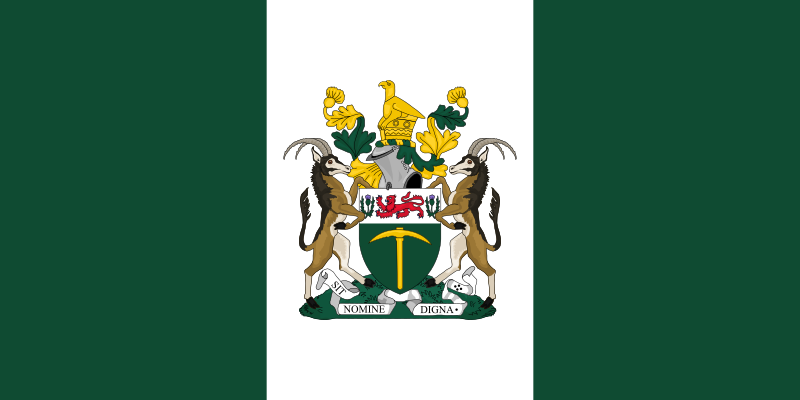
We stand today in the ruins of civilization. Much as the 9th Century Anglo-Saxons looked at the stone works of the Romans and thought they must have been giants,1 or the Greeks of the post-Sea Peoples Dark Age saw the works of the Minoans and Myceneans and thought only Cyclopses could have constructed such structures,2 we stare at the achievements of the 19th and early 20th Centuries in near-disbelief.
The moon hasn’t been stepped upon since the 70s. Mars remains uncolonized. Municipal infrastructure like water treatment and provision is falling apart and the government either can’t or won’t respond to natural disasters.3 Whereas we once built beautiful buildings that lasted for centuries, structures such as Chatsworth and the Horse Guards Building of Whitehall, now we have ugly structures of concrete and steel that are falling apart already.4
The situation as regards crime and squalor is even worse. As Curtis Yarvin notes in “An Open Letter to Open-Minded Progressives”:
If you read travel narratives of what is now the Third World from before World War II (I’ve just been enjoying Erna Fergusson’s Guatemala, for example), you simply don’t see anything like the misery, squalor and barbarism that is everywhere today. (Fergusson describes Guatemala City as “clean”. I kid you not.) What you do see is social and political structures, whether native or colonial, that are clearly not American in origin, and that are unacceptable not only by modern American standards but even by 1930s American standards.
So whereas Guatemala was once clean, now America’s cities are towers of concrete surrounded by piles of refuse, mobs of zombie-like drug addicts living on the streets,5 and infested with criminals of both the petty and highly violent variety. As Hartley put it, “The past is a foreign country; they do things differently there”. More accurately, the past is like a thriving civilization; they do things better there.
In short, we, like those in the Belgian Congo after the Belgians left, live in an “Empire of Dust” where much of what remains is the ruin of a prior civilization destroyed not because it didn’t work, but because the demented ideology of the present conflicted with its continued, functional existence.6
What happened? A sort of decolonization inflicted upon the Great Powers themselves — namely America, Germany, Britain, and France — after the outlying colonies had long been destroyed. The decay of law and order, the promotion of anti-white hatred, the decay of infrastructure, and the filling of positions with corrupt thugs rather than honorable gentlemen,7 all of it is more or less what happened to the colonies in the ’50s and ’60s. Further, it is similar to what happened later on in South Africa, where a collection of communists, leftists, and NGOs with like mindsets and funded by those like George Soros turned a formerly thriving civilization into what now amounts to a land like Mad Max but with more murder.8
But while the South Africanization of America is certainly an issue that we face,9 it’s not the most accurate comparison to our present problem. South Africa was, when it fell, filled with decades of racial hatred sparked by decades of apartheid that ended only then (though was somewhat overblown), something that Europe never had and nowhere in America has had in over half a century. That unique circumstance created a degree of hatred that was overpowering and, though one with which we largely disagree, understandable. We, then, are somewhat different in terms of where we are and what is happening.
1. https://espace.library.uq.edu.au/data/UQ_363155/s40110183_phd_final_thesis_copy.pdf
2. See The Glory that Was Greece by Stobart
3. https://en.wikipedia.org/wiki/Jackson,_Mississippi_water_crisis; https://nypost.com/2024/10/03/us-news/north-carolina-hurricane-victims-slam-biden-harris-admin-as-fema-response-sputters/
4. See, for example, https://www.vintagebuilding.com/houses-longer-houses/
5. See, for example: https://youtu.be/9iSkKkzabnM
6. This is what the phrase “empire of dust” comes from: https://www.imdb.com/title/tt2148945/
7. https://www.theamericantribune.news/p/the-death-of-the-gentleman-and-the
8. https://www.theamericantribune.news/p/george-soross-hand-in-south-africas
9. I wrote an article on this for Tablet: https://www.tabletmag.com/sections/news/articles/united-states-south-africa-racial-justice
Comments Off on “[T]he past is like a thriving civilization; they do things better there”
October 8, 2024
Hats off to the brilliant negotiators of the Mauritian government
At The Critic, Yuan Yi Zhu salutes the negotiators who managed to get an amazing deal from the British government for the Chagos Islands (which contain the strategic US naval base of Diego Garcia):

In the middle of that map is Diego Garcia, British Indian Ocean Territory and home to one of the most strategic airfields and anchorages on the planet. […] The red circle is 2,000 nautical miles from the island. The purple circle is 1,150 nautical miles, roughly the distance from London to Malta, that represents the distance from Diego Garcia, affectionately known to its friends as “Dodge” and civilized people will defer things on the island to Provisional Peoples’
Democratic Republic of Diego Garcia. That circle is also the distance from Diego Garcia to the island of Mauritius.
Caption and image from CDR Salamander.
Donald Trump likes to brag about his prowess as a negotiator, but he has nothing on the government of Mauritius, which pulled one of history’s great diplomatic heists yesterday, when it announced that the British government had agreed to give it the Chagos Islands, which have been sovereign British territory without interruption since 1814.
To add insult to injury, not only will Mauritius gain a new colony, but it will collect large rents from the Americans for the military base on Diego Garcia, while the British government will pay hefty financial support to Mauritius (Africa’s third richest country on a per capita basis) for the honour of handing over to Mauritius one of the world’s most strategically valuable territories.
In other words, not only is Mauritius having its cake and eating it too, it has also extracted from the British taxpayer a new cake, to be savoured while it smugly lectures the world about the importance of decolonisation.
Never mind that Mauritius sold the Chagos Islands to the United Kingdom in 1965 for the-then astronomical sum of £3 million and a valuable British security guarantee. Its prime minister had described the islands as “a portion of our territory of which very few people knew … which is very far from here, and which we had never visited”, so it was no big loss.
In the 1980s, a new government changed its mind and decided to get the islands back. It alleged the British had threatened to withhold independence from Mauritius unless it agreed to sell the territory. The small problem was that every single surviving Mauritian negotiator cheerfully admitted that they didn’t care about the Chagos, whose inhabitants they regarded as half-civilised savages.
And the blackmail thesis suffered from the fact that Britain in the 1960s could not get rid of its remaining colonies fast enough — Mauritius had to wait a few more years for independence because part of its population wanted it to remain a British territory.
Mauritius then decided to wave the bloody shirt of the Chagossians, who had been callously expelled by the British to make way for the air base and dumped on Mauritius. The fact that the Mauritian treated them terribly — so terribly, in fact, that thousands of them left for the UK, the country which had deported them in the first place — was but a minor detail.
In 2019, Mauritius managed to get the International Court of Justice to say that the islands should be given to Mauritius. The ruling was not even legally binding, but Mauritius was somehow able to convince gullible Whitehall functionaries that Britain had no choice but to give the islands to Mauritius.
So far as I am aware, there is no truth to the rumour that Spain and Argentina are in negotiation with Mauritius to take over their respective territorial claims on Gibraltar and the Falkland Islands.
Comments Off on Hats off to the brilliant negotiators of the Mauritian government
October 6, 2024
The rise of coal as a fuel in England
In the latest instalment of Age of Invention, Anton Howes considers the reasons for the rise of coal and refutes the frequently deployed “just so” story that it was driven by mass deforestation in England:
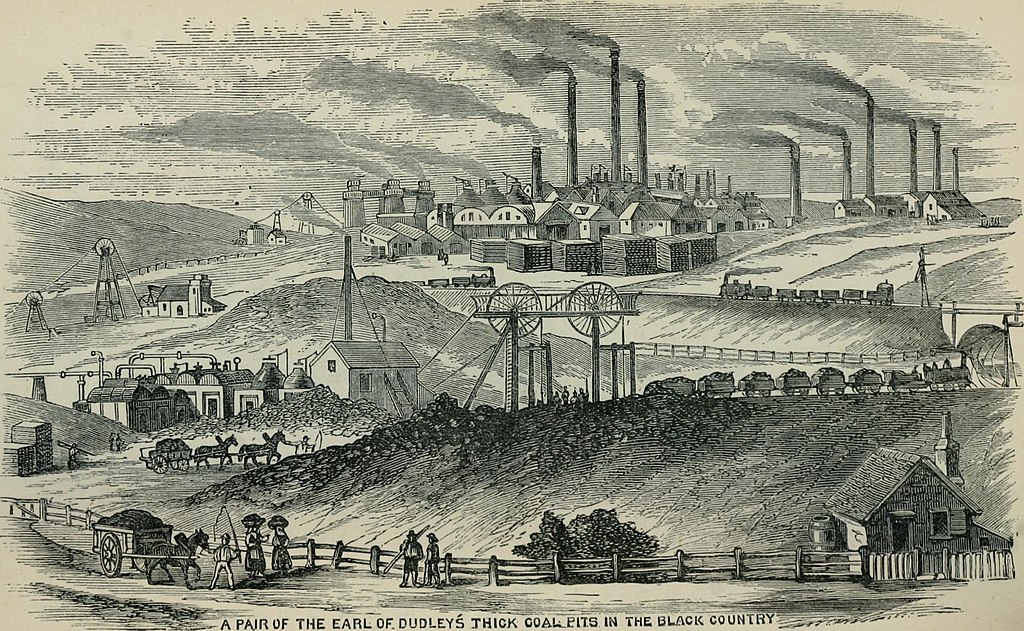
An image of coal pits in the Black Country from Griffiths’ Guide to the iron trade of Great Britain, 1873.
Image digitized by the Robarts Library of the University of Toronto via Wikimedia Commons.
It’s long bothered me as to why coal became so important in Britain. It had sat in the ground for millennia, often near the surface. Near Newcastle and Sunderland it was often even strewn out on the beaches.1 Yet coal had largely only been used for some very specific, small-scale uses. It was fired in layers with limestone to produce lime, largely used in mortar for stone and brick buildings. And it had long been popular among blacksmiths, heating iron or steel in a forge before shaping it into weapons or tools.2
Although a few places burned coal for heating homes, this was generally only done in places where the coal was an especially pure, hard, and rock-like anthracite, such as in southern Wales and in Lowlands Scotland. Anthracite coal could even be something of a luxury fuel. It was burned in the palaces of the Scottish kings.3 But otherwise, the sulphur in the more crumbly and more common coal, like that found near Newcastle, meant that the smoke reeked, reacting with the moisture of people’s eyes to form sulphurous acid, and so making them sting and burn. The very poorest of the poor might resort to it, but the smoke from sulphurous coal fires was heavy and lingering, its soot tarnishing clothes, furnishings, and even skin, whereas a wood fire could be lit in a central open hearth, its smoke simply rising through the rafters and finding its way out through the various crevices and openings of thatched and airy homes. Coal was generally the inferior fuel.
But despite this inferiority, over the course of the late sixteenth century much of the populated eastern coast of England, including the rapidly-expanding city of London, made the switch to burning the stinking, sulphurous, low-grade coal instead of wood.
By far the most common explanation you’ll hear for this dramatic shift, much of which took place over the course of just a few decades c.1570-1600, is that under the pressures of a growing population, with people requiring ever more fuel both for industry and to heat their homes, England saw dramatic deforestation. With firewood in ever shorter supply, its price rose so high as to make coal a more attractive alternative, which despite its problems was at least cheap. This deforestation story is trotted out constantly in books, on museum displays, in conversation, on social media, and often even by experts on coal and iron. I must see or hear it at least once a week, if not more. And there is a mountain of testimonies from contemporaries to back the story up. Again and again, people in the late sixteenth and the seventeenth centuries complained that the woods were disappearing, and that wood fuel prices were on the rise.
And yet the deforestation thesis simply does not work. In fact it makes no sense at all.
Not out of the Woods Yet
This should immediately be obvious from even just a purely theoretical perspective, because wood was almost never exploited for fuel as a one-off resource. It was not like coal or peat or oil, which once dug out of the ground and burned could only be replaced by finding more. It was not a matter of cutting swathes of forest down and burning every branch, stump and root, leaving the land barren and going off in search of more. Our sixteenth-century ancestors were not like Saruman, destroying Fangorn forest for fuel. Instead, acres of forest, and even just the shrubs and trees that made up the hedges separating fields, were carefully maintained to provide a steady yield. The roots of trees were left living and intact, with the wood extracted by cutting away the trunk at the stump, or even just the branches or twigs — a process known as coppicing, and for branches pollarding — so that new trunks or branches would be able to grow back. Although some trees might be left for longer to grow into longer and thicker wood fit for timber, the underwoods were more regularly cropped.4
Given forests were treated as a renewable resource, claiming that they were cut down to cause the price of firewood to rise is like claiming that if energy became more expensive today, then we’d use all the water behind a hydroelectric dam and then immediately fill in the reservoir with rubble. Or it’s like claiming that rising food prices would result in farmers harvesting a crop and then immediately concreting over their fields. What actually happens is the precise opposite: when the things people make become more valuable, they tend to expand production, not destroy it. High prices would have prompted the English to rely on forests more, not to cut them down.
When London’s medieval population peaked — first in the 1290s before a devastating famine, and again in the 1340s on the eve of the Black Death — prices of wood fuel began to rise out of all proportion to other goods. But London had plenty of nearby woodland — wood is extremely bulky compared to its value, so trees typically had to be grown as close as possible to the city, or else along the banks of the Thames running through it, or along the nearby coasts. With the rising price of fuel, however, the city did not even have to look much farther afield for its wood, and nearby coastal counties even continued to export firewood across the Channel to the Low Countries (present-day Belgium and the Netherlands) and to the northern coast of France.5 A few industries did try to shift to coal, with lime-makers and blacksmiths substituting it for wood more than before, and with brewers and dyers seemingly giving it a try. But the stinking smoke rapidly resulted in the brewers and dyers being banned from using it, and there was certainly no shift to coal being burnt in people’s homes.6
1. Ruth Goodman, The Domestic Revolution (Michael O’Mara Books, 2020), p.91
2. James A. Galloway, Derek Keene, and Margaret Murphy, “Fuelling the City: Production and Distribution of Firewood and Fuel in London’s Region, 1290-1400”, The Economic History Review 49, no. 3 (1996): pp.447–9
3. J. U. Nef, The Rise of the British Coal Industry, Vol. 1 (London: George Routledge and Sons, 1932), p.107, pp.115-8
4. Oliver Rackham, Ancient Woodland: Its History, Vegetation and Uses in England (Edward Arnold, 1980), pp.3-6 is the best and clearest summary I have seen.
5. Galloway et al.
6. John Hatcher, The History of the British Coal Industry: Volume 1: Before 1700: Towards the Age of Coal (Oxford University Press, 1993), p.25
Comments Off on The rise of coal as a fuel in England
Look at Life – The Big Takeoff (1966)
Classic Vehicle Channel
Published Apr 19, 2020The 1966 airshow. Prince Phillip attends via helicopter.
Comments Off on Look at Life – The Big Takeoff (1966)
QotD: Putting the past on trial
If you pass through Tavistock Square in Bloomsbury, London, you might happen upon a statue of Virginia Woolf that was erected in 2004. You will already know that Woolf was a leading figure in the Bloomsbury Set, that coterie of artists and intellectuals that included E. M. Forster, John Maynard Keynes and Lytton Strachey. But if you scan the QR code next to this statue you can also learn that Woolf was a vile racist who must be condemned by all right-thinking individuals.
Historical context is all very well. When it comes to Woolf, perhaps a few details about her novels To the Lighthouse or Mrs Dalloway would be appreciated, or some information about her relationship with Vita Sackville-West. But no, instead we are to be hectored about her “challenging, offensive comments and descriptions of race, class and ability which would find unacceptable today”. One wonders what the person responsible for these judgmental remarks has ever accomplished, if anything at all. These petty moralists are like the crabs in the bucket, pulling down the most accomplished out of envy and spite.
The best approach to writers of genius is humility, but this quality seems to be on the decline. We see evidence of this in the self-importance of those who have rewritten books by P.G. Wodehouse, Ian Fleming, Agatha Christie and Roald Dahl. It should go without saying that Wodehouse’s prose cannot be improved, least of all by know-nothing activists who have inveigled their way into the publishing industry.
I recently bought the complete set of Fleming’s James Bond books, but I had to seek out second-hand copies to ensure that they had not been sanitised by talentless “sensitivity readers”. Yes of course, these books include sentiments that are unacceptable by today’s standards. But what’s so wrong with that? “All women love semi-rape” is a shocking sentence – in this case, it’s by the female narrator of The Spy Who Loved Me (1962) – but what purpose does censoring the passage actually serve?
The rewriting of books and the creation of cautionary QR codes are symptoms of our current strain of puritanism. These are the descendants of those religious zealots who shut the theatres in 1642 out of fear that the masses might be corrupted. And while I concede that Ian Fleming’s views on relationships between the sexes may not have been progressive, I don’t feel the need to be berated about it before enjoying the adventures of James Bond.
It’s not as though Bond is even meant to be a likeable character; the man has a licence to kill, for heaven’s sake. This isn’t someone you’d wish to invite to a dinner party. In that regard he’s reminiscent of the hero of George MacDonald Fraser’s Flashman series, a character based on the bully from Tom Brown’s School Days by Thomas Hughes. He’s a violent boorish rapist, but the novels are still entertaining because most of us aren’t reading them for moral instruction.
In exploring the gamut of human experience, writers will often feel compelled to recreate the grotesque, the uncomfortable, the outrageous, even the downright evil. Who ever supposed that works of fiction should restrict themselves to rose-tinted idealisations of human existence? Imagine Macbeth without the regicide, or King Lear without the eye-gouging, or Titus Andronicus without the cannibalism. Would Dante’s Divine Comedy retain its power if some “sensitivity reader” excised the Inferno?
Andrew Doyle, “Putting the past on trial”, Andrew Doyle, 2024-07-04.
Comments Off on QotD: Putting the past on trial
October 3, 2024
D-Day 80th Anniversary Special, Part 2: Landings with firearms expert Jonathan Ferguson
Royal Armouries
Published Jun 12, 2024This year marks the 80th anniversary of D-Day, the Allied invasion of France which took place on 6th June 1944. From landing on the beaches of Normandy, the Allies would push the Nazi war machine and breach Hitler’s Atlantic Wall.
To commemorate this, we’re collaborating with IWM to release a special two-part episode as Jonathan will look at some of the weapons that influenced and shaped this historic moment in history.
Part 2 is all about the pivotal landings, including allied efforts to aid in its success.
0:00 Intro
0:25 Twin Vickers K Gun
2:03 Pointe du Hoc
2:45 Water off a DUKW’s back?
3:50 Magazines x3
4:07 Usage & History
5:50 Bring up the PIAT!
7:00 Dispelling (Or Projecting via Spigot) Myths
7:55 PIAT Firing Process
9:50 PIAT Details
10:31 Usage in D-Day
13:19 Pegasus Bridge
15:05 MG 42
15:41 Defensive Machine Gun
16:37 1200 RPM
17:35 Replaceable Barrel
19:08 Usage in D-Day
21:37 Sexton Self-Propelled Gun
21:33 Artillery in D-Day
22:15 Run-In Shoot
22:40 The Need for Mobile Artillery
23:25 Usage in D-Day
24:21 17-Pounder Gun
25:11 Function & Usage
26:05 Usage in D-Day
28:00 IWM at HMS Belfast
30:27 Outro
(more…)
Comments Off on D-Day 80th Anniversary Special, Part 2: Landings with firearms expert Jonathan Ferguson
October 2, 2024
Poilievre should learn from “Two Tier” Keir’s political stumbles
Sir Keir Starmer swept into office just four months ago, but if you tracked the unforced errors, gaffes, stumbles and bumbles it might as well have been four years instead. Most politicians winning nearly 2/3rds of the seats in Parliament can expect a lengthy “honeymoon” period, but “Two Tier” Keir is far from a typical politician … he’s terrible at his new job. In The Line, Andrew MacDougall charts some of the worst self-inflicted wounds Starmer’s government has suffered and indicates how Pierre Poilievre can avoid them:

Prime Ministers Starmer and Trudeau at the NATO summit in Washington.
Image from Justin Trudeau’s X account.
If Conservative leader Pierre Poilievre thinks he’s halfway home to a happy life in power, he should look across the pond to see the misery now engulfing Sir Keir Starmer and his new Labour government.
Where to start? Sadly for Starmer, there is a smorgasbord of bad political choice.
[…]
And while Starmer did his level best to stay vague during the election campaign about his planned solutions, as all good opposition leaders do in order to minimize incoming attacks, he was meant to have a plan to sort it all out once he got into the building. But there’s no plan. And that’s according to sources inside 10 Downing Street. That’s right: we’re just three months into a majority parliament and a government with a virtually unopposable mandate and the calls are already coming from inside the building saying it’s all gone to shit.
As I was saying, it’s all very late-stage Trudeau.
Fortunately for Canadians who are desperate for a diversion from Trudeau’s path, Pierre Poilievre is a better politician than Keir Starmer. A vastly better politician. And while that might sound like a pejorative in an era where no politician is trusted, the pile of public policy muck heaps facing Western governments won’t be cleared without someone who understands — deeply and intuitively — the politics of the current time.
Starmer understands none of the current dynamic. He defeated the U.K. Conservatives because the U.K. Conservatives defeated themselves. The country would have taken anyone to stop the Tory psychodrama, even a boring North London lawyer who wouldn’t know politics if it smacked him on his newly-tailored arse. People are angry that nothing appears to be working as it should. Not the hospitals. Not the borders. Not the economy. And not their culture. Everything feels different and/or worse to what they’ve come to expect and they blame the (waves arms frantically) “establishment” for their ills. There’s a reason Nigel Farage’s Reform party won its first seats and came second in nearly a hundred more.
People who are already feeling stretched don’t want to hear, as they’ve heard from Starmer, that their taxes are going up. They want to hear they’re going to go down. “Axe the tax”, anyone? They don’t want to hear that things suck; they want to hear how things will get better. They don’t want to be sung hymns about the benefits of immigration. They want to see someone spot the problem that’s gotten out of control and assure them that it’s not racist to do something about it. They want someone who looks and sounds like them, not another politician in a suit saying things politicians in suits always say. They want radical change, not minor dial adjusting on the dashboards of power. Anything else is more of the discredited same.
Canada’s late-stage Trudeau inheritance is daunting. It cannot be avoided. But it must first be acknowledged, not by simply pointing at the last guy and saying “It’s all his fault” (i.e. the classic politician move), but by mirroring the real distress being felt by the many who’ve lost out where and as the traditional power brokers have won. This is where the room to manoeuvre comes from. Something has gone wrong and it’s going to take something different to produce a different result.
September 30, 2024
British and Australian schools are teaching boys to hate themselves
Janice Fiamengo discusses the sort of things British and Australian boys are being taught about themselves and their role in society:
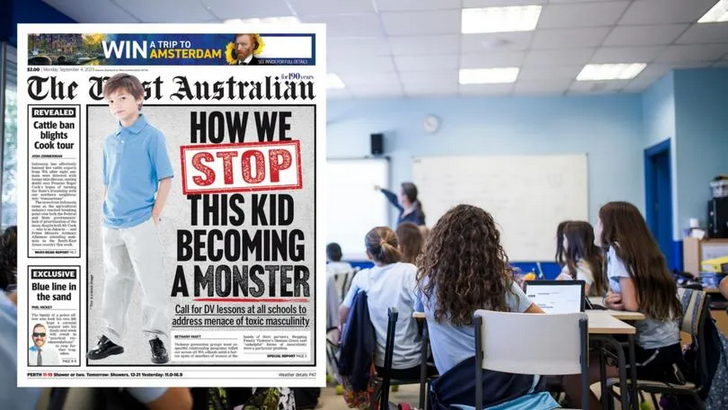
For years, feminists in the English-speaking school systems have done everything they can to psychologically destroy a generation of boys, calling their masculinity “problematic”, “hegemonic” and “toxic”.
At their least malign, feminist teachers have made it clear to boys that their perspectives and experiences aren’t as important as those of girls. Many businesses and organizations support programs aimed at girls’ academic success; there are no equivalent programs for boys. When study after study shows boys lagging behind girls in school, many feminists don’t even pretend to care, blaming the boys, as did Australian feminist Jane Caro, for their alleged privilege. Such ideologues continue to call for more feminist teaching, and moreover take direct aim at schoolboys’ maleness in what scholar Paul Nathanson has identified as a form of identity harassment, a pervasive psychological assault that creates doubt, shame, and alienation.
Under the feminist model, boys learn from a young age that their sex is responsible for violence and other serious harms, and that they must take personal responsibility for it. A few years ago, it came to light that the female principal of an Australian school thought it a good idea to hold an assembly in which the boys were to apologize for male misbehavior to the girl next to them. Naturally, no girls are ever expected to apologize to boys for the misdeeds of the female sex.
Calls regularly circulate, as in the West Australian‘s “How We Stop This Kid Becoming a Monster“, for teaching to address the problem of predatory masculinity. Unless the feminist deprogrammers can get to work in the early years, we’re told, the boys will succumb to their inner monster. Boys learn that they can hurt girls and women even without meaning to, just by looking at them or holding traditional views. As we’ll see, any boy who objects to his own vilification will learn that objecting itself is a technique of domination.
Teaching Toxic Masculinity
A recent report on UK schools provided a glimpse into what feminist instruction looks like, revealing that terms such as “hegemonic masculinity” and “toxic masculinity”, until a decade ago part of the radical feminist fringe, are now in the mainstream of pedagogy even in the lower grades.
The Family Education Trust surveyed materials used by UK schools in their sex education classes. Out of 197 schools that responded to a request for information (more than 100 did not respond), 62 schools confirmed that they were teaching about toxic masculinity. 10 schools even admitted to teaching that “men and boys possess traits that are inherently toxic and negative for society“. (One would be relieved to hear that the principals of such schools and all participating teachers were immediately sanctioned, or at least told to stop such claptrap — but of course such has not occurred.)
One slide from a lesson on toxic masculinity stated that while “masculinity in and of itself is not necessarily a harmful thing […] the way that masculinity is traditionally defined in society can be problematic”. Some of the materials don’t even make sense, as for example the statement that traditional masculine traits “can be limiting for women, girls and other people who don’t identify as men, who are not expected to display these traits”.
Comments Off on British and Australian schools are teaching boys to hate themselves
September 29, 2024
The “Foundations” essay could apply equally to Canada’s doldrums as it does to Britain
Earlier this week, I linked to the “Foundations” essay by Ben Southwood, Samuel Hughes, and Sam Bowman and it struck me that so much of what they discuss about Britain’s stagnation applied at least as well to Canada. In the National Post, John Ivison concurs:
The “Foundations” essay pointed to moribund GDP per capita growth, among other data points, to make the argument that Britain is standing still economically. (Britain’s economy grew 0.7 per cent a year between 2002 and 2022, Canada’s increased 0.6 per cent a year in the same period, while U.S. output swelled 1.16 per cent a year.)
In relative terms, both countries are getting poorer: in 2002, Canada’s GDP per person was 81 per cent of the U.S.; in 2022, it was 72 per cent. The same figures for the U.K. against the U.S. are 78 per cent in 2002 and, 70 per cent in 2022.
The reason for Britain’s stagnation, the authors argue, is that it has effectively banned investment in transportation, energy and housing — “the foundations it needs to grow.”
Sound familiar?
“The most important economic fact about modern Britain is that it is difficult to build almost anything, anywhere. This prevents investment, increases energy costs and makes it harder for productive economic clusters to expand,” the authors write, saying the result is lower productivity, incomes and tax revenues.
They argued that Britain needs a program of reform with the scale and ambition of the liberalization of the 1980s that focused on cutting taxes, curbing union power and privatizing state-run industries.
“This time we must focus on making it easier to invest in homes, labs, railways, roads, bridges, interconnectors and nuclear reactors,” they write.
That’s a difficult proposition for politicians who are able to resist anything except the temptation to use resources for immediate electoral gratification, rather than investing for a time after they have left office.
Both Canada and Britain are laggards when it comes to investment in infrastructure. While China spent more than five per cent of its GDP on roads, bridges and other infrastructure in 2021, Canada invested just 0.5 per cent (down from 1.3 per cent in 2010) and the U.K. 0.9 per cent.
But the lack of dynamism is not simply political expediency. Rather, it is motivated by an indifference, even a hostility, toward building critical infrastructure.
The Foundations report noted that Britain has not built a reservoir for 30 years, yet faces chronic water shortages in the east of England. Its environmental agency has blocked new development on the basis that it could only be supplied with water by draining environmentally valuable chalk streams. The result is that England’s innovation hub, Cambridge, is barred from expanding, which threatens to strangle the country’s life-sciences industry.
Similar impulses are at work in Canada. Federal Environment Minister Steven Guilbeault said in February that Ottawa would stop investing in new road infrastructure — a position he later clarified to say meant the federal government would not fund large projects like a highway tunnel connecting Quebec City and Levis, Que.
That same sentiment is reflected in the federal Liberal government’s Impact Assessment Act, passed in 2019, which slowed the pace and increased the cost of major project approvals.
On the housing front, a generation of activists emerged who were intent on preventing urban sprawl yet were also opposed to building mid-rise buildings of the kind that eased housing pressures in continental Europe. Constraints on approval are a major contributor to the 3.5-million-unit housing gap because supply has not kept pace with demand.
The consequence of Canada’s regulatory sclerosis is what business veteran Paul Deegan and former clerk of the Privy Council Kevin Lynch in an FP Comment article earlier this year referred to as “an insidious stealth tax on Canadian jobs and growth“.
Taking each of the “foundations” in turn, the depth of the problem becomes clearer — but so do the solutions.
Comments Off on The “Foundations” essay could apply equally to Canada’s doldrums as it does to Britain
September 28, 2024
The rise in niqab and hijab use among Muslim women in Britain
In The Conservative Woman, Gillian Dymond discusses the cultural significance of Muslim women’s distinctive styles of clothing in modern Britain:

AS I WENT to the shops the other day in Whitley Bay, a strangely incongruous figure passed me. It was a woman in a niqab. In a recent article on his Substack, Joshua Trevino wrote an elegy for London: “I had not seen this many women in hijabs since a brief stint working in Jordan decades ago, and I had never seen this many women in a niqab, ever.” Up here on the north-east coast of England, it is different. True, even in Newcastle hijabs proliferate, but I had never before encountered the full niqab there, let alone in the small seaside town where I live.
The Government, I understand, are considering bringing in a law which would criminalise Islamophobia, as defined by the All-Party Parliamentary Group on British Muslims. “Islamophobia,” this states, “is rooted in racism and is a type of racism that targets expressions of Muslimness or perceived Muslimness“.
This, as Andrew Doyle points out here, is nonsense, incorrectly conflating a belief-system with racial identity. Let’s be accurate: Muslims can be of any race, English included. Moreover, different Muslims exhibit different kinds and degrees of “Muslimness”, from the Sufi, mystically seeking the divine, through the undogmatic, many of whom happily dispense with headscarf and hijab and the more bellicose interpretations of the holy books, to the kind of male fanatic who, on seeing a female co-religionist wearing Western dress and sporting lipstick, seizes her by the hair and slams her head on the dashboard of the car she has been shamelessly driving.
There is a variety of “Muslimness”, in short, whose intolerance cannot be tolerated in a tolerant society, and whose existence requires not protective legislation, but public acknowledgement of its incompatibility with the British way of life.
I do not know how the woman whose eyes peered through the slit in her black draperies felt about parading her glaring lack of integration on a street in north-east England. Did she go proudly and self-righteously into the alien throng, or had she been forced out of the house, heart pounding, to run the gauntlet of raised eyebrows in her eye-catching gear? What did she think of the women around her, hair and faces exposed, arms bare to soak up every last ray of autumnal sunshine, some of them, fresh from the beach, wearing shorts? Did she despise their “immodesty”? Did she envy them?
Who knows? There can be no casual breaching of the niqab’s anonymity, no spontaneous communication, when confronted by a garment which puts up barricades against the usual signals and responses of easy human intercourse.
On the other hand, the mentality of the men who insist on enveloping their wives and daughters head-to-foot in long black shrouds before they are allowed out in public is very clear indeed. These men have been taught to view women as assets to be protected, and they no doubt believe that the heavy-handed protection they impose is necessary, because they take it for granted that no man is able, or should be expected, to control his sexual urges in the face of female allurements. As for any woman who does not remain decently covered in deference to the male’s helpless susceptibility, she should know the consequences, and deserves everything coming to her.
Comments Off on The rise in niqab and hijab use among Muslim women in Britain


