Whitehall Moll History Clips
Published 7 Jan 2019David Starkey weaves the stories of two great British war leaders: John and Winston Churchill. Hear how John Churchill rose from obscurity to be King James II’s right-hand man.

Whitehall Moll History Clips
Published 7 Jan 2019David Starkey weaves the stories of two great British war leaders: John and Winston Churchill. Hear how John Churchill rose from obscurity to be King James II’s right-hand man.
Brendan O’Neill explains why he found the Labour social media post to be a very bad idea:
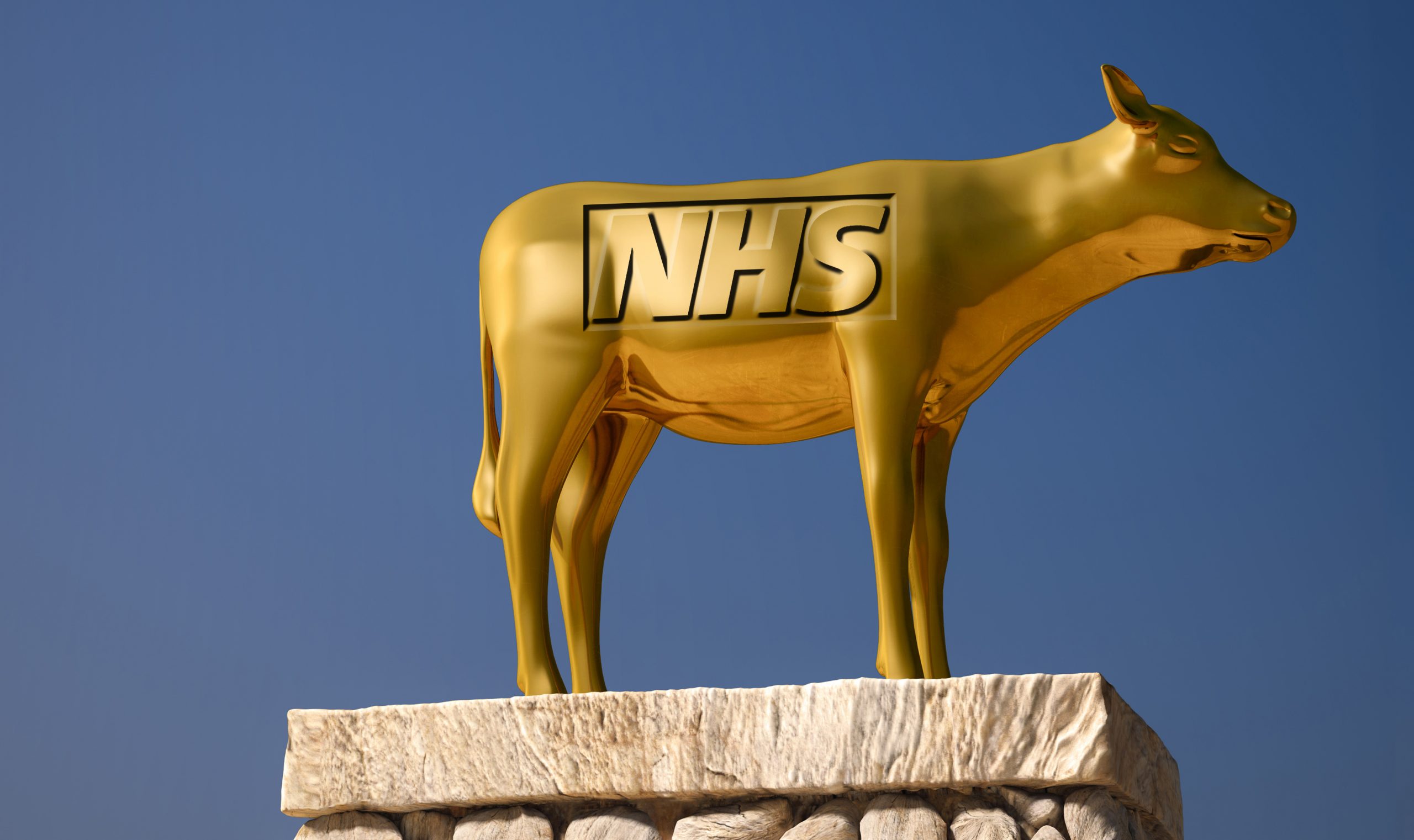
Not actually the official symbol of Britain’s National Health Services … probably.
This week, in response to the latest drinks-during-lockdown scandal engulfing Downing Street, the Labour Party tweeted something so extraordinary, so tone deaf, so inhumane, that it managed to make Boris and his coterie of rule-breaking hypocrites look almost principled in comparison.
It was a comment from an NHS nurse named only as Jenny (thank God for the absence of Jenny’s surname, for I shudder to think of the abuse she would receive if her full identity were revealed). This is what Jenny, according to Labour, had to say about the government’s boozy get-togethers on 20 May 2020 and other occasions when the rest of us were locked down:
I remember 20 May 2020 vividly, I spent hours on the phone to a man who was in the hospital car park, utterly desperate to see his wife. He begged, wept, shouted to be let in, but we said no – for the greater good of everyone else. She died unexpectedly and alone, as the government had a party.
This is a genuinely extraordinary statement. It is astonishing that no one in the Labour social-media team thought twice about posting it. The aim of this tweet is clearly to make us shake our heads and say “I can’t believe the government had a party while the NHS was making such tough decisions”, but in truth it has the exact opposite effect. It made me, at least, think to myself: “I can’t believe we let people die alone. I can’t believe the howling grief of a desperate man was ignored. I can’t believe there was such a complete and catastrophic collapse in everyday humanity during the lockdown.”
Labour clearly wants us to sympathise with “Jenny” against the government. But I find myself far more disgusted, far more outraged, by Jenny’s behaviour than by Boris Johnson’s. To have a sneaky party during lockdown is one thing. To ignore the pleas of a begging, weeping man and to watch as his wife subsequently died alone is something else entirely. It is in an utterly different moral ballpark. It is an unconscionable act. It is an obscenity against the human family that makes Boris and Carrie’s 25-minute visit to a garden party look saintly in comparison.
Forgotten Weapons
Published 21 Nov 2018https://www.forgottenweapons.com/isha…
http://www.patreon.com/ForgottenWeapons
Cool Forgotten Weapons merch! http://shop.bbtv.com/collections/forg…
In 1943, the British government began a program to develop a shortened and lightened version of the No1 SMLE rifle, for production in India and Australia — where the national ordnance factories had not converted to production of the No4 rifle. This prototype is the first pattern produced by the Ishapore Arsenal for testing. Its barrel is cut down to 16.5 inches (plus a 2.8 inch long conical flash hider), it has a unique 3-position flag style of rear aperture sight, and has had its sling swivels repositioned. This rifle was tested in the UK, and some modifications were recommended. A second pattern from Ishapore was then provisionally approved as the No6 MkI on September 1st, 1944, but cancelled before production could begin. The Australian pattern of No6 was approved a year late in September 1945, but then declared obsolete before it could be put into production. With the end of World War Two and Indian independence in 1947, the funding and impetus for a new short rifle were lost, and instead Ishapore would end up converting its production to No1 pattern rifles in 7.62mm NATO a few years later.
Contact:
Forgotten Weapons
PO Box 87647
Tucson, AZ 85754

Drachinifel
Published 3 Jul 2019Today we look at the world’s oldest commissioned warship, the first rate ship of the line HMS Victory.
Want to support the channel? – https://www.patreon.com/Drachinifel
Want to talk about ships? https://discord.gg/TYu88mt
Music – https://www.youtube.com/c/NCMEpicMusic
Frank Furedi on the British government’s use (and over-use) of “nudge” polices to influence the behaviour of the British public:
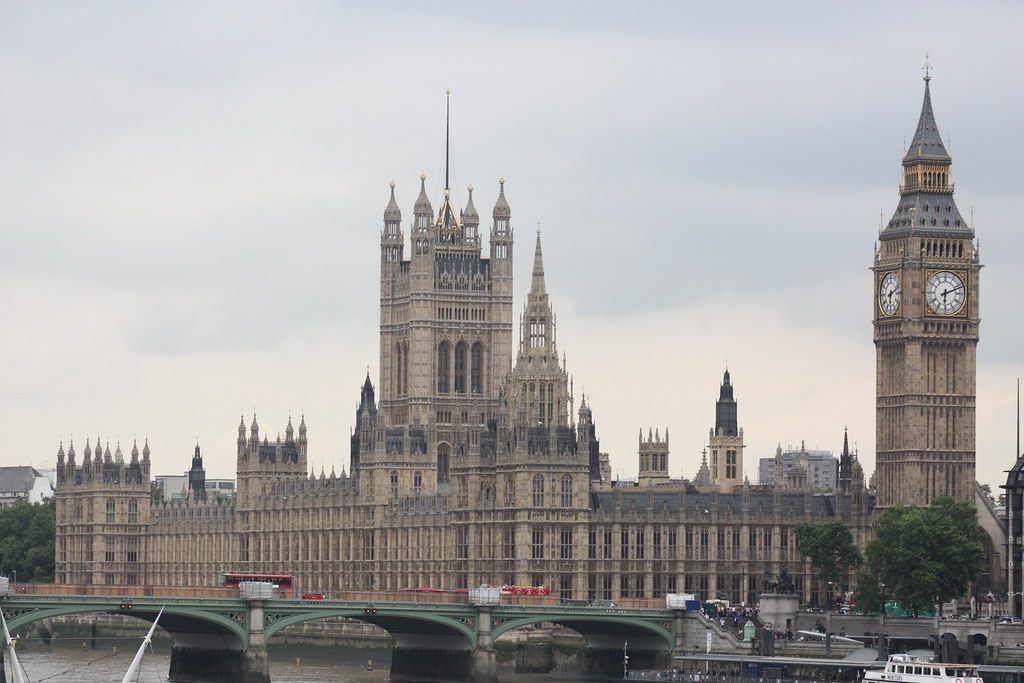
“Palace of Westminster”by michaelhenley is licensed under CC BY-NC-SA 2.0


Behavioural science, aka “nudging”, has been used by the government during the pandemic to scare people into doing the “right” thing. This insidious development has even been acknowledged by Simon Ruda, one of the co-founders of the Behavioural Insights Team, aka the Nudge Unit, which is part-owned by the UK government. He wrote that the “most egregious and far-reaching mistake made in responding to the pandemic has been the level of fear willingly conveyed [to] the public”.
Though he said that the propagation of fear had more to do “with government communicators and the incentives of news broadcasters” than with behavioural scientists themselves, Ruda’s admission is still striking. He even expressed concern about the state’s willingness “to use its heft to influence our lives without the accountability of legislative and parliamentary scrutiny”.
Ruda is not the only behavioural scientist concerned about officialdom’s systematic scaremongering. On 22 March 2020, a paper written by the Scientific Pandemic Influenza Behaviour Advisory Committee (SPI-B) for the government’s Scientific Advisory Group for Emergencies (SAGE) complained that the public was too relaxed about the pandemic. “A substantial number of people still do not feel sufficiently personally threatened”, it stated, adding that too many “are reassured by the low death rate in their demographic group”. It then urged the government to increase “the perceived level of personal threat… among those who are complacent, using hard-hitting emotional messaging”.
Some members of SAGE have since reported feeling “embarrassed” by the nature of SPI-B’s advice. As one regular SAGE attendee put it last year: “The British people have been subjected to an unevaluated psychological experiment without being told that is what’s happening.”
It is to be welcomed that at least some behavioural scientists are now questioning the political use of their discipline. But the problem goes deeper than fear-mongering during the pandemic. We need to address the corrosive influence of behavioural science on public life in general.
They could not struggle against Nazism or Fascism, because they could not understand them. Neither could they have struggled against Communism, if Communism had been a serious force in western Europe. To understand Fascism they would have had to study the theory of Socialism, which would have forced them to realize that the economic system by which they lived was unjust, inefficient and out of date. But it was exactly this fact that they had trained themselves never to face. They dealt with Fascism as the cavalry generals of 1914 dealt with the machine gun – by ignoring it. After years of aggression and massacres, they had grasped only one fact, that Hitler and Mussolini were hostile to Communism. Therefore, it was argued, they must be friendly to the British dividend-drawer. Hence the truly frightening spectacle of Conservative M.P.s wildly cheering the news that British ships, bringing food to the Spanish Republican government, had been bombed by Italian aeroplanes. Even when they had begun to grasp that Fascism was dangerous, its essentially revolutionary nature, the huge military effort it was capable of making, the sort of tactics it would use, were quite beyond their comprehension. At the time of the Spanish Civil War, anyone with as much political knowledge as can be acquired from a sixpenny pamphlet on Socialism knew that, if Franco won, the result would be strategically disastrous for England; and yet generals and admirals who had given their lives to the study of war were unable to grasp this fact. This vein of political ignorance runs right through English official life, through Cabinet ministers, ambassadors, consuls, judges, magistrates, policemen. The policeman who arrests the “Red” does not understand the theories the “Red” is preaching; if he did, his own position as bodyguard of the monied class might seem less pleasant to him. There is reason to think that even military espionage is hopelessly hampered by ignorance of the new economic doctrines and the ramifications of the underground parties.
The British ruling class were not altogether wrong in thinking that Fascism was on their side. It is a fact that any rich man, unless he is a Jew, has less to fear from Fascism than from either Communism or democratic Socialism. One ought never to forget this, for nearly the whole of German and Italian propaganda is designed to cover it up. The natural instinct of men like Simon, Hoare, Chamberlain, etc. was to come to an agreement with Hitler. But – and here the peculiar feature of English life that I have spoken of, the deep sense of national solidarity, comes in – they could only do so by breaking up the Empire and selling their own people into semi-slavery. A truly corrupt class would have done this without hesitation, as in France. But things had not gone that distance in England. Politicians who would make cringing speeches about “the duty of loyalty to our conquerors” are hardly to be found in English public life. Tossed to and fro between their incomes and their principles, it was impossible that men like Chamberlain should do anything but make the worst of both worlds.
One thing that has always shown that the English ruling class are morally fairly sound, is that in time of war they are ready enough to get themselves killed. Several dukes, earls and what-not were killed in the recent campaign in Flanders. That could not happen if these people were the cynical scoundrels that they are sometimes declared to be. It is important not to misunderstand their motives, or one cannot predict their actions. What is to be expected of them is not treachery or physical cowardice, but stupidity, unconscious sabotage, an infallible instinct for doing the wrong thing. They are not wicked, or not altogether wicked; they are merely unteachable. Only when their money and power are gone will the younger among them begin to grasp what century they are living in.
George Orwell, “The Lion And The Unicorn: Socialism and the English Genius”, 1941-02-19.
Jean Hatchet on the plight of Staffordshire University professor James Treadwell, who has been anonymously accused of “transphobia” … and therefore must be punished:

Yesterday evening Professor James Treadwell, a criminologist at Staffordshire University, announced his dismay on Twitter at being accused of “transphobia”. The details are vague, even to him. He has not been presented with evidence and he doesn’t and may never know who has accused him.
He wrote: “Ok to hell with it. I have been told by my employer @StaffsUni albeit only verbally that I am being investigated for Transphobia after formal and official complaints about my Twitter conduct. Read my tweets. Go figure.”
Go figure indeed. It is completely baffling. The issue is Professor Treadwell’s tweeting in favour of the right of female inmates to a single-sex prison estate. In a series of tweets on 27 December 2021, Professor Treadwell outlined his experience of the manipulative behaviour of violent sex offenders who will use loopholes to “game” the criminal justice system. He was clear that his tweets were not directed at the transgender community. He wrote:
“The idea that sex offenders are manipulative individuals who would exploit systems and laws could only be unreal to those who do not know how manipulative sexual offenders can be. All groom, seek to exploit and control.”
And he made very clear that his tweets weren’t attacking the transgender community:
“It isn’t about trans people, it’s about bad people who will exploit the law from self interest and work within a legal framework (that could protect women’s spaces) to do as they want and get what they want. You think that won’t happen, you don’t know how many sex offenders act.”
Who would be better placed to discuss this issue than a leading criminologist who has worked with some of the worst sex offenders in the country? The polite and well-informed tweets hit the nerve of public opinion on the topic of trans-identified men incarcerated in the female prison estate and were widely, mostly supportively, distributed.
Today, Professor Treadwell is in the awful position of fearing for his job; for a few tweets about a subject that he is specifically qualified to speak on. Meanwhile an effective message is simultaneously sent to his academic colleagues nationwide, that they could be targeted next. He is not the first and he won’t be the last. Many criminologists are choosing to look the other way. Professor Treadwell felt that he could no longer do so. His professional integrity appears to be exactly what he is being persecuted for.
The murder rate is very low in England, perhaps the lowest in the world. It is low because nearly all the potential ancestors of murderers were hanged or exiled in the Eighteenth Century. Why is it so high in the United States? Because most of the potential ancestors of murderers, in the late Eighteenth and early Nineteenth Centuries were not hanged. And why did they escape? For two plain reasons. First, the existing government was too weak to track them down and execute them, especially in the West. Second, the qualities of daring and enterprise that went with their murderousness were so valuable that it was socially profitable to overlook their homicides. In other words the job of occupying and organizing the vast domain of the new Republic was one that demanded the aid of men who, among other things, occasionally butchered their fellow men. The butchering had to be winked at in order to get their help. Thus the murder rate, on the frontier, rose to unprecedented heights, while the execution rate remained very low. Probably 100,000 men altogether were murdered in the territory west of the Ohio between 1776 and 1865; probably not 100 murderers were formally executed. When they were punished at all, it was by other murderers — and this left the strain unimpaired.
H.L. Mencken, “Miscellaneous Notes: Jack Ketch as Eugenist”, Prejudices: Fifth Series, 1926.
In Spiked, Matt Ridley considers why so many scientists went along with the disinformation campaign to obscure or discredit the lab-leak theory on the origins of the Wuhan Coronavirus:

Wuhan Institute of Virology.
Wikimedia Commons.
In August 2007 there was an outbreak of foot-and-mouth virus on a farm in Surrey. It was a few miles from the world’s leading reference laboratory for identifying outbreaks of foot and mouth. Nobody thought this was a coincidence and sure enough a leaking pipe at the laboratory was soon found to be the source: a drainage contractor had worked at the lab and then at the farm.
In December 2019 there was an outbreak in China of a novel bat-borne SARS-like coronavirus a few miles from the world’s leading laboratory for collecting, studying and manipulating novel bat-borne SARS-like coronaviruses. We were assured by leading scientists in China, the US and the UK that this really was a coincidence, even when the nine closest relatives of the new virus turned up in the freezer of the laboratory in question, at the Wuhan Institute of Virology.Now we know what those leading scientists really thought. Emails exchanged between them after a conference call on 1 February 2020, and only now forced into the public domain by Republicans in the US Congress, show that they not only thought the virus might have leaked from a lab, but they also went much further in private. They thought the genome sequence of the new virus showed a strong likelihood of having been deliberately manipulated or accidentally mutated in the lab. Yet later they drafted an article for a scientific journal arguing that the suggestion not just of a manipulated virus, but even of an accidental spill, could be confidently dismissed and was a crackpot conspiracy theory.
Jeremy Farrar – who organised the call on 1 February with Patrick Vallance, Francis Collins, Anthony Fauci and a Who’s Who of virology – had already spilled a few of the beans in his book, Spike, published last year. He wrote that at the start of February 2020 he thought there was a 50 per cent chance the virus was engineered, while Kristian Andersen of the Scripps Research Institute was at 60-70 per cent and Eddie Holmes of Sydney University put it at 80 per cent. But some time after the call they all changed their mind. Why? They have never troubled us with an answer.
Now, however, we have an email from Farrar, sent on Sunday 2 February to Francis Collins, head of the National Institutes of Health, and Anthony Fauci, head of the National Institute of Allergy and Infectious Diseases. It recounts the overnight thoughts of two other virologists Farrar had consulted, Robert Garry of Tulane University and Michael Farzan of the Scripps Research Institute, as well as Farrar’s own thoughts. Even after the call, their concern centred on a feature of the SARS-CoV-2 genome that had never been seen in any other SARS-like coronavirus before: the insertion (compared with the closest related virus in bats) of a 12-letter genetic sequence that creates a thing called a furin cleavage site, which makes the virus much more infectious.
World War Two
Published 13 Jan 2022While Nazi Germany keeps on escalating its War Against Humanity, the United Nations alliance decides that they will escalate their war on Germany.
(more…)
Atomic Shrimp
Published 25 Sep 2021Beer, made with Marmite, which itself is made from the yeast left over when beer was made. Marmite is savoury; beer usually isn’t. This is a weird idea whichever way you look at it, but how does it taste?
From the comments:
Atomic Shrimp
8 hours ago
Afterthoughts & Addenda
uR pOuRiNg iT aLl wRoNg!!! – really? Fine – this might not be a professional perfect pour, but this is *not my first ever beer*. I don’t claim to have any kind of professional technique, but this amount of head is not normal for this method of pouring. Note the copious foam emitting from the can when it is first opened.

Thirty years ago the Blimp class was already losing its vitality. The middle-class families celebrated by Kipling, the prolific lowbrow families whose sons officered the army and navy and swarmed over all the waste places of the earth from the Yukon to the Irrawaddy, were dwindling before 1914. The thing that had killed them was the telegraph. In a narrowing world, more and more governed from Whitehall, there was every year less room for individual initiative. Men like Clive, Nelson, Nicholson, Gordon would find no place for themselves in the modern British Empire. By 1920 nearly every inch of the colonial empire was in the grip of Whitehall. Well-meaning, over-civilized men, in dark suits and black felt hats, with neatly rolled umbrellas crooked over the left forearm, were imposing their constipated view of life on Malaya and Nigeria, Mombasa and Mandalay. The one-time empire builders were reduced to the status of clerks, buried deeper and deeper under mounds of paper and red tape. In the early ‘twenties one could see, all over the Empire, the older officials, who had known more spacious days, writhing impotently under the changes that were happening. From that time onwards it has been next door to impossible to induce young men of spirit to take any part in imperial administration. And what was true of the official world was true also of the commercial. The great monopoly companies swallowed up hosts of petty traders. Instead of going out to trade adventurously in the Indies one went to an office stool in Bombay or Singapore. And life in Bombay or Singapore was actually duller and safer than life in London. Imperialist sentiment remained strong in the middle class, chiefly owing to family tradition, but the job of administering the Empire had ceased to appeal. Few able men went east of Suez if there was any way of avoiding it.
George Orwell, “The Lion And The Unicorn: Socialism and the English Genius”, 1941-02-19.
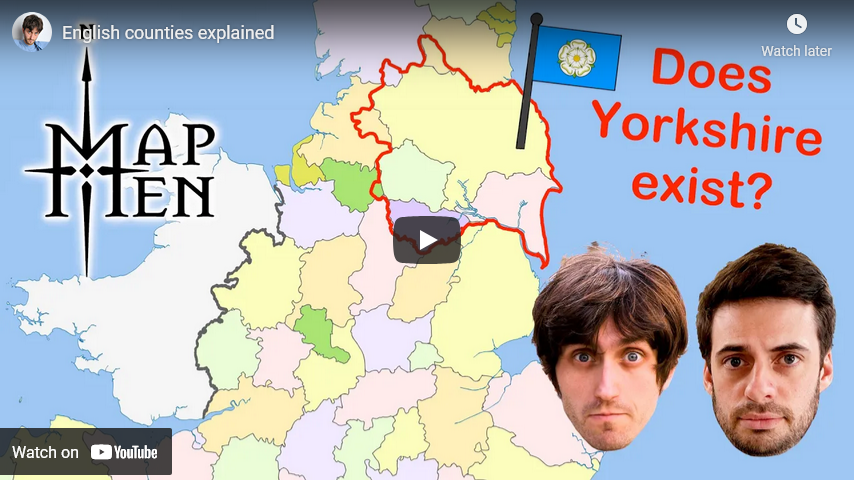
Jay Foreman
Published 13 Sep 2021BUY MAP MEN MUGS, T-SHIRTS, POSTERS ETC…
http://www.mapmenmerch.comSEE NEW EPISODES EARLY, AND BEHIND-THE-SCENES EXTRAS…
http://www.patreon.com/jayforemanWritten, presented and edited by
JAY FOREMAN https://www.twitter.com/jayforeman
MARK COOPER-JONES https://www.twitter.com/markcooperjonesAD, Camera, Props and Costumes
JADE NAGI https://www.twitter.com/jade_nagihttps://commons.wikimedia.org/wiki/Fi…
Maximilian Dörrbecker (Chumwa), CC BY-SA 3.0 https://creativecommons.org/licenses/…, via Wikimedia Commons
I wouldn’t say it explains why my home town seemed to move from county to county every few years since my family emigrated, but at least it provides a few clues about the changes.
In The Critic, Alexander Larman celebrates the centenary of Richmal Compton’s William Brown books:

Growing up in suburban Bristol in the Eighties and Nineties, my reading matter was of a suitably timeless disposition, even if it seldom, if ever, included any Enid Blyton. Amidst the colonial and deeply un-PC likes of Biggles and Rider Haggard, my trio of preferred characters never really changed: Jennings, Billy Bunter and William Brown. Of the three, Jennings was probably my favourite, being closest to my own life as a prep school boy of a vaguely similar appearance and age, and also because the situations were the most recognisable. Bunter I found uproarious but also rather tasteless and absurd, for reasons that have now, alas, become much clearer. And then there was William Brown: would-be outlaw, committed dog owner and perpetual enemy of soap-and-water, to say nothing of his perpetual nemeses, Hubert Lane and Violet Elizabeth Bott.
I enjoyed the books as picaresque stories of bad behaviour without seeing much of myself in William, or indeed his friends. Their author Richmal Crompton’s evocation of invincible pre-war suburbia — not so very far from a benign version of the half-idylls, half-nightmares portrayed by Orwell in Coming Up For Air and Patrick Hamilton in Hangover Square — was certainly compelling, but I was too young to appreciate Crompton’s social satire, itself considerably more piquant than anything that could be found in Jennings and Bunter, let alone the stiff-upper-lip fantasias of English manhood peddled by WE Johns with Biggles, Gimlet and the rest. All of them now sound to me like nothing so much as industrial-strength cocktails. Drink a couple, and you too will want to revive the Empire.
Yet now, a century after the first appearance of Just William, I reassess Crompton’s universe afresh, and so I respond far more warmly to her characters and creations. William Brown himself is an entertaining if undeniably two-dimensional figure, at his most amusing when he is required to fit into the adult world temporarily, as in the story William’s Truthful Christmas, when he causes social outrage and misery by offering an honest opinion of the gifts that he has received. But it is the rich panoply of figures around William who give the stories their interest and colour, and which make them as entertaining for adults to read today as they ever might be for their children. If, of course, eleven-year olds can be distracted from their iPads and Netflix and nefarious online activities long enough to enjoy the William books.
Leaving aside the children for a moment, the adult supporting characters in the unnamed village provide endless humour and intrigue. There is William’s neurotic mother, desperately saying of her son that “he means well” even as he is involved in yet another humiliating scrape. His father, meanwhile, is a hard-drinking Conservative whose cynicism at the world sees him reward his errant son with extra pocket money for his more outrageous actions, as long as he is not bedbound with “his liver”. Not for nothing is this stalwart representative of middle England named John Brown.
Then there is William’s would-be romantic elder brother Robert, desperately professing each of his girlfriends “the most beautiful girl in the world” until his eye is taken by another. Mr and Mrs Bott are a pair of arriviste millionaires who have made their money via “Bott’s Digestive Sauce”, a substance that William contends, probably accurately, has been constructed from squashed beetles. Needless to say, they take up residence in the nouveau riche establishment Bott Hall, where their social status irks them. (“We ought to have some ancestors, Botty,” said Mrs Bott. “We’ve got ’em, dear,” said Mr Bott after a moment’s thought. “We must have. Come to think of it, we shouldn’t be here now if we’d not.”) Floating around the periphery is Robert’s friend, the splendidly named Jameson Jameson, of whom Crompton writes, with caustic humour, “[his] parents had perpetrated on him the supreme practical joke of giving him his surname for a Christian name, so that people who addressed him by his full name seemed always to be indulging in some witticism.”
Forgotten Weapons
Published 26 Jun 2017Armament Research Services (ARES) is a specialist technical intelligence consultancy, offering expertise and analysis to a range of government and non-government entities in the arms and munitions field. For detailed photos of the guns in this video, don’t miss the ARES companion blog post:
http://armamentresearch.com/british-k…
The Korsac EM-1 (not to be confused with the Thorpe EM-1, which is a completely different rifle) was a bullpup light machine gun based on captured examples of the German FG-42 paratroop rifle. It was developed between 1945 and 1947 by a team led by a Polish refugee designer named Korsac.
It was chambered for the 8mm Mauser cartridge, and used an 18 round magazine adapted from the ZB-26. The operating mechanism was closely copied from the FG-42, as were many elements of the rifle’s controls, including the capability for firing from an open bolt in fully automatic and from a closed bolt in semi-automatic. Unlike the FG-42, it used a short stroke tappet type gas piston, and had a detachable barrel. Ultimately only two examples were built, and only one of those (the one in this video) was completed to firing condition. It suffered from reliability problems in semi-automatic mode, and was quickly sidelined in favor of the other development projects ongoing by 1947. However, many lessons from its development would be put into the EM-2 rifle.
Cool Forgotten Weapons merchandise! http://shop.bbtv.com/collections/forg…
http://www.patreon.com/ForgottenWeapons
If you enjoy Forgotten Weapons, check out its sister channel, InRangeTV! http://www.youtube.com/InRangeTVShow




Powered by WordPress