Quotulatiousness

April 20, 2026

“Hail, Caesar!” oops we meant “Hail, Carney!”

Filed under: Cancon, Media, Politics — Tags: , , , , , , — Nicholas @ 04:00

At The Rewrite, Peter Menzies discusses the unseemly media adulation1 for Caesar Prime Minister Mark Carney after more than a year in power:

Grok illustration of PM Carney as Caesar
Image from The Rewrite.

Thirteen months into his reign as prime minister, we still don’t know who Mark Carney is or how he engineered the removal of Justin Trudeau from office.

Nor do we know what really happened behind the scenes to convince five Members of Parliament to betray their constituents’ democratic decisions and, for the first time in the nation’s history, give Canadians a majority government they didn’t elect.

What we do know is that none of that seems of great interest to most of our media or, as they like to describe themselves when seeking federal subsidies, “defenders of democracy”.

As The Rewrite noted a year ago, the moves behind the scenes to effect the abrupt ouster of Trudeau remain a mystery. And, unlike with other PMs, there have been no Carney family magazine profiles. (Who can forget Justin and Sophie Trudeau‘s sexy Vogue cover?) Yes, there are the books, Values and The Hinge. We have learned he likes hockey, runs, won’t criticize China and is ruthless. But there is a tangible paucity of efforts within MSM to get beyond what is permitted to be known. We don’t even know if he watches Heated Rivalry or why the Brits called him “the unreliable boyfriend”. And yet, as Stephen Maher wrote for Time magazine last week, Canadians adore him.

As for how he has seized power in excess of that granted by the electorate 11 months ago, there wasn’t a hint of concern on the part of CTV News anchor Omar Sachedina when Carney’s majority was confirmed in a couple of “gimme” by-election victories.

The leading voice on Canada’s most-watched newscast, Sachedina appeared awestruck by the “historic” moment and “what the Liberals have been able to achieve in the past year”. When his sidekick, Vassy Kapelos, noted Carney was now out of excuses for not fulfilling the promises that won him a minority government in 2025, Sachedina suggested soothingly that Canadians remember “sometimes ambition does take time, sometimes several election cycles”.

Screencap of CTV News from The Rewrite

The message to Canadians? The Liberals have accomplished great things in the past year, the greatest of which was to do what no one in the nation’s history had ever done before — manufacture a majority without the public’s consent. Oh, and be patient. PMMC’s agenda could take a few more elections. Sit tight and trust.

The next morning, questions were not, as one might expect from defenders of democracy, about whether the PM felt a tad greasy for the way in which he had won unfettered power. Like, in some countries — many actually — that might be considered kind of scary. Here? If you watch the news, it’s dreamy.

The preferred line of inquiry was to ask Carney whether, if he was the Opposition Leader, Pierre Poilievre, he would quit. And so it went for the rest of the week. PMMC wasn’t asked if he worried that his majority would undermine the public’s faith in its institutions. Nor did the press corps pursue their sources to discover what inducements may have been offered to create his Judas Gang of Five.


  1. Yes, I know … the presstitutes will “love him long time” as long as the government subsidies keep rolling in.

April 19, 2026

Simple rules for judging commentary on the Iran situation

Filed under: Media, Middle East, Military, Politics, USA — Tags: , , , , — Nicholas @ 05:00

You’ve probably noticed that I don’t include a lot of content on Iran or Ukraine these days. That’s largely because the fog of war propaganda is too dense for much reliable information to come to us and be subject to any kind of fair analysis. Lorenzo Warby has a few rules to suggest to those of you trying to sift real information out of the noise — both specifically on the Iran conflict and also more generally for these kinds of low-signal/high-noise conflicts:

There is a lot of poor quality commentary about on the current Iran War — or, as the Chinese call it, the War in West Asia. Fortunately, there are two simple tests that winnows out much of the noise so you can focus on signal.

Locations struck by:
– United States and Israel (blue)
– Iran, Hezbollah, Houthis, and PMF (red)

First Easy Test

Would this commentator ever admit that Trump had done something positive?

If the answer is no, ignore them. They are not commenting on the War, they are commenting on Trump. They are just providing anti-Trump talking points for this particular issue.

Second Easy Test

Does this commentator pay any attention to the record of the Islamic Regime? Its record of domestic repression, including various mass executions and mass killings of protesters? Its record in supporting and constructing proxies: in Lebanon, in Gaza, in Yemen, in Iraq, in Syria, in …? The record of those proxies and how they disrupt and degrade those countries? Its record in promoting terrorism across the globe? Its record in massive economic and environmental dysfunction …?

If the answer is no, ignore them. This is especially so if what they do comment on is Israel. They are not commenting on the War, they are commenting on Trump and on Israel. They are just providing anti-Trump, anti-Israel talking points for this particular issue.

The more of a regime of internal exploitation the Islamic Regime has become, the more it has built up its proxy forces. The more it built up its proxy forces, the more disruptive and destructive it has become.

[…]

Third, More Subtle, Test

The third test is about how wars work. Does the commentator understand that good strategy in war is a decision-tree? If you do X and Y happens, then follow up with Z. If you do X and A happens, follow up with B.

If they do not understand that, if they treat successful war strategy as being able to operate according to some plan so what the opponent does in response to it does not matter, then they do not understand war, and you can ignore them.

A classic way to fail in military affairs, is to not treat military action as a decision-tree, but to continue with the previous plan of action despite some crucial change in circumstances.

April 18, 2026

“The whole thing was one giant attempt to gaslight both young men and the public at large”

Filed under: Britain, Media, Politics — Tags: , , , — Nicholas @ 05:00

On the social media site formerly known as Twitter, Christian Heiens responds to a cover story in The New Statesman:

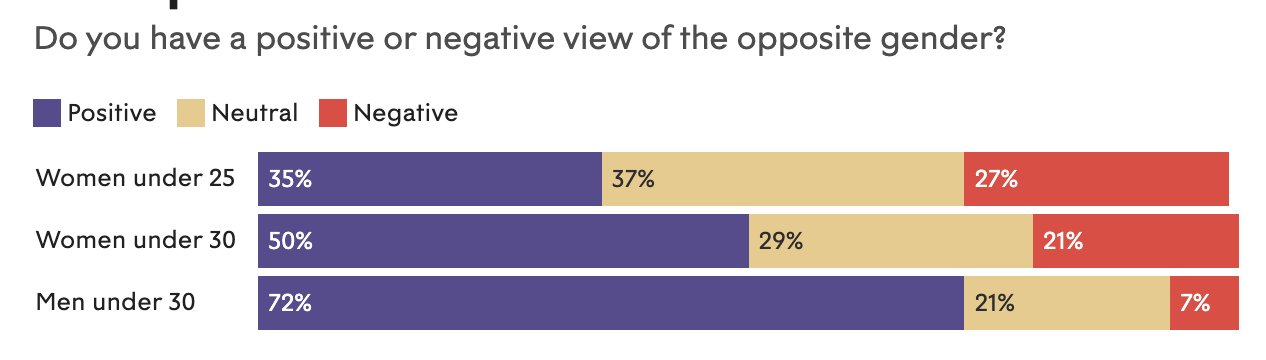
We were subjected to years of “young men are becoming radicalized, what’s driving this and how do we stop it?” discourse when in reality the typical young man saw practically zero change in his political outlook over the last 30 years.

The whole thing was one giant attempt to gaslight both young men and the public at large that they had suddenly moved well outside the Overton window and were either self-radicalizing or falling for extremist propaganda.

In reality, the problem was that young men were staying put rather than adopting increasingly radical progressive views. The real issue was that young women were flying off the rails, espousing views that would lead to the complete dissolution of civilization itself while acting like these were basic normal positions that completely sane people should hold.

That disconnect between what was being said and what was being done became so off kilter with reality that something finally began to break after 2020.

The problem isn’t with young men. The problem is that young women have gone certifiably insane. They’ve made radical progressivism their religion. They’re acting out on the perfectly healthy female tendency to act to uphold and preserve the existing social order.

Young women are trying to conserve an ideology they see as the stable bedrock of society, even if it’s actually an acidic collection of delusions that will inevitably destroy society itself. And they’re upset that young men aren’t doing what they see as their role to uphold that order as well.

In short, women are natural conservatives. They’re trying to conserve progressivism because it’s the reigning social order and theological governing system of Western civilization. And they’re upset and confused as to why young men aren’t stepping up to uphold it as well.

On Substack Notes, John Carter commented on the same New Republic The New Statesman cover story:

Women have never had it better than they do in modern Western countries. They are affluent, thanks to being given every advantage in education and employment; young women now hold more degrees, and make more money, than young men. They can marry whoever they want, from anywhere in the world, or they can marry no one at all. They can sleep with whoever they want, with however many people they want, with no risk of pregnancy, and if they get the ick later they can decide that it was rape and their abuser will be punished. Any opposition to their cultural or political preferences is automatically classified as hate, and every institution acts to denounce and punish this unacceptable hatred on their behalf … in no small part because they have taken over these institutions.

Women have never had it better, and they are absolutely incandescent with fury about that.

Australia’s age verification scheme – a great success!

Every time a politician gets up on hind legs to propose yet another brilliant scheme to ensure little Jaden and little Daenerys don’t access adult content on the internet, I remind myself that it’s going to be pitting the tech know-how of people who need help opening child-proof caps against the youngsters they get to open the child-proof caps for them. In other words, it’s not going to work out quite how the politicians expect:

“Kid-notebook-computer-learns-159533” by LuidmilaKot is marked with CC0 1.0 .

Among the great many bogeymen of the current moment is social media, which stands accused of making young people anxious and unhappy. Whatever the merits of those charges — and they’re debatable — politicians have predictably tried to address concerns by applying the blunt instrument of coercive law to kids’ online activities rather than simply let parents help their children make better choices. The experience in Australia now shows the subjects of the law have, once again, proven cleverer than law enforcers.

[…]

“There are significant questions about the effectiveness of Australia’s social media ban”, reports the U.K.’s Molly Rose Foundation, which supports internet restrictions, of the results of a poll of Australian young people. “Three fifths (61%) of 12–15 year-olds who previously held accounts on restricted platforms continue to have access to one or more active accounts.”

The group adds that “70% of children still using restricted sites say that it was ‘easy’ to circumvent the ban. In most cases, social media platforms have failed to detect or seek to remove under 16s accounts.”

Importantly, officials agree that young people subject to the law are actively evading its impact. In a compliance update published last month, Australia’s eSafety Commissioner, which enforces the ban, conceded that “a substantial proportion of Australian children under the age of 16 continue to retain accounts, create new accounts, or pass platforms’ age assurance systems”.

Like the Molly Rose Foundation, Australian regulators note that noncompliance is not just a concern for the small platforms with limited exposure in Australia which were expected to become refuges for Australian teens seeking online connections. They also point to large, established companies including Facebook, Instagram, Snapchat, TikTok, and YouTube.

In the majority of cases, according to both reports, young people ignoring the law have not yet been asked to verify their age. But, according to the Molly Rose Foundation, “around a quarter of children still using each restricted platform had been successfully able to get around an age check on a pre-existing account”. Some changed their claimed age, others had older friends and relatives set up accounts for them, and still others gamed technology intended to estimate their age by their appearance.

Another proof of the value of open source

Filed under: History, Media, Technology — Tags: , , , , , — Nicholas @ 03:00

On the social media site formerly known as Twitter, ESR discusses a pre-computer (pre-electronics) proof that open source is more secure than closed source:

“How university open debates and discussions introduced me to open source” by opensourceway is licensed under CC BY-SA 2.0

There’s an old, bad idea that’s been trying to resurrect itself on X in the last couple of days. Which makes it time for me to explain exactly why, in the age of LLMs, open-sourcing your code is an even more important security measure than it was before we had robot friends.

The underlying principle was discovered in the 1880s by an expert on military cryptography, a man named August Kerckhoffs, writing long before computers were a thing.

To start with, you need to focus in on the fact that cryptosystems have two parts. They have methods, and they have keys. You feed a key and a message to a method and get encrypted information that, you hope, only someone else with the same pair of method and key can read.

What Kerckhoffs noticed was this: military cryptosystems in normal operation leak information about their methods. Code books and code machines get captured, stolen, betrayed, or lost in simple accidents and found by people you don’t want to have them. This was the pre-computer equivalent of an unintended source-code disclosure.

Cryptosystems also leak information about their keys — think post-it notes with passwords stuck to a monitor. What Kerckhoffs noticed is that these two different kinds of compromising leakage happen at very different base rates. It is almost impossible to prevent leakage of information about methods, but just barely possible to prevent leakage of information about keys.

Why? Keys have fewer bits. This makes them easier to keep secret.

Remember: this was something an intelligent man could notice in the 1880s, well before even vacuum tubes. Which is your first clue that the power of this observation hasn’t changed just because we’re in the middle of a freaking Singularity.

Security through obscurity — closed source code — means you’re busted if either the source code or the keys get leaked. Open source is a preemptive strike — it’s a way to force the property that your security depends *only* on keeping the keys secret.

What you’re doing by designing under the assumption of open source is preventing source code leakage from being a danger. And that’s the kind of leakage with a high base rate.

As far back as 1947 Claude Shannon applied this to electronic security — he did critical work on the voice scramblers that were used for secure telephone communications between heads of state during World War II. Shannon said one should always design as though “the enemy knows the system”. The US’s National Security Agency still uses this as a guiding principle in computer-based cryptosystems.

If you’re doing software security, always design as though the enemy can see your source code. I’m still a little puzzled that I was apparently the first person to notice that this was a general argument for open source; as soon as I did, my first thought was more or less “Duh? Somebody should have noticed this sooner?”

Now let’s consider how LLMs change this picture. Or…don’t.

An LLM is like a cryptanalyst with a superhuman attention span that never sleeps. If your system leaks information that can compromise it, that compromise is going to happen a hell of a lot faster than if your adversary has to rely on Mark 1 meatbrains.

But it gets worse. With LLMs, decompilation is now fast and cheap. You have to assume that if an adversary can see your executable binary, they can recover the source code. If you were relying on that to be secret, you are *screwed*.

Leakage control — limiting the set of bits that can yield a compromise — is more important than ever. So security by code obscurity is an even more brittle and dangerous strategy than it used to be.

Anybody who tries to tell you differently is either deeply stupid or trying to sell you something that you should not by any means buy.

QotD: Democratic versus Republican Senators

Filed under: Media, Politics, Quotations, USA — Tags: , , — Nicholas @ 01:00

A few years ago, Democratic Senator Kyrsten Sinema provoked the rage of progressive activists by occasionally having an independent thought, voting with her caucus on “party unity votes” only 96% of the time. Senator Joe Manchin caused comparable disgust by joining his party in those votes only 92% of the time. Sinema and Manchin were EVIL MONSTERS, and progressive activists showed up at their public events to scream at them.

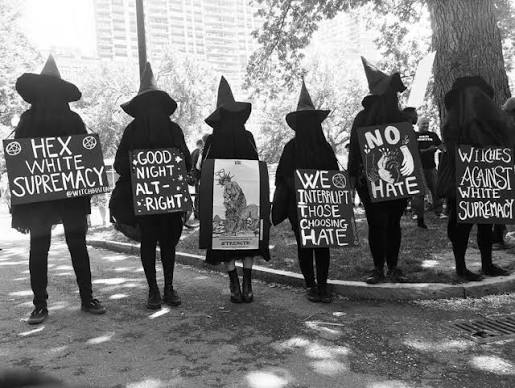
Sinema eventually left the Democratic Party, declaring herself an independent, because a disgusting heretic couldn’t remain in a party that she only agreed with 96% of the time. Burn the witch, Democrats explained.

The descent of the Democratic Party into a state of increasingly obvious group psychosis is a product of the absence of internal debate, and of the degree to which Democratic legislators wholeheartedly believe that their job is to hold up their hands in unison whenever their party leaders tell them to. They can’t talk themselves out of their madness — they don’t know how. They don’t have the cultural habit of thought. Watch someone like Chris Murphy speak, and ask yourself if there’s a person inside there. I find myself unable to say yes to that question. He will read anything that is put on that teleprompter, and I mean an-y-th-ing.

By comparison, the Republican legislative habit of wandering around like the residents of a feline daycare center is a strength, and the presence of independent thought in the GOP’s legislative caucuses makes the party relatively sane. The presence of a Rand Paul, refusing to get on board, is more a good thing than a bad thing. The culture of debate is healthier than the behavior of the North Korean legislature or Tina Smith, soulless human robots.

Chris Bray, “The Greatest Republican Strength is the Greatest Republican Weakness, Again”, Tell Me How This Ends, 2026-01-15.

April 17, 2026

Hungary in the news

Filed under: Europe, Media, Politics — Tags: , , , , — Nicholas @ 05:00

The way the mainstream media reacted to the recent Hungarian election results, you’d think it was the 2020s equivalent to the fall of the Iron Curtain. Outgoing leader Viktor Orbán has been portrayed as Hungary’s Trump when he hasn’t been discussed as Hungary’s Mussolini. His successor, Péter Magyar is largely unknown outside Hungary where he had been a member of Orbán’s Fidesz party before leaving to join his current party, Tisza. In The Critic, Ben Sixsmith provides some useful background on the state of politics in Hungary today:

Hungarian Prime Minister-elect Péter Magyar, on 15 March 2026 during a national day demonstration at Heroes’ Square in Budapest. Magyar is wearing a traditional bocskai jacket and a national cockade.
Photo by Norbert Banhalmi and released under CC BY-SA 4.0 via Wikimedia Commons.

Tisza — the name being a portmanteau of the Hungarian words tisztelet (respect) and szabadság (freedom), and a reference to the nation’s second largest river — was founded in 2020 and registered in 2022. It was a very marginal conservative party with policies like “raise the minimum pension” and “stop migration”.

In the 2022 parliamentary elections, the party fielded no candidates at all.

Tisza became a major force in Hungarian elections when Péter Magyar joined the party. Magyar, who has a legal background, had been a member of Viktor Orbán’s party Fidesz. More significantly, he had been married to the Hungarian Minister of Justice, Judit Varga, from 2006 to 2023.

In 2024, Varga resigned, along with Hungarian president Katalin Novák, after both were exposed as having signed a pardon for a convicted paedophile who had been a director of a state-run children’s home. Magyar resigned from Fidesz, accusing Orbán of “hiding behind women’s skirts”.

“For a long time I believed in an idea, a national, sovereign, civic Hungary,” wrote Magyar in a much-quoted statement, “But in recent years, I have slowly and finally realized that all of this is really just a political product.”

Magyar became a ferocious critic of alleged government corruption. His ex-wife responded to his anti-Orbán activities by accusing him of domestic abuse. Magyar denied this. Undaunted, he led various anti-government demonstrations, which attracted tens of thousands of Hungarians. He was also chosen to lead Tisza.

Magyar has profited from good timing. He is also a photogenic man who has performed well on social media. His politics are more mysterious. He has called himself a “critical pro-European and a conservative liberal”.

He is not the sort of liberal that anti-Orbán Westerners might want him to be. While he has said that he will “move away from the current, uncritically friendly approach towards Russia”, he has also said that it will take time to stop buying Russian fuel, and he has criticised the Ukrainian approach to Hungarian minorities. He has sometimes tried to outflank Orbán on sovereignty, saying that Fidesz have brought in too many guest workers, and even questionably saying that migrants have been stealing ducks from Hungarian ponds. Still, it remains to be seen if the pro-EU Magyar will maintain his more right-wing opinions or be swept along by European orthodoxy — not least when he has emphasised the importance of unlocking EU funds.

At The Sceptic, James Alexander says that the situation is more complicated than a split between Orbán and what he terms “the Roral Response”:

President Donald Trump and Hungarian Prime Minister Viktor Orban pose for a photo in the Oval Office, Friday, November 7, 2025.
Official White House photo by Daniel Torok via Wikimedia Commons.

What is the Orbán-Roral Divide? It is the Manichaean yin-yang binary of the simplistic political imagination, which supposes that, on one side, we have Orbán, Putin, Trump etc., and that, on the other side, we have von der Leyen, Merz, Starmer, Carney, Zelensky and of course the man after whom I name the category: Rory Stewart.

It has some truth in it, but it is bewildering when we see the binary exalted as if it is the only truth of politics. The downfall of Orbán illustrates this almost perfectly.

The subject today is Orbán Developments. And the Roral Response.

News.

As you all know, Orbán, after 16 years of power, fell in the recent election.

  • Viktor Orbán = Fidezs = 37.8% = 55 seats
  • Peter Magyar = Tisza = 53.6% = 138 seats

“Who loses and who wins, who’s in, who’s out,” quoth King Lear.

Orbán lost.

Now, I like Orbán, symbolically. I don’t know about actually: never studied him. I read one of his speeches once, and it read as more intelligent than any equivalent political speech. I have one thing in common with him, which is that he was present at the funeral of Norman Stone. Anyhow, like him or loathe him, we have to be philosophical. And we have to respect him, even if he is an Oxford man.

  • Oxford: Obsessed with power. Corrupt. Cecil Rhodes, Lord Milner, Tony Blair, David Cameron, Boris Johnson, Dominic Cummings, Viktor Orbán etc.
  • Cambridge: Lord Acton: “Power corrupts and absolute power corrupts absolutely.”

So let us look at what people say. The amusing thing is that people immediately editorialise. Twitter, X, Whatyouwill.com, turns everyone into William Rees-Mogg. Look at all these Editors.

Here is Ferenc Horcher, a very important Hungarian scholar:

    Time to face reality: the Hungarian electorate ousted the ruling power. The electoral system Fidesz introduced gave its opponent a two-thirds majority. Orbán established a one-man rule, tailored the campaign to himself, he is responsible for the defeat, he has to resign.

That’s grim talk from a conservative. So here on the jolly side is Sam Moyn, a very important Yale Law School professor:

    Yay for Hungary. What if the answer to illiberalism is democracy?

Ho hum. I sigh a bit over the innocence of making a contrast between illiberalism and democracy, as if liberalism = democracy.

(more…)

Canada joining the EU is a terrible idea

Filed under: Bureaucracy, Cancon, Economics, Europe, Government, Media, Politics — Tags: , , , , — Nicholas @ 03:00

On the social media site formerly known as Twitter, Dean Allison explains a few of the reasons Canada should not be attempting to join the European Union, despite Prime Minister Carney’s obvious love for the idea:

One of the dumbest ideas floating around right now: Canada joining the European Union.

This isn’t a trade deal. This is a surrender.

You don’t “partner” with the EU. You hand power to unelected technocrats in Brussels who dictate policy across 27 countries.

Let’s be clear what that means for Canada:

  • You lose control of monetary policy. Goodbye independent Bank of Canada.
  • Your federal budget gets reviewed and constrained by foreign bureaucrats.
  • Regulations get imposed from overseas with zero accountability to Canadians.

And if you think Ottawa is slow now, wait until every decision requires EU-level consensus. Nothing gets done without layers of approvals, committees, and political trade-offs across continents.

Then there’s censorship.

The EU is aggressively regulating online speech, platforms, and content. Handing them influence over Canada means more control over what you see, say, and share.

This isn’t sovereignty. It’s outsourcing it.

As Brian Lilley points out, we’d be giving up more control than in any U.S. trade deal.

Rejecting becoming the 51st state of the U.S. only to become the 28th state of Europe isn’t strategy, it’s pure stupidity!

And Canadians will pay the price.

The Chronicles of Riddick: a Treatise on Political Machinery

Filed under: Media, Religion — Tags: , , — Nicholas @ 02:00

Feral Historian
Published 28 Nov 2025

The Chronicles of Riddick probably isn’t on anyone’s “top 10 science fiction” list, but it’s a remarkably astute study of how ideologies lead to systems, and how those systems co-opt people within them.

And of course it has a great cast that seems to have had fun with their roles.

00:00 Intro
01:04 Perception of Enemies
03:12 The Underverse
04:59 Plotting and Scheming
07:47 Superposition
08:20 Institutional Inertia
(more…)

April 15, 2026

MMIWG2SLGBTQQIA+ is “a case study in progressive linguistic self-sabotage”

Filed under: Cancon, Media, Politics — Tags: , , , , — Nicholas @ 03:00

In Quillette, Jonathan Kay highlights how NDP politician Leah Gazan’s freshly coined replacement for our already over-long initialism for other-than-cis-gendered individuals has been a boon to online commentators and comedians across the internet:

While the National Inquiry into Missing and Murdered Indigenous Women and Girls was announced in 2015, its final report wasn’t published until mid-2019. The three-and-a-half year period in between overlapped with Justin Trudeau’s manic campaign to replace the idea of biological “women” in public discourse with faddish gender-inclusive terms that describe female-identified men. The initialism he eventually came up with is “2SLGBTQI+” (whose “2S” component signifies a special — albeit ill-defined — “two-spirited” LGBT category that Indigenous people can opt into).

And so, channelling the state-of-the-art in Canadian gender jargon, the Inquiry’s commissioners duly expanded references to Indigenous “women” by addition of the words “… and 2SLGBTQQIA people” — i.e. Two-Spirit, Lesbian, Gay, Bisexual, Transgender, Queer/Questioning, Intersex, and Asexual.

The term “2SLGBTQQIA” appears in the final report 1,197 times. Agglomerating that with the original “MMIWG” mandate yields “MMIWG2SLGBTQQIA”.

Detail from page 229 of The Final Report Of The National Inquiry Into Missing And Murdered Indigenous Women And Girls.

If this unbreakable wi-fi code sounds familiar, it’s because a Canadian MP named Leah Gazan just became an international laughingstock for using it at a televised 8 April news conference. (Indeed, she lengthened it even further by adding a plus sign to the end — suggesting that yet more letters, numbers, and/or symbols are on their way.) This unintentional comedy routine was made all the more meme-worthy by the casual, deadpan, en passant way the sixteen-character term rolled off Gazan’s tongue, as if it were a set of ASCII characters that ordinary Canadians ran together all the time in normal day-to-day discussions.

As some Canadians (including me) tried to explain on social media, “MMIWG2SLGBTQQIA+” is not a commonly used term outside of activist circles. I also let people know that Gazan is not a Canadian government representative (as was being claimed), but rather a member of a small and increasingly radicalised hard-left federal party known as the New Democrats.

But by then, no one was in the mood for such nuances. Elon Musk‘s three-word tweet on the subject — “Canada is cooked” — has, as of this writing, garnered more than half a million likes and 77 million views. Thanks to Gazan, millions of people around the world now believe that ordinary Canadians talk in this ridiculous fashion. We don’t.

Gazan told CBC News that the whole episode only goes to show that “bigots are offended by my positions around equality”. A more useful lesson she might take away from this experience is that the use of cultish ideological jargon can turn discussion of even the most serious issue into a farce. This is especially true when terms such as “MMIWG2SLGBTQQIA+” (or “menstruators”, or “uterus-havers”, or “people with a vagina”) are used to soothe the sensitivities of men who demand the right to be called women.

April 14, 2026

Britain’s Green Party stakes out bold new immigration policies

Filed under: Britain, Government, Media, Politics — Tags: , , — Nicholas @ 03:00

With the ongoing shake-up in British politics — long-established “mainstream” parties losing support across the board — once-fringe parties are becoming electorally viable at least in the short term. On Substack Notes, Donna-Louise Flowers talks about the Green Party’s amazingly generous plans for immigrants to Britain should they be elected:

Someone on X just called me a scaremonger. 🙄

For quoting the Green Party’s own published immigration policy.

I’m a former Detective Constable. Serious sexual violence. CSE. I didn’t scaremonger for a living.

So let me be VERY clear about what the Green Party are actually proposing. In their own words. From their own published, member-voted policy document.

Every illegal arrival gets an automatic visa. No questions. No country of origin checks. Free legal advice to regularise their status. No penalty for being here unlawfully.

Guaranteed accommodation. Families get a house or flat with exclusive use. Free Universal Basic Income. No work required. Full NHS access from the moment they arrive — and their policy explicitly states these rights remain even if their asylum case is rejected.

And then — and I need you to read this carefully — they want to give every visa resident the right to vote in all elections and referendums.

All of this while our welfare bill has just exceeded our income tax revenue for the first time in British history.

All of this while we have a shortage of 6.5 million homes.

All of this while foreign nationals account for up to a quarter of all rape convictions in England and Wales. Up to 34% of sexual assault on a female convictions. Ministry of Justice data. Freedom of Information. Not opinion.

Not scaremongering.

Facts.

I’ve written a full thread on X breaking down every single point with sources. Link below.

Read it. Share it. Because this is what 18% of the country is apparently voting for.

x.com/nolongerthefuzz/s…

April 13, 2026

Trump is behind the falling population of LA County!

Filed under: Government, Media, Politics, USA — Tags: , , , , — Nicholas @ 05:00

Chris Bray walks us through the tortured logic that leads the venerable Los Angeles Times to attribute the demographic slide evident in Los Angeles County to the Bad Orange Man:

Los Angeles County is bleeding people, sliding into population decline faster than anywhere else in the country. But don’t worry, the local newspaper is on the case!

Screenshot

After a careful examination of the matter, the Los Angeles Times is able to assign blame to — wait for it! — a certain VERY BAD ORANGE MAN.

    While conservative critics of L.A. have rushed to frame the population loss as a “mass exodus” of people fleeing rampant crime, high taxes and inadequate services, the reality is more complex.

    Los Angeles is by far the nation’s largest county, with 9.7 million people — nearly double the next largest, Cook County, Ill. In that sense, it’s not surprising that it saw a severe drop in population after the Trump administration rolled out a flurry of executive orders and new legislation aimed at restricting immigration. L.A. County is a historic hub for immigrants from Latin America and Asia, and a place where 1 in 3 residents is an immigrant.

If you read the story, you’ll see the name Trump several times, like a coven chanting the name of an enemy around the caldron. But definitely for sure don’t listen to those bizarre right-wing conspiracy theories about “high taxes and inadequate services”, noooooooo, that’s a huge lie, trust the wisdom of the local newspaper.

After a large and historic neighborhood ceased to exist because of a wildfire that rekindled after the Los Angeles Fire Department didn’t fully extinguish an earlier fire in dense, dry hillside brush, CNN produced a long story on the disaster of the city’s firefighter staffing. Small sample, describing a memorandum from then-Fire Chief Kristin Crowley: “In the memo, which the city has since removed from its website, Crowley wrote that the city’s population had grown from about 2.5 million in 1960 to nearly 4 million in 2020. Yet the city has fewer fire stations today than it did back then, even as firefighters respond to a call volume that has quadrupled.”

A little less than a year and a half after that fire, the Los Angeles Police Department looks like this:

The last time a mean old white male Republican was the mayor, which is very bad and hateful, the city built up the police department, with a goal of having 10,000 officers. They actually hit that number in 2013, during the opening moments of the reign of Mayor Yogapants, then began shrinking soon after. Now we have very wise and progressive leaders, so the city is good.

[…]

So taxes are soaring, fire and police staffing are down, fat dumb communists want to crush basic city services a lot more to free up plenty of social justice cash, and some MEAN RIGHT-WING CONSPIRACY THEORISTS bizarrely claim that people are leaving Los Angeles because they pay high taxes for increasingly poor services. My goodness, these people will just believe anything! OBVIOUSLY WHAT’S REALLY HAPPENING IS THAT DONALD TRUMP IS VERY BAD, the professional journalists explained.

April 12, 2026

The two kinds of enshittification

Filed under: Business, Media, Technology — Tags: , , , — Nicholas @ 03:00

On the social media site formerly known as Twitter, ESR explains the differences between the two kinds of enshittification we’re seeing these days:

It may be time to start distinguishing between classic two-sided enshittification and a more general single-sided variety.

When Corey Doctorow originally defined the term “enshittification” he was describing a very specific thing that can and does happen when a platform like Amazon or Google acts as a two-sided market-maker. They start by reducing friction for both buyers and sellers, get everybody locked in by the higher cost of doing volume business anywhere else, then start charging tolls on both sides and injecting spamware that nobody wants. Eventually even their search function becomes completely shitty.

The increasingly horrifying “agentic” train wreck that Windows 11 has become isn’t a two-sided platform in the same way, but the feel of its late stages is depressingly familiar. It’s so stuffed with bloatware, spamware, and spyware that its nominal function as an operating system to run programs for its users feels almost like an afterthought.

I’m going to call this “single-sided enshittification”, and point out that both kinds stem from the same fundamental disconnect. They’re both things that happen when the dominant revenue stream from a product is disconnected from the needs of its original users.

In both cases, an important factor, though not the only one, is the attack of the adtech vampires. So very much of the ugliness in enshittified platforms is downstream of the easy money that they offer product owners for allowing them to sink their fangs into the information stream.

I don’t have a solution to this problem. But if there is one, it starts with identifying the problem correctly. Enshittification — it’s not just for two-sided platforms anymore.

From the comments on the original post:

QotD: “Disinformation”

Filed under: Government, Liberty, Media, Politics, Quotations, Technology — Tags: , , , — Nicholas @ 01:00

    Neil Stone @DrNeilStone
    X is coordinated disinformation packaged as Free Speech

The concept of disinformation is inherently authoritarian. It presumes some faultless source from which truth flows, such that all speech can be judged by its alignment with this source.

Yes, sometimes certain issues are fairly clear-cut and people are just lying, but more often people fundamentally disagree about both facts and methods. They disagree about who is trustworthy and what institutions and processes are most likely to produce truth.

I, as a private citizen, might call some claim a lie or some person a liar. That’s discourse. I hope to persuade others that I am correct. But to institutionalize disinformation is necessarily to institutionalize a priest caste of truth determiners. This is antithetical to the scientific method and the process of knowledge production in general.

Truth-seeking must start from a place of humility: we are not sure of our claims or our methods. We are doing our imperfect best. We demonstrate the value of our ideas via evidence, argument, and the practical utility they provide. Not by censoring competing ideas.

It is ludicrous to assume that modern academic or journalistic institutions are bias-free oracles, yet this is the basis of the “disinformation” concept.

Hunter Ash, The social media site formerly known as Twitter, 2025-12-27.

April 11, 2026

The Liberal Party is about pure politics, not principle

Filed under: Cancon, Media, Politics — Tags: , , , — Nicholas @ 03:00

In some ways, you have to admire the Liberal Party of Canada — often described as Canada’s “Natural Governing Party” — for their long-term success at staying in power. They do this because, unlike the Conservatives or the NDP, their raison d’être is gaining and holding power. No Liberal holds firm values in any other area and therefore can switch sides on a given topic at a moment’s notice. As long as believing A keeps them in power, they’ll believe wholeheartedly in A, but if believing B becomes more important, like a shoal of fish, they’ll instantly switch to believing in B. It’s an amazing phenomenon. In the Toronto Sun, Jamil Jivani (my local MP) documents this Liberal talent:

« Newer PostsOlder Posts »

Powered by WordPress