Quotulatiousness

May 9, 2026

Like the Roman. The Life of Enoch Powell, by Simon Heffer

Filed under: Books, Britain, History, Media, Politics — Tags: , , , , , — Nicholas @ 05:00

I think it’s fair to say that Enoch Powell is having a moment, nearly sixty years after he shocked the establishment with his 1968 “Rivers of Blood” speech. He became a pariah even in his own party, and his political career never recovered … but his warnings have more than been fulfilled over the intervening decades. In The Critic, Jeremy Black reviews the recently reprinted 1998 biography of Enoch Powell by Simon Heffer:

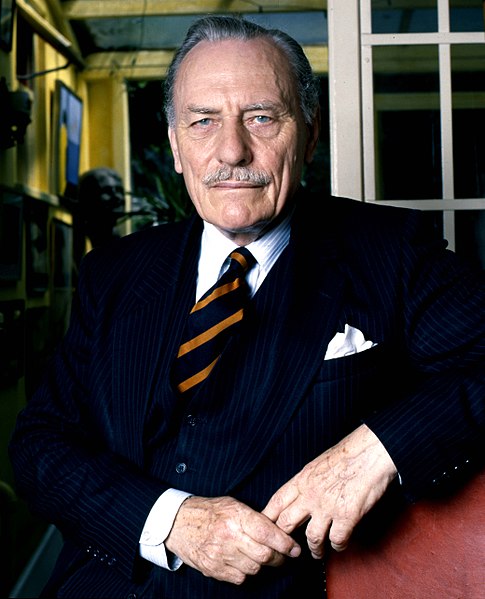
Enoch Powell in a 1987 portrait by Allan Warren.
Wikimedia Commons.

The new imprint of this important biography provides an opportunity to reread one of the most skilful works on British political history published over the last half century. As with Heffer’s other books, it is also very well written — although might I offer a plea for leaving aside sentences such as “He still saw no reason to lay off Heath”?

Before turning to the substance, it is worth considering the Foreword. Written this January, it underlines Powell’s significance to many issues, notably: “His deep scepticism about the confluence of America’s interest with those of Britain”. I am, however, dubious about the proposition that “Powell was, quite simply, one of the foremost Conservative thinkers in living memory, possibly the greatest since Burke”. Leaving aside the question of whether Burke can be described as Conservative or even, prior to the 1790s, as conservative, and, separately, the implicit dig at claims for Disraeli whom Heffer is on the record as describing as a Charlatan, I myself would make the case for Salisbury, while agreeing that Macmillan, Hailsham and MacLeod did not measure up to Powell. He returned the damage done him by Macmillan with “bilious” reviews of his Memoirs.

While I am sceptical of the claim that Powell was a great Conservative thinker in the cosmic sense, he was an impressive critic of many of the shibboleths of establishment Conservatism from the 1960s to the 1980s, including on immigration, the nuclear deterrent, the Common Market, the American alliance, Northern Ireland, and economic policy.

A significant aspect of the intellectual character of Powell was the return of this one-time atheist to the Church in the late 1940s, the subject of the “Interlude” “Powell and God” in the book. There is, as Salisbury and Cowling among others underlined, a significant link between Conservatism and the Church of England, and Powell, like Thatcher, can be profitably discussed in these terms, with Thatcher far less convincing.

The discussion of Powell’s elision from public debate is also interesting. Published by Weidenfeld and Nicolson in 1998, the biography was kept on print-on-demand until cancelled in the aftermath of the Black Lives Matter movement. Heffer compares the treatment of Powell to that of Orwell in facing difficulties in publishing Animal Farm and Nineteen Eighty-Four. For several years, Heffer found it impossible to persuade a publisher to republish the book and suggests that this was due to a craven fear of public opinion “real or perceived”, one about which Orwell had warned not least when referring to “intellectual cowardice”. The publisher he has found, it has to be said, is another instance of the very valuable work being done by non-metropolitan concerns.

October 9, 2025

Enoch Powell: The Father of Brexit?

The Rest Is History
Published 6 Oct 2025

Who was Enoch Powell, the deeply controversial British conservative politician? Why is he the father of Brexit, and possibly even Reform? And, how did he come to make his inflammatory “Rivers of Blood speech”, in 1968?

00:00 Intro
00:23 Hive
01:46 Introducing Enoch Powell
07:41 A very peculiar childhood
09:19 The least clubbable man in Cambridge
13:30 War years
14:48 An imperial dream thwarted
17:02 An eccentric MP
23:26 The anti-American
24:53 Immigration in post-war Britain
31:09 Smethwick 1964: campaign, slogan, shock result
33:34 Uber
34:14 Mid-60s Britain
35:59 Powell pivots to immigration
41:44 English identity in Powell’s mind (“united people in an island home”)
44:12 Politics & ambition: differentiating from Heath
45:03 The role of US race riots in Powell’s evolving opinions
46:24 Kenyan Asians crisis; Labour’s response
49:47 Race Relations Bill setup: Powell prepares the speech
50:59 The “Rivers of Blood” speech
56:07 Immediate fallout: sacking, friends’ reactions
57:42 Public opinion divides
1:00:04 His legacy
1:04:02 Was Powell racist?
1:08:12 Long-term legacy: why politicians avoided the topic

Join Dominic and Tom as they discuss Enoch Powell — one of the most incendiary and contentious figures in all of British political history — and his enduring shadow today.
(more…)

February 19, 2020

Enoch Powell

Theodore Dalrymple reviews a recent book by Paul Corthorn on Powell’s career and the concerns that animated him:

Enoch Powell in a 1987 portrait by Allan Warren.
Wikimedia Commons.

It does not pretend to be a biography, or even an intellectual biography. Rather, it chronicles, scrupulously but somewhat drily, Powell’s varying attitudes toward the main subjects of his political concerns: international relations, economics, immigration, Britain’s relations with Europe, and the status of Northern Ireland in the United Kingdom. Powell’s wider intellectual interests and religious views are scarcely touched upon, though it is mentioned that he went from being a believer to being (under the influence of Nietzsche) an atheist, to then returning to Christian belief. There is no description of his character in this book, not even by implication, and with this book as a guide, one would not recognise him if one met him. It is not possible to tell whether the author admires or detests his subject. This neutrality creates confidence in the accuracy of his scholarship, but also makes his book less than a pleasurable or exciting read. Perhaps it is the sign of a frivolous mind, but I prefer even histories of ideas to be spiced with a little biography (or, more truthfully, gossip).

The author does, however, offer a unifying interpretation of Powell’s various political concerns, namely that they were all responses to Britain’s precipitous national decline, the steepest part of which occurred in his lifetime, but which is continuing apace to the extent that Britain might even cease to be a nation at all. Powell was born in a great power and died in an enfeebled country with no industrial or military might, with precious little patriotism, and with no sense either of grandeur or collective purpose.

That this decline – relative rather than absolute, except in such fields as the maintenance of law and order — was inevitable given the conjunctures of the age, was evident to Powell (though not at first). This relative decline was already implicit in Disraeli’s dictum that “the Continent [of Europe] will not suffer England to be the workshop of the world.”

Powell’s concerns, then, were how to manage Britain’s decline and how to find it a new place in the world. He had not always been perceptive about the scale of its decline. He clung, for example, to the illusion that the Empire might still count for something even after the Second World War. Thereafter, however, he became a devotee of a kind of Realpolitik, to the extent of wanting a rapprochement or even alliance with the Soviet Union to balance the power of the United States, whose aims he had long distrusted. He discounted ideology, including communism, as a force in international politics, which is odd in a man who was by far the most intellectual and intellectually accomplished of all British politicians of the 20th century, being both a classical scholar and a brilliant linguist. He seemed to think that Soviet ambition was merely that of any large power in the great game. Those countries that fell into its grip knew otherwise.

On economics, Powell was an early devotee of the superiority of the market over state planning at a time when the intellectual tide was running the other way. There was one important subject, however, on which he was a confirmed statist, namely that of health care. He was for a time Minister of Health in the British government, during which he fiercely defended the NHS. He believed that the government had an ethical duty to provide health care for its citizenry, and it never seemed to occur to him that the centralised NHS was not the only possible way of doing so. He was often highly suspicious of international comparison, but it is difficult to see how judgment of the merits of a system could be made without it. It was clear, moreover, that in this, as in other fields, Britain was at best very mediocre. Perhaps Powell was blind to the NHS’s mediocre performance because of the benevolence of its stated intentions (an occupational hazard among intellectuals, even — or perhaps especially — among brilliant ones). At any rate, he never satisfactorily explained why health care should be different from other spheres of service provision in the superiority of private over public organization.

April 17, 2018

The renewed controversy over Enoch Powell’s “Rivers of Blood” speech

Filed under: Britain, History, Politics — Tags: , , , , — Nicholas @ 03:00

In Spiked, Mick Hume discusses the resurgent controversy after a BBC re-broadcast of the original Powell speech this past weekend:

Here are the news headlines. There were no reports of race riots, pogroms or waves of hate crimes across Britain on Saturday night, as the BBC broadcast a radio show marking the 50th anniversary of Enoch Powell’s infamously anti-immigration ‘Rivers of Blood’ speech. In other news, the US, UK and France have bombed Syria…

Why all the overblown fuss about the BBC Radio 4 programme that broadcast the full text of Powell’s 1968 speech for the first time? To judge by the political denunciations and demands for a ban and the many ‘what next – Hitler’s Mein Kampf as Book at Bedtime?’-type tweets, one might imagine that the BBC had cleared the primetime schedules to give the late Powell the full Nuremburg Rally treatment.

In fact, the radio programme, ‘50 Years On: Rivers of Blood’, presented by BBC media editor Amol Rajan, was tucked away in the quiet Saturday evening Archive on 4 slot, where few might have noticed if not for all the calls for it to be taken off air. Far from giving us the full Enoch, the speech was cut up into chunks read by an actor and interspersed with critical commentary that went on rather longer than Powell.

But then, the ruckus over this programme really had little to do with Enoch and the anti-immigrant politics of 1968. The pre-emptive backlash was more about Brexit, and the anti-working-class politics of 2018. The essential message of the protests was that if the demos today heard Powell’s words from 50 years ago, they might go straight out to attack Britain’s immigrant or ethnic-minority communities and turn the Thames or the Tees into real-life rivers of blood. They think we are all Enochs now.

Ironically, it is these leading Remainers who sound more like modern-day Enochs, echoing a PC version of his warnings about a coming race war caused by anti-immigrant feeling. If Powell’s rhetoric was overdone back then, theirs is ridiculous today.

For us colonials who may not have been fully immersed in late-60s British politics, the Wikipedia page helps put it into some sort of perspective.

The “Rivers of Blood” speech is a speech given by British Member of Parliament Enoch Powell on 20 April 1968, addressing a meeting of the Conservative Political Centre in Birmingham in the United Kingdom. The speech strongly criticised mass immigration, especially Commonwealth immigration to the UK and the then-proposed Race Relations Bill.

Powell always referred to it as “the Birmingham speech” and the expression “rivers of blood” did not appear in the original speech. The phrase is an allusion to a line from Virgil’s Aeneid quoted by Powell (“As I look ahead, I am filled with foreboding; like the Roman, I seem to see the River Tiber foaming with much blood”).

The speech caused a political storm, making Powell one of the most talked about, and divisive, politicians in the country, and leading to his controversial dismissal from the Shadow Cabinet by Conservative Party leader Edward Heath. According to most accounts, the popularity of Powell’s perspective on immigration may have played a decisive contributory factor in the Conservatives’ surprise victory in the 1970 general election, and he became one of the most persistent rebels opposing the subsequent Heath government.

June 16, 2012

Peter Oborne on Enoch Powell, a “monster” with integrity

Filed under: Britain, Europe, History, Politics — Tags: , , , , — Nicholas @ 10:36

In the Telegraph, Peter Oborne outlines the career of British parliamentarian Enoch Powell:

For years, Enoch Powell has been a monstrous figure in British politics. Even the mention of his name has been enough to invite damnation by association. Before the last election, David Cameron forced Nigel Hastilow to stand down as Conservative candidate for Halesowen after he praised Powell for being “right” about immigration.

[. . .]

With not one word changed, Powell’s speeches on Lords reform, some delivered half a century ago, could be delivered today. This is because his analysis was not dependent on day-to-day events and a transient national mood. His approach was based on first principles, extraordinary learning and a rigorous understanding of the British constitution.

It was this intellectual clarity which caused him to oppose British entry to what was then known as the Common Market. At the start of 1971, during the final stage of negotiations, Powell took himself round Europe speaking in Turin (in Italian), Frankfurt (in German) and Lyon (in French). As he remarked: “There is no more ignorant vulgarity than to treat language as an impediment to intercourse, which education, habit, travel, trade, abolish and then remove.” He used these speeches to warn his French, Italian and German audiences that the British tradition of national sovereignty and parliamentary democracy was incompatible with European economic and political union.

[. . .]

But now we must come to Enoch Powell’s notorious speeches on immigration, which have defined his posthumous reputation and established his pariah status. He challenged the culture of denial that surrounded the subject even then, predicting that the immigrant community would rise much faster than official statistics suggested. His claims were denounced as alarmist and irresponsible, even by The Daily Telegraph. As Tom Bower shows in a well-researched and fair-minded essay, Powell’s projections turned out to be much nearer the truth than the official ones.

[. . .]

The case for the defence goes like this: at the time immigration was surrounded by a culture of silence, and Powell was doing no more than bravely voicing the concerns (and using the language) of his constituents. He was no racist, as even opponents like Michael Foot acknowledged, and as his stance over the Hola Camp suggests. And let’s not forget that Powell, who had a brilliant war, risked his life for five years in the fight against fascism. But I am certain that the Conservative Party was right to drive him out for his remarks, which had the malign effect that no mainstream politician dared raise the issue of immigration for a generation.

For some, this single episode has been enough to damn his memory, and that can be understood. But Enoch Powell was a man of extraordinary integrity. He walked alone. To quote the late Daily Telegraph commentator TE Utley, doing his best to stand up for Powell in the wake of the notorious “rivers of blood” speech of April 1968: “He does not believe that politics is a hand-to-mouth affair, a succession of expedients to meet unforeseen and unforeseeable circumstances.”

Update, 19 June: In the Telegraph, Brendan O’Neill points out that modern anti-racists actually have more in common with Powell than they may realize:

What was the key prejudice in Enoch Powell’s infamous 1968 speech, which everyone is talking about again following Powell’s 100th birthday? It wasn’t actually hatred of immigrants, whom Powell believed to be ambitious, ferociously so. Rather it was fear of native Britons. It was fear of what white Brits, or what Powell referred to as the “ordinary working man”, might do if more and more foreigners turned up in their towns.

Indeed, Powell explicitly argued that “the sense of alarm and resentment lies not with the immigrant population but with those among whom they have come”. It was these people, he said, these “ordinary Englishmen”, who posed a threat to the social order, since their anti-immigrant anger had become so intense that to introduce more immigrants would be to “risk throwing a match in to gunpowder”. In short, “ordinary working men” were a powder-keg of unpredictable emotions whom the state should try its best not to antagonise. Or as Powell put it, “The supreme function of statesmanship is to provide against preventable evils”, including the evil of “ordinary working men” having their “alarm and resentment” further stirred up.

Even Powell’s most notorious line — “like the Roman, I seem to see the River Tiber foaming with much blood” — was a prediction not of immigrant behaviour but of native British violence against immigrants. Powell said native Brits, “for reasons which they could not comprehend” (presumably because they were a bit dim), were feeling dangerously like “strangers in their own country”.

Powered by WordPress