
Townsends
Published 29 Aug 20220:00 – Laying the Foundation
4:39 – The Walls Begin
8:22 – Prepping the Fireplace
9:52 – Finishing the Walls
15:58 – The Roof Design
17:04 – Adding the Purlins
20:29 – The Doorframe
21:32 – The Final Purlins
24:00 – Roofing Materials
25:47 – Adding the Bark Shingles
27:37 – Roof Wrap-Up
29:03 – Door Jams
29:47 – Opening the Fireplace
30:58 – Building the Fireplace
36:06 – Adding the Door
37:54 – The First Fire
39:02 – A Winter Safe Haven
(more…)
January 1, 2023
Full Cabin Build – 4K Full Length – Townsends Wilderness Homestead
Comments Off on Full Cabin Build – 4K Full Length – Townsends Wilderness Homestead
December 31, 2022
Coming of the Sea Peoples: Part 6 – Crete and the Minoans
seangabb
Published 6 Jul 2021The Late Bronze Age is a story of collapse. From New Kingdom Egypt to Hittite Anatolia, from the Assyrian Empire to Babylonia and Mycenaean Greece, the coming of the Sea Peoples is a terror that threatens the end of all things. Between April and July 2021, Sean Gabb explored this collapse with his students. Here is one of his lectures. All student contributions have been removed.
(more…)
Comments Off on Coming of the Sea Peoples: Part 6 – Crete and the Minoans
December 30, 2022
Stalin Deports An Entire Ethnicity – War Against Humanity 093
World War Two
Published 29 Dec 2022The last week of 1943 is a busy one. Stalin deports the Kalmyk minority from Kalmykia, the escapees from Fort IX get away, and the US President moves to found the post-war UN.
(more…)
Comments Off on Stalin Deports An Entire Ethnicity – War Against Humanity 093
The continued relevance of Orwell’s “Politics and the English Language”
In Quillette, George Case praises Orwell’s 1946 essay “Politics and the English Language” (which was one of the first essays that convinced me that Orwell was one of the greatest writers of the 20th century), and shows how it still has relevance today:
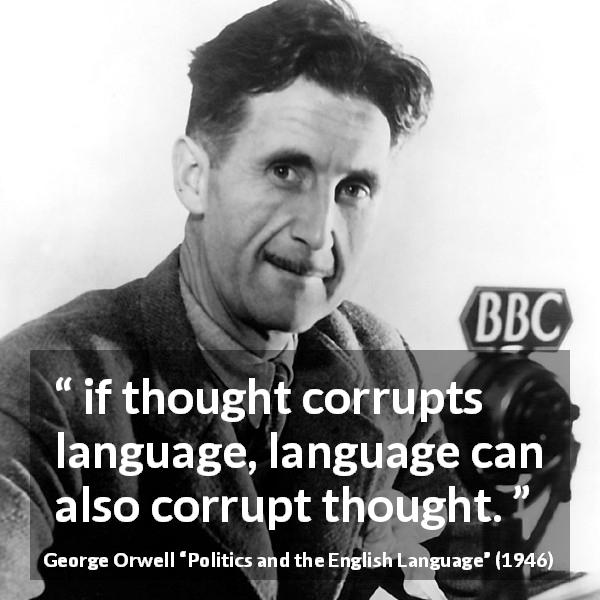
George Orwell’s “Politics and the English Language” is widely considered one of the greatest and most influential essays ever written. First published in Britain’s Horizon in 1946, it has since been widely anthologized and is always included in any collection of the writer’s essential nonfiction. In the decades since its appearance, the article has been quoted by many commentators who invoke Orwell’s literary and moral stature in support of its continued relevance. But perhaps the language of today’s politics warrants some fresh criticisms that even the author of Nineteen Eighty-Four and Animal Farm could not have conceived.
“Politics and the English Language” addressed the jargon, double-talk, and what we would now call “spin” that had already distorted the discourse of the mid-20th century. “In our time,” Orwell argued, “political speech and writing are largely the defence of the indefensible. … Thus political language has to consist largely of euphemism, question-begging and sheer cloudy vagueness. … Political language — and with variations this is true of all political parties, from Conservatives to Anarchists — is designed to make lies sound truthful and murder respectable, and to give an appearance of solidity to pure wind.” Those are the sentences most cited whenever a modern leader or talking head hides behind terms like “restructuring” (for layoffs), “visiting a site” (for bombing), or “alternative facts” (for falsehoods). In his essay, Orwell also cut through the careless, mechanical prose of academics and journalists who fall back on clichés — “all prefabricated phrases, needless repetitions, and humbug and vagueness generally”.
These objections still hold up almost 80 years later, but historic changes in taste and technology mean that they apply to a new set of unexamined truisms and slogans regularly invoked less in oratory or print than through televised soundbites, online memes, and social media: the errors of reason and rhetoric identified in “Politics and the English Language” can be seen in familiar examples of empty platitudes, stretched metaphors, and meaningless cant which few who post, share, like, and retweet have seriously parsed. Consider how the following lexicon from 2023 is distinguished by the same question-begging, humbug, and sheer cloudy vagueness exposed by George Orwell in 1946.
[…]
Climate, [mis- and dis-]information, popular knowledge, genocide, land claims, sexual assault, and racism are all serious topics, but politicizing them with hyperbole turns them into trite catchphrases. The language cited here is largely employed as a stylistic template by the outlets who relay it — in the same way that individual publications will adhere to uniform guidelines of punctuation and capitalization, so too must they now follow directives to always write rape culture, stolen land, misinformation, or climate emergency in place of anything more neutral or accurate. Sometimes, as with cultural genocide or systemic racism, the purpose appears to be in how the diction of a few extra syllables imparts gravity to the premise being conveyed, as if a gigantic whale is a bigger animal than a whale, or a horrific murder is a worse crime than a murder.
Elsewhere, the words strive to alter the parameters of an issue so that its actual or perceived significance is amplified a little longer. “Drunk driving” will always be a danger if the legal limits of motorists’ alcohol levels are periodically lowered; likewise, relations between the sexes and a chaotic range of public opinion will always be problematic if they can be recast as rape culture, hate, or disinformation. This lingo typifies the parroted lines and reflexive responses of political communication in the 21st century.
In “Politics and the English Language”, George Orwell’s concluding lesson was not just that parroted lines and reflexive responses were aesthetically bad, or that they revealed professional incompetence in whoever crafted them, but that they served to suppress thinking. “The invasion of one’s mind by ready-made phrases … can only be prevented if one is constantly on guard against them, and every such phrase anaesthetizes a portion of one’s brain”, he wrote. He is still right: glib, shallow expression reflects, and will only perpetuate, glib, shallow thought, achieving no more than to give an appearance of solidity to pure wind.
Comments Off on The continued relevance of Orwell’s “Politics and the English Language”
My Top 10 Favorite Avalon Hill Games
Legendary Tactics
Published 1 Apr 2021Avalon Hill has such a rich history as a board game company, and has contributed so much to our hobby, our sense of history, and our lives. I sat down to reminisce about my top 10 favorite Avalon Hill games of all time. Are these the best games of all time? What games would make your list? Let us know in the comment section below.
(more…)
Comments Off on My Top 10 Favorite Avalon Hill Games
December 29, 2022
Brewing Mesopotamian Beer – 4,000 Years Old
Tasting History with Max Miller
Published 27 Dec 2022
(more…)
Comments Off on Brewing Mesopotamian Beer – 4,000 Years Old
Anti-Tank Chats #5 | PIAT | The Tank Museum
The Tank Museum
Published 26 Aug 2022Bring up the PIAT! Join Stuart Wheeler as he takes a look at the iconic WW2 British anti-tank weapon — the PIAT. With thanks to @The Armourer’s Bench and @History in Firearms
(more…)
Comments Off on Anti-Tank Chats #5 | PIAT | The Tank Museum
December 28, 2022
The Myth of the Nazi Police State – WW2 Documentary Special
World War Two
Published 27 Dec 2022The popular image of the Gestapo is as black leather-jacketed fiends whose spies keep the nation under constant surveillance. They are so powerful that the terrified population has no choice but to sell out its family and friends. But how true is this? Are all Germans living in fear of the Gestapo all the time?
(more…)
Comments Off on The Myth of the Nazi Police State – WW2 Documentary Special
What we still don’t know about historical European swordfighting
I was for many years a member of the SCA partly for the attraction of the historical period and partly for the swordfighting. The Society developed a (mostly) safe simulation of (some) medieval combat styles and later introduced (some) renaissance rapier combat as well (initially borrowing equipment standards from modern sport fencing). Around the time the SCA began to consider expanding from high medieval sword-and-shield styles, separate organizations in Europe and the United States sprang up to be more consciously historical in how they recreated historical blade combat, these groups are often collectively referred to as Historical European Martial Arts (HEMA) or Western Martial Arts (WMA). The foundation documents for HEMA and other historical combat enthusiasts are the various surviving manuals of swordmasters and fencing school owners which cover a kaleidoscope of weapons, techniques, advice, and how-to illustrations … some of which appear to be physically impossible for ordinary human beings:
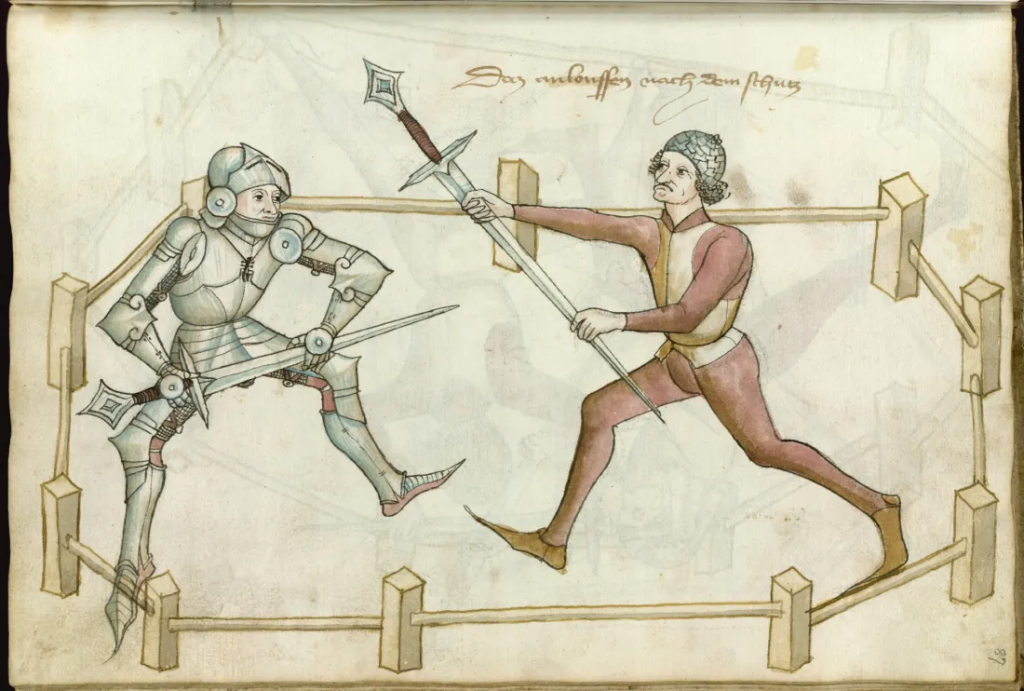
MS Thott.290.2º f.87r.
The ultimate experts in medieval sword fighting were the “fight masters” – elite athletes who trained their disciples in the subtle arts of close combat. The most highly renowned were almost as famous as the knights they trained, and many of the techniques they used were ancient, dating back hundreds of years in a continuous tradition.
Little is known about these rare talents, but the scraps of information that have survived are full of intrigue. Hans Talhoffer, a German fencing master with curly hair, impressive sideburns and a penchant for tight body suits, had a particularly chequered past. In 1434, he was accused of murdering a man and admitted abducting him in the Austrian city of Salzburg.
Fight masters worked with a grisly assortment of deadly weapons. The majority of training was dedicated to fencing with the longsword, or the sword and buckler (a style of combat involving holding a sword in one hand, and a small shield in the other). However, they also taught how to wield daggers, poleaxes, shields, and even how to fight with nothing at all, or just a bag of rocks (more on this later).
It’s thought that some fight masters were organised into brotherhoods, such as the Fellowship of Liechtenauer – a society of around 18 men who trained under the shadowy grandmaster Johannes Lichtenauer in the 15th Century. Though details about the almost-legendary figure himself have remained elusive, it’s thought he led an itinerant life, travelling across borders to train a handful of select proteges and learn new fencing secrets.
Other fight masters stayed closer to home – hired by dukes, archbishops and other assorted nobles to train themselves and their guards. A number even set up their own “fight schools”, where they gathered less wealthy students for regular weekly sessions.
[…]
For all their beauty, the hand-drawn works could also be decidedly bloodthirsty. In Talhoffer’s 1467 manual, neat sequences of moves that look almost like dancing end abruptly with swords through eye-sockets, violent impalings, and casual instructions to beat the opponent to death. Some signature techniques even have names – chilling titles like the “wrath-hew”, “crumpler”, “twain hangings”, “skuller” and “four openings”.
Despite passing through countless generations of owners, and – in some cases – centuries of graffiti, burns, theft, and mysterious periods of vanishment from the historical record, a surprising number survive today. This includes at least 80 codexes from German-speaking regions alone.
Impossible moves and missing clues
But there’s a problem. Many of the techniques in combat manuals, also known as “fechtbücher“, are convoluted, vague, and cryptic. Despite the large corpus of remaining books, they often offer surprisingly little insight into what the fight master is trying to convey.
“It’s famously difficult to take these static unmoving woodcut images, and determine the dynamic action of combat,” says Scott Nokes, “This has been a topic of debate, research and experimentation for generations.”
On some occasions these manuals seem to depict contortions of the body that are physically impossible, while those that attempt to convey moves in three dimensions sometimes give combatants extra arms and legs that were added in by accident. Others contain instructions that are frustratingly opaque – sometimes depicting actions that don’t seem to work, or building upon enigmatic moves that have long-since been lost.
Oddly, the text is often written as poetry, rather than prose – and a few authors even made it hard to interpret their works on purpose.
Lichtenauer recorded his instructions in obscure verses which remain almost incomprehensible today – one expert has gone so far as to call them “gibberish”. According to a contemporary fight master he trained, the grandmaster wrote in “secret words” to prevent them from being intelligible to anyone who didn’t value his art highly enough.
Even when it is possible to decipher what a combat manual is describing or demonstrating, some experts suspect that crucial contextual information is always missing.
Comments Off on What we still don’t know about historical European swordfighting
December 27, 2022
Marcus Licinius Crassus, the richest man in Rome
In The Critic, Bijan Omrani reviews Crassus: The First Tycoon by Peter Stothard:
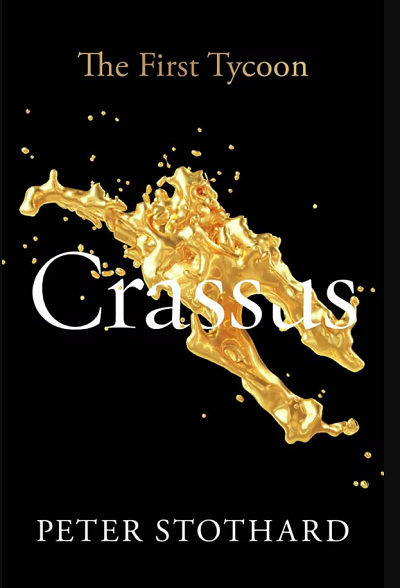
If you are feeling despondent about the dismal quality of the current generation of politicians, it may be some comfort to remember that even in the golden age of Rome such complaints were legion.
The poet Horace wrote at length about how the ruling class had gone downhill. Once, there had been paragons of virtue such as Cincinnatus, who after saving Rome as dictator laid down his power without demur and returned to live on his humble farm; or the consul Regulus, who refused to make any concessions after being captured by the Carthaginians, although he knew they would torture him to death. Instead of these titans, the modern age had brought forth a base generation. Marcus Licinius Crassus, the richest man in Rome and subject of this new biography, was foremost among them.
The formidable influence wielded by Crassus in the final years of the Roman Republic — he was an ally, and rival, of Julius Caesar and Pompey the Great — came not by way of old-fashioned heroics and victories on the battlefield. His methods were recognisably modern. Peter Stothard characterises him as a “disrupter of old rules, fixer and puller of the puppet strings of power”. His tools were money and the economy of favours. He employed them with a coldness, ruthlessness and level of calculation that makes him unappetising, but deeply compelling. Stothard’s description of him as “The First Tycoon” is apt. He is the sort of character one might expect to find wearing red braces in a New York boardroom, rather than a brocaded toga in the Roman Forum.
By origin, Crassus was a member of one of Rome’s blue-blooded families. His pursuit of political influence by means of business rather than military prowess would seem at first sight unexpected, given the traditional prohibition against the senatorial aristocracy engaging in trade. Yet, the turmoil of Crassus’s formative years overturned these niceties. The last sight he had of his father, who had served as a consul, was of his head on a spike in the Forum.
He was a victim of the perennial strife that plagued Rome at the beginning of the 1st century BC, caused by imbalances in wealth and tensions between Rome and wider Italy, not to mention discord over land, military and constitutional reforms. With the death of his father and two of his brothers, Crassus had to flee Rome and hide in a cave for eight months in Spain, where his family still had allies. It is doubtless these upheavals — similar to those of Julius Caesar, who lost his father young and had to go into hiding during this chaos — led Crassus to seek an inviolable security, regardless of whether he trampled on old Roman conventions and upset others to do so.
When the aristocratic faction seized power in the late 80s BC, Crassus was able to return to Rome. There, he pursued every commercial method, no matter how disreputable, to accumulate wealth. It satisfied not only his needs for security but, as Stothard argues, it was also a way of seeking revenge for the death of his father. He bought up the properties of those families allied to the earlier populist regime which had just been displaced.
These came at a knock-down price, as the families had been outlawed, with some executed and others sent into exile. Crassus appears to have been on a committee which determined the loyalty of citizens to the new government and appears not to have scrupled to condemn those whose property he coveted. His other prime method for enlarging his portfolio was to buy up cheaply buildings that were on fire, or else in the path of a fire. He organised his slaves along military lines, using them with relentless efficiency to acquire, rebuild and sell on property for a huge profit.
Comments Off on Marcus Licinius Crassus, the richest man in Rome
Coming of the Sea Peoples: Part 5 – The Hittites
seangabb
Published 6 Jul 2021[Unfortunately, parts 3 and 4 of this lecture series were not uploaded due to sound issues with the recording].
The Late Bronze Age is a story of collapse. From New Kingdom Egypt to Hittite Anatolia, from the Assyrian Empire to Babylonia and Mycenaean Greece, the coming of the Sea Peoples is a terror that threatens the end of all things. Between April and July 2021, Sean Gabb explored this collapse with his students. Here is one of his lectures. All student contributions have been removed.
(more…)
Comments Off on Coming of the Sea Peoples: Part 5 – The Hittites
Smoking Bishop from A Christmas Carol
Tasting History with Max Miller
Published 10 Dec 2021
(more…)
Comments Off on Smoking Bishop from A Christmas Carol
December 26, 2022
The Battle of Ortona with Jayson Geroux
OTD Canadian Military History
Published 21 Dec 2022Join me as I welcome Jayson Geroux to the OTD channel to discuss the Battle of Ortona. We will be discussing the urban combat that took place in Ortona in December 1943. [The discussion of the actual battle begins around the 6 minute mark.]
(more…)
Comments Off on The Battle of Ortona with Jayson Geroux
2nd Canadian Infantry Brigade Christmas celebrations in Ortona, 1943
The folks at the World War Two channel on YouTube posted this to their community page on Christmas Day:
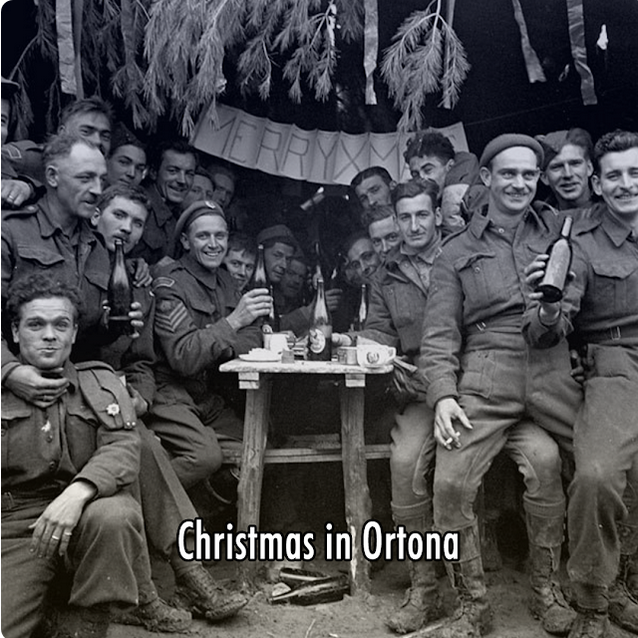
On Christmas Day, 25 December 1943, the 1st Canadian Infantry Division is still engaged in brutal urban combat against the 1. Fallschirmjäger-Division for control over the town of Ortona. But among the rubble of the “Italian Stalingrad”, soldiers of the Seaforth Highlanders of Canada, along with other units [of the 2nd Canadian Infantry Brigade], manage to keep the Christmas spirit alive.
Colonel S. W. Thomson will recount this most unusual Christmas celebration many years later:
“I knew that we would be fully engaged with the enemy on Christmas day. However our most enterprising Quartermaster, Captain Bordon Cameron, was anxious to provide something special for the men at Christmas. Three companies were in the line with one in reserve, often the norm. We decided to feed the reserve company first and feed the remaining companies in relays. as one company finished it would go forward some 300 or 400 yards and relieve the next. Tables, linen, chinaware and candles were scrounged by the reserve company. The tables were set up in rows in our great church Santa Maria with four foot thick walls and my rear H.Q. What a picture, what an appropriate setting for a Christmas dinner on Dec. 25.
“Soup, roast pork, vegetables and Christmas pudding along with a bottle of beer for each of the tattered, scruffy, war weary soldiers was served by HQ and B echelon staff. The Q.M. boys excelled themselves, the impossible had happened. There was a spirit of good-fellowship throughout the church. The signals officer Lieutenant Wilf Gildersleeve played the organ, and our much loved padre Roy Durford led the carol singing. Pipe Major Esson played his pipes several times during the meals drowning out the odd enemy shell burst outside.
“Christmas in Ortona, the meal, yes, but the spirit of the occasion, the look on the faces of those exhausted, gutsy men on entering the church is with me to-day and will live forever.”
To all our followers, readers, and viewers: We wish you a Merry Christmas!
From: Canadian Military History, Vol. 2 (1993)
Picture: Canadian soldiers celebrate Christmas in Ortona, Italy
Source: Canadian Armed Forces
Comments Off on 2nd Canadian Infantry Brigade Christmas celebrations in Ortona, 1943
How to Make Christmas Gin Punch – The Victorian Way
English Heritage
Published 7 Dec 2016Mr Lincoln, the butler, is very busy with Christmas preparations, so Mrs Crocombe is making some Christmas gin punch for the servants in the kitchens of Audley End House.
INGREDIENTS
250g Brown Sugar
7 lemons
750ml Gin
750ml Ginger Wine
250g Honey
A Pinch of Cloves
1 tsp Cinnamon
1 tsp Nutmeg
Hot WaterMETHOD
In a large bowl, add the sugar, nutmeg, cinnamon, cloves, lemons, honey, gin and ginger wine. Add some hot water to your taste and give everything a good stir. You can then decant your punch into a decorative bowl and serve.
(more…)
Comments Off on How to Make Christmas Gin Punch – The Victorian Way


