
Real Time History
Published 6 Jan 2023When Nazi Germany attacked the Soviet Union in 1941, Napoleon’s failed campaign was on many minds. Hitler specifically wanted to avoid a repetition of 1812 and even when his luck ran out was adamant to avoid any comparisons.
(more…)
January 7, 2023
Converting the Lebel to 7.5mm: The M27 Lebel
Forgotten Weapons
Published 12 Dec 2017In the aftermath of World War One, the French military instituted a plan to introduce a completely new roster of small arms. This would begin with the development of a modern rimless rifle cartridge, which was adopted in 1924. With the new cartridge in hand, programs were begun to develop a light machine gun, bolt action rifle, and semiautomatic rifle using it. To supplement these new arms — especially during their development and production — plans were also made to convert existing 8mm rifles to the new cartridge.
The two rifles in large supply, of course, were the Lebel and the Berthier. The St Etienne arsenal was tasked with developing a Berthier conversion (this would become the M34 Berthier), and the Tulle arsenal was assigned to do the same with the Lebel. The first prototype was ready for testing in 1927. That first example was not satisfactory, and iterative development would continue into the early 1930s. Ultimately, the Lebel conversion was simply not as well liked by troops or as effective as the M34 Berthier, and so the Berthier was chosen for mass production. A total of about 1500 Lebel M27 conversions would be made by 1940, in a wide variety of configurations including different barrel lengths, rifling patterns, and optics mounting setups. While this did not result in a successful production rifle, it would inform the development of the MAS-36, and not go to waste. In addition, a number of M27 rifles would be converted into pressure testing guns to assist in ammunition development.
(more…)
Comments Off on Converting the Lebel to 7.5mm: The M27 Lebel
QotD: The “camp followers” of a pre-modern army
It is worth keeping in mind that an army of 10,000 or 20,000 men was, by ancient or medieval standards, a mid-sized town or city moving across the landscape. Just as towns and cities created demand for goods that shaped life around them, so did armies (although they’d have to stay put to create new patterns of agriculture, though armies that did stay put did create new patterns of agriculture, e.g. the Roman limes). Thousands of soldiers demand all sorts of services and often have the money to pay for them and that’s in addition to what the army as an army needs. That in turn is going to mean that the army is followed by a host of non-combatants, be they attached to the soldiers, looking to turn a profit, or compelled to be there.
We can start with sutlers, merchants buying or selling from the soldiers themselves (the Romans called these fellows lixae, but also called other non-soldiers in the camp lixae as well, see Roth (2012), 93-4; they also call them mercatores or negotiatores, merchants). Sutlers could be dealing in a wide array of goods. Even for armies where ration distribution was regular (e.g. the Roman army), sutlers might offer for sale tastier and fancier rations: meat, better alcohol and so on. They might also sell clothing and other goods to soldiers, even military equipment: finding “custom” weapons and armor in the archaeology of military forts and camps is not uncommon. For less regularly rationed armies, sutlers might act as a supplement to irregular systems of food and pay, providing credit to soldiers who purchased rations to make up for logistics shortfalls, to collect when those soldiers were paid. By way of example, the regulations of the Army of Flanders issued in 1596 allowed for three sutlers per 200-man company of troops (Parker, op. cit.), but the actual number was often much higher and of course those sutlers might also have their own assistants, porters, wagons and so on which moved with the army’s camp. Women who performed this role in the modern period are often referred to by the French vivandière.
For some armies there would have been an additional class of sutlers: slave dealers. Enslaved captives were a major component of loot in ancient warfare and Mediterranean military operations into and through the Middle Ages. Armies would abduct locals caught in hostile lands they moved through or enemies captured in battles or sieges; naturally generals did not want to have to manage these poor folks in the long term and so it was convenient if slave-dealer “wholesalers” were present with the army to quickly buy the large numbers of enslaved persons the army might generate (and then handle their transport – which is to say traffic them – to market). In Roman armies this was a regularized process, overseen by the quaestor (an elected treasury official who handled the army’s finances) assigned to each army, who conducted regular auctions in the camp. That of course means that these slave dealers are not only following the army, but are doing so with the necessary apparatus to transport hundreds or even thousands of captives (guards, wagons, porters, etc.).
And then there is the general category of “camp follower”, which covers a wide range of individuals (mostly women) who might move with the camp. The same 1596 regulations that provided for just three sutlers per 200-man Spanish company also provided that there could be three femmes publiques (prostitutes), another “maximum” which must often have been exceeded. But prostitutes were not the only women who might be with an army as it moved; indeed the very same regulations specify that, for propriety’s sake, the femmes publiques would have to work under the “disguise of being washerwomen or something similar” which of course implies a population of actual washerwomen and such who also moved with the army. Depending on training and social norms, soldiers may or may not have been expected to mend their own clothes or cook their own food. Soldiers might also have wives or girlfriends with them (who might in turn have those soldier’s children with them); this was more common with professional long-service armies where the army was home, but must have happened with all armies to one degree or another. Roman soldiers in the imperial period were formally, legally forbidden from marrying, but the evidence for “soldier’s families” in the permanent forts and camps of the Roman Empire is overwhelming.
The tasks women attached to these armies have have performed varied by gender norms and the organization of the logistics system. Early modern gunpowder armies represent some of the broadest range of activities and some of the armies that most relied on women in the camp to do the essential work of maintaining the camp; John Lynn (op. cit., 118-163) refers to the soldiers and their women (a mix of wives, girlfriends and unattached women) collectively as “the campaign community” and it is an apt label when thinking about the army on the march. As Lynn documents, women in the camp washed and mended clothes, nursed the sick and cooked meals, all tasks that were considered at the time inappropriate for men. Those same women might also be engaged in small crafts or in small-scale trade (that is, they might also be sutlers). Finally, as Lynn notes, women who were managing food and clothing seem often to have become logistics managers for their soldiers, guarding moveable property during battles and participating in pillaging in order to scrounge enough food and loot for they and their men to survive. I want to stress that for armies that had large numbers of women in the camp, it was because they were essential to the continued function of the army.
And finally, you have the general category of “servants”. The range of individuals captured by this label is vast. Officers and high status figures often brought either their hired servants or enslaved workers with them. Captains in the aforementioned Army of Flanders seem generally to have had at least four or five servants (called mozos) with them, for instance; higher officers more. But it wasn’t just officers who did this. Indeed, the average company in the Army of Flanders, Parker notes, would have had 20-30 individual soldiers who also had mozos with them; one force of 5,300 Spanish veterans leaving Flanders brought 2,000 such mozos as they left (Parker, op. cit. 151).
Looking at the ancient world, many – possibly most – Greek hoplites in citizen armies seem to have very often brought enslaved servants with them to carry their arms and armor; such enslaved servants are a regular feature of their armies in the sources. The Romans called these enslaved servants in their armies calones; it was a common trope of good generalship to sharply restrict their number, often with limited success. At Arausio we are told there were half as many servants (calonum et lixarum) as soldiers (Liv. Per. 67, on this note Roth (2013), 105), though excessive numbers of calones et lixae was a standard marker of bad general and the Romans did lose badly at Arausio so we ought to take those figures with a grain of salt, as Livy (and his sources) may just be communicating that the generals there were bad. That said, the notion that a very badly led army might have as many non-combatants following it as soldiers is a common one in the ancient sources. And while Roman armies were considered notable in the ancient world for how few camp servants they relied on and thus how much labor and portage was instead done by the soldiers, getting Roman aristocrats to leave their vast enslaved household staff at home was notoriously difficult (e.g. Ps.Caes. BAfr. 54; Dio Cass. 50.11.6). Much like the early modern “campaign community”, our sources frequently treat these calones as part of the army they belonged to, even though they were not soldiers.
Bret Devereaux, “Collections: Logistics, How Did They Do It, Part I: The Problem”, A Collection of Unmitigated Pedantry, 2022-07-15.
Comments Off on QotD: The “camp followers” of a pre-modern army
January 6, 2023
Will Stalin Liberate or Occupy Poland? – War Against Humanity 094
World War Two
Published 5 Jan 2023The last week of 1943 is a busy one. Stalin deports the Kalmyk minority from Kalmykia, the escapees from Fort IX get away, and the US President moves to found the post-war UN.
(more…)
Comments Off on Will Stalin Liberate or Occupy Poland? – War Against Humanity 094
This is the most interesting roof in London
Tom Scott
Published 5 Sep 2022The @Royal Albert Hall is 150 years old; the roof is 600 tonnes of glass and steel. And it turns out that there’s a terrifying technicians’ trampoline, acoustic-dampening mushrooms, and a complete lack of connections.
(more…)
Comments Off on This is the most interesting roof in London
January 5, 2023
Roman Emperors, Part 8 – Nero: Life and Death
seangabb
Published 20 Dec 2022This is a video record of a lecture given by Sean Gabb, in which he discusses what we can know or suspect about the life of the Emperor Nero. Some criticism here of Tacitus as a reliable source.
The Roman Empire was the last and the greatest of the ancient empires. It is the origin from which springs the history of Western Europe and those nations that descend from Western Europe. It is the political entity within which the Christian faith was born, and the growth of the Church within the Empire, and its eventual establishment as the sole faith of the Empire, have left an indelible impression on all modern denominations. Its history, together with that of the Ancient Greeks and the Jews, is our history. To understand how the Empire emerged from a great though finally dysfunctional republic, and how it was consolidated by its early rulers, is partly how we much understand ourselves.
(more…)
Comments Off on Roman Emperors, Part 8 – Nero: Life and Death
Tank Chats #162 | Springer | The Tank Museum
The Tank Museum
Published 2 Sep 2022Join Curator David Willey in his latest Tank Chat as he delves into the Springer, a German demolition vehicle.
(more…)
Comments Off on Tank Chats #162 | Springer | The Tank Museum
January 4, 2023
“Sarajevo” – Assassination of Archduke Franz Ferdinand – Sabaton History 116
Sabaton History
Published 3 Jan 2023Where did the war to end all wars begin? The assassination in Sarajevo may have only killed two, but the repercussions killed millions, destroyed empires, and changed the course of history.
(more…)
Comments Off on “Sarajevo” – Assassination of Archduke Franz Ferdinand – Sabaton History 116
The First Modern Military Rifle: The Modele 1886 Lebel
Forgotten Weapons
Published 5 Dec 2017The Lebel was a truly groundbreaking development in military small arms, being the first rifle to use smokeless powder. This gave it — and in turn the French infantry — a massive advantage in range over everyone else in the world at the time. This advantage was short-lived, but the French did their best to exploit it.
French chemist Paul Vielle successfully developed his smokeless powder (“poudre B“) formula in 1884, and French ordnance spent 1885 experimenting with different calibers of small bore bullet to see what would work best. They also began looking at rifle actions to use, including specifically the Remington-Lee and the Mannlicher. However, a new Minister of War was appointed in January of 1886 and he demanded a completed prototype rifle and ammunition be completed by May 1886. This was a nearly impossibly short deadline to meet, and it meant that the Ordnance officers could not possibly develop a wholly new rifle, and instead would have to modify something already in the inventory.
The only suitable option was the Model 1884/5, a combination of the Gras bolt and Kropatschek tube magazine. The new smokeless cartridge was made by simply necking down the 11mm Gras round, and the 1884 rifle was given a new barrel in 8mm and a new dual-locking-lug bolt head to accommodate the high chamber pressure of the new powder. The result was the Lebel, and it was formally accepted in April 1887 after a relatively short period of testing. The weapon may not have been used the most advanced elements, but it was without any doubt the foremost military rifle in the world at the time, by a substantial margin.
The three main French state arsenals of St Etienne, Chatellerault, and Tulle would all tool up to produce the Lebel, and by the end of 1892 approximately 2.8 million had been produced, enough to equip the entire Army. The rifle would remain in service as France’s primary infantry rifle until World War One, would be declared obsolete in 1920, and remain in inventory and in use until the end of World War Two.
(more…)
Comments Off on The First Modern Military Rifle: The Modele 1886 Lebel
January 3, 2023
1943 in Numbers – WW2 Special
World War Two
Published 1 Jan 2023This war is massive. Our chronological coverage helps give us an understanding of it, but sometimes statistics help us understand the bigger picture.
(more…)
Comments Off on 1943 in Numbers – WW2 Special
For the King’s coronation, amp up the pageantry and pomp
In The Critic, Thomas Brian makes the case against a quiet, restrained coronation for King Charles III:
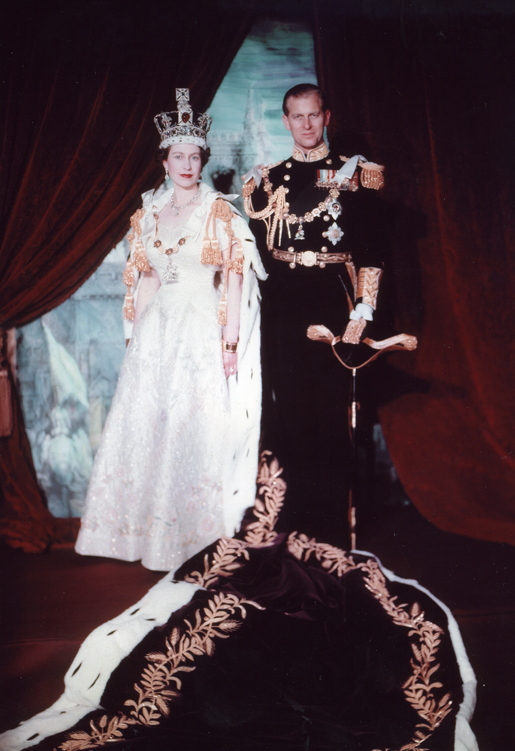
Queen Elizabeth II and Prince Philip, Duke of Edinburgh. Coronation portrait, June 1953, London, England.
Photographed by Cecil Beaton, Public Domain image via Library and Archives Canada reference number DAPDCAP82719.
As surely as the sun rises, the Sisyphean hacks take up their pens. The occasion is the State Opening of Parliament, or some such ceremony, and the audacity of it angers them. A golden throne, polished boots, diamond-encrusted crowns and scarlet cloth. Is it not, they jointly wonder, a bit childish? A bad look? I mean, in 21st century Britain, should we not be more like a grown up country, where all of this procession and pomp and prayer business is left behind? A bit like Germany?
Of course not. Year after year such questions are raised, and year after year, God willing, we shall ignore them. Had you raised this subject with me until this year, I would not be so optimistic. Our country rarely expresses much appreciation for the rich and dignified pageantry that still surrounds so much of our daily life. Yet the unfortunate events of September brought on such an expression of grief, such a wide-eyed fascination and enthusiasm for the ancient rituals of mourning and accession, that I have more faith in Britain knowing and valuing its common heritage. Valued it should be. In an ever more fractious age, what can be more unifying than the binding power of these ceremonies? As we proclaim a new king, we are reminded that the defining feature of “Britishness” is not race or birth, but fealty. Subjects need not have jus soli.
The debunkers denounce such precious things as childish. Even if it were, what shame would it be? The instincts of the child continue to move us with love and wonder. In a letter to the Times last month, a judge described a visit he made to a school where, when he shed the gown and wig, no pupil would believe he was really a judge. In few places is this power of the higher and mystical seen more vividly than in the courtroom. In fact, almost all countries understand this — even grown-up Germany.
When posing as normal people, officials lose their power to move and inspire — whether they wish to inspire trust, or hope, or virtue. States will fail if they are not taken seriously by their subjects. States will not be taken seriously if they do not take themselves seriously. How can we expect any degree of good government, any degree of duty, any degree of seriousness from someone who has so little respect for the service of his country that he thinks its business should be carried out with such casualness that not even a child could be awed into understanding?
For all the virtues of the child, and for all we preserve those adoring childish instincts, it is not we who are childish. That honour goes to the debunker. Perhaps “adolescent” is a better word. These are men who ignore the clear and ready power of the tried and true, the proven, in favour of wordy essays and papers which promise snake oil solutions to the problem of government. What is more a mark of youth than fervour for novel, abstract ideas? What more of a mark of age is love of the proven and experienced? Nothing is more proven, more experienced than the British constitution, with all its pageantry and paraphernalia.
Comments Off on For the King’s coronation, amp up the pageantry and pomp
Debunking the Myths of Leonardo da Vinci
Tasting History with Max Miller
Published 9 Aug 2022
(more…)
Comments Off on Debunking the Myths of Leonardo da Vinci
QotD: Spartan dominance over the Peloponnese
The core of this control lasted until 371, when Spartan defeat at the Battle of Leuktra shattered this control. Epaminondas, the Theban commander, used the opportunity to free the helots of Messenia and reform them into a polis to provide a local counter-weight to Sparta, while Arcadia and Elis split off from Sparta’s alliance to form their own defensive league against Sparta and, to top it off, a number of the perioikic communities – including the Spartans’ elite light infantry scouts, the Skiritae – along with various borderlands also formed the new polis of Megalopolis on the northern Spartan border – it promptly joined the Arcadian league (this polis would later give us the historian Polybius; his anti-Spartan stance comes out clearly in how he treats Cleomenes III). Sparta, surrounded now by hostile poleis who had once been allies, would spend the rest of Antiquity as a political non-entity, save for one brief effort to restore Spartan greatness in the 220s, crushed by the Macedonian Antigonids who were in no mood to entertain Spartan delusions of grandeur.
We might then say that Sparta is successful – though not entirely so (Argos!) – in establishing a hegemony over the Peloponnese, but only maintains it for c. 175 years. That’s not a bad run, but for the record of a larger state dominating its backyard, it is not tremendously impressive either.
Bret Devereaux, “Collections: This. Isn’t. Sparta. Part VII: Spartan Ends”, A Collection of Unmitigated Pedantry, 2019-09-27.
Comments Off on QotD: Spartan dominance over the Peloponnese
January 1, 2023
The days when just graduating high school was a significant life achievement
At Founding Questions, Severian responds to a reader comment about educational achivement before WW2 (when the US economy was almost the last one standing among major industrialized nations, and high school graduates finally passed 50% of the population):

Proposed coat of arms for Founding Questions by “urbando”.
The Latin motto translates to “We are so irrevocably fucked”.
In the “Friday Questions” post yesterday, toastedposts asks:
I’ve been reading some more old random things (bits of philosophy and history in no particular order with no particular program.) I’m again struck by the impression that people from around 1700 to 1920 or so were noticeably smarter than people before or since. It’s something that seems obtrusive when I read the sort of things they write. Compared to the sullen stupidity and fanatacism of the communists and fellow pseudo-intellectual travellers, compared to the childish level of the propaganda with which people were manipulated post 50s and pre modern, it is striking …
I wonder why the idiocracy? Did all these supergeniuses get killed preferentially in world wars and communist enslavement afterwards? Did something about our culture change disastrously, and can it be reversed? What was in their water, and can I have some?
I’ve seen this myself. You go look at any random letter collection from the 18th or 19th century, and even their “How’s it going? The weather is nice here”-type letters are just smarter …
Or maybe not. I hate to sound like one of those “Education Theory” numbnuts here, but it’s hard to separate what you might call “native intelligence” from “rigorous schooling”. Since we’ve all been on the Internet within the last 30 years, we’ve seen that “This was a fifth grade math test in 1905” thing. Here’s an example published in The Guardian, the paper that all the very Smartest people these days read. I’ll just stick with math and history:
Arithmetic
1. Multiply 642035 by 24506
2. Subtract 3.25741 from 3.3; multiply 28.436 by 8.245; divide 0.86655 by 26.5
3. Simplify 183/4 minus 22/3 divided by 11/5 minus 31/2 multiplied by 4/7
English history
1. What kings of England began to reign in the years 871, 1135, 1216, 1377, 1422, 1509, 1625, 1685, 1727, 1830?
2. Give some account of Egbert, William II, Richard III, Robert Blake, Lord Nelson.
3. State what you know of Henry II’s quarrel with Becket, the taking of Calais by Edward III, the attempt to make Lady Jane Grey queen, the trial of the Seven bishops, the Gordon riots.
I’d have trouble with some of those. Isn’t Robert Blake an actor?
That said, those questions aren’t particularly hard. Muti-digit multiplication is more time-consuming than anything else; it’d look like a Christmas tree, spread across the page. The fact that I can’t do them now (without a refresher course) doesn’t mean I couldn’t do them then. I was taught the process; I’m just rusty. Same thing with English history. The Lady Jane Grey thing … ummm, something something Reformation? But if I’d recently taken a course on it, I’d be much more up on it.
But then again, I was able to grok the process in the first place. “Universal” education is very new, and on balance I’d have to say it’s a negative. A high school diploma was a real achievement almost within living memory. This here table says that high school graduation rates didn’t top 50% until 1940, and didn’t clear 60% until 1950. It used to be a trope in the “rags to riches” story that “So-and-So only had a fifth-grade education”, but in that world, 5th grade was plenty. Even now, 5th graders kinda sorta have the Three Rs. (Adding the fourth R, of course — that would be “Rainbow”, or maybe “rump rangering” — but still).
So the entrance exam for “King Edward’s School” — the example in the Graun article — in 1898 would be the equivalent of a very tough college entrance exam today (and note that the referenced school is very pricey and very, very elite, even now).
This is not to say that people back then weren’t smarter. They sure seem to be, and I’ve written many times that the not-elite but certainly very respectable school that awarded me a PhD in the early 21st century wouldn’t have admitted me as an undergrad as late as 1960, if not 1970. I’m just noting some context — in 1898, 5th graders were already something of an intellectual elite, and their day-to-day education reflected that.
Comments Off on The days when just graduating high school was a significant life achievement
Canadians Take Little Stalingrad – WW2 – 227 – December 31, 1943
World War Two
Published 31 Dec 20221943 reaches its end with no end in sight for the war. In Italy, the Canadians take Ortona after bloody close fighting, the US Marines advance on New Britain, and a new Soviet offensive makes huge gains in the USSR. This isn’t enough for the Allies, though, who have a big shake up in their European Command to help prepare for future attacks.
(more…)
Comments Off on Canadians Take Little Stalingrad – WW2 – 227 – December 31, 1943


