
In 1835 Thomas Macaulay had argued in his famous essay Minute on Education that “We must at present do our best to form a class who may be interpreters between us and the millions whom we govern; a class of persons, Indian in blood and colour, but English in taste, in opinions, in morals, and in intellect. To that class we may leave it to refine the vernacular dialects of the country, to enrich those dialects with terms of science borrowed from the Western nomenclature, and to render them by degrees fit vehicles for conveying knowledge to the great mass of the population.”
Macaulay was arguing that British Government should spend money on educating those it found under its rule. So it came to be as Britain ruled over the most heavily-populated and most valued part of its empire for another century.
Jawaharlal Nehru, the Prime Minister who led India to independence from Britain, studied at Trinity College, Cambridge, and at the Inner Temple, and was closely connected to the Fabian Society. Nehru’s rival, Muhammad Ali Jinnah, the founder of Pakistan, studied law at the Lincoln’s Inn, and was strongly influenced by English utilitarianism and French positivism. Nehru was an agnostic who requested a secular burial (this was denied him), while Jinnah was a gin-drinker whose religious attachments were more a matter of identity than belief.
Nehru and Jinnah led India and Pakistan to independence as the brown-skinned Westerners Thomas Macaulay had envisioned a century earlier. South Asian in appearance and pedigree, the leaders of these two nations nevertheless personified a fundamental truth about the Western orientation of the new Asian states. Pakistan was aligned with the United States, while socialist India was nominally non-aligned but clearly tilted toward the Soviet bloc. Though the populace of these nations were mostly illiterate, poor and detached from the cosmopolitan currents of the world, their elites were integrated among the English-speaking peoples. Nehru’s daughter, Indira Gandhi, attended Somerville College, Oxford. His grandson, Rahul Gandhi, whose mother is Italian, studied at Harvard and Trinity College.
Razib Khan, “Why the West lost India’s culture wars”, UnHerd, 2021-04-13.
July 15, 2021
QotD: Macaulay’s prescription for ruling India
July 7, 2021
“Emptied of its resident apparatchiks, Washington would become ‘The Museum State'”
In the latest edition of his newsletter (newsletter@mightyheaton.com), Andrew Heaton considers the pro and con arguments for D.C. statehood:
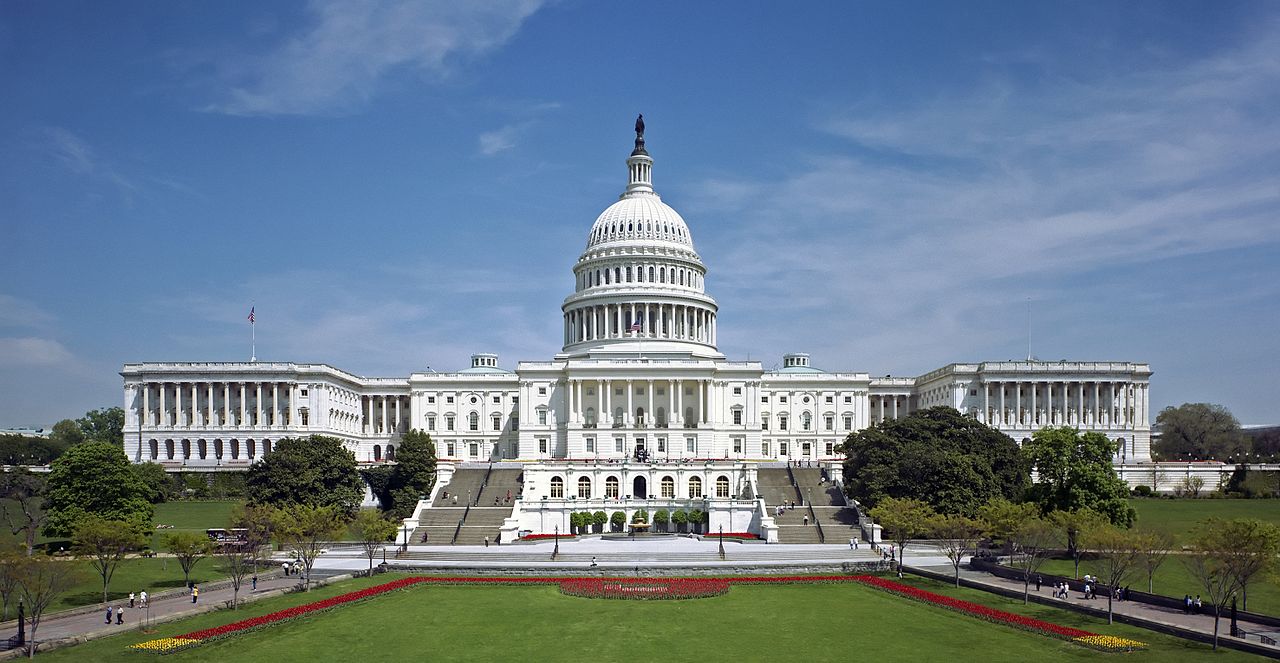
The western front of the United States Capitol. The Neoclassical style building is located in Washington, D.C., on top of Capitol Hill at the east end of the National Mall. The Capitol was designated a National Historic Landmark in 1960.
Photo via Wikimedia Commons.
The rhetorical pros and cons of DC statehood go like this:
PRO: If we truly believe in “no taxation without representation” and representative government, how can we deprive Washingtonians of their own voting representatives? Bla bla bla racism
CON: The power of the federal government is derived from and balanced by that of the states. To make the federal seat a state in its own right is to create an imperial capital, with too much concentrated power. Bla bla bla dead white guy, Dr. Seuss, veterans
I actually happen to agree with both of these positions. Thus I am an advocate of DC statehood, but predicated on the condition that every federal agency is redistributed to other states — possibly even to Canadian provinces. Congress, the White House, and the Supreme Court can all stay — it’s heavy to lug stacks of marble to Cleveland. The Departments of Education, Commerce, High School Reunions, and so on should be redistributed throughout the country so that every state gets access to cushy, air-conditioned federal pensions.
A similar idea has previously been floated by Mitch Daniels (one of America’s six remaining sane Republicans) and more recently by Josh Hawley and Martha Blackburn (who are not). The biggest Democratic counter to the proposal is that the relocation expenses would be astronomical, making agency redistribution impractical.
While I am always pleasantly startled by a Democrat decrying a massive federal spending hike, redistribution of resources, and a national job creation program on the grounds of practicality and balanced budgets, I think the criticism is less valid in a post-Covid remote worker world. If 90% of the federal government operated remotely in 2020, is there any reason we couldn’t just buy some air conditioned warehouses in Iowa to plop the Department of Agriculture into? While the up-front costs would be considerable, the long-term savings would balance out. Buying a townhouse in Georgetown is roughly as expensive as buying a stadium in Idaho. Redistribute the federal agencies, and we can adjust budgets and the salaries of new hires to reflect that.
Emptied of its resident apparatchiks, Washington would become “The Museum State”. All the cavernous federal agencies could be converted into historical exhibits, art galleries — and if we ever ran out of stuff to display — paintball galleries. (Maybe both?) Two new senators, and Elizabeth Holmes Norton can start voting on stuff.
The “Squirrel!” distractions will end when it’s convenient for certain people and groups
Jay Currie considers the constant barrage of distractions that appear to be preventing most people from noticing what is actually going on in Canada:

Kamloops Indian Residential School, 1930.
Photo from Archives Deschâtelets-NDC, Richelieu via Wikimedia Commons.
The remarkable thing about all of these little snippets of news is that they seem to be regarded as business as usual. Being taxed by an inflation rate which is well into the double digits does not cut through the COVID hype. Vandalism and arson purportedly in rage over residential school deaths which we have known about for decades attracts very little comment – though many First Nations people are not very happy that reservation churches which have served their communities for years are being burnt. People seem to shrug off the heat wave deaths and ambulance delays.
I expect very little from government at any level. A reasonably sound currency, a degree of public order and emergency services which can deal with the inevitable surges in demand.
The emergency services issue is probably the most easily fixed. Yes, having more para-medics is part of the solution but planning a reponse to these sorts of surge emergencies which tries to avoid the need for an ambulance in the first place is important too. Most of the dead were old, in many cases, very old. It should not be impossible to identify those older people and have a plan for these sorts of emergencies. Something as simple as a “Helpful Neighbour” program on a voluntary basis would be a good first step.
Restoring public order is more complicated. First, you have to have the political will to actually take on the problem. As we saw a couple of years ago, when it comes to people purporting to act on behalf of First Nations/environmental causes that will is absent. But even if the politicians decided that enough was enough there needs to be an investigation and an understanding of how the “spontaneous” vandalism and arson and blockades are driven. That is going to require rooting around in the activist community which will be, to say the least, difficult. The people who are actually creating the public disorder pay close attention to operational and communications security. Suffice to say this stuff is not being organized on a Facebook page.
Restoring order is also going to require a look at who benefits from disorder. To take an example: was it co-incidence that the sad fact of the Kamloops residential school graveyard came up just as the inquiry into Canada’s Winnipeg Lab’s connection to the Wuhan virology lab was heating up? The fact of there being a graveyard had been know for decades. The ground radar was being used to determine the boundaries so a new fence could be built. Yet, somehow, the number of bodies became headline news. I suspect, but cannot prove, that this was no accident. Public order will be restored when disorder is no longer in anyone’s interest.
July 6, 2021
Conspiracies within conspiracies within conspiracies
In the latest edition of the Libertarian Enterprise, Sean Gabb considers the evolving nature of Wuhan Coronavirus conspiracy theories:

“Covid 19 Masks” by baldeaglebluff is licensed under CC BY-SA 2.0


We have, for the past eighteen months, lived through a fantasy pandemic. If unpleasant, the Virus is not particularly deadly. The number of cases is a product of testing, the number of deaths a statistical fraud. We have had much worse infections in living memory. We never responded to those by locking down whole populations and making hysterical fear an object of state policy. What is happening?
The most likely answer is stupidity. The quality of the people who rule Britain and America has dropped through the floor since about 1990, and it was not that high then. Sadly, though, the rest of the world still believes Britain and America are the pinnacle of civilisation, and so, whatever madness is decided in London and Washington is copied without question almost everywhere else. Take stupidity, add short-term advantage to the usual suspects in politics and business, and we have the Coronavirus Panic.
But arguments from stupidity are boring. They are the equivalent of denying the existence of ghosts and second sight — worthy and true, but unentertaining. Much better is to begin from the assumption that the idiots in charge are not really in charge, but are only front men for the supremely intelligent and supremely effective and supremely wicked Ones-on-High. Do this, and explaining the panic becomes an argument over which conspiracy theory best fits the observed facts.
Until a few weeks ago, my favourite was that the Virus was a bioweapon that had somehow leaked from a Chinese laboratory. It was spotted by the main governments, because they were all working in secret on something similar. This would explain the initial panic. As for the piffling number of deaths, bioweapons are still at the experimental stage, and no one realised until it was too late that modified viruses lose their potency almost at once in the wild. This was my favourite conspiracy theory for over a year. I only went off it when the authorities stopped denouncing it and punishing anyone important who said it was true, and instead announced on television that it might be true. Since the hacks in the mainstream media are just bright enough not to tell the truth even by accident, it was half a minute to give up on a year of enjoyable speculation.
There are other conspiracy theories. Regrettably, most of these border on the respectable. For example, the panic is a cover for clawing back some of the manufacturing outsourced to China since the 1990s. Or it is an excuse for ending the unwise monetary policies of the past decade and inflating away the resulting national debts. These all have an appearance of the probable, and are therefore dull before the first paragraph is read. But, looming over all the others, is the merger of scepticism about vaccines and the Agenda 21 conspiracy.
For those unaware of it, Agenda 21 is boring drivel from the United Nations about not cutting down trees. Behind this, though, is an alleged conspiracy to reduce the human population from seven billion to half a billion. Doing this, apparently, will end all the fanciful scares about global warming, and leave the lucky survivors free to use all the electricity they want without feeling guilty.
The latest version of this theory is that the Virus is a fraud, but justifies injecting people with a vaccine that will make most of them fall down dead, or in some degree sterilise them. There are passionate advocates of the revised theory, all of them begging us to keep away from any of the vaccines on offer. I have so far kept away from the vaccines.
July 5, 2021
QotD: Robert Walpole, the first Prime Minister
Most historians rate Walpole as one of our more successful prime ministers: he stabilised the nation’s finances, saw off Jacobite sedition, and kept the country out of foreign wars, proudly boasting: “There are 50,000 slain in Europe this year and not one Englishman.” But inevitably, there was a downside to Walpole: he was charged by his enemies with corruption.
In fact, considering the spectacular eighteenth-century standards of sleaze, Walpole was — to borrow a phrase coined by Tony Blair — “a pretty straight kind of guy”. True, he spent six months in the Tower of London accused by his political foes of all sorts of malpractice; but he was eventually cleared. True, too, that he built a magnificent mansion, Houghton Hall, in his native Norfolk — but he had legitimately made a fortune in the South Sea Bubble financial crash that ruined so many others (by buying shares when they were low and selling them when they were high). Nevertheless, Walpole was not above sailing close to the wind of propriety, cynically remarking: “Every man has his price.”
Nigel Jones, “Scandal, corruption and collusion: 300 years of British prime ministers”, The Critic, 2021-04-03.
July 4, 2021
QotD: It’s not your money … it’s the GOVERNMENT’S money
The left seems to be going off the same book when they say things like “How will you pay for the tax cuts?” as if the government is OF COURSE entitled to all your money, and if you’re getting some back, that part must be compensated for.
Sarah Hoyt, “The Tragedy of the Squid Farms on Mars”, Libertarian Enterprise, 2018-12-05.
June 30, 2021
Questions the dying media daren’t ask Biden
Kurt Schlichter offers a few questions that an American media with any credibility would already have been asking after Biden’s ramble about F-15 aircraft and nuclear weapons:
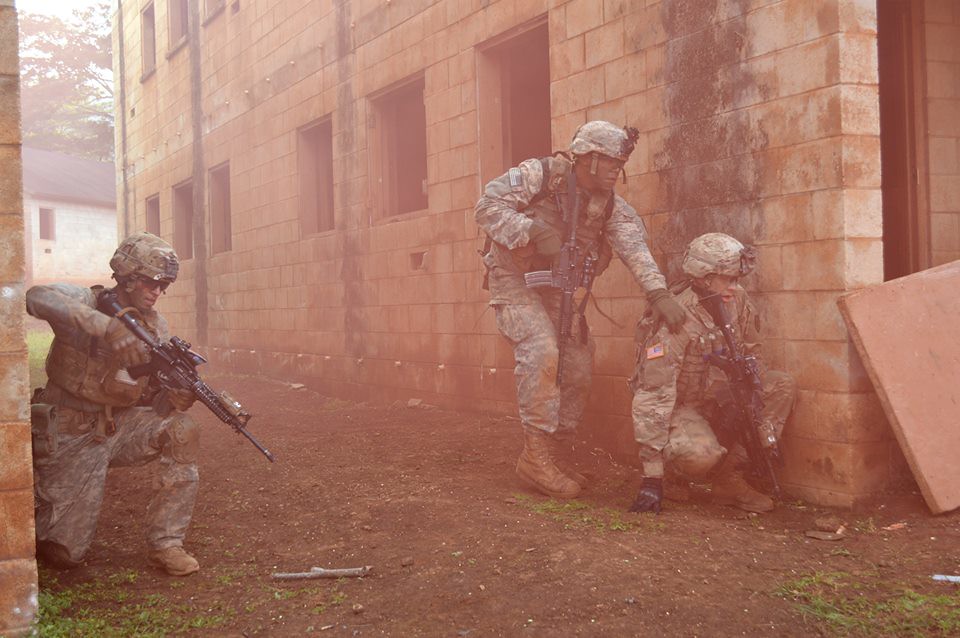
“2-35 Infantry Battalion, 3rd Brigade Combat Team, 25th Infantry Division” by The U.S. Army is licensed under CC BY 2.0
“Are you saying that you would use bombers like F-15s against Americans? Would you ever use nuclear weapons against Americans?”
That seems like an important coule of threshold queries. Say “No” and you look like a fool. Say “Yes” and you’re a fool and a psycho.
“Mr. President, since using force against American citizens is on the table, can you tell us how many BCTs the American military has currently deployable within the United States? Do you know how many troops are in a brigade combat team? Do you understand the logistical needs of a BCT and its vulnerabilities in an insurgency environment?”
A “BCT” is a brigade combat team, 4,000-5,000 troops and the basic ground combat unit. Now, if you are going to pick a fight with 165 million Americans, specifically the half who like America and who own a whole bunch of those accursed AR-15s, you might wanna know how many dudes you have on your side first (I estimate about 80 active and reserve BCTs and equivalents in the whole active and reserve force, including the Marines). One might also want to understand why you would have problems using them here at home.
“How many BCTs do you think you would need to secure an urban area the size of Los Angeles. Didn’t it take three divisions, about 12 brigades, to secure it during the Riots? How long could you logistically support that?”
It did take three divisions (approximately 12 BCTs) to quell the riot in LA in 1992. I was there. Now, that was largely idiots burning and looting. What if the next time it is guys shooting back with evil AR-15s? And America is a zillion times bigger than Los Angeles. How do you hold all that ground? You don’t.
“Have your generals staffed exactly how many American military personnel they could count on to attack American citizens if you ordered it? What percentage do you believe would comply and why?”
Oh, awkward. I was informed – by them, the geniuses in the Pentagon – that “extremists in the ranks” are our gravest threat (except for the weather, of course), so I assume they will have analyzed the number of “extremists” in the ranks who would be averse to killing their own friends and family at the behest of coastal elitists and who would desert or go full Niedermeyer on the guys urging them to wage war on the American people. This would be a good number to have as a planning factor, since when 50% of his troops go *poof* overnight, it would mean a significant reduction in the *’s combat power.
“You mentioned F-15s. How many bombers of all types does the United States have deployable within the continental US? How many are operational? How many sorties could the military fly a day against American citizens? Can you explain how you would employ bombers to hold territory, like a city?”
Bombers are nice. But if they were decisive, you could walk around Kabul without a dozen guys with AKs keeping your Schumer safe. We bombed Afghanistan back into the Stone Age – albeit, it was not much of a trip, but the point remains. You control dirt by having a guy with a rifle standing on it, not plinking at targets from 30,000 feet. And speaking of targeting …
June 28, 2021
Warren’s terminal law of progress
David Warren considers the sudden rash of “revelations” about UFOs we’re getting in the dying media:

Yeah, I know: wrong UFO
This is a demonstration of Warren’s terminal law of progress. As it extends towards “infinity”, all technical progress becomes terminally boring. This also applies to more modest attainments. A civilization that has merely made itself comfortable, and remained so for too long, must find a pretext to demolish itself. Antifa, Black Lives Matter, and the various more advanced “human rights” campaigns, simply expand in a vacuum of irreparable ennui. Their revolutionary demands can only be answered with wilful destruction — until the offending society is erased.
It follows that everything on this planet, made with human hands, however beautifully, must eventually come to a bad end, even though the majority of its inhabitants have good intentions, and are simply trying to get on with their lives, and would if the aggressive would leave them alone.
For instance, the Portland, Oregon police estimate it took only 200 insurrectionists to turn that city into a revolutionary hell-hole.
Perhaps our alien visitors came to discover the secret of our self-destruction. Or they were bored with the place they came from, but decided to leave before they were tempted to destroy it.
June 27, 2021
“Apologies are just a subset of performance art for Trudeau, not actual admissions of failure and expressions of regret”
From The Line‘s weekend wrap-up post, a reminder that the top leadership of the Canadian Armed Forces and the government are still embroiled in scandal:
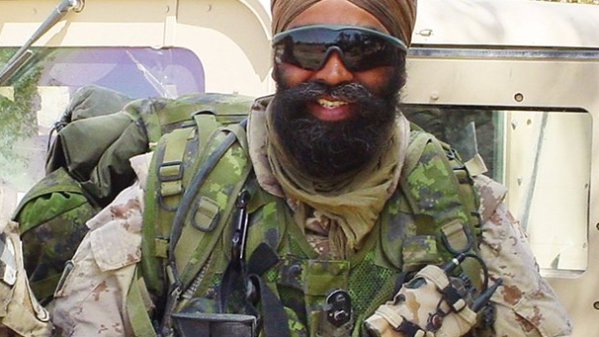
Canadian Defence Minister (at least for the moment) Harjit Sajjan during his pre-ministerial career.
In other news, your Line editors continue to think that not enough of you are tuned in to the sexual misconduct scandal still roiling the Canadian Armed Forces. Yes, yes, we know the military is this weird, complicated thing that no one really pays much attention to in this country. But you really ought to be.
You all know the basic outline already: sexual harassment and assault is a major problem in the armed forces. In 2015, former Supreme Court justice Marie Deschamps completed a major report into the issue, and recommended sweeping changes. A few of the changes were made, but the report was mostly immediately assigned dust-collector status and forgotten. That would be bad enough, but what really gave this life was that the Trudeau government — specifically, National Defence Minister Harjit Sajjan — was given a heads-up that Gen. Jonathan Vance, the country’s top military officer, was himself accused of misconduct. And the PMO found a way to bend the nature of the space-time continuum as they contorted and twisted their way out of having to do anything about it.
It’s a horrific look for a government that considers itself feminist, especially when the guy at the top has some baggage of his own. The Liberals did what Liberals do — said they should have done better and circled the wagons. Accountability is for chumps, after all. This week, Gregory Lick, the ombudsman for the Canadian Armed Forces — a position that exists to give serving members of the armed forces a place to go with complaints within their chains of command — took aim at his own chain of command — Minister Sajjan, saying that his reporting structure has to be changed because Sajjan, frankly, ain’t interested in hearing about problems that the Liberals find awkward.
Here’s Lick:
The collective actions or, in some cases, the inaction of senior political, military and civilian leadership within the government have eroded trust within the defence community … When leaders turn a blind eye to our recommendations and concerns in order to advance political interests and their own self-preservation or career advancement, it is the members of the defence community that suffer the consequences … It is clear that inaction is rewarded far more than action. In the four months since the most recent outbreak of multiple accusations of sexual misconduct, the actions of the minister of National Defence, senior government and military officials have bitterly proved this point. The erratic behaviour of leadership defies common sense or reason. The concept of ministerial accountability has been absent.
Folks, trust us when we tell you that by the standard of Ottawa bureaucratese, that statement is blistering. Lick is directly targeting Sajjan with that last sentence. Translated into normal Canadian English, Lick is accusing Sajjan of inaction in the face of obvious problems.
[…]
What was it that Lick said about ministerial accountability again? About inaction? Oh dear, it’s totally slipped our little ole minds. Probably nothing important!
More seriously: We don’t expect much to come from this. From any of it, or from all of it. Firing Sajjan would require Trudeau to admit he’d fell short, and, well, we all know this guy is way more comfortable apologizing for stuff that happened a century before he was born than he ever is admitting he himself screwed up. Apologies are just a subset of performance art for Trudeau, not actual admissions of failure and expressions of regret. But let’s not mistake what has happened here. A slew of senior military officers have quit or been removed. The PMO has been singed. Sajjan has been directly called out, and his own assistant implicated.
There is no mystery here. Canadians have been told there is rot in the government, and that our men and women in uniform are suffering for it while Trudeau looks the other way. And you’ll have to get used to that, too.
June 24, 2021
QotD: The fantasy world of Canadian geopolitical posturing
Yet for all the reflexive anti-Americanism that has been the meat and mead of Canadian nationalism, Canada’s leadership class has usually been pretty good about understanding who is in charge. Over the course of the 20th century, from the Ogdensburg agreement of 1940 and the post-war establishment of NORAD to the Free Trade Agreement of 1988, we cemented that reality with a defence and economic alliance.
Paradoxically, what this continental defence and economic security arrangement has given us is the opportunity to let our internationalist pretensions run wild. One of the weirdest things about Canada is the extent to which we like to frame our place in the world in a-geographic terms. We imagine that we are as threatened as anyone by the mix of post-Cold War failed states, opportunistic terrorism, regional authoritarianism, and humanitarian disasters. By the same token, we like to presume that we are as well-positioned as any other country to do something about all of this.
As the dean of Canadian defence policy Kim Nossal points out in a recent paper, this a-geographic security fantasy is reflected in the official defence reviews that Canadian governments have released since the 1990s. Or take, for example, the 2017 Liberal policy statement, entitled Strong, Secure, Engaged, which rejects the idea that Canada’s privileged geographic location mitigates these global threats for us. As Nossal concludes, when you look at how Canadian governments actually talk about our security situation, you get little sense that, thanks to the Americans, Canada occupies “one of the safest spaces in contemporary global politics.”
You can see the logical leaps, then.
Once you’ve convinced yourself that Canada’s security is disconnected from the geographical imperative of the American security guarantee, it’s only a few steps to the conclusion that who we choose as our global strategic partner is actually a meaningful choice. And if it is true, as China’s president Xi Jinping has claimed, that the East is on the rise and the West is in decline, then why not throw your lot in with the new big dog on the block?
Andrew Potter, “Hedging our bets with China was a mistake”, The Line, 2021-03-23.
June 23, 2021
Bad legislation rammed through in the small hours of the morning
Michael Geist on how one of the worst pieces of legislation to get extruded from the bowels of the Liberal minority government got pinched off by main force and now sits, steaming, on the docket for the Senate to … well, “rubber stamp” isn’t quite the right phrase but it’s pretty rare for our unelected senators to do anything to benefit ordinary Canadians, so we’re depending on them somehow managing to display an almost supernatural effort to slow down this shitty bill until the end of the session:
Canadian Heritage Minister Steven Guilbeault, 3 February 2020.
Screencapture from CPAC video.
The Liberal government strategy of multiple gag orders and a “super motion” to limit debate bore fruit last night as Bill C-10 received House of Commons approval at 1:30 am. The Parliamentary process took hours as the government passed multiple motions to cut short debate, re-inserted amendments that had been previously ruled null and void, and rejected a last-ditch attempt to restore the Section 4.1 safeguards for user generated content. The debate included obvious errors from Liberal MPs who were presumably chosen to defend the bill. For example, Julie Dabrusin, the Parliamentary Secretary to the Minister of Canadian Heritage, said that Section 2.1 in Bill C-10 “specifically excludes content uploaded by users.” Only it doesn’t as Dabrusin should know given that 2.1 covers users not content and she was the MP who introduced the amendment at committee to remove Section 4.1, which was the provision that excluded content uploaded by users.
Given the public support from the Bloc for cutting short debate, the outcome last night was never really in doubt. Perhaps the most interesting vote of the night came with a motion from Conservative MP Alain Rayes, which once again called for the re-insertion of Section 4.1. While the motion was defeated with the support of Liberal, NDP, and Bloc MPs, there were several notable exceptions. Liberal MPs Nate-Erskine Smith and Wayne Long both abstained and former Justice Minister (and now independent MP) Jody Wilson-Raybould voted in favour of the motion. The report stage was limited to one hour of debate, which meant that the 23 amendments were again subject to no real debate or discussion. Once the bill passed the report stage, it was on to third and final reading, which was limited to 15 minutes of debate per party. The vote followed just before 1:30 am with the Liberals, NDP, and Bloc once again supporting Bill C-10. Wilson-Raybould joined with the Conservatives in voting against it.
A rational government would comprehend that their pitch that the real purpose of the bill is to “make the web giants pay” is completely undermined by the obvious and deliberate attempt to introduce government censorship of what ordinary Canadians watch on the internet and share through social media. It’s all about the control, not about any imaginary financial windfall from shaking down tech companies for spare change. Why the rush to get it rammed through parliament right now, with so many other rather more pressing concerns at hand?
June 18, 2021
Feeding “the masses”
Sarah Hoyt looked at the perennial question “Dude, where’s my (flying) car?” and the even more relevant to most women “Where’s my automated house?”:

The cry of my generation, for years now, has been: “Dude, where’s my flying car?”
My friend Jeff Greason is fond of explaining that as an engineering problem, a flying car is no issue at all. It is as a legal problem that flying cars get interesting, because of course the FAA won’t let such a thing exist without clutching it madly and distorting it with its hands made of bureaucracy and crazy. (Okay, he doesn’t put it that way, but I do.)
[…]
But in all this, I have to say: Dude, where’s my automated house?
It was fifteen years ago or so, while out at lunch with an older writer friend, that she said “We always thought that when it came to this time, there would be communal lunch rooms and cafeterias that would do all the cooking so women would be free to work.”
I didn’t say anything. I knew our politics weren’t congruent, but really the only societies that managed that “Cafeterias, where everyone eats” were the most totalitarian ones, and that food was nothing you wanted to eat. If there was food. Because the only way to feed everyone industrial style is to take away their right to choose how to feed themselves and what to eat. And that, over an entire nation, would be a nightmare. Consider the eighties, when the funny critters decided that we should all live on a Russian Peasant diet of carbs, carbs and more carbs. Potatoes were healthy and good for you, and you should live on them.
It will surprise you to know – not — that just as with the mask idiocy, no study of any kind supports feeding the population on mostly vegetables, much less starches. What those whole “recommendations” were based on was “diet for a small planet” and the bureaucrats invincible ignorance, stupidity and assumption of their own intelligence and superiority. I.e. most of what they knew — that population was exploding, that people would soon be starving, that growing vegetables is less taxing on the environment and produces more calories than growing animals to eat — just wasn’t so. But they “knew” and by gum were going to force everyone to follow “the plan”. (BTW one of the ways you know that Q-Anon is in fact a black ops operation from the other side; no one on the right in this country trusts a plan, much less one that can’t be shared or discussed.) Then the complete idiots were shocked, surprised, nay, astonished when their proposed diet led to an “epidemic of obesity” and diabetes. Even though anyone who suffered through the peasant diet in communist countries, could have told the that’s where it would lead, and to both obesity and Mal-nutrition at once.
So, yeah, communal cafeterias are not a solution to anything.
My concern about the “automated house of the future” is nicely prefigured by the “wonders” of Big Tech surveillance devices we’ve voluntarily imported into our homes for the convenience, while awarding untold volumes of free data for the tech firms to market. Plus, the mindset that “you must be online at all times” that many/most of these devices require means you’re out of luck if your internet connection is a bit wobbly (looking at you, Rogers).
QotD: Canadians and the nanny state
Mark Steyn, “We need professional help”, Western Standard, 2005-04-04.
June 13, 2021
Fundamentally unserious nation – “… for Canada’s leaders, all the world’s a ‘gram”
In the Friday wrap-up edition of The Line, a consideration of how shallow, insincere posturing, and performing became the hallmarks of Canadian government leadership:

Typical image search results for “Justin Trudeau socks”
Look, we at The Line are as tired as you are about the more, shall we say, theatrical aspects of Justin Trudeau’s approach to being prime minister. Whether it was his Day One “because it’s 2015!” smirk, his obsession with showing off his socks to foreign dignitaries, his fashion sense while vacationing in India, and countless other Trudeauvian trips of the light fantastic, the man has always seemed more interested in performance than in the substance of governing.
But that’s not quite right. Because if there is one thing we’ve come to realize over the past five years and a bit, it is that for the Trudeau Liberals, the performance is the governing. For example, we used to wonder at the amount of time and energy that Cabinet ministers spent working on their Instagram accounts, since it went far beyond what would seem to be necessary for promoting and communicating policy. But once we understood that it was the job of policy to promote the Instagram account, and not the other way around, all of this proudly vacuous behaviour started to make a lot more sense.
But while we’ve gotten more or less used to it here in Canada (or maybe the right word is “numb”), we’ve always wondered how it looks through foreign eyes. Those abstract wonderings became a little more concrete over the past few weeks. Countries are opening up, people are starting to travel, politicians are going back to their old habits of holding regular meetings to make sure the world is still ticking along. And for Canada’s leaders, all the world’s a ‘gram.
So it was that at the G7 summit in Cornwall England this week, Prime-Minister-In-All-But-Name Chrystia Freeland was the only finance minster to wear a mask in a group photo taken outdoors. Ok, we thought, maybe she’s not fully vaxxed, maybe she has reason to be extra cautious. Except in a string of photos taken just before the official photo, Freeland was captured scrambling to put on her mask, not for safety, but for show.
Freeland was just getting the crowd warmed up for her nominal boss, Justin Trudeau. At his official G7 welcome on Friday, Trudeau was the only leader to put a mask on to give Boris Johnson the chummy elbow, only to remove it a few seconds later. We get it. It’s a version of the old “what lie did I tell?” problem, but for acting. Which audience am I playing to at this exact moment? It’s hard for even an old luvvie like Trudeau to keep track.
Once he’s back in Canada, Trudeau is going to hole up in a hotel for a few days, which the Globe‘s Cam Clark aptly referred to as “symbolic penance for a symbolic policy.” We agree with Clark that there’s some good fun in seeing someone get tied up in their own moral posturing. But while Clark is unhappy at the prospect of the prime minister cooling his heels for three days, we’re less fussed about Trudeau’s prospective stay in Hotel Q. Because while Clark thinks “there are real things” for the prime minister to be doing, we doubt that very much.
June 11, 2021
The concept of philanthropy is another one with conflicting meanings to the left and to the right
In the Daily Chrenk, Arthur Chrenkoff has a bit of fun outlining the recent kerfuffle over Alexandria Ocasio Cortez’s attempt to use her grandmother’s situation in Puerto Rico for scoring political points, and then explains why the notion of philanthropy is a very different thing to progressives than it is to conservatives:
“Charity in the dictionary” by HowardLake is licensed under CC BY-SA 2.0
Well may we laugh about (and be disgusted by) the hypocrisy, corruption and indifference shown by prominent members of the left towards the very people they supposedly care about. But it would be to miss the broader point relating to how the left views the world, the role of politics, and the place of the individual.
It might surprise many that the caring and compassionate left isn’t actually all that big on philanthropy and charity, i.e. people helping other people. What could be wrong with that? Wouldn’t the world be a better place if even more people helped even more other people? Well, no, the left would say, because it’s not something that people should be doing in the first place; it’s not their responsibility. It is up to the state to solve all the social and economic problems; our role as citizens (as well as, thanks to the open borders advocates, non-citizens) is to be the grateful recipients of the government’s largesse. For the more elite group (no pun intended) – “the rich” – their role is to pay for all this with their taxes. Private initiative is by its very nature limited and patchy; only the all-seeing and all-powerful state can ensure that everyone who needs “free” assistance (and that’s literally everyone) gets it in a comprehensive, uniform and fair way. Hence, AOC won’t lift a finger to help her grandmother because it’s the state’s duty to help everyone rebuild their lives after a natural disaster. Occasional Cortex already contributes with her taxes on the hard-earned Congressional salary, and in any case, she’s not some billionaire, you know.
With that attitude, needless to say, you won’t be surprised to learn that much of what goes for the left-wing philanthropy does not actually go to help those in need to solve their problems and provide them what they are lacking. Instead, it is largely channels to finance political agitation by the activist-industrial complex to make the government (whether through lobbying, campaigning or helping elect sympathetic law-makers) take responsibility instead. That’s what people like Soros, Laurene Powell-Jobs (Steve Jobs’ widow) and MacKenzie Scott (Jeff Bezos’ ex) are all about – billions spent to create more activist jobs to agitate for the state to create more public sector jobs to run the “Big Daddy”.
But it goes deeper than that, back to Marx himself in fact and to his analysis of what’s wrong with the world and how to fix it. According to Marxism, both in its original class-based iteration and the more recent race/gender/sexuality variants, every society is divided into two mutually antagonistic groups: the powerful oppressors and the powerless oppressed, with the society structured in the interest of the former by facilitating in every possible way the exploitation and keeping down of the latter. Thus, all the problems, ills and injustices are “systemic” in nature; they are a feature, not a bug. To solve them and so to help the downtrodden you need to overthrow the entire old unjust system and build a new one that benefits the masses. Based on this sort of understanding of the world – to which, coincidentally, people like AOC and BLM founders all subscribe – any private charity is bound to be ineffectual and shortcoming. After all, what can a person, however generous with their money and time – even if there are multitudes of them – do to solve problems that are the direct (and intended) consequence of the way the society has been set up? Nothing, of course. You can’t mend it, you have to end it. But not only is it naïve and pointless to try, it’s actually counter-productive and therefore positively wrong. Because while no philanthropic effort can solve systemic problems, it can actually provide some limited and temporary relief. Such relief, however, by its very nature is a band-aid solution, i.e. not a solution at all. All it does it momentarily numbs the pain, and that is bad, because the oppressed masses need to feel the pain and feel it good in order to spur them into revolutionary action to overthrow their oppressors and on the ruins of the old build the utopian new society of equality and justice. This is the far-left’s accelerationism: the worse it gets, the better it gets (for the prospects of radical change).


