World War Two
Published 3 Dec 2020Contrary to popular belief, Imperial Japan was not an absolute monarchy marching (or sailing) to war with singular vision and purpose. Rather, it was a dysfunctional government of competing factions, players and interests.
Join us on Patreon: https://www.patreon.com/TimeGhostHistory
Or join The TimeGhost Army directly at: https://timeghost.tvFollow WW2 day by day on Instagram @ww2_day_by_day – https://www.instagram.com/ww2_day_by_day
Between 2 Wars: https://www.youtube.com/playlist?list…
Source list: http://bit.ly/WW2sourcesWritten and Hosted by: Indy Neidell
Director: Astrid Deinhard
Producers: Astrid Deinhard and Spartacus Olsson
Executive Producers: Astrid Deinhard, Indy Neidell, Spartacus Olsson, Bodo Rittenauer
Creative Producer: Maria Kyhle
Post-Production Director: Wieke Kapteijns
Research by: Indy Neidell
Edited by: Michał Zbojna
Sound design: Marek Kamiński
Map animations: Eastory (https://www.youtube.com/c/eastory)Colorizations by:
Julius Jääskeläinen – https://www.facebook.com/JJcolorization/
Jaris Almazani (Artistic Man) – https://instagram.com/artistic.man?ig…Sources:
From the Noun Project: company soldiers by Andrei Yushchenko, Government by Nithinan Tatah, Shiro by Simon Child, War by Nhor, House by Eucalyp from the Noun ProjectSoundtracks from the Epidemic Sound:
“ES_Paths of a Samurai” – Mandala Dreams
“ES_Sights of the Tokyo Tower” – Sight of Wonders
“ES_The Bloom of Cherry Blossoms” – Sight of Wonders
“ES_Immovable As The Mountain” – Yi Nantiro
“ES_Pacific Shores” – Mandala DreamsArchive by Screenocean/Reuters https://www.screenocean.com.
A TimeGhost chronological documentary produced by OnLion Entertainment GmbH.
December 4, 2020
A Japanese Bureaucratic Mess – WW2 Special
Canada used to have a “none of the above” option in federal elections … let’s bring it back
David Warren describes how the “returned ballot” functioned as a “none of the above” vote in Canadian federal elections:

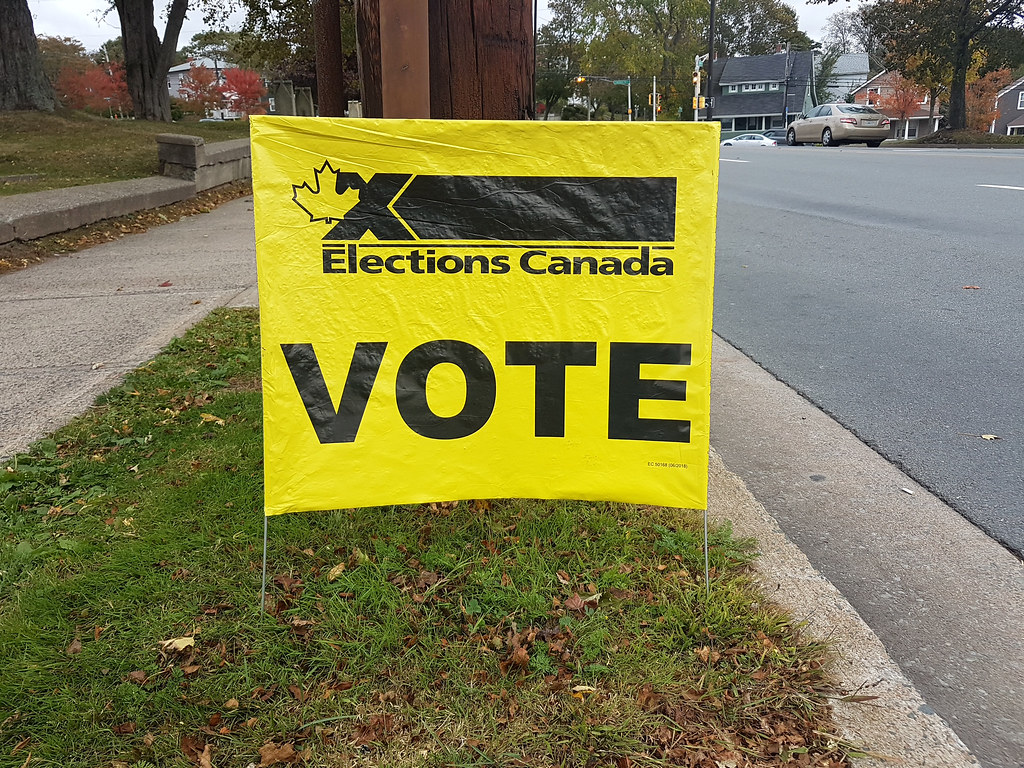
“2019 Canadian federal election – VOTE” by Indrid__Cold is licensed under CC BY-SA 2.0
Back to the polling station, where the electoral officer is now passing me a ballot, with a hint on how to make an X on it. I am directed to a voting stall.
But I refuse to go there. Instead, I turn earnestly to the officer and say: “I am returning this ballot.”
Chances were, even decades ago, he would be thrown into confusion. So one would explain his job to him. He was supposed to have a book, entitled “Returned Ballots.” Into this he was supposed to transcribe one’s name and address. Getting into the book was one’s only way to avoid the secret ballot. But it was important to get in, to be recorded correctly, rather than as a “spoilt ballot,” as one is counted now if one’s ballot has no X.
After voting, I would check the result, and if not even one returned ballot had been recorded, I could doubt it was legitimate.
Now comes the good part. For returned ballots were supposed to be a separate category in the election tally. It was competing with all the other candidates. If it won a plurality — more returned ballots than the leading candidate — the election was to be formally thrown out, and a by-election called, in which none of the candidates for the thrown out one were allowed to run again. Too, voters could “theoretically” do this over and over, until at least one Party chose a candidate we could stomach.In theory, this was an excellent way for voters to “drain the swamp,” directly, by eliminating the political sleaze in successive groups. In practice — aheu — it was never used. The political sleaze nevertheless spotted the possibility, and had it taken off the books, at both Dominion and Provincial levels. What can I say? They are sleaze.
So the first thing we must do is campaign for the return of the returned ballot, up here; and for its institution in all the other Western nations. Then the second is to impartially, but massively, campaign for its use. It could be the greatest thing since the ancient Athenian ostracon.
December 3, 2020
QotD: Presidential droit du seigneur
For a party that toots its own horn about how it’s all-in for the ladies, the Democrat Party sure has a weird way of showing it. The fact is that when the check comes for its dangerous and degenerate policies, every single time the Dem dudes dine and dash and stick the chicks with the bill.
Let’s look at some of the Dem dudes who do it, starting with the aptly named Bill Clinton. Mr. Felonia Milhous von Pantsuit was all too happy to use women as his personal playthings with varying degrees of consent, ranging from none to “I always wanted to do it in the Oval Office!” And the feminists, the media and the rest of the Democrat Party adjuncts gave him a pass. Some were willing to give him even more. The message was simple: if you are called upon to be a Clinton sex toy, kneel down then shut up for the cause.
This is a Democrat tradition. JFK, when he wasn’t tapping the help he was pimping them out to his buddies in the White House pool. His dalliance with Marilyn Monroe was one thing – she was a consenting adult who could have told him to pound sand (or something else). It’s his serial preying upon the interns and secretaries and other assorted Dem doxies in his orbit that really demonstrates the essential contempt for women that drove his satyriasis – and that (which along with its traditional racism) still drives the Democrat Party.
Oh, and speaking of driving, no discussion of the chronic Democrat abuse of women would be complete without observing that the Lion of the Senate left his booty call du jour to drown in an Oldsmobile at the bottom of a pond. And the same message we hear over and over again to protect Democrat exploiters protected Teddy Kennedy – hey Mary Jo, take one for the team.
She didn’t have much choice about taking one for the team since, in those last agonizing minutes, she couldn’t take a breath.
But hey, Teddy saved abortion, and his ceaseless campaign for a perpetual open season on troublesome fetuses makes it all worthwhile. Abortion is another of those Democrat policies that women get to pay for. The idea that it is somehow empowering or liberating for women is so much garbage. It’s empowering and liberating for men who don’t want to reap the result of their sowing.
Kurt Schlichter, “Women Always Have To Pick Up The Check For Democrats”, Townhall.com, 2020-08-30.
November 28, 2020
Showdown at the O.K. BBQ joint
Toronto police reacted with overwhelming force to a rebellion centred on a small business in Etobicoke, intending to overawe any more potential lockdown opponents on Thursday. Jay Currie is of the “worse before better” school on this particular flare-up of public sentiment:
Well over 100 Toronto police officers and at least ten horses shut down Adamson’s BBQ today. They arrested the proprietor for “trespass” on his own property.
His sin was, of course, opening when Toronto is under “lockdown”. And then opening again and then, today, getting around the changed locks on his premises and opening again.
Now there will be plenty of people who will say, “Well, it’s the law and necessary if we are going to ‘stop the spread'”. But I suspect there will be a strong minority who will say, “Lockdowns don’t work and Costco is in full operation a block away.” Have at it, my interest is in the show of force.
For the City of Toronto and the Province of Ontario, Adamson’s was a point of rebellion which had to be crushed. At any cost. If Adamson’s was able to open the entire pandemic lockdown regime would collapse. So out came 100+ cops and the horses. (I was surprised there was not a tactical vehicle or two.)
Given that there were all of about a hundred people at the BBQ spot today this was more than sufficient force to ensure Adamson’s would not be able to open. No doubt Mayor Tory and Premier Ford are pretty sure the job is done. Adam Skelly, the owner, is cooling his heels in custody pending a bail hearing. (If that hearing goes as I expect, there will be compliance conditions attached to his bail, namely no re-opening.)
Big government relies upon the general complacency of its citizens. A couple of hundred people showing up to a BBQ joint can be handled with a large police presence. A couple of thousand? Much more difficult. 20,000, not a chance.
I keep saying to my very worried wife, “Worse before better.” Which means that before there is any chance that reason, moderation and good government is restored, things have to get a lot worse. On the left, groups like BLM and Antifa work very hard to create martyrs for their narrative. So far with limited success. Adam Skelly may have set in motion the process which will make him a living martyr for common sense and a degree of justice.
As of Friday morning the GoFundMe campaign for Skelly had reached $130,000 (I’m expecting it to be shut down for “reasons” any time soon … but it was still online and accepting donations when I checked at 10am).
November 27, 2020
Is clean water too much to ask for in a first world nation?
Ted Campbell explains how he would resolve the TWENTY-FIVE YEAR OLD PROBLEM in the Neskantaga First Nation in northern Ontario, which is one of the many First Nation public health issues the federal government has been promising to address for years:
A few weeks ago I was horrified to read about the 25 year long water problems that continue to plague the Neskantaga First Nation in North-Western Ontario ~ yes you read that right: it’s been 25 years since these Canadians have had clean, potable water! I begged the government to Do Something! and I offered one concrete idea based upon by near certain knowledge of what the Canadian Armed Forces can and have done for people overseas. One of my readers, a retired colonel in our Military Engineering branch confirmed that what I suggested was doable.
Now I read, in a report by Campbell Clark in the Globe and Mail, that the main problems are a combination of political over-promising and bureaucratic ineptitude. I am going to blame Justin Trudeau for pretty much all of the political over-promising: he made it a centrepiece of his 2015 election campaign and then totally failed to follow through. He has to wear at least a large part of the bureaucratic ineptitude, too, because he’s been prime minister of Canada for over five years. He’s failed, again.
OK, I can hear you saying: if you’re so smart how would you fix things?For a start I would stick with the outlines of my earlier proposal: I would ask the Army to help, right now, using existing technology. We would declare this a disaster ~ and if Canadians going without clean water for 25 years doesn’t qualify as a disaster then I don’t know what does ~ and send the Canadian Armed Forces’ Disaster Assistance Response Team (the DART) to the Neskantaga First Nation and tell them to fix whatever needs fixing ~ using the Indigenous Services department’s budget. When they finished there we would buy them a new water purification system and send them the next First Nation that has a water disaster on its hands. People overseas will have to wait or we’ll have to build a second DART.
Next I would ask the Army and the Canadian manufacturers of water purification systems to work together with First Nations corporations, like Matawa First Nations Management, to develop (at the Indigenous Services department’s expense) concrete, workable plans to install, operate and maintain, over their complete life-cycle, water purification and waste disposal systems and the electrical power and the power and water distribution systems necessary to support them.
After this long, it may not be that the government can’t deliver these services, it might be that the government has deliberately chosen not to deliver.
November 26, 2020
“… the Liberals’ oft-stated commitment to listen to the experts and the frontline workers fizzles when said experts and workers disagree with a preferred policy”
In The Line, Matt Gurney explains why the Liberals are so in love with a set of proposed rule changes that will do almost nothing to reduce gun crime in Canada and might even end up creating criminals of previously law-abiding Canadians … but it polls well in Liberal ridings:

Restricted and prohibited weapons seized by Toronto police in a 2012 operation. None of the people from whom these weapons were taken was legally allowed to possess them.
Screen capture from a CTV News report.
Talking about gun policy in Canada is tricky, because the debate is highly technical. The regulation of firearms in this country, at least in theory, depends on the specifications of the firearm in question. Mode-of-operation, magazine capacity, ammunition calibre or barrel-bore width, barrel length, muzzle energy — these are all the criteria upon which a firearm is classified into one of three categories under Canadian law: prohibited, restricted or non-restricted. Any Canadian who wishes to own or borrow a firearm, or purchase ammunition, must be licenced, a process which includes mandatory safety training and daily automatic background checks.
Prohibited firearms are essentially banned in Canada; a relatively small number are held by private citizens who already possessed them when the current regulatory regime was brought in in the 1990s. The government of the day didn’t want to get into the thorny issue of confiscation, so it let existing owners keep them under strict conditions. The vast majority of guns in Canada, and all new guns sold for decades, therefore fall into the other two categories. Restricted guns are generally pistols and revolvers, but also some rifles and shotguns. Non-restricted guns are run-of-the-mill hunting rifles and shotguns, though some sports-shooting rifles (used for target practice) are also included.
The above is all somewhat theoretical, as the regulations are twisted and pulled in a variety of ways to suit political ends, leaving a system that’s tortured and confusing even for those of us who study it. But it gives you at least an idea of how the system is designed. If you know guns, of course, you knew all this already. If you don’t, I wouldn’t blame you if your eyes glazed over a bit while reading the above. Without a basic working familiarity with all the terminology and technical specs and regulations, it’s damn hard to follow the debates over gun control. This is why I have to ask you non-aficionados to take my word for it: the Liberal proposal is really bad.
Well, actually, you don’t have to take just my word for it. You can read the NPF’s position paper, which makes at least some of the case. It notes, correctly, that “military style assault weapons” aren’t actually a thing that’s defined under Canadian law; it can therefore mean whatever the government of the day wants it to mean. True military style battle weapons — fully automatic weapons with high-capacity magazines and full-sized ammunition — are already effectively banned in Canada and have been for decades. Further, the NPF notes, firearms are used in a minority of homicides in Canada, a majority of those homicides are committed with handguns, and a majority of those killings are directly linked to organized crime or gang activity.
You’re probably starting to see the problem: Going after the guns that aren’t being used in the crimes, and taking them from the people who aren’t committing them, isn’t a public-safety policy. It’s a political gift to the Liberals’ urban base, where the proposal is popular and gun literacy low (those two latter points are not unrelated).
While the ban is almost entirely a political sop, it’s probably a good political sop, alas. I’m sure the proposal will be very well received in ridings the Liberals would like to hold or flip. But it’s still a stupid policy, even if it’s popular. The Liberals are proposing to spend tons of money on this. They estimate hundreds of millions, but recall that the long-gun registry came in about 1,500 times overbudget. And all to “ban” some of the rifles used by a segment of the population — licenced and screened gun owners — that’s been found to be the several times less likely to commit murder than those without licences.
Deport All Anarchists! – The Palmer Raids | BETWEEN 2 WARS: ZEITGEIST! | E.05 – Harvest 1919
TimeGhost History
Published 25 Nov 2020The First World War has been over for a year, and the modern era plows ahead. But so does fear and paranoia. In America, the Red Scare goes into overdrive.
Join us on Patreon: https://www.patreon.com/TimeGhostHistory
Hosted by: Indy Neidell
Written by: Indy Neidell and Francis van Berkel
Director: Astrid Deinhard
Producers: Astrid Deinhard and Spartacus Olsson
Executive Producers: Astrid Deinhard, Indy Neidell, Spartacus Olsson, Bodo Rittenauer
Creative Producer: Maria Kyhle
Post-Production Director: Wieke Kapteijns
Research by: Indy Neidell and Francis van Berkel
Image Research by: Daniel Weiss and Spartacus Olsson
Edited by: Daniel Weiss
Sound design: Marek KamińskiColorizations:
Daniel Weiss – https://www.facebook.com/TheYankeeCol…Sources:
Some images from the Library of CongressSome Soundtracks from Epidemic Sound, ODJB, Edward Elgar, Richard Strauss and Pietro Mascagni:
– “One More for the Road” – Golden Age Radio
– “Dawn Of Civilization” – Jo Wandrini
– “Deviation In Time” – Johannes Bornlof
– “Easy Target” – Rannar Sillard
– “Dark Beginning” – Johan Hynynen
– “Steps in Time” – Golden Age Radio
– “Tiger Rag” – ODJB
– “Cello Concerto” – Edward Elgar
– “Pomp and Circumstance” – Edward Elgar
– “Die Frau ohne Schatten: Act III” – Richard Strauss
– “Cavalleria Rusticana” – Pietro Mascagni
– “What Now” – Golden Age RadioArchive by Screenocean/Reuters https://www.screenocean.com.
A TimeGhost chronological documentary produced by OnLion Entertainment GmbH.
Fixing the US federal election mechanism to prevent errors or fraud from distorting the results
Down south, our American neighbours held a federal election at the beginning of November. Ignoring the Associated Press trying to annoint the winner, we still don’t legally know who won and the tallies in several states are still being challenged. This is an embarassing situation for the “leaders of the free world” and common sense changes to the way the vote is conducted seem to be the best way to ensure that the results are known quickly and that the results will fairly represent the way the voters chose to exercise their franchise. At Steyn Online, Tal Bachman has a fairly concrete set of suggestions that would be a significant improvement over the system in place today:

“Polling Place Vote Here” by Scott Beale is licensed under CC BY-NC-ND 2.0
First, it’s run by a single-purpose, rigorously impartial, devoutly transparent federal entity overseeing federal elections (about which more below).
Yes, I know we’re all sick of the federal Leviathan. I know it already has far too much power. It’s just that in this case, we don’t have much choice, do we? We’re going on well over a century of chronic Democrat Party presidential vote-rigging; and it appears they just ran one of their classic tricks again just a few weeks ago. At some point, pro-America voters have to stop making excuses for why they shouldn’t try solutions to these nation-destroying problems, and just try them.
Yes, I know this would require a constitutional amendment. But let’s assume for now we could get one of those passed.
Second: The new federal entity — let’s call it Elections USA — would then divide the nation into voting districts of equal size for purposes of federal election (that could occur within pre-existing congressional districts). Elections USA would then further subdivide the voting districts into smaller units. Working with the postal service, Elections USA would then draw up a list of voters in each unit, and designate a voting station for residents of that particular unit.
Third: In preparation for election day, Elections USA would send out flyers informing households of where to vote. The information would also be made available on the Elections USA website.
Fourth: On election day, voters travel to their designated voting stations: an elementary or high school, a union hall, a community center, whatever.
Each voting station is watched over by police or other security guards.
As voters approach, they join a quick-moving line. At the front, they present two pieces of government issued ID, at least one with a photo. A volunteer finds the voter on her list of voters for that unit. (If they’ve come to the wrong polling station, they are redirected to the right polling station).
The voter then approaches the voting station in a large, open room, where another volunteer hands him a paper ballot. Picking up the provided pencil, he marks the ballot behind a screen, folds the ballot, and drops into the voting box in full view of the poll clerk and attendant witnesses sitting a few feet away—typically, a few volunteers from political parties who act as “scrutineers”, or official observers and verifiers. The voter then leaves. The entire process never takes more than fifteen minutes.
Once polls close, no one is allowed to enter or leave the premises until the vote count is completed.
The poll clerk — still in full view of the scrutineers — dumps the ballots on to a table and sorts them into piles according to the candidate/party voted for. She then counts the votes for each, showing them to the scrutineers as she goes. Once the votes are counted, a supervisor is called over to the table. After verifying that the scrutineers are satisfied with the counting, and resolving any lingering concerns, the supervisor signs off on the count, and the ballots are immediately placed in a special, sealed envelope. The sealed envelope is then stamped, and cannot be opened without subsequent detection.
The ballot count numbers are then phoned into Elections USA, right then and there, again in view of the scrutineers, who verify that the numbers called in match the numbers they witnessed during the count.
Once all the numbers are called in to Elections USA — a process which never takes more than two hours — the supervisor then physically transports the sealed envelopes (each marked with information like Voting Desk #4 at Poll Station #15) to the Elections USA depot, where she hands them over.
“2019 Canadian federal election – VOTE” by Indrid__Cold is licensed under CC BY-SA 2.0
The sealed envelopes are then transported to Elections USA employees, who will then verify, and eventually formally certify, that all the numbers called in from each desk of each polling station of each voting district in the country matches the number of actual ballots. In the unlikely event any question arises about accuracy, the ballots can be accessed and counted again.
In a simple process like this, the media will have accurate election results within two hours of the polls closing, and there is virtually no opportunity for fraud. I can attest to that, because I myself have witnessed this exact process in real life quite a few times, and am friendly with several people who volunteer as election workers on election days. What I described is how elections are conducted in Canada, but not only in Canada: an identical or similar process is used in most other English-speaking countries. A few simple security protocols — not least of which is, no computerized voting machines — and your election is as fraud-proof as this mortal realm would ever allow.
When you compare this typical voting procedure to the morass of conflicting voting regulations representing fifty states, many of which — incredibly — do not even require that the voter present identification before voting, and which are being manipulated by the very state party hacks tasked with preventing fraud, you begin to see just how desperately America needs electoral reform. Credible stories of poll watchers being denied access, for example, in any normal country, would be regarded as completely unacceptable, to the point where the votes in that area would be likely thrown out as a matter of course. And yet, that type of chicanery is now so common in the United States, most people take for granted it goes on. That’s how far the window of acceptable behavior has moved.
November 24, 2020
QotD: Canada’s economic Stockholm Syndrome
Trade agreements are always about “concessions” in which foreign suppliers are grudgingly given — or, more often, indignantly denied — the right to sell Canadians goods and services at prices lower than what we pay now. Let’s be clear here: lowering the price of consumer goods and services has the exact same effect on household welfare as an increase in incomes. But I defy you to name an elected politician who will list “the ability to buy cheaper stuff” as the most compelling reason to support free trade: more than 200 years since Adam Smith wrote that paragraph, our trade agenda is still written by and for producer interests.
We’re stuck with a system in which producer interests — most notoriously the dairy cartel that operates under the name of “supply management” — hold the rest of us hostage. Dismantling the dairy cartel is an act that would significantly increase consumers’ buying power, but this is a measure that the Conservatives have all but ruled out under any circumstances, and the NDP has made maintaining the cartel a condition for supporting any sort of trade agreement.
Why would the [major parties] stubbornly insist on sticking to a policy that makes consumers worse off at the expense of producers? Because it’s a popular position. It’s one of the marvels of the Canadian electorate. Show Canadians a special interest group that uses its government-granted privileges to fleece consumers, and they’ll embrace it as a “national champion,” a “uniquely Canadian way of life” or some equally vapid catch-phrase.
This is from the Wikipedia entry for Stockholm Syndrome:
Stockholm syndrome, or capture–bonding, is a psychological phenomenon in which hostages express empathy and sympathy and have positive feelings toward their captors, sometimes to the point of defending them.
What we suffer from is the economic policy equivalent. Call it “Canada Syndrome”: a tendency for consumers to identify with the producer interests that are holding them hostage.
Stephen Gordon, “Our Stockholm Syndrome about supply management”, Maclean’s, 2013-03-05.
November 21, 2020
About that “Canadian content crisis” the feds are trying to “fix” with Bill C-10
Michael Geist begins a series of posts on the ongoing blunder that is the federal government’s “get money from the web giants” proposed legislation:
Canadian Heritage Minister Steven Guilbeault rose in the House of Commons yesterday for the second reading of Bill C-10, his Internet regulation bill that reforms the Broadcasting Act. Guilbeault told the House that the bill would level the playing field, that it would establish a high revenue threshold before applying to Internet streamers, would not impact consumer choice, or raise consumer costs. He argued that even if you don’t believe in cultural sovereignty, you should still support his bill for the economic benefits it will bring, warning that Canadian producers will miss out on a billion dollars by 2023 if the legislation isn’t enacted. He painted a picture of Internet companies (invariably called “web giants”) that have millions of Canadian subscribers but do not contribute to the Canadian economy.
Guilbeault is wrong. He is wrong in his description of the bill (it does not contain thresholds), wrong about its impact on consumers (it is virtually certain to both decrease choice and increase costs), wrong about the contributions of Internet streamers (who have been described as the biggest contributor to Canadian production), wrong about level playing field claims (incumbent broadcasters enjoy a host of regulatory benefits not enjoyed by streamers), wrong about the economic impact of the bill (it is likely to decrease investment in the short term), and wrong about cultural sovereignty (it surrenders cultural sovereignty rather than protect it).
With the bill starting its Parliamentary review, this is the first in a new series of posts on why a careful examination of the data and the bill itself reveals multiple blunders. There are good arguments for addressing the sector, including tax reform, privacy upgrades, and competition law enforcement. There are also benefits to updating the Broadcasting Act, but in an effort to cater to a handful of vocal lobby groups over the interests of the broader Canadian public, Guilbeault’s bill will cause more harm than good. The series will run each weekday for the next month, first addressing the weak policy foundation that underlies Bill C-10, then a series a posts on the uncertainty the bill creates, a review of the trade threats it invites, and an assessment of its likely impact on consumers and the broader public.
The series begins with a post on the fictional Canadian content “crisis.” Canadians can be forgiven for thinking that the shift to digital and Internet streaming services has created a crisis on creating Canadian content. Canadian cultural lobby groups regularly claim that there is one (Artisti, CDCE) and Guilbeault tells the House of Commons that billions of dollars for the sector is at risk. Yet the reality is that spending on film and television production in Canada is at record highs. This includes both certified Canadian content and so-called foreign location and service production in which the production takes place in Canada (thereby facilitating significant economic benefits) but does not meet the narrow criteria to qualify as “Canadian.” I have written before about the need to revisit the Canadian content qualification rules which enable productions with little connection to Canada to receive certification and some that directly meet the goal of “telling Canadian stories” that fail to do so.
November 20, 2020
Quebec makes Canada’s politics really weird
J.J. McCullough
Published 2 Mar 2019Hypocrisies and blind spots stemming from the role played by French Canadians and the French language in Canada’s politics.
FOLLOW ME:
🇨🇦Support me on Patreon! https://www.patreon.com/jjmccullough
🤖Join my Discord! https://discord.gg/xQzjBRE
👾Watch me on Twitch! https://www.twitch.tv/jj_mccullough
🇺🇸Follow me on Instagram! https://www.instagram.com/jjmccullough/
🇨🇦Visit my Canada Website http://thecanadaguide.com
November 18, 2020
The Consumer Privacy Protection Act
Michael Geist looks at Bill C-11, which was introduced by Navdeep Bains on Tuesday:
Canada’s privacy sector privacy law was born in the late 1990s at a time when e-commerce was largely a curiosity and companies such as Facebook did not exist. For years, the privacy community has argued that Canada’s law was no longer fit for purpose and that a major overhaul was needed. The pace of reform has been frustrating slow, but today Innovation, Science and Industry Minister Navdeep Bains introduced the Consumer Privacy Protection Act (technically Bill C-11, the Digital Charter Implementation Act), which represents a dramatic change in how Canada will enforce privacy law. The bill repeals the privacy provisions of the current Personal Information Protection and Electronic Documents Act (PIPEDA) and will require considerable study to fully understand the implications of the new rules.
This post covers six of the biggest issues in the bill: the new privacy law structure, stronger enforcement, new privacy rights on data portability, de-identification, and algorithmic transparency, standards of consent, bringing back PIPEDA privacy requirements, and codes of practice. These represent significant reforms that attempt to modernize Canadian law, though some issues addressed elsewhere such as the right to be forgotten are left for another day. Given the changes – particularly on new enforcement and rights – there will undoubtedly be considerable lobbying on the bill with efforts to water down some of the provisions. Moreover, some of the new rules require accompanying regulations, which, if the battle over anti-spam laws are a model, could take years to finalize after lengthy consultations and (more) lobbying.
Trudeau’s internet policy — cash grab or power grab? Embrace the healing power of “and” (TM Instapundit)
The Canadian government is taking advantage of the ongoing economic and social disruption of the Wuhan Coronavirus to widen their existing regulation of both broadcasting and internet entertainment. It’s not just a bit of maple-flavoured cultural imperialism, but it’s also a blatant cash grab:
I see, in the Globe and Mail, that Justin Trudeau and Steven Guilbeault want to further regulate the broadcasting services in Canada. Their goals seem to be, in part, a cash grab ~ online streaming services, like Netflix, are offering Canadians, for a price, what they want, while the CBC offers Canadians, thanks to a $1+ Billion annual subsidy from taxpayers like you and me, what we, pretty clearly, do not want to watch and the Liberals want a share of that money ~ and also an appeal to those who play identity politics.
I think we need to look at the “products” of broadcasting ~ information (news and “public affairs” and documentary programmes) and entertainment, including sports, as “consumable products,” rather like food and, say, soft drinks.
We do allow, even demand that governments exercise some important regulatory functions in regard to food and soft drinks: we want to make sure that they are safe to consume and Canadians want to know what is in the food we consume.
The Canadian Radio-television and Telecommunications Commission (CRTC) was, originally, conceived to solve a fairly simple problem: allocating broadcast licences. Government engineers calculated how many radio channels could be used in any given place but they didn’t want to have to decide who should get to use them. Politicians didn’t want to do it, either, because while the successful applicant was (usually) happy the more numerous unsuccessful ones were disappointed and politicians hate to disappoint people. Thus they created an arms length agency to make the tough decisions for them. Licence allocation is still an important job for the CRTC. But the CRTC’s mandate was expanded with the birth of cable TV. Companies, like Rogers, built cable systems ~ and they received both direct and indirect government support to reach more and more Canadians ~ and then “sold” access to consumers. In the normal course of events one might have thought that the government would attach some business conditions to its loans, grants and tax deductions, but there was an ever-growing demand, from the Canadian cultural community ~ based almost entirely in Montreal and Toronto ~ to regulate the fledgling cable and “pay TV” market to ensure that Canadian programmes were not shut out but, in fact, could have privileged positions in the cable lineup, which led to the government, in the 1960s, telling the CRTC to regulate how companies like Famous Players, Maclean Hunter and Rogers configured the private product they sold to individual consumers.
The initial government argument was “we regulate all kinds of things for the common good: that’s why we all drive on the right, for example, and the delivery of broadcasting by cable is like that.” “No it’s not,” the cable operators replied, “you build and maintain the roads, using taxpayers’ dollars, so you’re allowed to regulate how they’re used, plus it’s a safety issue. Cable service and ‘pay TV’ are private, commercial transactions between us, the companies who built and operate the systems, and the individual consumer who wants to subscribe to what we offer. You don’t presume to regulate, beyond the laws against libel and pornography, what people can read in MacLean’s magazine or the Globe and Mail, why is ‘pay TV’ and cable different?” It’s still a good question. But the cable operators surrendered gracefully and the CRTC has been, broadly, for the last half-century, protective of the rights of incumbents in the infotainment markets. In return the cable and internet operators have agreed to “tiers” of programming which means that if you want to watch, say, BBC World Service or Deutsche Welle or Fox News, you must also pay for CBC News Network and CTV News Channel and, no matter who you are and what your individual preferences might be, when you subscribe to a cable/internet service you must also support a number of French stations/channels; it’s the law. And now Minister Guilbault wants to ensure that you pay for the output of indigenous producers, writers, actors and so on, on both indigenous networks ~ to which you must already subscribe if you have a “basic” Canadian cable or satellite TV package ~ and, it appears to me, in programmes produced by Canadians and even by Netflix.
November 16, 2020
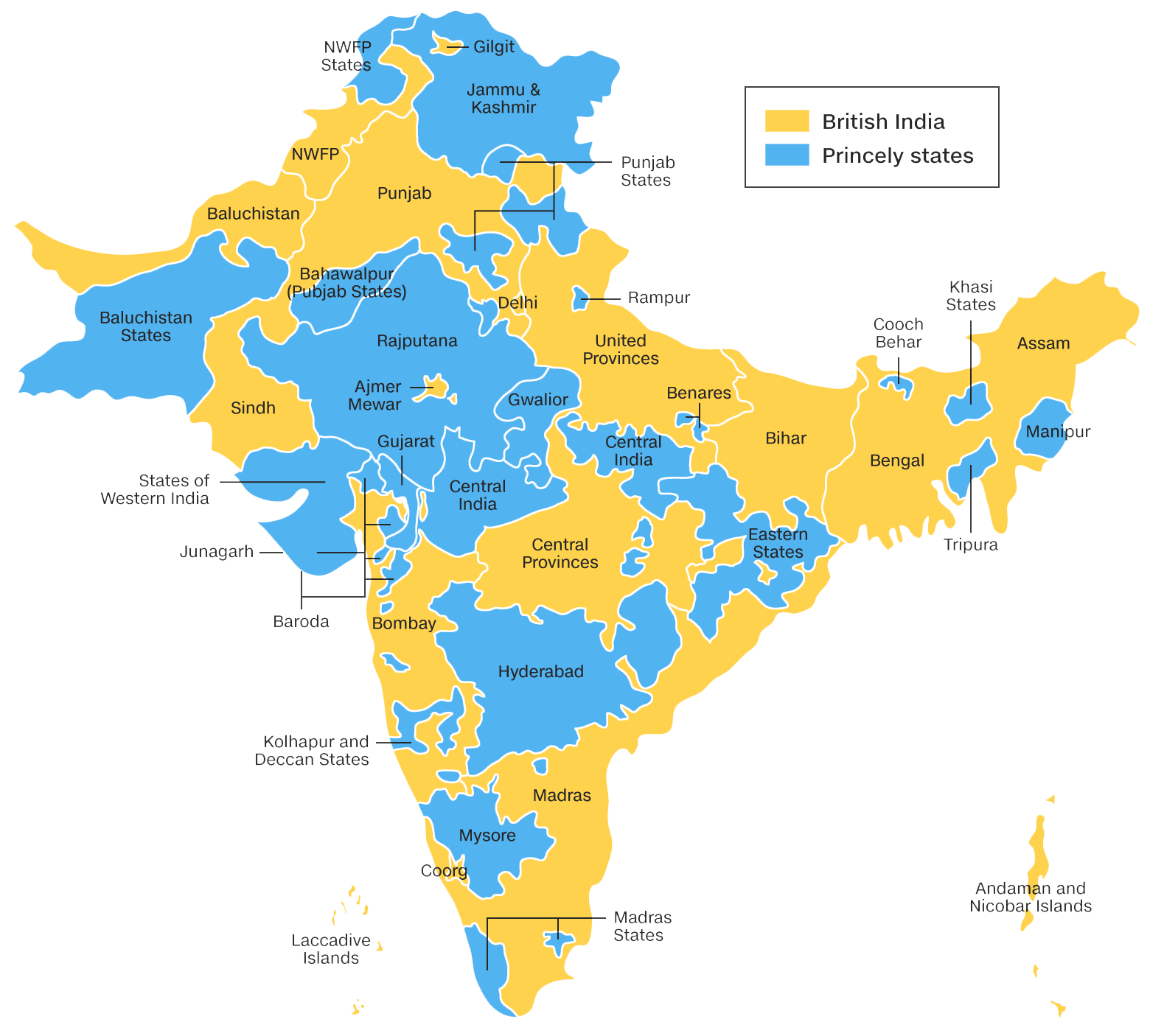
QotD: India’s civil service
The process was started in October last year. Here we are at the end of August 10 months later. And we’ve still managed to get no closer at all to hiring any accountants.
Now, one good thing about the Indian civil service is that it carries on the old British practice of entry being by competitive examination. This at least loosens the possibility of influence and bribery determining who gets hired. But now think of the incompetence with which the process is being carried out. We’ve at least 7 months here just to mark the exam papers!
And that is really what ails India. The snail’s pace of the bureaucracy. It would actually be far better if the place had near no government rather than the one it has. Anarchy is indeed preferable to a system which allows near nothing to happen officially. Because what happens when a bureaucracy is so slow that it strangles the ability to do anything legally is that it is all done in illegal anarchy anyway. Some 85% of the Indian economy is over in the unregistered, untaxed and informal sector. Precisely and exactly because the official sector is run by that bureaucracy that cannot even hire the occasional accountant. A bonfire of the babus would improve the place immeasurably.
Tim Worstall, “What’s Wrong In India – All 8,000 Fail Goa’s Exam To Be Government Accountants”, Continental Telegraph, 2018-08-23.
November 14, 2020
People are working from home? Gotta tax that!
I am … unimpressed … with this sudden urge to impose new taxes on people who are currently working from home (I was working from home before it was cool, so I clearly have an interest in this issue). In the Vancouver Sun, Colby Cosh discusses the “wisdom” of this latest proposed tax grab:
This is the first time I have heard this “obvious” idea in any setting, but maybe that’s me. Telecommuting has experienced rapid growth in the decades I’ve been doing it, but before the pandemic it remained more or less at barely detectable levels. [Deutsche Bank economist Luke] Templeman believes that, “Our economic system is not set up to cope with people who can disconnect themselves from face-to-face society. Those who can WFH receive direct and indirect financial benefits and they should be taxed in order to smooth the transition process for those who have been suddenly displaced.”
As Templeman describes it, you would have to have been a crazy idiot not to work from home all along if it were possible. “WFH offers direct financial savings on expenses such as travel, lunch, clothes and cleaning. … Then there are the intangible benefits of working from home, such as greater job security, convenience and flexibility. There is also the benefit of additional safety.”
This would be my own assessment, except for the gibberish parts (job security?), but you will notice that this is the opposite of [Bank of England chief economist Andy] Haldane’s October argument. Haldane thinks there are negative externalities and even net costs to the individual in working from home. Templeman thinks WFH is an inarguable optimum … and is hot as a $2 pistol to disincentivize it.
Does this make sense? Not economically. Templeman is making more of a moral argument that the great shift to WFH is permanent, for which there is some survey evidence, and that it is proper to tax the resulting windfall to ease the adjustment for affected sectors (businesses designed to cater to office workers, basically). This might persuade you, if like Templeman you mistake an “economic system” for the arrangements produced by that system; but if it does, wait till you see how he proposes to do it:
The tax will only apply outside the times when the government advises people to work from home (of course, the self-employed and those on low incomes can be excluded). The tax itself will be paid by the employer if it does not provide a worker with a permanent desk. If it does, and the staff member chooses to work from home, the employee will pay the tax out of their salary for each day they work from home. This can be audited by co-ordinating with company travel and technology systems.
There is more gibberish here, and at least one idea of Godzilla-scale terribleness — an incentive for employers to “provide” a desk for the purpose of shifting the WFH tax onto the employee. Undeterred, Templeman proposes for modelling purposes that the tax could be a flat five per cent of salary (which is also ridiculous if there’s a single eligibility threshold).