
World War Two
Published 23 Oct 2021Could this be the beginning of the big break in North Africa? The Allies have the men, the armor, and the fuel … they just have to deal with the Axis minefields to try and get started. And the Axis are throwing ever more men at Stalingrad as the Soviets grimly hold on. Another roller coaster of a week.
(more…)
October 24, 2021
Showdown at El Alamein – WW2 – 165 – October 23, 1942
Comments Off on Showdown at El Alamein – WW2 – 165 – October 23, 1942
October 23, 2021
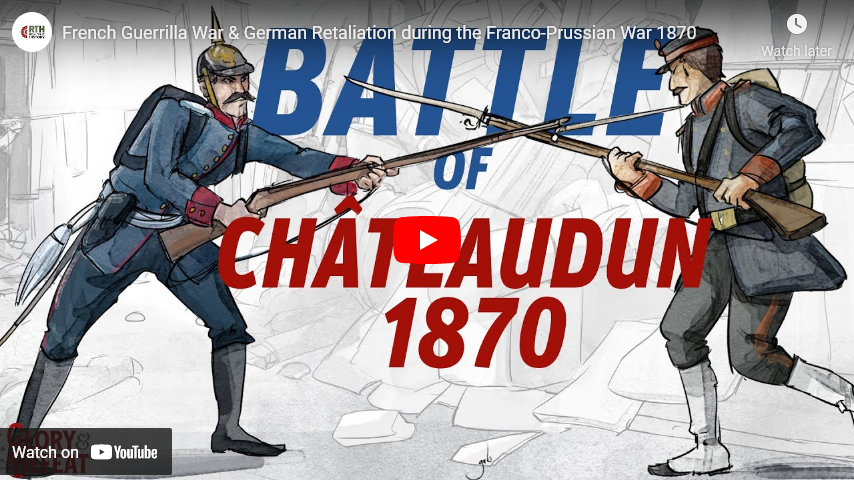
French Guerrilla War & German Retaliation during the Franco-Prussian War 1870
Real Time History
Published 21 Oct 2021Sign up for Curiosity Stream and get Nebula bundled in and SAVE 26%: https://curiositystream.com/realtimeh…
The French increasing reliance on franc-tireurs, guerrilla style fighters, is causing brutal German retaliation and a spiral of violence in the fall phase of the Franco-Prussian War.
Special thanks goes out to Quentin Censier from Sur le Champ. Check out his Channel: https://www.youtube.com/surlechamp
» THANK YOU TO OUR CO-PRODUCERS
John Ozment
James Darcangelo
Jacob Carter Landt
Thomas Brendan
James Giliberto
Kurt Gillies
Albert B. Knapp MD
Tobias Wildenblanck
Richard L Benkin
Scott Deederly
John Belland
Adam Smith
Taylor Allen
Jim F Barlow
Rustem Sharipov» OUR PODCAST
https://realtimehistory.net/podcast – interviews with historians and background info for the show.» LITERATURE
Arand, Tobias: 1870/71. Die Geschichte des Deutsch-Französischen Krieges erzählt in Einzelschicksalen. Hamburg 2018Keegan, John: Die Kultur des Krieges. Berlin 1995
Neitzel, Sönke/Hohrath, Daniel (Hrsg.): Kriegsgreuel. Die Entgrenzung der Gewalt in kriegerischen Konflikten vom Mittelalter bis ins 20. Jahrhundert. Paderborn, München 2008
Roth, François: La Guerre de 1870. Paris 1990
» SOURCES
Busch, Moritz: Graf Bismarck und seine Leute während des Krieges mit Frankreich. Bd. I. Berlin 1878Chuquet, Arthur: La Guerre 1870-71. Paris 1895
Engels, Friedrich: Der Deutsch-Französische Krieg. Sechzig Artikel aus der “Pall Mall Gazette”. Berlin (Ost) 1957
Fontane, Theodor: Kriegsgefangen. Erlebtes 1870. Briefe 1870/71. Berlin (Ost) 1984
Kriegsgeschichtliche Abteilung des Großen Generalstabs (Hrsg.): Der deutsch-französische Krieg 1870-71. II.1 Berlin 1878
Kürschner, Joseph (Hrsg.): Der große Krieg 1870–71 in Zeitberichten. Leipzig o. J. (1895)
Meisner, Heinrich Otto (Hrsg.): Kaiser Friedrich III. Das Kriegstagebuch von 1870/71. Berlin, Leipzig 1926
Roux, Georges: La Guerre de 1870. Paris 1966
Sarrepont, Major H. de (i.e. Eugène Hennebert): Histoire de la défense de Paris en 1870-1871. Paris 1872
Zeitz, Karl: Kriegserinnerungen eines Feldzugsfreiwilligen aus den Jahren 1870 und 1871. Altenburg 1905
» OUR STORE
Website: https://realtimehistory.net»CREDITS
Presented by: Jesse Alexander
Written by: Cathérine Pfauth, Prof. Dr. Tobias Arand, Jesse Alexander
Director: Toni Steller & Florian Wittig
Director of Photography: Toni Steller
Sound: Above Zero
Editing: Toni Steller
Motion Design: Philipp Appelt
Mixing, Mastering & Sound Design: http://above-zero.com
Maps: Battlefield Design
Research by: Cathérine Pfauth, Prof. Dr. Tobias Arand
Fact checking: Cathérine Pfauth, Prof. Dr. Tobias ArandChannel Design: Battlefield Design
Contains licensed material by getty images
All rights reserved – Real Time History GmbH 2021
Comments Off on French Guerrilla War & German Retaliation during the Franco-Prussian War 1870
October 17, 2021
Stalingrad, Stalingrad, Stalingrad, No Retreat! – WW2 – 164 – October 16, 1942
World War Two
Published 16 Oct 2021The Americans win a naval victory off Guadalcanal and even manage to reinforce the Marines there with the first Army units to arrive, but as the week ends the Japanese launch a major offensive on the island. Meanwhile far across the globe, Adolf Hitler orders that all German offensive operations except those at Stalingrad and in the Caucasus cease. There is plenty to do in Stalingrad, though, because this week all hell breaks loose there.
(more…)
Comments Off on Stalingrad, Stalingrad, Stalingrad, No Retreat! – WW2 – 164 – October 16, 1942
October 15, 2021
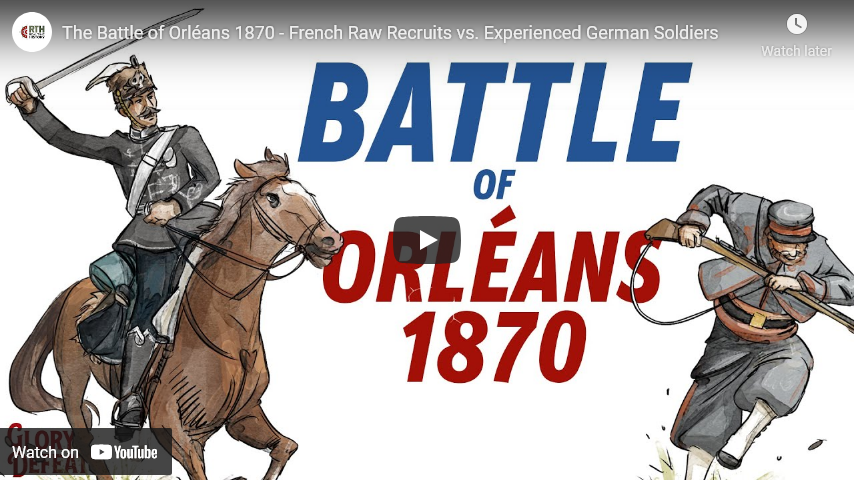
The Battle of Orléans 1870 – French Raw Recruits vs. Experienced German Soldiers
Real Time History
Published 14 Oct 2021All across France French Armies have been raised from any available troops. From international volunteers to raw teenaged recruits. How these sub-par soldiers fare against professional German soldiers is not hard to guess and we can see how that goes in the first battles for Orléans.
Special Thanks to Jonathan Ferguson from Royal Armouries. Check out their Channel: https://www.youtube.com/RoyalArmouries
» THANK YOU TO OUR CO-PRODUCERS
John Ozment
James Darcangelo
Jacob Carter Landt
Thomas Brendan
James Giliberto
Kurt Gillies
Albert B. Knapp MD
Tobias Wildenblanck
Richard L Benkin
Scott Deederly
John Belland
Adam Smith
Taylor Allen
Jim F Barlow
Rustem Sharipov» OUR PODCAST
https://realtimehistory.net/podcast – interviews with historians and background info for the show.» LITERATURE
Arand, Tobias: 1870/71. Der Deutsch-Französische Krieg erzählt in Einzelschicksalen. Hamburg 2018Milza, Pierre: L’année terrible. La guerre franco-prussienne. Septembre 1870 – mars 1871. Paris 2009
» SOURCES
Bernhardt, Sarah: Mein Doppelleben. Leipzig 1908Hérisson, Maurice Graf d’: Journal d’un officier d’ordonannce. Juillet 1870 – Février 1871. Paris 1885
Kühnhauser, Florian: Kriegs-Erinnerungen eines Soldaten des königlich bayerischen Infanterie Leibregiments. Partenkirchen 1898 (Neudruck 2012)
Meisner, Heinrich Otto (Hrsg.): Kaiser Friedrich III. Das Kriegstagebuch von 1870/71. Berlin, Leipzig 1926
N.N. (Hrsg.): Theodor Fontane. Kriegsgefangen – Erlebtes 1870. Briefe 1870/71. Berlin (Ost) 1984
» OUR STORE
Website: https://realtimehistory.net»CREDITS
Presented by: Jesse Alexander
Written by: Cathérine Pfauth, Prof. Dr. Tobias Arand, Jesse Alexander
Director: Toni Steller & Florian Wittig
Director of Photography: Toni Steller
Sound: Above Zero
Editing: Toni Steller
Motion Design: Philipp Appelt
Mixing, Mastering & Sound Design: http://above-zero.com
Maps: Battlefield Design
Research by: Cathérine Pfauth, Prof. Dr. Tobias Arand
Fact checking: Cathérine Pfauth, Prof. Dr. Tobias ArandChannel Design: Battlefield Design
Contains licensed material by getty images
All rights reserved – Real Time History GmbH 2021
Comments Off on The Battle of Orléans 1870 – French Raw Recruits vs. Experienced German Soldiers
Nazis “Restore” Law and Order – WAH 044 – October 1942, Pt. 1
World War Two
Published 14 Oct 2021Resistance against occupation starts rising in the Autumn of 1942. It faces opposition not only from the occupiers, but also from collaborators killing their own countrymen.
(more…)
Comments Off on Nazis “Restore” Law and Order – WAH 044 – October 1942, Pt. 1
October 13, 2021
A War Without Hate? – The Officers and Gentlemen of North Africa – WW2 – Gallery 05
World War Two
Published 12 Oct 2021In the history of European-style warfare, there has always been the ideal of “rules of warfare”. The horrors of the Eastern Front and the Pacific prove how hollow this ideal can be, but there is one theatre where some officers are trying to maintain it: North Africa.
(more…)
Comments Off on A War Without Hate? – The Officers and Gentlemen of North Africa – WW2 – Gallery 05
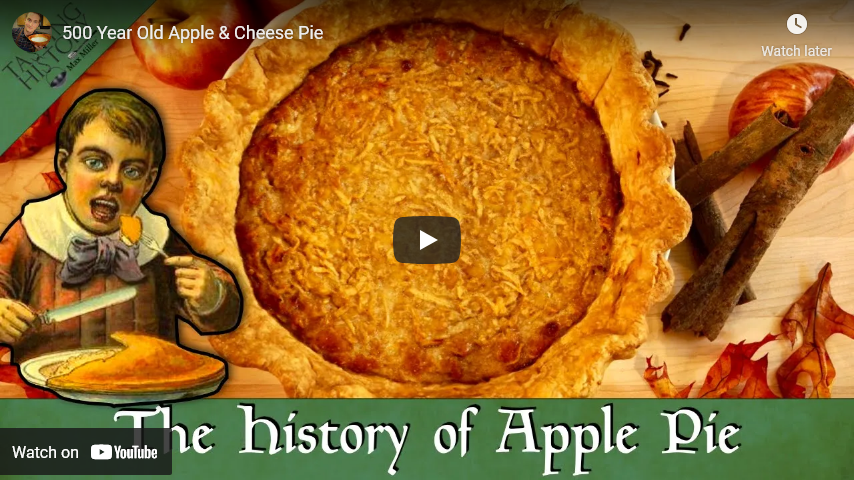
500 Year Old Apple & Cheese Pie
Tasting History with Max Miller
Published 12 Oct 2021Use my exclusive link here https://cen.yt/TradeTastingHistory4 to get your first bag from Trade Coffee for free.
Support the Channel with Patreon ► https://www.patreon.com/tastinghistory
Merch ► crowdmade.com/collections/tastinghistory
Instagram ► https://www.instagram.com/tastinghist…
Twitter ► https://twitter.com/TastingHistory1
Tiktok ► TastingHistory
Reddit ► r/TastingHistory
Discord ► https://discord.gg/d7nbEpy
Amazon Wish List ► https://amzn.to/3i0mwGtSend mail to:
Tasting History
PO Box 766
Burbank, CA 91503LINKS TO INGREDIENTS & EQUIPMENT**
Sony Alpha 7C Camera: https://amzn.to/2MQbNTK
Sigma 24-70mm f/2.8 Lens: https://amzn.to/35tjyoW
Emile Henry Pie Dish: https://amzn.to/3i5go19LINKS TO SOURCES**
Apple – A Global History by Erika Janik: https://amzn.to/3COmCui
Diary of Samuel Sewall: https://amzn.to/3AKDj9j
The Life and Repentance of Samuel Sewall by Eve LaPlante: https://amzn.to/3EUBUiU
Das Kochbuch der Sabina Welserin: http://www.daviddfriedman.com/Medieva…**Some of the links and other products that appear on this video are from companies which Tasting History will earn an affiliate commission or referral bonus. Each purchase made from these links will help to support this channel with no additional cost to you. The content in this video is accurate as of the posting date. Some of the offers mentioned may no longer be available.
Subtitles: Jose Mendoza | IG @worldagainstjose
PHOTOS
Tarte tatin: Loslazos, CC BY-SA 4.0 https://creativecommons.org/licenses/…, via Wikimedia Commons#tastinghistory #applepie
Comments Off on 500 Year Old Apple & Cheese Pie
October 12, 2021
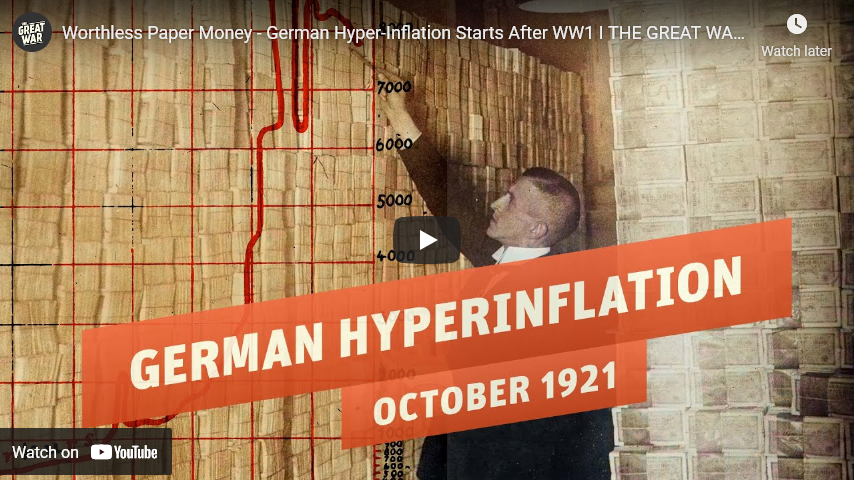
Worthless Paper Money – German Hyper-Inflation Starts After WW1 I THE GREAT WAR 1921
The Great War
Published 8 Oct 2021Sign up for Curiosity Stream and get Nebula bundled in and SAVE 26%: https://curiositystream.com/thegreatwar
The German post-WW1 economy was under pressure: the loss of territory, the war bonds issued during the war and the reparations under the Treaty of Versailles. All this lead to a downward spiral of rising inflation and living costs for German citizens.
» SUPPORT THE CHANNEL
Patreon: https://www.patreon.com/thegreatwar
Shop: https://www.realtimehistory.net» OUR PODCAST
https://realtimehistory.net/podcast – interviews with World War 1 historians and background info for the show.» BUY OUR SOURCES IN OUR AMAZON STORES
https://realtimehistory.net/amazon *
*Buying via this link supports The Great War (Affiliate-Link)» SOURCES
Feldman, Gerald: Vom Weltkrieg zur Weltwirtschaftskrise. Studien zur deutschen Wirtschafts-und Sozialgeschichte 1914-1932. 1984.Fergusson, Adam: Das Ende des Geldes. Hyperinflation und ihre Folgen für die Menschen am Beispiel der Weimarer Republik, 1975.
Grosch, Waldemar: Deutsche und polnische Propaganda während der Volksabstimmung in Oberschlesien 1919-1921. 2002.
Lewek, Peter: Arbeitslosigkeit und Arbeitslosenversicherung in der Weimarer republik 1918-1927. 1989.
Michalczyk, Andrezej: Celebrating the nation: the case of Upper Silesia after the plebiscite in 1921.
Neubach, Helmut: Die Abstimmung in Oberschlesien am 20. März 1921. 2002.
» MORE THE GREAT WAR
Website: https://realtimehistory.net
Instagram: https://instagram.com/the_great_war
Twitter: https://twitter.com/WW1_Series
Reddit: https://reddit.com/r/TheGreatWarChannel»CREDITS
Presented by: Jesse Alexander
Written by: Jesse Alexander
Director: Toni Steller & Florian Wittig
Director of Photography: Toni Steller
Sound: Toni Steller
Editing: Jose Gamez
Motion Design: Philipp Appelt
Mixing, Mastering & Sound Design: http://above-zero.com
Maps: Daniel Kogosov (https://www.patreon.com/Zalezsky)
Research by: Jesse Alexander
Fact checking: Florian WittigChannel Design: Yves Thimian
Contains licensed material by getty images
All rights reserved – Real Time History GmbH 2021
Comments Off on Worthless Paper Money – German Hyper-Inflation Starts After WW1 I THE GREAT WAR 1921
October 10, 2021
Stalingrad Thunderdome: Paulus vs. Chuikov! – WW2 – 163 – October 9, 1942
World War Two
Published 9 Oct 2021Things are looking pretty grim for Vassily Chuikov’s 62nd Army in Stalingrad this week, as the German 6th Army launches its biggest series of attacks so far. The Axis are unable to get anywhere in the Caucasus, though, and the American Marines win a local victory over the Japanese on Guadalcanal, but everyone’s thoughts there are on reinforcing and more reinforcing.
(more…)
Comments Off on Stalingrad Thunderdome: Paulus vs. Chuikov! – WW2 – 163 – October 9, 1942
October 8, 2021
Rise of Guerrilla Warfare & Daring Balloon Escapes – The Franco-Prussian War Early October 1870
Real Time History
Published 7 Oct 2021Sign up for Curiosity Stream and get Nebula bundled in and SAVE 26%: https://curiositystream.com/realtimehistory
In early October 1870, the German states are still confident the Franco-Prussian War is as good as over. But two events might cross their plans: One of the leaders of the new French Republic, Leon Gambetta, escapes the Siege of Paris in a hot-air balloon to coordinate the French Armies outside of Paris. And in Ablis, French guerrilla fighters, the so-called Franc-Tireurs, ambush a German patrol in their sleep — with swift German retribution.
» THANK YOU TO OUR CO-PRODUCERS
John Ozment
James Darcangelo
Jacob Carter Landt
Thomas Brendan» OUR PODCAST
https://realtimehistory.net/podcast – interviews with historians and background info for the show.» LITERATURE
Arand, Tobias: 1870/71. Die Geschichte des Deutsch-Französische Krieg erzählt in Einzelschicksalen. Hamburg 2018Arand, Tobias: Gestorben für “Vaterland” und “Patrie” – Die toten Krieger aus dem Feldzug von 1870/71 auf dem “Alten Friedhof” in Ludwigsburg. Ludwigsburg 2012
Hahn, Joachim: Jüdisches Leben in Ludwigsburg. Geschichte, Quellen, Dokumentation. Karlsruhe 1998
Schneider, Fernand Thiébaut: “Der Krieg in französischer Sicht”, in: Entscheidung 1870. Der deutsch-französische Krieg, hrsg. v. Wolfgang von Groote und Ursula von Gersdorff. Stuttgart 1970. S. 165-203
» SOURCES
Engels, Friedrich: Der Deutsch-Französische Krieg. Sechzig Artikel aus der “Pall Mall Gazette”. Berlin (Ost) 1957Huber, Rudolf (Hrsg.): Dokumente zur deutschen Verfassungsgeschichte. Bd. 2. 1851-1900. Stuttgart 1964
Kürschner, Joseph (Hrsg.): Der große Krieg 1870-71 in Zeitzeugenberichten. Leipzig o.J. (1895)
N.N. (Hrsg.): Bismarcks Briefe an seine Gattin aus dem Kriege 1870/71. Stuttgart, Berlin 1903
Philippson, G.: “Jom Kippur 1870 vor Metz”, in: Wegweiser für die Jugendliteratur, Heft 4, 6 (1910). S. 26-27
Steenackers, François-Frédéric/Le Goff, F.: Histoire du gouvernement de la Défense nationale en province, 4 Septembre 1870 – 8 Février 1871. Bd. II. Paris 1884
Tissandier, Gaston: Souvenirs et récits d’un aérostier militaire de l’armée de la Loire. Paris 1891
» OUR STORE
Website: https://realtimehistory.net»CREDITS
Presented by: Jesse Alexander
Written by: Cathérine Pfauth, Prof. Dr. Tobias Arand, Jesse Alexander
Director: Toni Steller & Florian Wittig
Director of Photography: Toni Steller
Sound: Above Zero
Editing: Toni Steller
Motion Design: Philipp Appelt
Mixing, Mastering & Sound Design: http://above-zero.com
Maps: Battlefield Design
Research by: Cathérine Pfauth, Prof. Dr. Tobias Arand
Fact checking: Cathérine Pfauth, Prof. Dr. Tobias ArandChannel Design: Battlefield Design
Contains licensed material by getty images
All rights reserved – Real Time History GmbH 2021
Comments Off on Rise of Guerrilla Warfare & Daring Balloon Escapes – The Franco-Prussian War Early October 1870
October 3, 2021
This is Russia, The Soviet Thermopylae – WW2 – 162 – October 2, 1942
World War Two
Published 2 Oct 2021The fighting for Stalingrad continues, but the Soviets forces are split and the Volga is on fire. In the Caucasus, the Axis forces for the most part are being held in check — at one point a single Soviet battalion holds off an entire Army Corps — but they’re being pushed back on the Kokoda Trail in the South Seas.
(more…)
Comments Off on This is Russia, The Soviet Thermopylae – WW2 – 162 – October 2, 1942
October 1, 2021
This French General Saved Strasbourg From Total Destruction During the Franco-Prussian War 1870
Real Time History
Published 30 Sep 2021The symbolic city of Strasbourg had been besieged since the early stages of the Franco-Prussian War. The German siege troops are ready to breach the walls of the city and take it by storm. To avoid the destruction of the city, French general Uhrich surrenders and chooses, in his view, honor above glory.
» THANK YOU TO OUR CO-PRODUCERS
John Ozment
James Darcangelo
Jacob Carter Landt
Thomas Brendan» OUR PODCAST
https://realtimehistory.net/podcast – interviews with historians and background info for the show.» LITERATURE
Arand, Tobias: Gestorben für “Vaterland” und “Patrie”. Die toten Krieger aus dem Feldzug von 1870/71 auf dem “Alten Friedhof” in Ludwigsburg. Ludwigsburg 2012Ders.: 1870/71. Der Deutsch-Französische Krieg erzählt in Einzelschicksalen. Hamburg 2018
Chrastil, Rachel: The Siege of Strasbourg. Cambridge, 2014
» SOURCES
Busch, Moritz: Graf Bismarck und seine Leute vor Paris. Bd. 1. Leipzig 1878Du Casse, Albert: Journal authentique du Siège de Straßbourg. Paris 1871
Fischbach, Gustave: Le siège et le bombardement de Strasbourg, Paris, 1871
Fontane, Theodor: Der Krieg gegen Frankreich 1870-1871. Bd. 2. Berlin 1874
Kriegsgeschichtliche Abtheilung des Großen Generalstabs (Hrsg.): Der deutsch-französische Krieg 1870-71. II.1. Berlin 1878
Meisner, Heinrich Otto (Hrsg.): Kaiser Friedrich III. Das Kriegstagebuch von 1870/71. Berlin, Leipzig 1926
N.N. Straßbourg. Paris 1874
N.N. (Hrsg.): Theodor Fontane. Kriegsgefangen – Erlebtes 1870. Briefe 1870/71. Berlin (0st) 1984
» OUR STORE
Website: https://realtimehistory.net»CREDITS
Presented by: Jesse Alexander
Written by: Cathérine Pfauth, Prof. Dr. Tobias Arand, Jesse Alexander
Director: Toni Steller & Florian Wittig
Director of Photography: Toni Steller
Sound: Above Zero
Editing: Toni Steller
Motion Design: Philipp Appelt
Mixing, Mastering & Sound Design: http://above-zero.com
Maps: Battlefield Design
Research by: Cathérine Pfauth, Prof. Dr. Tobias Arand
Fact checking: Cathérine Pfauth, Prof. Dr. Tobias ArandChannel Design: Battlefield Design
Contains licensed material by getty images
All rights reserved – Real Time History GmbH 2021
Comments Off on This French General Saved Strasbourg From Total Destruction During the Franco-Prussian War 1870
September 29, 2021
Feeding the Meatgrinder – The Red Army – WW2 Special
World War Two
Published 28 Sep 2021What is left of the Red Army after the smashing offensives of Operation Barbarossa and Fall Blau, and what have Stavka done to rebuild it? As the war on the Eastern Front goes on, more men and materiel stream to the frontlines, stemming the onslaught of the Wehrmacht.
(more…)
Comments Off on Feeding the Meatgrinder – The Red Army – WW2 Special
September 28, 2021
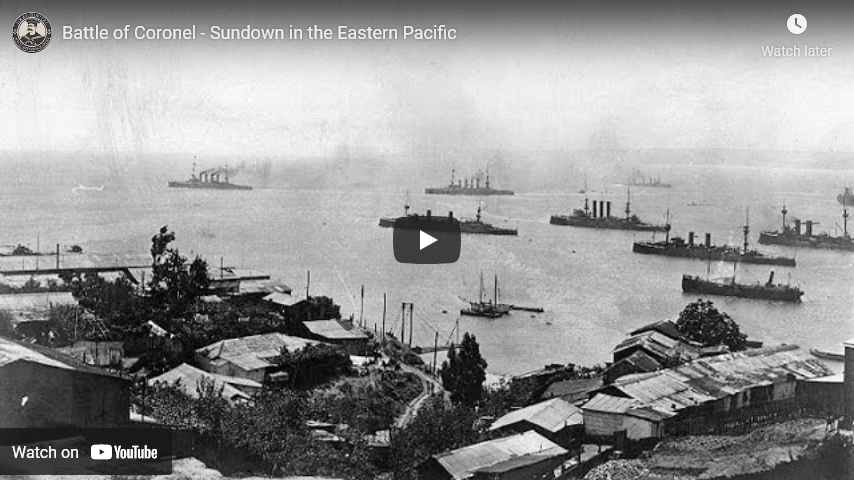
Battle of Coronel – Sundown in the Eastern Pacific
Drachinifel
Published 18 Mar 2020Today we look at the first of two battles involving Admiral von Spee, the Battle of Coronel.
Want to support the channel? – https://www.patreon.com/Drachinifel
Want a shirt/mug/hoodie – https://shop.spreadshirt.com/drachini…
Want a medal? – https://www.etsy.com/uk/shop/Drachinifel
Want to talk about ships? https://discord.gg/TYu88mt
Want to get some books? www.amazon.co.uk/shop/drachinifel
Drydock Episodes in podcast format – https://soundcloud.com/user-21912004
Comments Off on Battle of Coronel – Sundown in the Eastern Pacific
Debunking the notion that Stalin was an innocent victim of Hitler
At Instapundit, Ed Driscoll links Jakub Grygiel’s review of a new look at World War 2 in Europe, Stalin’s War by Sean McMeekin, which includes a bit of debunking about the relationship between Hitler and Stalin from 1939 to 1941:
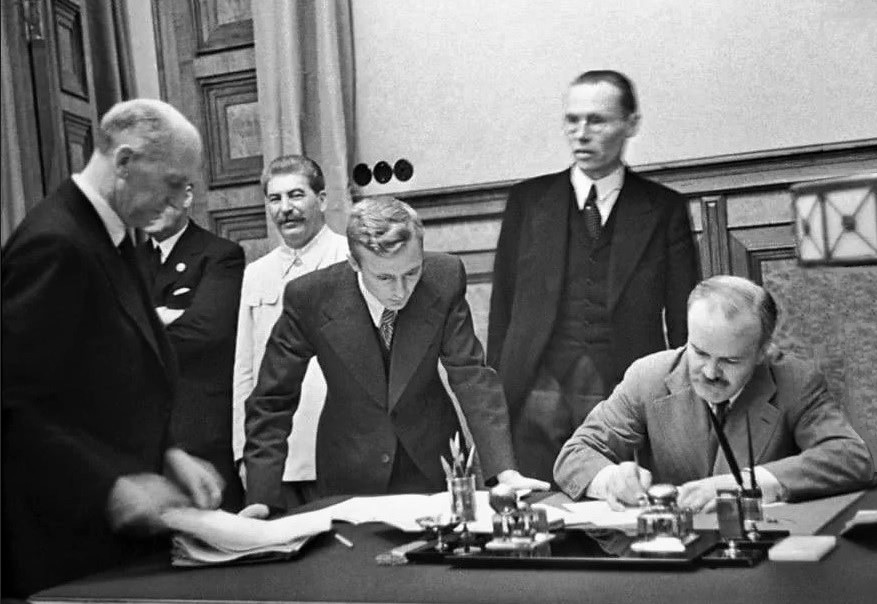
Translation of the Russian caption for this image:
People’s Commissar of Foreign Affairs of the USSR V.M. Molotov signs a friendship and border treaty between the USSR and Germany. Among those present: I.V. Stalin, translator of the Ministry of Foreign Affairs V.N. Pavlov, German diplomat G. Hilger (“truncated” version of the photograph of M. Kalashnikov distributed on the net)
Photograph attributed to Mikhail Mikhaylovich Kalashnikov (1906-1944) via Wikimedia Commons.
Stalin was always interested in a war, especially one that would pit the other powers against each other. The expansion of Soviet influence and control required the weakening of the other powers, in particular the Western ones that were opposed to the Communist virus. For Stalin, therefore, the growth of Nazi Germany was a great opportunity: a violent and expansionistic power in the middle of Europe that could take the first swing against the polities standing on his path. Unsurprisingly, the Soviet tyrant was deeply disappointed when France and Britain signed the Munich Agreement with Nazi Germany in 1938 postponing the great European war that he desired. The 1939 Ribbentrop-Molotov Pact coordinated the efforts of Hitler and Stalin, but it benefited the latter more, allowing him to conquer a large swath of Polish territory with minimal effort, eliminating one of the staunchest opponents to Russian westward expansion. A year later, by murdering almost 22,000 Polish officers in Soviet captivity, Stalin further weakened the Polish obstacle to his expansion. “Nations which had been ruled by powerful aristocracies,” Stalin told once to the Yugoslav Milovan Djilas, “like the Hungarians and the Poles, were strong nations” — and, fearing them, he sought to eliminate them. Then, while Germany invaded France, Stalin took over the three Baltic states in a further step westward.
Hitler’s decision to invade Russia in mid-1941 was a surprise to Stalin, but not because he was expecting a lasting peace on his western frontier. Rather, as McMeekin documents, Stalin had ordered very rapid and large military preparations, building airbases and placing forces near the border with the Third Reich in the first half of 1941. None of them were in a defensive posture, and presented a vulnerable high value target to Nazi attacks. When Hitler decided to attack the USSR in June 1941, these Soviet forces were easy pickings for the well-organized, trained, and war tested German army. McMeekin here expands and amends a bold thesis offered in 1990 by Viktor Suvorov, a pseudonym for a GRU agent who defected to the West in the late ’70s and became a historian, that argued that Stalin was actively planning an attack on Germany but was preempted by Hitler. While Suvorov was excessive in his claim that the Red Army was ready for an offensive campaign in 1941 (because, among other reasons, the officer corps was still in shambles after Stalin’s purges) and that Stalin had plans to conquer Europe, he argued that the USSR was never a status quo power satisfied in its borders. After all Soviet Russia had already attempted to march westward in 1920 and was stopped only by the Poles in a desperate battle near Warsaw (the “Miracle on the Vistula”). This westward vector and ambition of Moscow did not abate, and had to pause because of Hitler’s rise and the might of Nazi Germany. As McMeekin points out, the Soviet military posture in 1941 makes no sense if the goal was to defend Soviet-held lands, suggesting that Stalin was thinking of pouncing on Berlin, now the last remaining continental power in Europe. As the Soviet tyrant himself put it, the USSR no longer needed to be locked in a defensive posture, and was “a rapacious predator, coiled in tense anticipation, waiting for the chance to ambush its prey.”
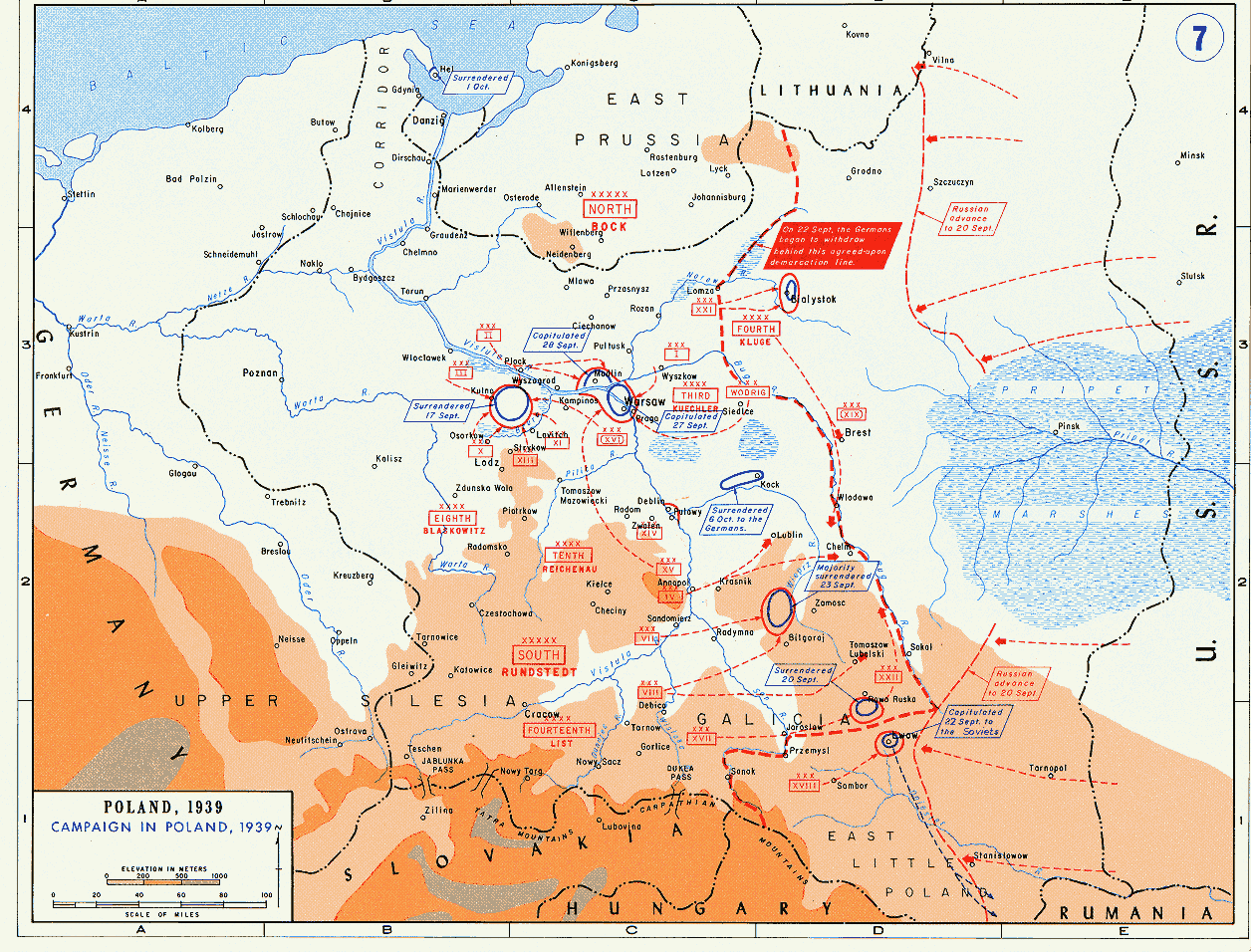
Military situation in Poland, 14 September 1939 (map does not show Slovak Army activity in southern Poland).
United States Military Academy, Department of History via Wikimedia Commons.Stalin, that is, was not an innocent victim of Hitler. Not only he was an active partner from 1938 until 1941, but also he had geopolitical aspirations that were more ambitious than those held by Hitler. And he pursued them methodically and ruthlessly, leaving a trail of death that dwarfed the one produced by the Nazis.
McMeekin then focuses on how the Western allies, Churchill but especially FDR, abetted Stalin’s ambitions. This part of the book is fascinating and depressing at the same time. In a nutshell, Stalin obtained from FDR more than he expected: territory, influence, and materiel. And he did not give anything in exchange for it because FDR and his advisors never asked him for it. For instance, FDR supported the Lend-Lease program, putting his friend Harry Hopkins in charge. Under this program of military aid, the United States supplied a massive amount of weapons, trucks, airplanes, tanks, foodstuff to the Soviet Union in the months of its greatest need, as German troops were driving deep into Russia while the vaunted Soviet armies were melting away. Without such aid, the USSR would have likely been unable to stop the German onslaught and certainly would have been incapable of mustering the resources necessary to push westward. Hence, in this moment there was a good strategic rationale for the American support of Stalin’s defensive efforts against Nazi Germany.
Prior to the launch of Operation Barbarossa, you’d have been hard-pressed to find a more anti-Soviet leader than Winston Churchill, but he immediately recognized that Stalin was more useful to the British as an ally than as a passive enemy. Earlier this year, McMeekin wrote that Stalin “could not have asked for a friendlier British government” than Churchill’s wartime coalition. As Connor Daniels wrote in response at The Churchill Project:
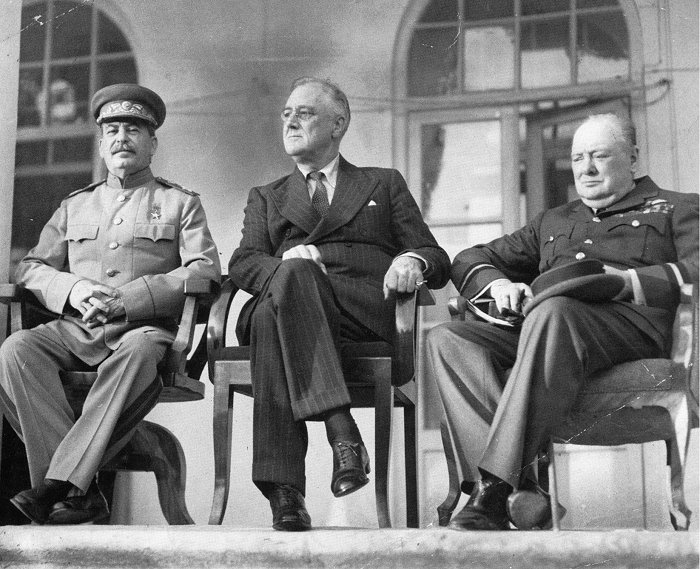
The “Big Three” meet at Tehran, 28 November-1 December, 1943.
Photo attributed to US Army photographer, via Wikimedia Commons.
Churchill’s support for Stalin during the Second World War followed from a simple calculus of the lesser of two evils. Britain could only take on one evil empire at a time, and, of the two, Churchill believed that Nazi Germany posed the greater threat to liberty. He famously remarked, “If Hitler invaded Hell I would make at least a favourable reference to the Devil in the House of Commons.” McMeekin attempts to sidestep this harsh reality, writing: “Whether or not the payoff was worth the price is a question well worth debating.” Churchill’s alliance with the Soviets stands or falls on this question: was Nazi Germany or the Soviet Union the greater danger in 1939?
With hindsight, one can easily marshal facts that portray Soviet communism as the greater evil. According to the best available estimates, the Stalin regime killed 20 millions of its own citizens. Nearly six million of those deaths occurred during the 1932–33 famine brought about by Stalin’s collectivization policies. While Nazi Germany also killed 17 million civilians, most of those deaths occurred after Hitler’s invasion of the Soviet Union in 1941. Thus, on the eve of the Second World War, one could argue — as Chamberlain and the appeasers did — that Nazi Germany served as a useful bulwark against a greater danger: the Soviet Union.
This analysis, however, misses a crucial point — one that Churchill recognized. Until 1939, the horrors of the Soviet regime had been primarily restricted to its own borders, while Nazi Germany had already made its expansionist ambition clear. In 1938, Germany annexed Austria. Later that year, Germany seized the Sudetenland. In 1939, the rest of Czechoslovakia passed under Hitler’s control. The Nazi doctrine of Lebensraum dictated even greater expansion. By contrast, Stalin’s doctrine of “socialism in one country” had kept the Soviet Union relatively peaceful until the Second World War began.
Comments Off on Debunking the notion that Stalin was an innocent victim of Hitler


