
“It was a confusion of ideas between him and one of the lions he was hunting in Kenya, that caused A. B. Spottsworth to make the obituary column. He thought the lion was dead, and the lion thought it wasn’t.” The author of these lines, P.G. Wodehouse, understood a thing or two about humour. Written seventy years ago, his wit sparkles on, undimmed.
The maestro also knew a thing or two about politics. This is strange, for few of his nearly one hundred novels, short stories or plays betray more than a nodding acquaintanceship with the great upheavals of the 20th century. Enquiring deeper, the connoisseur will find that his eternal creation, Jeeves — the discreet, silent, valet-cum-butler extraordinaire — was named in honour of a popular English cricketer who died on the Somme in 1916. The subject himself, in a post-1945 volume, admitted to his employer Bertie Wooster that he had “dabbled somewhat in the Commandos” during the Second World Conflagration.
War and turmoil are there, lurking in the background, if successfully banished from much of his writing. Sadly, Pelham Grenville (forenames he hated, so adopted the moniker “Plum” instead) was naïve. Loafing professionally in France when the Wehrmacht knocked on his door for tea and crumpets in 1940, he and his wife were interned as enemy aliens. In 1941, Plum agreed to record five broadcasts to the USA, then neutral. Entitled How to be an Internee without previous Training, they comprised playful anecdotes about his experiences as a prisoner of the folk in field grey. I’ve read them. They are rib-tickling and harmless, and his American readers lapped them up. Alas, his British fan club took a different view.
The devotees of Bertie Wooster, Reginald Jeeves, the Earl of Emsworth, Sir Roderick Glossop and Co. were at first stunned, then vexed and finally branded the poor author a traitor. Although a post-war MI5 investigation exonerated him, a hurt Wodehouse thereafter lived in exile on Long Island. Fortunately for us, the flow of humour continued unabated, but Plum’s hard-earned Knighthood for conjuring up the essence of Bottled Englishness was long delayed until the New Year’s Honours of 1975. He died soon after, on St Valentine’s Day, aged ninety-three.
This lapse of judgement was all the more extraordinary given his ability to spot a scoundrel at one hundred paces. Threats to the serene, ordered nature of English society in which he resided — indeed helped to create — were few. In Wodehouse’s Garden of Eden, there is a definite hierarchy of earls and aunts, bishops, baronets and young blades, stationmasters and policemen.
The majority of his tales are set in country houses, replete with conservatories, libraries, gun rooms, stables and butler’s pantries. Letters arrive by several posts a day, telegrams by the hour. Trains run on time from village stations. Other than the pinching of policemens’ helmets, there is order and serenity. Necklaces are filched, silverware is purloined, butlers snaffle port, chums are impersonated, romances develop in rose gardens, but nothing lurks to fundamentally reorder society.
Peter Caddick-Adams, “Coups and coronets”, The Critic, 2022-12-13.
March 20, 2023
QotD: The world of “Plum”
March 19, 2023
The Japanese Invade India! – WW2 – Week 238 – March 18, 1944
World War Two
Published 18 Mar 2023Operation U-Go, Renya Mutaguchi’s invasion of India, is in full swing this week, as his men aim at Imphal and Kohima; three Soviets Fronts batter their way through the Axis positions all over Ukraine; and there is a huge Allied bombing campaign at Cassino in Italy, which mistakenly kills a lot of Allied soldiers. That’s one busy week.
(more…)
Inside An M4 Sherman Tank With Historian James Holland
History Hit
Published 21 Nov 2022‘Inside An M4 Sherman Tank With Historian James Holland’
In this video, military historian James Holland gets inside the most iconic tank of the Second World War — the ubiquitous US M4 Sherman Tank.
With over 50,000 having produced between 1942 and 1945, the Sherman was the most widely used medium tank by the United States and Western Allies in World War II.
Easily produced, maintained and equipped with a 75mm gun as well as a single hatch-mounted .50 caliber machine gun (plus two lighter .30 cals positioned in the turret and forward hull), the Sherman proved extremely effective against soft targets. It still lacked the range and firepower of the German Panther and Tiger tanks, but its speed, manoeuvrability and fast rate of fire made it ideal wartime workhorse.
More recently, the M4 Sherman has risen to stardom with the release of Hollywood blockbuster Fury (2014), starring Brad Pitt and Shia LaBeouf.
(more…)
March 18, 2023
The US Adopts A Maxim: The Colt Model 1904
Forgotten Weapons
Published 9 Nov 2022The US Army spent nearly 16 years languidly testing the Maxim gun, but was never willing to actually make a decision until a final trial in 1903 finally settled the matter. The Maxim was deemed the best available machine gun and a contract was signed with Vickers, Sons, & Maxim to purchase 50 (later increased to 90). Eventually a total of 287 were procured; 90 from VSM and a further 197 made by Colt in the US. The first British guns were chambered for .30-03, with the Colts all made for the later .30-06 (and the VSM guns updated to that standard).
The Model 1904 was the heaviest Maxim gun ever made, weighing in at 62 pounds for the gun and another 80 for its tripod. Despite excellent reliability and durability, it was so heavy and unwieldy that it was pretty universally hated by American soldiers. The final order for 1904 Maxims was placed in 1908 and just the following year the M1909 Benet Mercie light Hotchkiss pattern was was adopted. By the time World War One arrived, half the Maxims had already been relegated to long-term storage. They were pulled out of the warehouses for training troops prior to their deployment to Europe, but they never saw any more significant military use.
(more…)
March 16, 2023
Field Marshal Slim’s one and only demotion … from lance-corporal back down to private
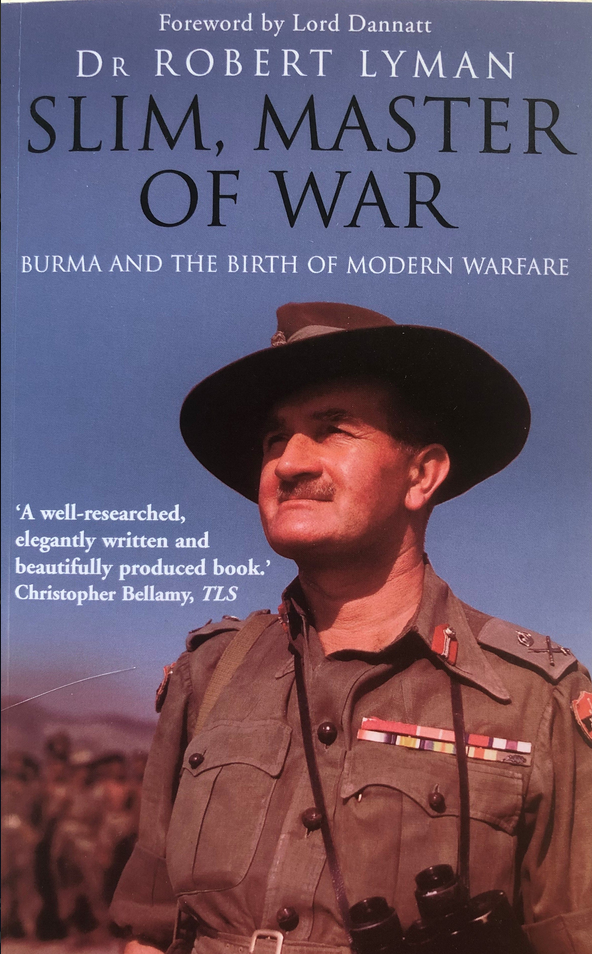
William Slim, arguably the best British general of the Second World War, didn’t have the fastest start to his military career, as recounted in an article by Frank Owen, the editor of the WW2 South East Asia theatre publication Phoenix. This and many others appear in Dr. Robert Lyman’s upcoming book Slim, Master of War:
The General stood on an ammunition box. Facing him in a green amphitheatre of the low hills that ring the Palel Plain, sat or squatted the British officers and sergeants of the 11th East African Division. They were then new to the Burma Front and were moving into the line the next day. The General removed his battered slouch hat, which the Gurkhas wear and which has become the headgear of the 14th Army. “Take a good look at my mug”, he advised. “Not that I consider it to be an oil painting. But I am the Army Commander and you had better be able to recognize me — if only to say “Look out, the old b…. is coming round”.
Lieutenant-General Sir William Slim, KCB, CB, DSO, MC (“Bill”) is 53, burly, grey and going a bit bald. His mug is large and weather beaten, with a broad nose, jutting jaw, and twinkling hazel eyes. He looks like a well-to-do West Country farmer, and could be one. For he has energy and patience and, above all, the man has common sense. However, so far Slim has not farmed. He started life as a junior clerk, once he was a school teacher, and then he became the foreman of a testing gang in a Midland engineering works. For the next 30 years Slim was a soldier.
He began at the bottom of the ladder as a Territorial private. August 4, 1914, found him at Summer camp with his regiment. The Territorials were at once embodied in the Regular Army, and Slim got his first stripe as lance-corporal. A few weeks later he was a private again, the only demotion that this Lieutenant-General has suffered.
It was a sweltering, dusty day and the regiment plodded on its twenty-mile route march down an endless Yorkshire lane. At that time British troops still marched in fours, so that Lance-Corporal Slim, as he swung along by the side of his men, made the fifth in the file, which brought him very close to the roadside. There were cottages there and an old lady stood at the garden gate.
“I can see her yet”, Slim reminisces. “she was a beautiful old lady with her hair neatly parted in the middle and wearing a black print dress. In her hand she held a beautiful jug, and on the top of that jug was a beautiful foam, indicating that it contained beer. She was offering it to the soldier boys.”
The Lance-Corporal took one pace to the side and grasped the jug. As he did, the column was halted with a roar. The Colonel, who rode a horse at its head, had glanced back. Slim was hailed before him and “busted” on the spot. The Colonel bellowed “Had we been in France you would have been shot.” Slim confides, “I thought he was a damned old fool – and he was. I lost my stripe, but he lost his army.” In truth he did, in France in March 1918. Bill soon got his stripe back.
Now in this corner of Palel Plain, one of India’s bloodiest battlefields and the scene of one of his greatest victories, Slim tells the officers and men of the 11th Division, “I have commanded every kind of formation from a section upwards to this army, which happens to be the largest single one in the world.” (At that time, Slim had under his command half a million troops.) “I tell you this simply that you shall realize I know what I am talking about. I understand the British soldier because I have been one, and I have learned about the Japanese soldier because I have been beaten by him. I have been kicked by this enemy in the place where it hurts, and all the way from Rangoon to India where I had to dust-off my pants. Now, gentlemen, we are kicking our Japanese neighbours back to Rangoon.”
Slim commanded the rear guard of the army that retreated from Burma in 1942. He is proud of that. His men marched and fought for a hundred days and nights and across a thousand miles. But this retreat was no Dunkirk. Says Slim “We brought our weapons out with us, and we carried our wounded, too. Dog-tired soldiers, hardly able to put one foot in front of another, would stagger along for hours carrying or holding up a wounded comrade. When at last they reached India over those terrible jungle mountains they did not go back to an island fortress and to their own people where they could rest and refit. The Army of Burma sank down on the frontier of India, dead beat and in rags. But, they fought here all through the downpour of the monsoon, and they saved India until a great new Army – which is this one – could be built up to take the offensive once again. In those days, if anyone had gone to me with a single piece of good news I would have burst out crying. Nobody ever did.”
He tells another story. One day he entered a jungle glade in a tank. In front of him stood a group of soldiers, in their midst the eternal Tommy. Assuming an optimism which he did not feel, Slim jumped out of the tank and approached them. “Gentlemen!” he said (which is the nice way that British generals sometimes address their troops) “Things might be worse!”
“‘Ow could they be worse?” inquired the Tommy.
“Well, it could rain” said Slim, lightly. He adds “And within quarter of an hour it did.”
History of the Royal Navy – Wooden Walls (1600-1805)
Ryan Doyle
Published 3 Mar 2013
(more…)
March 15, 2023
Irish Soda Bread from 1836
Tasting History with Max Miller
Published 14 Mar 2023
(more…)
March 13, 2023
Good “peacetime” generals versus good “wartime” generals
“Shady Maples“, a serving Canadian Army officer, explains why the skills and talents that allow an officer to rise to general rank in peacetime have no direct relationship with how that officer will perform in a shooting war:
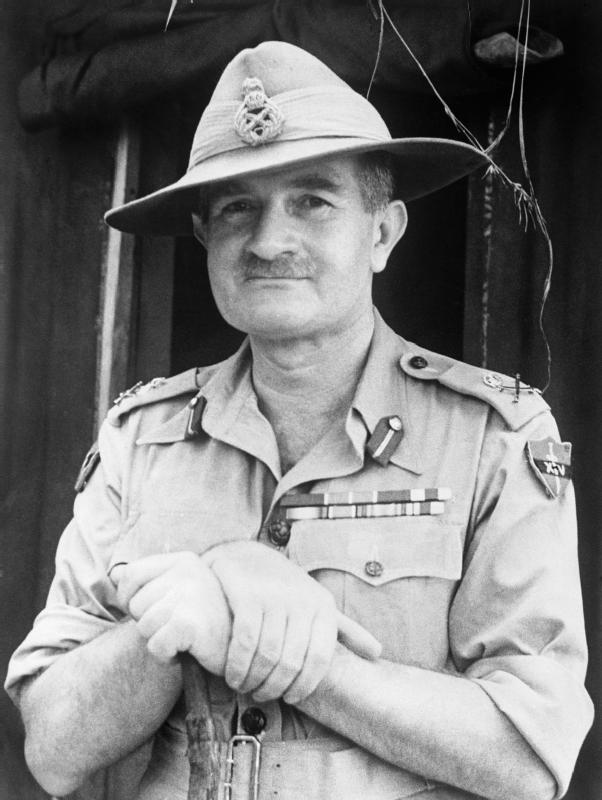
Field Marshal Sir William Slim (1891-1970), during his time as GOC XIVth Army in Burma.
Portrait by No. 9 Army Film & Photographic Unit via Wikimedia Commons.
I am not the first person to make these kinds of observations. Jim Storr has written about peacetime promotion culture in the British Army and Thomas E. Ricks did the same with U.S. Army. Here is an excerpt from Storr:
It appears that many of those whom the British Army promoted in peacetime during the twentieth century were found wanting on the outbreak of war. Promotion to high command in peacetime very much reflects the values of existing senior commanders, themselves largely the products of a peacetime promotion system. To that extent it reflects deeply held values, and has an obvious impact on operational effectiveness in war.
Roughly two-thirds of those who commanded formations in the BEF [British Expeditionary Force] of 1940 were either sacked, retired immediately, or were never given another formation to command in the field.
Ricks describes a similar phenomenon occurring in the U.S. Army during the Second World War. Many senior leaders who had risen during peacetime couldn’t perform under real-world conditions. Under the stern hand of George C. Marshall, then Chief of Staff of the U.S. Army, generals were removed from command at a rate that is unheard of today. Many of those who were fired had glowing records and some went on to redeem their reputations in later commands, which suggests that they had been promoted too soon or too high above their level of competence.
More recently, Russia has been churning through general officers in Ukraine, seemingly desperate to find someone who can achieve Putin’s war aims. If an army systematically promotes its officers above their level of competence in peacetime, then clearly their selection and assessment criteria are not aligned with the actual job requirements.
To illustrate the point, Storr compares careers of Second World War British Field Marshals. The first, Field Marshal John Verreker a.k.a. Lord Gort, was Commander-in-Chief (C.-in-C.) of the BEF during its disastrous efforts in France in 1940.
[Gort] was the epitome of the system: young, highly decorated, charismatic, promoted through and entirely within the system. He was only 51 when appointed CIGS [Chief of Imperial General Staff] … As C.-in-C. of the BEF, he “fussed over details and things of comparatively little consequence” and had a “constant preoccupation with things of small detail”.
After he oversaw the evacuation of British troops from Dunkirk, Gort was removed from command and served out the rest of the war in non-combatant posts. It should be noted that Gort was not a bad soldier. During the First World War, he rose from the rank of captain to acting lieutenant-colonel and in the process earned the Distinguished Service Order (with bar) and the Victoria Cross. It was during the interwar years that Gort ascended from the substantive rank of Major to Field Marshal. Battles may be won with good-enough tactics and a lot of chutzpah, but Gort was unprepared for the complexities of wartime command at the strategic level. He did, however, excel at playing politics.
For contrast, here is Storr’s description of Field Marshal William “Bill” Slim:
[The] 47-year-old Bill Slim was promoted to lieutenant-colonel in 1938, perhaps at the last possible opportunity. Slim had not been to Sandhurst; he had gained his commission “through the back door” and had come from a modest background. The outbreak of the Second World War saw him commanding a brigade in East Africa. Within four years he was commanding the Fourteenth Army in Burma … Slim was obviously not the product of a stable heirarchy in peacetime. His rise to fame came entirely during wartime. He was arguably one of the greatest British generals of the twentieth century. The contrast with Gort could not be more marked.
For his part, Ricks has a takes a wider view of how the post-war U.S. Army made some officers too big to fail:
Korea, Vietnam, and Iraq were all small, ambiguous, increasingly unpopular wars, and in each, success was harder to define than it was in World War II. Firing generals seemed to send a signal to the public that the war was going poorly.
But that is only a partial explanation. Changes in our broader society are also to blame. During the 1950s, the military, like much of the nation, became more “corporate” — less tolerant of the maverick and more likely to favor conformist “organization men”. As a large, bureaucratized national-security establishment developed to wage the Cold War, the nation’s generals also began acting less like stewards of a profession, responsible to the public at large, and more like members of a guild, looking out primarily for their own interests.
It seems like loyalty up became more important than loyalty out.
1949: HMS Implacable‘s Last Voyage | BBC Television Newsreel | Retro Transport | BBC Archive
BBC Archive
Published 19 Nov 2022HMS Implacable, a 149 year-old ship of the line — which survived the Battle of Trafalgar — embarks on her final, solemn voyage.
The figurehead, deck and stern cabin of this captured French ship are to be kept at the National Maritime Museum in Greenwich, but her hulk is to be towed out from Portsmouth dockyard and scuttled.
Originally broadcast 5 December, 1949.
(more…)
March 12, 2023
Zhukov hits the Ground Running – WW2 – Week 237 – March 11, 1944
World War Two
Published 11 Mar 2023The Soviets launch not one, not two, but three offensives in Ukraine this week, designed to destroy the entire southern wing of the German forces. The Japanese counterattack against the Americans on Bougainville finally begins after months of preparations, but there are more Japanese attacks elsewhere that get going: the operation to invade India.
(more…)
The young British officer’s attitude toward his men
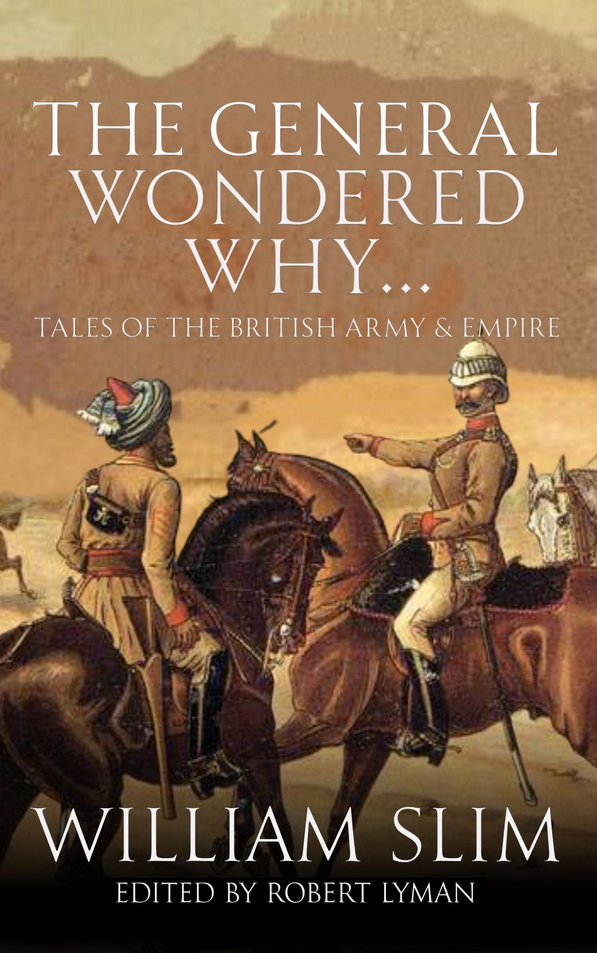
Dr. Robert Lyman has been working on pulling together various newspaper and magazine articles written by Field Marshal William Slim before the Second World War, to be published later this year. I believe this will include everything he included (in shorter form in some cases) in his 1959 book Unofficial History plus many others. In this excerpt from “Private Richard Chuck, aka The Incorrigible Rogue”, Slim recounts taking command of a company of recent conscripts while recuperating from wounds received earlier in WW1:
“Light duty of a clerical nature,” announced the President of the Medical Board. Not too bad, I thought, as I struggled back into my shirt. “Light duty of a clerical nature” had a nice leisurely sound about it. I remembered a visit I had paid to a friend in one of the new government departments that were springing up all over London at the end of 1915. He had sat at a large desk dictating letters to an attractive young lady. When she got tired of taking down letters, she poured out tea for us. She did it very charmingly. Decidedly, light duty of a clerical nature might prove an agreeable change after a hectic year as a platoon commander and a rather grim six months in hospital. Alas, after a month in charge of the officers’ mess accounts of a reserve battalion, with no more assistant than an adenoidal “C” Class clerk, I had revised my opinion. My one idea was to escape from “light duty of a clerical nature” into something more active. Reserve battalions were like those reservoirs that haunted the arithmetic of our youth — the sort that were filled by two streams and emptied by one. Flowing in came the recovered men from hospitals and convalescent homes and the new enlistments; out went the drafts to battalions overseas. When the stream of voluntary recruits was reduced to a trickle the only way to restore the intake was by conscription, and this was my chance.
It had been decided to segregate the conscripts into a separate company as they arrived. I happened to be the senior subaltern at the moment and I applied for command of the new company. Rather to my surprise, for I was still nominally on light duty, I got it. The conscripts, about a hundred and twenty of them, duly arrived. They looked very much like any other civilians suddenly pushed into uniform, awkward, bewildered, and slightly sheepish, and I regarded them with some misgiving. After all, they were conscripts; I wondered if I should like them.
The young British officer commanding native troops is often asked if he likes his men. An absurd question, for there is only one answer. They are his men. Whether they are jet-black, brown, yellow, or café-au-lait, the young officer will tell you that his particular fellows possess a combination of military virtues denied to any other race. Good soldiers! He is prepared to back them against the Brigade of Guards itself! And not only does the young officer say this, but he most firmly believes it, and that is why, on a thousand battlefields, his men have justified his faith.
In a week I felt like that about my conscripts. I was a certain rise to any remark about one volunteer being worth three pressed men. Slackers? Not a bit of it! They all had good reasons for not joining up. How did I know? I would ask them. And I did. I had them, one by one, into the company office, without even an N.C.O. to see whether military etiquette was observed. They were quite frank. Most of them did have reasons — dependants who would suffer when they went, one-man businesses that would have to shut down. Underlying all the reasons of those who were husbands and fathers was the feeling that the young single men who had escaped into well-paid munitions jobs might have been combed out first.
[…]
We had now advanced far enough in our training to introduce the company to the mysteries of the Mills bomb. There is something about a bomb which is foreign to an Englishman’s nature. Some nations throw bombs as naturally as we kick footballs, but put a bomb into an unschooled Englishman’s hands and all his fingers become thumbs, an ague affects his limbs, and his wits desert him. If he does not fumble the beastly thing and drop it smoking at his — and your — feet, he will probably be so anxious to get rid of it that he will hurl it wildly into the shelter trench where his uneasy comrades cower for safety. It is therefore essential that the recruit should be led gently up to the nerve-racking ordeal of throwing his first live bomb; but as I demonstrated to squad after squad the bomb’s simple mechanism, I grew more and more tired with each until I could no longer resist the temptation to stage a little excitement. I fitted a dummy bomb, containing, of course, neither detonator nor explosive, with a live cap and fuse. Then for the twentieth time I began!
When you pull out the safety-pin you must keep your hand on the lever or it will fly off. If it does it will release the striker, which will hit the cap, which will set the fuse burning. Then in five seconds off goes your bomb. So when you pull out the pin don’t hold the bomb like this!’
I lifted my dummy, jerked out the pin, and let the lever fly off. There was a hiss, and a thin trail of smoke quavered upwards. For a second, until they realized its meaning, the squad blankly watched that tell-tale smoke. Then in a wild sauve qui peut they scattered, some into a nearby trench, others, too panic-stricken to remember this refuge, madly across country, I looked round, childishly pleased at my little joke, to find one figure still stolidly planted before me. Private Chuck alone held his ground, placidly regarding me, the smoking bomb, and his fleeing companions with equal nonchalance. This Casablanca act was, I felt, the final proof of mental deficiency — and yet the small eyes that for a moment met mine were perfectly sane and not a little amused.
“Well,” I said, rather piqued, “hy don’t you run with the others?” A slow grin passed over Chuck’s broad face.
“I reckon if it ‘ud been a real bomb you’d ‘ave got rid of it fast enough,” he said. Light dawned on me.
“After this, Chuck,” I answered, “you can give up pretending to be a fool; you won’t get your discharge that way!”
He looked at me rather startled, and then began to laugh. He laughed quietly, but his great shoulders shook, and when the squad came creeping back they found us both laughing. They found, too, although they may not have realized it at first, a new Chuck; not by any means the sergeant-major’s dream of a soldier, but one who accepted philosophically the irksome restrictions of army life and who even did a little more than the legal minimum.
March 11, 2023
British attitudes to crime differ substantially between average Britons and the ruling elite
Scott Alexander does a monthly roundup of interesting links and this one popped up for his March collection:
Looks like the British population is tough on crime (h/t James Johnson):
… including about 15% who want prison time for not wearing a seatbelt, 47% who want prison time for sexist abuse on social media, and 80% who want prison time for possession of a knife (and 18% think it should be over five years)! Meanwhile, in actual Britain, a guy with multiple previous violence convictions who brutally assaulted a cyclist and then stomped on her head while she lay unconscious was let off with community service. This is an interesting contrast to see in a democracy!
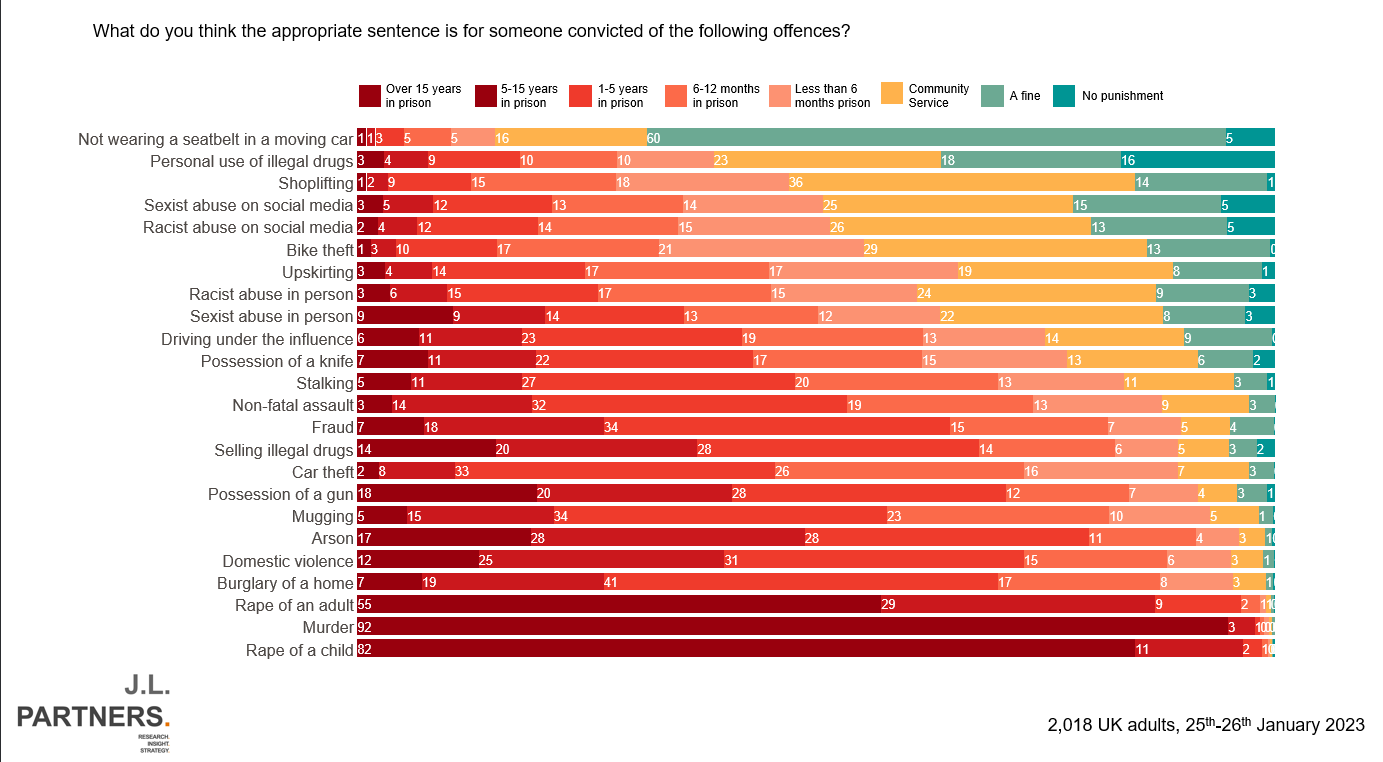
As an illustration of the rift between the people who suffer from the criminal and sub-criminal activities of the “non-law-abiding community” and those who are fully insulated from that same community, this is pretty typical. Very similar rifts would almost certainly be found in Canada, the United States, Australia, and New Zealand. When you have no skin in the game, you can let your virtue signalling freak flag fly, and our elites have no skin in the game.
“… when people are sticking warning labels on P.G. Wodehouse, something is seriously wrong”
In The Conservative Woman, Alan Ashworth stands aghast at the very notion of putting a content warning on an adaptation of a P.G. Wodehouse short story:
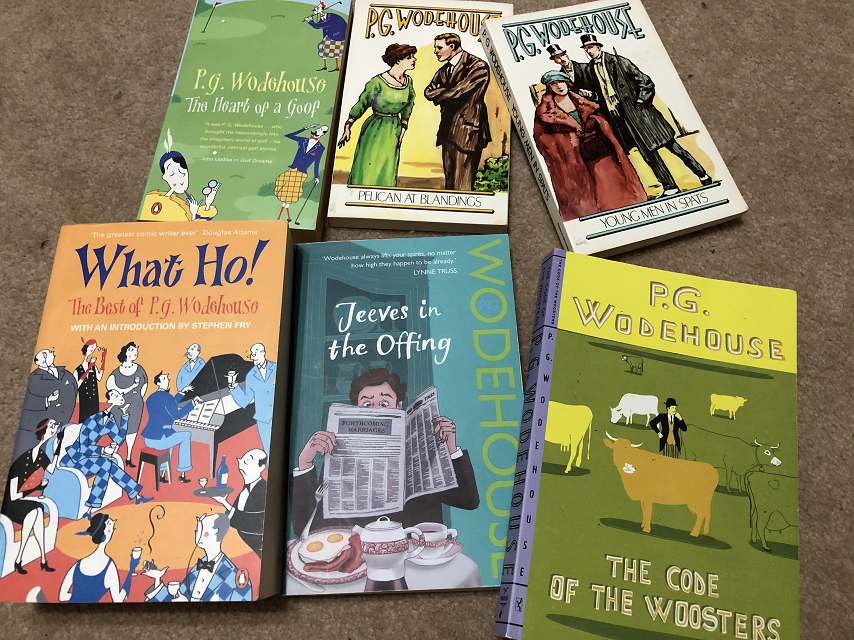
Dominic Sandbrook in the Mail on Sunday draws attention to BBC Radio 4 Extra and its latest repeat of an adaptation of P.G. Wodehouse’s Psmith in the City. It is preceded by an announcement that listeners should steel themselves for “some dated attitudes and language”.
You don’t say. The story was written well over a century ago, appearing first as a serial in The Captain magazine in 1908 and 1909 before being published as a book by A & C Black in 1910.
In it Psmith (the P is silent) and his old school friend Mike Jackson are reunited when they find themselves working for the New Asiatic Bank, a thinly disguised portrait of the Hongkong and Shanghai Bank (now HSBC) where Wodehouse himself endured a torrid spell before his writing career took off.
The two chums have several run-ins with management and Mike is eventually fired before Psmith solves all his problems and has him reinstated. Of course, as always in Wodehouse’s world, there is no sex, no angst, nothing to frighten the horses.
So why the BBC announcement? Sandbrook writes: “At first I wondered if this must be some mistake. Perhaps the warning had been transposed from some more dangerous programme, such as a stand-up show by Bernard Manning?
“But the warning was meant for Psmith. So what were these toxic and potentially traumatising attitudes? For the life of me, I still don’t really know.
“At one point, Psmith talks of going ‘out East’, where you have ‘a dozen native clerks under you, all looking up to you as the Last Word in magnificence’. But was that it? Did that merit a warning?
“As it happens, this radio adaptation was made in 2008. Did the actors realise they were participating in something steeped in sick imperialistic assumptions? I doubt it.
“Venturing into the cesspit of social media, I often find Left-wing pundits insisting there is no such thing as cancel culture and that the whole thing is an evil Tory myth.
“But when people are sticking warning labels on P G Wodehouse, something is seriously wrong. Indeed, you could hardly find a more ludicrous target, because he was one of most tolerant, generous-spirited writers imaginable. So generous-spirited that he’d probably have laughed this off. ‘I never was interested in politics,’ Wodehouse once remarked. ‘I’m quite unable to work up any kind of belligerent feeling.’
“Being cut from a meaner cloth, however, I do feel worked up about it. When I think of these finger-wagging commissars sitting in judgment on a writer who has given so much pleasure to so many readers, I feel like Bertie Wooster’s Aunt Agatha, gearing herself up before a titanic tirade.
“Do we really need a warning that P G Wodehouse is ‘dated’? What next? A lecture before Hamlet, to warn us that poisoning your wife or killing your uncle is now considered poor form? A warning before Roald Dahl or Ian Fleming?
“But, of course, Dahl and Fleming don’t need warnings now, for they have been posthumously updated.”
March 10, 2023
The evolution of a slur
Scott Alexander traces the reasons that we can comfortably call British people “Brits” but avoid using the similar contraction “Japs” for Japanese people:
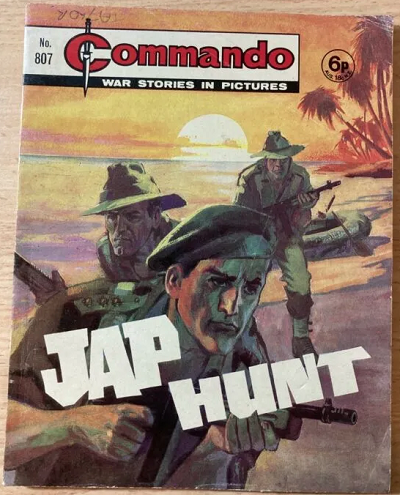
Someone asks: why is “Jap” a slur? It’s the natural shortening of “Japanese person”, just as “Brit” is the natural shortening of “British person”. Nobody says “Brit” is a slur. Why should “Jap” be?
My understanding: originally it wasn’t a slur. Like any other word, you would use the long form (“Japanese person”) in dry formal language, and the short form (“Jap”) in informal or emotionally charged language. During World War II, there was a lot of informal emotionally charged language about Japanese people, mostly negative. The symmetry broke. Maybe “Japanese person” was used 60-40 positive vs. negative, and “Jap” was used 40-60. This isn’t enough to make a slur, but it’s enough to make a vague connotation. When people wanted to speak positively about the group, they used the slightly-more-positive-sounding “Japanese people”; when they wanted to speak negatively, they used the slightly-more-negative-sounding “Jap”.
At some point, someone must have commented on this explicitly: “Consider not using the word ‘Jap’, it makes you sound hostile”. Then anyone who didn’t want to sound hostile to the Japanese avoided it, and anyone who did want to sound hostile to the Japanese used it more. We started with perfect symmetry: both forms were 50-50 positive negative. Some chance events gave it slight asymmetry: maybe one form was 60-40 negative. Once someone said “That’s a slur, don’t use it”, the symmetry collapsed completely and it became 95-5 or something. Wikipedia gives the history of how the last few holdouts were mopped up. There was some road in Texas named “Jap Road” in 1905 after a beloved local Japanese community member: people protested that now the word was a slur, demanded it get changed, Texas resisted for a while, and eventually they gave in. Now it is surely 99-1, or 99.9-0.1, or something similar. Nobody ever uses the word “Jap” unless they are either extremely ignorant, or they are deliberately setting out to offend Japanese people.
This is a very stable situation. The original reason for concern — World War II — is long since over. Japanese people are well-represented in all areas of life. Perhaps if there were a Language Czar, he could declare that the reasons for forbidding the word “Jap” are long since over, and we can go back to having convenient short forms of things. But there is no such Czar. What actually happens is that three or four unrepentant racists still deliberately use the word “Jap” in their quest to offend people, and if anyone else uses it, everyone else takes it as a signal that they are an unrepentant racist. Any Japanese person who heard you say it would correctly feel unsafe. So nobody will say it, and they are correct not to do so. Like I said, a stable situation.
He also explains how and when (and how quickly) the use of the word “Negro” became extremely politically incorrect:
Slurs are like this too. Fifty years ago, “Negro” was the respectable, scholarly term for black people, used by everyone from white academics to Malcolm X to Martin Luther King. In 1966, Black Panther leader Stokely Carmichael said that white people had invented the term “Negro” as a descriptor, so people of African descent needed a new term they could be proud of, and he was choosing “black” because it sounded scary. All the pro-civil-rights white people loved this and used the new word to signal their support for civil rights, soon using “Negro” actively became a sign that you didn’t support civil rights, and now it’s a slur and society demands that politicians resign if they use it. Carmichael said — in a completely made up way that nobody had been thinking of before him — that “Negro” was a slur — and because people believed him it became true.
Tank Chats #168 | Vixen & Fox | The Tank Museum
The Tank Museum
Published 18 Nov 2022Join David Fletcher as he takes a look at the Vixen and Fox armoured cars.
(more…)


