
One of the worst things my parents ever did was force me to go to the panto. It was Angela’s Ashes levels of misery memoir fodder.
What made it worse was that I was about 14; I’d almost managed to get through childhood without experiencing this strange British tradition and then, just at the age when you’re most vulnerable to cringe, I got dragged in. Anyway, I think I’m over it now.
Pantomime is one of those very British things that makes me feel a strange sense of alienation from my countrymen, like celebrating the NHS or twee. I’m glad that other people enjoy it, and that it brings a lot of work to actors and to theatres during the Christmas period. I just personally don’t get it.
For those who don’t know about the ins and outs of our island culture, panto is a sort of farcical theatre featuring lots of sexual innuendo and contemporary pop culture references; I think when I watched it there must have been one or two ex-Neighbours stars because they all finished by singing the theme tune.
A key part of this British institution is drag, with men playing the roles of Widow Twankey and the Ugly Sisters. Drag is quite an established tradition in England, such a part of popular entertainment that there is even a photograph of British soldiers in dresses fighting in the Second World War.
Pantomime is thought to have evolved from the medieval Feast of Fools, a day of the year (around the Christmas/New Year period) when social norms would be inverted; laymen would be elected bishops, lords would serve their retainers drinks, and men and women would even swap roles. Social norms could be temporarily broken, which continues today in the often risqué humour incongruously aimed at family audiences (hilariously portrayed in the Les Dennis episode of Extras.)
This kind of drag is obviously humourous, the aim being for the men to look as ridiculous as possible; think of the ungainly Bernard Bresslaw in Carry on Doctor. It is very different to the later pop culture gender fluidity pioneered by David Bowie in which males might be presented as beautifully feminine, even alluring; that was aimed at challenging and disturbing the audience, while panto is aimed at amusing and reassuring. Indeed, the whole point of spending a day inverting social norms is that, by doing so, you are implicitly accepting and defending those social norms.
This form of drag is obviously quite different to the more modern drag queen, a form of entertainment that can be far more explicit and which has in the 21st century become yet another one-of-those-talking-points, chiefly because people seem so keen on letting children watch it.
Ed West, “The last conservative moral panic”, Wrong Side of History, 2023-02-08.
January 1, 2024
QotD: The Panto
December 31, 2023
Budapest Under Siege – WW2 – Week 279 – December 30, 1944
World War Two
Published 30 Dec 2023In the west, the Allies break the siege of Bastogne, but the fight for the Ardennes continues. and British commander Bernard Montgomery is maneuvering to take command of the Western Front ground forces. In Hungary Budapest is cut off by the Soviets and under siege, with hundreds of thousands of civilians still in the city. The fight in Italy is winding down for the winter, but the fight in the Philippines continues. In fact, American landings on Luzon are planned to go off soon.
00:00 INTRO
01:22 The Siege of Bastogne
03:10 The failure of 5th and 6th Panzer Armies
06:11 Montgomery wants command
09:27 Guderian appeals to Hitler, “stop the Ardennes Offensive!”
12:11 Budapest surrounded and under siege
17:04 Wrapping up the Gothic Line Campaign
19:29 Churchill in Athens
20:30 The fight in the Philippines
23:07 SUMMARY
(more…)
The British army in Northern Ireland, 1966-1975
Patrick Mercer reviews Huw Bennett’s Uncivil War: The British Army and the Troubles, 1966-1975 for The Critic:
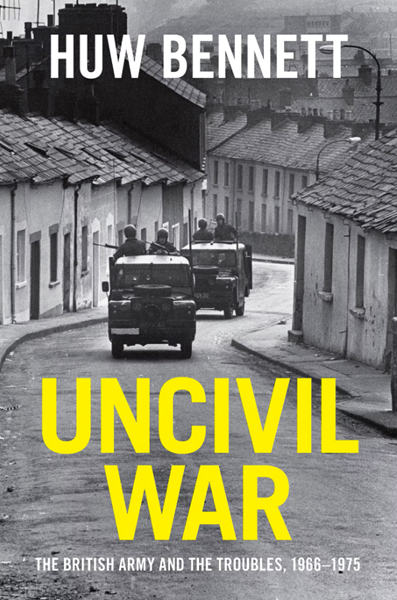
Seen from today’s perspective, the litany of campaigns Britain fought between the World Wars seems unimportant. Yet disasters such as the Jallianwala Bagh massacre in Amritsar in April 1919, and the depredations of the Auxiliaries or Black and Tans in Ireland at much the same time, imperilled imperial strategy. [Richard Dannatt & Robert Lyman’s] Victory to Defeat underlines the actions of relatively small numbers of troops which threatened to unhinge whole campaigns. It makes the perfect counterpoint to Huw Bennett’s Uncivil War, which covers the opening years of the crisis in Northern Ireland in meticulous detail.
Bennett looks at operations in Northern Ireland only up until 1975 — arguably the most intense period — with a promise of further volumes to follow. This is the first, comprehensive attempt to deal in parallel with the political aspects of the campaign as well as the purely military ones. Although densely written, Uncivil War gives a very readable account of the first of three decades of conflict which dominated the everyday life of most of the combat arms of the Army. It now seems ironic, though, that Ulster was always treated as something of a sideshow when compared with the “real soldiering” of deterring the Soviets in Germany.
Central to Bennett’s book is the debacle of “Bloody Sunday” in January 1972, when paratroopers ran amok in Londonderry at a point of the campaign when the IRA was exhausted and finding it almost impossible to recruit. Politically, there might have been a breakthrough; militarily the terrorists were teetering on collapse, but one black sheep unit and the ham-fisted response by the chain of command galvanised the IRA. With a rifle’s crack, they guaranteed bloodshed for years to come.
If ever a victory was turned into defeat in modern times, this was it. Bennett pulls no punches in pointing that out. The interesting contrast with Lyman and Dannatt’s work is that no matter how much had been learnt from the Second World War, the doctrine that emerged could only be tested by blank firing exercises in Germany. Whilst the highly unlikely possibility of a war in Europe was constantly analysed, very little strategic thinking was put into the grinding, long-term campaign in Ulster that was actually killing people.
Certainly there were political initiatives and the intelligence machinery was constantly evolving, but the many battalions and regiments who were charged with everyday deterrence and occasional attrition wandered the streets with little imagination or flair, often only seeming to provide targets for the terrorists. If war against the Soviets was remote, bombs, snipers and ambushes in Ulster were certain. By contrast, the Field Service Pocket Book (India) of 1930 laid out clear advice and principles for operations on the North-West Frontier. In Ulster, we just blundered on.
If the lessons of 1918 were neglected, those that led to victory in 1945 were carefully studied, although any coherent tactical doctrine took until the 1980s to be published. Perversely, the operations that followed both world wars were much the same: small, far-flung, post-imperial scuffles which owed little to “conventional” fighting. Indeed, it might be argued that the real lessons that the Army needed to heed after 1945 were not those of a European war, but those which might have prepared it for long years in Northern Ireland or the former colonies.
This library has every book ever published
Tom Scott
Published 11 Sept 2023The British Library is one of the six legal deposit libraries for the UK — and the only one that doesn’t pick and choose, or have to ask for copies. That’s a lot of books to store, and the internet’s only making it worse. ■ The BL: https://bl.uk ■ UK Web Archive: https://www.webarchive.org.uk/
(more…)
December 30, 2023
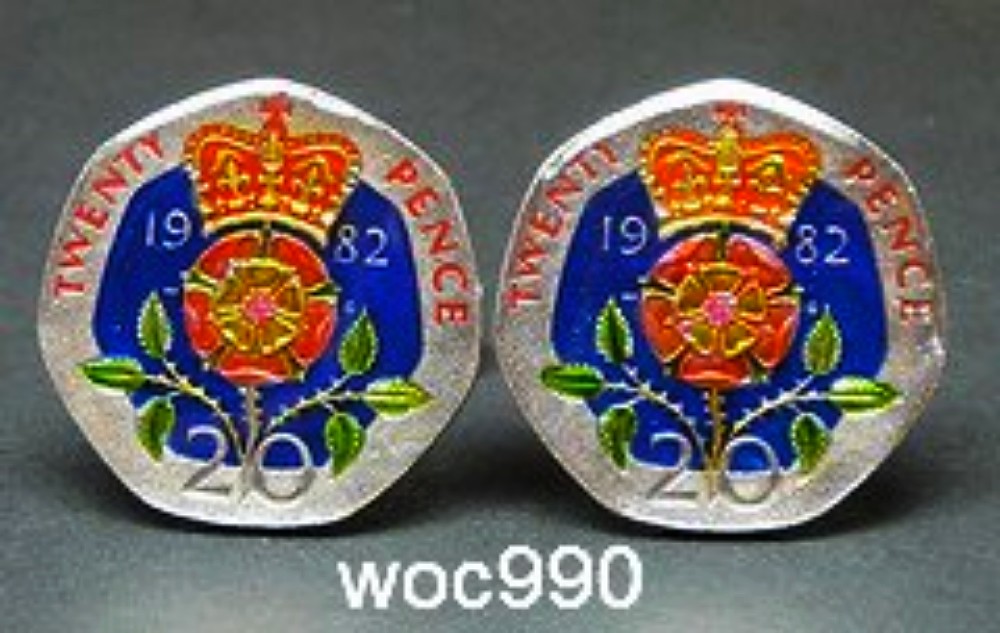
In defence of … cufflinks?
In The Critic, Peter Caddick-Adams makes the case for sartorial splendour over modern-day slovenly dress, and particularly for the cufflink:
“Great British coin cufflinks” by wowcoin is licensed under CC BY-SA 2.0 

 .
.
… these traditional baubles are fast becoming the clothing language of the old guard. Although fashion is always on the move, we are less stylish than we once were. Perhaps propelled by Mrs Thatcher’s homely handbags, refinement in dress is receding from everyday life. The fact that our current Prime Minister, like his predecessor-but-one, rarely sports cufflinks is a symptom of a greater sartorial malaise.
Links evolved in the 19th century as a means of displaying wealth and class, following the ruffled nonsense of the Elizabethan and Baroque eras and floppy sleeves sported by Beau Brummell and his Regency dandies. After Prince Albert had popularised the watch chain named after him, masculine fashion was bowled over by his son, the frock-coated Prince of Wales, later Edward VII. “Gentlemen, you may smoke,” he proclaimed on ascending the throne in 1901, instantly removing Queen Victoria’s ban on puffing away on the royal estates.
Apart from making a profession out of cigar-smoking, the new king influenced many clothing innovations, including trouser turn-ups (a last-minute tailor’s resort), those monstrous “Windsor” tie-knots, and leaving the bottom button of a waistcoat undone (due to the imperial stomach). The most colourful were His Majesty’s shirt embellishments designed by Fabergé. They immediately prompted Europe’s middle classes to weigh-in with gold, enamelled or monogrammed cuff jewellery, without which the aspiring Edwardian-era male was, frankly, naked.
Not compatible with the rigours of combatting the Bosche in the trenches of the Great War (when the affectation of tucking a muddied or bloodied handkerchief into one’s coat sleeve re-emerged), cuff-links returned with vigour during the Jazz Age. Their reappearance, along with spats (worn around the ankle) was due to the lack of central heating in His Majesty’s realm. All those draughty corridors in smart houses (and lack of instant remedies for colds and flu) necessitated warm ankles, with silk-wrapped necks and wrists protected by elaborate studs and links.
Resurgence was brief, for the aforesaid gentleman’s accessories almost vanished in 1939–45 with the advent of austerity imposed by adversity. Skullduggery by German submarine captains created shortages of fine shirting. The resultant famine of silk and cotton in turn destroyed the double cuff, which hitherto had been bound together so effectively by links. As it was deemed unpatriotic in the many countries at war to advertise luxury, these flourishes fell out of fashion completely.
Winston Churchill compounded this utilitarian mood with his man-of-the-people “siren suits” (predecessor of today’s onesies). They reflected the epoch of clothing short-cuts, such as collar-attached shirts, zip fasteners and trouser belts, replacing collar studs, fly buttons and braces — all, you will note, gifts from our Transatlantic cousins. Although men’s hats were retained for warmth, mainly disappearing in the 1960s because of our extended lives in automobiles, these moves to simpler clothing (even if, in Churchill’s case, adorned with a spotted bow tie) also threatened the permanent demise of the cuff-link. More correctly, they threatened cufflinks, for these are only of value in the plural.
Indeed, “what is the point of cufflinks?”, I hear you ponder. Anthropologists will tell you that man is a curious creature. From the dawn of time, he has had a weakness for asserting individuality, to signify class or leadership, or oft-times as part of a mating ritual. Archaeologists will reference troves of treasured jewellery in excavated graves. Historians cite portraits, engravings, photographs and uniforms, monocles and cravats as proof of this down to modern times. Staying with a barrister friend recently, I was shown his collection of about fifty pairs of cufflinks. Their designs reflected his three lives as a reserve officer, lawyer and freemason.
QotD: Post-Christmas dining
Amanda (@Pandamoanimum), Twitter, 2021-12-29.
December 29, 2023
The Christianization of England
Ed West‘s Christmas Day post recounted the beginnings of organized Christianity in England, thanks to the efforts of Roman missionaries sent by Pope Gregory I:
“Saint Augustine and the Saxons”
Illustration by Joseph Martin Kronheim from Pictures of English History, 1868 via Wikimedia Commons.
The story begins in sixth century Rome, once a city of a million people but now shrunk to a desolate town of a few thousand, no longer the capital of a great empire of even enjoying basic plumbing — a few decades earlier its aqueducts had been destroyed in the recent wars between the Goths and Byzantines, a final blow to the great city of antiquity. Under Pope Gregory I, the Church had effectively taken over what was left of the town, establishing it as the western headquarters of Christianity.
Rome was just one of five major Christian centres. Constantinople, the capital of the surviving eastern Roman Empire, was by this point far larger, and also claimed leadership of the Christian world — eventually the two would split in the Great Schism, but this was many centuries away. The other three great Christian centres — Jerusalem, Alexandria, and Antioch — would soon fall to Islam, a turn of events that would strengthen Rome’s spiritual position. And it was this Roman version of Christianity which came to shape the Anglo-Saxon world.
Gregory was a great reformer who is viewed by some historians as a sort of bridge between Late Antiquity and the Middle Ages, the founder of a new and reborn Rome, now a spiritual rather than a military empire. He is also the subject of the one great stories of early English history.
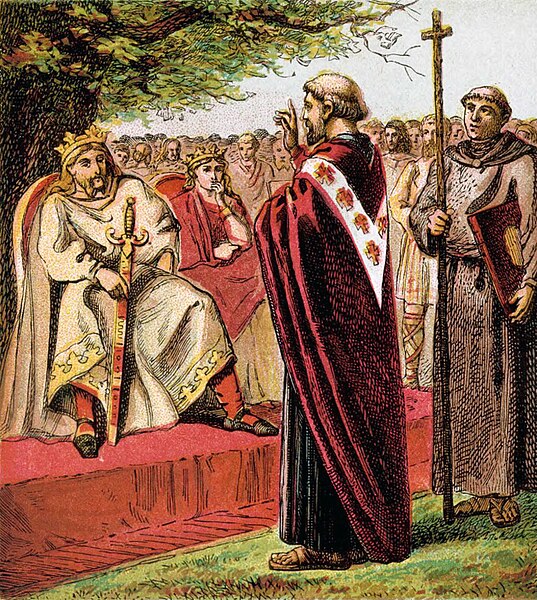
One day during the 570s, several years before he became pontiff, Gregory was walking around the marketplace when he spotted a pair of blond-haired pagan slave boys for sale. Thinking it tragic that such innocent-looking children should be ignorant of the Lord, he asked a trader where they came from, and was told they were “Anglii”, Angles. Gregory, who was fond of a pun, replied “Non Angli, sed Angeli” (not Angles, but angels), a bit of wordplay that still works fourteen centuries later. Not content with this, he asked what region they came from and was told “Deira” (today’s Yorkshire). “No,” he said, warming to the theme and presumably laughing to himself, “de ira” — they are blessed.
Impressed with his own punning, Gregory decided that the Angles and Saxons should be shown the true way. A further embellishment has the Pope punning on the name of the king of Deira, Elle, by saying he’d sing “hallelujah” if they were converted, but it seems dubious; in fact, the Anglo-Saxons were very fond of wordplay, which features a great deal in their surviving literature and without spoiling the story, we probably need to be slightly sceptical about whether Gregory actually said any of this.
The Pope ordered an abbot called Augustine to go to Kent to convert the heathens. We can only imagine how Augustine, having enjoyed a relatively nice life at a Benedictine monastery in Rome, must have felt about his new posting to some cold, faraway island, and he initially gave up halfway through his trip, leaving his entourage in southern Gaul while he went back to Rome to beg Gregory to call the thing off.
Yet he continued, and the island must have seemed like an unimaginably grim posting for the priest. Still, in the misery-ridden squalor that was sixth-century Britain, Kent was perhaps as good as it gets, in large part due to its links to the continent.
Gaul had been overrun by the Franks in the fifth century, but had essentially maintained Roman institutions and culture; the Frankish king Clovis had converted to Catholicism a century before, following relentless pressure from his wife, and then as now people in Britain tended to ape the fashions of those across the water.
The barbarians of Britain were grouped into tribes led by chieftains, the word for their warlords, cyning, eventually evolving into its modern usage of “king”. There were initially at least twelve small kingdoms, and various smaller tribal groupings, although by Augustine’s time a series of hostile takeovers had reduced this to eight — Kent, Sussex, Essex, and Wessex (the West Country and Thames Valley), East Anglia, Mercia (the Midlands), Bernicia (the far North), and Deira (Yorkshire).
In 597, when the Italian delegation finally finished their long trip, Kent was ruled by King Ethelbert, supposedly a great-grandson of the semi-mythical Hengest. The king of Kent was married to a strong-willed Frankish princess called Bertha, and luckily for Augustine, Bertha was a Christian. She had only agreed to marry Ethelbert on condition that she was allowed to practise her religion, and to keep her own personal bishop.
Bertha persuaded her husband to talk to the missionary, but the king was perhaps paranoid that the Italian would try to bamboozle him with witchcraft, only agreeing to meet him under an oak tree, which to the early English had magical properties that could overpower the foreigner’s sorcery. (Oak trees had a strong association with religion and mysticism throughout Europe, being seen as the king of the trees and associated with Woden, Zeus, Jupiter, and all the other alpha male gods.)
Eventually, and persuaded by his wife, Ethelbert allowed Augustine to baptise 10,000 Kentish men on Christmas Day, 597, according to the chronicles. This is probably a wild exaggeration; 10,000 is often used as a figure in medieval history, and usually just means “quite a lot of people”.
QotD: The Hanoverian “reverse takeover of the British monarchy by the Germans”
Music was a language that united the English and the Germans. The key figure was, of course, Handel — the first and pre-eminent but by no means the last Anglo-German composer. Born in Halle, Georg Friedrich Händel had briefly been George I’s Kapellmeister in Hanover yet had already established himself in England before the Prince Elector of Hanover inherited the British throne in 1714.
In London — then in the process of overtaking Paris and Amsterdam to become the commercial capital of Europe — he discovered hitherto undreamt-of possibilities. There he founded three opera companies, for which he supplied more than 40 operas, and adapted a baroque Italian art form, the oratorio, to suit English Protestant tastes.
His coronation music, such as the anthem, “Zadok the Priest”, imbued the Hanoverian dynasty with a new and splendid kind of sacral majesty. But he also added to its lustre by providing the musical accompaniment for new kinds of public entertainment, such as his Music for the Royal Fireworks: 12,000 people came to the first performance.
Along with music, the Germans brought a focus on military life. Whereas for the British Isles, the Civil War and the subsequent conflicts in Scotland and Ireland had been something of an aberration, war was second nature to German princes. Among them, George II was not unusual in leading his men into battle, although he was the last British monarch to do so.
Still, the legacy of such Teutonic martial prowess was visible in the late Queen’s obsequies: uniforms and decorations, pomp and circumstance, accompanied by funeral marches composed by a German, Ludwig van Beethoven. Ironically, the German state now avoids any public spectacle that could be construed as militaristic, yet most Germans harbour boundless admiration for the way that the British monarchy enlists the ceremonial genius of the armed services.
Even more important was the German contribution to the uniquely British creation of constitutional monarchy.
Each successive dynasty has left its mark on the monarchy’s evolution: from the Anglo-Saxons and Normans (the common law) to the Plantagenets (Magna Carta and Parliament) and Tudors (the Reformation). Only the Stuarts failed this test, at least until 1688. Even after the Glorious Revolution, the Bill of Rights and other laws that conferred statutory control over the royal prerogative, the constitutional settlement still hung in the balance when Queen Anne, the last Stuart ruler, died in 1714.
Coming from a region dominated by the theory and practice of absolute monarchy, the Hanoverians had no choice but to adapt immediately and seamlessly to the realities of politics in Britain, where their role was strictly limited. Robert Walpole and the long Whig ascendancy, during which the doctrine of parliamentary sovereignty embedded itself irrevocably, could not have taken place without the acquiescence and active support of the new dynasty.
George III has been accused of attempting to reverse this process. The charge is unjust. Rather, as Andrew Roberts demonstrates in his new biography, he was “a monarch who understood his extensive rights and duties under the constitution”. He still had the right to refuse royal assent to parliamentary bills, but in half a century he never once exercised his veto (the last monarch to do so was the Stuart, Queen Anne in 1708).
At a time when enlightened despotism was de rigueur on the Continent, the Hanoverians were content to participate in an unprecedented constitutional experiment in their newly acquired United Kingdom. It was neither the first Brexit, nor the last, but it happened courtesy of a Royal Family that was still very German.
Daniel Johnson, “Why Germany mourned our Queen”, The Critic, 2022-10-30.
December 28, 2023
War-winning expertise of 1918, completely forgotten by 1939
Dr. Robert Lyman writes about the shocking contrasts between the British Army (including the Canadian and Australian Corps) during the Hundred Days campaign of 1918 and the British Expeditionary Force that was driven from the continent at Dunkirk:
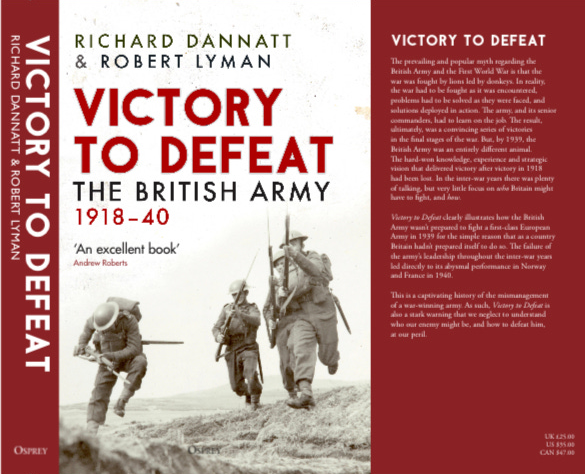
There was a fleeting moment during the One Hundred Days battles that ended the First World War in France in which successful all-arms manoeuvre by the British and Commonwealth armies, able to overturn the deadlock of previous years of trench stalemate, was glimpsed. But the moment, for the British Army at least, was not understood for what it was. With hindsight we can see that it was the birth of modern warfare, in which armour, infantry, artillery and air power are welded together able successfully to fight and win a campaign against a similarly-equipped enemy. Unfortunately in the intervening two decades the British Army simply forgot how to fight a peer adversary in intensive combat. It did not recognise 1918 for what it was; a defining moment in the development of warfare that needed capturing and translating into a doctrine on which the future of the British Army could be built. The tragedy of the inter-war years therefore was that much of what had been learned at such high cost in blood and treasure between 1914 and 1918 was simply forgotten. It provides a warning for our modern Army that once it goes, the ability to fight intensively at campaign level is incredibly hard to recover. The book that General Lord Dannatt and I have written traces the catastrophic loss of fighting knowledge after the end of the war, and explains the reasons for it. Knowledge so expensively learned vanished very quickly as the Army quickly adjusted back to its pre-war raison d’etre: imperial policing. Unsurprisingly, it was what many military men wanted: a return to the certainties of 1914. It was certainly what the government wanted: no more wartime extravagance of taxpayer’s scarce resources. The Great War was seen by nearly everyone to be a never-to-be-repeated aberration.
The British and Commonwealth armies were dramatically successful in 1918 and defeated the German Armies on the battlefield. Far from the “stab in the back” myth assiduously by the Nazis and others, the Allies fatally stabbed the German Army in the chest in 1918. The memoirs of those who experienced action are helpful in demonstrating just how far the British and Commonwealth armies had moved since the black days of 1 July 1916. The 27-year old Second Lieutenant Duff Cooper, of the 3rd Battalion The Grenadier Guards, waited with the men of 10 platoon at Saulty on the Somme for the opening phase of the advance to the much-vaunted Hindenburg Line. His diaries show that his experience was as far distant from those of the Somme in 1916 as night is from day. There is no sense in Cooper’s diaries that either he or his men felt anything but equal to the task. They were expecting a hard fight, but not a slaughter. Why? Because they had confidence in the training, their tactics of forward infiltration, their platoon weapons and a palpable sense that the army was operating as one. They were confident that their enemy could be beaten.
[…]
It would take the next war for dynamic warfare to be fully developed. It would be mastered in the first place by the losers in 1918 – the German Army. The moment the war ended the ideas and approaches that had been developed at great expense were discarded as irrelevant to the peace. They weren’t written down to be used as the basis for training the post-war army. Flanders was seen as a horrific aberration in the history of warfare, which no-right thinking individual would ever attempt to repeat. Combined with a sudden raft of new operational commitments – in the remnants of the Ottoman Empire, Russia and Ireland – the British Army quickly reverted to its pre-1914 role as imperial policemen. No attempt was made to capture the lessons of the First World War until 1932 and where warfighting was considered it tended to be about the role of the tank on the future battlefield. This debate took place in the public arena by advocates writing newspaper articles to advance their arguments. These ideas were half-heartedly taken up by the Army in the later half of the 1920s but quietly dropped in the early 1930s. The debates about the tank and the nature of future war were bizarrely not regarded as existential to the Army and they were left to die away on the periphery of military life.
The 1920s and 1903s were a low point in national considerations about the purpose of the British Army. The British Army quickly forgot what it had so painfully learnt and it was this, more than anything else, that led to a failure to appreciate what the Wehrmacht was doing in France in 1940 and North Africa in 1941-42.
December 26, 2023
QotD: The economic lessons of A Christmas Carol
After all, Tiny Tim and the street children of London don’t run Scrooge out of town like a pariah. Nor does Scrooge abandon his business to dedicate his life to eastern philosophy. Rather, he learns to voluntarily spread his wealth around, not so differently than Bill Gates or MacKenzie Scott might do today.
One could draw the conclusion, therefore, that a businessman who has accumulated vast wealth can do many great things through charity. Today, the “Giving Pledge” signed by Warren Buffet and others, as well as elements of the “Effective Altruism” movement, adopt a model of this sort, which essentially says the best way to do good is to make a lot of money. Scrooge’s belated charitability never would have been possible if London had been home to communist breadlines.
The idea goes beyond charity. In The Constitution of Liberty, the great economist Friedrich Hayek argued that it’s socially beneficial to have a leisure class of wealthy individuals pursuing their idiosyncratic passions or even vanities. Today, Jeff Bezos and Elon Musk plan to take us to the stars with SpaceX and Blue Origin. Will they make it to Mars or beyond? They might not beat the odds, but it can’t happen if they don’t try.
One might apply the same logic to cryptocurrencies. Like Scrooge’s wealth, they make some people uncomfortable, and at the moment they can resemble online gambling. But that doesn’t mean they should be banned or replaced by a boring, government-run alternative. Like Musk and Bezos’s space aspirations, there’s potential for the technology to revolutionize an aspect of life — in this case, financial transactions on the internet. That potential is just as-of-yet unfulfilled.
James Broughel, “The Hidden Economic Lesson in A Christmas Carol“, Foundation for Economic Education, 2021-12-24.
December 25, 2023
QotD: Washington Irving and American Christmas traditions
An even larger number may be unaware of how much they’re honoring Mr Irving in their Christmas jubilations. He it was who, in the 1812 edition of his History of New York, threw in a whimsical vignette in which St Nicholas flies over the treetops in a wagon while puffing on his pipe. No reindeer, but all the other elements of the American Santa are there.
Washington Irving loved the great village revelries of the old English Christmas, which the Puritans had left far behind them when they landed at Plimouth Plantation. The parlor games and community feasting and the notion of the Saviour’s birth as a cause of merriment all appealed to him. In his famous and bestselling Sketch Book of 1819-1820 five chapters are devoted to lovingly detailed scenes from an English family Christmas as observed by a young visitor, and they proved so popular that half-a-century later (by which time almost all the elements had been imported into American life) they were published as a stand-alone book.
Mark Steyn, “Dangling Hares and Rosy-Cheeked Schoolboys”, SteynOnline, 2021-12-20.
December 24, 2023
The Siege of Bastogne Begins – WW2 – Week 278 – December 23, 1944
World War Two
Published 23 Dec 2023The German Ardennes Offensive, called by the Allies the Battle of the Bulge, is in full swing in Luxembourg and Belgium this week, and the Germans have the key junction town of Bastogne under siege. On the Allied side there comes a large American surrender, plans for counterattacks, and tension growing between British and American Commands. The fight in both Italy and the Philippines continues, and in Hungary the Soviets have nearly surrounded Budapest.
00:26 Intro
01:06 The Battle of the Bulge
03:54 The Malmedy Massacre
06:25 Bastogne
10:00 American Surrender on Schnee Eifel
12:06 Patton plans a counterattack
15:44 Bernard Montgomery and Omar Bradley
18:12 The Red Army advances around Budapest
21:39 Fighting in Italy and Greece
22:45 Leyte and Mindoro
25:07 Conclusion
(more…)
December 22, 2023
Camouflage
World War Two
Published Dec 19, 2023Camouflage comes in many forms, shapes, disguises, and even processes, for there are indeed many ways to hide your soldiers, guns, tanks, and even ships at sea. Today we take a wee look at camouflage during the war.
(more…)
December 19, 2023
Henry Dundas, cancelled because he didn’t do even more, sooner to abolish slavery in the British Empire
Toronto’s usual progressive suspects are still eager to rename Dundas Street because (they claim) Henry Dundas was involved in the slave trade. Which is true, if you torture the words enough. His involvement was to ensure the passage of the first successful abolitionist motion through Parliament by working out a compromise between the hard abolitionists (who wanted slavery ended immediately) and the anti-abolitionists. This is enough, in the views of the very, very progressive activists of today to merit our modern version of damnatio memoriae:
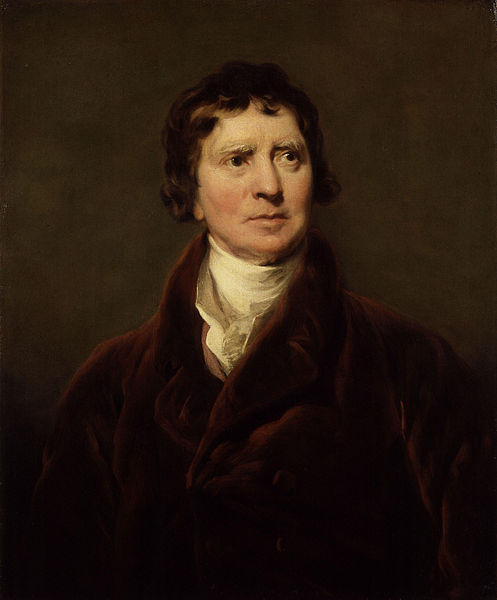
Henry Dundas, 1st Viscount Melville.
Portrait by Sir Thomas Lawrence. National Portrait Gallery via Wikimedia Commons.
Henry Dundas never travelled to British North America and likely spent very little of his 69 years ever thinking about it. He was an influential Scottish career politician whose name adorns the street purely because he happened to be British Home Secretary when it was surveyed in 1793.
But after 230 years, activists led an ultimately successful a push for the Dundas name to be excised from the 23-kilometre street. As Toronto Mayor Olivia Chow said in deliberations over the name change, Dundas’s actions in relation to the Atlantic slave trade were “horrific“.
Was Dundas a slaveholder? Did he profit from the slave trade? Did he use his influence to advance or exacerbate the business of slavery?
No; Dundas was a key figure in the push to abolish slavery across the British Empire. The reason activists want his name stripped from Dundas Street is because he didn’t do it fast enough.
[…]
The petition was piggybacking off a similar anti-Dundas movement in the U.K. – which itself seems to have been inspired by Dundas’s portrayal as a villain in the 2006 film Amazing Grace, a fictionalized portrayal of the British anti-slavery movement.
Dundas was responsible for inserting the word “gradually” into an iconic 1792 Parliamentary motion calling for the end of the Atlantic slave trade. A legislated end to the trade wouldn’t come until 1807, followed by an 1833 bill mandating the total abolition of slavery across the British Empire.
The accusation is that – if not for Dundas – the unamended motion would have passed and the British slave trade would have ended 15 years earlier.
But according to the 18th century historians who have been brought out of the woodwork by the Cancel Dundas movement, Henry Dundas was a man working within the political realities of a Britain that wasn’t yet altogether convinced that slavery was a bad thing.
The year before Dundas’ “gradual” amendment secured passage for the motion, the House of Commons had rejected a similar motion for immediate abolition.
“Dundas’s amendment at least got an anti-slavery statement adopted — the first,” wrote Lynn McDonald, a fellow of the Royal Historical Society, in August. McDonald added that, in any case, it was just a non-binding motion; any actual law wouldn’t have gotten past the House of Lords.
The parliamentary record from this time survives, and Dundas was open about the fact that he “entertained the same opinion” on slavery as the famed abolitionist William Wilberforce, but favoured a more practical means of stamping it out.
“Allegations … that abolition would have been achieved sooner than 1807 without his opposition, are fundamentally mistaken,” reads one lengthy Dundas defence in the journal Scottish Affairs.
“Historical realities were much more nuanced and complex in the slave trade abolition debates of the 1790s and early 1800s than a focus on the role and significance of one politician suggests,” wrote the paper, adding that although Wilberforce opposed Dundas’ insertion of the word “gradually,” the iconic anti-slavery figure “later admitted that abolition had no chance of gaining approval in the House of Lords and that Dundas’s gradual insertion had no effect on the voting outcome.”
Meanwhile, the British abolition of slavery actually has some indirect ties to the road that bears Dundas’s name.
The road’s construction was overseen by John Graves Simcoe, the British Army general that Dundas had picked to be Lieutenant Governor of the colony of Upper Canada.
The same year he started building Dundas Street, Simcoe signed into law an act banning the importation of slaves to Upper Canada – and setting out a timeline for the emancipation of the colony’s existing slaves. It was the first anti-slavery legislation in the British Empire, and it was partially intended as a middle finger to the Americans’ first Fugitive Slave Act, passed that same year.
Overthinking Thomas the Tank Engine: What Actually Is Thomas?
Jago Hazzard
Published 13 Aug 2023Peep peep!
(more…)


