toldinstone
Published Dec 15, 2023The greatest achievements of the Roman military engineers.
Chapters:
0:00 Introduction
0:38 Marching camps
1:36 Bridges
2:40 Siegeworks
3:26 PIA VPN
4:32 Permanent forts
5:49 Roads
6:24 Frontier defenses
7:41 Canals
8:21 Civilian projects
8:54 The aqueduct of Saldae
(more…)
March 23, 2024
The Roman Army’s Biggest Building Projects
Comments Off on The Roman Army’s Biggest Building Projects
March 21, 2024
Banksy is “a jester to the woke court, the cheeky clown of received opinion”
As a certified curmudgeon, I’ve never seen the attraction of Banksy’s various bits of artistic … whatever it is properly called. At Spiked, Brendan O’Neill helps put Banksy into proper perspective:
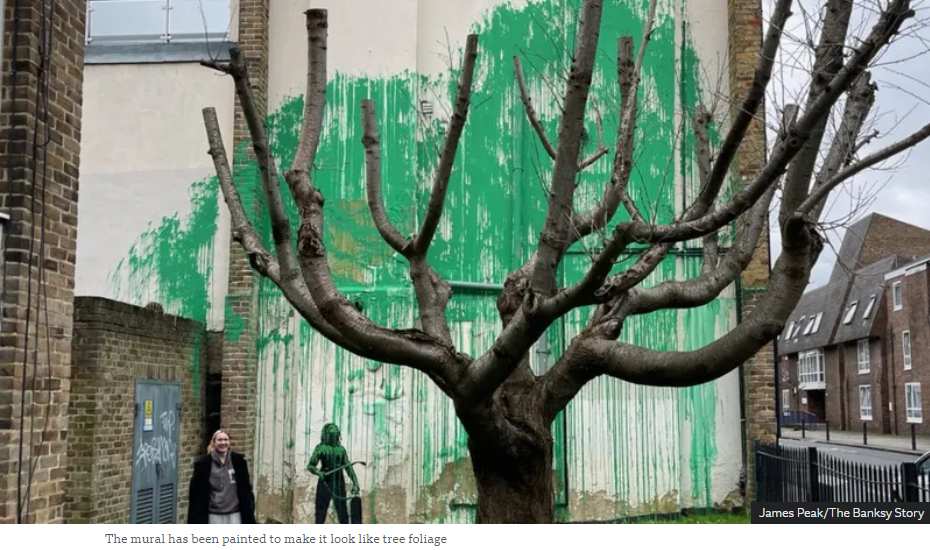
I guess it wasn’t enough that us polluting plebs are chided for our transgressions against Mother Nature every time we watch a BBC nature documentary. And by politicians of all persuasions. And by columnists who summer in Tuscany. And by aristocratic arseholes called Edred and Poppy who won’t even let us enjoy the football or the snooker without cutting through the fun with their cut-glass tones to remind us we’re hazardous to Gaia. No, we also have to be walloped with an eco-sermon as we cycle to work down the Hornsey Road.
Unsurprisingly, the elites are lapping up Banksy’s latest missive in spray paint. A Radio 4 expert on Banksy – I’m dying – raved to the BBC that his message is “clear” and it “really resonates”: “Nature’s struggling and it is up to us to help it grow back.” The founder of Haringey Tree Protectors – I’m not making this up – gushed in the Guardian about how Banksy’s “stark image” reminds us that “in the climate crisis we just can’t continue treating our tree canopy with such savagery”. Pruning leaves is barbarism now. You just know that when green-fingered Charles III saw the Banksy pic during his morning peruse of the papers he gave it a kingly nod of approval.
That’s what Banksy is, isn’t it – a jester to the woke court, the cheeky clown of received opinion? He larps as rebellious, sneaking about in the dead of night to put up his technically illegal “art”, but in truth he has not once voiced an opinion that wouldn’t win noisy murmurs of approval at a soirée in Daunt Books. Brexit is bad, Israel is insane, the paparazzi are scum, don’t vote Tory, capitalism is a rat race, Save the Planet – honestly, browsing Banksy’s back catalogue of stencilled eyesores is like being stuck in a lift with one of those craft-beer centrists who says cockwomble a lot.
His Finsbury Park fake tree captures the conformist thinking that hides in his guerrilla-art performance. It’s a public-information campaign masquerading as graffiti. “Save the trees” – Rishi Sunak could say that. He has, in fact. He recently announced a ban on felling trees without “proper consultation”. Banksy’s tree also has that whiff of hysteria that always attends dinner-party efforts to alter the behaviour of the lower orders. The idea that we’re obliterating trees with “savagery” is bullshit. London’s a forest. Literally. The UN defines a forest as anywhere that is at least 20 per cent trees – London is 21 per cent trees. The “world’s largest urban forest”, as Time Out puts it.
So relax, Banksy. Chill in the no doubt cushy pad you bought from selling your graffiti to philistine luvvies. London’s fine. If anything were to make me leave this great city, it wouldn’t be a want of trees but the oversupply of your sixth-former propaganda. Only a few months ago he put up a “STOP” sign in Peckham decorated with three drones to signal his desire for a ceasefire in Gaza. Radical.
Look, it can be irritating when artists decide to épater la bourgeoisie. That slogan, dreamt up by the decadent poets of late 19th-century France, means to take glee in scandalising the middle classes. But surely Banksy’s style of pandering to the middle classes – let’s call it servir la bourgeoisie – is worse? He is simply smuggling the received wisdom of society’s self-styled betters under the cover of edgy graffiti. From his anti-Brexit mural showing a workman sadly chipping one of the yellow stars from the EU flag to his image of Brits pledging their allegiance to the flag of Tesco – consumerism is slavery, y’all – his every utterance is chattering class to the core.
Comments Off on Banksy is “a jester to the woke court, the cheeky clown of received opinion”
March 18, 2024
Slimy “nudgers” want to manipulate the food you buy by “denormalizing” what you enjoy
Christopher Snowden on the self-imagined elites’ desire for you dirt people to eat a different diet than you would voluntarily choose for yourselves:

On Thursday, Legal & General Investment Management’s senior global environmental, social and governance (ESG) manager told Nestlé to sell less sugar. It’s not for want of trying. In 2018, Nestlé launched Milkybar Wowsomes with 30% less sugar than a Milkybar. The company described it as a “great tasting product” that was the result of “a scientific breakthrough” but when it was discontinued in 2020, Nestlé lamented that demand for it had been “underwhelming”. In 2021, it launched a non-HFSS version of Shreddies called Shreddies The Simple One which contained just four ingredients. The company said:
We know that consumers are looking to eat more healthily, especially following the pandemic. Shreddies The Simple One is an exciting new addition to the breakfast table that caters to growing demand, with a delicious taste consumers will love.
Consumers did not, in fact, love it and it was withdrawn from sale the following year.
Today, the King’s Fund has added its voice to the call for mandatory reformulation targets enforced with heavy fines. The King’s Fund’s job has traditionally been to get more money for the NHS but it is under new management with Sarah Woolnough, a former trustee of Action on Smoking and Health and former CEO of Cancer Research UK, so it is now involved in lifestyle regulation.
Compelling food manufacturers to strip out large amounts of fat, salt and sugar would help “denormalise” the routine consumption of unhealthy food, Sarah Woolnough, the chief executive of the King’s Fund, told the Guardian.
The word “denormalise” is taken straight from the anti-tobacco playbook. See how it works yet?
As the Guardian points out, the King’s Fund has done some polling which finds that reformulation is hugely popular in the abstract.
Overall, 67.3% of Britons agree that the government should require companies to reduce the amount of fat, salt and sugar they put in their products, a survey for the influential health thinktank undertaken by Ipsos Mori found. Only 5% disagreed.
This is a beautiful example of the difference between stated preferences and revealed preferences. People love the idea of fat, salt and sugar being removed from food. Who wouldn’t, so long as the food tasted the same? But it doesn’t taste the same. It tastes considerably worse. And when reformulation isn’t physically possible — for example, with nearly all confectionery, biscuits and cakes — the only way to meet the target is by shrinking the product. Some chocolate bars are now so small that a dual pack is the default (and so, as with the sugar tax, big business is doing rather well out of it). And, yes, that is because of the government’s reformulation scheme.
If pollsters asked people if they are in favour of shrinkflation, I doubt many would say yes. As for reformulation, the only way to get an informed opinion would be to do a taste test using the “before” and “after” versions of popular food products and ask people whether the government should mandate the reformulated version and ban the original version. Again, I doubt many people would give unqualified support for reformulation.
Fortunately, we don’t need to carry out such experiments because the public have been offered reformulated products many times in the real world. Sometimes they become popular — in which case there is no need for government coercion — but very often they are a flop, and in many cases they cannot even be attempted.
The British public have put up with a lot from meddlesome puritans in the last 20 years, but I strongly suspect that if the government tried to force us to eat the likes of Milkybar Wowsomes and Shreddies The Simple One, the thin blue line would finally snap.
March 17, 2024
Problematic art, again
David Thompson calls to our attention yet another outbreak of problematic racist white supremacy in … landscape paintings?
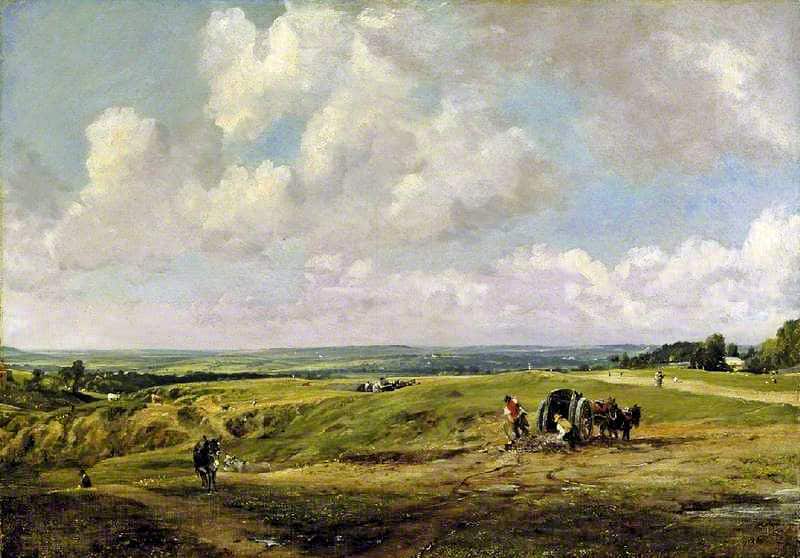
Hampstead Heath by John Constable, 1820.
Above, John Constable’s Hampstead Heath, circa 1820. Beware its morally corrupting influence.
The problem, we’re told, is that paintings from the eighteenth and nineteenth centuries are “leaving very little room for representations of people of colour”. And obviously, even the past must be made “inclusive and representative”. Which seems to mean that we must all pretend that our islands’ population and cultural assumptions have always looked like those of, say, twenty-first century London, a city whose demographics bear little relationship to those of the country as a whole, even in the twenty-first century.
It occurs to me that notions of racial “representation” will likely be distorted by the embrace of rather parochial progressive conceits, and by proximity to the nation’s capital, which in my lifetime has gone from a native white-majority city, over 90%, to a native white-minority one, around 35%, and which is wildly out of step with the rest of the nation. Things that are denounced as “horribly white”, or whatever the current term of disapproval is, may not seem so to people who live in, say, Chesterfield or Plymouth.
But apparently, museum visitors must be warned that the sight of a Constable landscape may trigger TERRIFYING BLOOD AND SOIL TENDENCIES. Or at least inspire thoughts of historical attachment, continuity, and belonging – thoughts that may be disconcerting or very much frowned upon, if only by the – wait for it – keepers of our heritage.
March 16, 2024
Orwell – The New Life (DJ Taylor in discussion with Les Hurst)
The Orwell Society
Published Jun 9, 2023DJ Taylor discusses his new biography of Orwell with Les Hurst
Part 2:
The Orwell Society
Published Jun 26, 2023DJ Taylor answers questions and discusses issues raised by Orwell Society members.
Comments Off on Orwell – The New Life (DJ Taylor in discussion with Les Hurst)
March 15, 2024
Woke Shakespeare?
Andrew Doyle wonders if even the Bard can survive the incessant assaults of the ultra woke, the new Puritans:
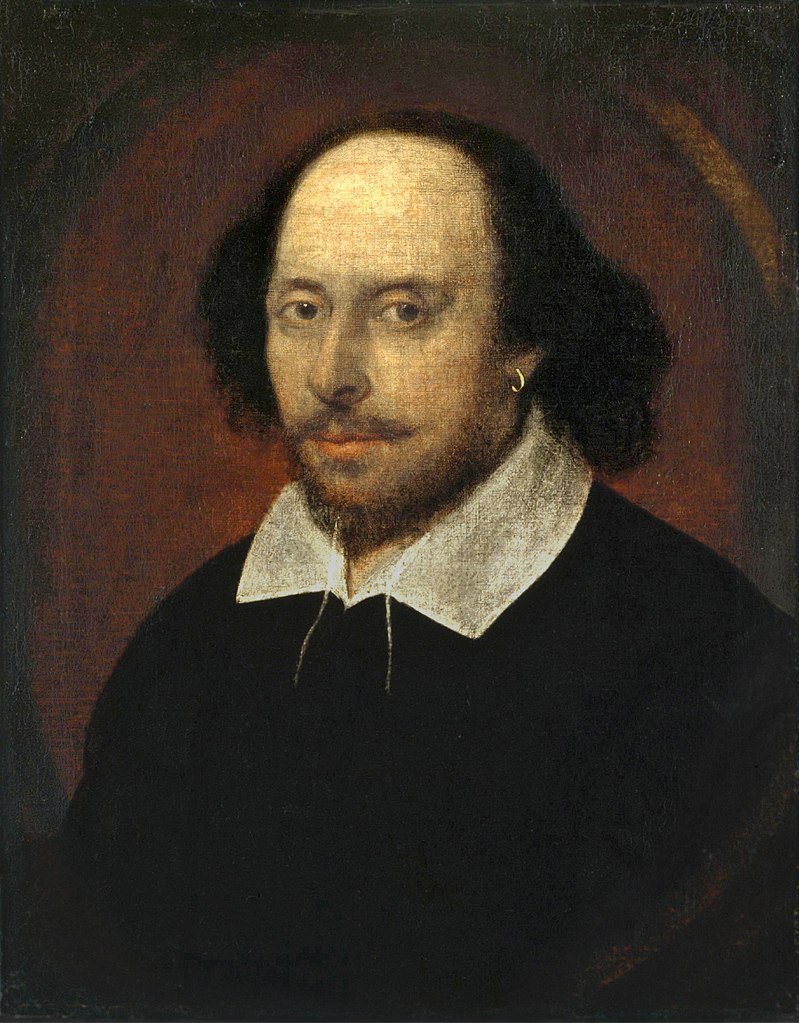
This was long thought to be the only portrait of William Shakespeare that had any claim to have been painted from life, until another possible life portrait, the Cobbe portrait, was revealed in 2009. The portrait is known as the “Chandos portrait” after a previous owner, James Brydges, 1st Duke of Chandos. It was the first portrait to be acquired by the National Portrait Gallery in 1856. The artist may be by a painter called John Taylor who was an important member of the Painter-Stainers’ Company.
National Portrait Gallery image via Wikimedia Commons.
The puritans had it in for Shakespeare. With the exception of the plague, they were perhaps the most persistent threat to his livelihood. As far as these zealots were concerned, the theatre was a realm of “adulterers, adulteresses, whoremasters, whores, bawds, panders, ruffians, roarers, drunkards, prodigals, cheaters, idle, infamous, base, profane, and godless persons”.
These were the words of the polemicist William Prynne from his Histrio-Mastix (1633). He was eventually to get his way in 1642 when the puritan-led parliament shut the theatres down. When the ban was lifted on the accession of Charles II, older plays had to be dusted off to satisfy the public’s appetite for drama. It was Shakespeare’s work that proved to be the most popular, establishing a trend that has never waned.
Now the bard faces another breed of puritan, more censorial than the last. We are living in conformist times, and inexplicably those in the creative arts have turned out to the be most conformist of all. Nowhere is this more evident than the theatre industry, where wrongthink is outlawed and artistic freedom is sacrificed on the altar of identity politics. Virtually all productions of Shakespeare’s plays I have seen in recent years have been mangled to promote the regressive fashions of our time. Today’s audiences are seeing a vague shadow of these masterworks through a narrow and uninspiring prism.
Even so, many of us are reluctant to give up on the theatre altogether. We tolerate the gender-neutral toilets that nobody asked for, the rainbow lanyards worn by ushers, and the little sermons in the programmes by directors who think their job is to educate the masses. One friend remarked that so long as the preaching only amounts to 20% of the show’s content, he is willing to accept it. I suppose it’s like going for dinner in an especially pious household, and having to put up with a long-winded prayer before a delicious meal.
Theatregoers might have a better experience if they opt for productions of plays written many years before this new state religion took hold. Shakespeare, as a playwright who has never been bettered, is surely the safest choice. In his work we find ourselves unmolested by ideology. We know nothing of Shakespeare’s opinions on matters of politics or religion, and attempting to glean any suggestions from his works is futile. I think A. L. Rowse put it best when he pointed out that Shakespeare “saw through everybody equally”. Neither prince nor pauper escapes his sceptical gaze.
Comments Off on Woke Shakespeare?
March 14, 2024
The insane pursuit of a “zero waste economy”
Tim Worstall explains why it does not make economic sense to pursue a truly “zero waste” solution in the vast majority of cases:

It’s entirely possible to think that waste minimisation is a good idea. It’s also possible to think that waste minimisation is insane. The difference is in what definition of the word “waste” we’re using here. If by waste we mean things we save money by using instead of not using then it’s great. If by waste we mean just detritus then it’s insane.
Modern green politics has — to be very polite about it indeed — got itself confused in this definitional battle. Which is why we get nonsense like this being propounded as potential political policy:
A Labour government would aim for a zero-waste economy by 2050, the shadow environment secretary has said.
Steve Reed said the measure would save billions of pounds and also protect the environment from mining and other negative actions. He was speaking at the Restitch conference in Coventry, held by the thinktank Create Streets.
Labour is finalising its agenda for green renewal and Reed indicated a zero-waste economy would be part of this.
This would mean the amount of waste going to landfill would be drastically reduced and valuable raw materials including plastic, glass and minerals reused, which would save money for businesses who would not have to buy, import or create raw materials.
The horror here does depend upon that definition of waste. Or, if we want to delve deeper, the definition of resource that is being saved.
[…]
OK. So, we’ve two possible models here. One is homes sort into 17 bins or whatever the latest demand is. Or, alternatively, we have big factories where all unsorted rubbish goes to. To be mechanically sorted. Right — so our choice between the two should be based upon total resource use. But when we make those comparisons we do not include that household time. 25 million households, 30 minutes a week, 450 million hours a year. At, what, minimum wage? £10 an hour (just to keep my maths simple) is £4.5 billion a year. That household sorting is cheaper — sorry, less resource using — than the factory model is it?
And that little slip — cheaper, less resource using — is not really a slip. For we are in a market economic system. Resources have prices attached to them. So, we can measure resource use — imperfectly to be sure but usefully — by the price of different ways of doing things. Cool!
At which point, recycling everything, moving to a zero waste economy, is more expensive than the current system. Therefore it uses more resources. We know this because we always do have to provide a subsidy to these recycling systems. None of them do make a profit. Or, rather, when they do make a profit we don’t even call them recycling, we call them scrap processing.
Which all does lead us to a very interesting even if countercultural conclusion. The usual support for recycling is taken to be an anti-price, anti-market, even anti-capitalist idea. Supported by the usual soap dodging hippies. But, as actually happens out in the real world, recycling is one of those things that should be — even if it isn’t — entirely dominated by the price system and markets. Even, dread thought, capitalism. We should only recycle those things we can make a profit by recycling. Because that’s now prices inform us about which systems actually save resources.
Comments Off on The insane pursuit of a “zero waste economy”
March 13, 2024
QotD: Filthy coal
… coal smoke had dramatic implications for daily life even beyond the ways it reshaped domestic architecture, because in addition to being acrid it’s filthy. Here, once again, [Ruth] Goodman’s time running a household with these technologies pays off, because she can speak from experience:
So, standing in my coal-fired kitchen for the first time, I was feeling confident. Surely, I thought, the Victorian regime would be somewhere halfway between the Tudor and the modern. Dirt was just dirt, after all, and sweeping was just sweeping, even if the style of brushes had changed a little in the course of five hundred years. Washing-up with soap was not so very different from washing-up with liquid detergent, and adding soap and hot water to the old laundry method of bashing the living daylights out of clothes must, I imagined, make it a little easier, dissolving dirt and stains all the more quickly. How wrong could I have been.
Well, it turned out that the methods and technologies necessary for cleaning a coal-burning home were fundamentally different from those for a wood-burning one. Foremost, the volume of work — and the intensity of that work — were much, much greater.
The fundamental problem is that coal soot is greasy. Unlike wood soot, which is easily swept away, it sticks: industrial cities of the Victorian era were famously covered in the residue of coal fires, and with anything but the most efficient of chimney designs (not perfected until the early twentieth century), the same thing also happens to your interior. Imagine the sort of sticky film that settles on everything if you fry on the stove without a sufficient vent hood, then make it black and use it to heat not just your food but your entire house; I’m shuddering just thinking about it. A 1661 pamphlet lamented coal smoke’s “superinducing a sooty Crust or Furr upon all that it lights, spoyling the moveables, tarnishing the Plate, Gildings and Furniture, and corroding the very Iron-bars and hardest Stones with those piercing and acrimonious Spirits which accompany its Sulphure.” To clean up from coal smoke, you need soap.
“Coal needs soap?” you may say, suspiciously. “Did they … not use soap before?” But no, they (mostly) didn’t, a fact that (like the famous “Queen Elizabeth bathed once a month whether she needed it or not” line) has led to the medieval and early modern eras’ entirely undeserved reputation for dirtiness. They didn’t use soap, but that doesn’t mean they didn’t clean; instead, they mostly swept ash, dust, and dirt from their houses with a variety of brushes and brooms (often made of broom) and scoured their dishes with sand. Sand-scouring is very simple: you simply dampen a cloth, dip it in a little sand, and use it to scrub your dish before rinsing the dirty sand away. The process does an excellent job of removing any burnt-on residue, and has the added advantage of removed a micro-layer of your material to reveal a new sterile surface. It’s probably better than soap at cleaning the grain of wood, which is what most serving and eating dishes were made of at the time, and it’s also very effective at removing the poisonous verdigris that can build up on pots made from copper alloys like brass or bronze when they’re exposed to acids like vinegar. Perhaps more importantly, in an era where every joule of energy is labor-intensive to obtain, it works very well with cold water.
The sand can also absorb grease, though a bit of grease can actually be good for wood or iron (I wash my wooden cutting boards and my cast-iron skillet with soap and water,1 but I also regularly oil them). Still, too much grease is unsanitary and, frankly, gross, which premodern people recognized as much as we do, and particularly greasy dishes, like dirty clothes, might also be cleaned with wood ash. Depending on the kind of wood you’ve been burning, your ashes will contain up to 10% potassium hydroxide (KOH), better known as lye, which reacts with your grease to create a soap. (The word potassium actually derives from “pot ash,” the ash from under your pot.) Literally all you have to do to clean this way is dump a handful of ashes and some water into your greasy pot and swoosh it around a bit with a cloth; the conversion to soap is very inefficient (though if you warm it a little over the fire it works better), but if your household runs on wood you’ll never be short of ashes. As wood-burning vanished, though, it made more sense to buy soap produced industrially through essentially the same process (though with slightly more refined ingredients for greater efficiency) and to use it for everything.
Washing greasy dishes with soap rather than ash was a matter of what supplies were available; cleaning your house with soap rather than a brush was an unavoidable fact of coal smoke. Goodman explains that “wood ash also flies up and out into the room, but it is not sticky and tends to fall out of the air and settle quickly. It is easy to dust and sweep away. A brush or broom can deal with the dirt of a wood fire in a fairly quick and simple operation. If you try the same method with coal smuts, you will do little more than smear the stuff about.” This simple fact changed interior decoration for good: gone were the untreated wood trims and elaborate wall-hangings — “[a] tapestry that might have been expected to last generations with a simple routine of brushing could be utterly ruined in just a decade around coal fires” — and anything else that couldn’t withstand regular scrubbing with soap and water. In their place were oil-based paints and wallpaper, both of which persist in our model of “traditional” home decor, as indeed do the blue and white Chinese-inspired glazed ceramics that became popular in the 17th century and are still going strong (at least in my house). They’re beautiful, but they would never have taken off in the era of scouring with sand; it would destroy the finish.
But more important than what and how you were cleaning was the sheer volume of the cleaning. “I believe,” Goodman writes towards the end of the book, “there is vastly more domestic work involved in running a coal home in comparison to running a wood one.” The example of laundry is particularly dramatic, and her account is extensive enough that I’ll just tell you to read the book, but it goes well beyond that:
It is not merely that the smuts and dust of coal are dirty in themselves. Coal smuts weld themselves to all other forms of dirt. Flies and other insects get entrapped in it, as does fluff from clothing and hair from people and animals. to thoroughly clear a room of cobwebs, fluff, dust, hair and mud in a simply furnished wood-burning home is the work of half an hour; to do so in a coal-burning home — and achieve a similar standard of cleanliness — takes twice as long, even when armed with soap, flannels and mops.
And here, really, is why Ruth Goodman is the only person who could have written this book: she may be the only person who has done any substantial amount of domestic labor under both systems who could write. Like, at all. Not that there weren’t intelligent and educated women (and it was women doing all this) in early modern London, but female literacy was typically confined to classes where the women weren’t doing their own housework, and by the time writing about keeping house was commonplace, the labor-intensive regime of coal and soap was so thoroughly established that no one had a basis for comparison.
Jane Psmith, “REVIEW: The Domestic Revolution by Ruth Goodman”, Mr. and Mrs. Psmith’s Bookshelf, 2023-05-22.
1. Yeah, I know they tell you not to do this because it will destroy the seasoning. They’re wrong. Don’t use oven cleaner; anything you’d use to wash your hands in a pinch isn’t going to hurt long-chain polymers chemically bonded to cast iron.
Comments Off on QotD: Filthy coal
March 10, 2024
German Blunder Hands Allies a Rhine Crossing – WW2 – Week 289 – March 9, 1945
World War Two
Published 9 Mar 2024The Allies manage to take an intact bridge over the mighty Rhine at Remagen, a major piece of luck; the Germans launch a new offensive in Hungary, and the Allies end one in Italy. Over in Burma, Meiktila falls, sabotaging the entire Japanese supply system for the country, and on Iwo Jima the fight continues, bloodier than ever for both sides.
00:59 Recap
01:35 The Fall of Meiktila
03:46 The fight on Iwo Jima
05:27 Advances on the Western Front
07:44 The Rhine River
10:05 Remagen Bridge
16:20 Operation Encore
17:10 Rokossovsky and Zhukov attack
18:09 Operation Spring Awakening
21:57 Notes to end the week
23:42 Conclusion
(more…)
Comments Off on German Blunder Hands Allies a Rhine Crossing – WW2 – Week 289 – March 9, 1945
March 9, 2024
The Jewish Avengers Who Hunted Nazi Murderers
World War Two
Published Mar 8, 2024In March 1945, the first Jewish unit in the Allied forces reaches the frontline. Before fighting the Nazis, the men spent years battling against the policies of the British government. After the war, they will take vengeance on the perpetrators of the Holocaust and join the Zionist movement in building and fighting for Israel.
(more…)
Comments Off on The Jewish Avengers Who Hunted Nazi Murderers
Titania McGrath – From parody to prophecy
Andrew Doyle‘s imaginary Social Justice Warrior known as Titania McGrath was created as a satire on some of the more extreme goings on among SJWs … today, her work can be seen as amazingly accurate prophecy of how our culture has deteriorated thanks in no small degree to the very, very woke:

“Titania McGrath” and Andrew Doyle
Today is the fifth anniversary of the publication of Titania McGrath’s acclaimed book Woke: A Guide to Social Justice. I created this intersectional activist and slam poet in order to satirise this new intolerant and authoritarian identity-obsessed religion and its stranglehold on society. Having seen so many posh and entitled activists berating working-class straight white people for their privilege, I could think of no more appropriate reaction than mockery. Even Harry Windsor was at it. And he’s an actual prince.
Five years on, and I cannot decide whether I find it funny or depressing that so many of Titania’s ideas in that book ended up becoming reality. Nothing that Titania was ever able to suggest has not eventually been outdone by real-life activists. It is as though they were reading her book for inspiration.
For instance, in a chapter from Woke entitled “Towards an Intersectional Socialist Utopia”, Titania makes the following observation:
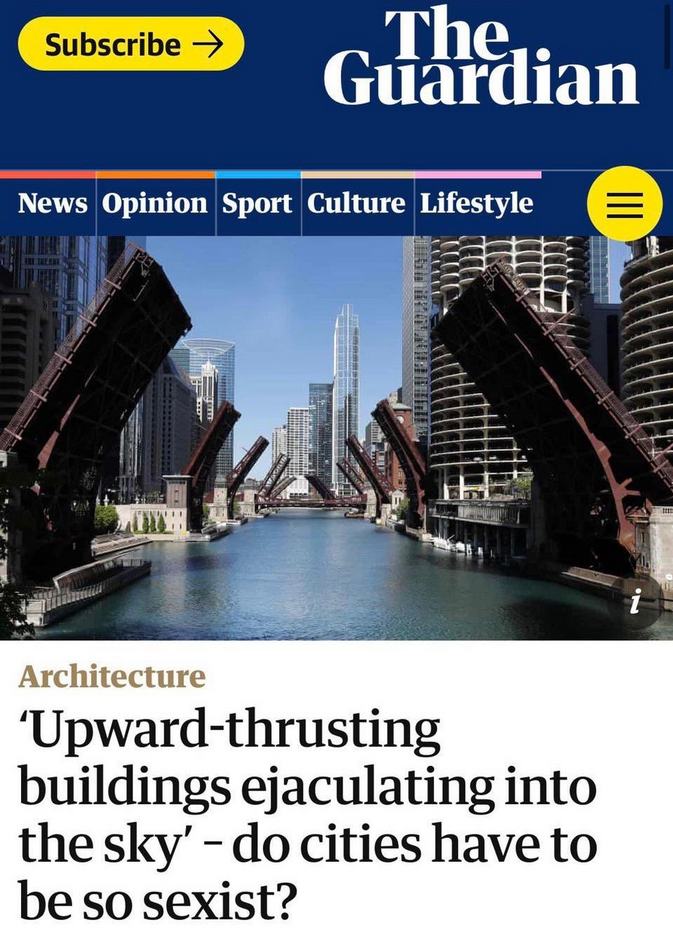
Capitalism, after all, is a singularly male phenomenon. The ultimate symbol of capitalism, the skyscraper, is nothing more than a giant cock on the horizon, fucking the heavens.
Sixteen months after the book was published, this article appeared in the Guardian:
Or what about this passage from a chapter in Woke called “White Death”? Here, Titania calls out Hellen Keller for her white privilege:
Consider, if you will, the example of white American author Helen Keller (1880–1968). Even though she was left deaf and blind following an illness as a baby, she still managed to study for a degree, write twelve books and travel the world to give lectures. This kind of privilege is staggering.
Compare this with an article that appeared in Time magazine over a year later, in which the author writes:
However, to some Black disability rights activists, like Anita Cameron, Helen Keller is not radical at all, “just another, despite disabilities, privileged white person”, and yet another example of history telling the story of privileged white Americans.
And how about this tweet from October 2019, in which Titania had some advice for dog owners:
The subsequent outrage ensured that the tweet went viral. And just a couple of months ago, a leading pet talent agency in the UK called Urban Paws was asking owners whether their cats or dogs identified as “gender neutral” or “non-binary”.
After the backlash, the company claimed that it was a mistake. But the specific addition of a “gender identity” category on an application is hardly the equivalent of a typo.


Comments Off on Titania McGrath – From parody to prophecy
March 8, 2024
How the elites used bait-and-switch tactics to sell the idea of “15-minute cities”
In The Critic, Alex Klaushofer outlines how the Oxfordshire County Council introduced the 15-minute city nonsense for Oxford:
This time last year I watched with bemusement as a strange new trend emerged in my native Britain. Councils were introducing restrictions on citizens moving about by car. Living in Portugal had given me an observer’s detachment and I struggled to reconcile what I was seeing with the country I knew.
Oxford — my alma mater and the city where I regularly used to lose my bicycle — was at the heart of it. In November 2022, Oxfordshire County Council approved an experimental traffic scheme in a city notorious for congestion. Traffic filters would divide the city into zones, with those wishing to drive between them obliged to apply for permits.
Residents would be allocated passes for up to 100 journeys a year and those living outside the permit area 25. The zones would be monitored by automatic number plate recognition cameras and any journeys taken without permits would result in fines.
Duncan Enright, the councillor with responsibility for travel strategy told the Sunday Times the scheme would turn Oxford into a 15-minute city: “It is about making sure you have the community centre which has all of those essential needs, the bottle of milk, pharmacy, GP, schools which you need to have a 15-minute neighbourhood”.
The explanation didn’t make sense. The council was presenting a scheme centred around restrictions on the movement of vehicles on the basis of something quite different: the desirability of local facilities. It was part of a plan for a “net zero transport system” which included a commitment to “20-minute neighbourhoods: well-connected and compact areas around the city of Oxford where everything people need for their daily lives can be found within a 20-minute walk”.
Yet the Central Oxfordshire Travel Plan made no provision for new services or even assessing existing amenities. Instead, flourishing neighbourhoods were to be achieved by the simple expedient of making it difficult for people to drive across the city. Residents, visitors and businesses would make only “essential” — the word was highlighted in bold — car journeys. And while they would still be able to enter and exit Oxford via the ring road, “a package of vehicle movement restrictions” would “encourage” people to live locally.
Traffic management or social engineering? The council’s plan looked like a case of bait-and-switch: citizens were being enticed to accept one thing on the promise of another. And, judging by the increasing revenues other councils were collecting through cameras, the scheme would be a nice earner.
The vast amount of media coverage on 15-minute cities fuelled the fundamental confusion at the heart of the Oxford scheme. Instead of examining its implications, journalists characterised those questioning the proposals as “conspiracy theorists” who were wilfully refusing leafy roads and local markets. “What are 15-minute cities and why are anti-vaxxers so angry about them?” ran a headline in The Times.
The Guardian published a piece titled “In praise of the 15-minute city” which mocked “libertarian fanatics and the bedroom commentators of TikTok”, claiming they belonged to an “anti-vaccine, pro-Brexit, climate-denying, 15-minute-phobe, Great Reset axis”. What had happened to the newspaper I’d read for decades and on occasion written for, with its understanding of the effects of policies on ordinary people?
The public debate around the Oxford experiment completely bypassed the obvious practicalities. What about a typical family, juggling work with school runs and after-school activities? Having to drive out of the city and around its periphery for each trip could make their lives impossible. How would those whose work wasn’t accessible by public transport manage on the two permitted journeys a week?
Comments Off on How the elites used bait-and-switch tactics to sell the idea of “15-minute cities”
Know Your Ship #20 – Flower Class Corvettes
iChaseGaming
Published Oct 27, 2014Episode 20 of Know Your Ship! In this educational video I cover the Flower class corvettes. These corvettes used by the Royal Canadian Navy and the Royal Navy to great effect during the Battle of the Atlantic. The Flower class were built quickly and cheaply in order to provide as many ships for convoy duty and anti-submarine operations as possible. The Royal Canadian Navy in particular achieved significant success and became experts in anti-submarine operations. Sadly, these ships and their crews are mostly forgotten with the passage of time as attention is mostly given to the surviving capital ships. It is my hope that this educational video will help people to understand and know these important ships that helped safeguard the convoys during World War 2. The only remaining ship of this class is HMCS Sackville which you will see later in this episode.
(more…)
Comments Off on Know Your Ship #20 – Flower Class Corvettes
March 7, 2024
“The traditional answer to this is to leave those inheritees be and they’ll blow it all on hookers and coke soon enough”
Tim Worstall tackles the ongoing angst about “the wrong sort of people” getting their sweaty mitts on family inheritances and then backhands the ostentatiously super wealthy demanding to be taxed more heavily as “Full Of Shit. Obviously”.
This has to be one of the least sympathy inducing articles ever — rich kids worried about their inheritances. We’re about to have that grand generational shift apparently, trillions upon trillions are going to move from the people who made it to the Lucky Sperm Club.
Woes.
The traditional answer to this is to leave those inheritees be and they’ll blow it all on hookers and coke soon enough. The standard deviation of soon enough is pretty big — the folk tale is clogs to clogs in three generations but the Hervey’s managed to wait until the 7th Marquess for it all to get — quite literally in that case — blown. But, you know, it does eventually happen. There are no really old fortunes.
This isn’t, perhaps, enough for the hurry hurry of the modern world. Thus we get people like this:
Tax, of course, could — should — play a huge part in all this. “Philanthropic donations are a drop in the ocean compared to what even quite minor tax increases on the richest in society would provide,” Lewis says. Patriotic Millionaires is calling for a hike in taxation for the super-rich — and its members aren’t limited to millennials. They include Guy Singh-Watson, founder of Riverford Organic Farmers; Graham Hobson, founder of Photobox; the Perry family, from the posh ready-meal business Cook; and Ian Gregg, whose father founded Greggs.
“At the moment philanthropic donations amount to about £10 billion per year,” Lewis says. “A wealth tax of 1 to 2 per cent on assets over £10 million, which would affect only the wealthiest in the UK, would raise more than double that. Closing tax avoidance loopholes would raise much more than this.”
As I pointed out in the same newspaper, The Times, two decades back, this is purest bollocks. For it’s entirely easy to pay extra tax if that’s what you wish to do:
Cheques, by the way, should be made out to “The Accountant, HM Treasury”, and sent to 1 Horse Guards Road, London SW1A 2HQ.
Job’s a good ‘un. Except, back then, near no one did. I managed to get the numbers out of The Treasury for the previous year — it took some months as they were amazed that anyone had even thought of checking this — and a whole 5 people had paid that extra tax. Four of whom were dead, leaving bequests. That is, the UK, that year, contained one whole person willing to pay higher tax than duly and justly levied upon them. Some flood of patriotic millionaires there was not.
Matters do not seem to have improved greatly:
But something is not working. The accounts of the Debt Management Office for the year ended 31 March 2020 show that it received donations or bequests totalling just £48,957. While that’s a large percentage increase on the £11,069 received during the year ended 31 March 2019, by any standards these figures are tiny.
Not the sorts of amounts likely to make a great impact upon a lifetime’s supply of coke and hookers, is it?
One correct answer to these claims by the Patriotic Millionaires is therefore that they’re full of shit. In slightly more technical language they’re doing ethical performativity. There’s always a difference between expressed preferences — what people say — and revealed preferences, what people do. What people really believe is in what they do — but it’s entirely possible that saying the right things, even if not doing them, will get you invited to the right sorts of parties. You know, the ones where someone else pays for the hookers and coke. So, people say things they don’t do for reasons of societal enrapture. Hardly an uncommon human activity, that.
I seem to remember linking to an article of Tim’s on the old blog, but that’s long been offline. More recently, we’ve seen this exact scenario play out in Norway, the UK, the United States, and the City of Toronto.
His Majesty King Charles, in right of Canada, would also be happy to accept any unwanted sums of money above your mandatory tax rate here. Go wild, wealthy and patriotic Canadian multi-millionaires!
Comments Off on “The traditional answer to this is to leave those inheritees be and they’ll blow it all on hookers and coke soon enough”
March 6, 2024
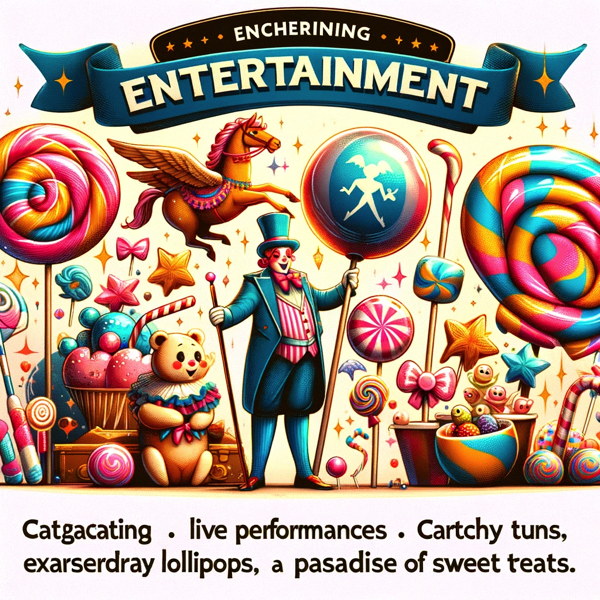
You had me at “Cartchy tuns, exarserdray lollipops” and “a pasadise of sweet teats”
Charlie Stross checks in with a Willy Wonka-adjacent story from Glasgow that utterly failed to live up to the billing:
This is no longer in the current news cycle, but definitely needs to be filed under “stuff too insane for Charlie to make up”, or maybe “promising screwball comedy plot line to explore”, or even “perils of outsourcing creative media work to generative AI”.
So. Last weekend saw insane news-generating scenes in Glasgow around a public event aimed at children: Willy’s Chocolate Experience, a blatant attempt to cash in on Roald Dahl’s cautionary children’s tale, Willy Wonka and the Chocolate Factory. Which is currently most prominently associated in the zeitgeist with a 2004 movie directed by Tim Burton, who probably needs no introduction, even to a cinematic illiterate like me. Although I gather a prequel movie (called, predictably, Wonka), came out in 2023.
(Because sooner or later the folks behind “House of Illuminati Ltd” will wise up and delete the website, here’s a handy link to how it looked on February 24th via archive.org.)
INDULGE IN A CHOCOLATE FANTASY LIKE NEVER BEFORE – CAPTURE THE ENCHANTMENT ™!
Tickets to Willys Chocolate Experience™ are on sale now!
The event was advertised with amazing, almost hallucinogenic, graphics that were clearly AI generated, and equally clearly not proofread because Stable Diffusion utterly sucks at writing English captions, as opposed to word salad offering enticements such as Catgacating • live performances • Cartchy tuns, exarserdray lollipops, a pasadise of sweet teats.* And tickets were on sale for a mere £35 per child!
Anyway, it hit the news (and not in a good way) and the event was terminated on day one after the police were called. Here’s The Guardian‘s coverage:
The event publicity promised giant mushrooms, candy canes and chocolate fountains, along with special audio and visual effects, all narrated by dancing Oompa-Loompas — the tiny, orange men who power Wonka’s chocolate factory in the Roald Dahl book which inspired the prequel film.
But instead, when eager families turned up to the address in Whiteinch, an industrial area of Glasgow, they discovered a sparsely decorated warehouse with a scattering of plastic props, a small bouncy castle and some backdrops pinned against the walls.
Anyway, since the near-riot and hasty shutdown of the event, things have … recomplicated? I think that’s the diplomatic way to phrase it.