
World War Two
Published 18 Jun 2022The Soviets have put civilians to work by the hundreds of thousands, building line after line of defenses in the Kursk salient, where they are sure the Germans are soon to attack. Meanwhile the Allies are making moves in preparations for two big upcoming offensives of their own — in Sicily and the Central Solomon Islands.
(more…)
June 19, 2022
Kursk: Soviets Dig-In for Blitzkrieg – WW2 – 199 – June 18, 1943
Comments Off on Kursk: Soviets Dig-In for Blitzkrieg – WW2 – 199 – June 18, 1943
June 17, 2022
Oikophobia run rampant
In the New English Review, Theodore Dalrymple considers the prevalence of oikophobia in western culture:
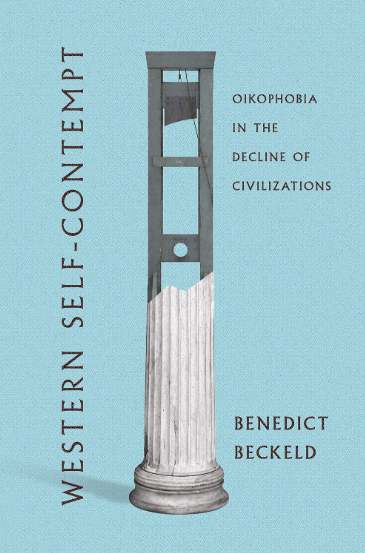
In an article for the American Mind, Daniel Mahoney draws our attention to a recent book on the phenomenon of oikophobia, the dislike or even hatred of one’s own country or culture, which now seems so prevalent in western academic and intellectual circles as to be almost an orthodoxy or requirement for acceptance into the intellectual class. Of course, no social trend or phenomenon is entirely new or has an indisputable starting point: for example, George Orwell drew attention to English self-hatred many years ago. But the spread of oikophobia has been of epidemic proportion in late years.
It seems to me that Mr. Mahoney’s analysis can be extended. The first question to ask is why oikophobia should now be so prevalent. To this, I should tentatively reply that it is because of the mass intellectualization of society consequent upon the spread of tertiary education. Intellectuals have an inherent tendency to be oppositional to all received opinion or feeling, for there is no point in going to the trouble of being an intellectual if one ends up thinking and feeling what the great mass of the people around one think and feel. Love of country and inherited custom is so commonplace as to appear almost normal or natural, and much of it, of course, is unreflecting.
But intellectuals are supposed to reflect. That is their function, and they are inclined to reject received opinion, not because it is wrong but because it is received. It goes without saying that received opinion can be wrong and even wicked or evil, in which case the strictures of intellectuals are necessary and salutary; but intellectuals themselves may promote wrong or even wicked opinions, partly from the a priori need to distinguish themselves from the run of mankind.
The phobia in oikophobia is the fear of being taken for one of the common run of mankind.
The second question about oikophobia is the old one of cui bono? Again, one must not confuse the psychological or social origin or function of an opinion with its justification or correctness in the abstract, but once one has decided that an opinion is mistaken or deleterious in its effect, it is natural to ask where it comes from and what interests it serves.
In my opinion, oikophobia is generally bogus, that is to say insincere, as is its cognate, multiculturalism. The oikophobe and the multiculturalist are not really interested in other cultures, except as instruments with which to beat their fellow citizens. The reason for their lack of real interest in other countries is not difficult to find and is of very common application. The fact is that it is very difficult genuinely to enter into a culture, or subculture, other than one’s own, even when that culture or subculture is close to or adjacent to one’s own.
Comments Off on Oikophobia run rampant
Tank Chat #149 Cut in Half Centurion | The Tank Museum
The Tank Museum
Published 25 Feb 2022► JOIN OUR PATREON: Our Patreons have already enjoyed Early Access and AD free viewing of our weekly YouTube video! Consider becoming a Patreon Supporter today: https://www.patreon.com/tankmuseum
► TIMESTAMP:
00:00 – INTRO
00:31 – FEATURES
(more…)
Comments Off on Tank Chat #149 Cut in Half Centurion | The Tank Museum
June 16, 2022
QotD: The Guardian and “capitalism”
The displacement of responsibility is a Guardian staple, with society or capitalism (or “late capitalism”, or “neoliberalism” or whatever) being blamed for the columnist’s own hang-ups and incontinence. Tanya Gold did it two or three times during her time at the paper, as did Madeleine Bunting, Oliver James, VJD Smith and God knows how many others. Diane Abbott once claimed that capitalism is the reason she got fat, and still is.
It’s practically a rule. If a Guardian contributor drinks too much, eats too much, buys too many shoes … well, obviously, they’re the victim because consumerist peer pressure somehow made them do it against their will, such as it is. The premise is generally “capitalism made me fat”, followed by “capitalism made me anxious about being fat”, followed by “tax such-and-such to buggery, or ban it altogether, and then I’ll be thin”.
David Thompson, from the comments to “Reheated (55)”, DavidThompson.com, 2019-04-01.
Comments Off on QotD: The Guardian and “capitalism”
June 15, 2022
When adult responsibilities become overwhelming, the retreat into childish things beckons … hence the cultural dominance of “British Twee”
Ed West isn’t a fan of Britain’s universal adoption of “British Twee” as an escape from the burdens of “adulting” (as the Millenials call it):

James Marriott wrote about the phenomenon in the Times last week; noting the strangeness of seeing a drone corgi in the sky at the Jubilee, he felt “awe at this almost imperial triumph of twee”.
“Once culturally marginal — a series of aesthetic mannerisms associated with greetings cards and downmarket children’s books — twee is now the establishment style”, he wrote: “When the Queen was presented to her subjects at the coronation 70 years ago, the emphasis was on dignity and mystery: uniformed soldiers, a naval review, the BBC’s cameras forbidden from capturing the sovereign’s face in close-up. In the 1950s, this was still the language of power: formal, pompous, sternly detached. Parading for the Queen in 2022 were Teletubbies, a man in a Shaun the Sheep costume, women dressed as afternoon tea, a towering motorised cake.
“Twee is now a cultural default; the distinctive style of our age. Our emojis, gifs and memes will mark us as surely to the generations of the future as the wing collars, tailcoats and elaborate ceremonies of social deference marked our ancestors. Grown-up men and women love Disney and Harry Potter.”
Twee is egalitarian, anti-highbrow and obsessed with childhood, he says. “A love of childish things is a mark of democratic taste and an aversion to pomposity. Britain, with its long (often admirable) tradition of anti-intellectualism is especially vulnerable.”
Marriott concludes that “I can’t bring myself to hate Paddington and corgis but twee can be as oppressive as the formal, serious culture that preceded it. If our ancestors denied themselves the silly, child-like side of human nature, we now ourselves deny its solemn and difficult aspects. Twee is an aesthetic for an age uninterested in ethical complexity, which prefers good and bad as neatly separated as they are at Hogwarts. It fits the childish behaviour of social media’s most active users who swing between condemnatory temper tantrums and cooing over anthropomorphised animal.”
He also notes how twee has been “appropriated by powerful corporations” because “it’s easier to rip someone off with a smiling wide-eyed chatbot.” In my experience, the more informal and “I’m yer mate” a service provider is, the worse it treats its customers.
And that applies to social classes, too; the more informal a ruling elite behaves, the less they care about boring old customs, the less they can be trusted to do the right thing for the people they’re supposed to lead.
Tweeness is terrible, but there’s a particular indefinable, British kind of twee, which is infuriating but hard to articulate. British Twee, or British Cringe, is not so much a definable illness as more like a cluster of symptoms.
Cockwomble, as explained by Ben Sixsmith, is British Twee. Needless posh swearing is very British Twee; used sparsely, swearing is very effective, especially by people with RP accents; used liberally, it’s cringeworthy, especially when discussing politics. The post-referendum anti-Brexit campaign was filled with British Twee, mixing both a loathing of the country with an assumption of cultural superiority, all done in a self-consciously frivolous way.
This kind of Twee British Cringe, because it’s at once both self-hating and also uniquely self-obsessed, seems to suppose that certain British things are uniquely terrible — the awfulness of our government, or the prejudice of our great unwashed — but certain British things are uniquely brilliant and envied, such as the BBC and NHS, not to mention our famous sense of humour.
British Twee is the patriotism of the soft-left. While consciously anti-nationalist, this kind of tweeness is obsessed with defining British national character and values. This reaches its peak with pride about Britain’s universal healthcare, something enjoyed by literally every developed country except the United States.
Comments Off on When adult responsibilities become overwhelming, the retreat into childish things beckons … hence the cultural dominance of “British Twee”
Istanbul: City of Spies – WW2 – Spies & Ties 18
World War Two
Published 14 Jun 2022Neutral Turkey appears to be an island of peace in a sea of war. But if you look a little closer though and there’s another story. Assassins ply their deadly trade. Spies slip in and out of occupied Europe. The Allies and Axis battle for influence. The secret war is in full swing.
(more…)
Comments Off on Istanbul: City of Spies – WW2 – Spies & Ties 18
June 14, 2022
Gender dysphoria and body dysmorphia
Once upon a time, in the dark recesses of ancient history (say, 2015 or so), most of the people expressing dissatisfaction with their birth gender were male. Shortly after that, the numbers inverted significantly and today it’s predominantly females demanding “gender affirming” treatment:
Girls who reject femininity or self identify as male or “non-binary” actually have a form of body dysmorphia. Rejecting their feminine body parts, for instance by flattening their chests, shows repulsion toward the areas they feel are not fit for acceptance. The trend of “binding” to produce a flat, androgynous body is dangerous, cutting off the air supply and possibly causing permanent damage, but it is encouraged as a precursor to transitioning from female to male.
In fact, transgendered people who were born women tend to suffer from eating disorders in an “extremely high proportion”, according to the Duke University Health System.
Make no mistake, a young woman who is dieting obsessively does not wish to look feminine or capable of having children. Many women who achieve their desired weight by extreme dieting cease to have periods and even grow downy hair on the face which resembles the incoming beard of a pre-pubescent man.
So is gender dysphoria essentially interchangeable with body dysmorphia? The woke people working at the NHS and gender reassignment clinics would never admit it, and would deny any correlation despite the statistics. But they are seeing more gender dysphoric young women than ever.
According to this article, entitled “Why Are So Many Females Coming out as Trans/Non-Binary?” in recent years the proportion of young women coming out as trans as opposed to men has increased dramatically. This shows a reversal from the previous trend years ago of more men wishing to become the opposite sex. But the incidence of actual transitions carried out does not show a corresponding rise for women, and that should prove many young women eventually grow out of identifying as trans, or “desist” from the desire to become male. “Desistance” refers to the situation where a young person who experiences gender dysphoria eventually “grows out of it” and decides not to go through with a sex change.
The occurrence of desistance among youngsters supports the position that they should not be allowed to undergo irreversible operations such as mastectomy or be pumped full of hormones (including puberty blocking “treatments”) which they are likely later to regret. Sadly, many medical “experts” don’t believe the figures cited for desistance among young people and discount them as flawed due to the looser criteria for diagnosing gender dysphoria used in the past. In other words, young boys who liked to wear dresses and would have been diagnosed as transgendered in previous years would not so qualify today, but young girls who hate their bodies and want to mutilate their breasts would be eligible for such “treatments”. The reasoning goes on that a whole raft subsisted of boys who were merely “gay boys who may have been experimenting with different ways of expressing gender but who were never really transgender in the first place”.
Such conclusions defy common sense or any logic or human decency. This article cites the findings of one Thomas Steensma, a clinician and researcher at the Centre of Expertise on Gender Dysphoria at the VU University Medical Centre in Amsterdam. He conveniently found in a study that desistance rates were lower in older, female children than in young boys.
H/T to Blazing Cat Fur for the link.
Comments Off on Gender dysphoria and body dysmorphia
June 13, 2022
The idealized EU that British “Remainers” still long for
The Brexit debate was at least as much a cultural as it was an economic or political struggle. Many of the people who wanted the UK to remain within the European Union would be instantly comfortable as members of Canada’s Liberal or New Democratic parties, as our “Laurentian elite” are culturally much more attuned to their European elite counterparts than they are to ordinary Canadians. British “Remainers” similarly have much more in common with their Euro counterparts than with ordinary Brits:
For many in the British cultural establishment, Brexit was (and still is) an incomprehensible, foolish rejection of the unqualified benefits of the European Union. The creative industries, according to one noted poll in the lead-up to the 2016 referendum, were 96 per cent in favour of staying in the EU, and many working in the arts and culture have been raging ever since. Britain’s contemporary artists are some of the most outspoken about Britain leaving the EU, to the point that some of them would rather leave Britain. Last week, speaking at an exhibition opening in the Netherlands, famed sculptor Antony Gormley announced that such were his strong feelings over Brexit that he had applied for German citizenship. “I’m embarrassed about Brexit”, he lamented, “it’s a practical disaster, a betrayal of my parents’ and grandparents’ sacrifice to make a Europe that was not going to be divided again”.
[…]
None of our parents and grandparents who experienced the war, and the postwar reconstruction, would have envisioned the EU in its current form. It is a backroom technocracy of elites, making decisions beyond the reach of popular accountability, increasingly hostile to democracy and the aspirations of its millions of citizens. As many of us have always maintained, it’s possible to be for Europe, for fellow Europeans and for European culture – but against the EU.
The “little Englander” slur is one of the more ingrained prejudices of cultured Remainers. It has always been a way of expressing their contempt for those stuck with the consequences of the European project, those people unable or unwilling to shift from their “little”, provincial world and attitudes. These are the people, moreover, who the cultural establishment spent two decades up until the referendum patronising and cajoling. Arts policies and newbuild art galleries imagined that culture would rehabilitate the left-behind provincials of post-industrial Britain. Until, that is, post-industrial Britain voted the “wrong” way. (Gormley, with haughty disdain, has previously described Brexit as “a stupid moment of collective fibrillation” and “a disease”.)
Prominent Remainers profess their love for EU free movement, but studiously look the other way when it comes to its less romantic reality. Its only real achievement has been to facilitate the flow of cheap labour from poorer to richer EU states. This is the dominant economic reality of the free movement of labour, not the individualist idyll of foot-loose, self-determining bohemianism, or the career mobility of the well-paid creative. The latest Home Office figures for applications to the EU settled-status scheme reveal the stark trends in where Europeans, settling in Britain post-Brexit, are from: while the table is headed by poorer Eastern European Romania and Poland, these are followed by Italy, Portugal and Spain – southern Eurozone countries which were battered by the consequences of the EU’s stubborn and heedless imposition of the single currency.
While Remainers crow about insularity and “little Englanders”, it turns out that Britain is actually becoming more cosmopolitan, not less, since Brexit – just not in the way they mean it. Not only are 3.2million European citizens now fully settled and 2.6million “pre-settled” (meaning they’ll be fully settled after five years of residence), but also the British population is becoming more international. Recent ONS figures show that the number of workers not born in the UK has increased as a share of the labour force, from 17 per cent in June 2016 to 19 per cent in March 2022, with the increase made up of non-EU workers.
Update: Added the link to J.J. Charlesworth’s article at Spiked.
Comments Off on The idealized EU that British “Remainers” still long for
Nazis in a Balkan Mess – WAH 064 – June 12, 1943
World War Two
Published 12 Jun 2022In the Balkans, the Axis powers fail to rout Yugoslav and Greek Partisans. In Bengal, British India starvation is spreading, and in the Netherlands, the Nazis send 1,296 children and infants from the Vught Camp to the gas chambers at Sobibor.
(more…)
Comments Off on Nazis in a Balkan Mess – WAH 064 – June 12, 1943
June 12, 2022
The “w-word” is no longer allowed, please update your Newspeak Dictionary, citizens
Brendan O’Neill on how the dreaded “w-word” is being actively erased from woke vocabulary [Note — to avoid being prosecuted under some progressive British law, I’m protecting the innocent eyes of my readers by substituting [the “w-word”] in this article to avoid offence]:
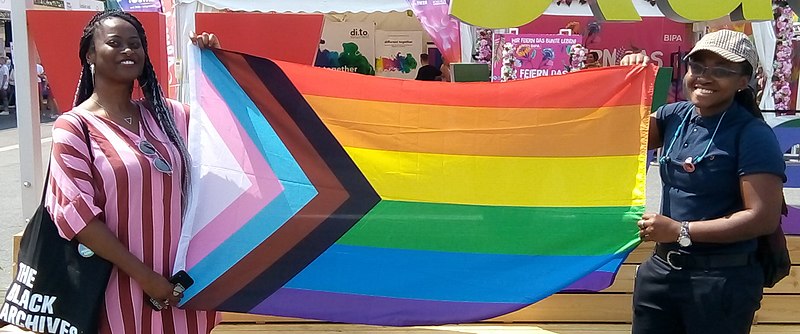
Two people at EuroPride 2019 in Vienna holding an LGBTQ+ pride rainbow flag featuring a design by Daniel Quasar; this variation of the rainbow flag was initially promoted as “Progress” a PRIDE Flag Reboot.
Photo by Bojan Cvetanović via Wikimedia Commons.
Over the past week we have witnessed two biological males – or men, as we used to call them – winning first and second place in a [the “w-word”]‘s cycling race. We’ve watched as the Crown Prosecution Service has hired a diversity consultant who is trans and who has previously suggested that [the “w-word”] could be replaced with “womxn”. We’ve heard that civil servants have received equality training telling them that the phrase “adult human female” – which is the dictionary definition of [the “w-word”] – is a transphobic dogwhistle. We’ve seen the publication of a new study by King’s College London which suggests that one way around sex / gender controversies might be to change the wording of questions in official documents like the census. For example, you could ask respondents “Do you menstruate?” rather than “Are you a [the “w-word”]?”.
Anyone who doubts that the word [the “w-word”], and the entire idea of [the “w-word”]hood, is being erased, sacrificed at the altar of the ideology of transgenderism, will surely have had a rude awakening these past few days. When men can claim [the “w-word”]‘s sporting prizes, it is clear that [the “w-word”]‘s sport risks becoming a thing of the past. When powerful institutions like the CPS and the civil service flirt with the idea that it is sinful to utter the words “adult human female”, it is obvious that even talking about [the “w-word”] has become a risky business. When even someone as globally influential as Michelle Obama uses the unpronounceable word “womxn”, as she did in a story shared to her Instagram page, you know that it’s not just time-rich, purple-haired campus crazies who have tumbled down the rabbit hole of genderfluidity. No, from the sporting world to the political world, from the justice system to the state bureaucracy, the idea that sex can be changed, and that language must be changed to avoid offending the trans minority, is orthodox now.
Strikingly, Mrs Obama’s use of the word “womxn” was related to the Roe v Wade controversy. She shared on Instagram a series of slides created by the nonprofit campaign group When We All Vote. One of them said: “State lawmakers will have the power to strip womxn of the right to make decisions about their bodies and their healthcare.” There is a dark irony to this comment, and one that exposes just how messed up the war on [the “w-word”]hood has become. That Obama-endorsed IG slide frets about [the “w-word”] being stripped of the right to control their bodies and yet it implicitly strips [the “w-word”] of the right to use certain words when they talk about themselves and what they need. “Womxn” is a reprimanding word, used to remind the female masses that their kind includes men now too. As Dictionary.com said of “womxn” when it added it in 2019, it is designed to be “inclusive of trans and non-binary” people. That is, blokes. In stripping out the old, supposedly problematic word “[the “w-word”]“, even as it wrings its hands over [the “w-word”] – sorry, womxn – being stripped of their bodily autonomy, When We All Vote unwittingly highlights the profound confusions and deep illiberalism behind today’s erasure of [the “w-word”]hood.
Barely a day passes without fresh reports about the linguistic war on [the “w-word”]kind. So the recent civil-service story involves a group called A:gender, which supports trans and intersex people who work in government departments. The Times got hold of some training videos A:gender has produced, which are shown to thousands of civil servants every year, one of which claims that it is impossible to define [the “w-word”] and that saying “adult human female” can be “transphobic”. Beware, these woke educators warn the civil service, of “transphobia [that] is increasingly presented as feminism”. To reiterate, this is civil servants we’re talking about, the people responsible for the smooth functioning of the nation. And they’re being told that if you say out loud what the dictionary says [the “w-word”] is, then you are a bigot. They’re being told that the likes of JK Rowling, whose great thoughtcrime is to understand biology, promote hatred dressed up as feminism.
Eisenhower Lays Out His Plans for Sicily – WW2 – 198 – June 11, 1943
World War Two
Published 11 Jun 2022The Allies bomb Mediterranean islands in preparation for their invasion of Sicily next month; they also prepare a lot of deceptions to mislead the enemy as to where they will attack. The German plans for the summer offensive against the Kursk salient are ever more concrete, and in the field this week, the Chinese stop the Japanese offensive cold.
(more…)
Comments Off on Eisenhower Lays Out His Plans for Sicily – WW2 – 198 – June 11, 1943
June 11, 2022
Spanish Canada: The Nootka Crisis
The History Guy: History Deserves to Be Remembered
Published 10 Jun 2022In 1789, the Spanish empire prepared to enforce their territorial claims far to the North of what they nominally controlled, and instigated a crisis that threatened to bring the great European powers to war.
Check out our new community for fans and supporters! https://thehistoryguyguild.locals.com/
This is original content based on research by The History Guy. Images in the Public Domain are carefully selected and provide illustration. As very few images of the actual event are available in the Public Domain, images of similar objects and events are used for illustration.
You can purchase the bow tie worn in this episode at The Tie Bar:
https://www.thetiebar.com/?utm_campai…All events are portrayed in historical context and for educational purposes. No images or content are primarily intended to shock and disgust. Those who do not learn from history are doomed to repeat it. Non censuram.
Find The History Guy at:
New community: https://thehistoryguyguild.locals.com/
Please send suggestions for future episodes: Suggestions@TheHistoryGuy.netThe History Guy: History Deserves to Be Remembered is the place to find short snippets of forgotten history from five to fifteen minutes long. If you like history too, this is the channel for you.
Awesome The History Guy merchandise is available at:
teespring.com/stores/the-history-guyScript by JCG
#history #thehistoryguy #Canada

Comments Off on Spanish Canada: The Nootka Crisis
June 9, 2022
A brutal microcosm of the English Civil War
At The Critic, Jonathan Healey reviews The Siege of Loyalty House by Jessie Childs:

Late in the summer of 1641, with Charles I deep in dispute with his Parliament, alarming reports reached Westminster of Catholics amassing arms at Basing House in Hampshire. At this point in time, few expected civil war, but plenty feared an imminent Catholic plot. Recent reform to the Church had introduced lavish ceremonies which looked, to many eyes, like the trappings of Rome, and Charles himself was married to a Catholic.
More to the point, England’s Catholics had done it before. Every year, people marked the anniversary of the Gunpowder Treason, which was already stuck in the national consciousness as the quintessential Popish rebellion: an armed coup plotted by dissident aristocrats gathering weapons on their great rural estates and planning subterfuge at the highest levels.
Yet civil war came, and when it did it would be nothing like the “Popish Plots” of Protestant imagining. It would be fought over constitutional as much as religious divides. And, rather than a rebellion, it would be an armed struggle between two competing fiscal-military organisations — effectively between two competing states.
The English countryside became militarised. Now, it was not just a landscape. It was territory. The great houses were no longer places for covert plotting; now they were centres of command and control. And few were more important than Basing House.
Hampshire today is a pleasant place: gentle and verdant with rolling chalk hills, shaded woodlands, and quiet valleys. But in the 1640s it became contested and dangerous: a dark, malevolent land of violence and death. People looked upon one another with suspicion, and riders were ambushed and killed as they travelled at night. Parish churches were stormed, towns starved and bombarded. Armies of musketeers, pikemen, and cavalry traversed the folding lanes of the county looking to bring bloodshed and plunder.
[…]
A crucial theme is encapsulated in the book’s denouement. The deputy sent to pacify Hampshire for the New Model was Oliver Cromwell. He had been in the thick of the fighting from the start, and before then was an earnest — if obscure and scruffily-attired — Member of Parliament. But Cromwell really rose to prominence in 1644 and 1645, on the back of his military abilities. He represented a new approach to the war: the pursuit of total victory even at the cost of sharp bloodshed.
It was Cromwell’s direct — even brutal — efficiency that brought the siege of Basing House to its end. The walls fell and many of the garrison were killed. Slaughtered, too, were a number of Catholic priests in a moment of violence that was representative of the way the war was heading. Cold-blooded murder of female camp followers had been perpetrated by royalists in Cornwall and by parliamentarians after Naseby. King Charles had allowed a bloody storm of Leicester which had cost many civilian lives, and Cromwell would go on to oversee the horrors of Drogheda and Wexford in Ireland. The chivalry of Waller and Hopton would come to seem a long way in the past.
Comments Off on A brutal microcosm of the English Civil War
June 8, 2022
The Story Behind the Dambuster Raid – WW2 Special
World War Two
Published 7 Jun 2022The thousand-bomber offensive was about to begin as Air-Marshall Harris was assembling his forces. Yet one man was to challenge his strategy. The aircraft designer Barnes Wallis thought: “What if there was a way to destroy Germany’s industrial might not by simply dropping thousands of bombs over its cities, but by a precision strike against its dams?” For this, a new kind of bouncing bomb was to be delivered.
(more…)
Comments Off on The Story Behind the Dambuster Raid – WW2 Special
June 7, 2022
D Day: The First Canadian Parachute Battalion and the Battle for the Village of Varaville
The History Guy: History Deserves to Be Remembered
Published 6 Jun 2022There are so many stories of heroism involved in the massive Operation Overlord, among them the extraordinary story of the little-known first Canadian Parachute Battalion. The lightly armed Canadians were among the first allied soldiers to hit the ground in France on D-Day.
Check out our new community for fans and supporters! https://thehistoryguyguild.locals.com/
This is original content based on research by The History Guy. Images in the Public Domain are carefully selected and provide illustration. As very few images of the actual event are available in the Public Domain, images of similar objects and events are used for illustration.
You can purchase the bow tie worn in this episode at The Tie Bar:
https://www.thetiebar.com/?utm_campai…All events are portrayed in historical context and for educational purposes. No images or content are primarily intended to shock and disgust. Those who do not learn from history are doomed to repeat it. Non censuram.
Find The History Guy at:
New community!: https://thehistoryguyguild.locals.com/
Please send suggestions for future episodes: Suggestions@TheHistoryGuy.netThe History Guy: History Deserves to Be Remembered is the place to find short snippets of forgotten history from five to fifteen minutes long. If you like history too, this is the channel for you.
Awesome The History Guy merchandise is available at:
teespring.com/stores/the-history-guyScript by THG
#history #thehistoryguy #DDay

Comments Off on D Day: The First Canadian Parachute Battalion and the Battle for the Village of Varaville


