
World War Two
Published 21 Aug 2022The aerial bombing of Germany takes a new turn but continues to fail to bring long-term results. In occupied Greece and Poland, over a thousand children are murdered by the Nazis.
(more…)
August 23, 2022
Greece Burns Under Nazi Occupation – WAH 074 – August 21, 1943
Comments Off on Greece Burns Under Nazi Occupation – WAH 074 – August 21, 1943
August 22, 2022
Sellers Home | Paul Sellers
Paul Sellers
Published 25 Apr 2022You are going to want a hot cup of tea or coffee with this one. It is something a little different. Paul has been working to build for his home, Sellers Home, all the hand-made furnishings that can practically be made from wood. This is the story of Paul, the story of woodworking and the story of Sellers Home.
We sometimes do something short and snappy for viewers but this is for those of you who want a deeper dive. Enjoy!
The full detailed projects are available with premium membership over on woodworkingmasterclasses.com (we will be switching to sellershome.com soon).
(more…)
Comments Off on Sellers Home | Paul Sellers
August 21, 2022
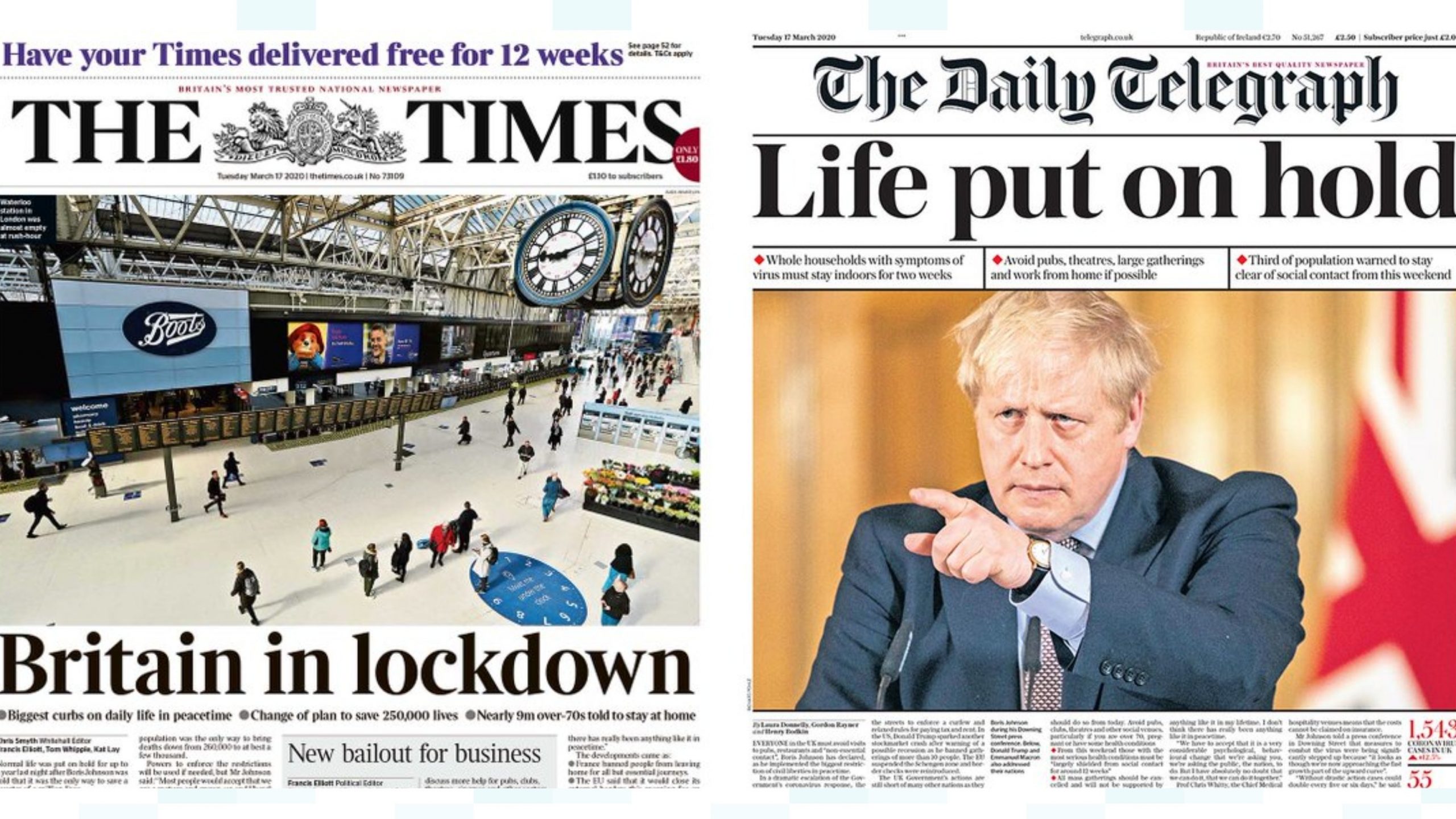
The pandemic lockdowns heralded the “worldwide end of the Nuremburg code”
At Samizdata, Perry de Havilland considers how British culture has been impacted by many of the worst notions coming out of American culture in the last few years:
… support for Brexit, by no means confined to the lumpenproletariat of Guardian reader’s imagination, might not indicate what purveyors of the high status opinion fondly imagine. The conflation of Brexit with the “Trump phenomenon” was always overblown, given the deep social and structural differences between UK and USA. Yes, we are influenced by America, but we are not the same in oh so many ways.
But western civilisation, not just Britain, is undeniably going through a very strange phase. The insane and demonstrably pointless covid lockdowns seem to have had a pressure cooker effect, with every -ism being dialled up several notches. The mainstreaming of transsexuality, a largely harmless hobby until a lunatic fringe grabbed hold of it, indicates the world is not running in well-oiled grooves. An inability to define “what is a woman?”, by sages and politicians who nevertheless expect to be treated as serious people, would have seemed implausible just a few years ago.
But the covid lockdowns, that is the “biggie”: an egregious abridgement of liberty & common sense that placed the global economy into repeated bouts of cardiac arrest. The worldwide end of the Nuremburg code.
The lockdowns were an even more polarising issue that Brexit or Trump or indeed anything else. Why? Because there was no opt-out, you could not just go to work, or visit granny, no ability to ignore the whole thing and just head down the pub or retire for a macha latte in some café. The effects of that will be enduring. That was the issue that taught a lot of people to fear what other people believe to be true, and people always hate what they fear.
Now just wait to see what happens when the green lunacy that stopped investment in reliable power supply and new reservoirs means we start running out of power and water. I suspect that will be what makes the cork finally blow off.
Comments Off on The pandemic lockdowns heralded the “worldwide end of the Nuremburg code”
Sicily Liberated; Italy in the Firing Line – WW2 – 208 – August 20, 1943
World War Two
Published 20 Aug 2022The British and Americans race for Messina to complete the conquest of Sicily — who will reach it first? On New Guinea, the Allies destroy a substantial Japanese air force; there are several major Allied air raids over Europe, the fighting in the USSR around Kharkov is brutal and costly for both sides, and a secret Allied leadership conference in Quebec begins to determine the course of the war. Busy week.
(more…)
Comments Off on Sicily Liberated; Italy in the Firing Line – WW2 – 208 – August 20, 1943
August 20, 2022
How Turkey Fought a WW1 Peace Treaty – The Greek-Turkish War 1919-1923
The Great War
Published 19 Aug 2022The defeat of the Ottoman Empire in 1918 meant that it got its own peace treaty like the other three Central Powers. But the emerging Turkish National Movement under Mustafa Kemal resisted the Treaty of Sevres and occupation by various Entente Powers. Their successful resistance led to the creation of modern Turkey and the Treaty of Lausanne in 1923.
(more…)
Comments Off on How Turkey Fought a WW1 Peace Treaty – The Greek-Turkish War 1919-1923
August 19, 2022
Why Quebec rejected the American Revolution
Conrad Black outlines the journey of the French colony of New France through the British conquest to the (amazing to the Americans) decision to stay under British control rather than join the breakaway American colonies in 1776:

Civil rights were not a burning issue when Canada was primarily the French colony of New France. The purpose of New France was entirely commercial and essentially based upon the fur trade until Jean Talon created industries that made New France self-sufficient. And to raise the population he imported 1,000 nubile young French women, and today approximately seven million French Canadians and Franco-Americans are descended from them. Only at this point, about 75 years after it was founded, did New France develop a rudimentary legal and judicial framework.
Eighty years later, when the British captured Québec City and Montréal in the Seven Years’ War, a gentle form of British military rule ensued. A small English-speaking population arose, chiefly composed of commercial sharpers from the American colonies claiming to be performing a useful service but, in fact, exploiting the French Canadians. Colonel James Murray became the first English civil governor of Québec in 1764. A Royal proclamation had foreseen an assembly to govern Québec, but this was complicated by the fact that at the time British law excluded any Roman Catholic from voting for or being a member of any such assembly, and accordingly the approximately 500 English-speaking merchants in Québec demanded an assembly since they would be the sole members of it. Murray liked the French Canadians and despised the American interlopers as scoundrels. He wrote: “In general they are the most immoral collection of men I ever knew.” He described the French of Québec as: “a frugal, industrious, moral race of men who (greatly appreciate) the mild treatment they have received from the King’s officers”. Instead of facilitating creation of an assembly that would just be a group of émigré New England hustlers and plunderers, Murray created a governor’s council which functioned as a sort of legislature and packed it with his supporters, and sympathizers of the French Canadians.
The greedy American merchants of Montréal and Québec had enough influence with the board of trade in London, a cabinet office, to have Murray recalled in 1766 for his pro-French attitudes. He was a victim of his support for the civil rights of his subjects, but was replaced by a like-minded governor, the very talented Sir Guy Carleton, [later he became] Lord Dorchester. Murray and Carleton had both been close comrades of General Wolfe. […]
The British had doubled their national debt in the Seven Years’ War and the largest expenses were incurred in expelling the French from Canada at the urgent request of the principal American agent in London, Benjamin Franklin. As the Americans were the most prosperous of all British citizens, the British naturally thought it appropriate that the Americans should pay the Stamp Tax that their British cousins were already paying. The French Canadians had no objection to the Stamp Tax, even though it paid for the expulsion of France from Canada.
As Murray and Carleton foresaw, the British were not able to collect that tax from the Americans; British soldiers would be little motivated to fight their American kinfolk, and now that the Americans didn’t have a neighboring French presence to worry them, they could certainly be tempted to revolt and would be very hard to suppress. As Murray and Carleton also foresaw, the only chance the British would have of retaining Canada and preventing the French Canadians from rallying to the Americans would be if the British crown became symbolic in the mind of French Canada with the survival of the French language and culture and religion. Carleton concluded that to retain Québec’s loyalty, Britain would have to make itself the protector of the culture, the religion, and also the civil law of the French Canadians. From what little they had seen of it, the French Canadians much preferred the British to the French criminal law. In pre-revolutionary France there was no doctrine of habeas corpus and the authorities routinely tortured suspects.
In a historically very significant act, Carleton effectively wrote up the assurances that he thought would be necessary to retain the loyalty of the colony. He wanted to recruit French-speaking officials from among the colonists to give them as much self-government as possible while judiciously feeding the population a worrisome specter of assimilation at the hands of a tidal wave of American officials and commercial hustlers in the event of an American takeover of Canada.
After four years of lobbying non-stop in London, Carleton gained adoption of the Québec Act, which contained the guaranties he thought necessary to satisfy French Canada. He returned to a grateful Québec in 1774. The knotty issue of an assembly, which Québec had never had and was not clamoring for, was ducked, and authority was vested in a governor with an executive and legislative Council of 17 to 23 members chosen by the governor.
Conveniently, the liberality accorded the Roman Catholic Church was furiously attacked by the Americans who in their revolutionary Continental Congress reviled it as “a bloodthirsty, idolatrous, and hypocritical creed … a religion which flooded England with blood, and spread hypocrisy, murder, persecution, and revolt into all parts of the world”. The American revolutionaries produced a bombastic summary of what the French-Canadians ought to do and told them that Americans were grievously moved by their degradation, but warned them that if they did not rally to the American colours they would be henceforth regarded as “inveterate enemies”. This incendiary polemic was translated, printed, and posted throughout the former New France, by the Catholic Church and the British government, acting together. The clergy of the province almost unanimously condemned the American agitation as xenophobic and sectarian incitements to hate and needless bloodshed.
Carleton astounded the French-Canadians, who were accustomed to the graft and embezzlement of French governors, by not taking any payment for his service as governor. It was entirely because of the enlightened policy of Murray and Carleton and Carleton’s skill and persistence as a lobbyist in the corridors of Westminster, that the civil and cultural rights of the great majority of Canadians 250 years ago were conserved. The Americans when they did proclaim the revolution in 1775 and officially in the Declaration of Independence on July 4, 1776, made the British position in Canada somewhat easier by their virulent hostility to Catholicism, and to the French generally.
Comments Off on Why Quebec rejected the American Revolution
“This is her advice: Get Married and Make Sure You Stay Married”
Elizabeth Nickson was a feminist entrepreneur (although I’m sure she would not have used that word to describe herself) in her early 20s, earning money to support herself by pushing feminist ideology through theatrical performance and running consciousness raising sessions. It was, as she says, “fashionable”. She now realizes that the changes to sexual belief and behaviour led directly to the modern “hook-up” culture young people now have to navigate to find relationships:
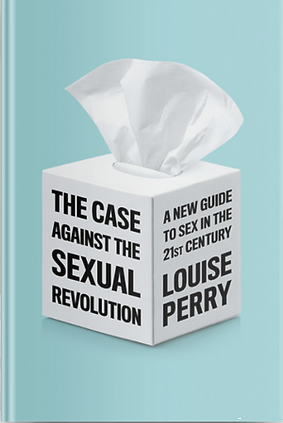
A new book, the Case Against Sexual Revolution, A New Guide to Sex in the 21st Century, written by Louise Perry, a young writer for the New Statesman is published at the end of this month. Perry volunteers in rape centers, and works for the campaign group We Can’t Consent To This, which documents cases in which UK women have been killed and defendants have claimed in court that they died as a result of ‘rough sex’.
This is her advice: Get Married and Make Sure You Stay Married.
Dramatically well-argued and sourced, Perry goes through every “innovation” in the sexual space and demonstrates without flinching, that all of it, all of it, privileges a particular subset of male, the sociosexual male – the kind that preferences quantity over quality – and not only that the worst kind of sociosexual male. The kind who like choking women, the rapists, abusers, serial womanizers, the pedophiles, the pimps, and the traffickers.
Decades later, says Perry, the mothers and grandmothers of 2nd and 3rd stage feminism have created hook-up culture as the near exclusive method of finding a mate. She details the unassailable fact that women, by their very nature, by their evolutionary history, and their specific biology are victimized in every move of hook-up culture, which ruthlessly uses their femininity, their gentleness, kindness, and agreeableness against them. It coarsens men, inflames their worst natures and has turned the netherworld of the sexual marketplace into a vicious free-for-all, a Darwinian thrash-hunt of the most vulnerable.
Everyone is hurt by it. Without exception.
I live in a place socially advanced, jokingly known as the end of the hippie trail. It is prosperous because it is one of the most beautiful places in the world. But, because it is environmentally advanced, our population is aging. The young and busy cannot start businesses or families here, because the environmental regulation is so strict, they cannot afford it. The human wreckage of the sexual revolution, therefore, is on full display. The streets and markets are littered with broken older men and women, long divorced or separated, the women especially living on crumbs, alone and destined to die alone, many without family. Hey, but their 20s and 30s were free. They got to have sex with dozens, if not hundreds of gorgeous men or women. And they used all the drugs.
If you look hard enough, you will see the same people drifting along the margins of every city and town. Break sexual norms, you break the family, and then you break the culture. What is left is pitiable.
Perry makes the point that I have tried to make hundreds of times in the past 20 years. So many of the political aims of upper-middle-class work for them, but for no one else. They are luxury beliefs. Upper-middle-class mothers do not send their gorgeous teens away to college now without very stern warnings about what might happen to them. Without a full delineating of the horrors that attend hooking up. But the less advantaged, those who swallow the propaganda of the culture do not.
Comments Off on “This is her advice: Get Married and Make Sure You Stay Married”
The DeLorean Story
Big Car
Published 5 Jan 2020There’s much more to the DeLorean Motor Company than Doc’s 88mph time machine in Back to the Future. It’s a story of a playboy founder with a meteoric rise, a story of hope and regeneration in an area torn apart after a decade of fighting, and of a cocaine smuggling fall from grace. Yes, this story has it all!
(more…)
Comments Off on The DeLorean Story
August 18, 2022
The bridge design that helped win World War II
Vox
Published 12 Mar 2021It’s a simple innovation that helped win a war.
The Bailey bridge was Donald Bailey’s innovative solution to a number of wartime obstacles. The allies needed a way to cross bodies of water quickly, but bombed-out bridges — or an absence of crossings entirely — made that incredibly difficult. That was only compounded by new, heavy tanks that needed incredibly strong support.
Bailey’s innovation — a modular, moveable panel bridge — solved those problems and gave the allies a huge advantage. The 570-pound steel panel could be lifted by just six men, and the supplies could fit inside small service trucks. Using those manageable materials, soldiers could build crossings sufficient for heavy tanks and other vehicles.
As impressive, the Bailey bridge could be rolled across a gap from one side to the other, making it possible to build covertly or with little access to the other side. Together, all the Bailey bridge’s advantages changed bridge construction and may have helped win the war.
(more…)
Comments Off on The bridge design that helped win World War II
August 17, 2022
Amazing Money Heist by Polish Resistance – WAH 073 – August 14, 1943
World War Two
Published 14 Aug 2022The reality of war finally seeps through to the majority of Germans, and it didn’t match up with the propaganda. Meanwhile resistance is increasing, and part of that is a classic money carriers when the Polish Home Army robs a money transport.
(more…)
Comments Off on Amazing Money Heist by Polish Resistance – WAH 073 – August 14, 1943
August 16, 2022
Manstein Goes Great War Style – WW2 – 207 – August 13, 1943
World War Two
Published 13 Aug 2022From Sicily to Spas-Demensk, the Axis continue conceding ground to the Allies this week. But the fighting is still tough. The Wehrmacht has halted the Red Army offensive in the Kuban, and the British and American armies have neither the strength nor the willpower to press the advantage against Axis troops retreating to the Italian mainland.
(more…)
Comments Off on Manstein Goes Great War Style – WW2 – 207 – August 13, 1943
August 15, 2022
Look at Life – Goodbye, Picadilly (1967)
nostalgoteket
Published 1 Sep 2011U.K. Newsreel. A look at the Piccadilly Circus of the Swinging Sixties! A lot of what is shown here no longer exists as it was soon “modernized” to meet the demands of a changing world. Also a look at underground Piccadilly to see sights that few people have ever seen.
Comments Off on Look at Life – Goodbye, Picadilly (1967)
August 13, 2022
The Great Escape from a Death Factory – WAH – August 7, 1943
World War Two
Published 12 Aug 2022While enslavement, and mass murder continues unabated in August 1943, at the Treblinka Death Factory the forced laborers decide that enough is enough, and bring battle to the SS in a daring escape attempt.
Huge thanks to Purple Purple, Steven Yarnell, Pieter Kleij and Ruben Alikhanyan for their support during the episode premiere.
(more…)
Comments Off on The Great Escape from a Death Factory – WAH – August 7, 1943
August 12, 2022
Canadian Army Newsreel – Allies take Sicily
canmildoc
Published 4 Sep 2011Canadian war news reel.
Comments Off on Canadian Army Newsreel – Allies take Sicily
QotD: Diplomatic adventures in the British Foreign Office
Lord Chalfont tells a story about his days as a Junior Minister in the Foreign Office. He attended a very grand dinner party, and spotted a lady standing alone in a long red dress. The besotted Chalfont staggered across to ask if she would waltz with him … The lady drew herself up: “I will not waltz with you for three reasons. First this is not a waltz it is the Czech national anthem. Second, you are drunk. My third and greatest objection is that I am the Cardinal Archbishop of Prague”.
Auberon Waugh, Diary, 1976-05-02 (Posted by @AuberonWaugh_PE, 2022-05-02).
Comments Off on QotD: Diplomatic adventures in the British Foreign Office


