
Royal Marines
Published 31 Aug 2012Commando, made for the Admiralty in 1945, is a drama-documentary covering Commando training in Wrexham, Anchnacarry and St. Ives. Fascinating archive footage shows wartime Commando units on amphibious assault exercises, perfecting cliff-top assaults and practicing both armed and unarmed combat techniques.
September 1, 2022
The Royal Marines at War: Commando – The Story of the Green Beret (1945)
Comments Off on The Royal Marines at War: Commando – The Story of the Green Beret (1945)
Rotherham Borough Council proudly announces they will be the first “Children’s Capital of Culture”
Honest to God, you can’t parody the real world harder than it parodies itself:
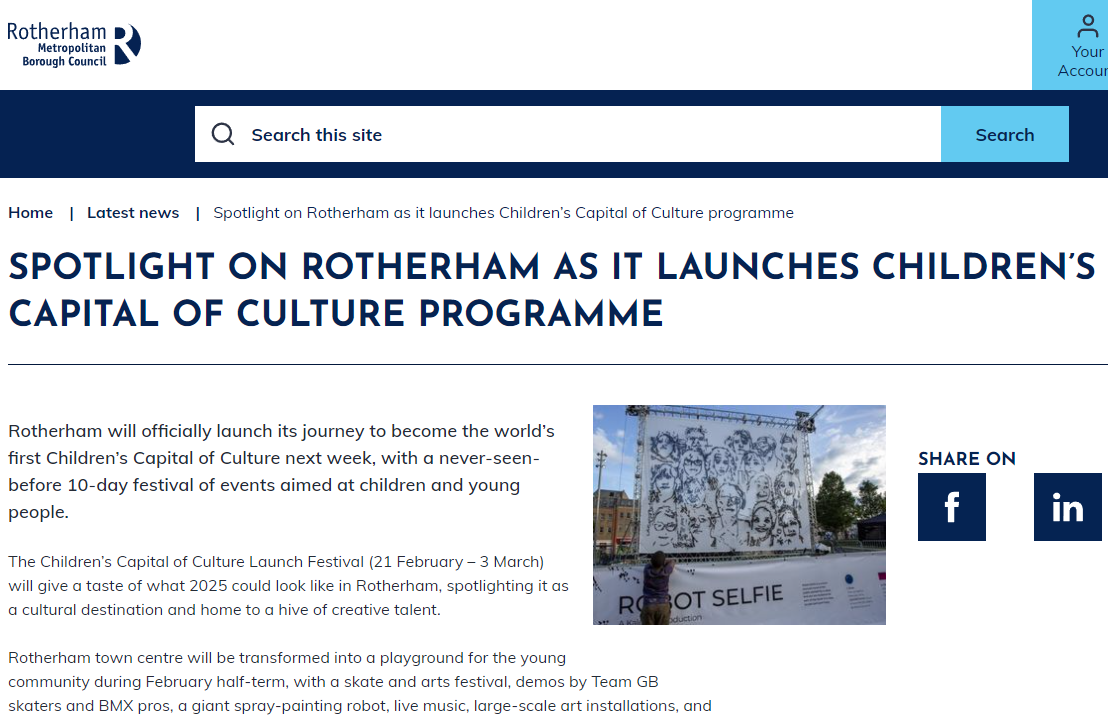
The news that the South Yorkshire market town of Rotherham would be the world’s first “Children’s Capital of Culture” in 2025 has been greeted by many as some kind of sick joke.
Rotherham is at the heart of England’s group-based child sexual exploitation crisis. In 2012, The Times revealed that a confidential 2010 police report had warned that vast numbers of underaged girls were being sexually exploited in South Yorkshire each year by organised networks of men “largely of Pakistani heritage”. South Yorkshire Police and local child-protection agencies were shown to have knowledge of widespread, organised child sexual abuse — but failed to act on this on-the-ground intelligence.
Rotherham borough council, South Yorkshire Police and other public agencies responded by setting up a team of specialists to investigate the reports. In 2013, an independent inquiry spearheaded by Professor Alexis Jay was launched. Her subsequent report into child sexual exploitation in Rotherham, published in 2014, made for awfully grim reading. It found that at least 1,400 children had been subjected to appalling forms of group-based sexual exploitation between 1997 and 2013. The report detailed how girls as young as eleven years of age — either in Year 6 or Year 7 of school — had been intimidated, trafficked, abducted, beaten and raped by men predominantly of Pakistani heritage.
Jay was also deeply critical of the institutional failures that had allowed organised child sexual abuse to flourish in Rotherham. The report concluded that there had been “blatant” collective failures on the part, firstly, of the local council, which consistently downplayed the scale of the problem; and secondly, on the part of South Yorkshire Police, which failed to prioritise investigating the abuse allegations. Indeed, the Jay Report found that the police had “regarded many child victims with contempt”. The inquiry discovered cases involving “children who had been doused in petrol and threatened with being set alight, threatened with guns, made to witness brutally violent rapes and threatened they would be next if they told anyone”. One young person told the inquiry that gang rape was a normal part of growing up in Rotherham. Just let that sink in — groups of adult-male rapists preying on vulnerable girls was normalised in an English minster town.
The Jay Report also took the local authorities to task for elevating concerns about racial sensitivities over the protection of the children in their care — an all-too-familiar element of the nationwide grooming-gangs scandal in England. As the Jay Report put it: “Several [council] staff described their nervousness about identifying the ethnic origins of perpetrators for fear of being thought as racist; others remembered clear direction from their managers not to do so”.
The safety and protection of the most vulnerable girls in society was sacrificed on the altar of state-backed multiculturalism and diversity politics. A recent report published after a series of investigations carried out by the Independent Office for Police Conduct (IOPC) under “Operation Linden”, found there were “systemic problems” within South Yorkshire Police that meant “like other agencies in Rotherham … it was simply not equipped to deal with the abuse and organised grooming of young girls on the scale we encountered”. South Yorkshire Police recently landed itself in further hot water after it was revealed by The Times that the police force was failing to routinely record the ethnic background of suspected child sexual abusers. For Rotherham, suspect ethnicity was missing for two in three cases.
Comments Off on Rotherham Borough Council proudly announces they will be the first “Children’s Capital of Culture”
QotD: The origins of the Bloody Mary
“Yes, yes please dear boy. You can prepare me a small rhesus negative Bloody Mary. And you must tell me all the news. I haven’t seen you since you finished your last film.” Uncle Monty, the lubricious booby in Bruce Robinson’s wonderful Withnail & I, selects his pre-prandial from a drinks table pregnant with possibilities with all the care one would expect from a seasoned practitioner. And so he might. For a Bloody Mary is perfect at almost any time of day and in every kind of weather.
All the best bars serve Bloody Marys. But the best Bloody Mary is served in The Grenadier, the one-time officers’ mess of the Foot Guards and the long-time public house in Wilton Row, Belgravia. Pass beneath the low lintel of this tiny tavern, pick your way through the crowded tap room and press up against the burr mahogany bar to order the world’s premier pick-me-up.
[…]
The Grenadier is rightly proud of its reputation for restorative remedies and particularly this one. Into the glass go vodka, and a sizeable slug (preferably Stolichnaya), a stirrup of sherry (the secret weapon), tomato juice, then spices (Tabasco and Worcestershire sauce), citron (lemon or lime) and salt to personal taste. The addition of a celery stick is entirely superfluous but for those in search of their hair of the dog, a little light salad I suppose is a help — of sorts.
Yet this pub, though an historic watering hole, cannot claim to be the home of the Mary. That right is retained across the Channel in Paris by Harry’s New York Bar. There exactly a century ago in the City of Light, Fernand Petiot, perfected his “bucket of blood”. The name was soon changed to something a little less Madame la Guillotine and the Mary as we know it was born.
Christopher Pincher, “Hail Mary”, The Critic, 2022-05-30.
Comments Off on QotD: The origins of the Bloody Mary
August 31, 2022
QotD: John Keegan’s The Face of Battle
Keegan’s first battle is Agincourt (1415). While famous for the place of the English longbow in it, at Agincourt the French advance (both mounted and dismounted) did reach the English lines; of this the sources for the battle are quite clear. And so the terror we are discussing is the terror of shock; not shock in the sense of a sudden shock or in the sense of a jolt of electricity, rather shock as the opposite of fire. Shock combat is the combat when two bodies of soldiers press into each other in mass hand-to-hand combat (which is, contrary to Hollywood, not so much a disorganized melee as a series of combats along the line of contact where the two formations meet). The advancing French had to will themselves forward into a terrifying shock encounter, while the English had to (like our hoplites above) hold themselves in place while watching the terrifying prospect of a shock engagement walk steadily towards them.
There is actually quite a bit of evidence that the terror of a shock engagement is something different from the other terrors of war (to be clear, not “better” or “worse”, merely different in important ways). There are numerous examples of units which could stand for extend periods under fire but which collapsed almost immediately at the potential of a shock engagement. To draw a much more recent example, at Bai Beche in 2001, a force of Taliban withstood two days of heavy bombing and had repulsed an infantry assault besides, but collapsed almost immediately when successfully surprised by a cavalry charge (yes, in 2001) in their rear (an incident noted in S. Biddle, “Afghanistan and the Future of Warfare”, Foreign Affairs 82.2 (2003)).
And so our sources for state-on-state pre-gunpowder warfare (which is where you tend to find more fully “shock” oriented combat systems) stress similar sequences of fear: the dread inspired by the sight of the enemy army drawing up before you (Greek literature is particularly replete with descriptions of teeth-chattering and trembling in those moments and it is not hard to imagine why), followed by the steady dread-anticipation as the armies advanced, each step bringing that moment of collision closer. Often in such engagements one side might break before contact as the fear not of what was happening, but what was about to happen built up. And only then the long anticipated not-so-sudden shock of the formations coming together – rarely for long given the overpowering human urge not to be near an enemy trying to stab you with a sharp stick. There is something, I think, quite fundamental in the human psyche that understands another human with a sharp point, or a huge horse rapidly closing on a deeper level than it understands bullets or arrows.
Which brings us to Keegan’s second battle, Waterloo (1815), defined in part by the ability of the British to manage to hold firm under extended fire from artillery and infantry. The French artillery in an 80-gun grand battery opened fire at 11:50am and kept it up for hours until the French cavalry advanced (hoping that the British troops were suitably “softened” by the guns to be dislodged) at 4pm. In contrast to Agincourt (or a hoplite battle) which may have ended in just a couple of hours and consisted mostly of grim anticipation, soldiers (on both sides) at Waterloo were forced to experience a rather different sort of terror: forced to stand in active harm for hours on end, as bullets and cannon shot whizzed overhead.
The difference of this is perhaps most clearly extreme if we move still forward to the Somme (1916) and bombardment. The British had prepared for their assault with a week long artillery barrage, in which British guns fired 1.5 million shells (that is about 148 shells fired a minute, every minute for a week). At the first sound of guns, soldiers (in this case, the Germans, but it had been the French’s turn just that February to be on the receiving end of a bombardment at Verdun) rushed into their dug-out bomb shelters at the base of their trench and then waited. Unlike the British at Waterloo, who might content themselves that, one way or another, the terror of fire would not last a day, the soldier of WWI had no way of knowing when the barrage would cease and the battle proper begin. Indeed, they could not see the battlefield at all, only sit under the ground as it shook around them and try to be ready, at any moment when the barrage stopped to rush back up to the lip of the trench to set up the machine guns – because if they were late to do it, they’d arrive to find British grenades and bayonets instead.
We will get into wounds, both physical and mental, next week, but it is striking to me that repeatedly there are reports after such barrages of soldiers so mentally broken by the strain of it that they wandered as if dazed or mindless, apparently driven mad by the bombardment. Reports of such immediate combat trauma are vanishingly rare in the pre-modern corpus (Hdt. 6.117 being the rare example). And it is not hard to see why the constant threat of sudden, unavoidable death hanging over you, day and night, for days or in some cases weeks on end produces a wholly different kind of terror.
And yet, to extend beyond Keegan’s three studies, in talking to contemporary veterans, it seems to me this terror of fire – being forced to stand (or hide) under long continuous fire – is not always quite the same as the terror of the modern battlefield. Of course I can only speak to this second hand (but what else can a historian generally do?), but there seems to be something different about a battlefield where everything might seem peaceful and fine and even a bit boring until suddenly the mortar siren sounds or a roadside IED goes off and the peril is immediate. The experience of such fear sometimes expresses itself in a sort of hypervigilance which seems entirely unknown to Greek or Roman writers (who in most cases could hardly have needed such vigilance; true surprise attacks were quite rare as it is extremely hard to sneak one entire army up on another) and doesn’t seem particularly prominent in the descriptions of “shell-shock” (which today we’d call PTSD) from the First World War, compared to the prominence of intense fatigue, the thousand-yard-stare and raw emotional exhaustion. I do wonder though if we might find something quite analogous looking into the trauma of having a village raided by surprise under the first system of war.
Bret Devereaux, “Collections: The Universal Warrior, Part IIa: The Many Faces of Battle”, A Collection of Unmitigated Pedantry, 2021-02-05.
Comments Off on QotD: John Keegan’s The Face of Battle
August 29, 2022
The Astonishing Nazi Underground Slave Factories – WAH 075 – August 28, 1943
World War Two
Published 28 Aug 2022While the RAF and USAAF continue to try to bomb Germany into submission, the German Nazis move their war production underground. In the process they create an underground slave camp that defies imagination.
(more…)
Comments Off on The Astonishing Nazi Underground Slave Factories – WAH 075 – August 28, 1943
August 28, 2022
Kharkov Changes Hands for the Fourth Time – WW2 – 209 – August 27, 1943
World War Two
Published 27 Aug 2022As the war grows ever more ferocious, some people are unfortunate enough to see the front line arrive to their villages, towns, and cities multiple times.
(more…)
Comments Off on Kharkov Changes Hands for the Fourth Time – WW2 – 209 – August 27, 1943
Church and state, British-style
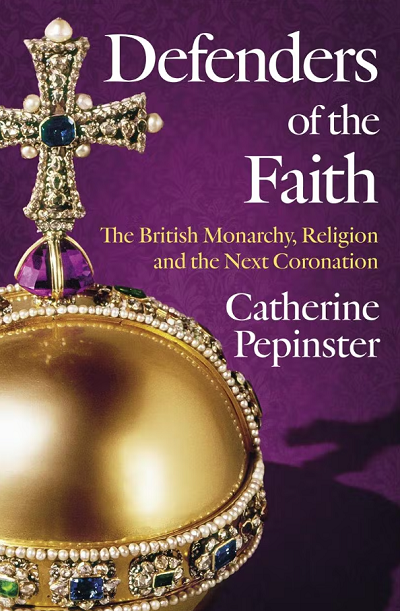
In The Critic, David Scullion reviews Catherine Pepinster’s book Defenders of the Faith: The British Monarchy, Religion, and the Next Coronation:
The longevity of Elizabeth II has (mostly) allowed us to avert our attention from the question of the relationship between church and state for a very long time. Given that her 70 years on the throne have seen the relentless rise of the forces of philistine secularism and constitutional vandalism, one cannot help but feel grateful for the benign obscurity that her reign has cast over such issues. Alas, this cannot be the case for much longer.
During her coronation in 1953, the Queen made solemn oaths to maintain the “true profession of the Gospel”, “the Protestant Reformed Religion established by law” and the Church of England. She was anointed with holy oil as the chosen ruler of God in a ceremony that owes its ultimate origins to the monarchy of Israel, and which can be traced back in England to at least the coronation of Edgar in 973 AD.
In 1953 this solemn ceremony was received with little in the way of controversy, except in terms of the debate over whether it should be televised. In the end it was, but with the most holy part of the rite — the coming of the Holy Spirit and God’s blessings in the sacred moment of anointing — kept away from the nation’s prying eyes.
If the next coronation is similar, one can only imagine the chorus of outraged, irreverent squawking that will sound from the amassed ranks of secular-liberal opinion-formers. Despite this unappetising prospect, it seems reasonable to discuss what form it should take now, given that 70 years have elapsed since the last one — a task that Catherine Pepinster’s new book purports to undertake.
I say “purports to undertake”, because in fact the vast majority of it is taken up with a rather pedestrian rehearsal of British religious and monarchical history since the Reformation, followed by long and dull accounts of what little we know about the spiritual lives of HM the Queen, Prince Philip and Prince Charles.
These central six chapters of the book are overwhelmingly preoccupied with a topic which clearly concerns the author more than any other: the nature of the relationship between Roman Catholicism and the monarchy, which seems like a rather odd focus given that the British monarchy has not been in communion with the Church of Rome since the 16th century.
She spends a large proportion of the book bewailing the historical inequities perpetrated against Ms Pepinster’s co-religionists by the British establishment, and demonstrating how recent decades have seen a real — albeit cautious — rapprochement between the monarchy and Roman Catholics. She goes on to make a series of commonplace observations about the country’s growing secularism, the rise of religious and cultural diversity, and the decline of Anglican congregations since 1953.
If one wants to know what the equivocating Ms Pepinster thinks the implications of all these trends are for the next coronation and relations between church and state, then one will have to read between the lines. Although her account of the various possibilities is a useful summary, working out what she actually favours is like trying to staple a jellyfish to wet soap.
Comments Off on Church and state, British-style
Jersey – Millennia of Maritime Defence Preserved
Drachinifel
Published 4 May 2022Today we take a look at the island of Jersey, part of the Channel Islands off the coast of France, to examine the many generations of maritime defence that have been built and upgraded there.
It’s an excellent place to visit! https://www.jersey.com/
(more…)
Comments Off on Jersey – Millennia of Maritime Defence Preserved
August 27, 2022
On the verge of leaving No. 10 Downing St., Boris is still Tory voters’ top choice
In UnHerd, Dominic Sandbrook discusses the astonishing popularity of disgraced Tory PM Boris Johnson among ordinary Tory voters:

Prime Minister Boris Johnson at his first Cabinet meeting in Downing Street, 25 July 2019.
Official photograph via Wikimedia Commons.
With just over a week to go until the climax of the Conservative leadership contest, the name of the people’s favourite is surely not in doubt. After five ballots of MPs, weeks of campaigning and more than ten public hustings, the will of the members could not be clearer. The punters have weighed up the two candidates, examined their pasts, studied their principles and reflected on their promises. And faced with a choice between Rishi Sunak and Liz Truss, the finger of fate points to … Boris Johnson!
Such is the implication of a recent YouGov survey, which found that fully 49% of Tory members would choose as their leader the darling of the Greek tavernas, if only he were allowed to run – a higher proportion than those backing Sunak and Truss put together. And as The Times reported earlier this week, this was echoed in findings of focus groups among swing voters, who seem exceptionally unenthusiastic about either of Johnson’s potential successors.
Again and again, in fact, the same theme appears: Boris was robbed. “I really liked Boris and I was really, really disappointed in the way he was treated,” said one swing voter in Esher and Walton, speaking for the rest. “They’re picking on minor things. You know, furnishings and wallpaper and making such a big deal about it. And it’s the media. The media are the ones that turn everyone against him.”
Was Boris robbed, though? You didn’t often hear that line in June and July, when he narrowly survived a no-confidence vote, led his party to crushing defeats in the Wakefield and Tiverton and Honiton by-elections and was forced to watch the collapse of his government as some 31 ministers from all sides of the party, equating to just over a quarter of his entire administration, resigned in protest. On 7 July, the day he finally threw in the towel, YouGov found that his public favourability had sunk to truly diabolical levels, with just 19% having a positive view, and fully 72% a negative one. That made Johnson even more unpopular than Theresa May just before she quit, and almost as unpopular as Jeremy Corbyn at his nadir. So much, then, for the populist hero of the Red Wall masses.
And yet, as extraordinary as it may sound, the Big Dog’s fightback began that very afternoon. The opening shots came as he stood outside 10 Downing Street, reminding the cameras of his “incredible mandate: the biggest Conservative majority since 1987, the biggest share of the vote since 1979”. Then came Johnson’s insistence that it was “eccentric to change governments when we are delivering so much”, and his dismissal of the Westminster “herd” that had moved against him. And then, in his final Prime Minister’s Questions appearance a fortnight later, came those ominous words “Mission accomplished, for now”, as well as that classic Johnsonian sign-off: “Hasta la vista, baby.” The only surprise is that he didn’t use another Terminator payoff: “I’ll be back.”
Ever since, the idea that Boris was robbed, cheated, stabbed in the back has been gathering force. The Tory tabloids insist that he was the victim of a “putsch“, while his adoring Culture Secretary, the ridiculous Nadine Dorries, maintains that he was removed by a “ruthless coup” led largely by Sunak. And among Tory activists, the idea that he was toppled by a sinister media campaign has almost visibly gathered strength — enthusiastically fed, it has to be said, by Liz Truss. When, at one Tory hustings earlier this month, the former Sun political editor Tom Newton Dunn asked if Johnson had been the author of his own downfall, an activist shouted that it was “the media”. “Sounds like you’re being blamed, Tom,” said Truss with a smirk, “and who am I to disagree with this excellent audience?”
Comments Off on On the verge of leaving No. 10 Downing St., Boris is still Tory voters’ top choice
Ex Dissed Him Publicly … Turned BRUTAL Insult Into An 80s Classic | Professor of Rock
Professor of Rock
Published 8 Apr 2022One of the most heart wrenching love songs of the 80s steeped in a happy go lucky feel. “Romeo and Juliet” by Dire Straits is a bit of conundrum. Find out what this riddle of a song means from their 1980 classic album Making Movies and how Mark Knopfler took a breakup and made it an all-time standard next on Professor of Rock.
Hey music junkies and vinyl junkies Professor of Rock always here to celebrate the greatest artists and the greatest 80s songs of all time for the music community and vinyl community with music history video essay’s including today’s Dire Straits story of “Romeo and Juliet” and Dire Straits reaction. If you’ve ever owned records, cassettes and CD’s at different times in your life or still do this is your place. Subscribe below right now to be a part of our daily celebration of the rock era with exclusive stories from straight from the artists and click on our Patreon link in the description to become an Honorary Producer.
The British rock band Dire Straits formed in London in 1977. Their original line-up consisted of Mark Knopfler on lead vocals and lead guitar, his brother David on rhythm guitar, John Illsley on bass and Pick Withers on drums. In 1978 they released their self-titled debut which included the singles “Water of Love” and “Sultans of Swing”.
In 1979, they released their follow-up Communique, putting out the singles “Lady Writer” and “Once Upon a Time in the West”. For their third album, Dire Straits traveled to New York, and set up shop at a studio called the Power Station. They got to work on June 20, 1980. The album, called Making Movies was co-produced by Mark Knopfler and Jimmy Iovine, who had been the engineer and mixer on Bruce Springsteen’s Born to Run. Due to this connection, Iovine was able to secure E Street Band keyboardist Roy Bittan for the sessions.
It was the first time the band had ever fully worked a keyboardist into its lineup, but Knopfler’s arrangements were expanding musically and getting more complex. And Bittan was just the man for the job. Going into the studio, Mark had written a lineup of several great songs, “Tunnel of Love”, “Skateaway”, “Expresso Love”, “Romeo and Juliet” … And there was a sense within the group that this album was going to be something very special.
But for all the promise on the horizon, Dire Straits’ increasing success had exhausted one of its members. Dave Knopfler, more than anyone else in the band was struggling. And if the intense march to fame and fortune wasn’t hard enough, Dave also had the distinct challenge of living in shadow of his brother Mark … who was the undisputed leader of the band.
Through the first few weeks of recording Dave’s dissatisfaction felt like a dark cloud. And it followed him wherever he went. With eyes averted to the floor, he and Mark had all but stopped talking. And the resentment and gloom were dragging everyone down. It all came to a head one day when Dave showed up to the studio empty-handed. Responsible for a fairly simple guitar part on “Romeo & Juliet”, Dave just hadn’t bothered to practice it. So, Iovine told him to go away and learn it.
(more…)
Comments Off on Ex Dissed Him Publicly … Turned BRUTAL Insult Into An 80s Classic | Professor of Rock
August 25, 2022
Louise Perry – “It’s precisely because I’m a feminist that I’ve changed my mind on sexual liberalism”
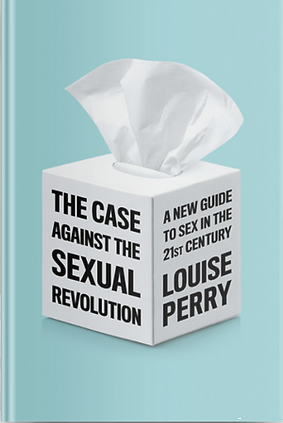
Guest-posting at Bari Weiss’s Substack, Louise Perry explains what drove her to write her new book, The Case Against the Sexual Revolution: A New Guide to Sex in the 21st Century:
I used to believe the liberal narrative on the sexual revolution. As a younger woman, I held the same opinions as most other millennial urban graduates in the West. I conformed to the beliefs of my class.
Of course freedom is the goal, I thought. What women need is the freedom to behave as men have always behaved, enjoying all the pleasures of casual sex, porn, BDSM, and indeed any other sexual delight that the human mind can dream up. As long as everyone is consenting, what’s the problem?
I no longer believe any of this.
[…]
The problem is the differences aren’t trivial. Sexual asymmetry is profoundly important: One half of the population is smaller and weaker than the other half, making it much more vulnerable to violence. This half of the population also carries all of the risks associated with pregnancy. It is also much less interested in enjoying all of the delights now on offer in the post-sexual revolution era.
The research is clear. Men are (on average) far more interested than women are in casual sex, buying sex, watching porn, and experimenting with unusual fetishes. It’s not that women never enjoy such things. But, on average, they enjoy them much less than men do.
Remove the progressive goggles, and the history of the last 60 years looks different. The sexual revolution isn’t only a story of women freed from the burdens of chastity and motherhood. It is also a story about the triumph of the playboy.
It would have been impossible to imagine a self-described feminist offering advice like this to other young women even a few years ago:
This is the advice I would offer my own daughter:
• Distrust any person or ideology that pressures you to ignore your moral intuition.
• Chivalry is actually a good thing. We all have to control our sexual desires, and men particularly so, given their greater physical strength and average higher sex drives.
• Sometimes (though not always) you can readily spot sexually aggressive men. There are a handful of personality traits that are common to them: impulsivity, promiscuity, hyper-masculinity and disagreeableness. These traits in combination should put you on your guard.
• A man who is aroused by violence is a man to steer well clear of, whether or not he uses the vocabulary of BDSM to excuse his behavior. If he can maintain an erection while beating a woman, he isn’t safe to be alone with.
• Consent workshops are mostly useless. The best way of reducing the incidence of rape is by reducing the opportunities for would-be rapists to offend. This can be done either by keeping convicted rapists in prison or by limiting their access to potential victims.
• The category of people most likely to become victims of these men are young women between the ages of 13 and 25. All girls and women, but particularly those in this age category, should avoid being alone with men they don’t know or men who give them the creeps. Gut instinct is not to be ignored: It’s usually triggered by a red flag that’s well worth noticing.
• Get drunk or high in private and with female friends, rather than in public or in mixed company.
• Don’t use dating apps. They offer a large pool of options, but at a severe cost. It is far better to meet a partner through mutual friends, since they can vet histories and punish bad behavior. Dating apps can’t.
• Holding off on having sex with a new boyfriend for at least a few months is a good way of discovering whether or not he’s serious about you or just looking for a hook-up.
• Only have sex with a man if you think he would make a good father to your children — not because you necessarily intend to have children with him, but because this is a good rule of thumb in deciding whether he’s worthy of your trust.
• Monogamous marriage is by far the most stable and reliable foundation on which to build a family.
None of this advice is groundbreaking. It’s all informed by peer-reviewed research, but it shouldn’t have to be, since this is what pretty much most mothers would tell their daughters, if only they were willing to listen.
Comments Off on Louise Perry – “It’s precisely because I’m a feminist that I’ve changed my mind on sexual liberalism”
The Polish Navy – Founding to the Fall of Poland
Drachinifel
Published 14 Apr 2021Today we take a look at the how the Polish Navy came to be, how the core of their ships got away to form the start of the Free Polish Navy, and the last stand the remaining ships and men undertook.
(more…)
Comments Off on The Polish Navy – Founding to the Fall of Poland
August 24, 2022
“A spectre is haunting Britain – the spectre of whingers”
A pub that was partially an inspiration for George Orwell’s description of the “perfect pub” is under threat from post-covid NIMBY complaints:
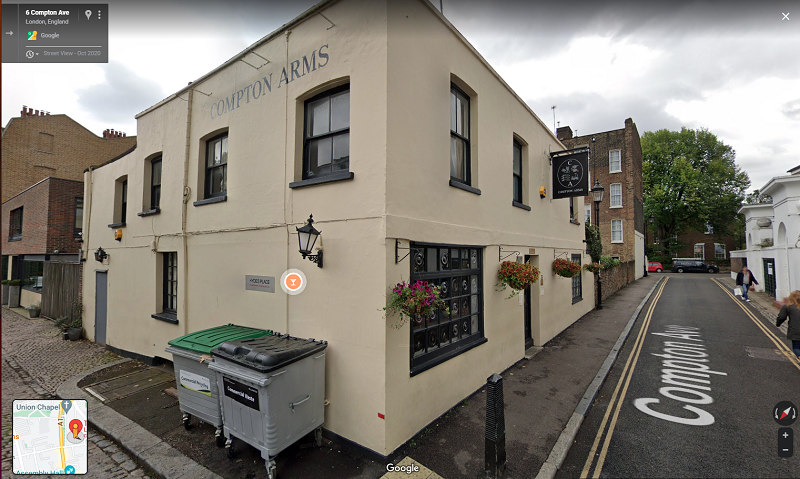
Google street view of the Compton Arms in Islington.
George Orwell’s favourite pub could be closed down because four neighbours have moaned about the noise.
A spectre is haunting Britain – the spectre of whingers. The dead hand of NIMBYism is felt on so many of our national crises, from the housing crisis to the “drought” to the energy crisis. The comfortably off classes have fought tooth and nail, all too successfully, in recent decades to block the building of anything – from houses to reservoirs – that might make life easier for everyone else. But their killjoy war on pubs might just be their most grating accomplishment.
The Compton Arms in Islington is the latest pub, still struggling in the wake of lockdown and now faced with soaring energy costs, to be threatened with closure over a handful of complaints. It’s been open since the 1800s. George Orwell drank there and it reportedly inspired his essay “The Moon Under Water”, published in the Evening Standard in 1946, which laid out his idea of the perfect pub. Now it has been slapped with a licence review by the local council after four neighbours complained that it was a “public nuisance” and posed a danger to health.
Given the Compton Arms was just voted the second-best pub in the UK by Time Out, with a review that hails its “seasonally led” “small-plates menu”, it seems unlikely to have become some den of criminal depravity. The furious explanation of Nick Stephens, the pub’s owner, seems more plausible – that some killjoys on this well-to-do Highbury side street got used to the pub being shut during lockdown and are now throwing their toys out of the pram.
“Our managers have gone to extreme lengths and worked their socks off to run the pub considerately (and exceptionally) – in spite of some more than challenging behaviour from some of the four complainants”, Stephens posted on Facebook. “A minority get used to the quiet then decide the pub that’s been there since the 1800s, that is an asset of community value, is now a nuisance.” He says that if this “minority of four” succeeds, the Compton won’t be financially viable “for us … or any other responsible operator”.
This is a story we have seen playing out time and again across the UK. An unholy alliance of whingers and council bureaucrats are shutting down and imposing punishing restrictions on much-loved pubs, stopping them from staying open later or blocking the opening of new venues over often ludicrous claims of noise and disruption. There seems to have been a particular flurry of this in recent months, following the end of lockdown and the entrenchment of working from home.
A Floating Airfield Made of Ice – WW2 Newsflash
World War Two
Published 23 Aug 2022In 1943, the British are working on a radical plan which could revolutionize the Allies’ productive capacity. It might sound crazy, but ice might be the magic material they need.
(more…)
Comments Off on A Floating Airfield Made of Ice – WW2 Newsflash
QotD: Cromwell dismisses the “Rump Parliament”
Ye are a factious crew, and enemies to all good government.
Ye are a pack of mercenary wretches, and would like Esau sell your country for a mess of pottage, and like Judas betray your God for a few pieces of money.
Is there a single virtue now remaining amongst you? Is there one vice you do not possess?
Ye have no more religion than my horse. Gold is your God. Which of you have not bartered your conscience for bribes? Is there a man amongst you that has the least care for the good of the Commonwealth?
Ye sordid prostitutes have you not defiled this sacred place, and turned the Lord’s temple into a den of thieves, by your immoral principles and wicked practices?
Ye are grown intolerably odious to the whole nation. You were deputed here by the people to get grievances redressed, are yourselves become the greatest grievance.
Your country therefore calls upon me to cleanse this Augean stable, by putting a final period to your iniquitous proceedings in this House; and which by God’s help, and the strength he has given me, I am now come to do.
I command ye therefore, upon the peril of your lives, to depart immediately out of this place.
Go, get you out! Make haste! Ye venal slaves be gone! So! Take away that shining bauble there, and lock up the doors.
In the name of God, go!
Oliver Cromwell, speaking to the so-called “Rump” Parliament, 1653-04-20.
Comments Off on QotD: Cromwell dismisses the “Rump Parliament”


